
P
Species Profile

Prairie Dog

Cynomys

Builders of the grassland underground
Frank Fichtmueller/Shutterstock.com

Prairie Dog Distribution

Click a location to explore more animals from that region

Endemic Species
Loading map...

Size Comparison

Human 5'8"
Prairie Dog 6 in

Prairie Dog stands at 8% of average human height.

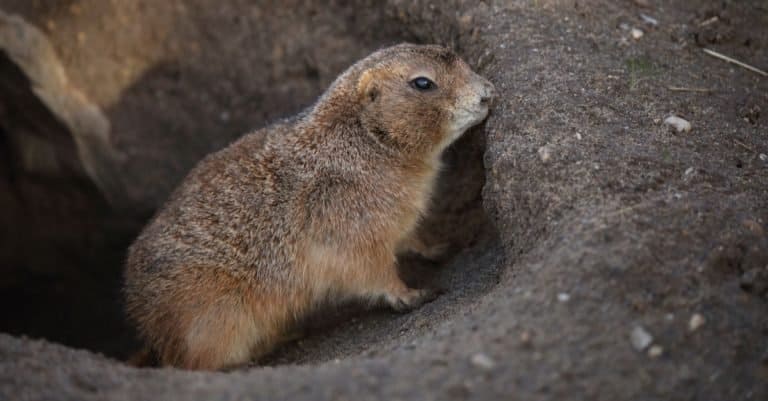
prairie dog family in a burrow

At a Glance

Genus Overview This page covers the Prairie Dog genus as a group. Stats below are general traits shared across the genus.
Also Known As Prairie rat, Gopher, Ground squirrel, Burrowing squirrel, Barking squirrel
Diet Omnivore
Activity Diurnal+
Lifespan 3.5 years
Weight 1.8 lbs
Status Not Evaluated
Did You Know?

Genus-wide size range: adults are ~28-43 cm head-body, with ~3-11 cm tails, and roughly ~0.5-1.5 kg depending on species, sex, and season.

Scientific Classification

Genus Overview "Prairie Dog" is not a single species but represents an entire genus containing multiple species.

Prairie dogs are highly social, colonial, burrowing rodents (ground squirrels) of North American grasslands and shrub-steppe. They form complex towns with extensive tunnel systems and use distinctive vocalizations for predator alerts and social communication.

Kingdom
Animalia
Phylum
Chordata
Class
Mammalia
Order
Rodentia
Family
Sciuridae
Genus
Cynomys

Distinguishing Features

  • Stout-bodied ground squirrels with short tails and small rounded ears
  • Live in large colonies (“towns”) with intricate burrow networks
  • Frequent upright “sentinel” posture at burrow mounds
  • Complex alarm calls and social behaviors
  • Primarily herbivorous grazers/foragers in open habitats

Physical Measurements

Males and females differ in size

Height
6 in (4 in – 8 in)
Length
1 ft 3 in (12 in – 1 ft 6 in)
1 ft 4 in (1 ft – 1 ft 8 in)
Weight
2 lbs (1 lbs – 4 lbs)
Tail Length
3 in (2 in – 4 in)
3 in (1 in – 4 in)
Top Speed
35 mph
running

Appearance

Primary Colors
Secondary Colors
Skin Type Mammalian integument with dense short-to-medium fur; sparsely furred nose, lips, and foot pads; prominent vibrissae (whiskers).
Distinctive Features
  • Genus-level size range: head-body ~28-43 cm; tail ~6-11 cm; mass ~0.6-1.7 kg (smallest to largest species).
  • Lifespan range across Cynomys: typically ~2-5 years in the wild; occasionally ~6-8+ years; captivity can reach ~10-12 years with care.
  • Stocky, low-slung ground-squirrel build with short legs, small rounded ears, and strong curved claws for digging.
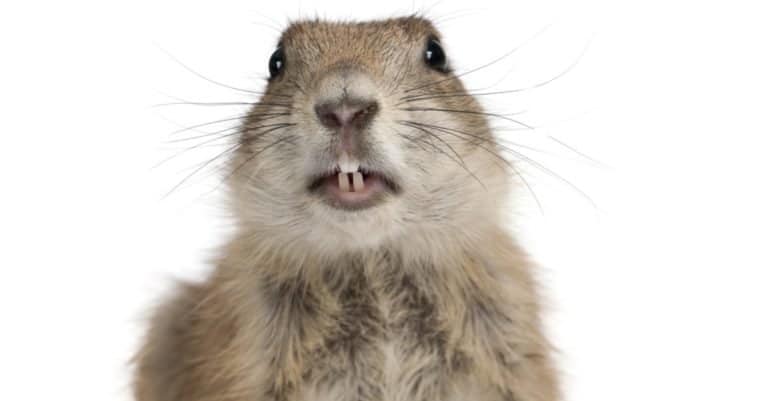
  • Large chisel-like incisors; diastema (gap) typical of rodents; cheek pouches absent.
  • Tail relatively short and often used in signaling; tail-tip coloration varies among species (not uniform across the genus).
  • Highly colonial: forms "towns" with interconnected burrow systems; architecture includes multiple entrances, chambers, and soil mounds; extent and mound form vary by species and soil type.
  • Ecosystem engineer: grazing and burrowing alter vegetation structure, nutrient cycling, and habitat for many grassland animals (effects vary by colony size and climate).
  • Communication: conspicuous upright posture at burrow mouths and complex alarm-call repertoires; call structure and dialects vary among species/populations.
  • Ecology variation: habitat spans shortgrass prairie to shrub-steppe; diet largely grasses/forbs but composition shifts seasonally and by region.
  • Predation pressure commonly from raptors, coyotes, badgers, and snakes; species-specific key predators differ by range and community.
  • Disease ecology: susceptible to sylvatic plague (Yersinia pestis), causing severe colony crashes; management may include flea control or vaccination in some areas.
  • Seasonal molt and coat tone changes occur; pelage can appear more reddish-buff or gray-buff depending on species, season, and local soils.

Sexual Dimorphism

Sexual dimorphism is generally modest across Cynomys: adult males average larger and heavier, especially during the breeding season. Seasonal reproductive condition is more conspicuous than coat differences, with males showing enlarged testes and females showing nipples when lactating.

  • Slightly larger average body mass and head width; differences vary by species and colony conditions.
  • During breeding season, scrotal testes and more pronounced scent-gland/marking behaviors may be evident.
  • Slightly smaller average size; differences often subtle outside breeding season.
  • Visible nipples during lactation; may show abdominal thinning/fur parting around nursing period.

Did You Know?

Genus-wide size range: adults are ~28-43 cm head-body, with ~3-11 cm tails, and roughly ~0.5-1.5 kg depending on species, sex, and season.

There are five living species, spanning shortgrass prairie and shrub-steppe from southern Canada and the U.S. Great Plains/Intermountain West into central Mexico.

"Towns" can contain many family groups (coteries) and persist for decades in the same landscape, even if local numbers boom and bust.

Not all prairie dogs "hibernate": some species/populations in colder regions enter prolonged torpor/hibernation, while others remain active much of winter with reduced above-ground time.

Their vocal communication includes distinct alarm calls; research shows calls can encode information about predator type and features (e.g., size/shape).

Lifespan varies widely: often ~3-8 years in the wild (highly dependent on predation and disease), and up to ~10-12 years in captivity.

They are a key prey base for grassland predators; black-footed ferrets are especially tied to prairie dog colonies for both food and shelter.

Unique Adaptations

  • Highly developed alarm-call system supporting rapid, group-wide risk assessment in open habitats.
  • Powerful forelimbs and claws for excavating; incisors and skull musculature suited to gnawing roots and stems while digging.
  • Physiological flexibility for seasonal extremes: fat storage, reduced metabolic rate (torpor/hibernation in some species/populations), and behavioral thermoregulation.
  • Ecosystem engineering: burrowing aerates soil, alters water infiltration, and creates habitat used by many other species (e.g., burrowing owls, snakes, small mammals, invertebrates).
  • Colony layout that concentrates many entrances and escape routes, reducing individual predation risk in open grasslands.
  • Disease-vector interface: close social contact and fleas can amplify outbreaks (notably sylvatic plague), shaping survival strategies and management needs.

Interesting Behaviors

  • Colonial living with coteries: tight-knit family groups share burrow systems, cooperate in vigilance, and defend territories-though colony size and social spacing vary by species and habitat.
  • Sentinel behavior: individuals often post above ground to watch for predators, then trigger coordinated retreats with alarm calls.
  • Burrow architecture: multi-entrance tunnel networks with chambers for nesting and food storage; mounded soil can improve lookout points and drainage.
  • Seasonal activity shifts: timing of breeding, emergence, and daily above-ground activity varies across the genus with latitude, elevation, and temperature.
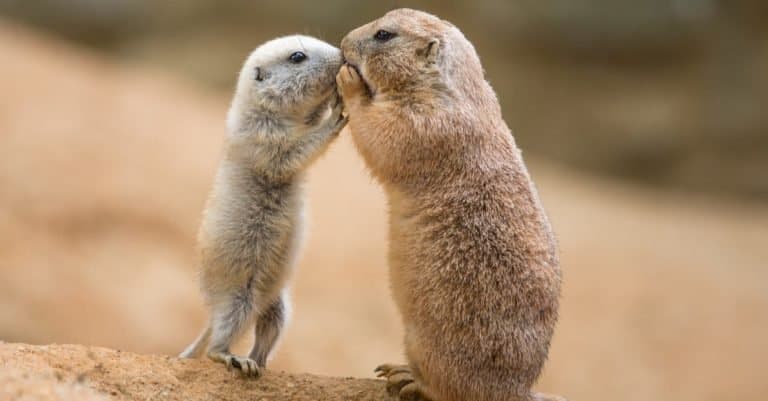
  • Social rituals: mouth-to-mouth contact and grooming help reinforce group identity and reduce conflict-common across species but used differently among colonies.
  • Vegetation "gardening" effects: grazing and clipping around burrow openings can improve predator detection and changes plant communities locally.
  • Boom-bust dynamics: colonies can expand rapidly in favorable years, then contract after harsh winters, drought, heavy predation, or disease outbreaks.

Cultural Significance

Prairie dogs (Cynomys) are part of life on the Great Plains and Intermountain West. Seen as a sign of healthy grasslands or as livestock competitors, their colonies help wildlife (including the black-footed ferret). Management balances land use and fights sylvatic plague (Yersinia pestis) with flea control, habitat planning, and vaccination.

Myths & Legends

Name lore: "Cynomys" comes from Greek roots meaning "dog mouse," and "prairie dog" refers to their bark-like alarm calls-an enduring naming story repeated in natural history writing since early European descriptions.

Exploration anecdote: During the Lewis and Clark Expedition, a live prairie dog was captured and shipped east to President Thomas Jefferson, helping introduce the animal to American scientific circles and popular imagination.

Frontier imagery: 19th-century accounts popularized the idea of bustling "prairie dog towns," a phrase that became a cultural metaphor for busy, tightly packed communities on the American plains.

Conservation-era symbolism: In the late 20th-21st centuries, prairie dogs became an emblem in debates over Western rangelands-cast either as industrious "grassland engineers" or as "pests," reflecting competing cultural narratives about land stewardship.

You might be looking for:

Black-tailed prairie dog

40%

Cynomys ludovicianus

The most widespread and commonly referenced prairie dog; large colonies across the Great Plains.

White-tailed prairie dog

18%

Cynomys leucurus

Smaller-bodied species of intermountain basins; notable seasonal torpor in colder climates.

Gunnison's prairie dog

16%

Cynomys gunnisoni

Southwestern U.S. species; often at higher elevations than black-tailed prairie dogs.

Utah prairie dog

14%

Cynomys parvidens

Range-restricted to Utah; conservation-sensitive and often highlighted in management contexts.

Mexican prairie dog

12%

Cynomys mexicanus

Endemic to northeastern Mexico; limited range compared with U.S. species.

Life Cycle

Birth 4 pups
Lifespan 4 years

Lifespan

In the Wild
2–10 years
In Captivity
6–12 years

Reproduction

Mating System Polygyny
Social Structure Harem Based
Breeding Pattern Seasonal
Fertilization Internal Fertilization
Birth Type Internal_fertilization

Across Cynomys, breeding is typically seasonal within colonial coteries where one male mates with multiple females. Multiple-male units and extra-pair matings occur in some species/populations, making the system variably polygynous to polygynandrous; females provide most direct care.

Behavior & Ecology

Social Colony Group: 200
Activity Diurnal, Crepuscular
Diet Omnivore Tender young grasses and forbs (fresh green growth)
Seasonal Hibernates 6 mi

Temperament

Highly social and tolerant within familiar groups; strong recognition of neighbors.
Vigilant and wary of predators; frequent scanning from mounds and sentry-like behavior.
Territorial around burrow clusters; aggression increases during breeding or boundary disputes.
Boldness and tolerance vary by species, colony density, human disturbance, and predator pressure.

Communication

Sharp alarm barks and yips with graded variation by threat type and urgency.
Contact calls between groupmates during foraging and reunions at burrow entrances.
Growls, squeals, and chatter-like calls during conflicts, mating, or rough play.
Tail postures/flicking and upright displays from mounds to signal alertness.
Nose-to-nose and open-mouth 'kissing' greetings for group recognition and tension reduction.
Scent marking from glands and urine at burrow entrances and territorial boundaries.
Chasing, boxing, and body postures to reinforce dominance, spacing, and boundary control.

Habitat

Biomes:
Temperate Grassland Desert Cold Desert Hot
Terrain:
Plains Plateau Valley Hilly Rocky Sandy
Elevation: Up to 10498 ft 8 in

Ecological Role

Keystone, colonial burrowing grazers (ecosystem engineers) and major prey base in North American grassland/shrub-steppe food webs; genus-level effects are strong but vary with colony density, climate, and plant community.

Vegetation structuring via grazing and clipping (maintains/opening short-stature grassland patches) Soil mixing and aeration through burrowing; altered infiltration and nutrient redistribution Creation of habitat and refugia for other species using burrows (invertebrates, reptiles, small mammals, birds) Trophic support as abundant prey for carnivores and raptors (supports higher-level predators) Influence on plant community composition and productivity through selective feeding and disturbance

Diet Details

Main Prey:
Grasshoppers and other orthopterans Beetles Caterpillars and other insect larvae Ants and other small invertebrates
Other Foods:
Grasses Forbs Seeds and grass seedheads Roots, bulbs and other underground plant parts Shrub leaves and green stems Cactus pads and fruit

Human Interaction

Domestication Status

Wild

Prairie dogs (genus Cynomys) are wild North American ground squirrels and are not domesticated. People have both harmed them (poisoning, shooting, habitat loss, control for grazing) and helped them (protected colonies, reintroductions, regulated captive keeping). They face sylvatic plague (Yersinia pestis) and are studied for social behavior and disease.

Danger Level

Moderate
  • Bites and scratches (can be severe due to strong incisors), especially from stressed or improperly handled animals
  • Zoonotic disease risk: fleas associated with prairie dogs can transmit Yersinia pestis (plague) in endemic regions; other potential zoonoses include tularemia and enteric infections (risk varies by region and handling hygiene)
  • Allergic reactions/asthma triggers from dander, bedding, and hay
  • Indirect injury/property risk: burrow holes can create trip hazards and can affect livestock/horse footing; burrowing may undermine small structures or irrigation features in some settings

As a Pet

Not Suitable as Pet

Legality: Laws vary. In the U.S., states may ban prairie dogs (Cynomys) or require permits; federal limits happened during disease outbreaks (e.g., 2000s monkeypox). Many countries treat them as restricted wildlife. Check rules before having or moving them.

Care Level: Expert Only

Purchase Cost: $150 - $600
Lifetime Cost: $3,000 - $15,000

Economic Value

Uses:
Ecosystem services (keystone species) Conservation and biodiversity value Research and education Wildlife tourism/photography Agricultural land-use conflict/management costs
Products:
  • eco-tourism and wildlife viewing opportunities
  • research outputs (behavior, communication, plague/flea ecology)
  • habitat restoration and mitigation projects (managed colonies)
  • pest-control services and materials (where colonies are lethally controlled)

Relationships

Related Species 10

Black-tailed prairie dog Cynomys ludovicianus Shared Genus
White-tailed prairie dog Cynomys leucurus Shared Genus
Gunnison's prairie dog Cynomys gunnisoni Shared Genus
Utah prairie dog Cynomys parvidens Shared Genus
Mexican prairie dog Cynomys mexicanus Shared Genus
Marmots
Marmots Marmota Shared Family
Ground squirrels Spermophilus spp. Shared Family
Ground squirrels Urocitellus spp. Shared Family
Thirteen-lined and other spotted ground squirrels Ictidomys spp. Shared Family
Rock squirrel Otospermophilus Shared Family

Ecological Equivalents 5

Animals that fill a similar ecological role in their ecosystem

European rabbit Oryctolagus cuniculus Colonial, burrow-dwelling grazer/browser whose warrens create strong soil disturbance and habitat-engineering effects broadly analogous to prairie dog towns, though in a different mammal order and with a different social structure.
Meerkat
Meerkat Suricata suricatta Highly social, burrow-using species in open habitats that exhibits sentinel behavior and alarm calls; displays similar anti-predator surveillance and cooperative living despite being a carnivoran with a very different diet.
Black-tailed jackrabbit Lepus californicus Open-grassland herbivore that shares parts of the same landscape and predators; overlaps in grazing impacts and predator–prey dynamics, but does not engage in burrow-based colonial living.
Pocket gophers Geomyidae Burrowing herbivorous rodents that strongly modify soils and vegetation; similar ecosystem engineering via digging, but typically solitary and largely subterranean rather than colonial and surface-active.
Tuco-tucos Ctenomys spp. Burrowing, herbivorous rodents native to South America that alter plant communities and soil structure; functionally comparable ecosystem engineers but differing in biogeography and sociality.

Types of Prairie Dog

5

Explore 5 recognized types of prairie dog

Black-tailed prairie dog Cynomys ludovicianus
White-tailed prairie dog Cynomys leucurus
Gunnison's prairie dog Cynomys gunnisoni
Utah prairie dog Cynomys parvidens
Mexican prairie dog Cynomys mexicanus

The prairie dog sits at the center of the entire ecosystem of the American prairie.

Despite their name, the five species of prairie dogs are not canines at all, but rodents. They were named for their dog-like barking sounds. They are considered to be the keystone species of the western plains. Their burrows help to churn the soil and promote water penetration. Their nitrogen-rich dung is a high-quality fertilizer that enriches the soil. And they provide a stable food source for predators. Experts believe that the loss of prairie habitats and the disappearance of prairie dog populations are linked together.

3 Incredible Prairie Dog Facts!

  • The first description of the prairie dog came from the expeditions of Lewis and Clark in 1804. Lewis described it as resembling a barking squirrel.
  • One of the more amazing facts is that prairie dogs are organized into large colonies called towns. The largest prairie dog town ever discovered was 25,000 square miles large and had about 400 million inhabitants.
  • The black-tailed prairie dog and Mexican prairie dog exhibit a behavior known as a jump-yip in which it jumps up into the air and emits a loud yipping sound. This behavior is contagious and soon spreads through the rest of the colony. It is not quite clear why they do this, but this adaptation might be a kind of all-clear signal for predators. Another explanation is that it helps prairie dogs collect information about the watchfulness of nearby colony mates.
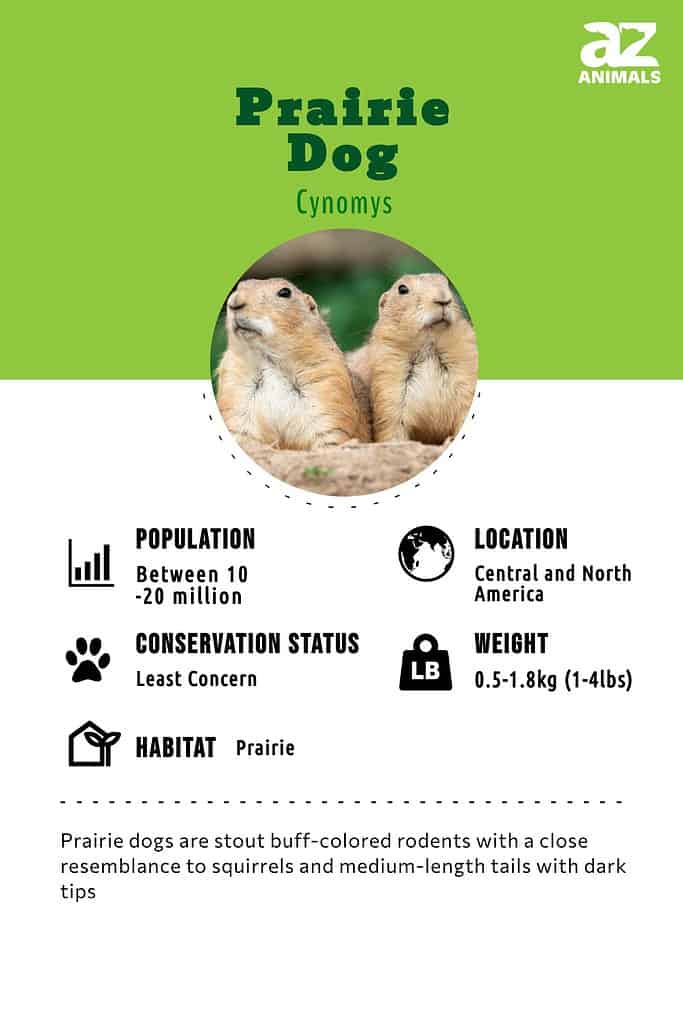
Prairie Dog Scientific Name
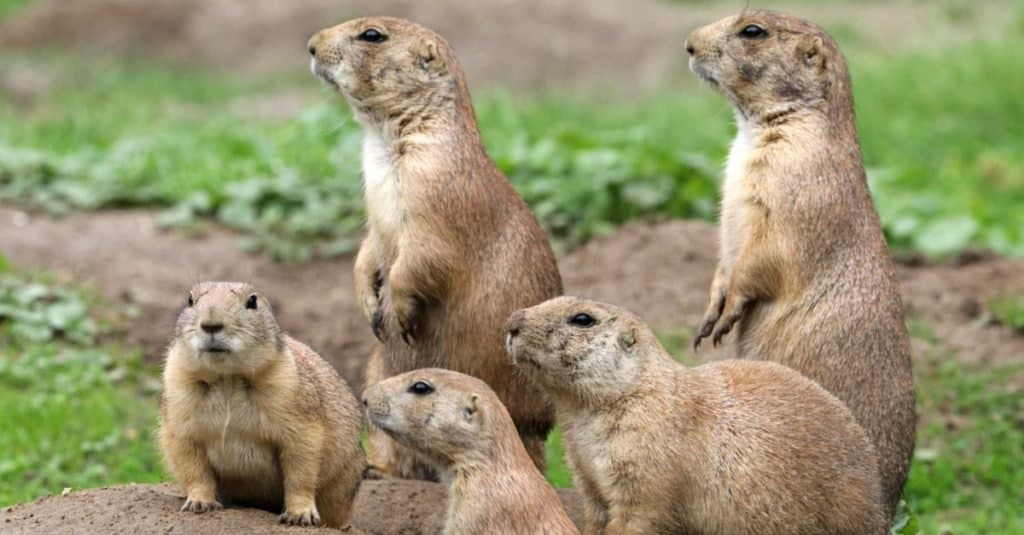
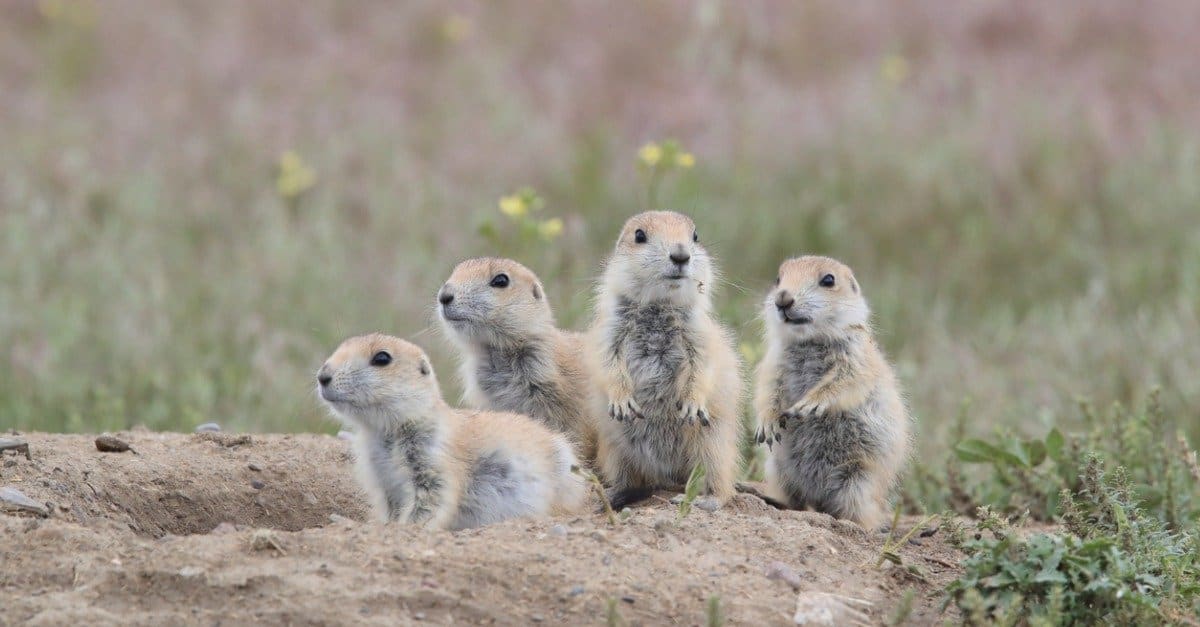
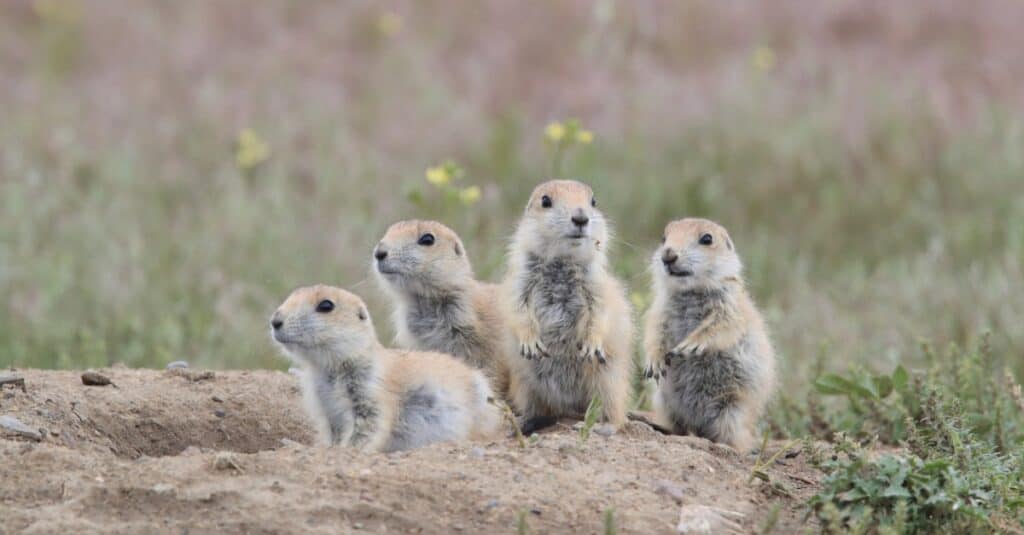
Inquisitive family of Prairie Dogs standing alert.

Prairie dogs are a species of short-tailed, ground-dwelling squirrel

The scientific name for the prairie dog genus is Cynomys. This appears to be the combination of two Greeks words that roughly translate to mean “dog mouse.” The genus belongs to the family of Sciuridae along with all other types of squirrels.

Appearance

These animals have a generally squirrel-like appearance. It is characterized by a small but stout body, rounded ears, a short tail, and strong digging claws. The short and coarse coat of fur is a yellowish-tan color with hints of brown and red. The tail is also covered in black, white, or gray fur. Weighing between 1 and 4 pounds, the prairie dog is about the same size as a rabbit. Its body measures 12 to 16 inches, while the tail adds another 1 to 5 inches. Males tend to be slightly larger than females on average, but their appearance is otherwise similar except for obvious sexual differences.

Types

Five species of prairie dog currently exist: 

  • Black-tailed prairie dog: Named for the black tips of their tails, these rodents do not hibernate during winter but instead enter torpor at nightfall.
  • Gunnison’s prairie dog: Recognizable by their tails which often have light gray tips, these ground squirrels are also the only prairie dogs that come with 40 pairs of chromosomes. All other subspecies have 50 pairs.
  • Mexican prairie dog: Native to Mexico as its name suggests, this rodent was considered a pest and a deterrent to agriculture and cattle husbandry. As a result of extermination campaigns against it, this subspecies currently occupies less than 4% of its former range.
  • White-tailed prairie dog: Its distinguishing features are dark blotches on either cheek above and below both eyes and a white tail. This mammal lives at higher elevations compared to its closest relatives.
  • Utah prairie dog: Their small sizes, multicolored fur, and dark eyebrows set them apart. Due to their IUCN status as Endangered, they are currently a protected species.

Evolution
What Do Prairie Dogs Eat

Prairie dogs’ distant ancestors are believed to have lived in North America about 40 million years ago

Prairie Dogs belong to the vast rodent family Sciuridae, or squirrels. The evolutionary tale of this extensive group is believed to have begun in North America with the earliest fossil evidence dating as far back as 40 million years ago during the late Eocene.

Prairie dogs belong to one of the main five families of the species, the Xerinae which consists of squirrels that are terrestrial in nature and make their homes in burrows dug in the earth. Within this subgroup, prairie dogs also belong to the tribe Marmotini alongside other species including chipmunks, groundhogs, marmots, and susliks.

Behavior
Where Do Prairie Dogs Live

Prairie dogs are intelligent animals with complex communication. They have a range of different barks and chirps for communicating different messages.

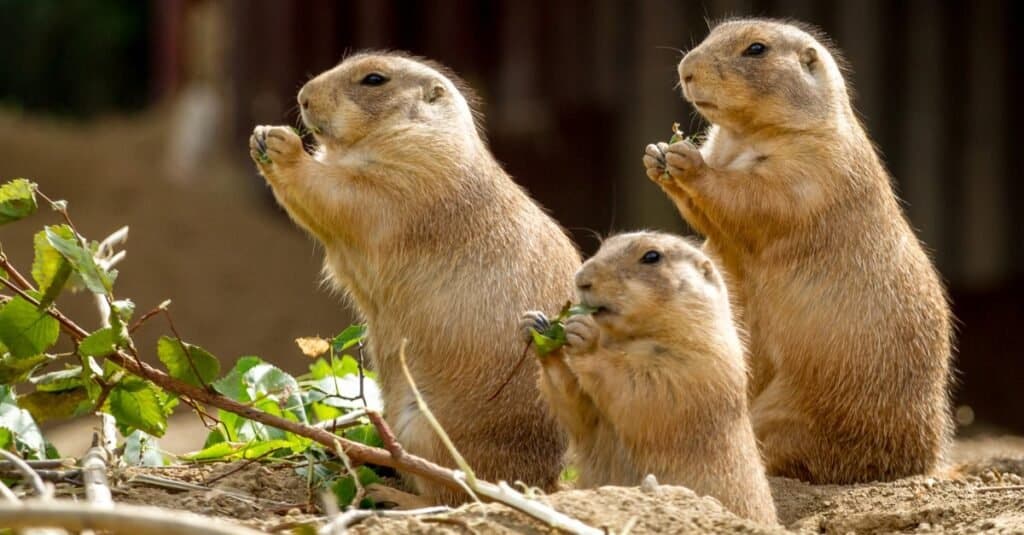
The social life of these animals revolves around the colony (the technical term for it is a coterie or clan, depending on the species). The basic unit of the colony is the family, which consists of one or two males, a few females, and their offspring. A single “town” of prairie dogs may consist of hundreds of members divided into multiple family units, all independent but working together. Each member contributes to the success of the family or colony by hunting for food, guarding the den, and grooming one another.

In order to communicate, these animals have evolved numerous vocal adaptations. The familiar barking sound for which they’re known is actually an alarm call. When the animal spots a predator, it emits a loud call that sends the rest of the colony scurrying for cover. Prairie dog communication is quite complex. Some studies suggest that they can convey precise details about where the intruder comes from and what it looks like. It can even distinguish between humans and hawks without a problem. Touch is another important aspect of prairie dog communication. Nuzzling and even kissing serve to reinforce relationships and bonds between members of the same family or group.

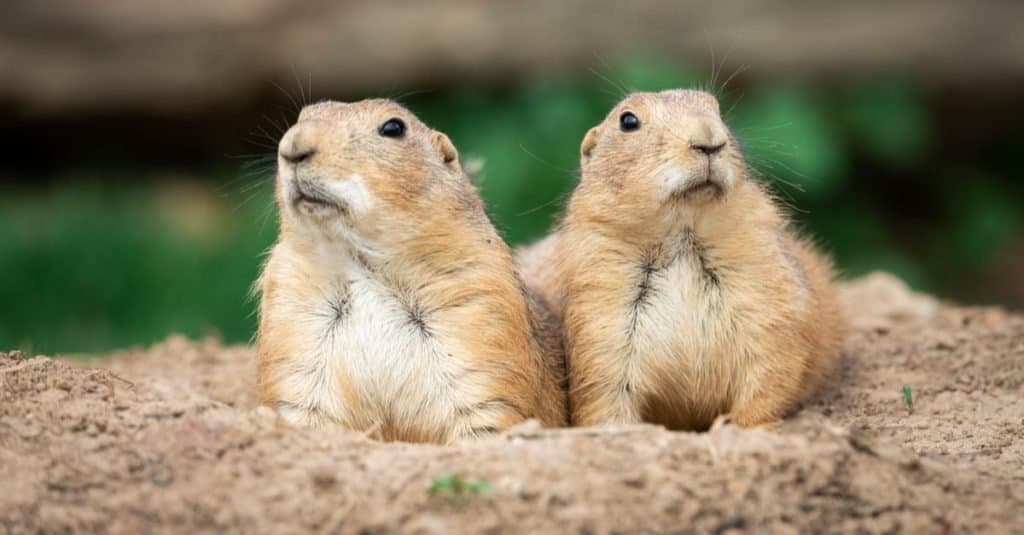
These animals construct some of the most impressive homes in the animal kingdom. These homes consist of underground burrows, tunnels, and chambers with distinctive sleeping quarters, nurseries, and toilets. Each of the six entrances to the burrow is marked by a volcano-shaped mound. These mounds serve as a kind of listening post from which a member of the colony can guard against nearby predators. There is generally one burrow per family. However, these burrows can form an entire town spanning an average of 247 acres.

In a harsh environment of scarce resources, these animals have multiple strategies for survival. When winter arrives, the animal has the ability to hibernate or slow down its metabolism to conserve energy. They can go for very long periods of time without any food or water. Some species like the white-tailed prairie dog will also deliberately kill other ground squirrels in order to eliminate competitors and maximize the survival odds of their own offspring. Given its herbivorous lifestyle, the animal obviously does not eat the meat from their fallen foe but instead leaves it for scavengers to pick over.

Habitat

These animals can be found all across the plains, valleys, and plateaus of the western United States and parts of Mexico. There are five species, each one corresponding to a different geographical region: Gunnison’s prairie dog can be found in the southwestern United States, the black-tailed prairie dog in the central United States, the white-tailed prairie dog in Wyoming, Utah, and Colorado, the Mexican prairie dog in the northeastern states of Mexico, and the Utah prairie dog in the state that bears its name.

Predators and Threats
Animals That Burrow Underground: Prairie Dog

Humans constitute the main threat to prairie dogs’ wellbeing

These animals face many threats in the wild. It is always at risk of death from natural predators and even other prairie dogs. But the main threat to its existence comes from human activity. The conversion of prairies into farmlands, pastures, and towns has reduced the full extent of the animal’s natural habitats. This has been exacerbated by the fact that many people regard them as pests for their destructive digging habits and deliberately hunt them down. It’s estimated that they lost about 95% of their natural territory in the 20th century. Another unexpected threat comes from the ancient scourge of the bubonic plague, which can decimate an entire colony and also spread to other animals, including humans. As a result of all these threats, the prairie dog numbers have fallen about 98% from their peak.

What eats the prairie dog?
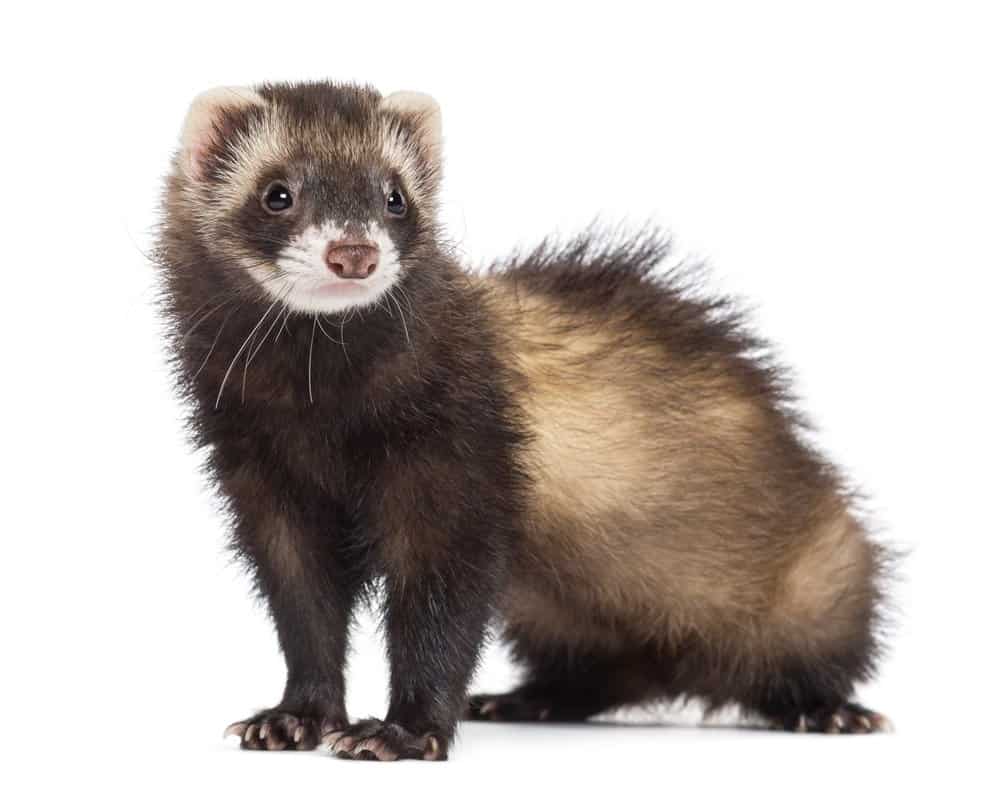
Ferret (Mustela Putorius Furo) - standing against white background

Ferrets are one of several creatures which consider prairie dogs a tasty meal

As a vital part of the local food chain, the animal is a source of food for numerous predators. It is preyed upon by ferrets, foxes, badgers, coyotes, eagles, and hawks, which raid the nests or take the prairie dog by surprise.

What does the prairie dog eat?
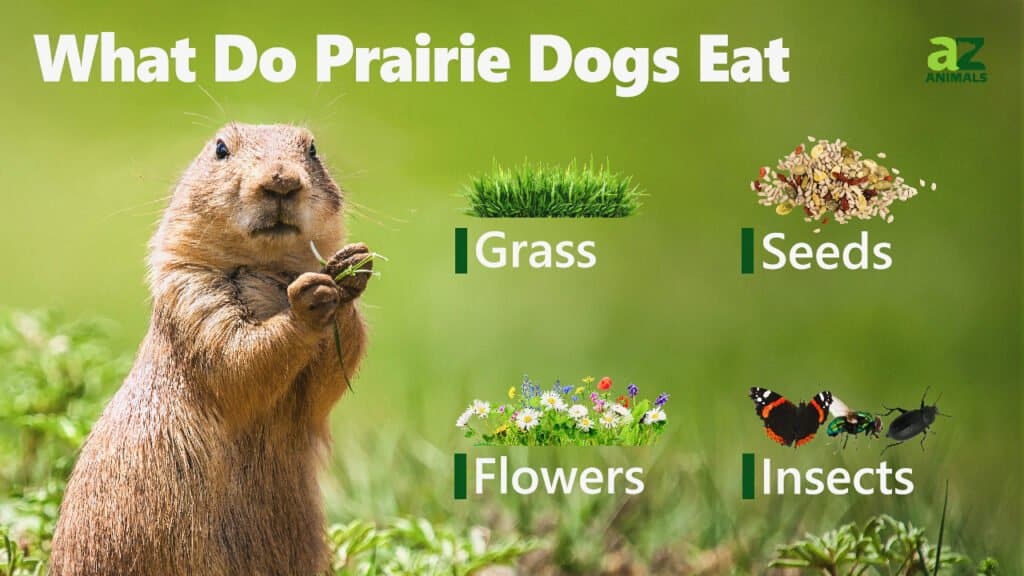
What Do Prairie Dogs Eat
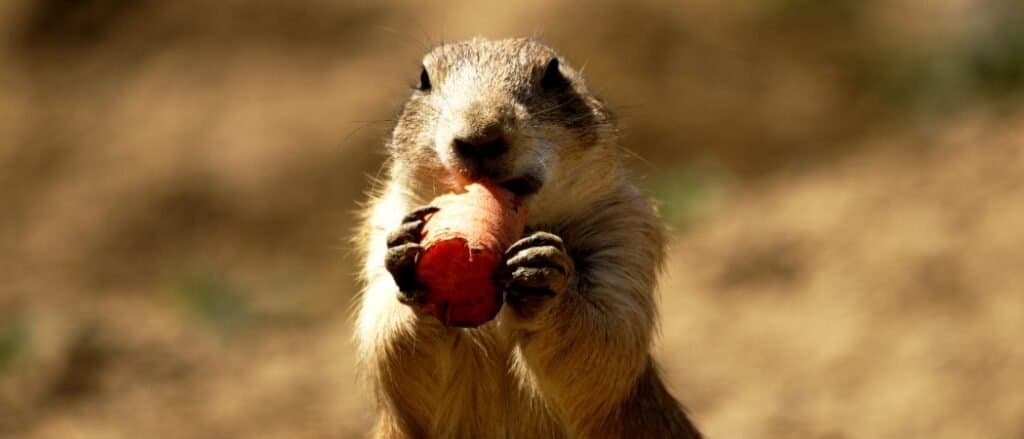
Although prairie dogs are mainly herbivorous, they also eat insects on occasion

These animals come out during the day to feed on roots, grasses, buds, and seeds. Some species will supplement their diet with insects.

Reproduction and Life Cycle
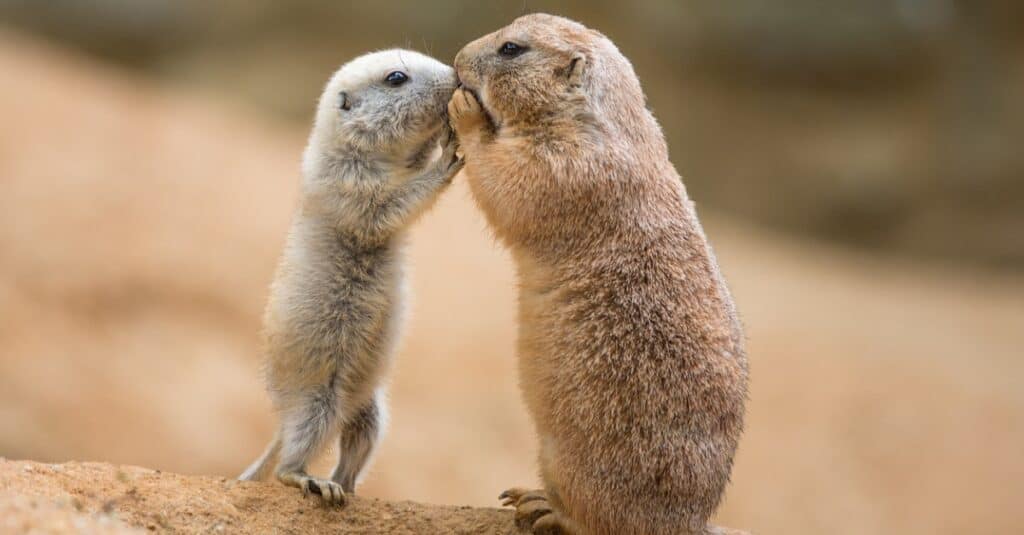
prairie dogs kissing

Female prairie dogs provide direct care to their young while their male mates patrol the premises and keep a sharp lookout for any possible danger

The prairie dog’s breeding season generally aligns with the late winter or early spring months. The female is sexually available for a very short time (perhaps as little as an hour) every year. She will advertise her sexual availability through her vocal communications and behavior. Their mating strategy is mostly polygynous; this means a single male will breed with multiple females every year and attempt to prevent her from having any other sexual partners.

These animals almost always mate underground, perhaps to avoid predators and competition with other males. After about a month of pregnancy, the mother produces a litter of three to eight pups, rarely more. Born blind and hairless, each new baby is completely dependent on the parents for protection. For the first six weeks of their lives, they remain safe within the burrow, feeding on the mother’s milk. As they learn valuable hunting and survival skills, the pups will achieve full independence after about a year. At that point, the males will disperse from the group to seek their own fortunes, while the females will tend to stay with the same family unit for their entire lives.

Each baby requires a large amount of parental investment to survive. The mothers are directly responsible for their care, while the father will contribute to their survival by defending the burrow from predators and threats. Despite this parental care, attrition is quite high. Only about half of the litter is expected to survive the first year. Curiously, it’s not just environmental and predatory factors that contribute to this attrition; it’s also the threat from other prairie dogs. Some species will deliberately kill other baby pups, even from close kin, to free up resources for their own offspring. While this adaptation may seem brutal, there is a certain logic to their behavior. Those pups that make it to adulthood have a lifespan of about three to four years on average and perhaps as many as eight.

Population
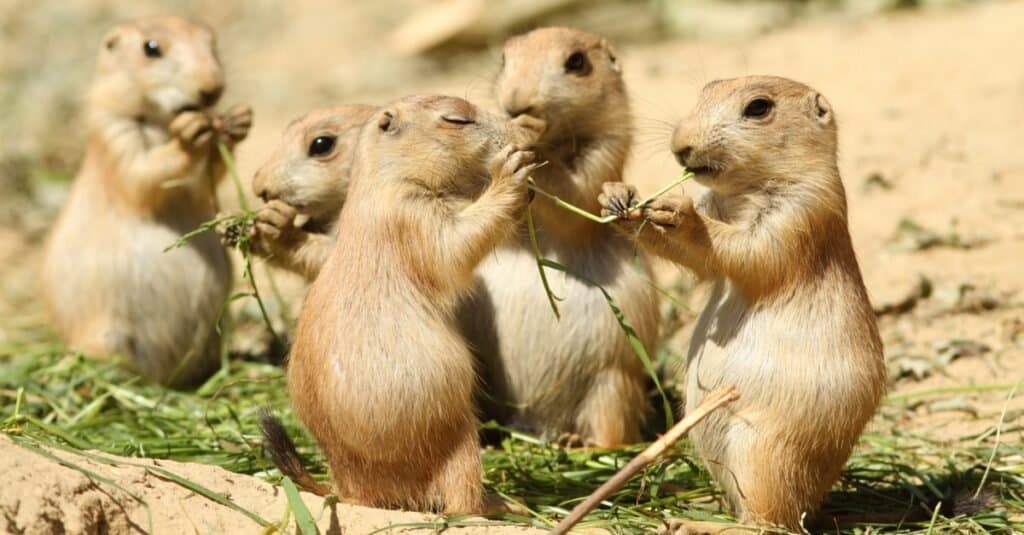
What Do Prairie Dogs Eat

Of the five extant subspecies of prairie dog, three are listed as Least Concern, while two, Utah and Mexican are listed as Endangered

While the exact numbers of these animals are not quite known, population numbers did fall sharply in the 20th century from habitat loss, disease, and deliberate extermination. The white-tailed, black-tailed, and Gunnison’s prairie dogs are still classified as least concern by the IUCN Red List, but the Utah and Mexican prairie dogs are both highly endangered and at risk of becoming extinct. Unfortunately, there is still not enough protection even on public land to revive numbers back to former levels.

View all 246 animals that start with P

Sources

  1. Britannica / Accessed May 10, 2021
  2. National Geographic / Accessed May 10, 2021
  3. World Wild Life / Accessed May 10, 2021
  4. One Kind Planet / Accessed May 10, 2021
  5. Scientific American / Accessed May 10, 2021
Dana Mayor

About the Author

Dana Mayor

I love good books and the occasional cartoon. I am also endlessly intrigued with the beauty of nature and find hummingbirds, puppies, and marine wildlife to be the most magical creatures of all.
Connect:

Thank you for reading! Have some feedback for us?


Prairie Dog FAQs (Frequently Asked Questions)

The prairie dog is a type of squirrel with a stout body and short tail. It has strong claws to dig deep, complex burrows in which it lives with a family. These are highly social animals that communicate through touch and complex sounds. They have an average lifespan of three to four years.