
There is often debate regarding the similarities between bullsnakes and rattlesnakes. Both of these snakes belong to the Serpentes family, of course, but their species are different. When it comes down to comparing the bullsnakes versus rattlesnakes, what are their key differences?
Rattlesnakes belong to the Crotalinae family, also known as the pit viper family. Bullsnakes belong to the Colubridae, which includes kingsnakes, corn snakes, and garter snakes. But this isn’t where their differences end. Let’s talk more about the ways in which these two snakes differ from each other now.
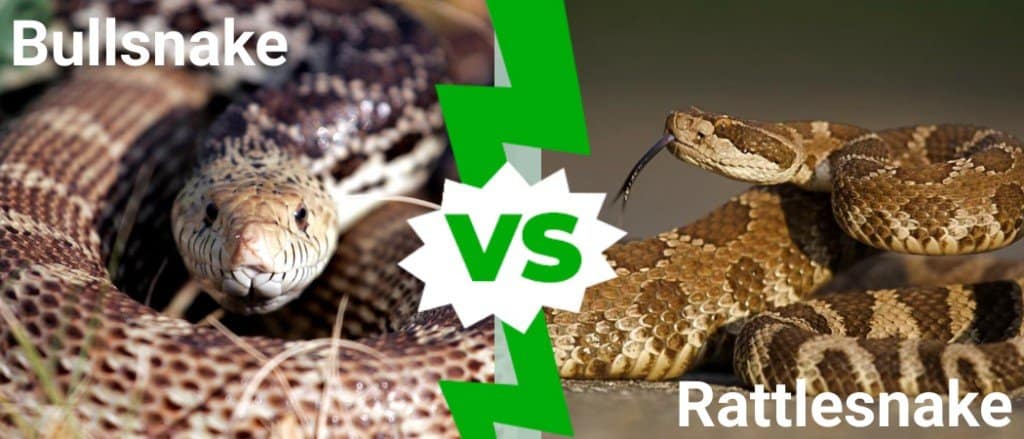
Comparing Bullsnakes vs Rattlesnakes
| Bullsnake | Rattlesnake | |
|---|---|---|
| Location | North America | North America, Mexico, Argentina |
| Color | Yellow, brown, orange, splotches | Shades of brown, diamond/striped pattern |
| Lifespan | 10-25 years | 10-20 years |
| Size | 4-8 feet long | 3-5 feet long |
| Special Features | An excellent mimic | Has a rattle and pits for sensing |
| Method of Killing | Constriction | Venom |
| Venomous? | No | Yes |
The 4 Key Differences Between Bullsnakes vs Rattlesnakes
There are key differences that separate bullsnakes and rattlesnakes. Bullsnakes are non-venomous and tend to kill using constriction. Rattlesnakes use venom and warn potential predators away using a rattle, something that the bullsnake does not possess. The markings on bullsnakes are also different from the markings on rattlesnakes, though it can be difficult to tell them apart at first.
Let’s dive a little deeper into what makes the bullsnake and the rattlesnake so different.
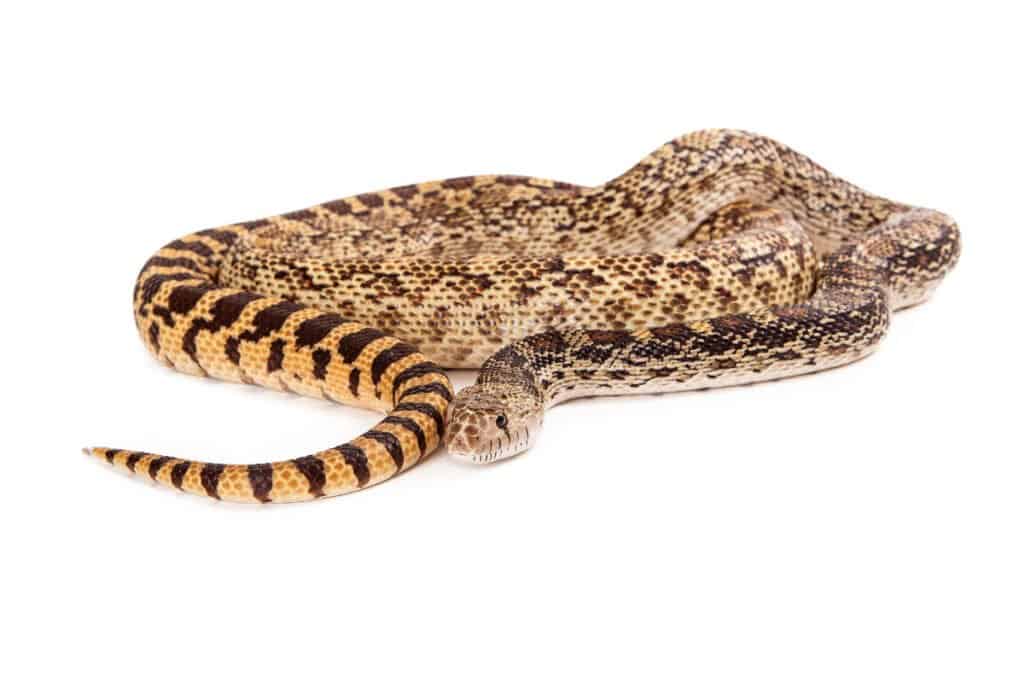
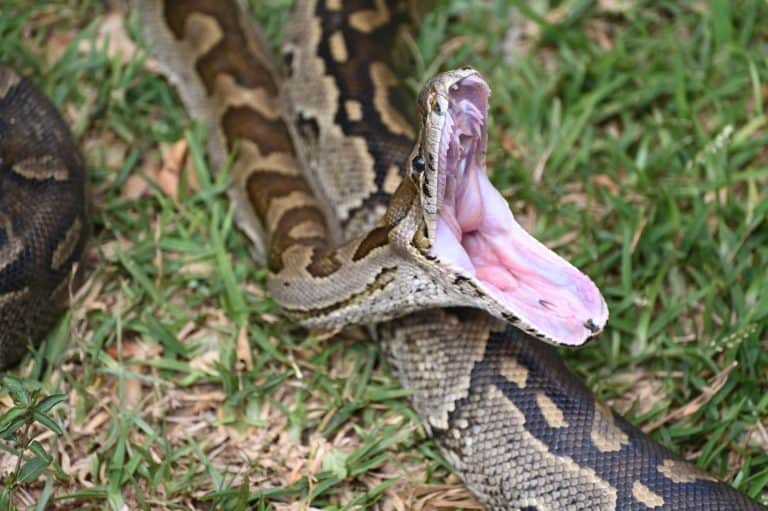
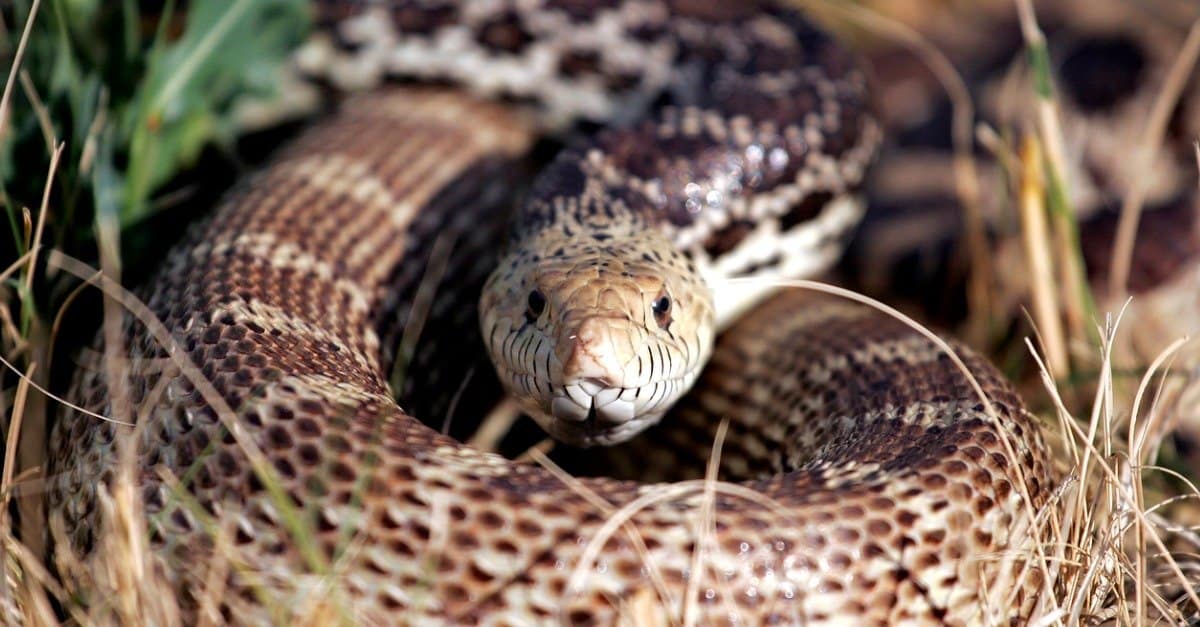
The markings on bullsnakes are different from the markings on rattlesnakes.
©Susan Schmitz/Shutterstock.com
Bullsnakes vs Rattlesnakes: How They Kill
Bullsnakes and rattlesnakes both eat similar things, given that they are carnivorous snakes. However, the way that they kill their prey is very different. Bullsnakes constrict their meals before swallowing them whole, while rattlesnakes choose to use their powerful venom to achieve this same result.
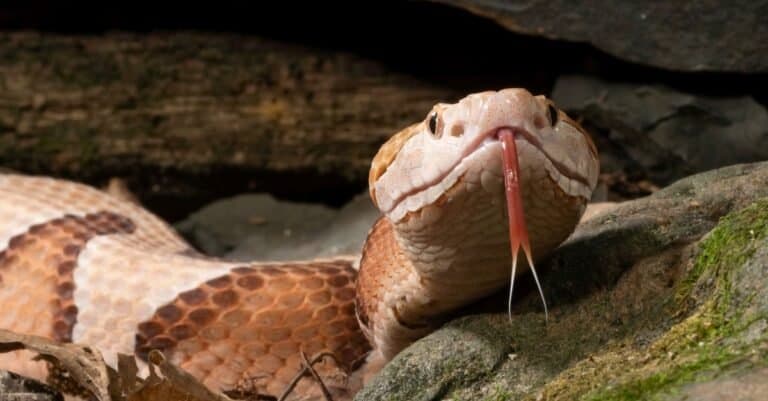
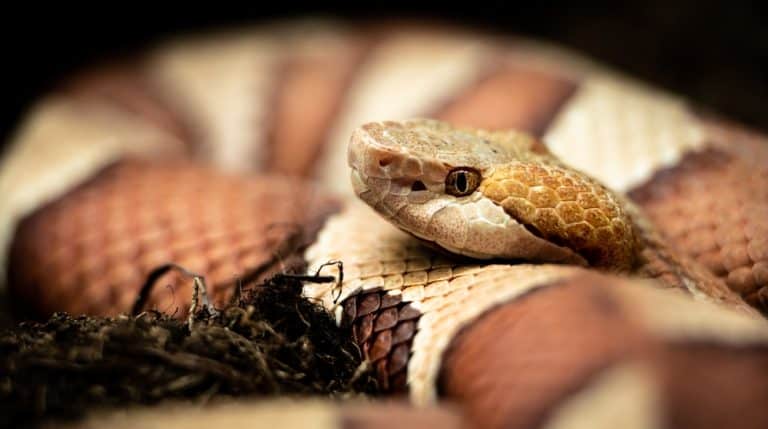
Rattlesnakes also have an advantage over bullsnakes in the way that they hunt. Rattlesnakes have a facial pit that allows them to sense prey in the night, a pit viper feature that bullsnakes do not share.
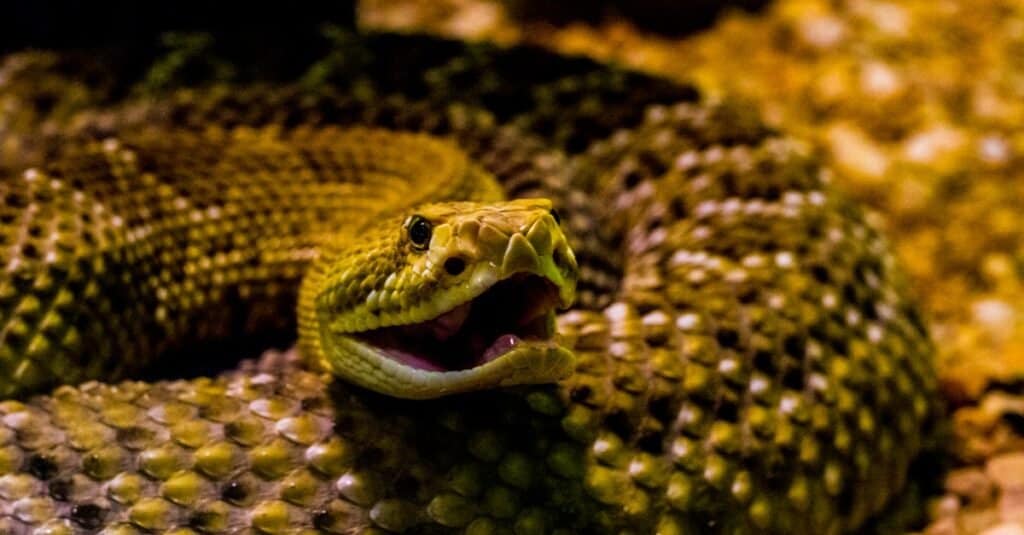
Rattlesnakes have a facial pit that allows them to sense prey in the night.
©iStock.com/Paulo Almeida
Bullsnakes vs Rattlesnakes: Venomous or Not?
Another key difference between bullsnakes and rattlesnakes is their venom. Bullsnakes are nonvenomous, meaning they can bite you but will not inject venom. Rattlesnakes are another story altogether: they have a fairly potent venom that can even kill grown adults if left untreated.
However, this isn’t to say that rattlesnakes are inherently more aggressive than bullsnakes– far from it. Bullsnakes are regarded as a much more aggressive species than rattlesnakes. While rattlesnakes are more dangerous overall, they tend to be a much shyer snake than bullsnakes are.
Bullsnakes vs Rattlesnakes: Head Shape and Body Markings
Bullsnake vs rattlesnake markings is another big difference between the two species. While it can be difficult to tell the difference between the two at first glance, there are ways you can tell the snakes apart based on their markings alone.
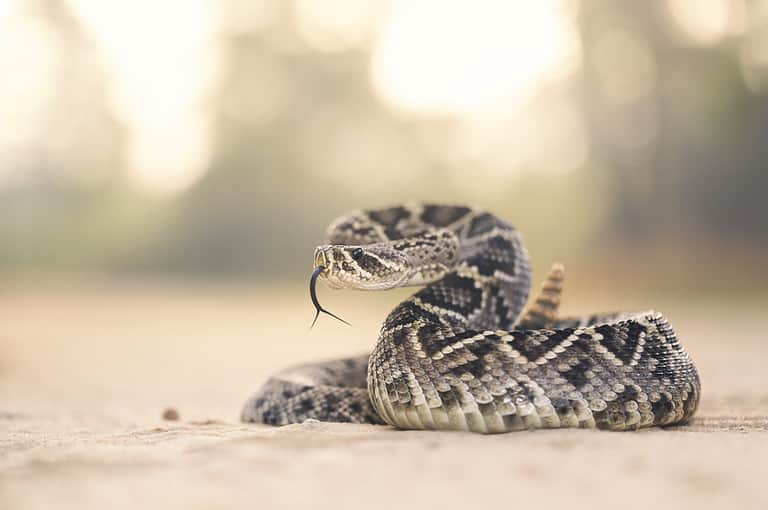
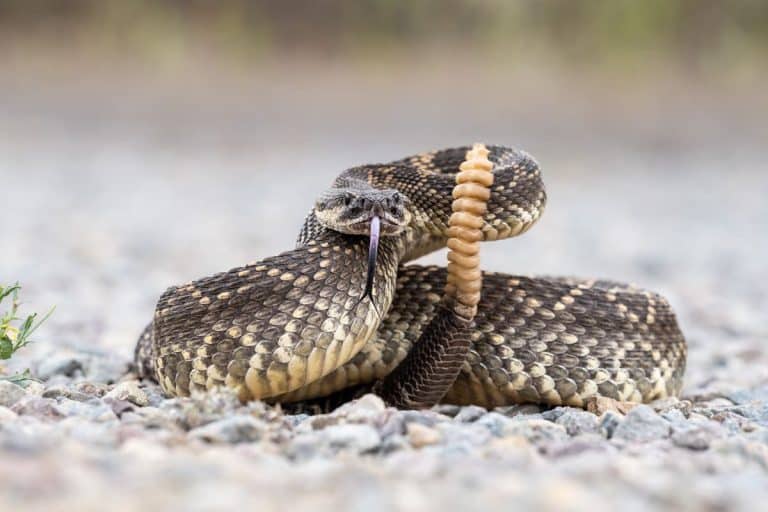
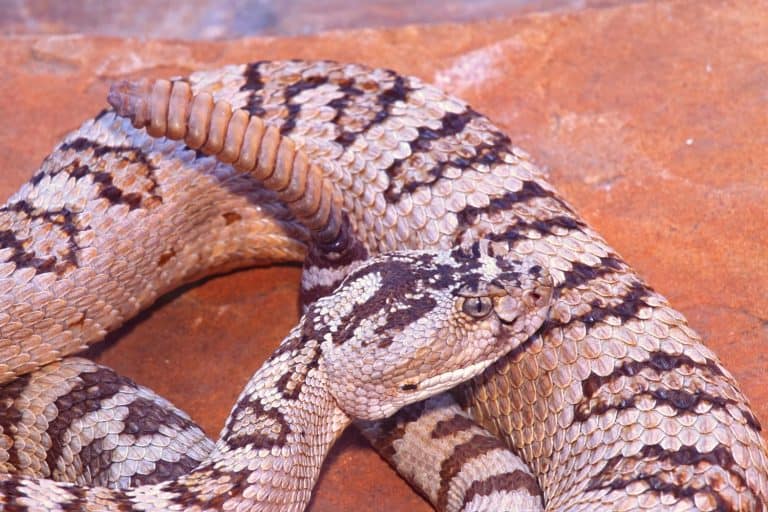
Rattlesnakes have a much more unique and distinct pattern along their back when compared to bullsnakes. They can have a striped or diamond pattern, earning some species of rattlesnakes the name “diamondback”. They are also found in more colors than bullsnakes are, ranging from dark brown all the way to pink!
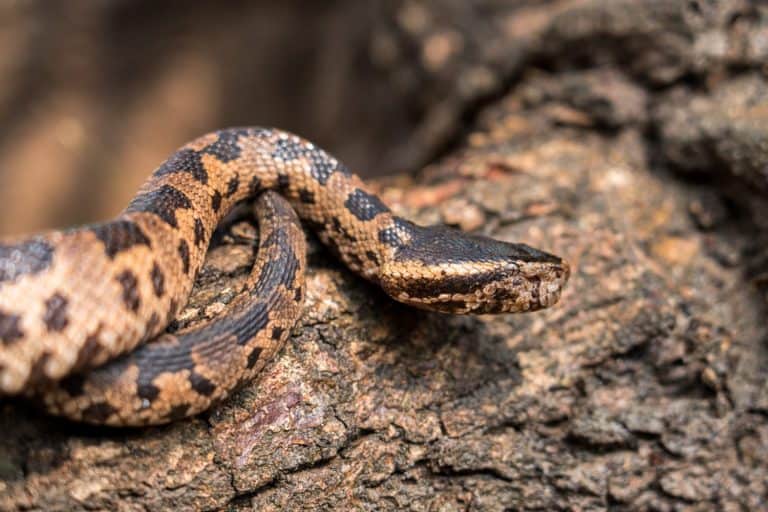
Bullsnakes can be patterned as well, but it is often more muddled or splotchy when compared to a rattlesnake. Most bullsnakes are a light yellow or brown color, with orange or red markings, all faded.
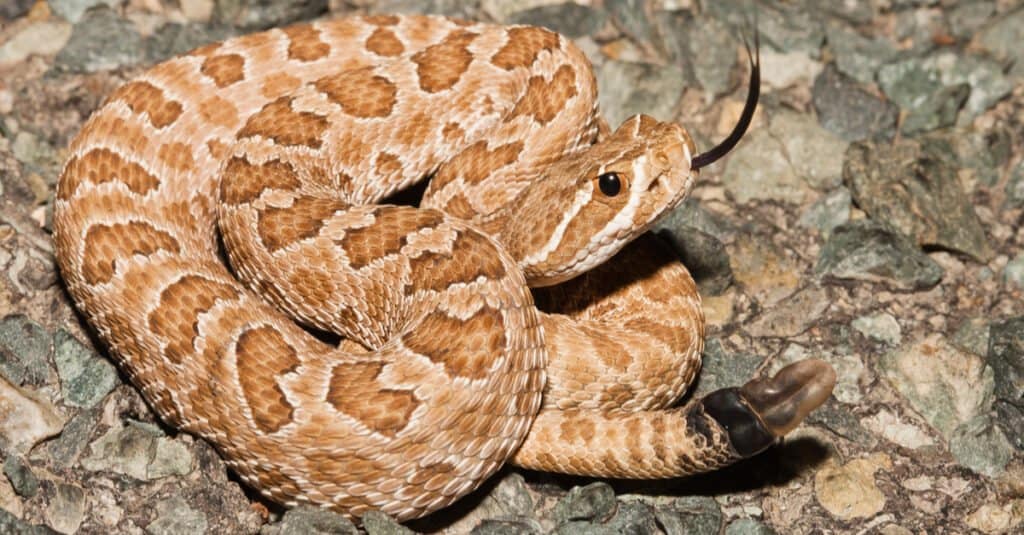
Compared to bullsnakes, rattlesnakes have a much more unique and distinct pattern along their back.
©Nathan A Shepard/Shutterstock.com
Bullsnakes vs Rattlesnakes: Presence of a Rattle
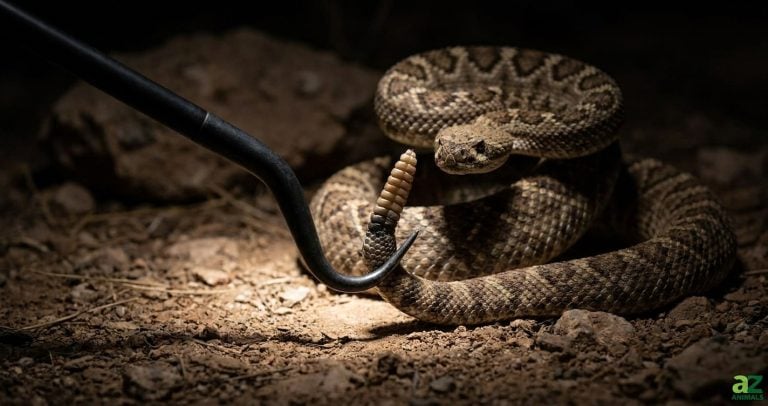
Another telltale difference between bullsnakes and rattlesnakes is the presence of a rattle. Rattlesnakes are well known for their unique rattling tails, and they use these tails as a warning for predators that try to get too close. Bullsnakes possess no rattle at the end of their tails, but they do something that may confuse you at first.
Bullsnakes are excellent mimics, capable of emitting a low growling or rattling sound from within. They coil up similarly to rattlesnakes as well, and this mimicry may be something that confuses people when trying to tell the difference between bullsnakes and rattlesnakes.