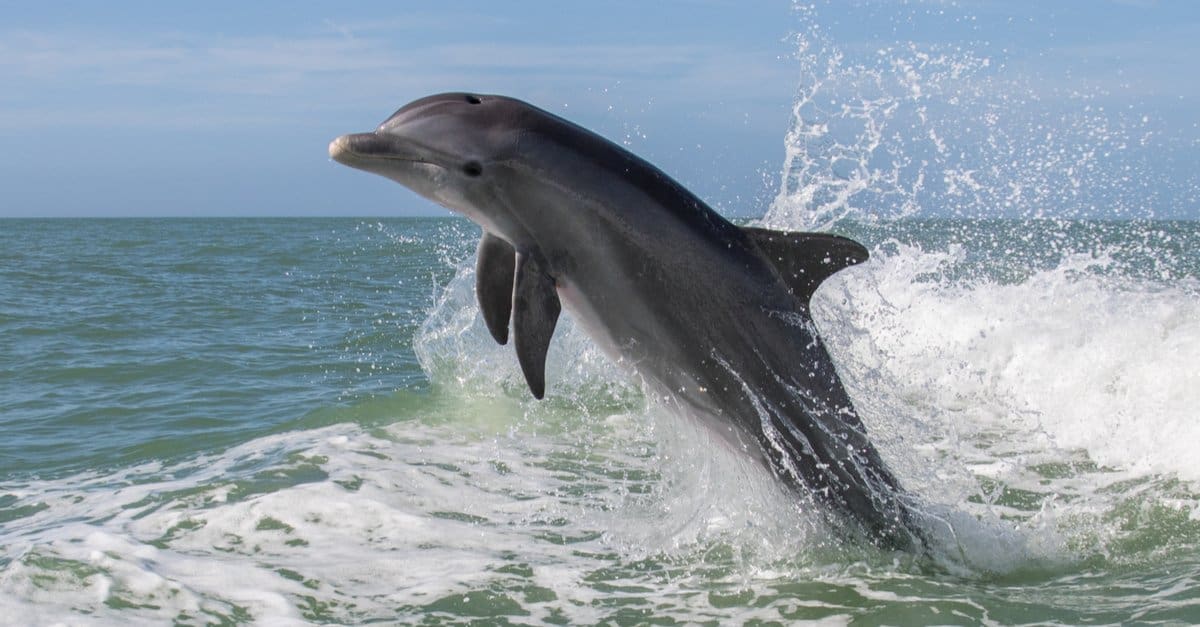

Dolphins are one of the world’s most beloved mammals. There are over 40 dolphin species worldwide. Dolphins are part of the cetacean infraorder, a group of marine mammals that includes dolphins, porpoises, and whales. Within this group, dolphins belong to the family Delphinidae, also known as oceanic dolphins, a family that also includes pilot whales and killer whales. These animals vary greatly in size. Dive into the world of dolphins to discover the 10 largest species.
10. Rough-Toothed Dolphin: 6.9-9.3 Feet
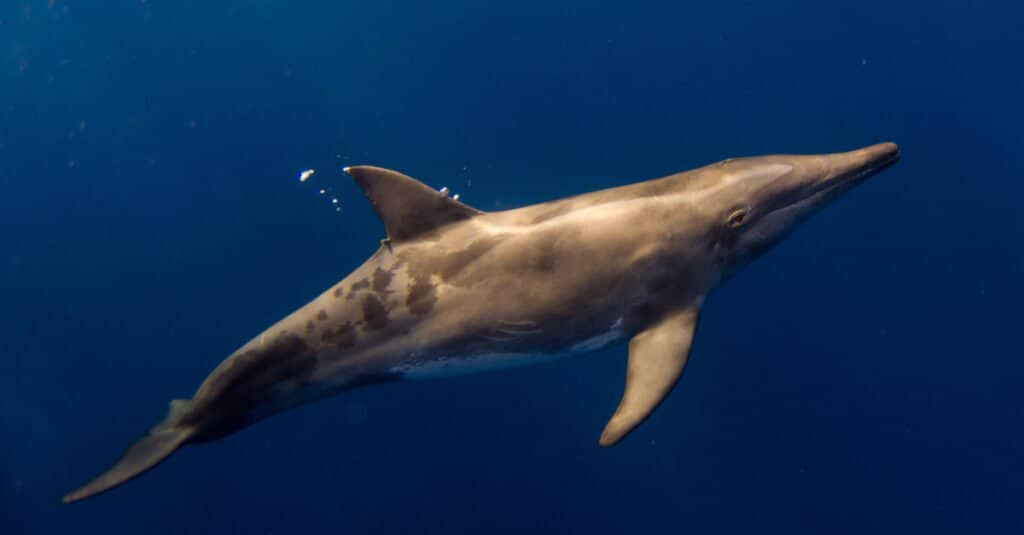
Some populations of rough-toothed dolphins have been recorded at lengths over 9 feet.
©buchpetzer/Shutterstock.com
The rough-toothed dolphin’s (Steno bredanensis) name comes from its unique grooved teeth. They can be identified by the light-colored spots on their sides and their long beaks. The rough-toothed dolphin is the only long-beaked dolphin species without a crease between its head and nose.
Rough-toothed dolphins are found in deep, open waters of the Atlantic, Pacific, and Indian Oceans. The average rough-toothed dolphin is smaller than many other dolphin species, measuring only 8.5 feet in length and weighing 350 pounds. However, populations near Brazil have been recorded at over 9 feet.
9. Northern and Southern Right Whale Dolphins: 6.5-10.2 Feet
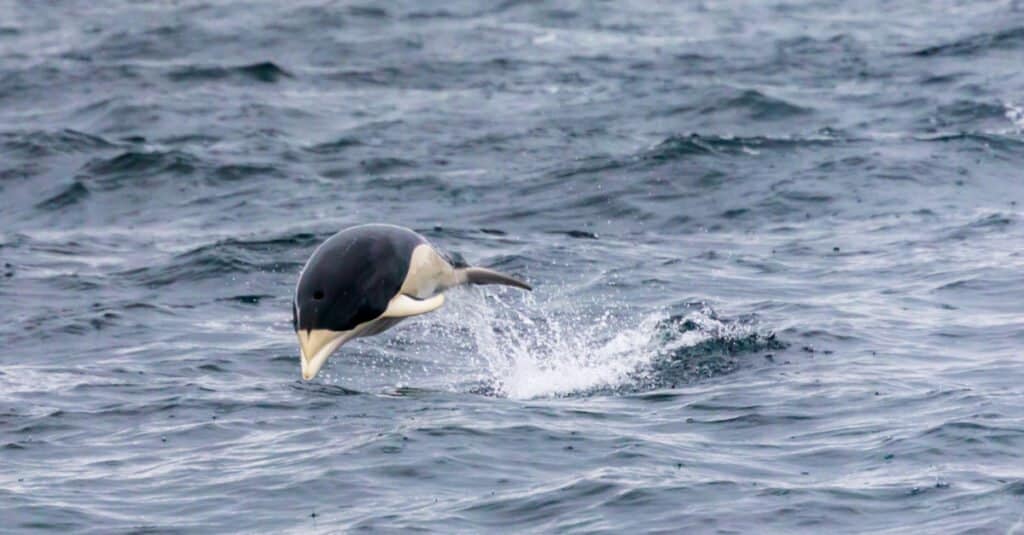
Southern right whale dolphins live in the waters around Antarctica.
©Circumnavigation/Shutterstock.com
Southern and northern right whale dolphins are recognized by their lack of a dorsal fin, short curved flippers, and well-defined beaks. These dolphins are uniquely colored, with white bellies and black backs. Northern right whale dolphins (Lissodelphis borealis) look very similar to their southern cousins, but the southern right whale dolphins (Lissodelphis peronii) have white undersides.
Both of these dolphins dwell in deep, offshore waters, but they live in opposite hemispheres. As their names suggest, the northern right whale dolphin lives in the North Pacific Ocean, while the southern right whale dolphin lives in Antarctic waters. Northern and southern right whale dolphins have nearly the same maximum length of approximately 10.2 feet. However, southern right whale dolphins tend to be larger on average. These dolphins weigh between 200 and 250 pounds, with southern right whale dolphins on the higher end.
8. Indo-Pacific Humpback Dolphin: 8.2-10 Feet
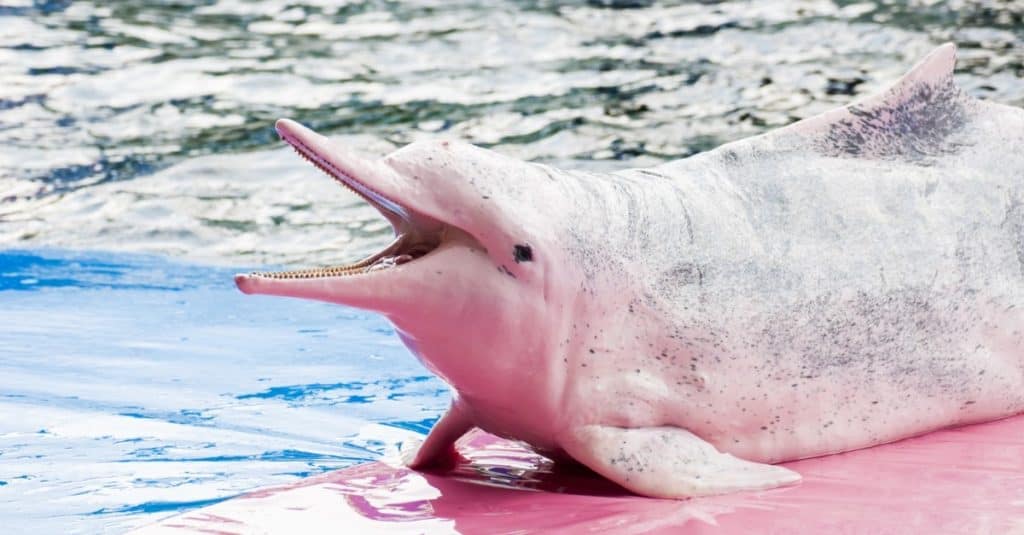
The Indo-Pacific humpback dolphin has mottled pinkish-gray skin.
©wasanajai/Shutterstock.com
These aerodynamic dolphins get their name from the fatty hump at the level of their dorsal fin. Indo-Pacific humpback dolphins (Sousa chinensis) are easily identified by their mottled pink skin, although there are variations in color depending on location. However, calves are typically born gray.
Indo-Pacific humpback dolphins can be found in the Indian and Pacific Oceans from Africa to Australia and China. These dolphins inhabit shallow coastal areas and bays. They can reach around 10 feet in length and weigh a maximum of approximately 600 pounds.
7. White-Beaked Dolphin: 7.8-10.2 Feet
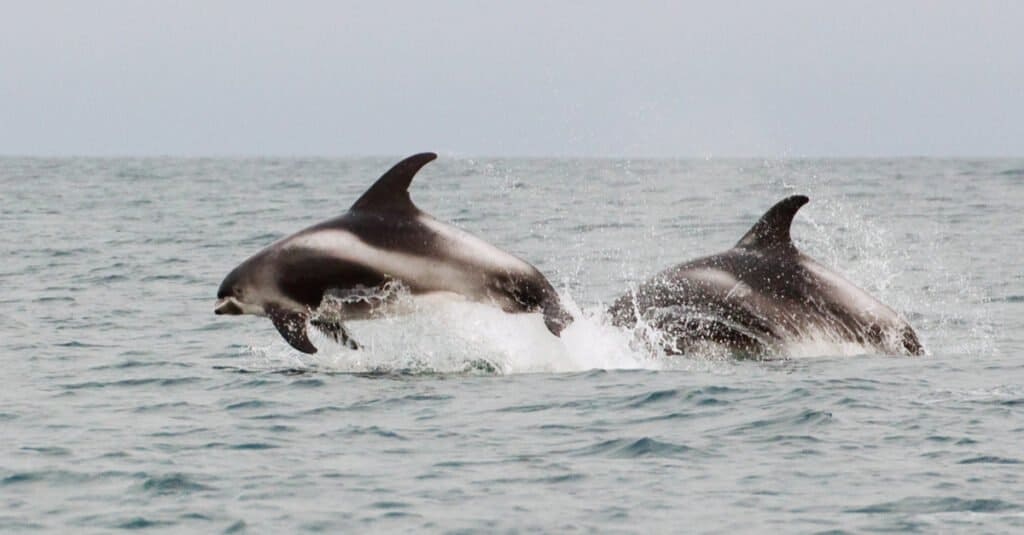
White-beaked dolphins can weigh up to 770 pounds.
©Agami Photo Agency/Shutterstock.com
This plump, black, and gray dolphin gets its name from the white tip of its beak. The light-colored saddle behind the dorsal fin and the white band on the belly also help identify the white-beaked dolphin (Lagenorhynchus albirostris).
They can be found in the North Atlantic Ocean, in the waters along the Eastern U.S. and Canada, as well as Scandinavia and northern Europe. The white-beaked dolphin has a length of 10.2 feet and a maximum weight of about 770 pounds.
6. Common Bottlenose Dolphin: 6-13 Feet
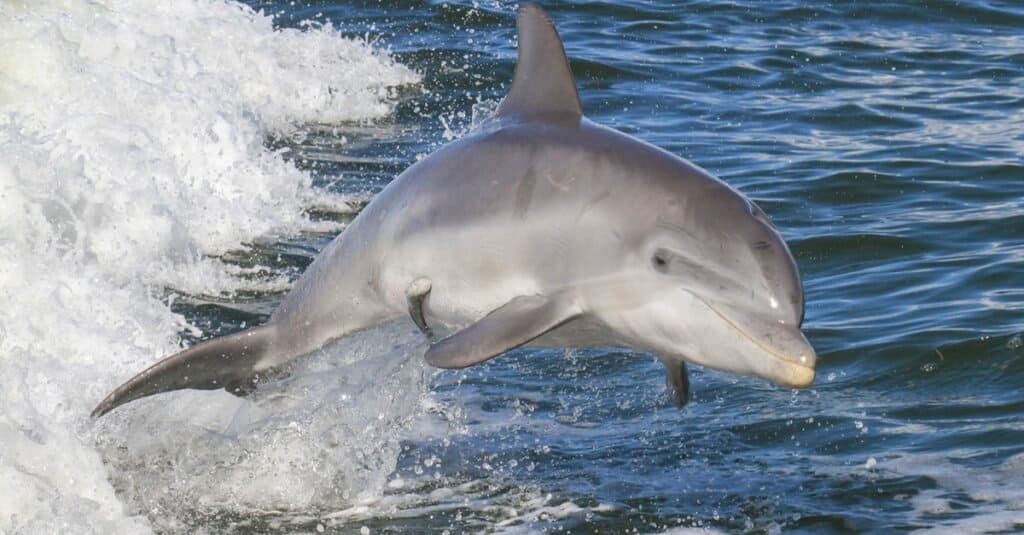
The common bottlenose dolphin is one of the most intelligent animals.
©Tory Kallman/Shutterstock.com
The common bottlenose dolphin (Tursiops truncatus) is the species most people think of when they hear the word dolphin. They are typically light gray to black on their sides, with white bellies. They are known for their intelligence, with advanced cognitive abilities including problem-solving and communication. These dolphins can be found in most coastal regions and open oceans, except polar waters. Some populations migrate seasonally, but common bottlenose dolphins generally stay in waters between 50 to 90 degrees Fahrenheit. They can reach up to 13 feet in length and weigh up to 1,400 pounds, although most individuals average closer to 660 pounds.
5. Risso’s Dolphin: 8.5-16 Feet
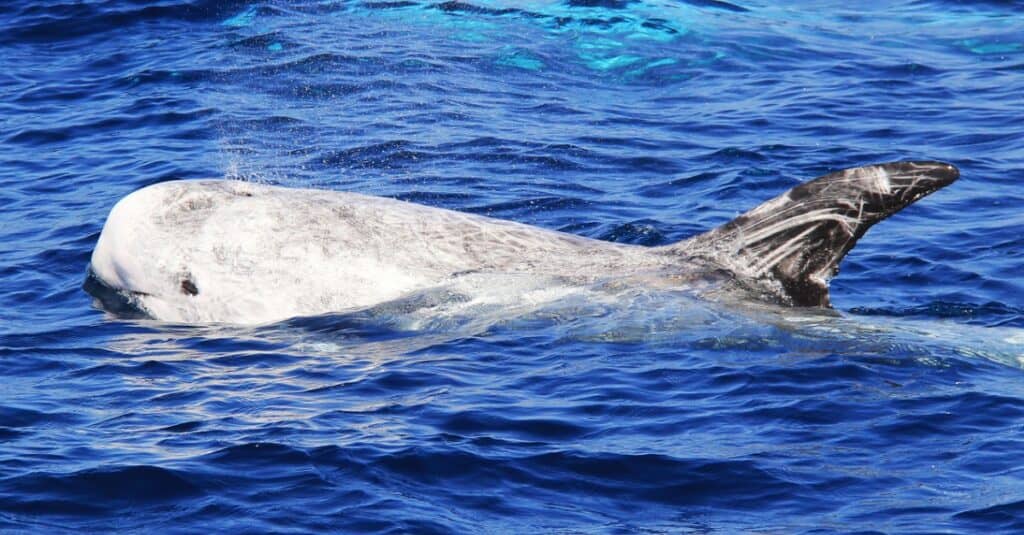
Although they are black as juveniles, Risso’s dolphins lighten in color as they age.
©iStock.com/PeakMystique
Risso’s dolphins (Grampus griseus) are born dark gray, then darken to black as juveniles before lightening with age. They have blunt heads and lack a beak. These dolphins have teeth only on their lower jaws. Risso’s dolphins are also known for extensive scarring, possibly due to skin damage from repigmentation and dominance fights among males.
These dolphins spend most of their time traveling. They generally roam the open sea in subtropical, tropical, and temperate waters worldwide. They can reach lengths of up to 13 feet and weigh up to 1,100 pounds.
4. False Killer Whale: 16-20 Feet

Despite the name, the false killer whale is more commonly mistaken for a pilot whale.
©Lewis Tse/Shutterstock.com
False killer whales (Pseudorca crassidens) have long, slender bodies that are mostly gray or black, although they can have lighter undersides. They have a slight overbite, which gives the impression of a beak. However, they do not resemble killer whales at all. Though they do not resemble killer whales, their skulls are similar to those of killer whales, and are the reason this species are referred to as false killer whales.
The false killer whale can be found in deep, offshore waters in tropical and subtropical oceans all over the world. However, they sometimes visit coastal areas. These dolphins can grow up to 20 feet long and weigh a maximum of 4,850 pounds.
3. Short-Finned Pilot Whale: 12-24 Feet
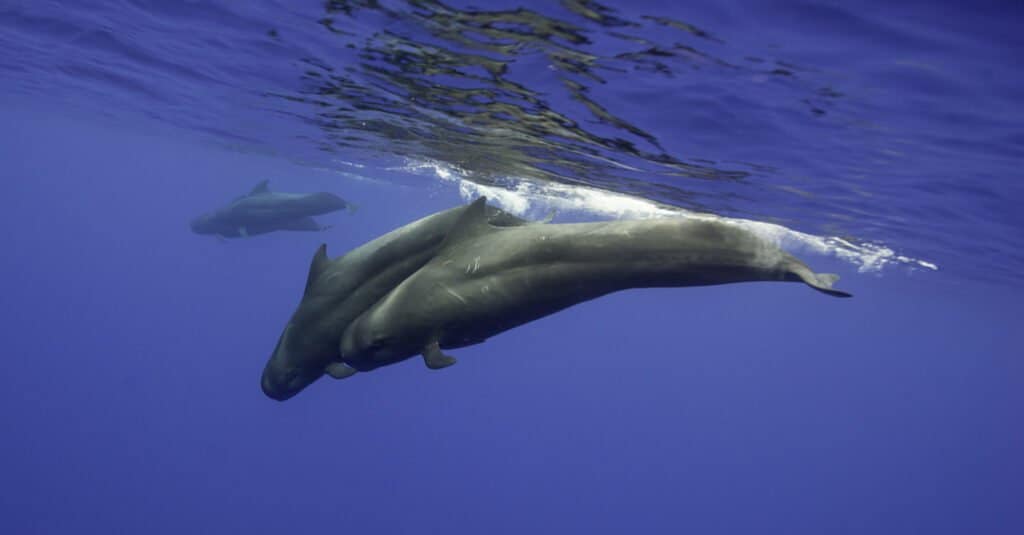
The short-finned pilot whale is said to have markings on its chest that look like an anchor.
©wildestanimal/Shutterstock.com
Short-finned pilot whales (Globicephala macrorhynchus) are black with white markings on their chests and throats. Some say these markings resemble anchors. They have a beak-like snout and a melon-shaped head. As their name indicates, they have short, thin flippers.
These whales can be found in open waters and along coastal shores near continental shelves in the Atlantic, Pacific, and Indian Oceans. They primarily inhabit tropical and subtropical waters. Short-finned pilot whales can grow to a maximum length of 24 feet and weigh up to 8,800 pounds.
2. Long-finned Pilot Whale: 19-25 Feet
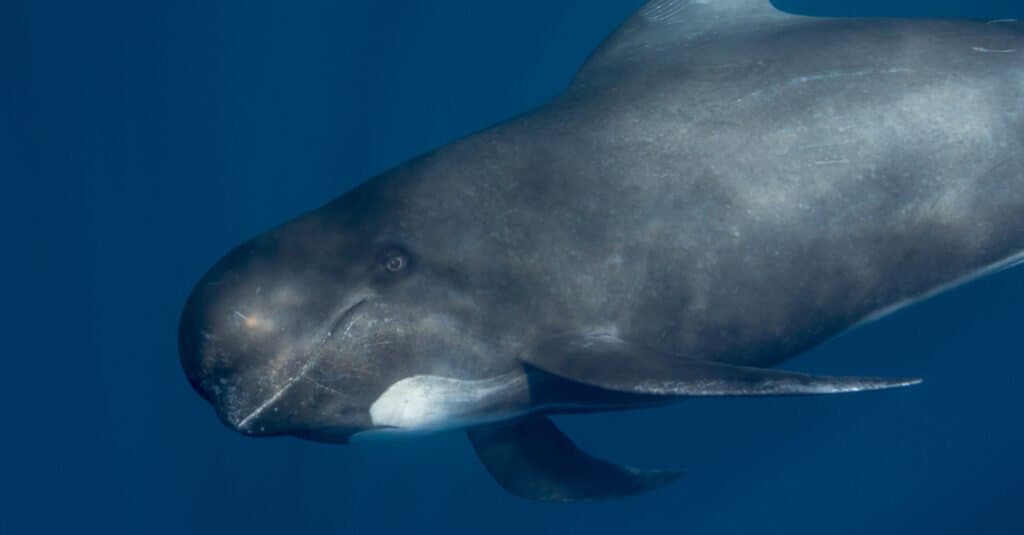
The long-finned pilot whale prefers colder waters.
©Andrew Sutton/Shutterstock.com
Like its short-finned cousin, the long-finned pilot whale (Globicephala melas) is known for its melon-shaped head and anchor-shaped markings. Other than their long pectoral fins, they differ slightly from short-finned pilot whales in size and coloration.
Long-finned pilot whales dwell in the colder waters of the Northern Atlantic and Southern Hemisphere. They can be found in open waters, as well as coastal regions. These whales can reach maximum lengths of 25 feet and weigh up to 5,500 pounds.
1. Orca or Killer Whale: 23-32 Feet

Although they are not vicious killers, the orca is the ocean’s top predator.
©slowmotiongli/Shutterstock.com
The orca, or killer whale (Orcinus orca), is the world’s largest dolphin. They are recognized by their iconic black and white bodies. These whales are primarily black on the top and sides, with white undersides and a white patch above their eyes. They are not vicious killers as their name would suggest. Their nickname comes from sailors who observed these whales preying on other whales.
Orcas are widespread and can be found in every ocean, especially in colder waters. Male killer whales can grow up to 32 feet long and weigh up to 22,000 pounds. A male orca’s dorsal fin alone can reach up to 6 feet tall. It is no wonder the orca is the largest animal in the Delphinidae family. It is also considered the top predator in the ocean.