
Barracudas, or ‘cudas’, as they’re commonly known, live in the surface layer of many of the world’s oceans. They’re specifically saltwater fish, and more than that, they’re extraordinary predators who strike fear into the hearts of fish everywhere. Some of the most incredible barracuda facts have to do with both their reputation and their fearsome nature. As a whole, barracudas are some of the most proficient hunters in the ocean. They are also popular targets for sport fishermen.
They might not be as deadly as great white sharks or as big as killer whales, but barracudas are striking predators nonetheless. Here, we’ll learn ten incredible barracuda facts. By the end, you’ll be well-versed in just what makes barracudas some of the coolest, scariest fish in our oceans today.
1. Barracudas are Carnivores
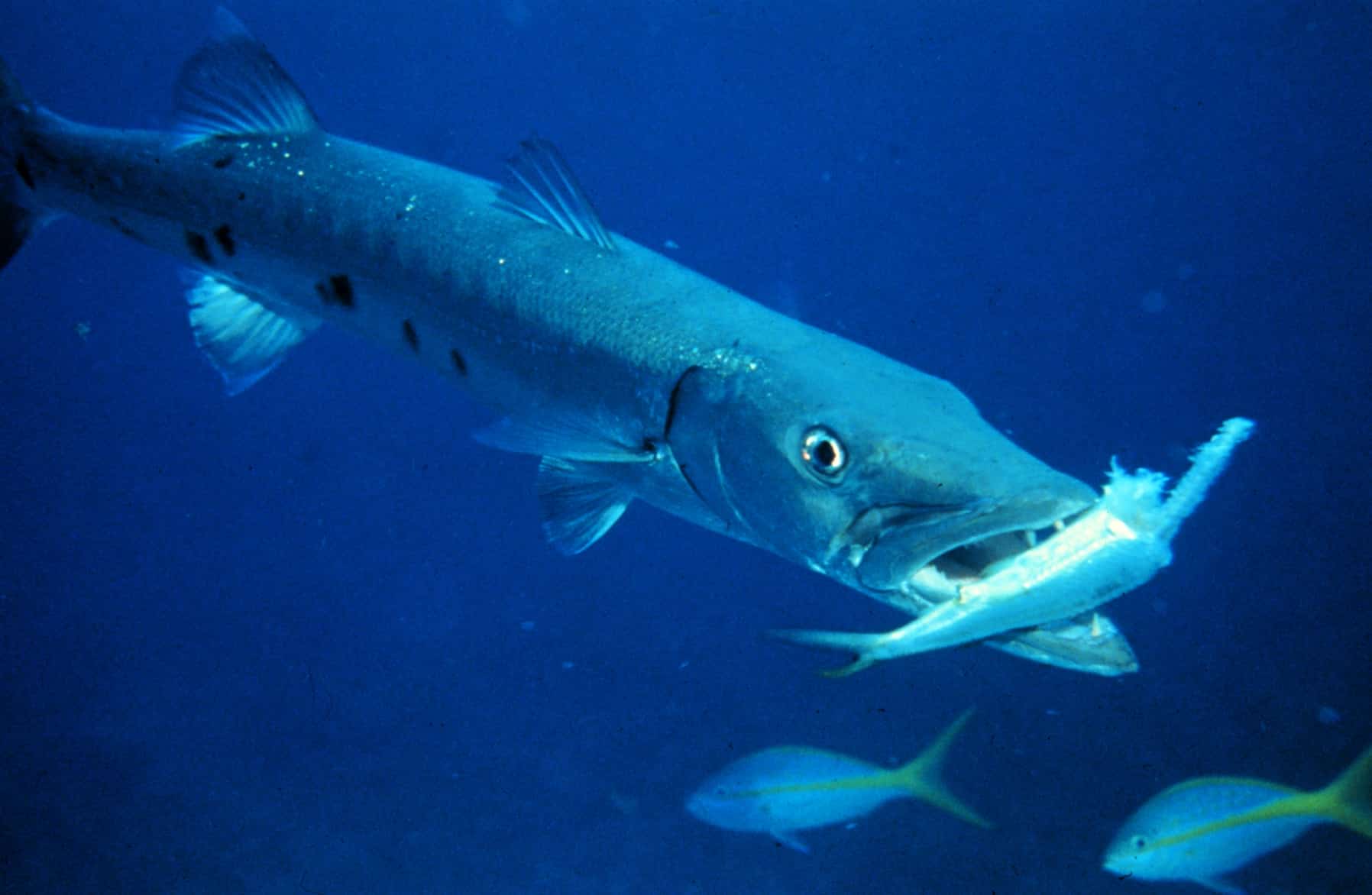
These predatory fish are the only members of the genus Sphyraena in the Sphyraenidae family of fish.
©Florida Keys National Marine Sanctuary / Public domain, from Wikimedia Commons, the free media repository – Original / License
Barracudas don’t just look like extreme predators; they are extreme predators. With few natural predators, adult barracuda pretty much have the run of the water. They use their hunting prowess to feed on anchovies, tuna, mullet, snappers, groupers, jacks, and other medium-sized fish. They hunt mostly during the day, in the surface layer of the ocean. Young barracuda eat smaller creatures, although they stay away from crustaceans, like crabs and lobster.
2. They Live in Salt Water
If you’re swimming in a lake, pond, or river — have no fear, barracudas are not near. Instead, these fish live only in salt water, though they may be found both just off the beach and in deep water. Barracudas live in tropical and subtropical oceans near the equator. They’re common off the East Coast of the United States but are less common in the northern Pacific Ocean. They live in both the Gulf of Mexico and the Caribbean Sea.
3. Barracudas Put Up a Fight
These fish have excellent eyesight, like hammerhead sharks. Unlike hammerheads, they don’t have a 360-degree field of vision.
©Karelj, Public domain, via Wikimedia Commons – Original / License
You might not fish them in the same way you would fish shrimp, herring, or mackerel, but barracuda still find their way onto rods and lines. These fish are not commercially important, and you’re not likely to find them on the menu, but they do serve another human purpose. Barracuda is an extremely popular target for sport fishers because of the tremendous amount of fight they put up. Like swordfish and marlin, barracuda are not easy to fish. This makes them a favorite of game anglers.
4. They Look Like Sea Snakes… With Fins and Teeth
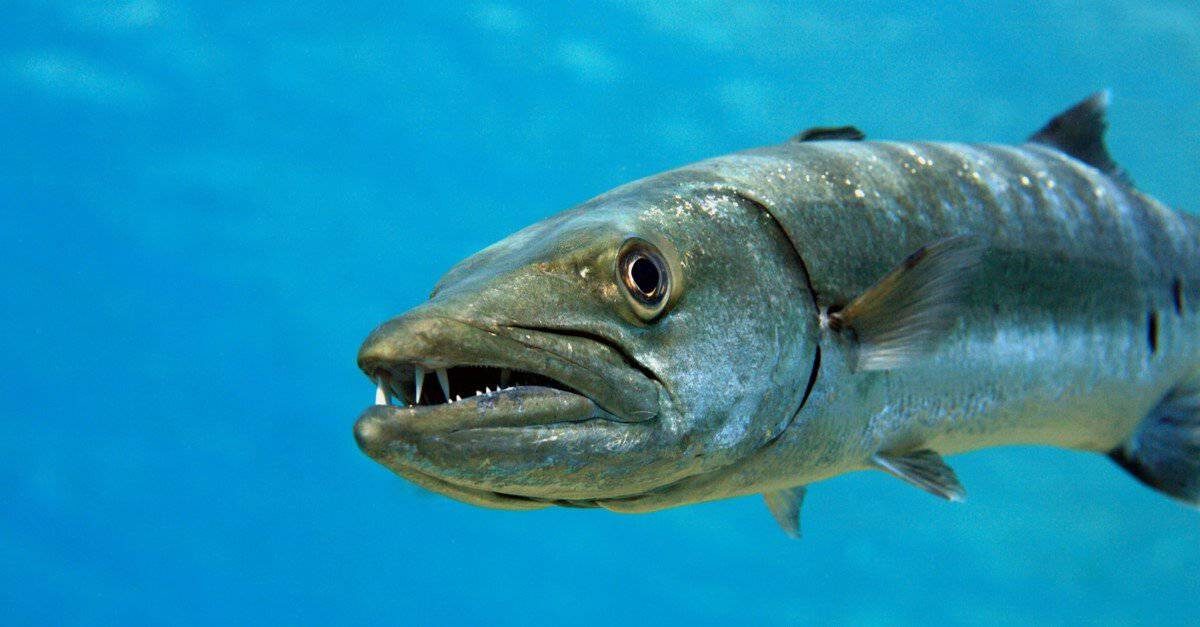
Another incredible barracuda fact is that barracudas are long and tubular. They resemble nothing so much as streamlined snakes with fins and massive, exposed teeth. Barracudas are blue-gray to brown in color, with whitish undersides. One of their most distinctive features is the dark blotches along their backs and the lower half of their sides, similar to tiger stripes. Young barracudas can actually change colors and patterns depending on where they are in the ocean, but adults are pretty much stuck with the look they have.
5. Barracudas have Unique Teeth
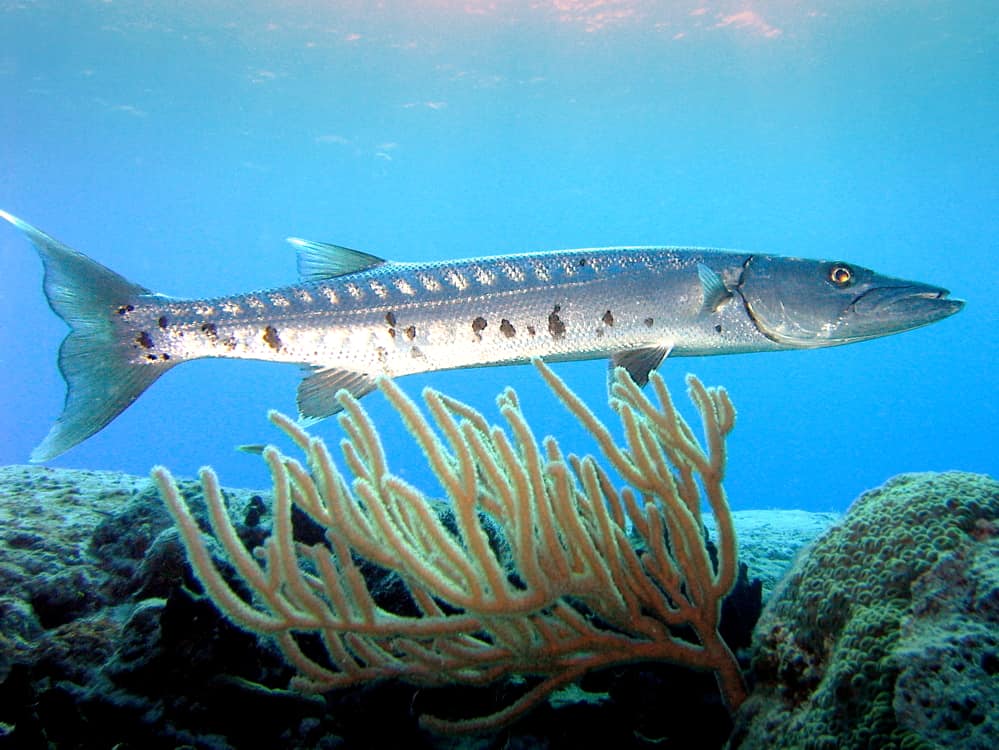
Uniquely, barracudas have two types of teeth; large, sharp fangs, and many smaller teeth meant for gripping and shredding.
©Laban712 / Public domain, from Wikimedia Commons, the free media repository – Original / License
Barracudas have wicked-looking teeth. These teeth, coupled with their robust underbites, make for a deadly bite. Barracudas have a mouthful of long, needle-like teeth meant for grabbing onto slippery fish. While those large teeth hold onto the fish, the shorter, triangular teeth shear the flesh. Barracudas don’t swallow fish whole, instead, they rely on their teeth to cut them up into manageable chunks before swallowing.
6. They Sometimes Bite Humans
Another barracuda fact is that they occasionally bite humans. Humans don’t fit their prey image, so the barracuda aren’t attacking for food. Rather, they bite either by mistake or in self-defense. The majority of barracuda bites occur when barracudas try to take dead or struggling fish from spear fishers.
7. Barracudas are Fast
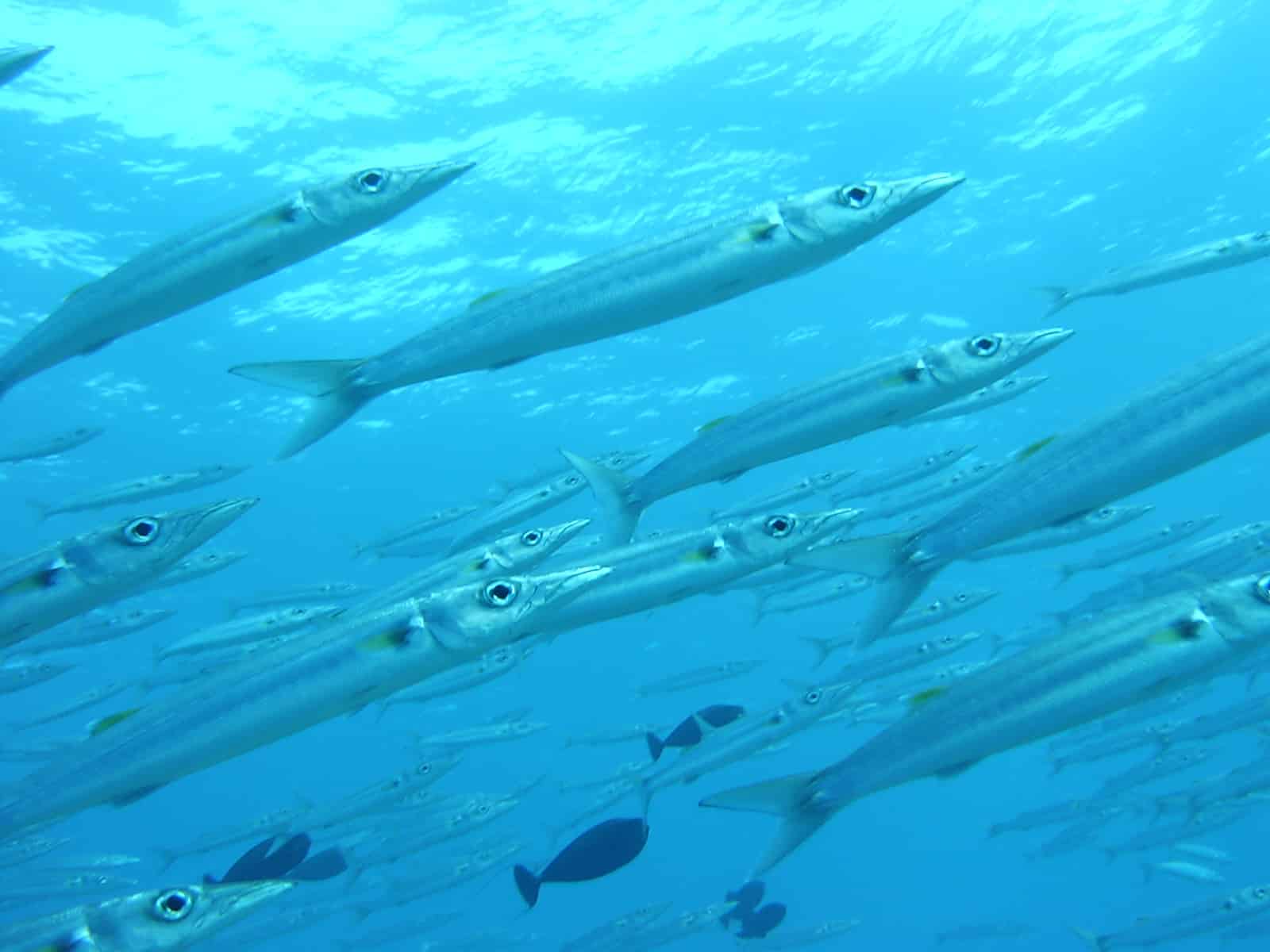
Few fish look like barracudas. They’re aggressive predators within their natural domains, and even bite humans on occasion.
Barracudas are built for speed. Their streamlined bodies mean that they are capable of reaching speeds of up to 36mph. This, combined with their fantastic eyesight and sharp teeth, means that they are excellent predators.
8. They Have Few Predators
Unsurprisingly, these fearsome fish have few natural predators as adults. Many fish eat baby barracudas, but only the largest hunt the adults. Adult barracudas’ few predators include goliath grouper, tuna, and sharks.
9. Baby Barracudas are Tiny
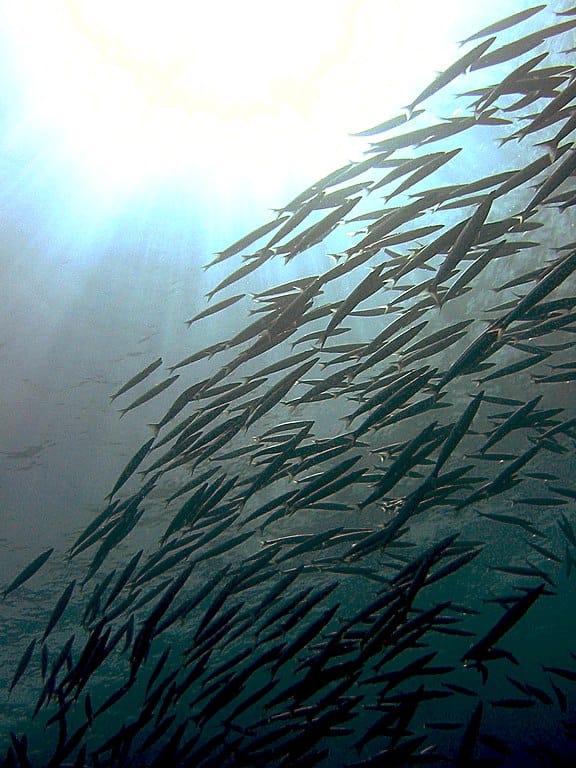
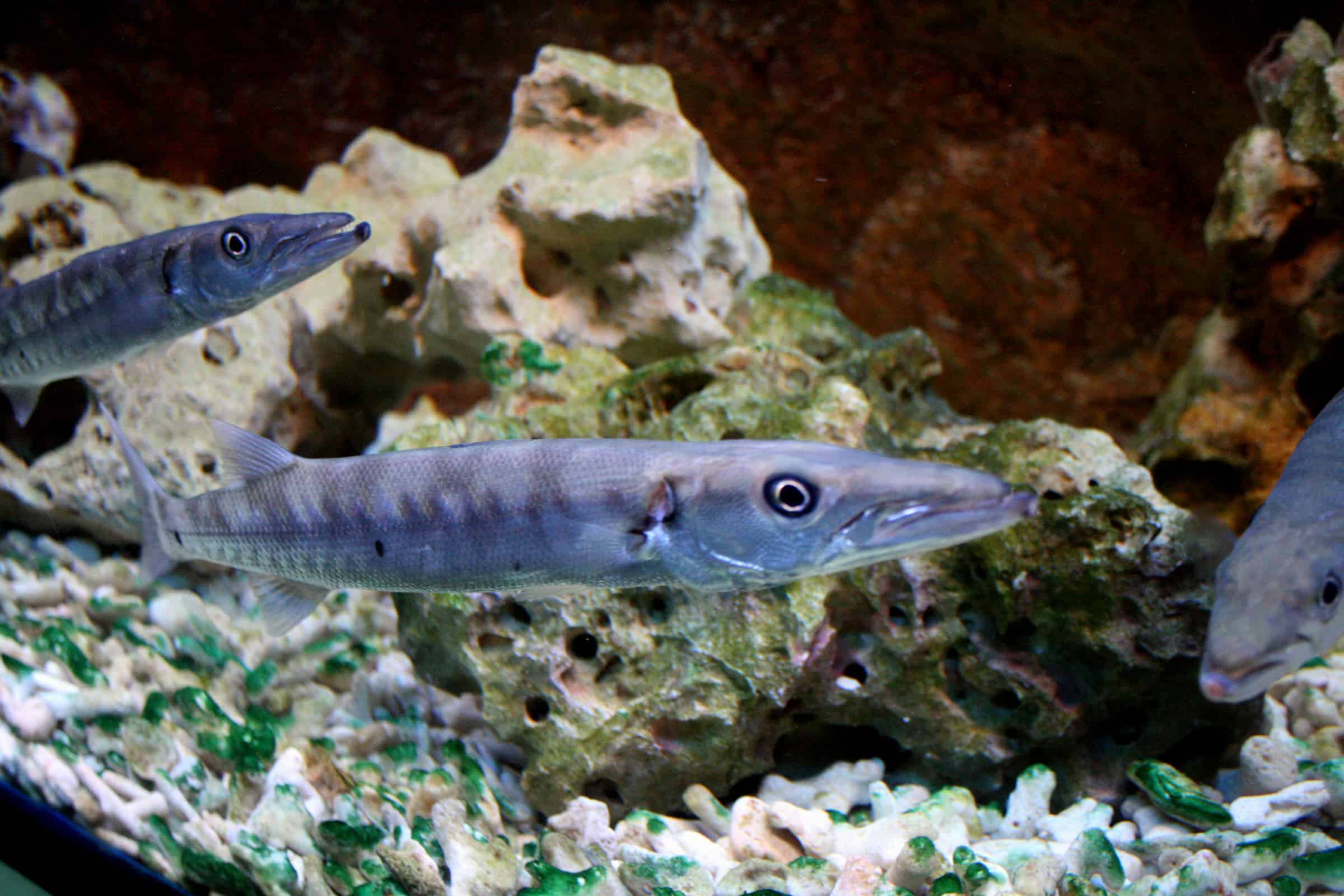
Scientists don’t know much about when or where barracudas have their babies, but they do know that fry (baby fish) hatch from eggs.
©Alan Slater, CC BY-SA 3.0, via Wikimedia Commons – Original / License
Scientists might not know exactly where barracuda spawning takes place, but they do know that eggs float on the ocean currents. Upon hatching, the larval barracuda fry makes their way to shallow waters with plenty of aquatic plants to hide in. After a few weeks of maturing, they grow to about half an inch long and look like tiny versions of their parents. However, they don’t leave the protected estuaries and mangroves of their birth until they’re at least a year old.
10. They have Parasites
It might seem strange, but barracudas are home to multiple parasites. Many of the ocean’s creatures play host to one parasite or another, including blue whales, sperm whales, silky sharks, and lemon sharks. But barracudas can get tapeworms, flukes, roundworms, and even fish lice. Ectoparasites (those that live outside the barracuda) include marlin suckers, pilotfish, sharksuckers, and slender suckerfish.