
Quick Take
- One frog makes itself nearly invisible by doing something extraordinary with its own blood, and scientists only recently figured out how.
- The world's most toxic animal is not a snake or a spider. It is a frog small enough to sit in your palm.
- A frog exists that doesn't need lungs to breathe, and its bizarre body adaptation lets it survive in one of the world's most extreme environments.
- Some frogs don't just croak. One species produces a call as loud as a running lawnmower, and its name gives you a clue why.
Frogs are fascinating creatures, known for their jumping abilities, unique color patterns, and distinct croaking sounds. What sets frogs apart from other animals in the animal kingdom is their ecological role. In many different kinds of environments, frogs act as important indicators of environmental health. They are widely distributed, inhabiting the lush rainforests of South America, as well as the montane grasslands of Africa. Read on to learn about some of the most amazing species of frogs from around the world.
1. Red-Eyed Tree Frog (Agalychnis callidryas)
Found in lowland rainforests from parts of northern South America up to southern Mexico, the red-eyed tree frog is one of nature’s most remarkable amphibians. Their bright green bodies are embellished with yellow and blue markings, orange feet, and of course, their iconic red eyes. They are not poisonous. These frogs are arboreal and are excellent climbers who spend most of their time sitting on the leaves in trees. They are nocturnal, so they hunt insects at night. Males measure 2 to 2.5 inches, while females measure 3 to 3.5 inches.
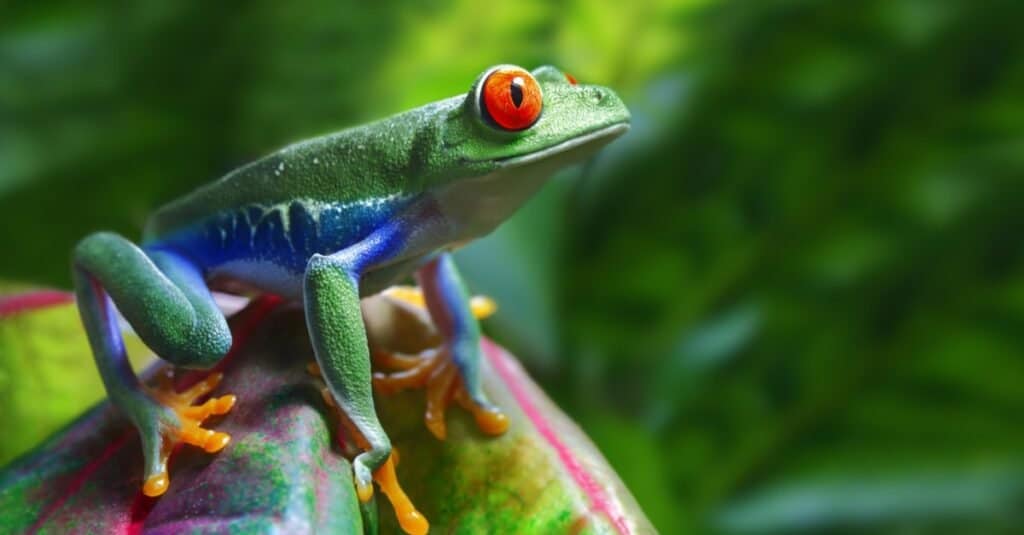
Red-eyed tree frogs sing to announce their territories and to attract females.
©Brandon Alms/Shutterstock.com
2. Glass Frog (Centrolenidae)
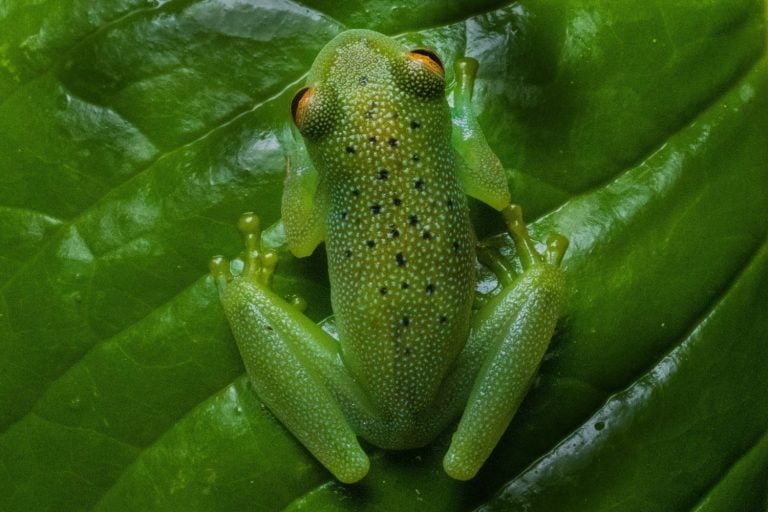
Glass frogs are arboreal and native to humid lowland and montane tropical rainforests in Central and South America. There are around 150 to 160 species. Many of these frogs have transparent abdomens that show their heart and other organs. Researchers have found that glass frogs increase transparency by removing nearly 90% of their red blood cells from circulation, which they store in the liver while they sleep. Glass frogs have incredible, high-pitched calls that some say sound like “peeps” or “whistles.” They are non-poisonous, and most species measure from 0.8 to 1.2 inches.
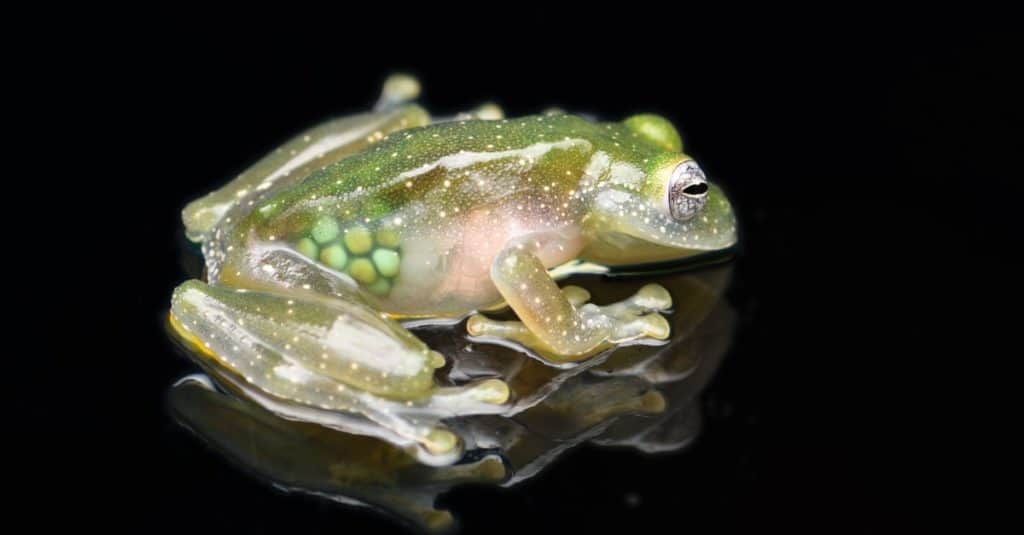
Glass frogs have incredible, translucent skin, revealing their body’s internal organs.
©petrdd/Shutterstock.com
3. Amazon Milk Frog (Trachycephalus resinifictrix)
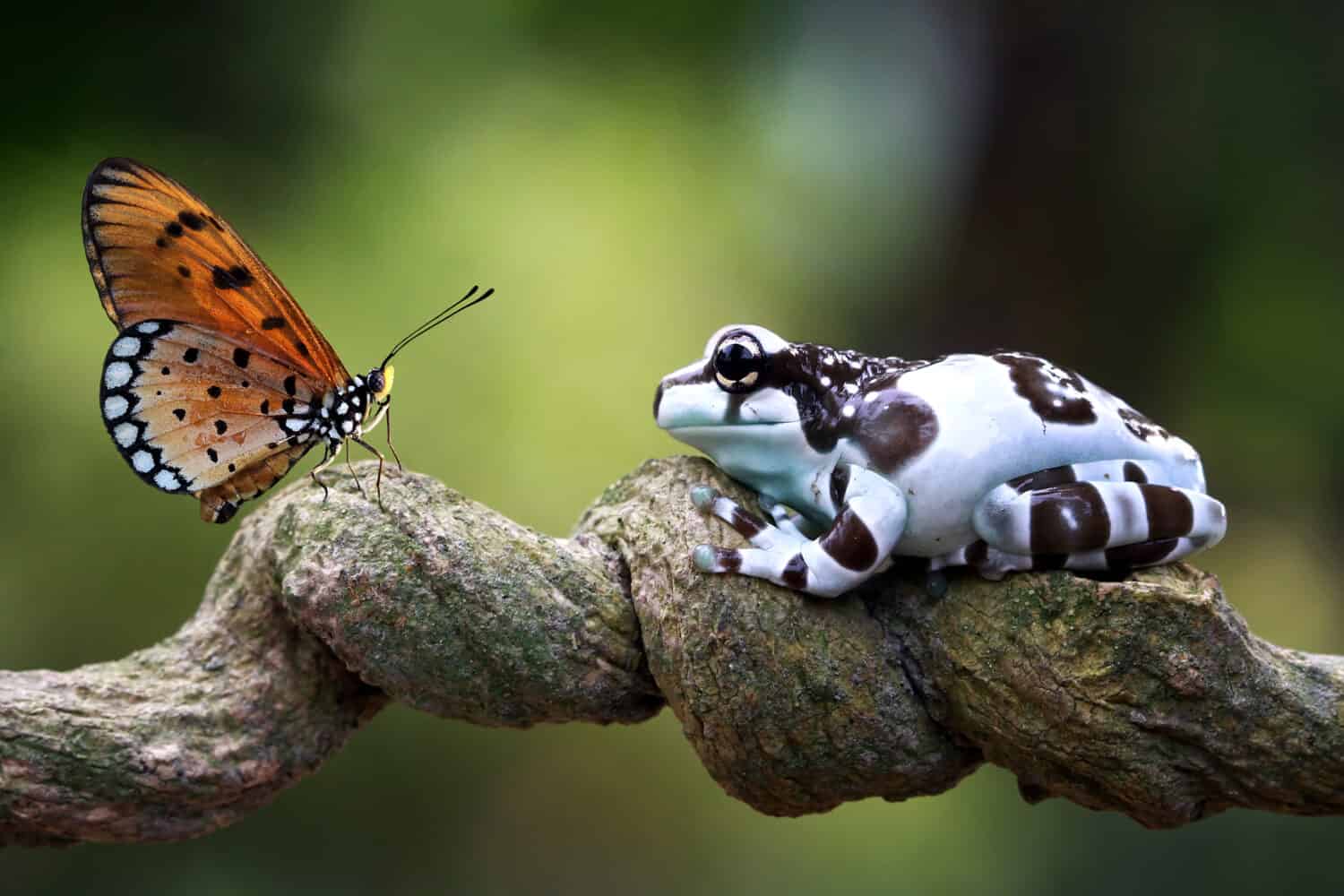
The Amazon milk frog, or the mission golden-eyed tree frog, is an arboreal frog native to the Amazon Rainforest in South America. It’s recognizable by its bluish-grey skin with dark banding and golden eyes with black cross-shaped pupils. It secretes a sticky, milk-like substance when threatened. The Amazon milk frog dwells in the upper canopy of trees, making it difficult for humans to observe it in its natural habitat.
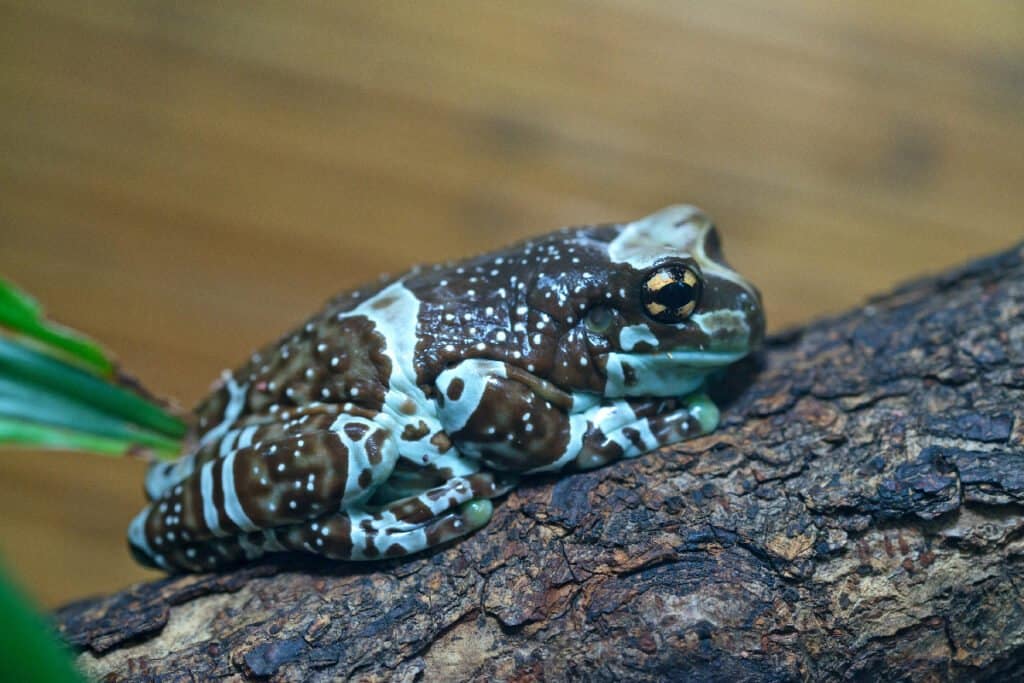
The Amazon milk frog is native to the Amazon Rainforest.
©iStock.com/Oskanov
4. Giant African Bullfrog (Pyxicephalus adspersus)
A southern African native, the African bullfrog is a hefty amphibian, ranking as Africa’s largest, growing up to 10 inches in length and weighing up to 3 pounds. They typically have an olive-green complexion with light underbelly markings. These bullfrogs also have powerful jaws equipped with razor-sharp, tooth-like projections called odontoids. These predatory frogs feed on anything from insects and rodents to snakes and small birds.
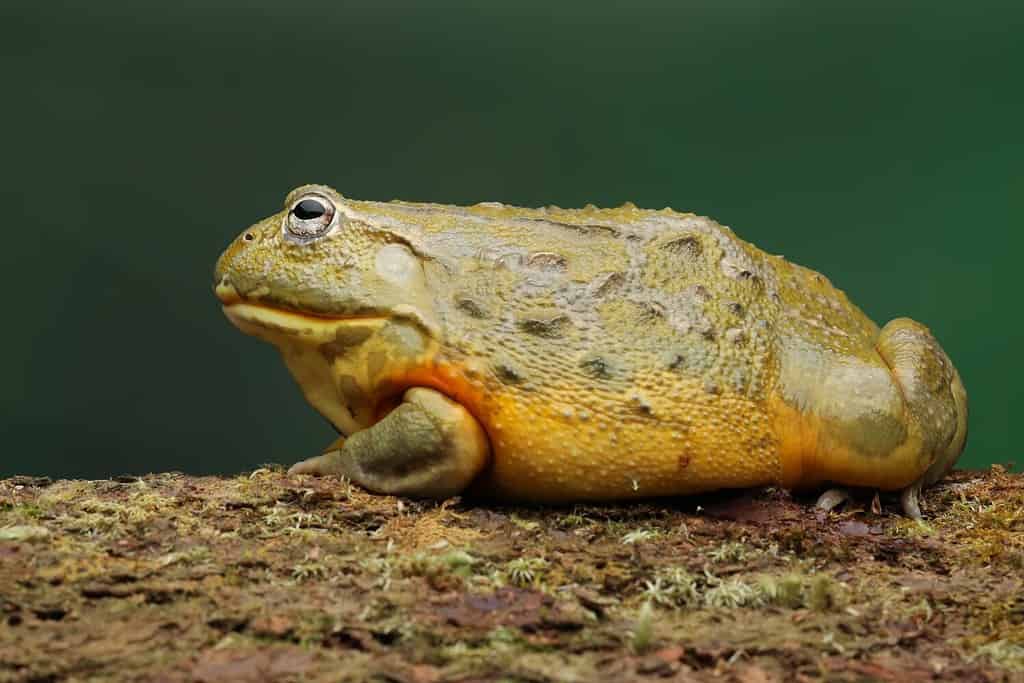
The giant African bullfrog is a ravenous predator and eats just about anything it can fit in its mouth.
©Lauren Suryanata/Shutterstock.com
5. Pobblebonk Frog (Limnodynastes dumerilii)
The pobblebonk frog, also known as the eastern banjo frog, is native to eastern Australia. It is one of the world’s loudest amphibians. During the breeding season, males produce a resonant “bonk” call to attract females. This call is said to resemble a plucked banjo string and usually reaches 80–90 decibels, which is as loud as some power tools and lawnmowers. Pobblebonk frogs are nocturnal and spend most of their time burrowed underground. They emerge under the cover of darkness to hunt and feed. They are a mottled brown or brownish-grey with orange or yellow markings on their sides. These frogs can reach up to 3 inches in length.
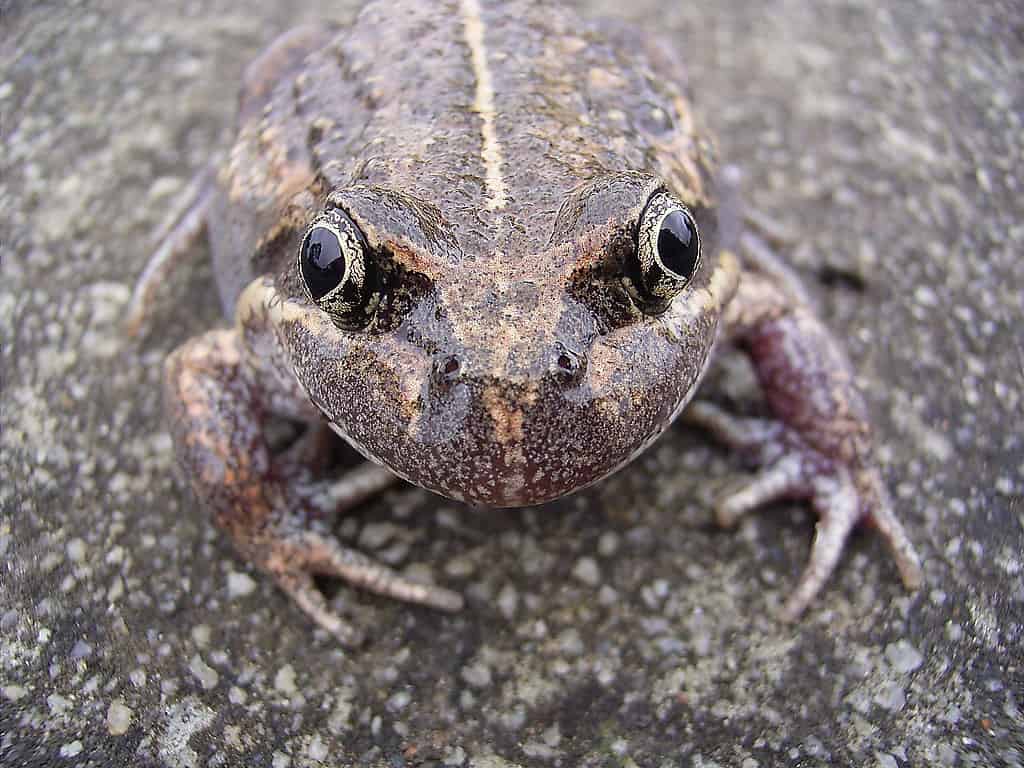
The pobblebonk frog lives in eastern Australia.
©iStock.com/photodeer
6. Lake Titicaca Water Frog (Telmatobius culeus)
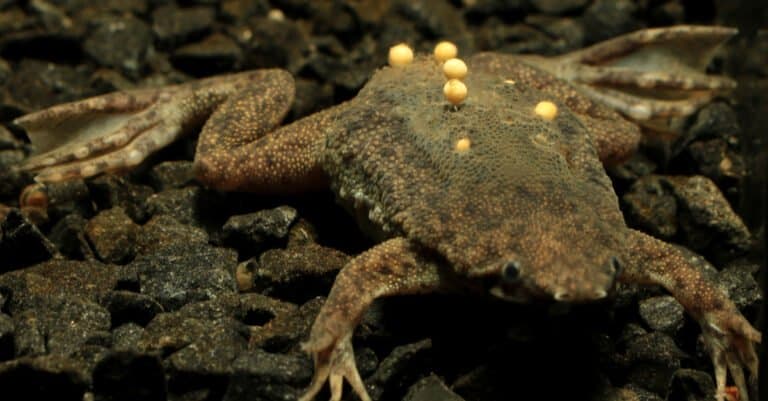
The Lake Titicaca frog has unique features that make it a perfect fit for its natural habitat. These frogs are among the world’s largest fully aquatic frogs, measuring up to about 8 inches in length and weighing up to 2 pounds. These frogs remain submerged at the bottom of the lake. They use their baggy, loose skin folds as gills, as they absorbs most of their oxygen from the water through their vascularized skin. They have a slow metabolism, but when their hunger does strike, they eat amphipods, insects, snails, fish, and worms. These amphibians only inhabit the waters of Lake Titicaca and connected waters tucked away in the Andean Highlands between Bolivia and Peru.
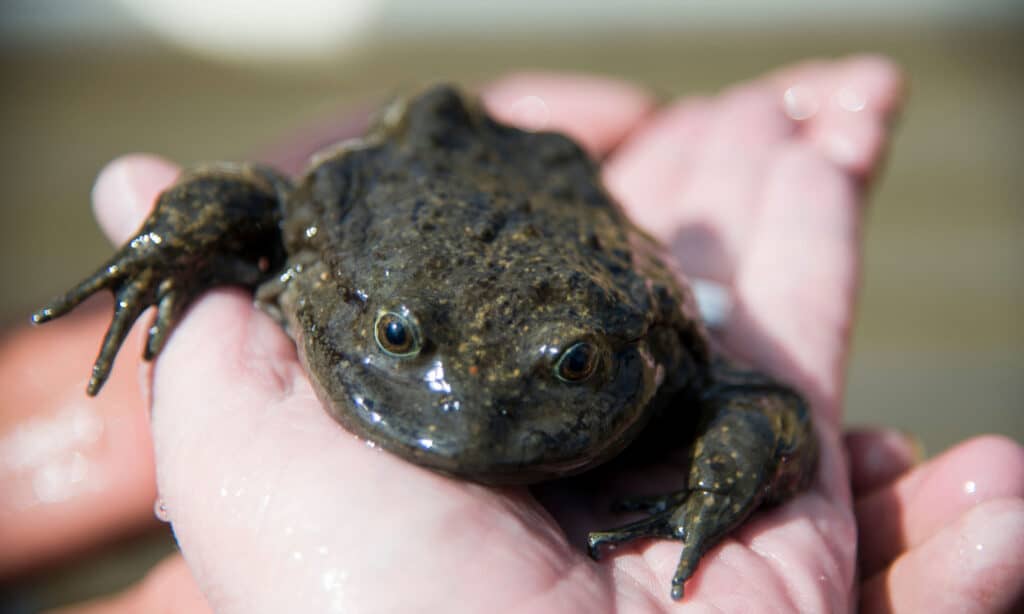
A single female Lake Titicaca water frog is capable of laying up to 500 eggs at once.
©Andreas Wolochow/Shutterstock.com
7. Harlequin Frog (Atelopus)
The harlequin frog is native to the mid-to-high elevation streams in the rainforests of Central and South America. They are famous for their vibrant color patterns, which may be yellow, lime-green, blue, orange, red, pink, or even purple, contrasted with black spots, patches, or marbling. These patterns not only serve to attract potential mates but also act as a warning to predators of their poisonous nature. These frogs carry skin toxins like bufadienolides and tetrodotoxin. Males measure 1–1.6 inches in length, while females measure 1.3–2.3 inches.
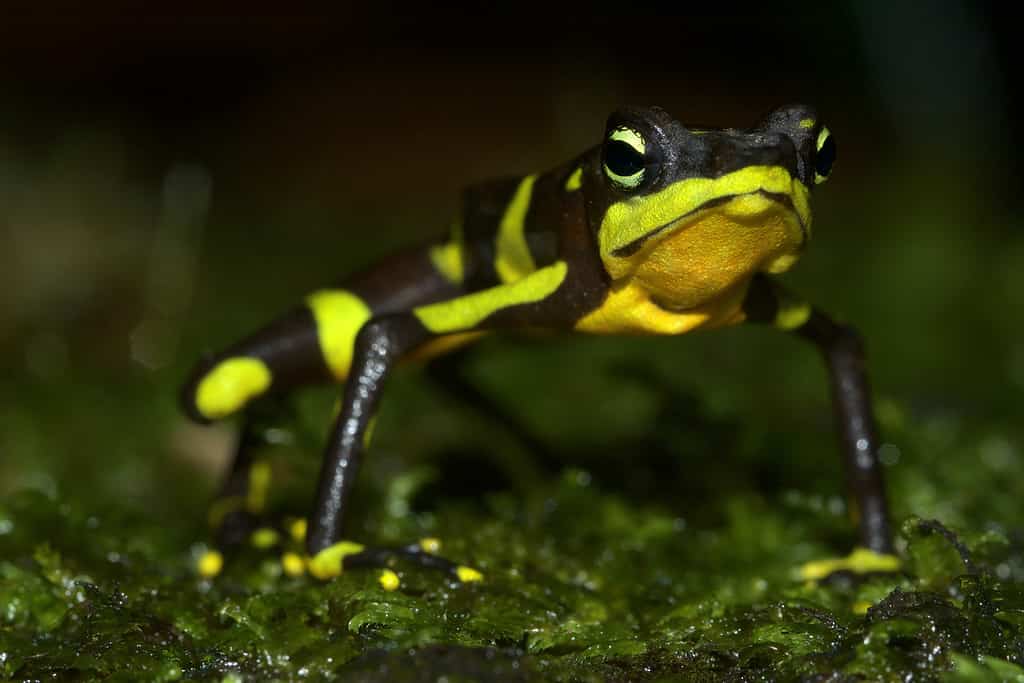
The limosa harlequin frog is an endangered species.
©iStock.com/Maria Ogrzewalska
8. Giant Monkey Frog (Phyllomedusa bicolor)
The giant monkey frog, or giant leaf frog, lives in the humid lowlands in the Amazon basin. These frogs measure 3.5-4.7 inches in length. These frogs are arboreal and nocturnal. They produce a distinctive call, which is a series of loud, guttural “wok” sounds. Although their skin secretions can be irritating to humans, giant monkey frogs are an important part of rainforest ecosystems, helping control populations of insects and other small animals.
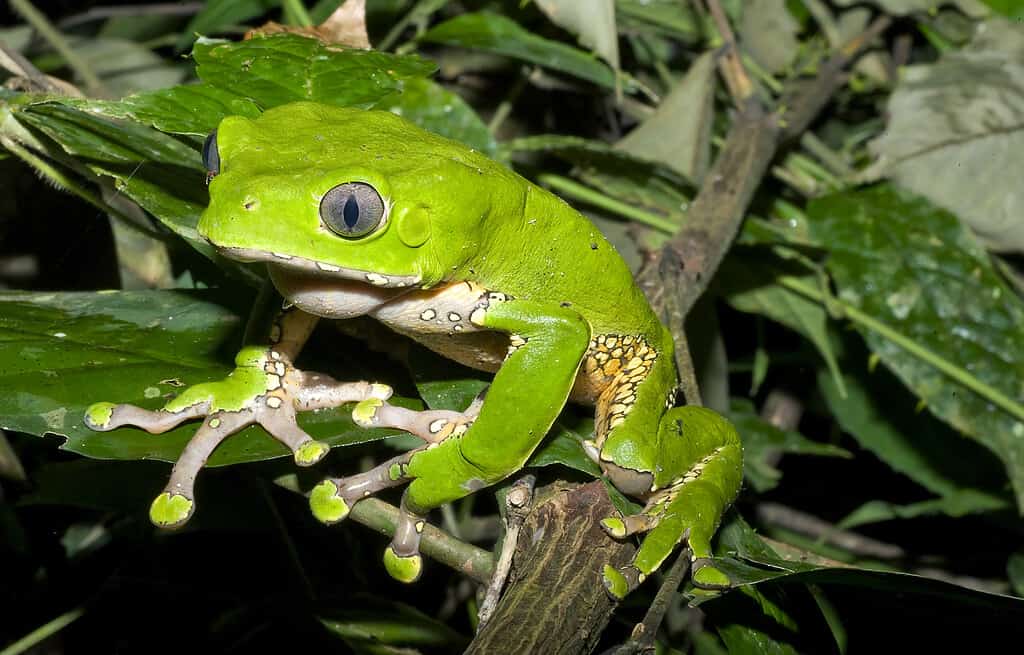
The giant monkey frog is also called the giant leaf frog, waxy-monkey tree frog, or bicolor tree frog.
©iStock.com/webguzs
9. Tomato Frog (Dyscophus guineti)
Tomato frogs are nocturnal, terrestrial frogs found in Madagascar rainforests and swamp forests. These frogs measure between 2.5 and 3.5 inches. Males are smaller and more of a yellowish-orange brown, while females are a bright tomato-red. They defend themselves by releasing a toxic secretion through their skin that is sticky and irritating but not deadly. They can also inflate themselves to look larger.
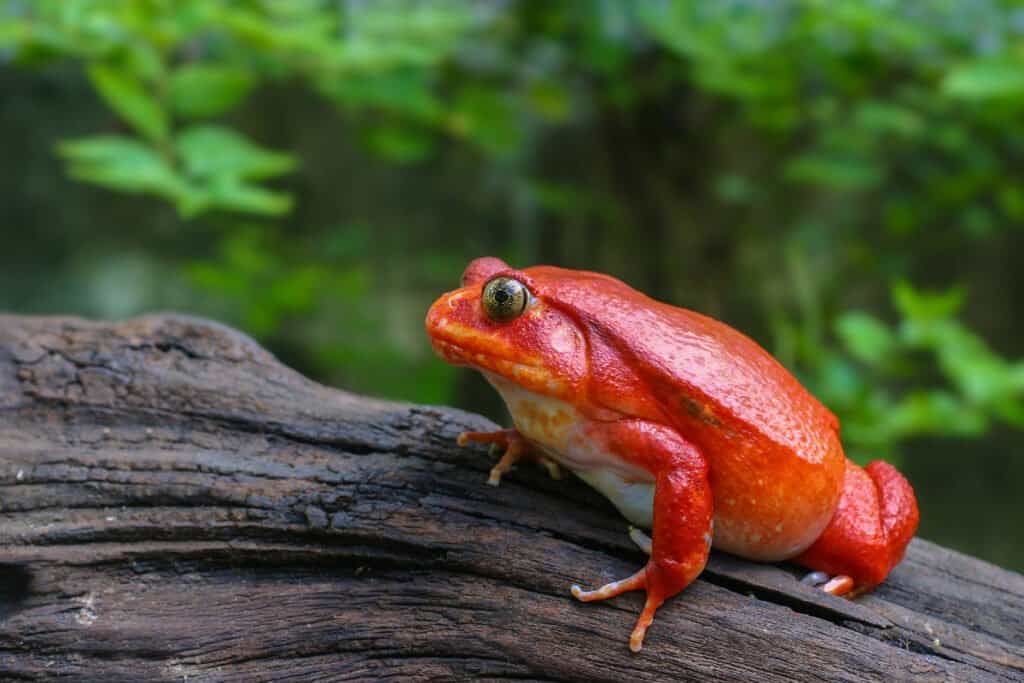
Tomato frogs are named for their vivid red coloring.
©Krisda Ponchaipulltawee/Shutterstock.com
10. Riggenbach Reed Frog (Hyperolius riggenbachi)
The Riggenbach reed frog is a small amphibian measuring between 1 and 1.6 inches, with males being smaller. It inhabits cool, moist montane grasslands and wetlands in western and central Cameroon and the eastern Nigeria highlands. The Riggenbach reed frog can also enter into a state of suspended animation, called aestivation, during the dry season to conserve water. Most mature males and juveniles are bright green with greenish-yellow stripes with yellow undersides. Females and some mature males have yellow, red, and black worm-like marbled patterns with with bright red fingers and toes.
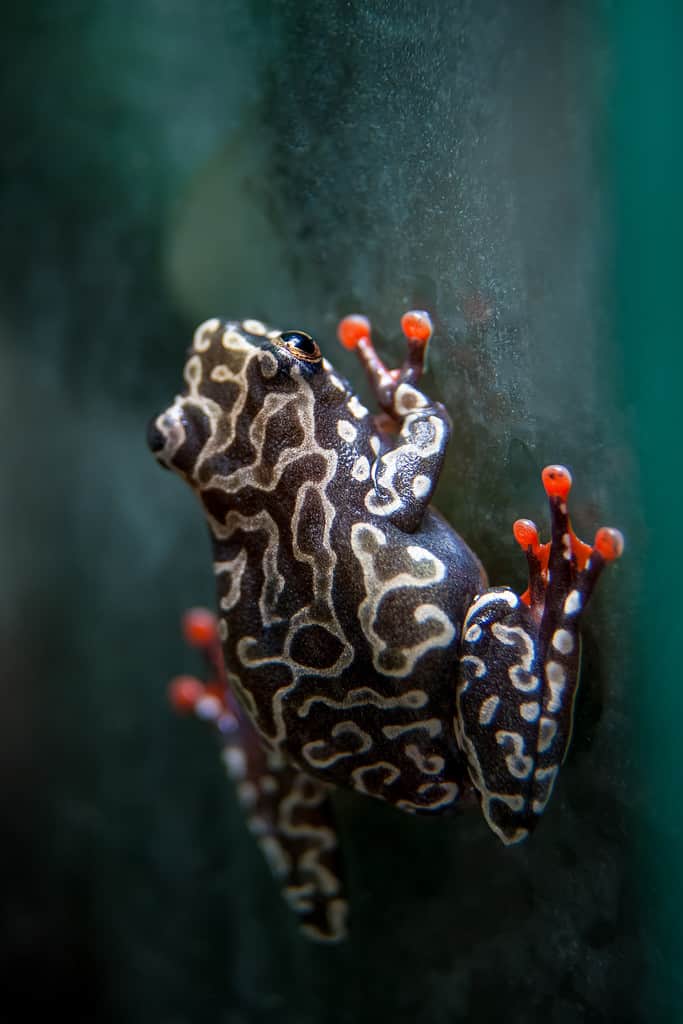
The Riggenbach reed frog has red fingers and toes.
©iStock.com/Farinosa
11. Wallace’s Flying Frog (Rhacophorus nigropalmatus)
Living in the Malay Peninsula, Sumatra, and Borneo, Wallace’s flying frog is one of the most incredible frogs in the world. It measures 3 to 4 inches long, with females being larger. It has a bright green back, a pale yellow belly, bright yellow webbing on its feet, and large eyes with horizontal pupils. The frog’s long limbs end in large, fully webbed hands and feet that allow it to jump and glide down to the forest floor from high up in the trees like a parachute. It also has flaps of skin along the sides of its body to catch the air.
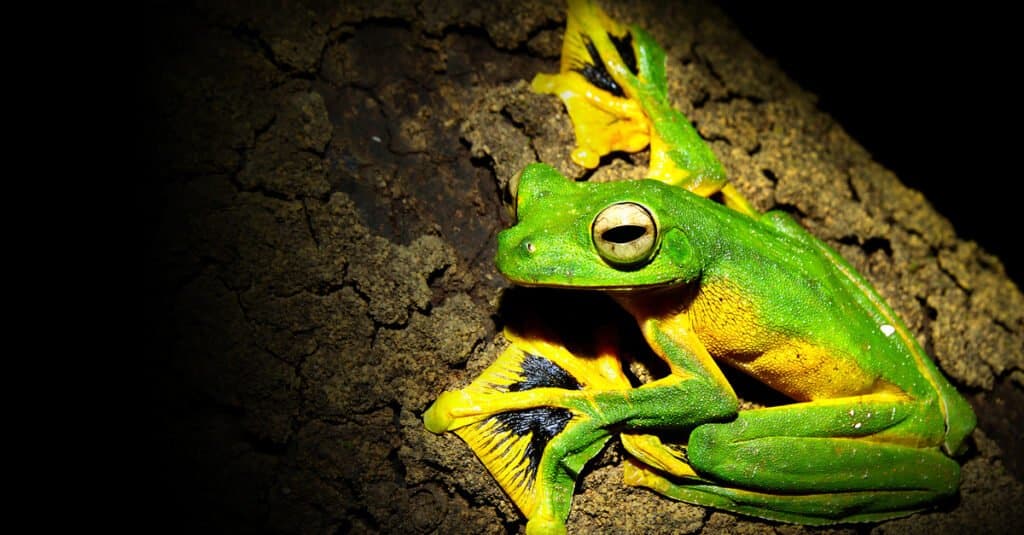
With their unique webbed feet, Wallace’s flying frogs can glide between branches.
©Binturong-tonoscarpe/Shutterstock.com
12. Asian Painted Frog (Kaloula pulchra)
The Asian painted frog, or the banded bullfrog, is 2 to 3 inches long with striking dark brown bodies and coppery brown or salmon pink stripes. They are widely distributed across Southeast Asia in rural, urban, and forest habitats. When it gets dry, the frogs bury themselves underground. After it rains, they re-emerge and call for their mates. When Asian-painted frogs feel threatened, they inflate their lungs and secrete a noxious white substance to ward off attackers.
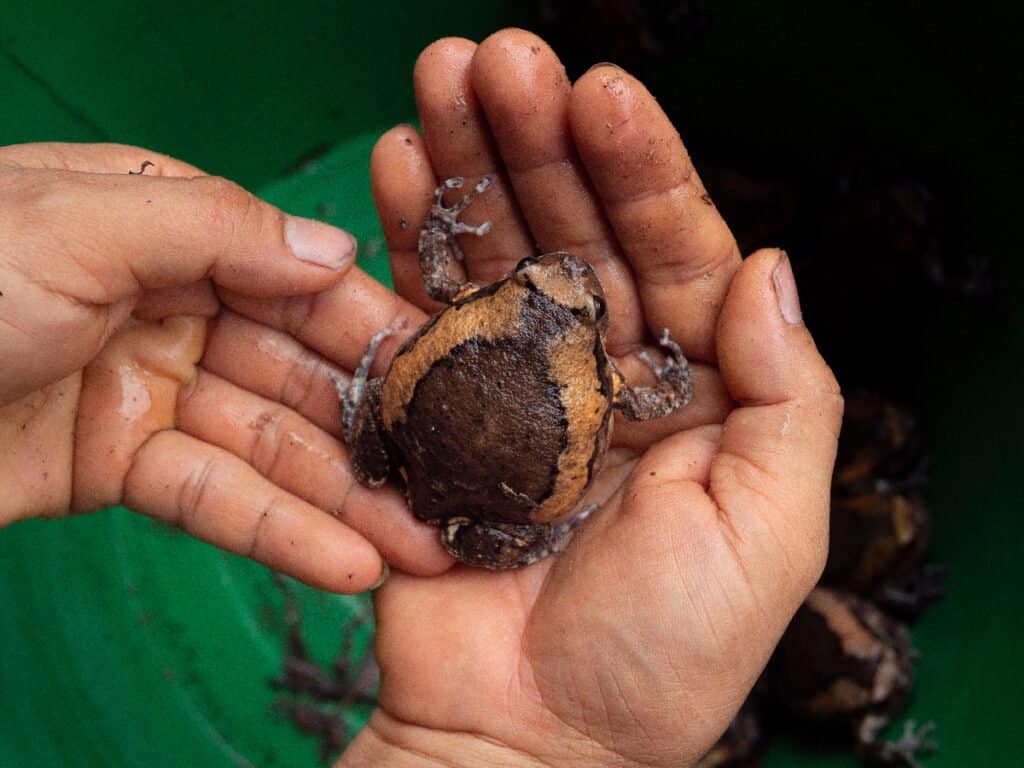
Asian-painted frogs can inflate their bodies with air to look larger.
©Silarock/Shutterstock.com
13. Golden Poison Frog (Phyllobates terribilis)
In Colombia lives a frog that is widely cited as the most toxic creature on Earth: the golden poison frog. Its batrachotoxin-packed poison is said to be able to take out ten men. The neurotoxin works by obstructing nerve cell sodium channels, resulting in paralysis and death. These frogs are terrestrial and diurnal, often found on the forest floor near streams. They are generally solid bright yellow, golden-orange, or mint-green with large, dark eyes. They can be found in the Chocó Rainforest near Colombia’s Pacific Coast.
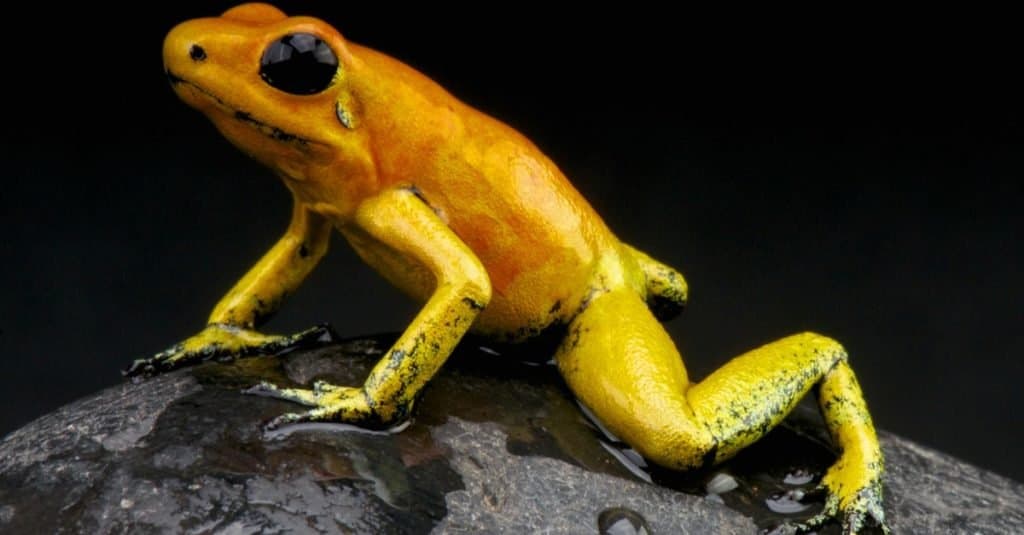
The golden poison frog is found in the rainforests of the Pacific coast of Colombia.
©reptiles4all/Shutterstock.com
14. Dyeing Poison Dart Frog (Dendrobates tinctorius)
The dyeing poison dart frog is a terrestrial, diurnal frog found in wet, humid forests, typically around rocky, cool streams of running water in Guyana, Suriname, French Guiana, and Venezuela. It is not as poisonous as the golden poison frog, but it is still very toxic. The poison is batrachotoxins, which is very powerful neurotoxin, and even small amounts can cause paralysis or death. The main predators of this frog are snakes, which have developed a resistance to the toxin in its skin. These frogs are among the largest poison dart frogs at 1.5 to 2 inches in length. They display a wide variety of vivid color patterns, including blue, yellow, green, brown, black, and white, with stripes, spots, and solid patches.
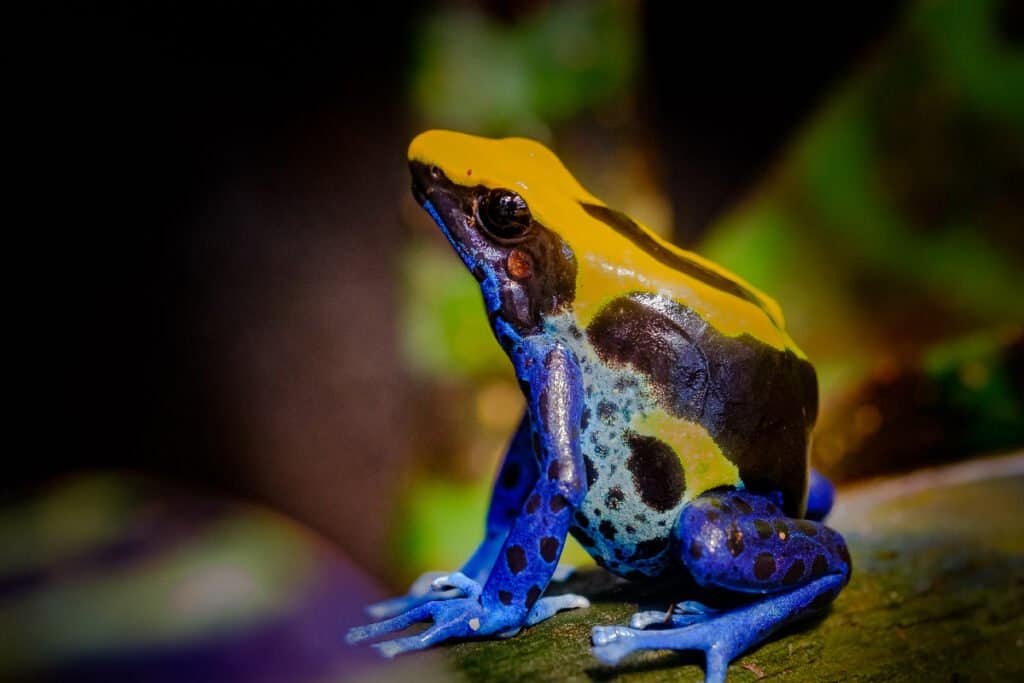
Dyeing poison dart frogs live in wet, humid forests, typically around rocky, cool streams of running water.
©iStock.com/Frank Cornelissen
15. Strawberry Poison Dart Frog (Oophaga pumilio)
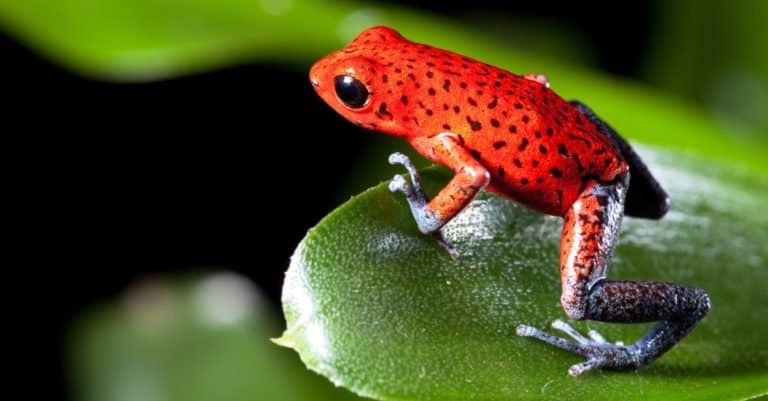
The strawberry poison dart frog is found in Costa Rica and Panama. It has dozens of color morphs, but the typical color is red with blue legs. The head is covered in black spots with the occasional white spot on its face and throat. It can grow up to 1 inch in length and inhabits lowland areas near streams, ponds, and marshes. This species of frog is said to be aggressive, often attacking other frogs and small animals that venture too close. They are diurnal and can typically be found on or near leaf litter.
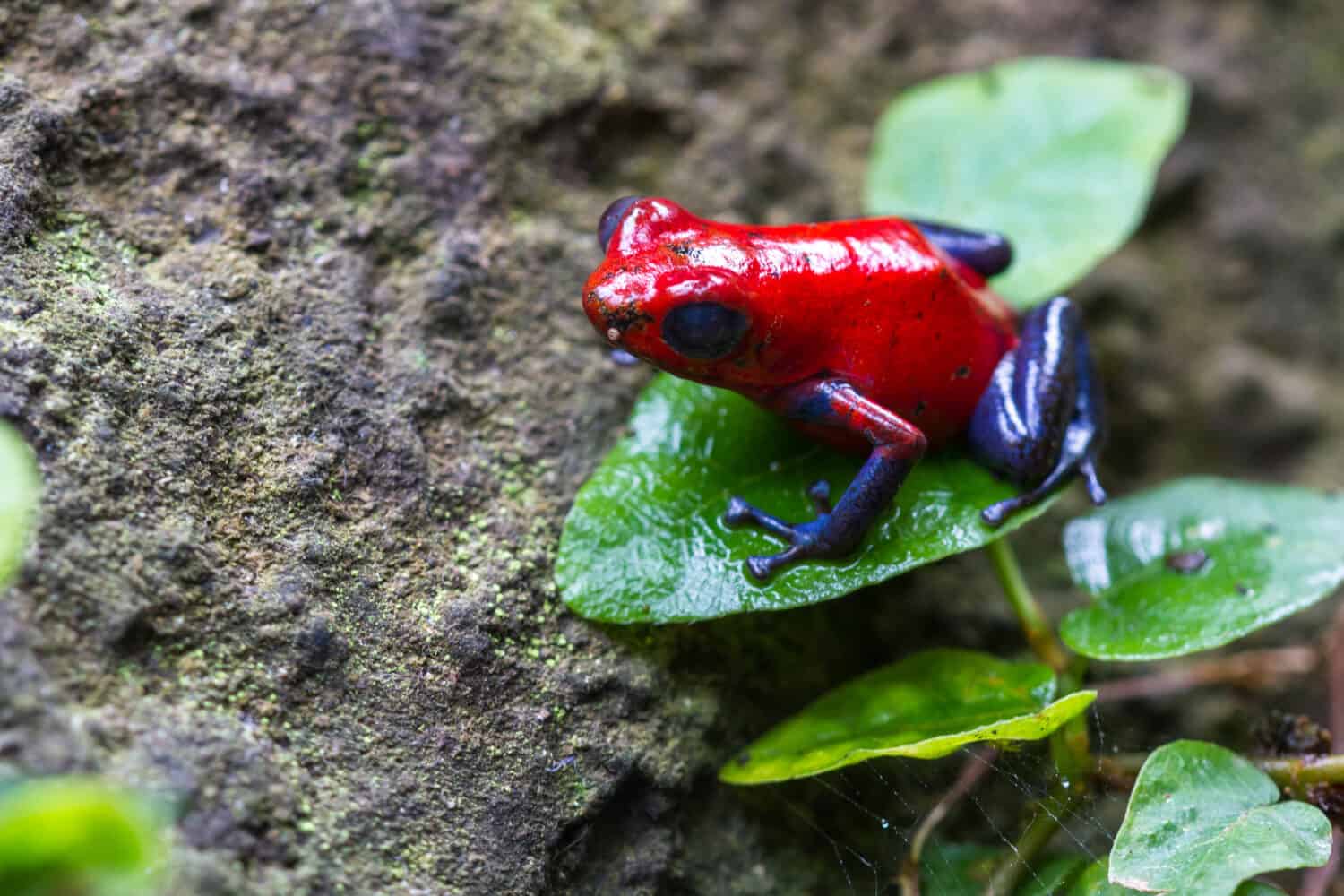
Strawberry poison dart frogs mainly live on the forest floor, often in leaf litter.
©Nature's Charm/Shutterstock.com
16. Red-Backed Poison Dart Frog (Ranitomeya Reticulata)
The red-backed poison frog is found in the Amazon rainforest, flourishing in both Peru and Ecuador. This tiny animal is one of the smallest poison dart frogs known, with fully grown adults measuring only 0.5 to 0.75 inches. The red-backed poison dart frog is an arboreal species and is found in lowland rainforests, often residing in the lower levels of the forest. They have a bright red to orange back and a black belly and black legs covered in a blue circular pattern.
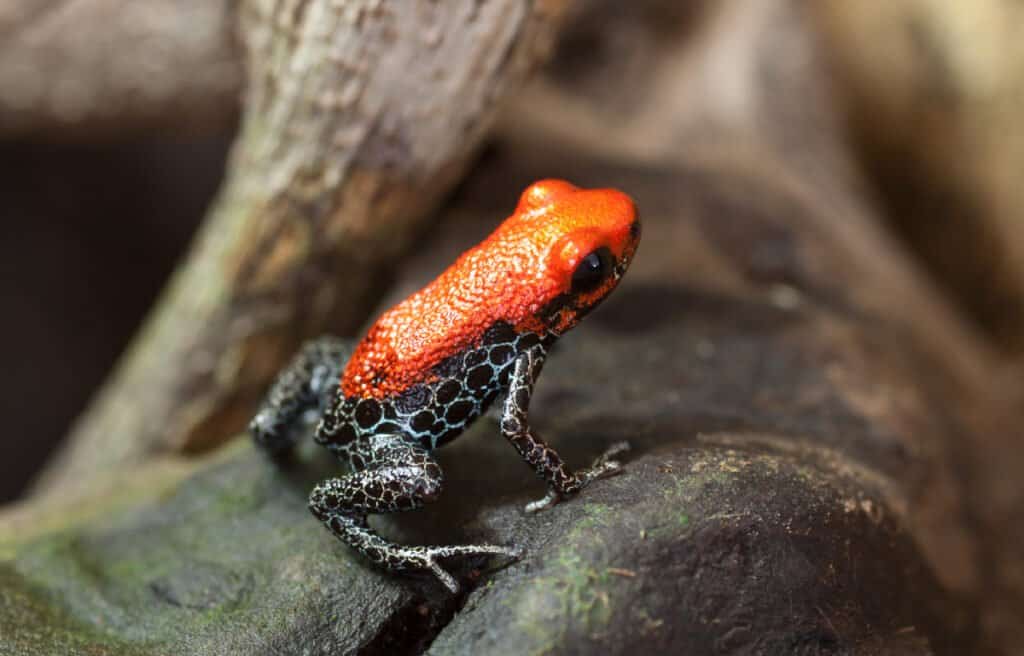
Fully grown adult red-backed poison frogs measure only 0.5 to 0.75 inches.
©Klaus Ulrich Mueller/Shutterstock.com
17. Yellow Banded Poison Dart Frog (Dendrobates leucomelas)
The yellow-banded poison dart frog lives in the northern rainforests of South America, mostly in Venezuela, but they may also be found in parts of Guyana, Brazil, and Colombia. These tiny frogs rarely get bigger than 1.5 inches and have black bodies with bright yellow markings. Due to its appearance, sometimes it is also called the bumblebee poison frog. Like other poison dart frogs, these frogs also secrete deadly toxins.
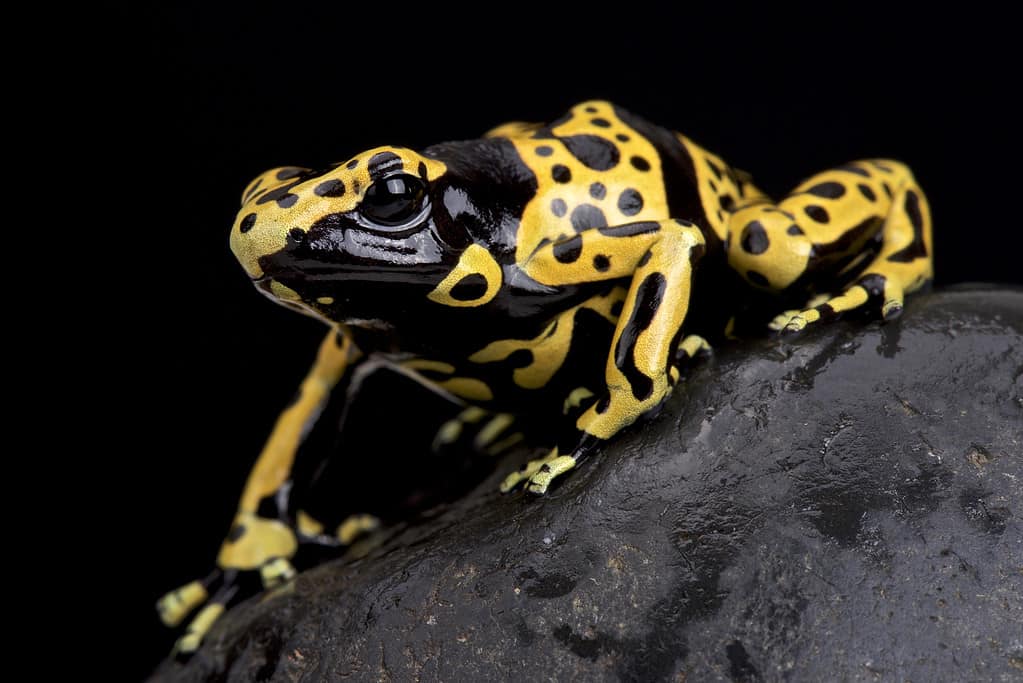
The yellow-banded poison dart frog lives in rainforest regions northern South America.
©iStock.com/reptiles4all
18. Mimic Poison Frog (Ranitomeya imitator)
The mimic poison frog measures between 0.4 and 0.8 inches from snout to vent. Though small in size, this diurnal and terrestrial amphibian inhabits the damp montane forests in the Andean foothills in eastern and north-central Peru. These little frogs have mild toxicity compared to other dart frogs. However, this incredible frog has many color morphs and can mimic the color patterns of other poison frogs in its environment.
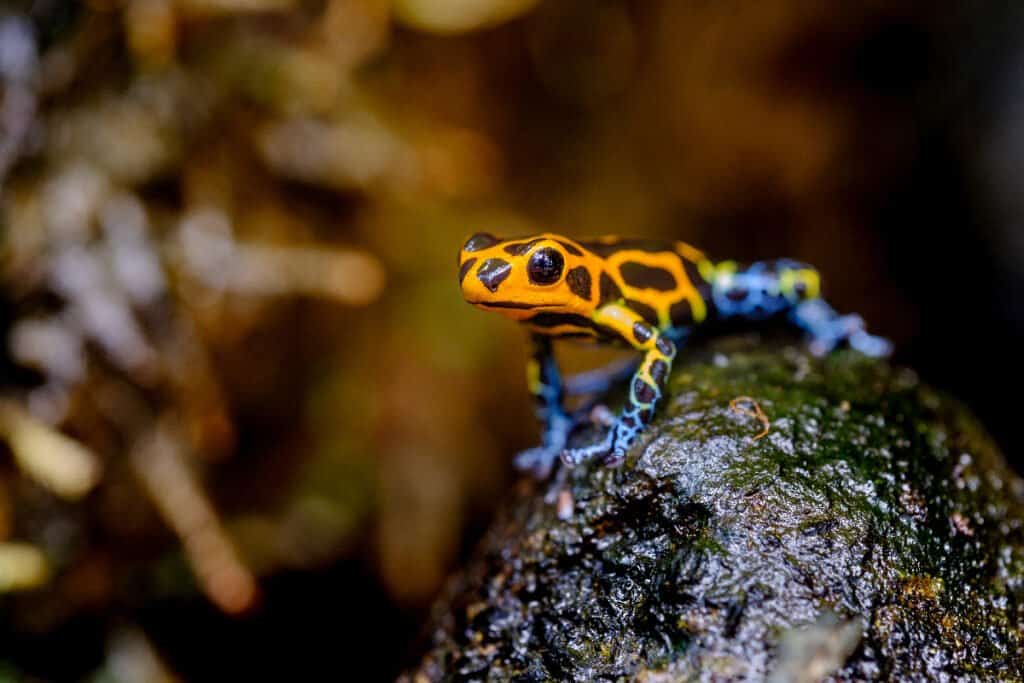
The mimic poison frog lives in eastern and north-central Peru.
©Frank Cornelissen/Shutterstock.com
19. Reticulated Poison Frog (Ranitomeya ventrimaculatus)
The reticulated poison frog is found in Brazil, southeastern Colombia, Ecuador, French Guiana, and Peru. This small, brightly colored amphibian is armed with toxic skin that repels predators as well as bacteria and fungi. Reticulated poison frogs only grow up to 0.8 inches at the most, and male frogs are smaller than female frogs. They have a dark base color with stripes running down the head and back, while the legs and belly have a net-like blue or gray pattern.
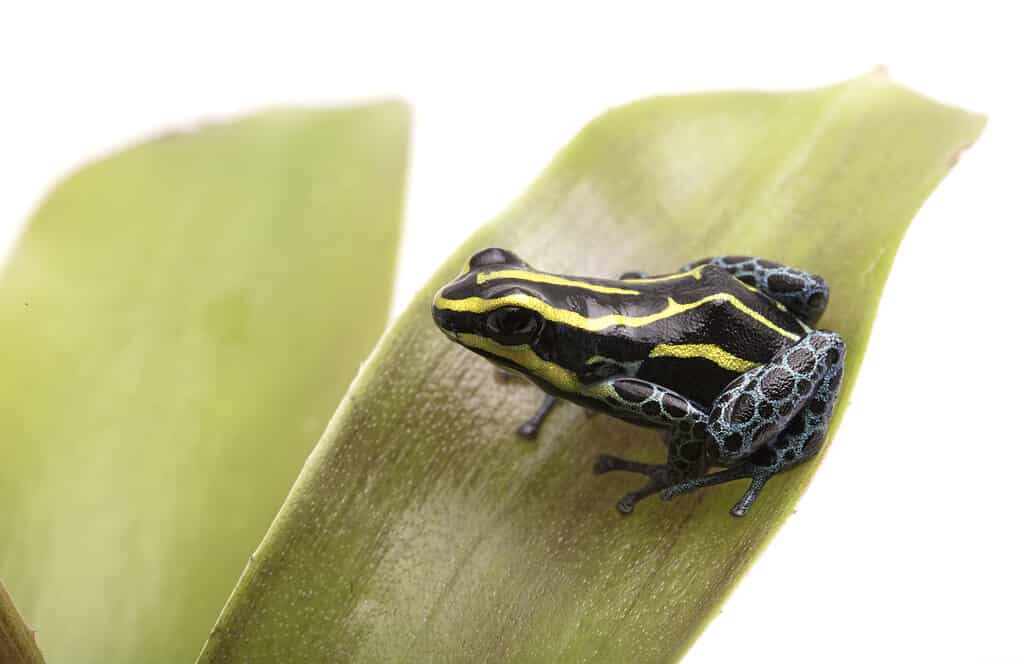
Reticulated poison frogs only reach 0.8 inches in length.
©iStock.com/kikkerdirk
20. Three-Striped Poison Frog (Ameerega trivittata)
The three-striped poison frog has jet-black skin with three stripes in shades of green, yellow-green, yellow, or orange. Females typically grow to around 2 inches, with males reaching about 1.65 inches in length. These diurnal terrestrial frogs can be found in the leaf litter of moist lowland rainforest floors throughout the Amazon basin and northern South America.
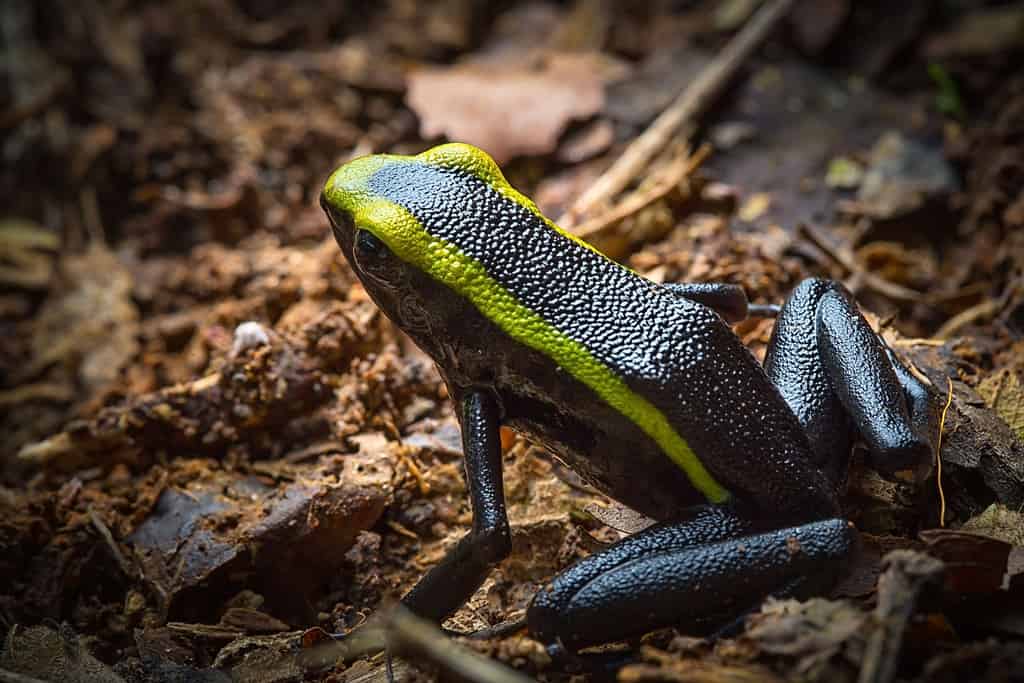
Female three-striped poison frogs typically grow to around 2 inches.
©iStock.com/kikkerdirk
21. Phantasmal Poison Frog (Epipedobates tricolor)
Found only in Ecuador, the phantasmal poison frog’s colorful patterns are just about as cool as its name. It’s a small frog, measuring 0.59 inches to 1 inch in length. Phantasmal poison frogs are a red, burgundy, or reddish-brown color with green or yellow stripes running down their backs. They are diurnal, terrestrial frogs typically found in the leaf litter of moist forests on the Andean foothills.
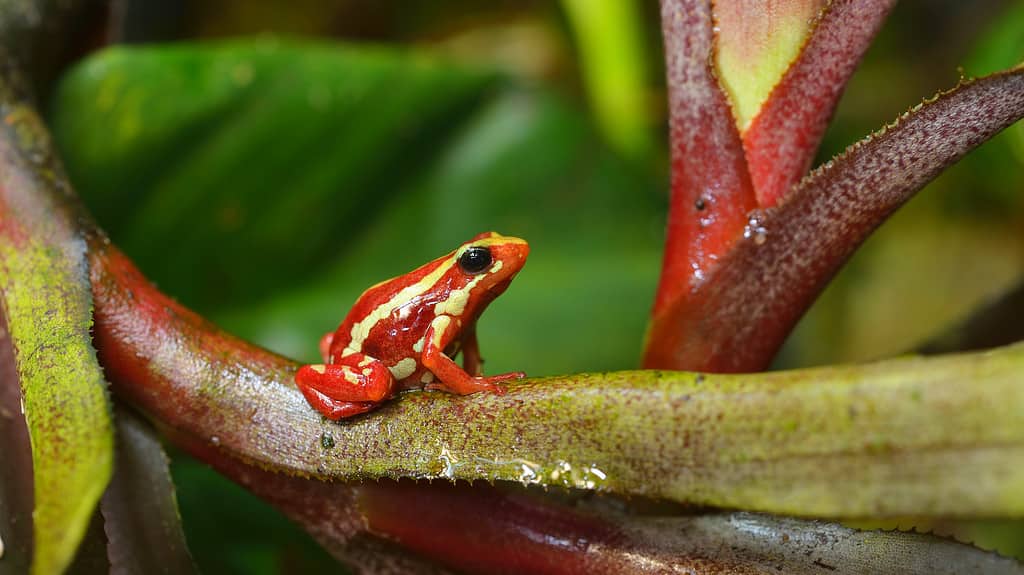
Phantasmal poison frogs are endemic to the Andean slopes of Ecuador.
©iStock.com/alekseystemmer
22. Marañón Poison Frog (Excidobates mysteriosus)
The Marañón poison frog is another incredible yet endangered frog species. It can only be found in the beautiful Cordillera del Condor region, located in the upper Marañón River drainage of the Cajamarca Department in Peru. These diurnal, terrestrial frogs favor primary premontane and montane forests. They have brown to black skin with light polka dots all over their bodies. These small frogs only reach about 1 inch in length.
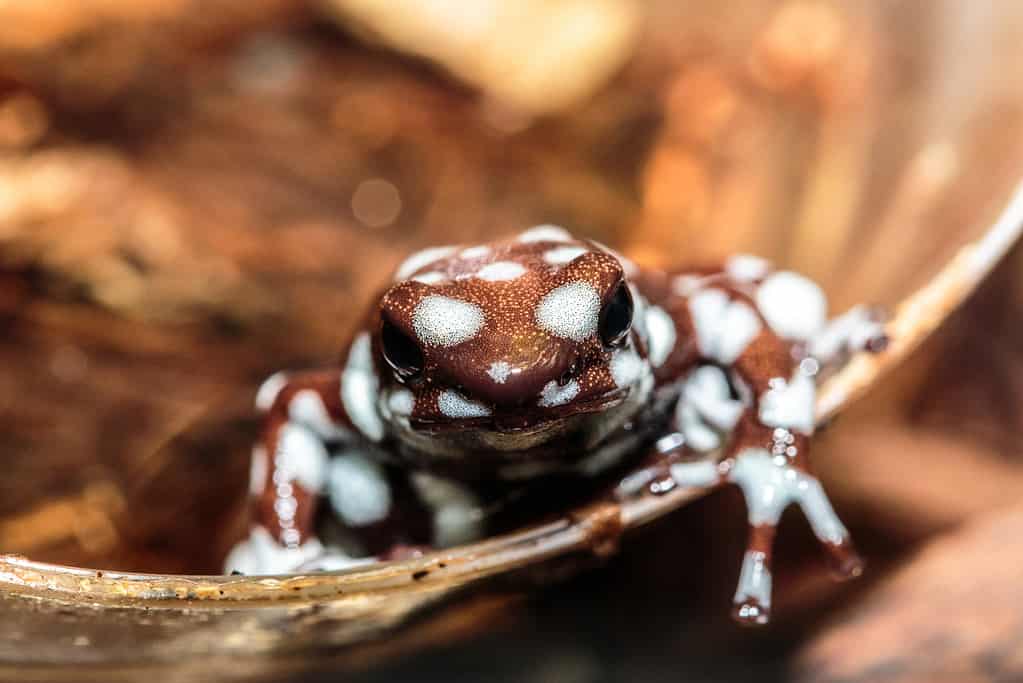
The Marañón poison frog can only be found in Peru.
©iStock.com/Rafael Sanchez