


K
Species Profile

Kai Ken

Canis lupus familiaris

Brindle loyalty, mountain agility.
Lindsay VG/Shutterstock.com

Kai Ken Distribution

Click a location to explore more animals from that region

Origin Location

This map shows the native origin of the Kai Ken. As a domesticated species, they are now found worldwide.

Loading map...

Found in 1 country

Size Comparison

Human 5'8"
Kai Ken 1 ft 8 in

Kai Ken stands at 29% of average human height.

Kai Ken

At a Glance

Domesticated
Also Known As Tora Inu, Tora-ken, Tiger Dog, Kai Inu, Kai Dog
Diet Omnivore
Activity Diurnal+
Lifespan 6 years
Weight 20 lbs
Status Not Evaluated
Did You Know?

Kai Ken is one of Japan's six native dog breeds (alongside Shiba, Akita, Kishu, Shikoku, and Hokkaido).

Scientific Classification

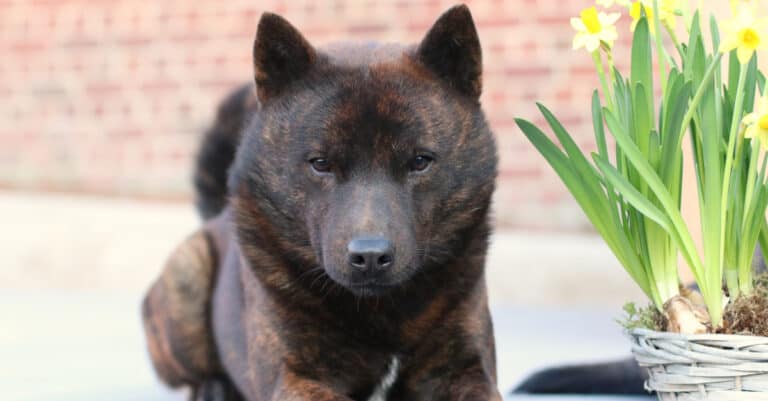
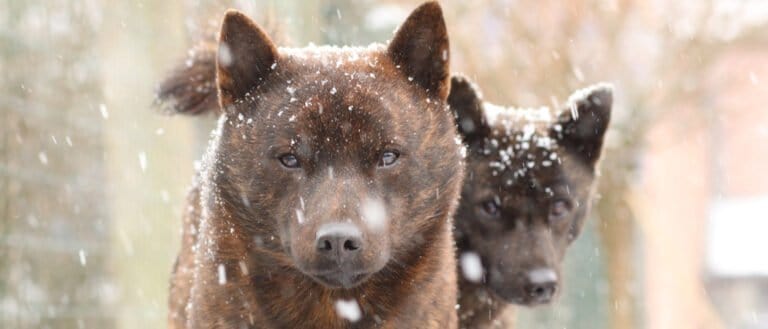
The Kai Ken is a Japanese domestic dog breed historically associated with the Kai Province (modern Yamanashi Prefecture). It is a medium-sized, spitz-type hunting dog known for agility and strong loyalty.

Kingdom
Animalia
Phylum
Chordata
Class
Mammalia
Order
Carnivora
Family
Canidae
Genus
Canis
Species
Canis lupus

Distinguishing Features

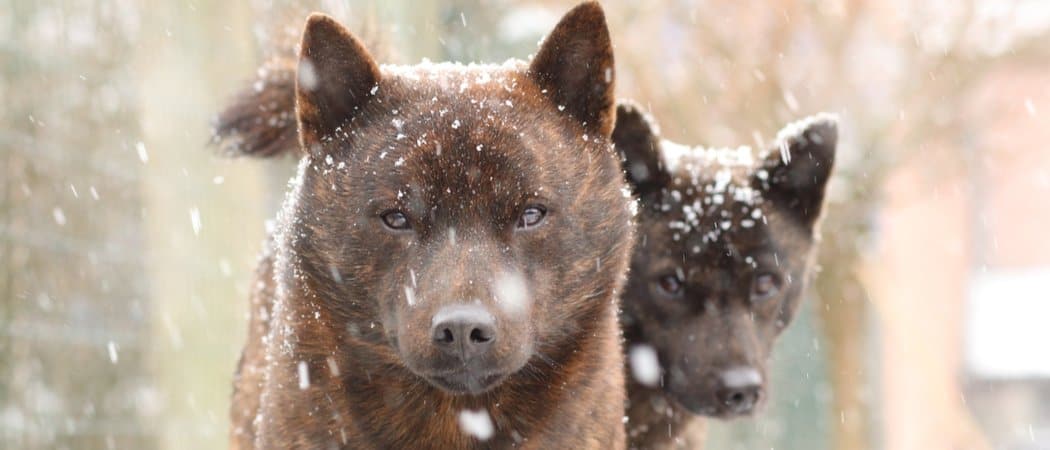
  • Medium-sized spitz-type dog with erect triangular ears and a curled/sickle tail
  • Often exhibits brindle striping (a hallmark trait in the breed)
  • Athletic build adapted for rugged terrain; alert expression

Physical Measurements

Males and females differ in size

Height
1 ft 9 in (1 ft 8 in – 1 ft 10 in)
1 ft 6 in (1 ft 5 in – 1 ft 7 in)
Length
2 ft 9 in (2 ft 6 in – 3 ft 1 in)
2 ft 7 in (2 ft 4 in – 2 ft 9 in)
Weight
34 lbs (29 lbs – 40 lbs)
33 lbs (26 lbs – 40 lbs)
Tail Length
9 in (8 in – 11 in)
9 in (8 in – 11 in)
Top Speed
30 mph
About 48 km/h

Appearance

Primary Colors
Secondary Colors
Skin Type Canine skin with pigmented dermis; moderately thick, weather-resistant due to a dense double coat (harsh outer guard hairs over a soft insulating undercoat) typical of spitz-type domestic dogs (Canis lupus familiaris).
Distinctive Features
  • Kai Ken (Canis lupus familiaris) is a dog breed bred for people and hunting; unlike wolves, it shows varied tame behavior, strong human bonds, spitz shape, curled or sickle tail, and erect ears.
  • Medium-sized, athletic Japanese spitz-type hunting dog historically associated with Kai Province (Yamanashi); built for agility, climbing/rough terrain, and endurance rather than sheer speed.
  • Defining coat identifier: brindle striping is strongly associated with the breed and used to distinguish it from other Japanese native breeds; coat often darkens/clarifies as the dog matures.
  • Head/face: wedge-shaped head, strong muzzle, small-to-medium triangular erect ears; alert, keen expression.
  • Body: compact, well-muscled frame; deep chest; balanced proportions; tail typically thick and carried curled or sickle over the back.
  • Temperament/behavioral traits (breed-typical): very loyal and people-focused with its family, often reserved with strangers; strong prey drive and hunting instincts-best managed with training and secure fencing.
  • Care requirements: high daily exercise and mental enrichment needs (structured walks, hiking, scentwork, training games); boredom can lead to destructive or escape behaviors.
  • Training needs: intelligent and independent; responds best to consistent, reward-based methods; early socialization is important to reduce suspiciousness/reactivity around unfamiliar people/dogs.
  • Grooming: moderate shedding year-round with heavy seasonal "coat blows"; weekly brushing typically, more frequent during shedding seasons; avoid over-bathing to preserve coat oils.
  • Generally healthy; screen for hip dysplasia and patellar luxation. Watch for eye issues (progressive retinal atrophy in some lines), skin allergies, and thyroid problems. Keep dog lean to protect joints.
  • Management notes: secure yard recommended (agile climbers/jumpers); leash reliability is important due to prey drive; double coat provides cold tolerance but requires heat management in hot/humid climates.

Sexual Dimorphism

Typical domestic-dog sexual dimorphism: males are often slightly larger, heavier-boned, and may show a fuller neck/ruff; females tend to be slightly smaller and more finely built. Both sexes share the hallmark brindle coat and spitz-type features.

  • Often broader head and thicker neck/ruff appearance
  • Slightly taller and heavier with more pronounced musculature
  • May present a more substantial bone structure and chest breadth
  • Slightly smaller, lighter build with a more refined head/neck
  • Often a narrower chest and finer overall bone structure
  • May appear more streamlined while retaining the same athletic proportions

Did You Know?

Kai Ken is one of Japan's six native dog breeds (alongside Shiba, Akita, Kishu, Shikoku, and Hokkaido).

The hallmark coat is brindle ("tiger-striped"); traditional color categories include red, medium, and black brindle.

The breed's name comes from Kai Province (modern Yamanashi Prefecture) and a word meaning "dog."

Kai Ken was designated a Japanese Natural Monument (a protected cultural/natural treasure) in 1934.

Bred for rugged mountain hunting, it's known for nimble footwork and stamina on steep terrain.

Compared with the gray wolf, the Kai Ken is a human-directed, medium-sized domestic dog selected for tractability and companionship as well as hunting ability.

Many Kai Ken form very tight bonds with one family and can be reserved with strangers-an old guard-and-hunt temperament.

Unique Adaptations

  • Brindle camouflage: striping helps break up the outline in forested, dappled light environments-an advantage for traditional hunting work.
  • Spitz-type double coat: dense undercoat plus harsher outer coat for weather resistance in variable mountain conditions.
  • Compact, athletic build: efficient movement and balance for climbing, quick turns, and surefooted travel on uneven ground.
  • Curling tail and erect ears: classic spitz features that support thermoregulation and directional hearing in outdoor work.
  • Domestic-dog social adaptability (vs. the gray wolf): selective breeding emphasizes cooperation with humans while retaining sharp hunting instincts.

Interesting Behaviors

  • Close "one-family" attachment: often shadows its people and thrives on steady routines and trust-building.
  • Reserved-but-watchful greeting style: tends to observe newcomers before accepting interaction.
  • Strong prey drive and tracking interest: may fixate on squirrels/cats; benefits from leash reliability and safe enclosed areas.
  • Quiet problem-solving: many individuals are not overly vocal but will alert when something is "off."
  • High situational awareness outdoors: frequently scans, scents the wind, and checks back-traits shaped by hunting in dense mountain forests.
  • Seasonal coat blow: can shed heavily in bursts, often paired with increased self-grooming and rubbing.

Cultural Significance

The Kai Ken, from Yamanashi (historic Kai Province), is part of Japan's work to preserve native dog lines. Recognition as a Natural Monument (1934) and help from native-dog groups made it a local symbol of loyalty, bravery, and its brindle "tiger dog" coat.

Myths & Legends

"Tiger dog" tales from Kai: local hunters historically celebrated brindle Kai Ken as dogs that could vanish into forest shadows like a tiger's stripes, then erupt into swift pursuit of boar or deer.

Mountain-hunter anecdotes describe Kai Ken as fearless companions that would hold game at bay until the hunter arrived-stories often repeated as examples of unwavering loyalty and courage.

Regional storytelling sometimes credits the breed with uncanny route-finding in steep valleys, returning hunters safely through foggy passes and dense woods.

In preservation-era narratives (early 20th century), the Kai Ken's Natural Monument designation became a point of pride-told as a 'saved from obscurity' origin story as Japan worked to protect its native breeds.

Old rural superstitions in parts of Japan linked brindle dogs with protective luck at the home's boundary-an extension of the broader cultural role of vigilant house guardians in village life.

Conservation Status

NE Not Evaluated

Has not yet been evaluated against the criteria.

Population Stable

Life Cycle

Birth 4 pups
Lifespan 6 years

Lifespan

In the Wild
3–13 years
In Captivity
12–15 years

Reproduction

Mating System Polygynandry
Social Structure Managed Domestic
Breeding Pattern Serial
Fertilization Managed Selective
Birth Type Internal_fertilization

Kai Ken (Canis lupus familiaris) breed shows polygynandry: both sexes can mate with multiple partners, but matings are usually arranged by breeders. Pairings are temporary, and humans guide breeding to keep health and avoid inbreeding.

Behavior & Ecology

Social Pack Group: 3
Activity Diurnal, Crepuscular, Cathemeral
Diet Omnivore Meat-forward foods (game/meat-based meals; fish often highly motivating)

Temperament

Distinguishing from base species (gray wolf): fully domesticated, strongly human-bonded, and responsive to household routine; far less dependent on cooperative pack hunting, with social structure largely shaped by people.
Breed hallmark: very loyal, forms a strong one-person/one-family bond; often reserved or aloof with strangers (not typically indiscriminately social).
Alert and watchful; can be protective and will often assess before engaging, reflecting 'primitive/spitz' tendencies within domestic dogs.
High prey drive and hunting motivation (historically used for mountain game); may chase wildlife-reliable recall usually requires structured training and management.
Agile, athletic, and persistent; benefits from daily vigorous exercise plus problem-solving work (tracking, nosework, hiking). Under-stimulation can lead to destructiveness or fence-testing.
Intelligent and independent; learns quickly but may be less biddable than many companion breeds-responds best to consistent, reward-based training and clear boundaries.
Potential dog selectivity (especially with same-sex or unfamiliar dogs); early socialization and controlled introductions reduce conflict risk.
Care requirements: secure fencing and leash reliability are important due to roaming/chase tendencies; enrichment and routine help prevent anxiety-related behaviors.
Coat/care: double coat with seasonal shedding; regular brushing during sheds helps skin/coat health and reduces matting.
Kai Ken can have bone and joint problems (hip dysplasia, patellar luxation), endocrine and skin issues (hypothyroidism, allergies/atopy), and some eye problems; small gene pool raises inherited risk, so screening and responsible breeding matter.

Communication

bark Often alert/territorial signaling
growl Warning/defensive
whine Attention/affiliation/stress
howl Long-distance/contact; variable by individual
yip/short barks during play or excitement
Body language: erect ear position, tail carriage, piloerection, weight shift, hard/soft eye, and facial tension to signal arousal or intent.
Scent communication: urine marking, ground scratching, and sniffing/overmarking; strong interest in environmental scents consistent with hunting ancestry.
Social gestures: play-bows, pawing, muzzle nudges, leaning, and following/'shadowing' bonded people.
HUBS (common group patterns with variation): many Kai Ken are 'quiet observers' until a trigger (stranger at door, novel sound) prompts alert signaling; individuals vary from very vocal to relatively silent depending on lines, socialization, and reinforcement history.

Habitat

Biomes:
Temperate Forest Alpine Boreal Forest (Taiga) Tundra Temperate Grassland Desert Cold Mediterranean Wetland +2
Terrain:
Mountainous Hilly Valley Rocky
Elevation: Up to 16404 ft 3 in

Ecological Role

Domestic omnivorous mesopredator (human-associated) with retained hunting aptitude; primarily a companion/working hunting dog rather than a self-sustaining wild predator.

historical population control of small-to-medium game around settlements (when used for hunting) deterrence/alerting that can reduce human-wildlife conflict near homes or livestock scavenging of human food waste in traditional settings (reduced refuse, though modern management should prevent this) cultural ecosystem value: heritage Japanese hunting breed supporting traditional practices and human recreation/working roles

Diet Details

Main Prey:
Small game mammals Rodents Birds Wild boar Sika deer Fish and other small aquatic animals
Other Foods:
Berries and other wild fruits Grasses and sedges Roots and tubers Fungi Human-provided starches

Human Interaction

Domestication Status

Domesticated

Kai Ken (Canis lupus familiaris) is a rare Japanese spitz-type hunting dog from Kai Province. Domesticated from wolves for work and companionship, it hunts boar and deer, has a brindle "tiger" coat, strong prey drive, climbing skill, and deep loyalty to one family. Needs lots of exercise, early socialization, and experienced handlers; watch hips, eyes, allergies.

Danger Level

Moderate
  • Bite risk can rise if under-socialized or fear-reactive around strangers/handling; tends to be aloof and protective rather than universally friendly.
  • High prey drive may lead to chasing/knocking down small children or vulnerable people during excited movement (management and training reduce this).
  • Potential dog-dog conflicts if poorly introduced; human injury can occur when breaking up fights.
  • Low tolerance for rough handling in some individuals-requires respectful handling and early habituation to grooming/vet procedures.

As a Pet

Suitable as Pet

Legality: Kai Ken (Canis lupus familiaris) is usually legal to own as a pet in most places. Rarely banned by breed laws, but local rules may restrict spitz-type dogs, require leashes/muzzles, or import quarantines. Check local and housing rules.

Care Level: Experienced

Purchase Cost: $1,500 - $4,500
Lifetime Cost: $18,000 - $45,000

Economic Value

Uses:
Companion animal Working/sport dog Breeding and conservation (rare breed) Pet services (training, grooming, veterinary care)
Products:
  • puppies from registered/preservation breeders
  • training services (obedience, reactivity management, nosework)
  • working/sport participation (agility, tracking, scent work)
  • routine veterinary care and preventive health screening
  • specialty equipment (secure fencing, harnesses, long lines)

Relationships

Kai Ken goes by many names, including “Tora Inu” or “Tiger dog,” but either name represents the same rare breed from Japan, near Mt. Fuji. Originally brought to the United States by servicemen who were stationed in Japan, these dogs have since been recognized by the UKC in 1997. Coloration varies between red, black, and gray brindle, leading to the nickname “tiger dog.” These dogs typically have a lifespan of 12 to 15 years and generally weigh between 25 and 40 lbs, though some may reach up to 55 lbs.

With constant energy and a dedicated heart, this breed can prove to be one of the most loyal.

Owning a Kai Ken: 3 Pros and Cons

Before deciding on such a rare breed, consider the pros and cons of introducing these dogs into your home and family life.

ProsCons
Incredible watchdog: The Kai Ken is naturally accustomed to taking care of their loved ones, making it an ideal watchdog.Rare: As great as this dog is, it is hard to find a reliable breeder. They aren’t very expensive, but they aren’t easy to come by.
Naturally clean: These dogs don’t like to be dirty, and they only need to be shampooed on an as-needed basis.Seasonal shedder: Kai Ken has a double coat that they blow (shed) twice a year, not great for owners with canine allergies.
Beautiful brindle colors: The brindle colors of the different variations of the Kai Ken dog make them look like tigers.High separation anxiety: Because this breed has a big heart for its owners, they don’t do well alone.

Size and Weight

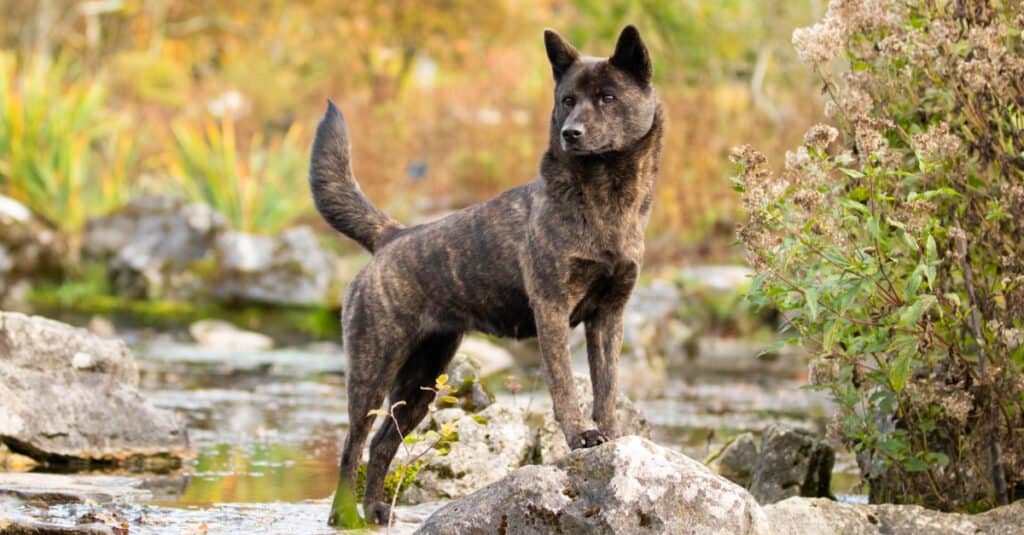
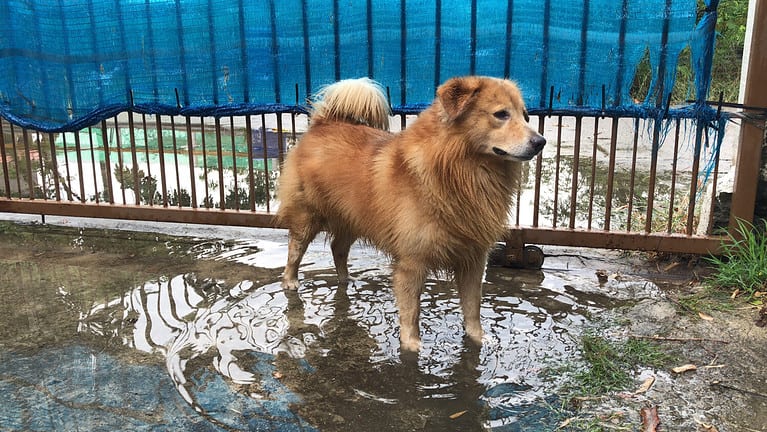
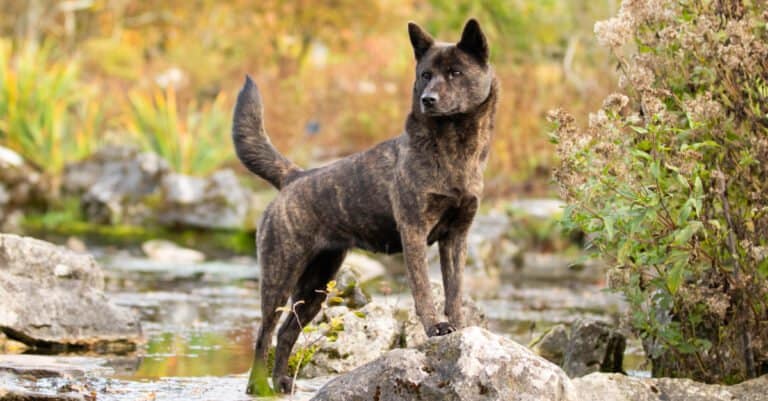
Kai Ken in a River

Kai Ken can weigh up to 55 lbs.

This dog breed has thick but smooth hair, with height and weight varying significantly. Their colors often have a variation of brown, but may change with their surroundings. While females can be as small as 25 lbs., males usually are no smaller than 35 lbs. Still, these dogs can get as heavy as 55 lbs, depending on genetic heritage. Kai Ken typically stands at 17 to 22 inches tall.

Common Health Issues

For purebred Kai Kens, the purity of their bloodline determines potential congenital health issues. Considering their size and incredible drive for activity, the most common problem is injuries while active. Some variations of the breed are stocky, while others are slender, leading to differences in which activities are safe for which dogs.

Kai Ken may suffer from progressive retinal atrophy, negatively impacting eyesight. It is important to keep up with regular annual visits to your veterinarian to ensure problems do not go untreated.

Ear infections are also rather common. Dogs with ear issues may show signs through scratching and shaking their head, while others have a dark and noticeable discharge or odor. Do not attempt home treatment without consulting a vet.

Mostly, Kai Ken suffer from:

  • Eye problems
  • Injuries
  • Ear infections
  • Hip dysplasia
  • Cancers
  • Allergies
  • Luxating patellas

Kai Ken Temperament and Behavior

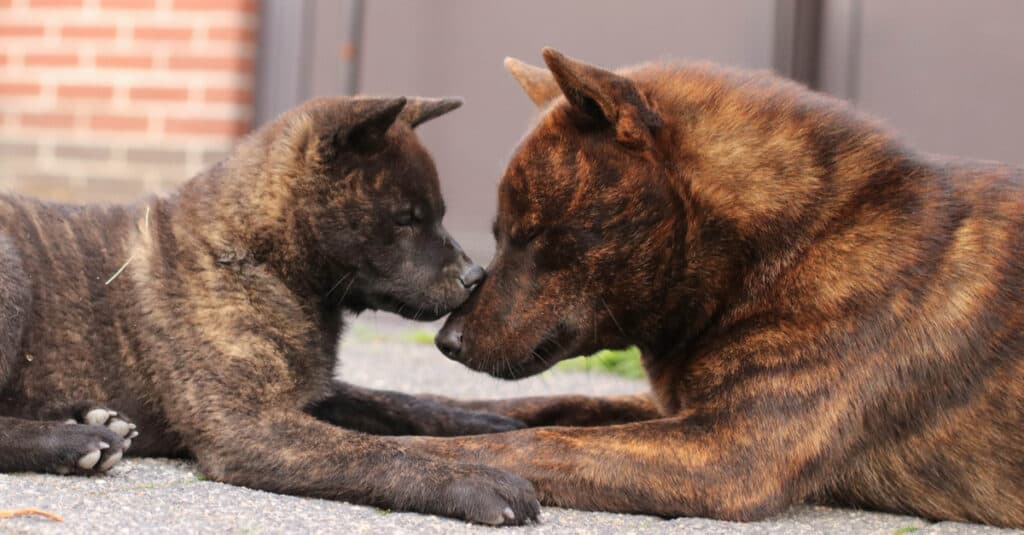
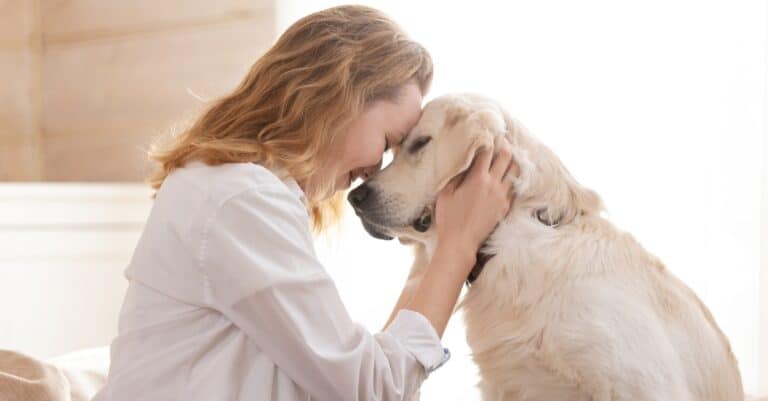
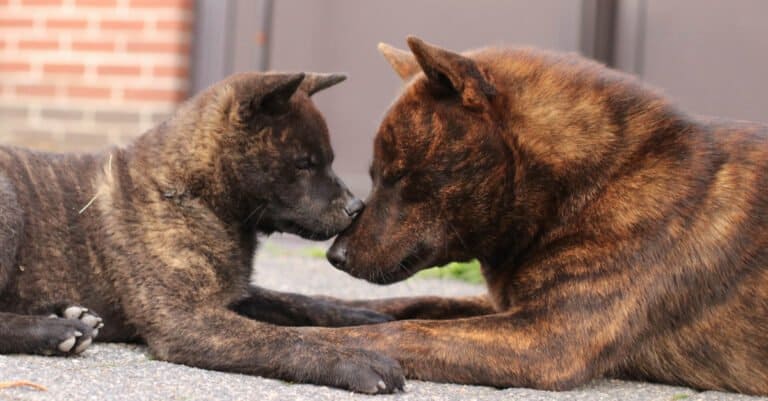
Kai Ken Nose-to-Nose with Puppy

Kai Ken are affectionate, fiercely loyal, and thrive when given attention.

The Kai Ken, also known as the “Tora Inu”, has a loyal personality, bonding deeply with an owner. Often adopted for their hard-working nature, these dogs seem to have boundless bravery that makes them incredible watchdogs. They seemingly spring into action whenever a threat is nearby, ensuring that none of their loved ones ever have anything to fear.

The most common trait of this breed is the desire to please. They love their owners fiercely, relying on them as a pack leader. The majority of their life is spent with their family, making it easy for them to bond. Most behaviors they perform are for the attention of the people they love, so make sure to engage as much as possible to keep them happy and reassured.

Though their general temperament is loving, Kai Ken also tends to place their loyalty into one person in the family, the “alpha.” Said person will be best able to socialize and train the dog, as it is likely that they will look to them for cues. Predisposed to hunting, it is important to establish good behavior in your Kai Ken early in life.

Caring for Kai Ken
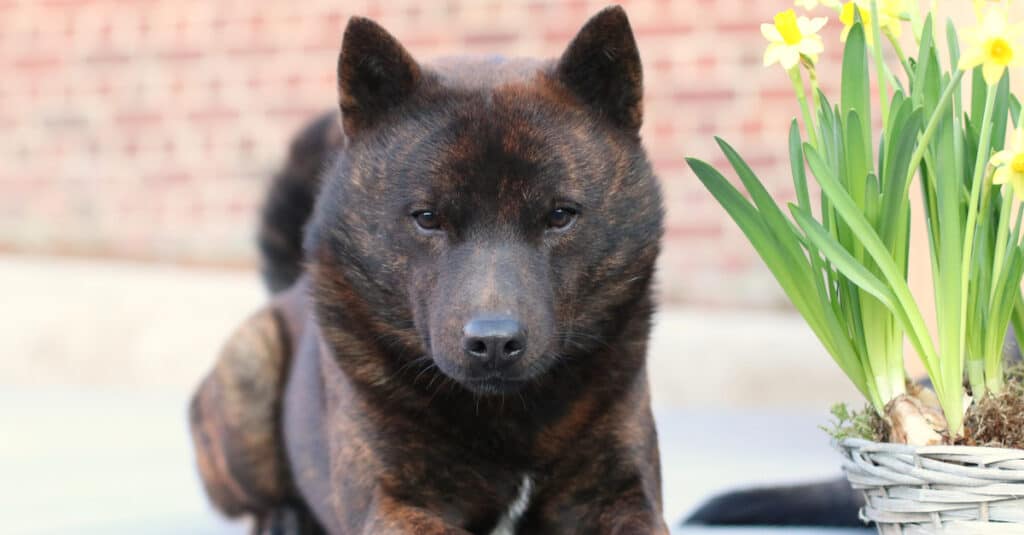
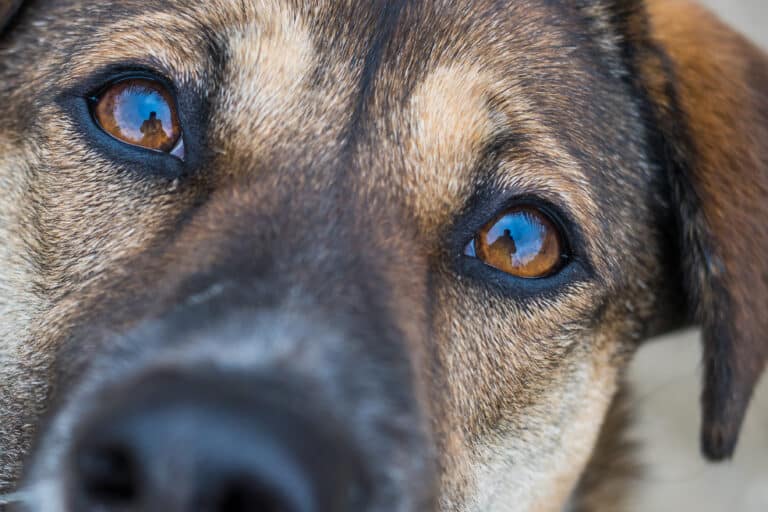
Kai Ken Close-Up

Kai Ken are suited to apartment living; their coat is easily dirt-resistant, and does not give off a strong odor.

Caring for Kai Ken dogs can take a lot of work, but below are a few tips to make the entire experience easy and fun. Whether you’re adopting a puppy or a grown dog, consider these options to ensure that you meet their basic and more complex needs.

The Best Dog Food for Kai Ken Dogs

Kai Ken dogs require very high-quality dog food. Adults typically eat about 1.5 to 3 cups a day, portioned into two meals per day. Each pet is unique, depending on their age, health, amount of activity, and personality. Consult with your veterinarian if you have concerns regarding feeding or diet.

Water should also constantly be available for this breed to remain hydrated enough for their activities.

Maintenance and Grooming
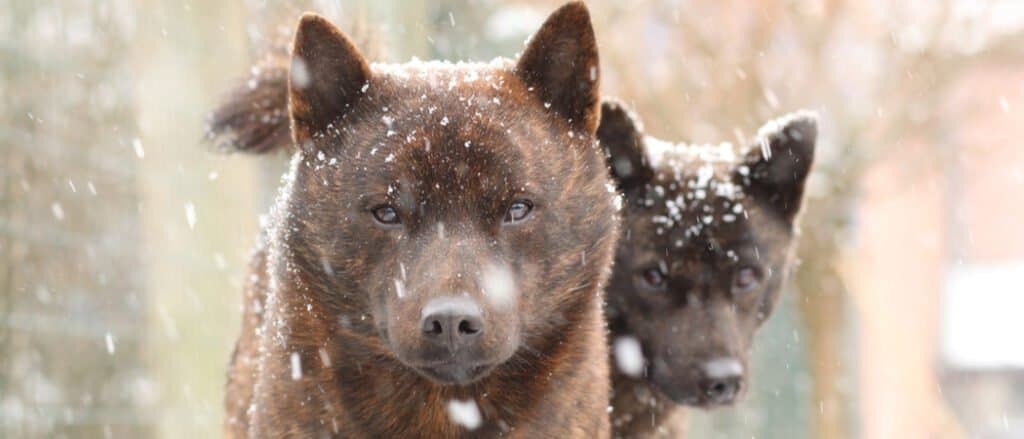
Kai Ken

Kai Ken were originally bred to hunt and are exceptionally intelligent.

Perhaps the best part about Kai Ken dogs is that they are pretty easy to keep clean. Their coat resists dirt buildup for the most part, and they don’t give off much odor. Most of the major shedding happens twice a year, but brushing a few times a week can help control the amount of regular shedding. You can hold off on bathing until they get truly dirty, but only use a canine shampoo.

To preserve dental health and hygiene, brush their teeth every other day. To help monitor for ear infections, check the ears for any possible infection or discharge. Dogs should also have their nails trimmed when they start to get long, though a professional groomer or veterinary technician can handle this task if an owner is hesitant.

Training

One of the best parts of training the Kai Ken breed is that they thrive on pleasing their alpha. As puppies or adults, these dogs are incredibly intelligent, picking up cues quickly. Originally bred to hunt, these dogs may have natural inclinations to do so, which they can be trained out of in order to be friendly, playful dogs.

Training should include socialization. Somewhat defensive of their owners, Kai Ken will need to understand the difference between a threat and a friend. Teaching them to be in different environments and settings is easily done through rewarding them with positive reinforcement in the form of praise and treats.

Exercise

If you are looking for an active pet, then this “tiger dog” is a great match. Whether it’s swimming, running, climbing, or hunting, you won’t be alone in your adventures. Kai Ken should spend about an hour per day going on a walk or rambunctiously playing.

As much energy as this breed expends, they can live quite happily in an apartment. If you have a yard, they have a safe place to explore and play. No matter the household, just make sure that your pet gets enough mental and physical stimulation to stay happy and healthy.

Puppies

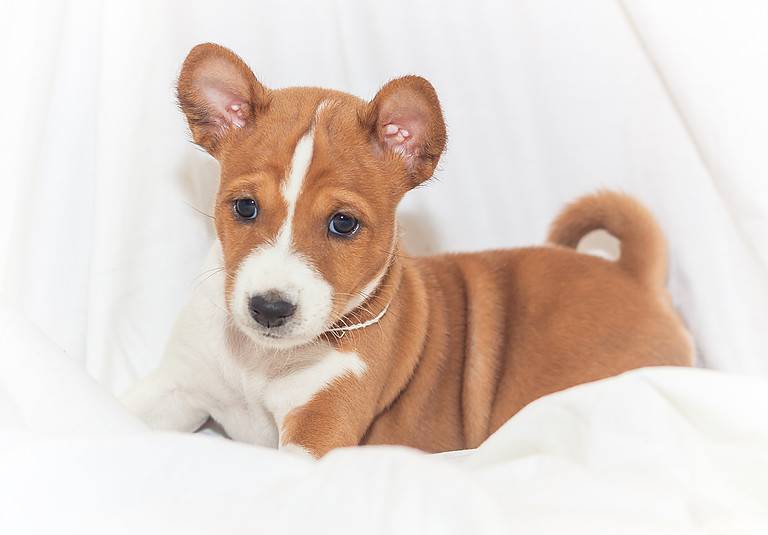
The puppies of this rare breed have the same high energy and need to play as their adult counterparts. They need to be fed high-quality dog food that is specifically intended for puppies, rather than adults. It is crucial to use this brief time to socialize them with other people and animals in their surroundings to manage their natural inclination to be a watchdog.
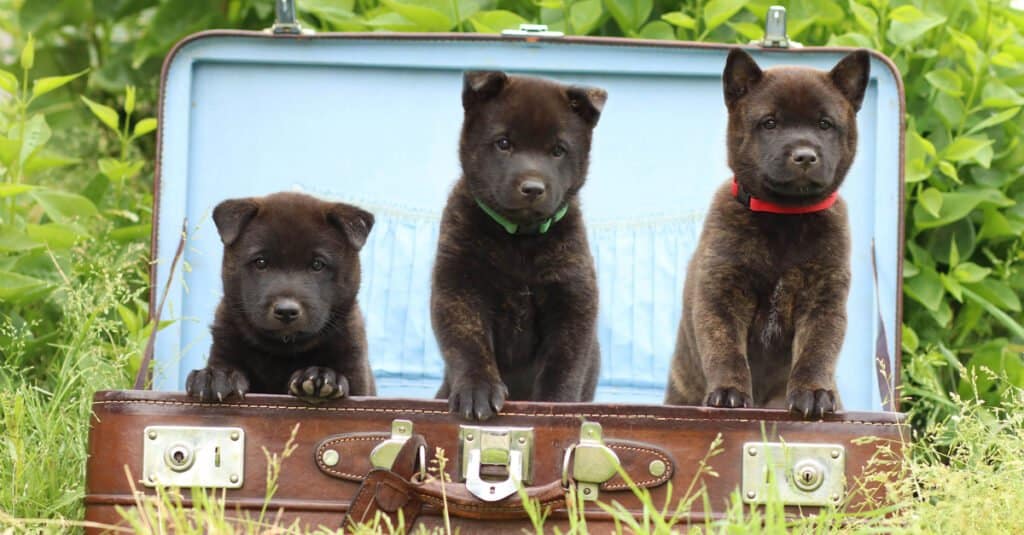
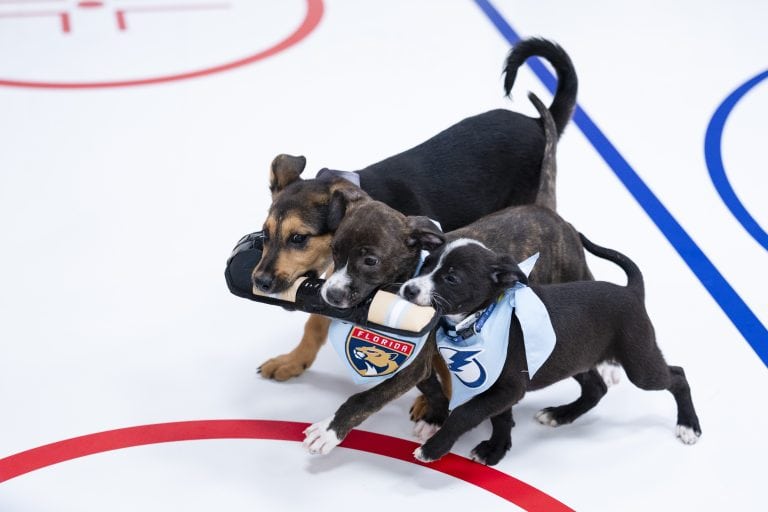
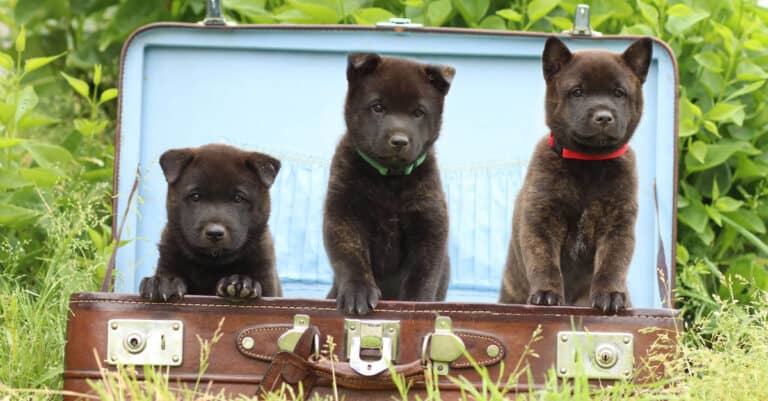
Three Kai Ken Puppies in a Suitcase

Kai Ken Puppies are pretty energetic and require age-appropriate food

Children

These dogs are meant to be around a family, but not necessarily children. They have a rather large frame, and they like to play rather roughly. Kai Ken are incredibly sensitive to the emotions of the alpha in the family, and may sense the stress or frustration towards someone else in the household, escalating the situation.

However, every dog is different. With the right training and socialization, they may feel more comfortable around children. Be sure to supervise interactions with new people and teach your child how to properly engage in order to avoid potential harm.

Dogs similar to Kai Ken

Other dogs that are similar to Kai Ken include:

  • Akita: The Akita has all of the sass and fur that the Kai Ken shows off, but with a much fluffier build. They may need extra brushing, but they are equally loving.
  • Shiba Inu: The Shiba Inu is also originally from Japan, hunting small animals and birds. While much fluffier, they are slightly smaller than others.
  • Japanese Chin: If you’re into the culture in Japan, the Japanese chin offers a much smaller and elegant pup to enjoy.
View all 103 animals that start with K

Sources

  1. American Kennel Club / Accessed September 11, 2021
  2. Wikipedia / Accessed September 11, 2021
  3. DogTime / Accessed September 11, 2021
  4. Kai Ken Society of America / Accessed September 11, 2021
  5. Dog Zone / Accessed September 11, 2021
  6. The Smart Canine / Accessed September 11, 2021
  7. Pet Keen / Accessed September 11, 2021
  8. Dog Lime / Accessed September 11, 2021
Austin S.

About the Author

Austin S.

Growing up in rural New England on a small scale farm gave me a lifelong passion for animals. I love learning about new wild animal species, habitats, animal evolutions, dogs, cats, and more. I've always been surrounded by pets and believe the best dog and best cat products are important to keeping our animals happy and healthy. It's my mission to help you learn more about wild animals, and how to care for your pets better with carefully reviewed products.
Connect:

Thank you for reading! Have some feedback for us?


Kai Ken FAQs (Frequently Asked Questions)

Kai Ken puppies cost about $1,500 USD from a reputable breeder. With their food and healthcare considered, the breed can be quite expensive (based on the brand). In just one week, this pup can go through 2 lbs. of food until they are 26 weeks old, and you’ll have to double it afterward. The breed is not suitable for novice dog owners.