









Quick Take
- These tiny dogs carry a 1,000-year-old job title, which explains why they behave nothing like the lap dogs they appear to be. Explore their ancient origins →
- The poodle half of this breed isn't what most people think, and that misconception changes everything about how you'd raise one. See the poodle's roots →
- Lhasapoos are whip-smart and easy to train, yet so many owners end up with an aggressive, unmanageable dog. See how training works →
- One grooming step owners routinely skip can lead to a health problem serious enough to require surgery. Check the grooming details →
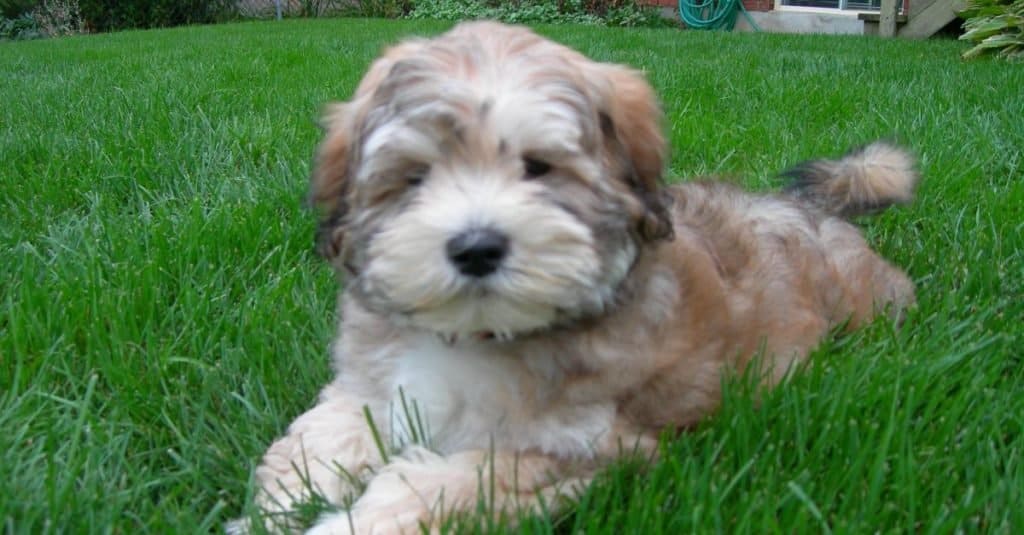
Owning a Lhasapoo is always an adventure because no two Lhasapoos are ever quite alike. These cuddly, spunky, highly intelligent dogs are a cross between the Lhasa Apso and the poodle. Some inherit the poodle’s curly coat while others sport the long, silky hair of the Tibetan breed. Lhasapoos will vary in size, depending upon whether their poodle parent was a miniature or toy breed. Puppies bred from toy poodles are dubbed teacup Lhasapoos. You can often find full-grown Lhasapoos in rescue shelters.
Though small in size, Lhasapoos make great watchdogs. They inherited their protective instincts from Lhasa Apso ancestors who were charged with guarding inner temple sanctums in their native Tibet. When trouble came calling, the Lhasa Apso’s barks would rouse enormous Tibetan mastiffs who would get rid of the intruders. Lhasapoos, thus, tend to be bossy and need a firm but loving hand to teach them they’re not the alpha of the pack. Another name for the Lhasapoo is Lhasadoodle.

3 Pros and Cons of Owning a Lhasapoo
| Pros | Cons |
|---|---|
| They’re mentally quick: Poodles and Lhasa Apsos are both bright dogs, so it stands to reason their offspring are bright, too. Lhasapoos relish games and can be trained to do tricks so long as the training involves lots of positive reinforcement. | They can be aggressive: It’s a trait Lhasapoos inherit from both parental lines. As a sentinel dog, Lhasa Apsos are wary of strangers, and poodles tend to assert dominance unless they are kept in check. Consistent obedience training and socialization from an early age are the keys to overcoming aggression in a Lhasapoo. |
| They form strong bonds: Lhasadoodles can be very affectionate and playful. They tend to be one-person dogs, but if you focus on teaching them socialization skills when they’re pups, they will easily learn how to get along with the other human and animal members of your family. | They’re yappers: Whenever someone is at your front door, your Lhasa Apso/poodle hybrid will let you know about it by barking loudly. Of course, this barking trait is also what makes them excellent watchdogs despite their small size. |
| They’re hypoallergenic: Neither the poodle nor the Lhasa Apso sheds very much, and the Lhasapoo has inherited its parents’ hypoallergenic coat. Lhasadoodles are great canines for people who love dogs but who don’t like to sneeze. | They don’t do well with young children: Because they bark a lot and can be aggressive, Lhasapoos are not recommended for households with young children. They do extremely well in homes with children who are old enough to respect their boundaries, though. |
Size and Weight
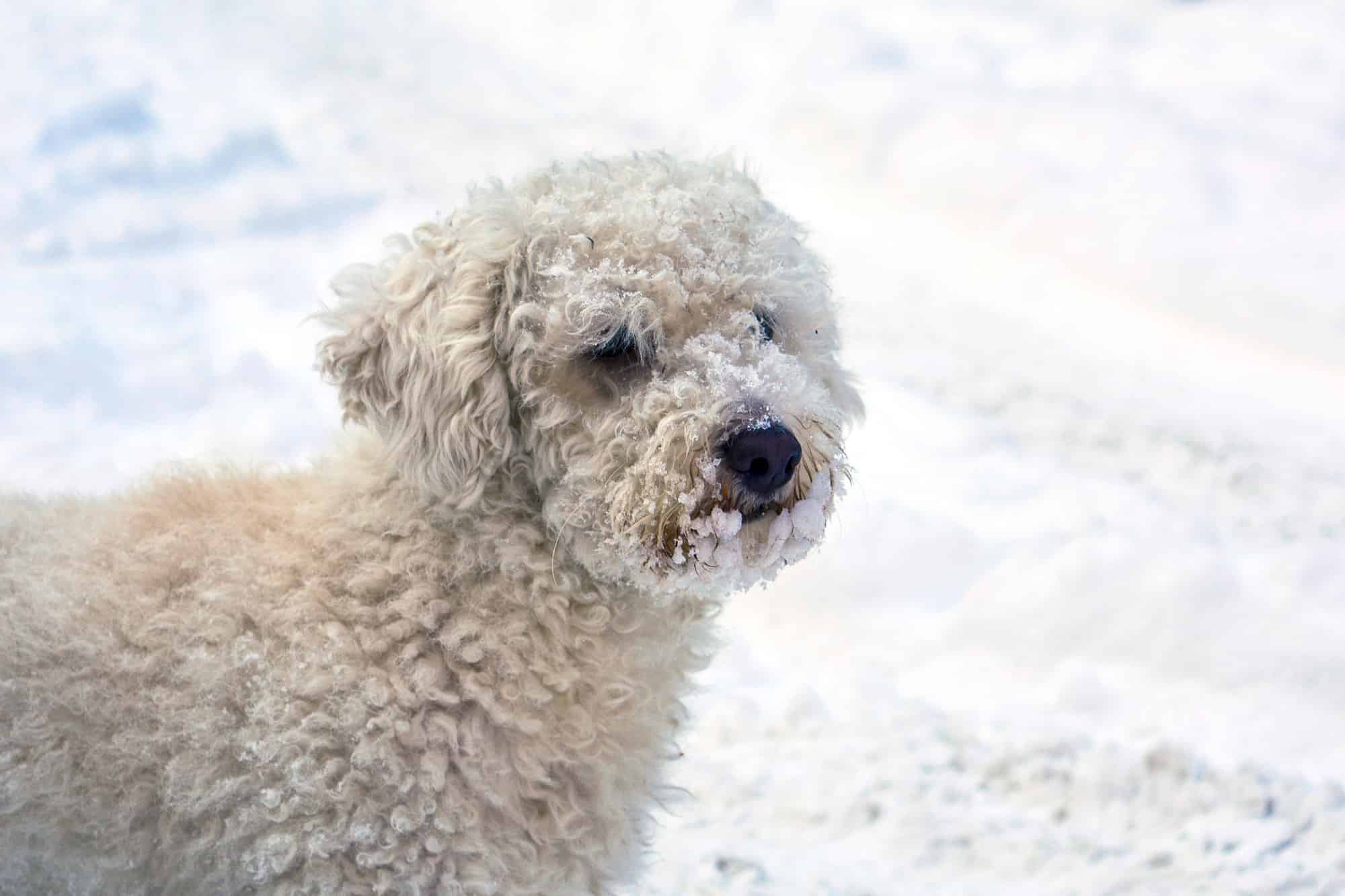
Lhasapoo males are slightly larger than females, just like Lhasa Apsos.
©iStock.com/RADsan
Depending on its parent poodle line, a Lhasadoodle can be a mini size or a teacup size. Mini Lhasadoodles have a miniature poodle parent. They range from 10 to 15 inches in height and weigh between 10 and 18 pounds. Teacup Lhasadoodles have a toy poodle parent. They range from 9 to 13 inches in height and weigh between 10 and 15 pounds.
Like Lhasa Apsos, Lhasadoodle males are slightly larger both in height and weight than females of the same breed. They will reach their adult height between 9 and 12 months, but it may take them another six months to fill out to their full adult weight.
Origins
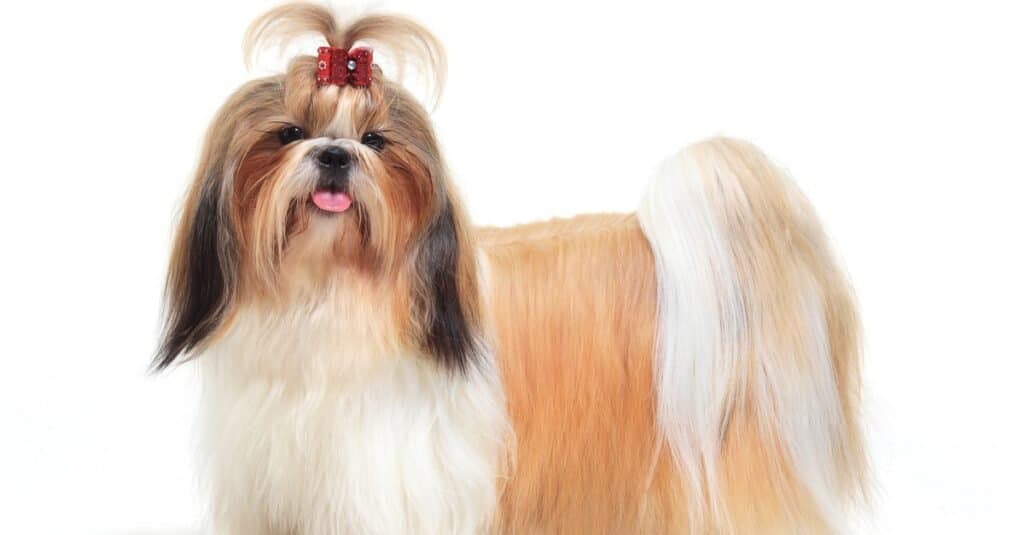
Lhasa Apsos once kept watch over monasteries in ancient Tibet
©Rombrant77/Shutterstock.com
The history of the Lhasapoo goes back a thousand years to the monasteries of Tibet, where the sage, watchful Lhasa apso kept watch over ancient religious sanctuaries, along with giant Tibetan mastiffs. However, it wasn’t until 1933 that the first of this silken-furred species would make its way to the United States as a diplomatic gift. A couple of years later, the breed was recognized by the American Kennel Club.
Because the Lhasapoo is also part poodle, a glimpse at the latter breed is also required. France’s national canine actually has German origins. And despite that somewhat pampered appearance, the poodle was actually created to aid hunters in snagging waterfowl — a role it is still engaged in today. (Fun fact: its name actually stems from the German word for splash: pudel).
When precisely did these two breeds come together to create this adorable, somewhat territorial little canine? No one knows for certain. Experts, however, assert that designer breeds became the in thing about two decades ago, which is likely when the first adorable furball of this variety came into being.
Common Health Issues
Dogs with shortened muzzles, like the Lhasa Apso, are sometimes affected by a condition called brachycephalic airway syndrome. These dogs may find it difficult to breathe, particularly when it’s hot out or when they’re exercising vigorously. If your Lhasapoo has inherited a shortened muzzle, it’s important to make sure his or her nostrils are fully open. If you notice your pet snorting or sniffing unusually, then it’s time for a visit to the vet. Like other toy breeds, some Lhasadoodles may also have unstable knees, which occasionally slip out of place. This condition, which is known as luxating patella, can be serious enough to warrant surgical intervention. Other conditions some Lhasapoos are prone to include eye diseases like retinal atrophy, cataracts, glaucoma, and “cherry eye” (prolapsed nictitating membrane). Despite these health issues, Lhasapoos typically live 12 to 15 years.
Temperament
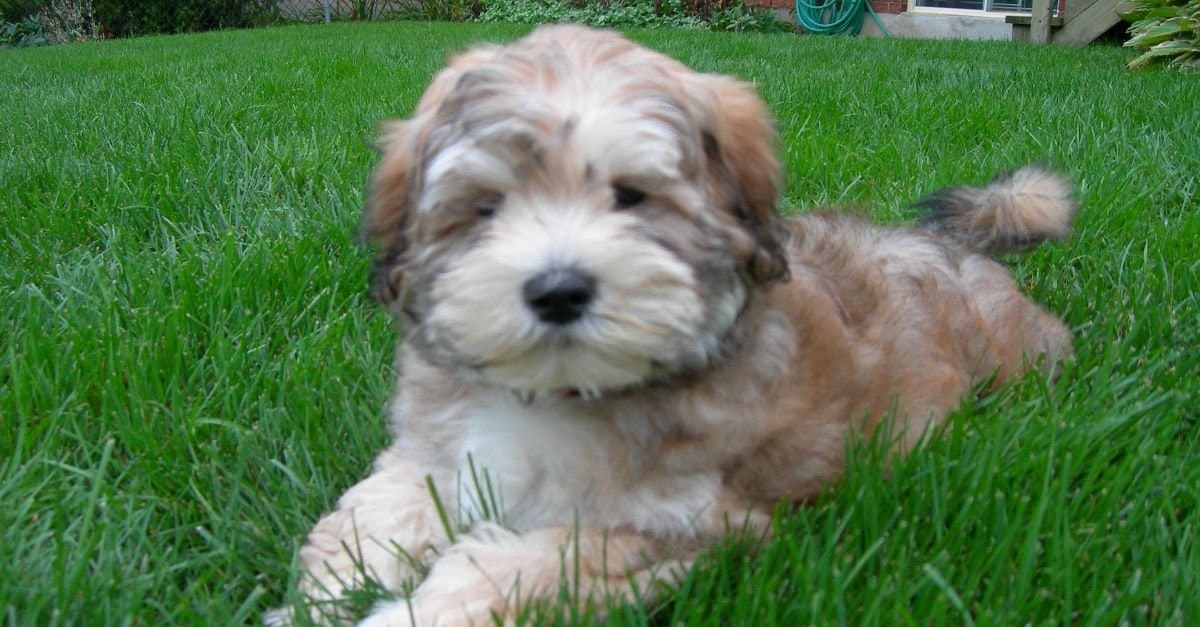
Lhasapoos can be very affectionate and playful. They tend to be one-person dogs, but if you focus on teaching them socialization skills when they’re pups, they will easily learn how to get along with the other human and animal members of your family.
©No machine-readable author provided. Happybeef assumed (based on copyright claims)., Public domain, via Wikimedia Commons – Original / License
When a Lhasapoo loves you, he or she really loves you. You can expect to have a full lap whenever you’re sitting on the couch. These pets will also be sweet and playful with other members of the family, including other companion animals, so long as they’ve gotten to know them. It takes Lhasapoos a while, though, to warm up to strangers. They may be small dogs, but they have fully embraced the responsibility of protecting you and yours.
How To Take Care of Lhasapoos
Lhasapoos can be relatively high maintenance. Even as puppies, they need regular haircuts, a fair amount of other grooming, consistent training, and a moderate amount of exercise to help them grow into healthy, engaging pets. There are several breed-specific factors you must take into consideration when it comes to dealing with Lhasadoodle pups and adults.
The Best Dog Food
Adult Lhasapoos should be fed one cup of high-quality dog food a day, split between two meals. Avoid giving them table scraps; as small dogs, even a minor weight gain can be unhealthy for them.
Puppies will need to eat small amounts at least three or four times a day. By six months old, your pet should be eating two meals a day. The optimal amount for your pup will vary according to his or her metabolism and activity levels, so if you have any questions, consult with your vet.
Maintenance And Grooming
Whether they inherit the curly coat of a poodle or the long, straight coat of a Lhasa Apso, a Lhasapoo’s coat needs to be brushed at least once daily so that mats and tangles don’t develop. Wash your dog’s face at least once a day; Lhasapoos are one of the breeds that commonly develop brownish stains under their eyes if that area isn’t kept scrupulously clean. A weekly bath is a good idea, too.
You’ll want to visit a professional groomer every three to four weeks for haircuts, and you’ll want the groomer to pay special attention to haircuts around the genital area so that your dog doesn’t end up with urine stains or with bits of feces clinging to the area beneath his or her tail. Make sure to keep your dog’s ears clean and dry to minimize the risk of ear infections. Dogs with shortened muzzles may be prone to periodontal disease, so make sure to brush your Lhasapoo’s teeth daily.
Training
Lhasapoos pick up new commands easily. They have a stubborn streak, though, so the earlier you begin working with them on training and socialization, the better. These dogs respond far better to positive reinforcement than to the threat of punishment. You may struggle with training from time to time, but if you give up on it, you’ll increase the likelihood that your Lhasadoodle will develop negative traits like aggression and wariness. It’s worth working with a professional dog trainer if you’re having problems working with your pet on your own.

Lhasapoos can be stubborn, so it is important to start training as early as possible.
©Jaypee00/Shutterstock.com
Exercise
Lhasapoos are active but small; they’ll do well with 60 minutes of moderate exercise per day. Some Lhasapoos may enjoy swimming, especially if they inherit traits from their poodle parent, but many are not naturally drawn to water. So long as you provide your Lhasadoodle with plenty of toys, he or she should do well in an apartment as well as a larger house.
Puppies
Lhasapoo puppies are adorable. They look like miniature Ewoks! Their tiny size means you’ll have to keep a close eye on them to make sure they don’t get into any trouble wandering around their new dwelling. Even the tiniest 8-to-12-week-old pup is ready to start potty training. In fact, it’s smart to start obedience training and socialization just as soon as you get your new pup home.
Children
Like their parent, Lhasa Apsos, Lhasapoos enjoy their independence, and that means they may not have a lot of tolerance for younger children who may want to pretend their pet dog is a doll. Even when a Lhasapoo is well socialized, this dog may snap if he or she feels harassed. For that reason, Lhasadoodles do best in homes with older children.
Dogs Similar to Lhasapoos
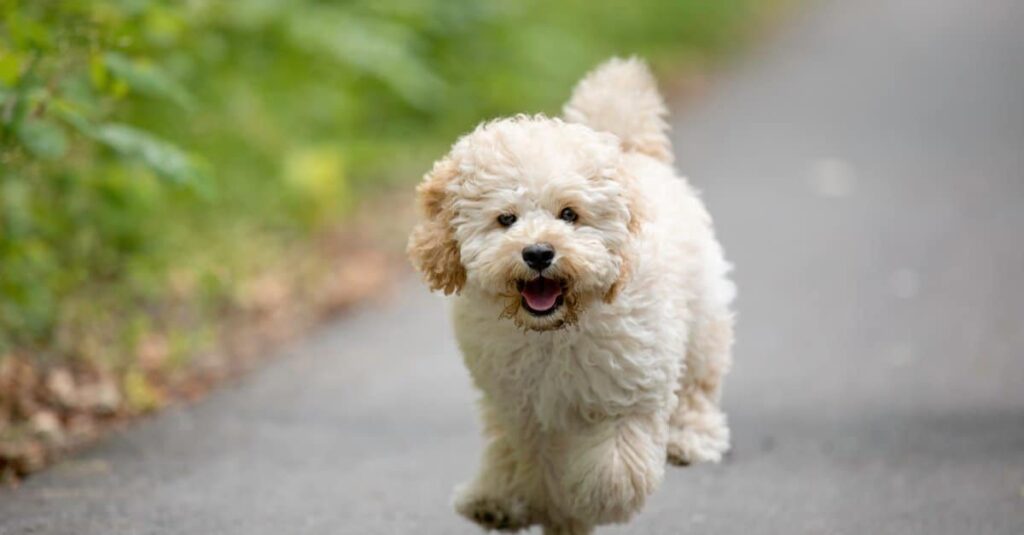
Maltipoos, like Lhasapoos, are a poodle hybrid breed.
©Rita Petcu/Shutterstock.com
Shih Tzus, Maltipoos, and Yorkshire terriers are similar to Lhasapoos in many ways.
- Shih Tzus: Shih Tzus are also a breed with roots in Tibet. Unlike Lhasa Apsos, though, these little dogs were bred to be companions, so their temperaments are far more placid than the sometimes-feisty Lhasapoo. They’re slightly smaller than Lhasapoos, too, usually growing no more than 11 inches tall. Their long, silky coats come in a variety of colors, including white, gold, black, and grey.
- Maltipoos: Maltipoos are a hybrid cross between a poodle and a Maltese. They are gentle, affectionate, and playful, but they can become anxious if they’re left alone too long. Depending upon whether their poodle parent was a mini or a toy, Maltipoos range from 8 to 14 inches tall. They’re intelligent dogs who are easy to train.
- Yorkshire terriers: Yorkshire terriers or Yorkies may be small dogs, but they don’t know it. This breed is as spunky and energetic as any terrier. Big Yorkies are only 9 inches tall and seldom weigh more than 7 pounds. They need frequent grooming to keep their long, silky coats smooth and clean.
Lhasapoo Pictures
View all of our Lhasapoo pictures in the gallery.

iStock.com/WestWindGraphics
Sources
- Animalso / Accessed March 22, 2021
- Vetstreet / Accessed March 22, 2021
- Dogtime / Accessed March 22, 2021
- The Happy Puppy Site / Accessed March 22, 2021
- Petcoach / Accessed March 22, 2021
- The Nest / Accessed March 22, 2021
- Oakhill-vets / Accessed March 22, 2021
- Wamiz / Accessed March 22, 2021
- Embrace Pet Insurance / Accessed March 22, 2021
- Dog Breed Plus / Accessed March 22, 2021