






Quick Take
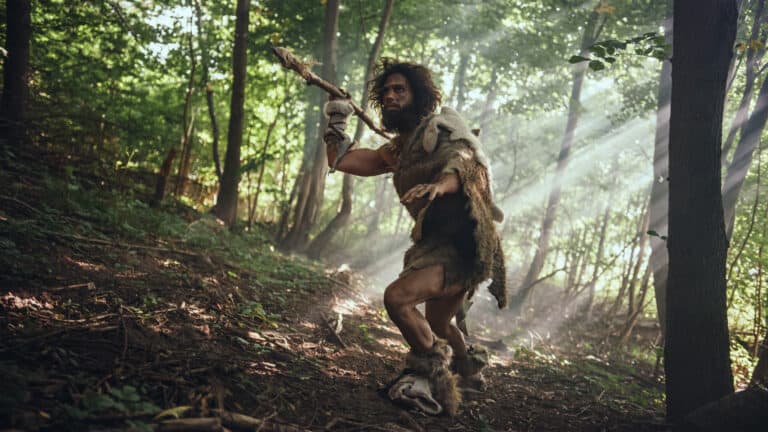
- Neanderthals were apex predators who hunted megafauna and outmuscled ice-age predators, but what ultimately drove them to extinction was something far closer to home. Apex predators and their end →
- Their DNA didn't die with them, and the odds are good that some of it is inside you right now. Interbreeding with Homo sapiens →
- Evidence of cannibalism among Neanderthals is undisputed, yet the reason behind it challenges every assumption you'd make. Cannibalism among Neanderthals →
- Neanderthals sewed clothes, created art, and likely spoke a complex language. So what exactly separated them from us? Neanderthal culture and behavior →
Neanderthals, the oldest extinct relatives to humans, existed between 400,000 and 40,000 years ago. From the time the first Neanderthal fossils were discovered in 1829, the relationships between these hominids and modern humans have been researched extensively. They appear to have existed concurrently with modern humans, and their eventual extinction may have been closely linked to the rise and spread of Homo sapiens as a competing species.

5 Neanderthal Facts
- Some of the first Neanderthal fossils were discovered in Germany’s Neander Valley, which is where the name of the species comes from.
- Extensive evidence suggests that Neanderthals made and used sophisticated tools, deliberately buried their dead, controlled fire, lived in shelters, and engaged in a variety of other advanced social behaviors.
- The ice age during which Neanderthals lived is likely responsible for many of their physical features, including their wide nostrils and shorter, stockier bodies.
- Neanderthals and humans likely evolved from a common ancestor that existed between 800,000 and 300,000 years ago; both species belong to the same genus. Some of the oldest known fossils showing early Neanderthal facial features date back to about 430,000 years ago and were discovered in Spain.
- When modern humans spread into Europe as the ice age advanced, they likely acted as a catalyst for Neanderthals’ extinction.
Classification and Scientific Name
Commonly known as Neanderthals, the scientific name for this species is Homo neanderthalensis. The name is derived from one of the earliest sites where Neanderthal fossils were discovered — the Neander Valley, which is located near modern-day Dusseldorf, Germany. In German, the word tal means “valley.” The word Neanderthal roughly translates to mean “inhabitant of the Neander Valley.”
The valley in Germany that this species is named for was itself named after Joachim Neander, a German theologian and teacher.
Fossils of Neanderthals were discovered in the Neander Valley, which is located near modern-day Dusseldorf, Germany.
©Roni Setiawan/Shutterstock.com
Types of Humans
Here’s a list of 8 types of extinct humans that walked the Earth up to 300,000 years ago, at the same time as Homo sapiens:
- Neanderthals (Homo neanderthalensis): They were a stocky group of hunters that inhabited Europe’s cold steppes.
- Denisovans (Denisova hominins): Denisovans lived during the Lower and Middle Paleolithic Period, and are known as the first ancient hominin species revealed only by genes, not by fossil classification. They are named after the Denisova Cave in Russia, where the first fossils were found.
- Homo erectus: The Homo erectus group lived from approximately 1.89 million years ago to 110,000 years ago during the Pleistocene Period. They inhabited Africa, Asia, and possibly Europe. They had proportions like the modern human, an upright stance, and a large, chinless face with protruding brows.
- Homo rhodesiensis/Homo heidelbergensis: Skulls of the Homo rhodesiensis species were found in sections of Central Africa such as Rhodesia, hence the nickname “Rhodesia Man.” But this has been merged with Homo heidelbergensis, based on a skull found near Heidelberg, Germany, dubbed the “Mauer Jaw,” and later bones found in Spain. These date from 400,000 to 700,000 years old.
- Homo naledi: Homo naledi lived during the Middle Pleistocene, 335,000 to 236,000 years ago. Their fossils were discovered in the Rising Star Cave, Cradle of Humankind, South Africa, beginning in November 2013. They were smaller in stature and body mass and had smaller brains than some other groups.
- Homo luzonensis: Homo luzonensis were discovered in Callao Cave in the Philippines on the island of Luzon and lived at least 130,000 years ago. They may have been pygmies.
- Homo floresiensis: This species of ancient humans, dubbed ‘Flores Man,’ lived around 17,000 to 95,000 years ago. They inhabited the island of Flores in Indonesia and are often referred to as ‘hobbits’ because of their average 3 ft 7 in stature. They were small-brained but did make fire and use tools.
- Red Deer Cave People: These ancient humans lived around 17,830 to 11,500 years ago, and lived in the Red Deer Cave in the Yunnan Province in China, named for the fact that this group consumed red deer. It remains inconclusive whether the fossils represent archaic humans or modern Homo sapiens.
Evolution
Though the first Neanderthal fossils were found in 1829 in Engis, Belgium, it took 100 years for them to be identified as this unique group. However, fossils found in 1856 in the Neander Valley gave researchers the opportunity to formally establish that name. It’s thought that Neanderthals evolved outside of Africa, while most other Homo sapiens were located in Africa until approximately 100,000 years ago.
Based on DNA research, Neanderthals are believed to have diverged from more modern human groups around 550,000 years ago. They had adaptations like short limbs and torsos, which aided in their heat conservation in the harshly cold climate. As they breathed in the air, their wide noses warmed and humidified the air.
Some researchers believe that the last common ancestor of Neanderthals and other human groups was Homo heidelbergensis, fossils of which have been found near Heidelberg, Germany, and Spain and date back as far as 700,000 years.
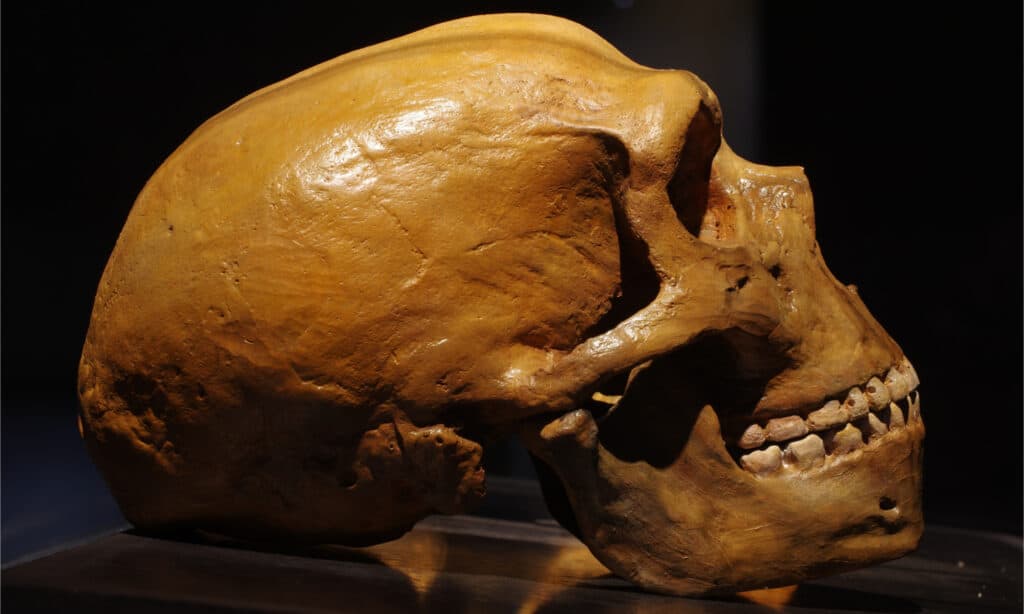
Neanderthals had adaptations like short limbs and torsos, which aided in their heat conservation in the harshly cold climate.
©Vitezslav Halamka/Shutterstock.com
Appearance and Behavior
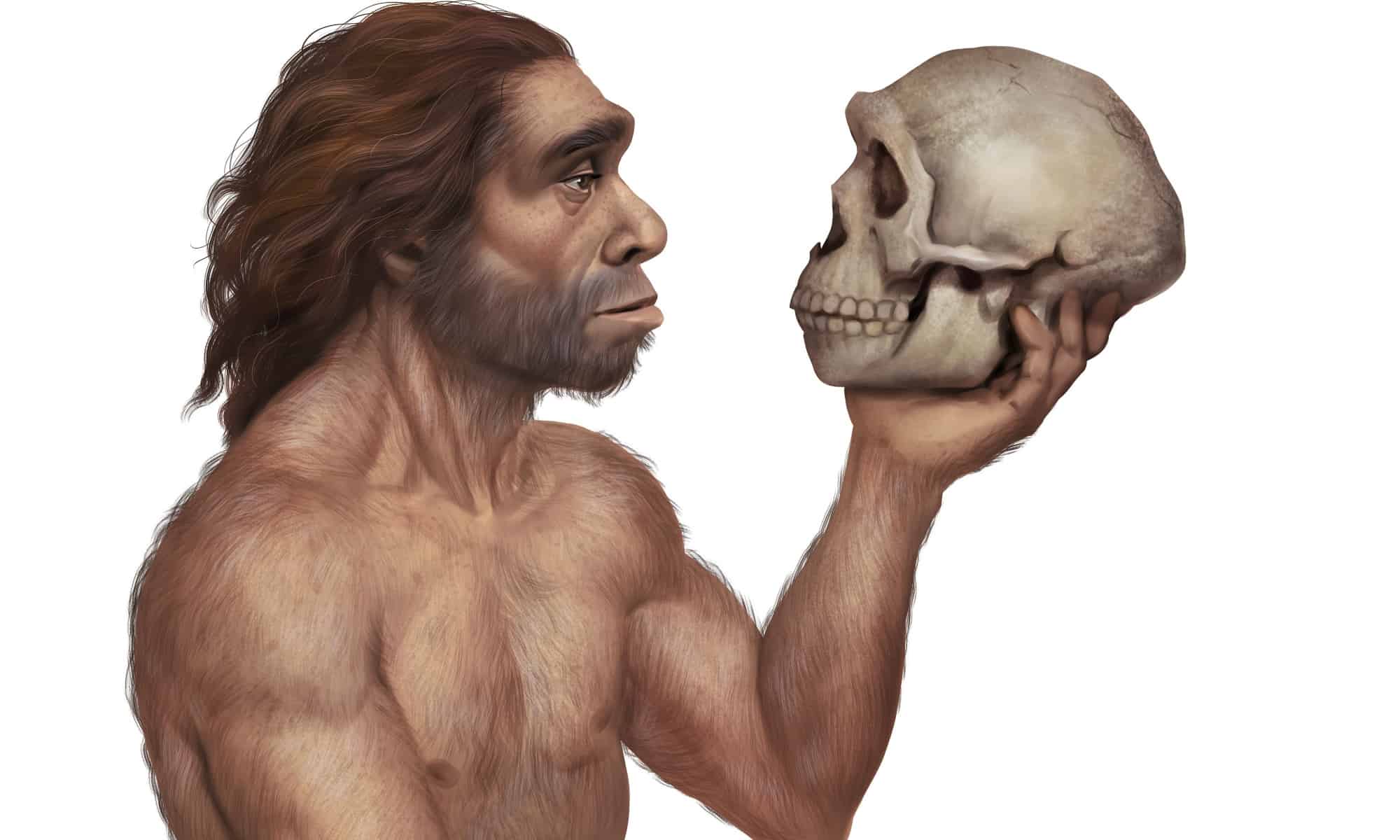
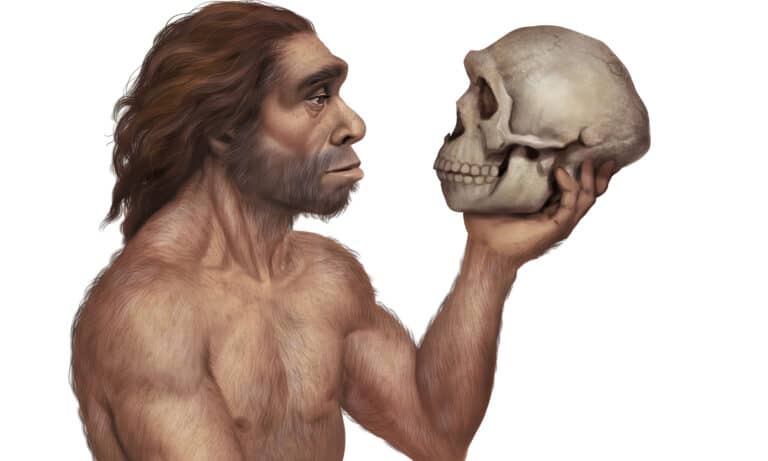
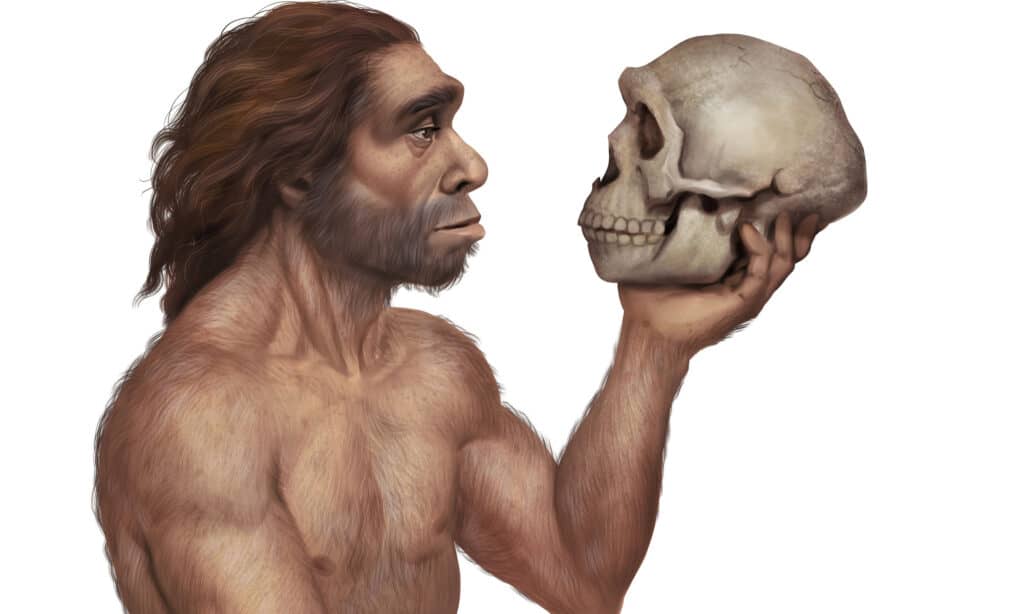
Through the examination of Neanderthal fossils and genetic studies, a great deal is known about how Neanderthals looked and behaved. Their bodies were shorter and stockier than those of modern humans — an adaptation that likely occurred to help them survive in ice-age climates. Male Neanderthals measured an average of 5 feet, 5 inches tall, and weighed an average of 143 pounds. The average Neanderthal woman measured 5 feet, 1 inch tall, and weighed 119 pounds.
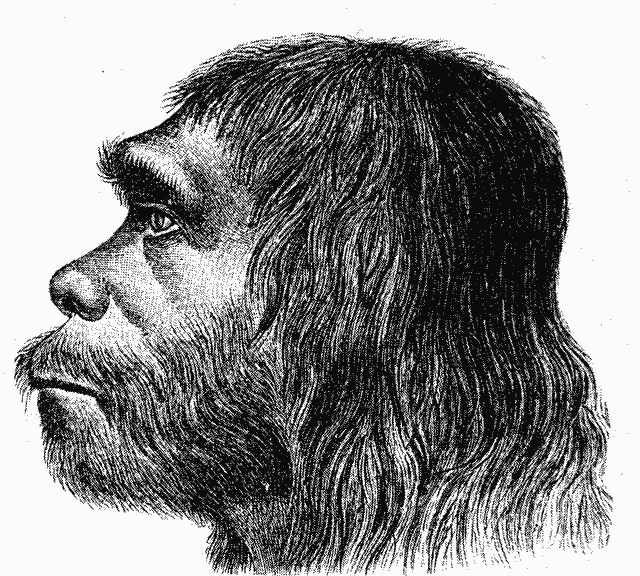
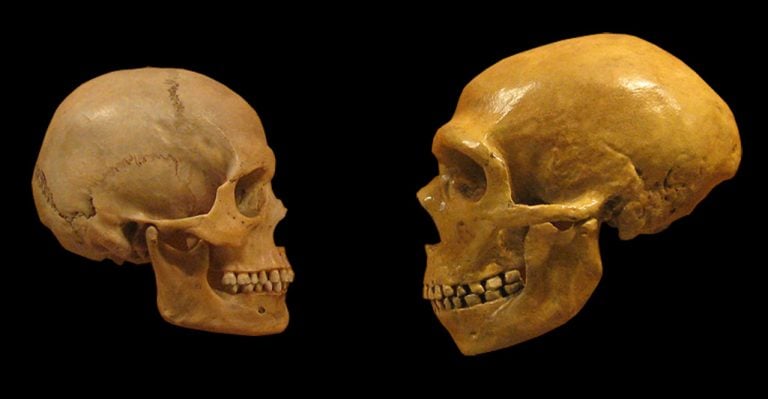
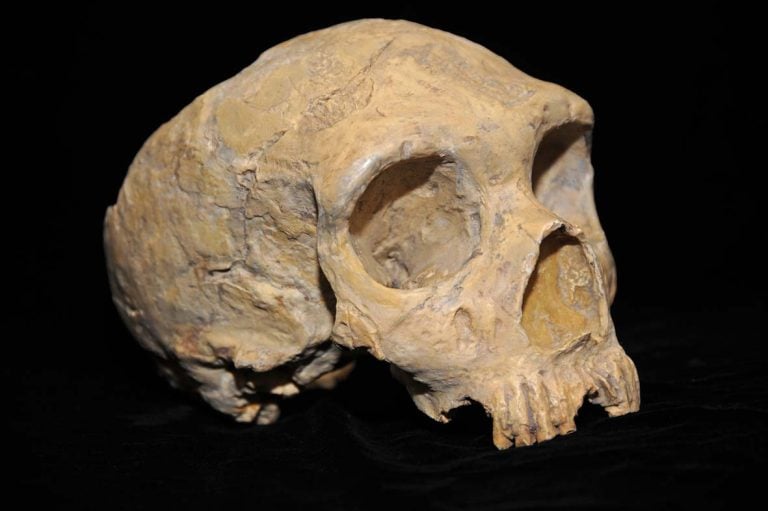
Neanderthal skulls were low-vaulted and had large orbital and nasal openings. Their brow ridges were prominently arched, and the occipital region of the skull — near the rear and base — was pronounced to anchor the large muscles of the neck. Their front teeth were larger than those of modern humans, but their premolars and molars were similar. They also had receding chins.
Neanderthals appear to have had larger diaphragms, which suggests higher lung capacities. Their chests were more pronounced, and their spines were less curved than those of modern humans. Modern Inuit and Siberian Yupiks, who live in Arctic climates, are believed to have similar builds to Neanderthals.
In terms of behavior, Neanderthals likely lived in groups of between 10 and 30 individuals, and these groups probably did not interact often with each other. However, there is some evidence that conflict occurred between groups; many Neanderthal fossils have fractures and other signs of injury.
It is believed that Neanderthal groups moved between certain areas depending on the season and that later generations continued visiting the same locations as their ancestors across extended periods. They were likely ambush hunters, meaning that they likely waited patiently before descending upon their prey. Clear evidence of their hunting prowess can be found in finds such as sharpened wooden spears and large numbers of big game remains at habitation sites.
Neanderthals engaged in the Mousterian stone tool industry and were able to construct sophisticated flake tools that were detached from prepared stone cores. These tools were used for hunting, sewing, and other activities. Based on asymmetries between their left and right arms, they likely hunted by thrusting their weapons rather than throwing them.
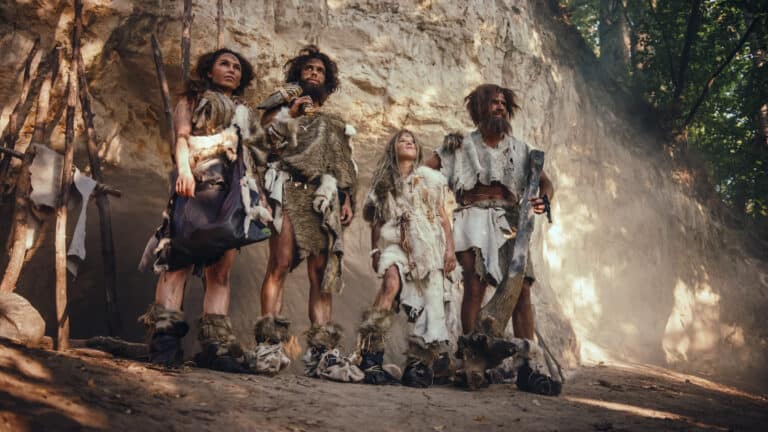
These early humans likely had a complex language that was similar to that of modern humans. It is believed that they cared for injured members of their social groups and buried their dead. They also developed non-utilitarian items, including ornamental ones that were dyed with natural pigments, and they were able to sew loosely fitting garments out of animal hides.
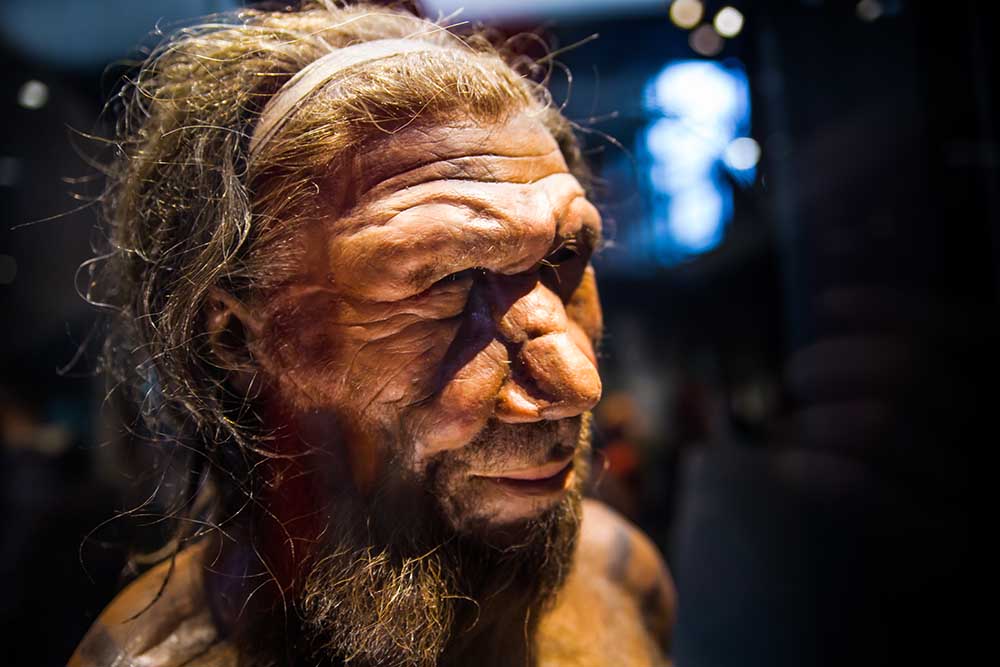
A replica of a Neanderthal adult male, based on 40,000 year-old remains found at Spy in Belgium.
©IR Stone/Shutterstock.com
Habitat
Neanderthals primarily lived in Europe and from southwestern to central Asia. Evidence of Neanderthal campsites has been found as far north as Belgium and as far south as the Mediterranean Sea. It is believed that Neanderthals thrived in forested areas that featured abundant limestone caves. Their heyday occurred before and during the last ice age of the Pleistocene Epoch, an extremely cold and unforgiving environment.
Their hearths were close to their resting and sleeping areas, suggesting that they used the same campsites repeatedly over extended periods of time. They also appear to have had campsites that were specifically used for shorter-term hunting trips, and some of their campsites were likely used on a seasonal basis.

It is believed that Neanderthals thrived in forested areas that featured abundant limestone caves.
©Gorodenkoff/Shutterstock.com
Diet
Neanderthals were skilled big game hunters and also ate considerable amounts of plant materials. Because the availability of plant foods dropped during the winter in colder climates, these early humans were likely forced to exploit other options, leading to their preference for meat. They were specialized seasonal hunters, eating whatever was available at the time. In the winter, they likely subsisted largely off of reindeer, in the summer, they primarily consumed red deer.
Hoofed animals were the preferred prey of Neanderthals. Besides red deer and reindeer, they probably hunted other Pleistocene megafauna like wild boars, woolly rhinoceroses, ibexes, cave bears, and brown bears. It is also believed that they hunted and consumed tortoises, rabbits, and many species of ground-dwelling birds. In coastal areas, evidence has shown that they also exploited marine resources; it is believed that they consumed shellfish, bluefin tunas, sea urchins, and even dolphins.
Isotopic chemical analyses of Neanderthal fossils have shown that their diets consisted of large amounts of meat. However, plaque in their molar teeth also shows that they consumed plenty of plant materials as well. Primarily forest foragers, Neanderthals likely enjoyed plant foods like mushrooms, moss, and pine nuts. They are also believed to have consumed edible grasses, and it appears that they cooked plants like legumes and acorns through processes like roasting, boiling, and smoking.
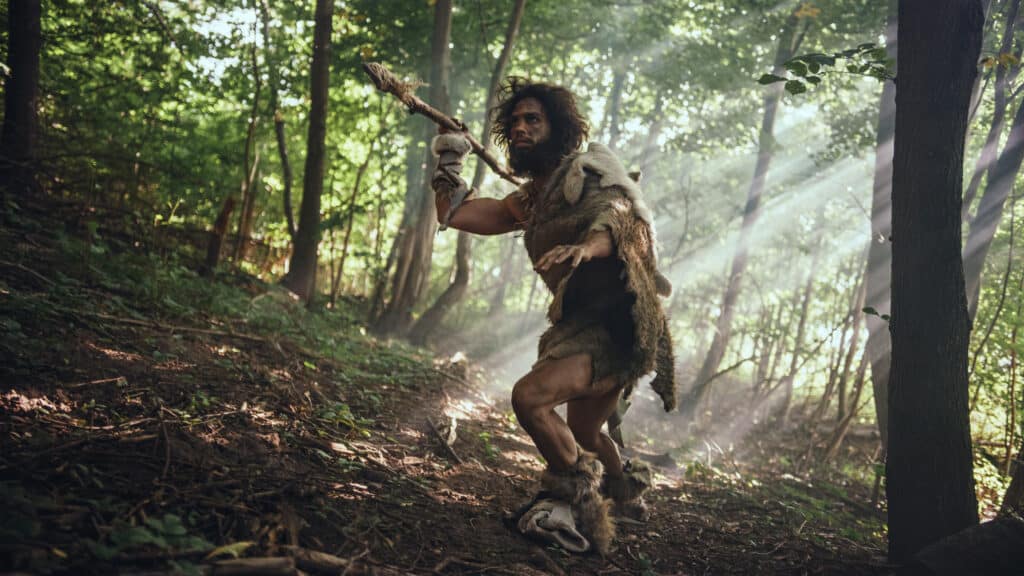
Neanderthals primarily hunted hoofed animals, but their prey also included wild boars, woolly rhinoceroses, ibexes, cave bears, and brown bears.
©iStock.com/gorodenkoff
Predators and Threats
Neanderthals were likely apex predators. Also known as alpha predators and top predators, this means that they were at the top of the food chain. However, it is believed that they had to compete with large ice age predators for their favorite foods. They most likely spent a lot of time fending off cave lions, cave bears, and even leopards to gain access to prey like horses, wild cattle, and deer.
Remarkably, Neanderthals may have also posed a threat to themselves. Evidence shows that the species engaged in cannibalism, and undisputed examples of this are abundant. However, their precise reasons for engaging in cannibalism are not known. They may have done so for ritualistic purposes, or they may have engaged in pre-burial de-fleshing. Neanderthals also may have resorted to cannibalism during extended periods of food shortage or during times of war.
Ultimately, Neanderthals’ biggest threat probably came from modern humans. Both species — Homo neanderthalensis and Homo sapiens — appear to have evolved from a common ancestor that existed roughly 700,000 to 300,000 years ago. Both species are believed to have coexisted for approximately 30,000 to 50,000 years. Although evidence shows that they likely interbred with modern humans, Neanderthals were a distinct branch of the human family tree.
It is believed that modern humans were able to outperform and outcompete Neanderthals, but didn’t necessarily exterminate them. As forested areas gave way to open steppes and grasslands during periods of climate change, modern humans gained a significant advantage over Neanderthals. Therefore, Homo sapiens likely indirectly contributed to the extinction of Homo neanderthalensis.
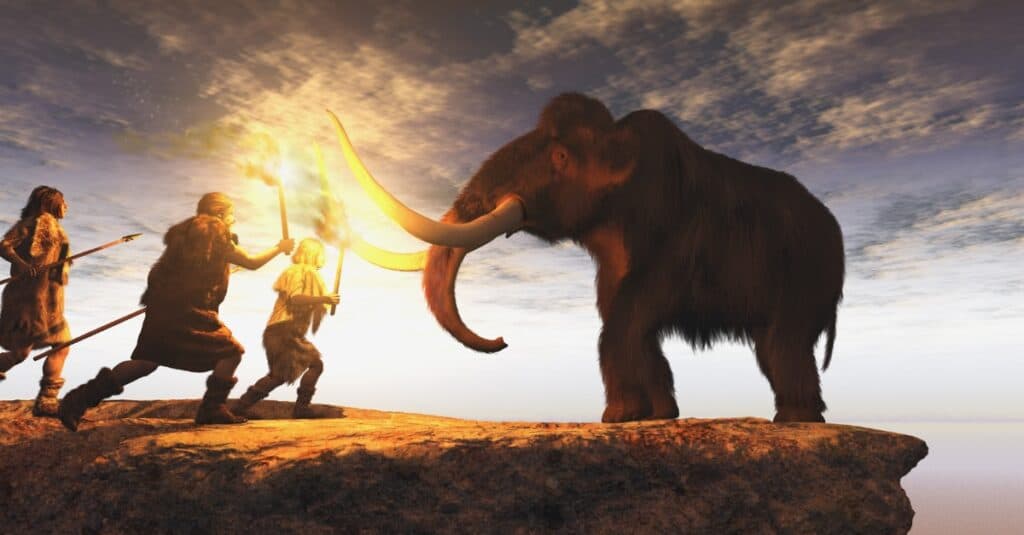
Neanderthals probably spent a lot of time fending off cave lions, cave bears, and leopards to gain access to prey like horses, wild cattle, and deer.
©Esteban De Armas/Shutterstock.com
Reproduction, Babies and Lifespan
It is believed that the majority of Neanderthals — roughly 80 percent — died well before the age of 40. The mortality rate for infants was also very high and is estimated to have been around 43 percent.
Because the total Neanderthal population never grew too large, these early humans likely engaged in high levels of interbreeding. This means that parents were likely typically close relatives. The resulting genetic abnormalities likely contributed to the high infant mortality rates.
Evidence shows that Neanderthals likely mated with Homo sapiens. In particular, the remains of a child with both Neanderthal and modern human ancestry, discovered in Portugal, likely existed roughly 24,500 years ago. Modern Europeans typically have about 2 percent Neanderthal DNA, which also supports the idea that modern humans interbred with Neanderthals.
Neanderthal babies faced harsh environments; many that survived past childbirth still likely perished at young ages. It appears that infants were weaned by their mothers around the age of 2.5 years, and they were likely expected to begin contributing immediately as hunters or gatherers. Evidence shows that Neanderthal infants frequently suffered from lead poisoning. At birth, their brains were sized similarly to those of modern human infants, but their brains grew more quickly and became larger during childhood.
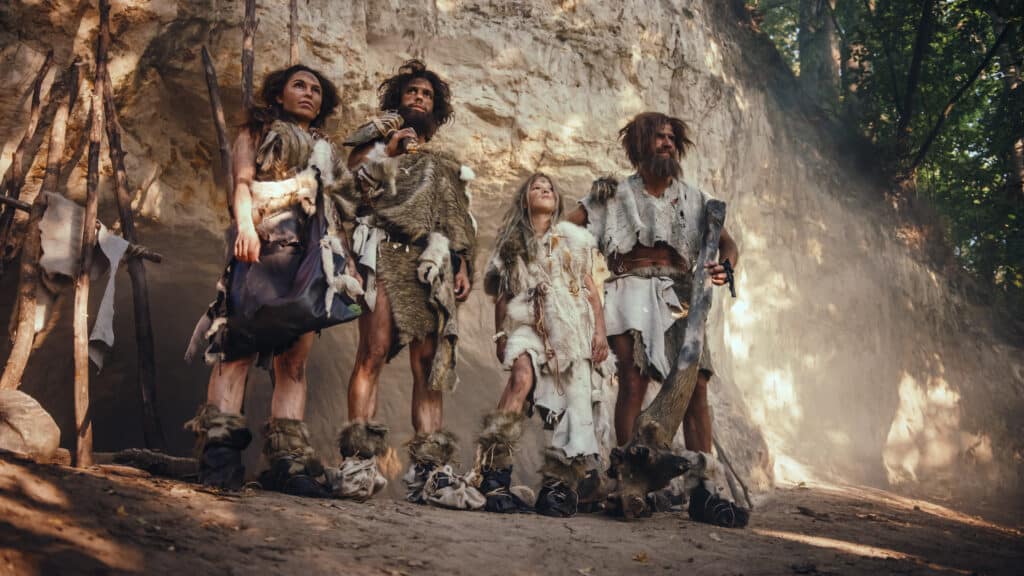
Evidence shows that Neanderthals likely mated with Homo sapiens. They also likely took part in high levels of interbreeding.
©iStock.com/gorodenkoff
Population
The modern population of Neanderthals is zero. Even when they existed, they descended from a very small population with an exceedingly small effective population — the number of members who can bear children — of roughly 3,000 to 12,000 individuals.
DNA analyses have shown that Neanderthal populations likely varied over time. Estimates of population sizes include 1,000 to 5,000 total individuals; 5,000 to 9,000 total individuals; or even 3,000 to 25,000 total individuals at one time. The population may have steadily increased up to around 50,000 total individuals before declining into extinction.
Ultimately, the highest total number of Neanderthals is believed to still have been 10 times smaller than that of contemporary populations of modern humans in Western Europe. Their populations were likely kept low due to the Boserupian Trap, a concept describing how population growth was constrained by food scarcity.
Neanderthal Pictures
View all of our Neanderthal pictures in the gallery.

Hermann Schaaffhausen - Public Domain
Sources
- David Burnie, Dorling Kindersley Animal, The Definitive Visual Guide To The World's Wildlife / Accessed November 10, 2008
- Tom Jackson, Lorenz Books The World Encyclopedia Of Animals / Accessed November 10, 2008
- David Burnie, Kingfisher The Kingfisher Animal Encyclopedia / Accessed November 10, 2008
- Richard Mackay, University of California Press The Atlas Of Endangered Species / Accessed November 10, 2008
- David Burnie, Dorling Kindersley Illustrated Encyclopedia Of Animals / Accessed November 10, 2008
- Dorling Kindersley Dorling Kindersley Encyclopedia Of Animals / Accessed November 10, 2008
- David W. Macdonald, Oxford University Press The Encyclopedia Of Mammals / Accessed November 10, 2008