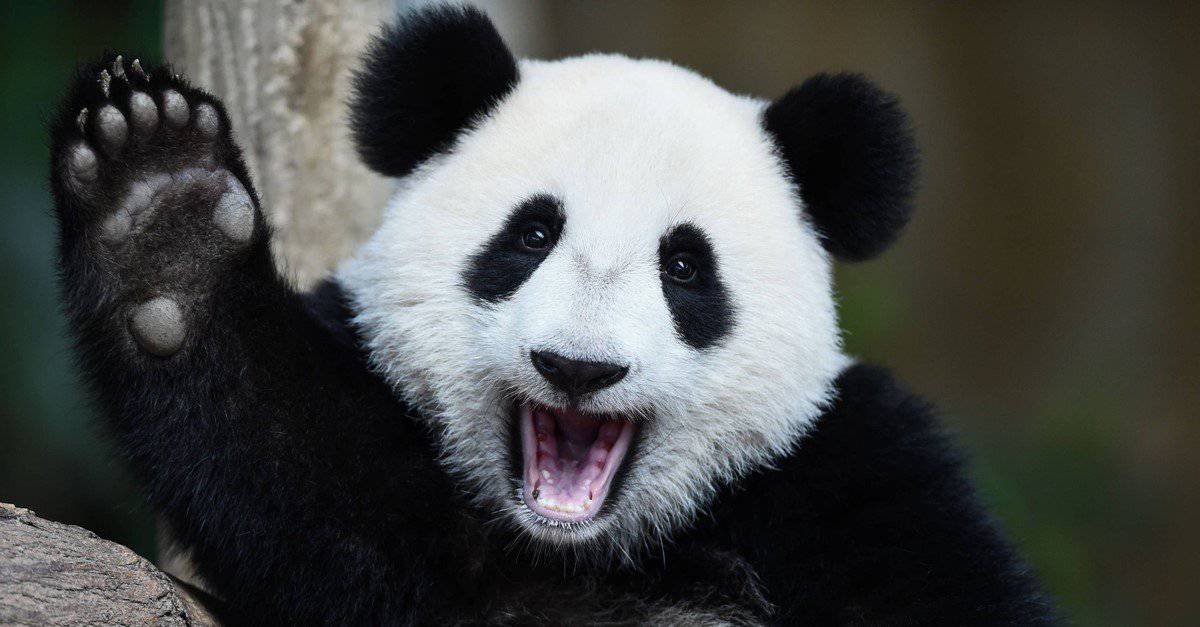

From pop culture to ancient Chinese tradition, pandas are among the most iconic and lovable animals on earth. Their bumbling walk, sleepy faces, and voracious love of bamboo have endeared them to audiences worldwide. But how many pandas are in the world? The exact number is hard to pinpoint, but all the estimates concur; there are not nearly enough. From how much they eat to how they use their “thumbs,” discover the unique species that is the panda!
The 2 (Or Is It 3?) Types of Pandas
By far the most iconic panda is the giant panda, and because of its relation to bears, it is also called the panda bear. Its striking black-and-white fur and impressive girth are immediately recognizable around the world. Its homeland, China, considers it a national treasure, as do conservationists worldwide.
However, the giant panda is not the only panda to walk the earth. The red panda also lives in China as well as in Nepal, Bhutan, and northern India. Though these two species are often thought to be related, the red panda is distinctly different from its so-called cousin. It belongs to the family Ailuridae, whereas the giant panda belongs to the family Ursidae. In fact, the red panda looks much more like a fox or cat than a bear.
Another panda is the Qinling panda, a subspecies of the giant panda. It was only discovered in the 1960s (although not recognized as a subspecies until the 1980s), but since then, it has also become the focus of conservation efforts. Similar in appearance, it retains the giant panda’s wide girth but is brownish.
How Many Pandas Are in the World?
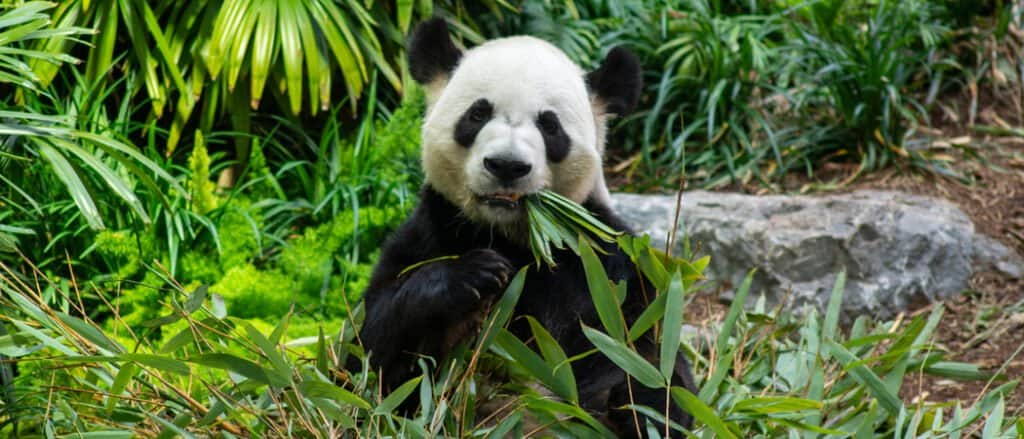
There are only 1,800 to 2,000 giant pandas left in the world.
©JWPhotoworks/Shutterstock.com
There are between 1,800 and 2,000 wild giant pandas in the world. Several pandas also live in zoos. However, due to their low numbers, it remains a species of great concern to conservationists.
It is also worth noting that the Qinling panda, the subspecies of the giant panda, exists in the wild in much lower numbers. Though it is impossible to know for certain, estimates put the number of Qinling pandas at a meager 100 to 300 individuals.
The red panda, belonging to the family Ailuridae, is also in danger. There are fewer than 10,000 individuals in the wild, although it can also be found in captivity.
The Giant Panda
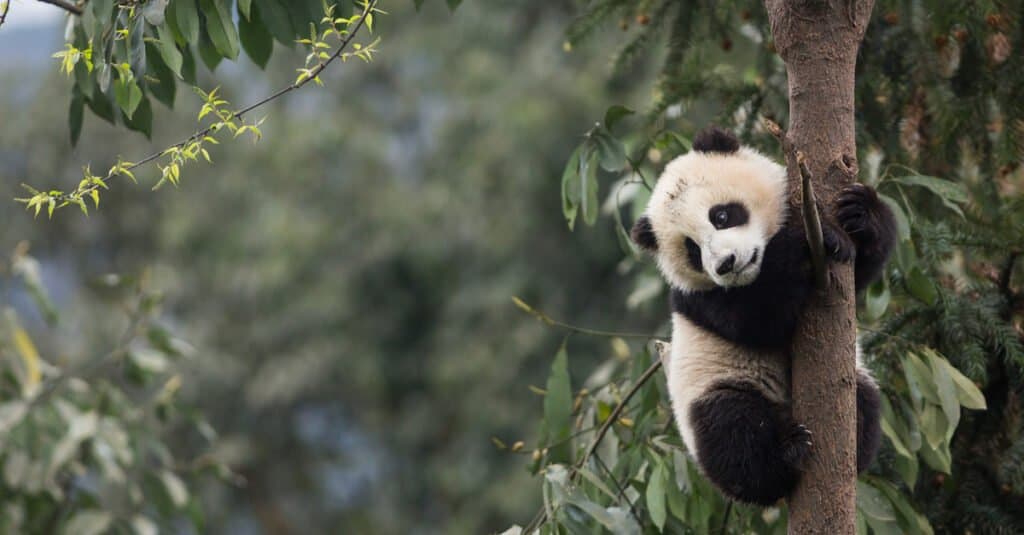
The giant panda is predominately white with black patches around its eyes and on its ears, nose, legs, and shoulders.
©Wonderly Imaging/Shutterstock.com
Appearance
The giant panda, or Ailuropoda melanoleuca, is physically unmistakable. It is predominately white with black patches around its eyes and on its ears, nose, legs, and shoulders. Its large nose gives it a superior sense of smell. With a gentle, somewhat dopey expression, it is considered one of the gentlest bears in existence.
True to their name, giant pandas can grow to be massive, with large heads and short tails. Adults typically measure between 5 and 6 feet in length. Females weigh as much as 200 pounds, while males often reach 300 pounds. Their claws are also truly impressive, measuring up to 3.5 inches in length.
The subspecies, the Qinling panda, is very similar in appearance to the giant panda in terms of length and weight. Its main distinguishing feature is its color, usually dark to light brown, with dark patches under its eyes. Additionally, its skull is smaller and more compact.
Diet and Predators
In keeping with its gentle appearance, the panda bear eats like an herbivore, although its digestive system is geared toward a carnivorous diet. This mixture qualifies it as an omnivore, and its diet includes bamboo, grass, fruits, rodents, and birds. A single panda can consume approximately 26 to 84 pounds of bamboo a day. This constitutes about 99% of their diet. To consume this much bamboo, pandas spend about 15 hours a day eating. A wrist extension on each paw resembling a thumb helps them grip their food. The rest of their time is spent sleeping off their exertions, making this bear extremely lazy.
Giant pandas live in the central and western mountains of China at an elevation of up to 13,000 feet. They rely on the bamboo-rich broadleaf and coniferous forests for food. Adult giant pandas have no natural predators other than humans, although juveniles may be preyed on by leopards and jackals.
The Red Panda
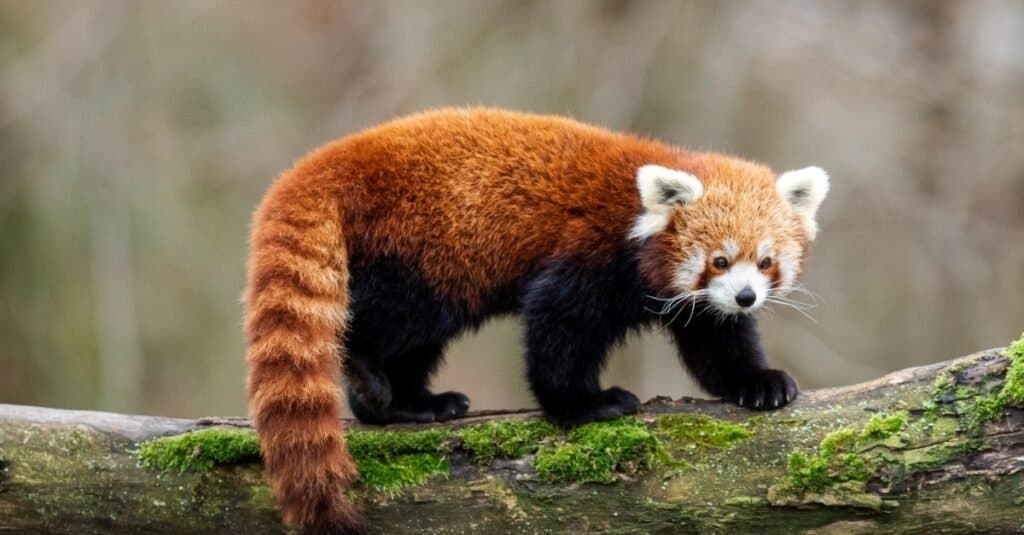
There are less than 10,000 red pandas in the wild.
©iStock.com/AB Photography
Red pandas, scientifically known as Ailurus fulgens, are the only members of their taxonomic family, Ailuridae. They are divided into two subspecies: the Chinese red panda and the Himalayan red panda. Red pandas are also known as lesser pandas or first pandas, as they were named before the giant panda.
Appearance
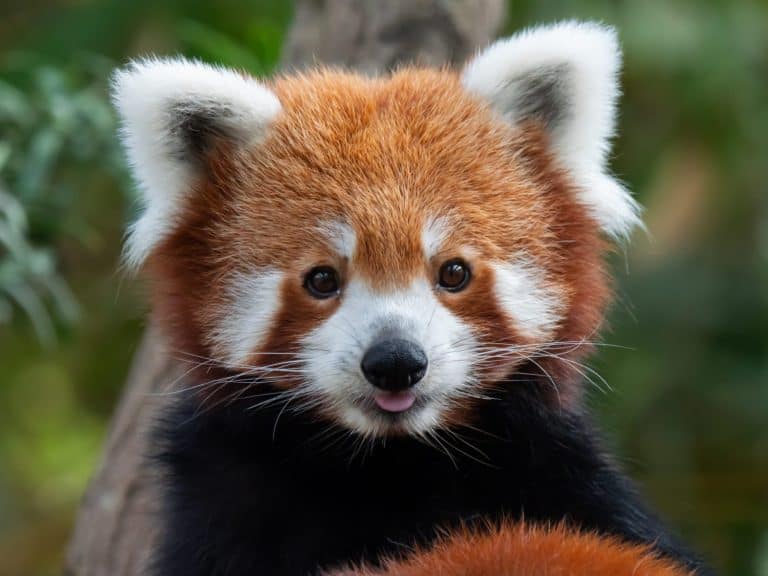
Red pandas look like a cross between a fox and a cat, although some see a bear-like resemblance in their facial structure. Their slender bodies sport distinctive reddish fur with white patches on their ears and faces, especially around the muzzle.
Red pandas are much smaller than panda bears, only reaching 36 to 43 inches long from their nose to the tip of their tail. Their tails are long and fluffy, enabling them to keep their balance while climbing. Typically, red pandas weigh no more than 8 to 17 pounds. Like giant pandas, they are equipped with a wrist extension that helps them eat bamboo.
Diet and Predators
Red and giant pandas share a love for bamboo. Lesser pandas are omnivorous, with bamboo comprising about 90% of their diet. They are often hunted by snow leopards and martens, though their cubs are targeted by other carnivores like birds of prey.
Are Pandas Endangered?
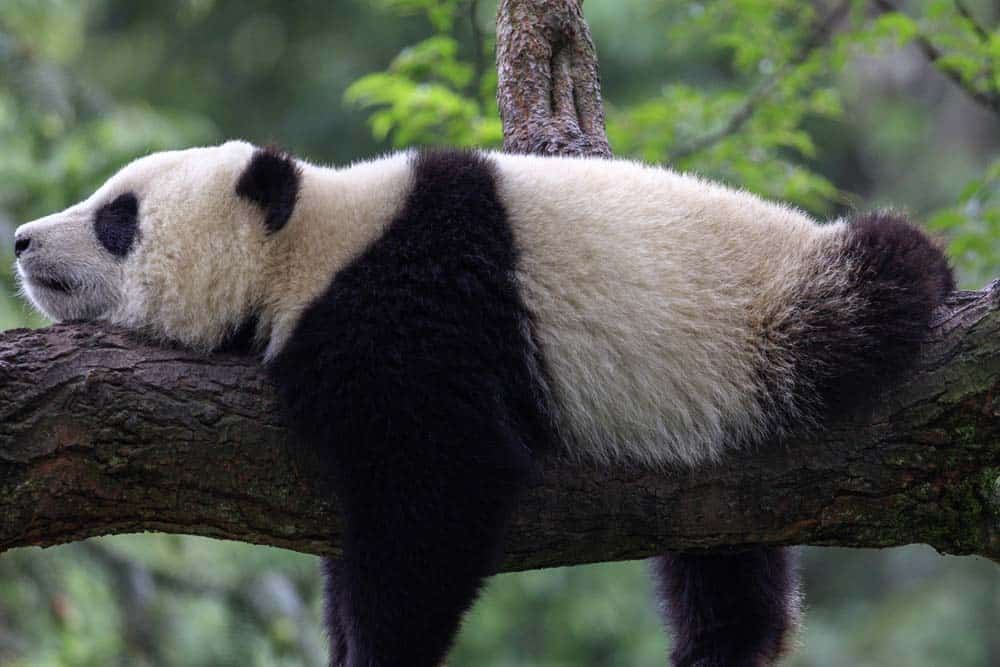
Giant pandas are listed as Vulnerable by the IUCN Red List.
©clkraus/Shutterstock.com
All pandas are facing threats, with the giant panda listed by the IUCN Red List as vulnerable and the red panda listed as endangered. However, there is good news, as the number of giant pandas in the wild has increased over the past number of years to almost 2,000 individuals. This is due to intense conservation efforts by the Chinese government.
However, several factors work against the survival of giant pandas. Strangely, they display a lack of interest in sex, meaning that they do not breed as readily as other bears. Hunting, habitat loss from deforestation, and pollution also pose serious problems.
For the Qinling panda, habitat loss and pollution from metals are the main sources of trouble. Although its numbers are much greater, the red panda also faces the loss of habitat and the threat of pollution. However, all these pandas are preserved in captivity, not only giving them a better chance of survival but also allowing people around the world to witness their unique wonder.