
Penguins are one of the most loved creatures in the world, and many cartoon characters, plushies, and fuzzy pajamas are proudly emblazoned with the image of this beloved sea bird. People have adored this tuxedo-feathered friend for many years and will continue to love them for many more. But how many years can a penguin live to enjoy this worldwide fame? And how old was the oldest penguin ever recorded? Let’s find out!
All About Penguins
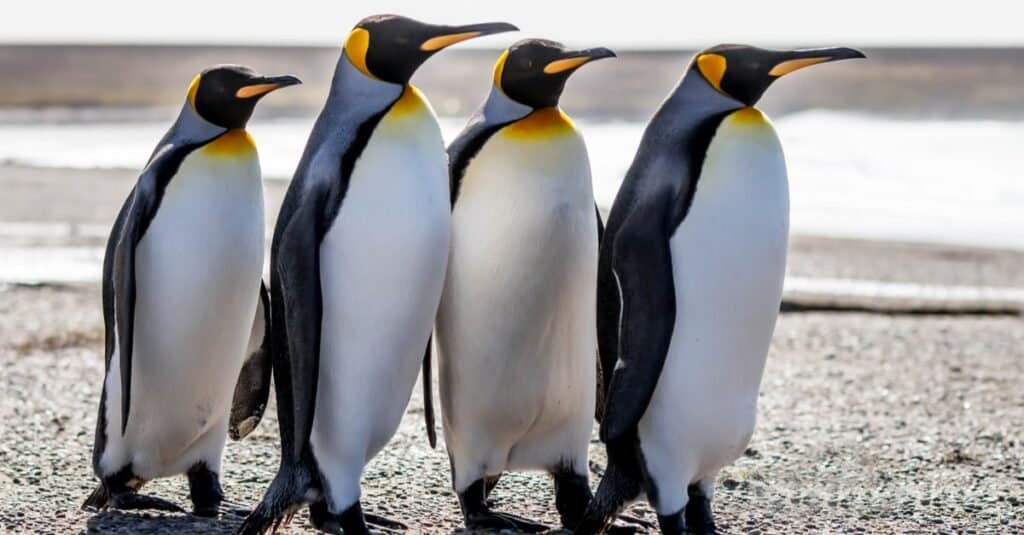
The king penguin is only one of the 18 universally recognized penguin species.
©fieldwork/Shutterstock.com
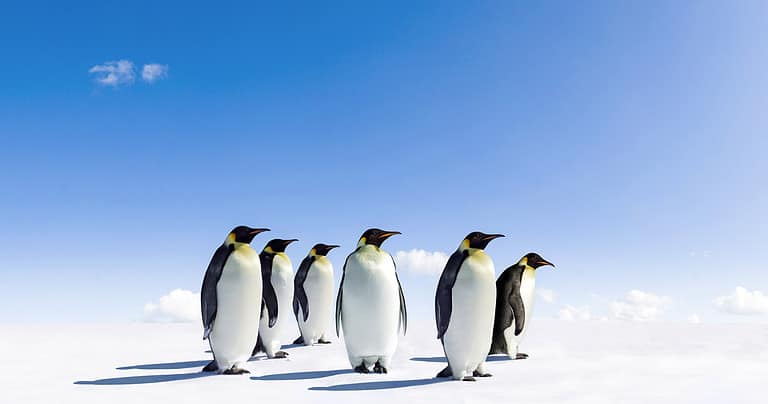
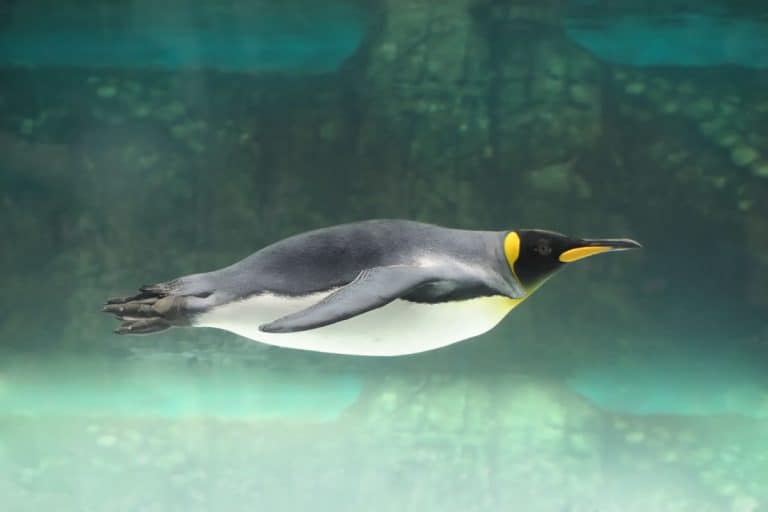
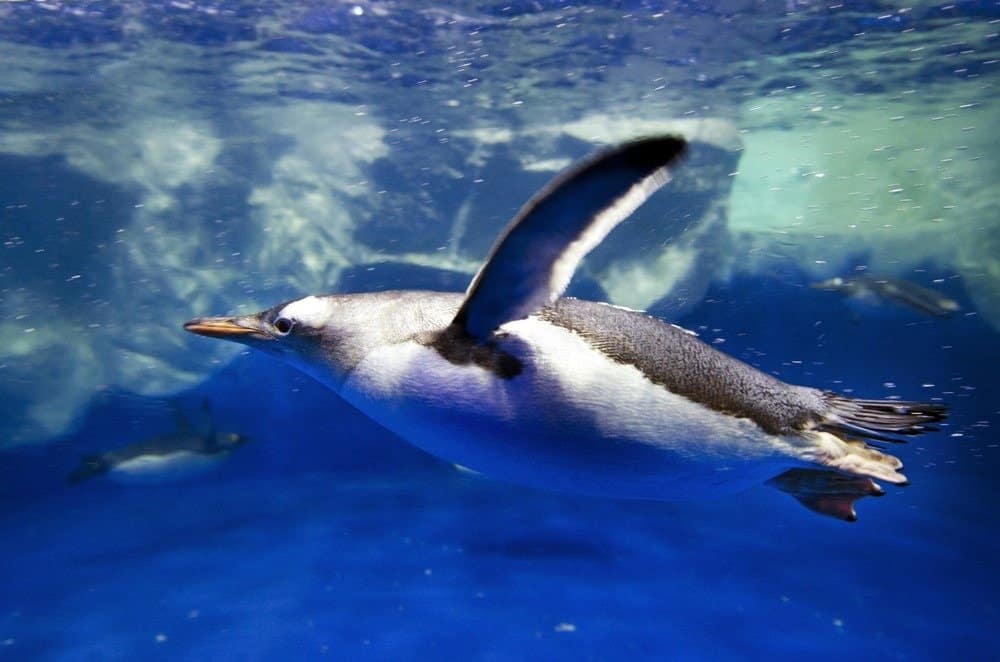
Penguins are flightless marine birds with a stocky build and short legs, ranging from 14 inches to 45 inches in height and between one and 90 pounds in weight, depending on the species. In addition to their highly recognizable black and white plumage, some species may have red or yellow markings. Their feathers are slick, dense, and watertight, enabling this bird to swim freely without being weighed down in the water. Their wings resemble flippers and fit close to the body to allow for fast and efficient propulsion through the water.
Penguin Species and Natural Habitats
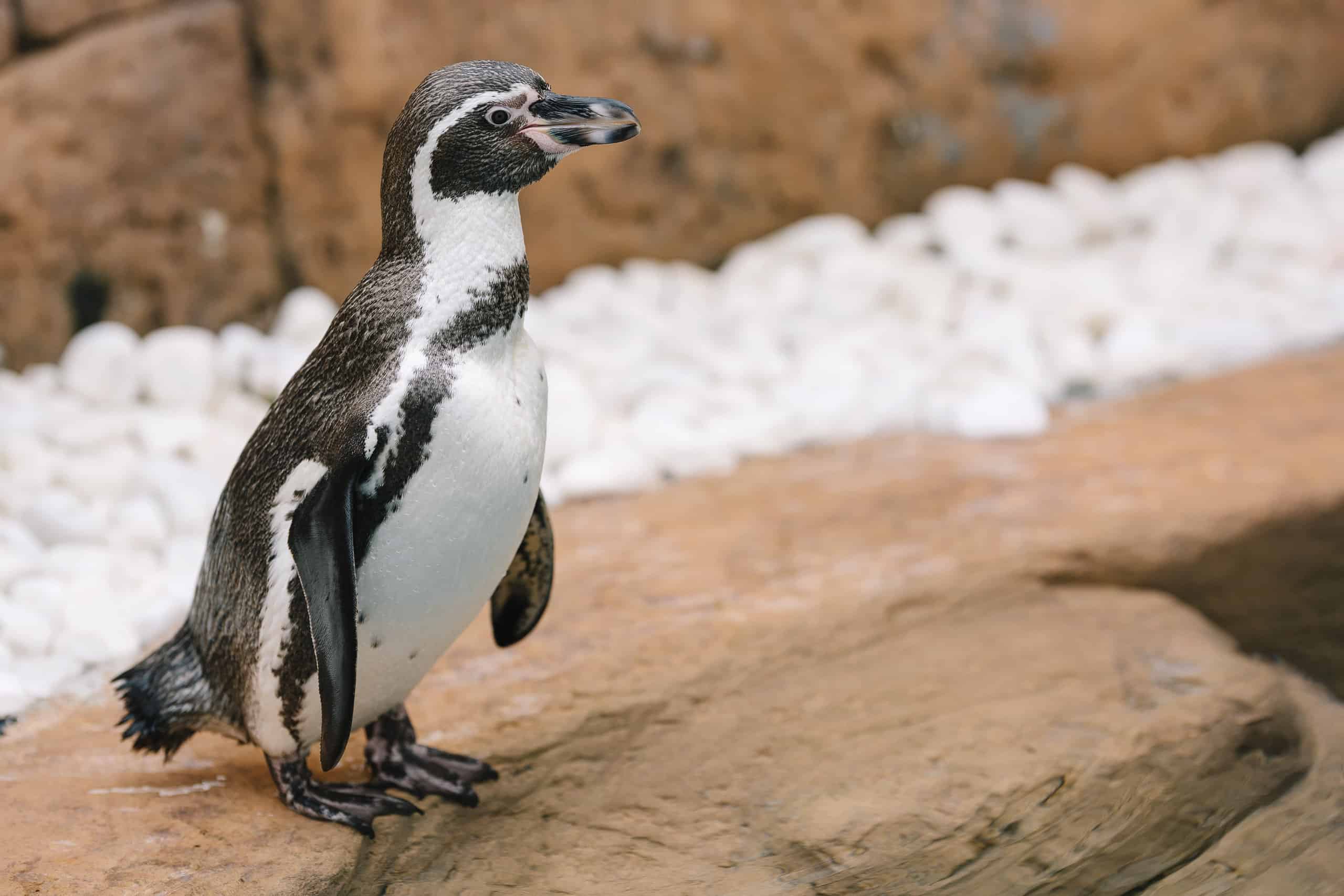
Penguins live in the southern hemisphere.
©iStock.com/mrtekmekci
There are eighteen universally recognized species of penguins worldwide, according to scientific experts. Penguins are found in the Southern Hemisphere, and most species are located primarily in various warm and cold regions. Only the Emperor penguin and Adélie penguin reside on the continent of Antarctica. Most penguins breed on the Antarctic Peninsula or surrounding sub-Antarctic islands, except for some penguin species that reside in temperate zones and the Galapagos penguin. The Galapagos penguin is the only species to live close to the equator.
Diet
Penguins are carnivores and consume a diet primarily of fish, krill, and cephalopods. A large penguin colony is capable of consuming several tons of food a day, with smaller penguins choosing to hunt the small fish and krill, while larger members of the species, such as the Emperor, prefer to hunt larger fish.
The Lifespan of a Penguin
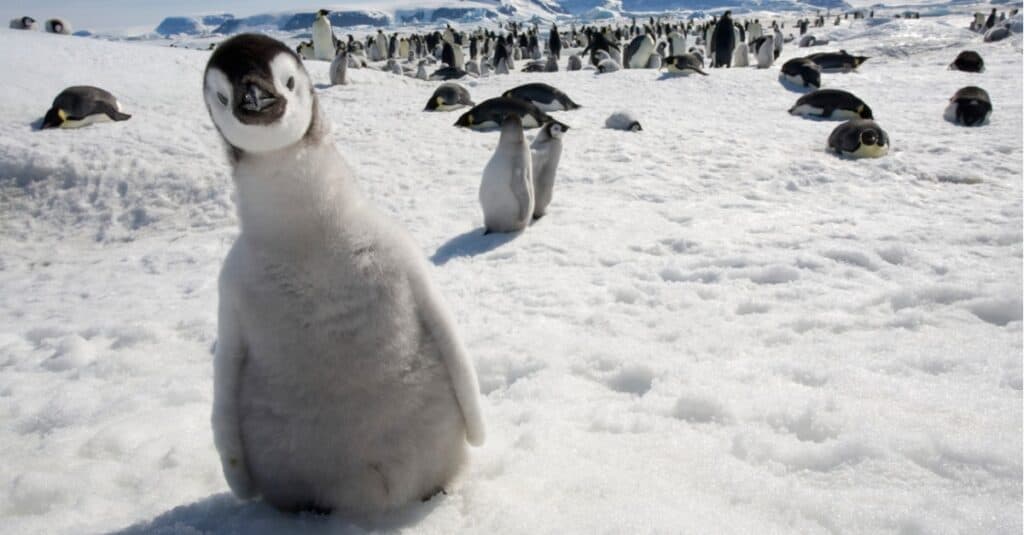
Some penguin species can live for up to 30 years.
©iStock.com/Sahil Yadav
Though the specific breeding patterns of each species of penguin differ in many ways, penguins select one mate for their entire lives, only choosing another if their partner dies. Mates are selected using complex vocal calls, and, in some species, even intricate dances are employed to attract a partner. Penguin mates tend to incubate their eggs together, with the notable exception of the Emperor penguin, where the male incubates the egg while the female seeks food, returning to feed the hatchling through regurgitation. After the first molting, when young penguins grow their adult plumage, the juvenile is considered an adult and leaves the colony to find food for itself.
The expected lifespan of a penguin depends on its species, but the average expected lifespan is between six and 30 years. Smaller penguin species, such as the gentoo or the rockhopper, have shorter expected lifespans of around 13 years, while larger members of the species, such as the king or emperor penguins, may live for close to 30 years. However, even among the smaller species, some penguins have the distinction of living well into their forties!
The Oldest Penguins Ever
The oldest penguin ever recorded was a king penguin named Oma, who lived to be 46 years old. However, there are some other penguins with impressive lifespans, too.
Oma: The World’s Oldest Penguin Ever Recorded
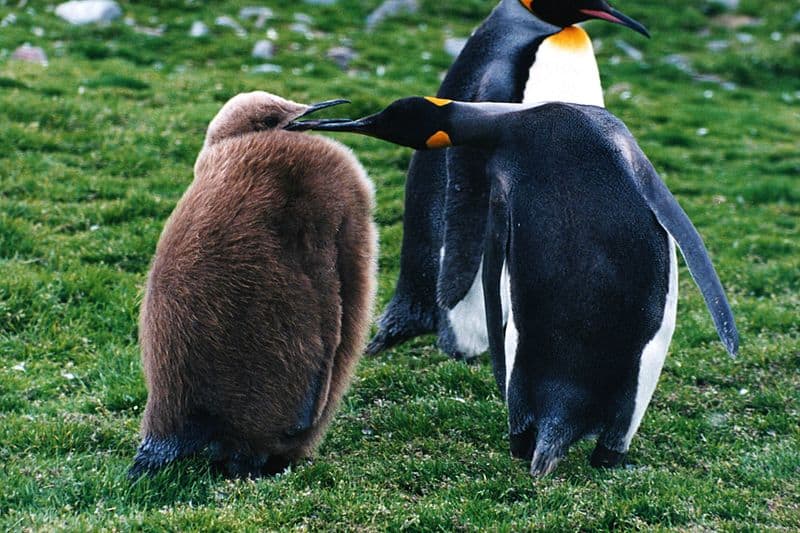
Oma, the oldest living penguin ever recorded, was a king penguin.
©Brocken Inaglory / Creative Commons – Original
The oldest documented penguin was a 46-year-old king penguin named Oma, which translates to Grandma in English. She was a longtime resident of the Wuppertal Zoo in Germany. Oma was hatched in South Africa in 1974 from an egg collected in Antarctica. She was moved to the Wuppertal Zoo in 1975 with eleven other penguins. Unfortunately, Oma had significant health problems that could not be improved with veterinary treatment, so she was put to sleep in November 2020.
Mochica
Mochica may not have been the oldest penguin ever, but 31 years is still impressive. He was the oldest Humboldt penguin on record at the time of his death, and was referred to by the staff of the Oregon Zoo as the Elder Statesman of his colony. Mochica got the nickname because he was known to prefer human company, and he was well-loved by hundreds of people during his long life. Unfortunately, his advanced age caused Mochica to suffer from significant health problems as well, so he was put to sleep in September 2021, aged 31. The current record-holder is Spneb, a Humboldt penguin in Cornwall, UK, who turned 37 in 2025.
Olde the Penguin
Olde is a Gentoo penguin that hatched on May 16th, 1979, at the Edinburgh Zoo in Scotland. She lived there for over a year before she was moved to the Sub-Polar Region exhibit at the Biodôme in Montreal, Canada. She lived there for twenty-three years, and in 2003 was relocated to the Odense Zoo in Denmark.
Olde was officially recognized by the Guinness World Records as the world’s oldest penguin in captivity in October 2020. Danny Larson released this statement to the public regarding the good news:
“The process of getting her recognized by Guinness World Records has been a talking point both among zookeepers and in the office, and we’re proud of Olde and the care the zookeepers give to her, as with all our penguins.”
Penguins Need More Protection
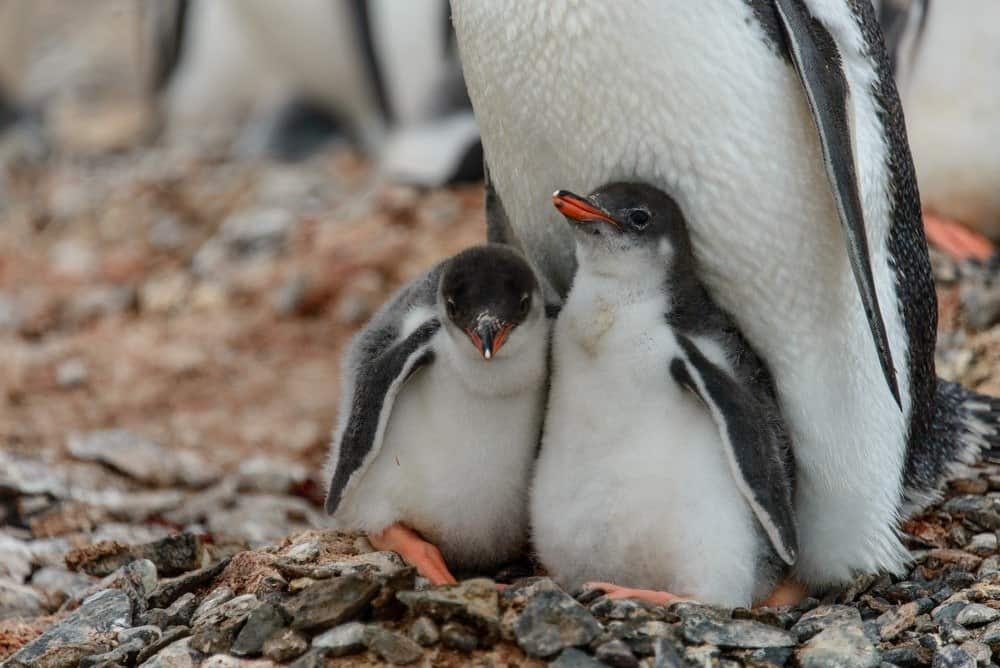
Many species of penguins are classified as under threat.
©Alexey Seafarer/Shutterstock.com
Penguins are the second most threatened seabird in the world. Thirteen recognized penguin species are globally threatened (classified as Vulnerable or Endangered) according to the IUCN Red List as of 2025. Emperor penguins are near threatened, and rockhopper penguins are classified as vulnerable.
The threat penguins face is overwhelming. The impact of environmental changes on penguin habitats is causing geological changes. These changes have drastically increased over time and are permanent. Pollution and climate change are the main causes of these changes and affect the world’s ecosystem.
Other threats to the survival of penguins are disease, becoming trapped in commercial fishing nets, and the introduction of non-native predators. Threats like these have solutions that can produce dramatic improvements more quickly.
For threats like pollution and climate change, there is no quick solution. It will take the dedicated long-term efforts of conservationists worldwide to preserve what remains of penguin habitats. Many conservation efforts worldwide are fighting on behalf of all eighteen species of penguins to classify them as protected species.
Anyone Can Be a Penguin Protector
There are many ways of supporting the conservation of penguins worldwide. For one, you can spread the word to raise awareness for these fascinating birds. You can also help by fundraising or by donating to conservation and research efforts worldwide. There are also other ways you can help protect penguins that only require a bit of your spare time. You can join Penguin Watch as a citizen scientist. Citizen scientists help count penguins using satellite images from home. If you like making clothing, you can even help by knitting a penguin jacket for the Penguin Foundation.