Colorado is undeniably one of the most breathtaking states for its natural beauty and magnificent scenery. For the outdoor lovers, you really could not do better than this state for a summer vacation. But those gorgeous mountain vistas and amazing forests are also home to snakes, and any outdoor fan can tell you that knowing all about the snakes in an area can do more than educate — it can keep you safe!
Colorado is home to three species of venomous snakes, and all of them are rattlesnakes. Though some species of rattlesnakes may not have a bite that can kill an adult human, any bite from a venomous snake can cause serious health issues. But can any of Colorado’s rattlesnakes deliver a deadly dose of venom that can kill? We will start with the smallest species and work our way up to the state’s largest and most dangerous snake!
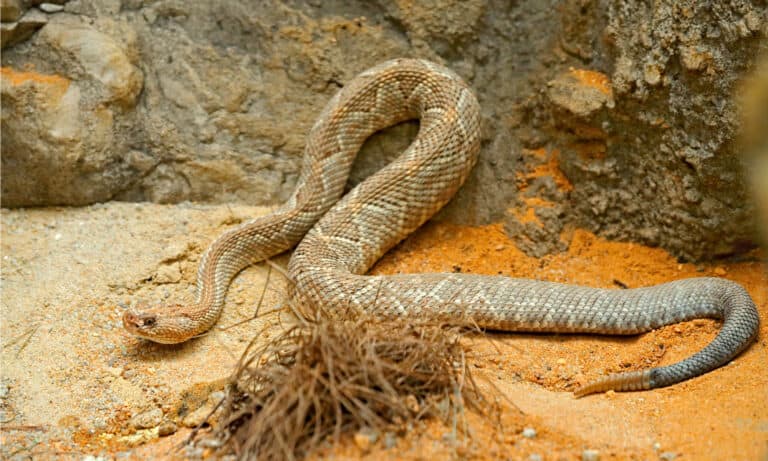
Midget Faded Rattlesnake
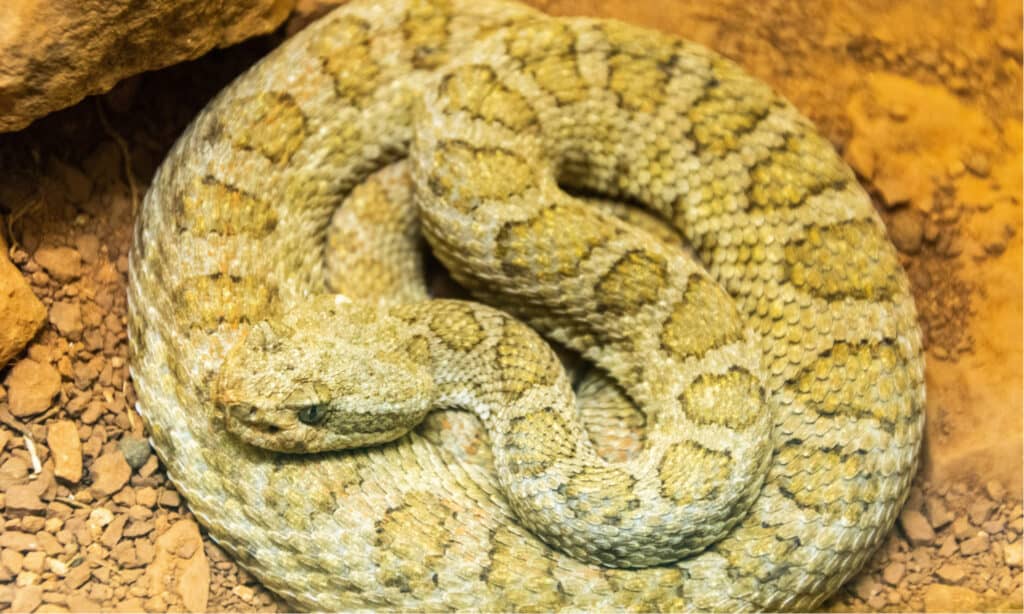
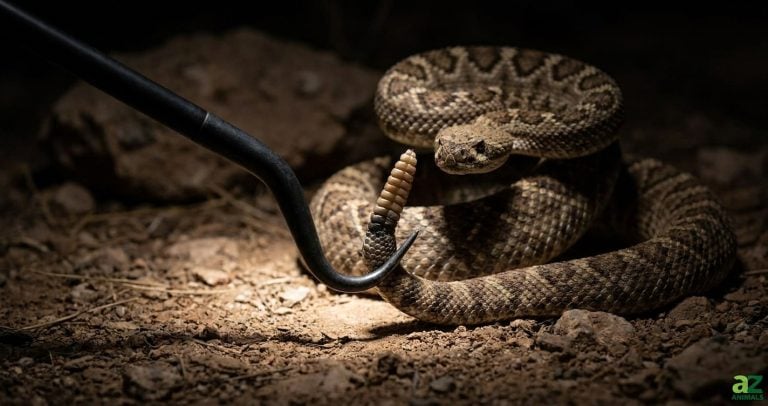
The midget faded rattlesnake is the third-largest and most dangerous snake found in Colorado.
©Alizada Studios/Shutterstock.com
| Size | 20-30 inches |
| Location | Rocky cliffs and shrubs, primarily found in the Green River/Colorado river regions. |
| Danger | Venomous, bites can cause severe injury without treatment |
| Behavior | Moderately aggressive but reclusive. Bites occur due to accidental contact or provocation. |
Midget faded rattlesnakes can be identified by their tan/light brown/overall yellow coloring and reddish-brown markings outlined in deep brown. While these markings are like other rattlesnake species, they often appear washed out or “muted,” hence the species’ common name.
While the midget faded rattlesnake’s preferred habitat is near rocky cliffs or areas with shrubs, they are mostly found along the Green River or Colorado River regions in the state. They are quite common but are thankfully reclusive. While a bite may be painful and need prompt medical care, they rarely, if ever, result in death.
Western Massasauga Rattlesnake
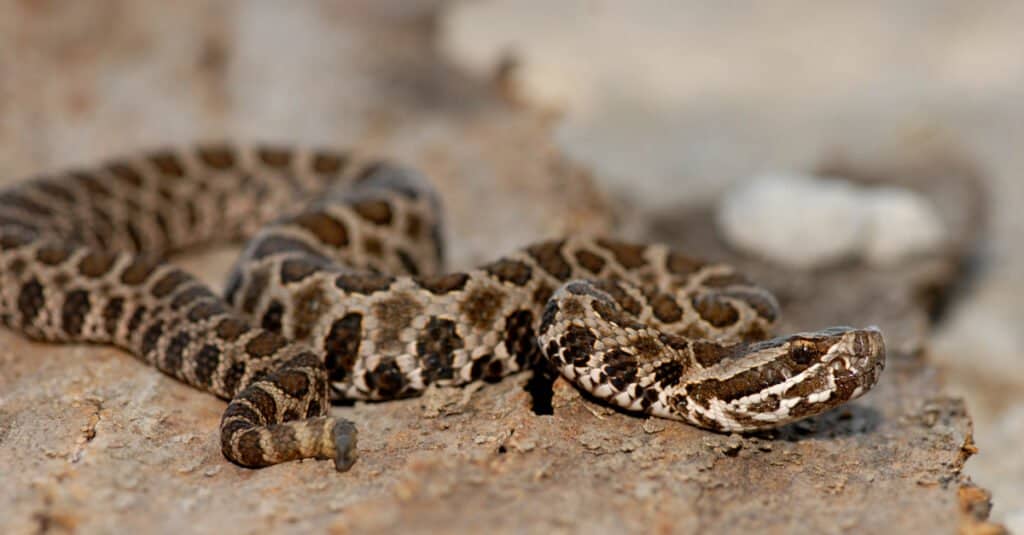
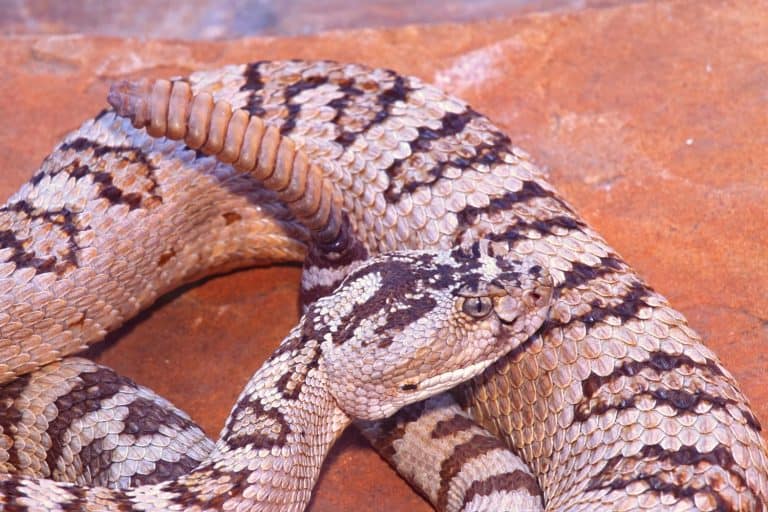
The western massasauga rattlesnake species is the second-largest venomous snake in Colorado.
©Rusty Dodson/Shutterstock.com
| Size | 12-36 inches |
| Habitat | Wetlands, near water sources, plains. |
| Danger | Moderately aggressive, the venom can cause life-threatening health problems if left untreated. |
| Behavior | Moderately aggressive. Most bites occur through accidental contact. |
Western massasauga rattlesnakes are pale brown or tan overall, with darker mottling that appears blurred or muted. Unlike other rattlesnake species, the western massasauga has nine distinctive large scales on the top of its head. The desert massasauga is a subspecies of the western massasauga that shares similar markings but is overall lighter in coloring due to its habitat in drier areas, like sand or plains locations. The western massasauga has a limited range in Colorado, but is mainly found in the southeastern region. Both the nominate subspecies and the desert massasauga subspecies are found in Colorado, but the western subspecies is more commonly spotted.
Despite their small size, western massasauga rattlesnakes have particularly potent venom. However, their smaller size does mean that they don’t inject as much venom per bite as some of the other rattlesnakes in the state do, therefore reducing the level of danger somewhat. However, it’s still important to seek medical attention if you are bitten by one of these snakes. Western massasaugas aren’t particularly aggressive, but they will bite to defend themselves if they are provoked.
Prairie Rattlesnake
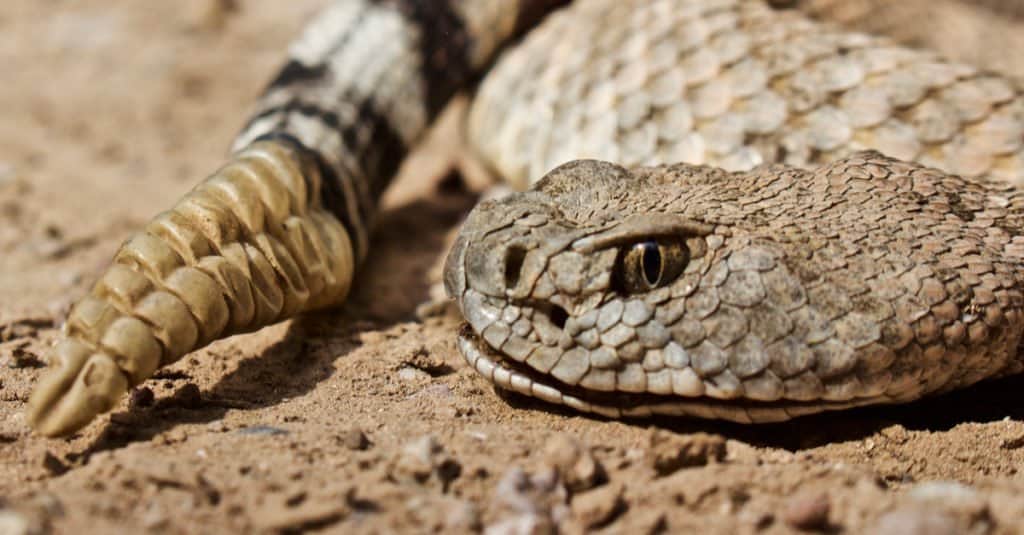
The prairie rattlesnake is the largest and most dangerous species of snake in Colorado.
©DMartin09/Shutterstock.com
| Size | 35-45 inches |
| Location | Grasslands, plains, foothills, mountains |
| Danger | Venomous; bite can be deadly without medical treatment. |
| Behavior | Moderately aggressive. Bites occur due to accidental contact or provocation. |
Prairie rattlesnakes are light brown, gray, or green overall, with darker mottled markings. There are two subspecies of prairie rattler, and markings range from brown, tan, to white. In addition to being the largest of Colorado’s three rattlesnake species, they are also highly common. This species is found throughout the state but is thankfully shy and prefers to be far away from human locations.
Prairie rattlesnakes can be aggressive as they will bite to defend themselves if they are threatened or disturbed. Although they are not the most dangerous snake in North America, their bites can be fatal without immediate medical treatment, as their venom has hemotoxic and neurotoxic properties.
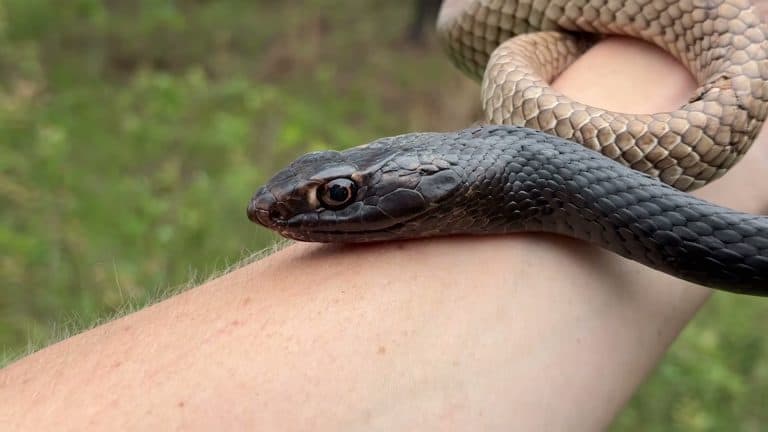
Honorable Mention: The Non-Venomous (But Really Common) Yellow-Bellied Racer
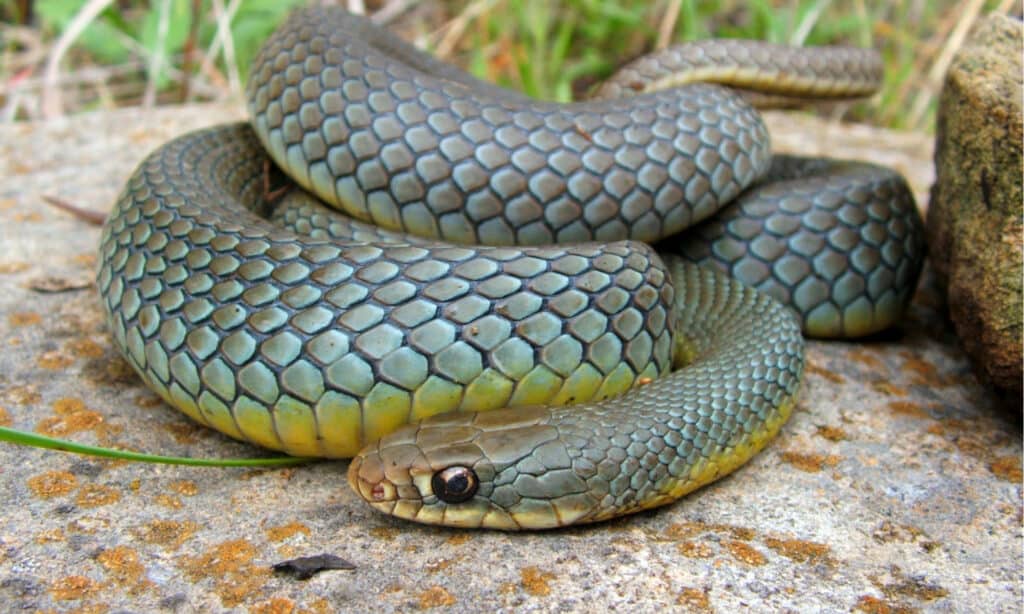
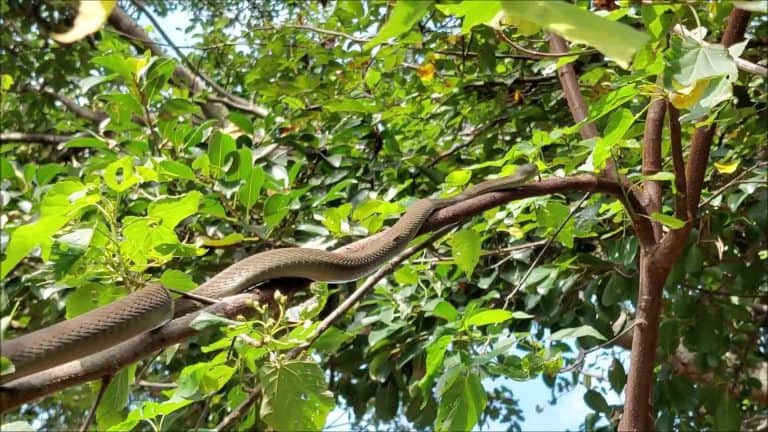
The yellow-bellied racer is not dangerous.
©Matt Jeppson/Shutterstock.com
Yellow-bellied racers are one of the most common snakes found in Colorado, but they are not venomous. Though they could be mistaken for dangerous snakes due to their vibrant blue/gray bodies, their distinctive bright yellow bellies easily identify them. They are a subspecies of the eastern racer and can reach lengths of up to 60 inches. Commonly found in grasslands, meadows, and mountain regions, they are thin, agile snakes with small heads and rounded eyes.
In the world of snakes, racer species are known for their agility and speed. The yellow-bellied racer is extremely quick and non-aggressive, making it legal to own them as pets in Colorado. However, they rarely adapt to handling and will bite.