
Everything’s bigger in Texas, even the spiders! The biggest spiders in Texas make the biggest spiders in many other states look puny in comparison! While Texas has over 900 spider species, only two species have venom considered medically significant. While several other spiders (like yellow sac spiders or false widows) have venom that can cause painful bites, it is rarely dangerous. The black widow (Latrodectus) and the brown recluse (Loxosceles reclusa) are highly venomous spiders found in Texas; they pose a significant danger to humans. Though they may appear frightening, none of the six largest spiders in Texas are truly harmful beyond the potential for a painful bite. Continue reading to discover six of the largest spiders in the Lone Star State, what they look like, what they eat, where they live, and how big they are.
This post was updated on September 13, 2025 to clarify sizes, ranges, female tarantula lifespan, and giant crab spider habitat.
6. Trapdoor Spider
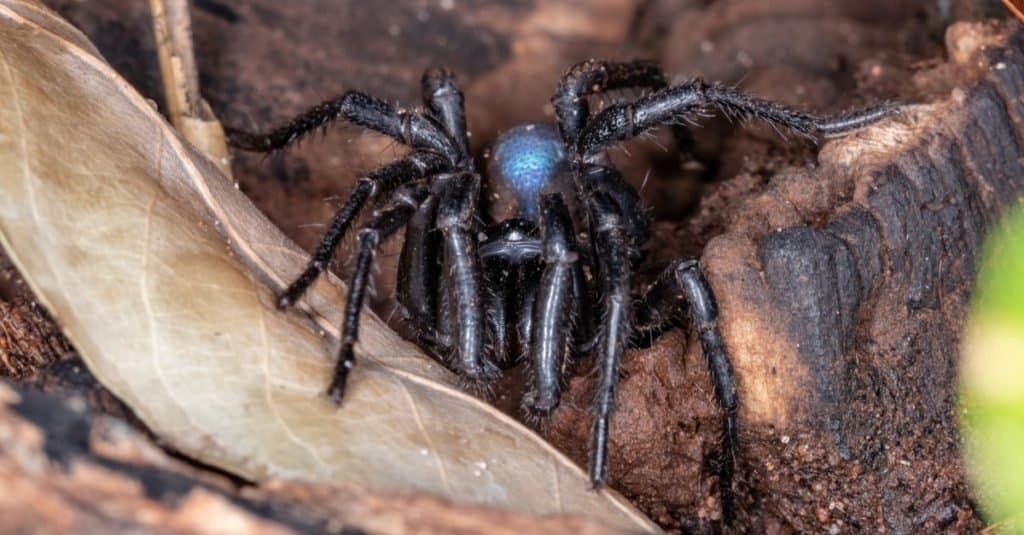
Trapdoor spiders in Texas commonly belong to the Ummidia genus, though not all trapdoor spiders are contained in this genus.
©Vinicius R. Souza/Shutterstock.com
They’re not the biggest spiders in Texas, but trapdoor spiders (Ctenizidae) still grow to respectable sizes. They can grow up to 1.25 inches long, with legs up to 2.5 inches across.
As their name suggests, trapdoor spiders hunt by constructing trapdoors in loose dirt or sand. Trapdoor spiders use their silk-lined burrows and a cleverly camouflaged trapdoor as a hunting strategy. They wait for unsuspecting prey to come close, and when vibrations from the prey disturb silk trip lines around the burrow entrance, the spider quickly bursts out, grabs the prey with its fangs, and retreats into the burrow to consume it.
Trapdoor spiders range from black to dark brown and have smooth bodies. Each species looks a little different, but they can be easily recognized by their use of trapdoors. When threatened, these spiders hide in their tunnels. Bites are rare and, when they occur, cause few symptoms beyond mild pain. Trapdoor spiders are common in certain regions of North America.
5. American Nursery Web Spider
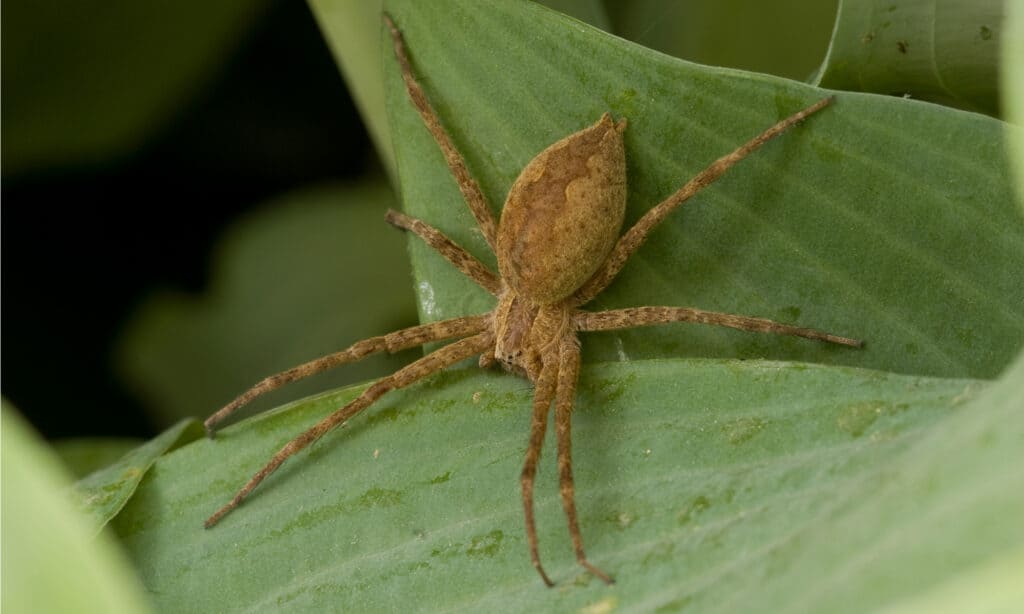
The American nursery web spider lives throughout the eastern half of the United States.
©SDeming/Shutterstock.com
American nursery web spiders (Pisaurina mira) are among the biggest spiders in Texas. Their bodies can reach 0.75 inches long, with a leg span up to 2.5 inches.
American nursery web spiders can be uniformly light brown, with a slightly darker brown band down the center of their bodies, though some have almost no brown markings. These spiders have long, narrow bodies with long legs. They only spin webs for their egg sacs when they are breeding. They’re not dangerous to humans and prefer to stay out of the way.
4. Huntsman Spider
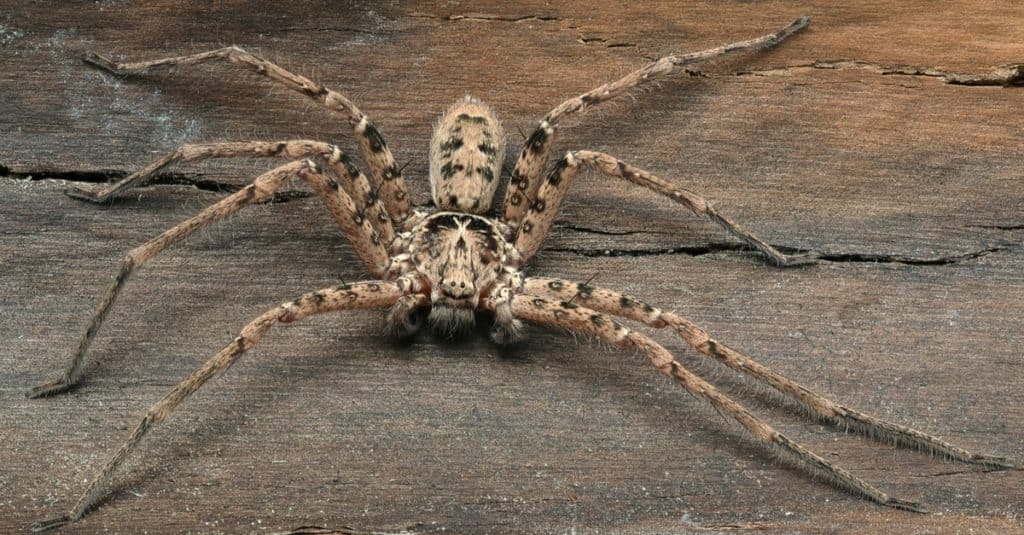
The huntsman spider resides in Florida and other gulf states.
©iSKYDANCER/Shutterstock.com
Huntsman spiders (Heteropoda venatoria) may not be the biggest spiders in Texas, but they’re pretty close. Huntsman spiders have narrow bodies with very long legs. They grow up to 1.4 inches long in the body, with legs that stretch up to 5 inches across. They’re sand-colored, with darker markings on their cephalothorax (the head and first body segment). Huntsman spiders do not spin webs and are not dangerous to humans. They’re mainly found in Florida, Texas, and Gulf states near ports.
3. Texas Brown Tarantula
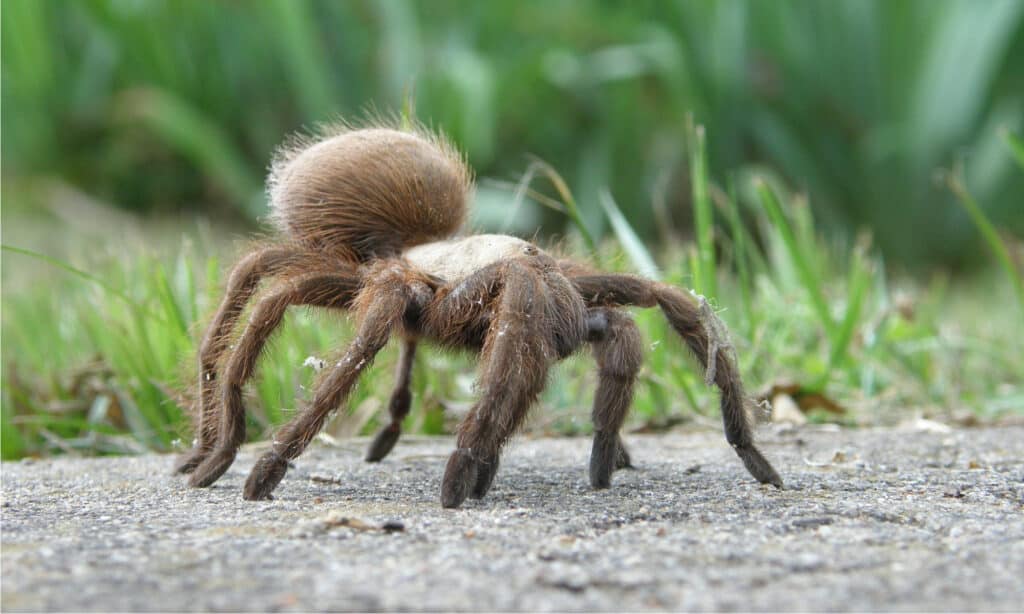
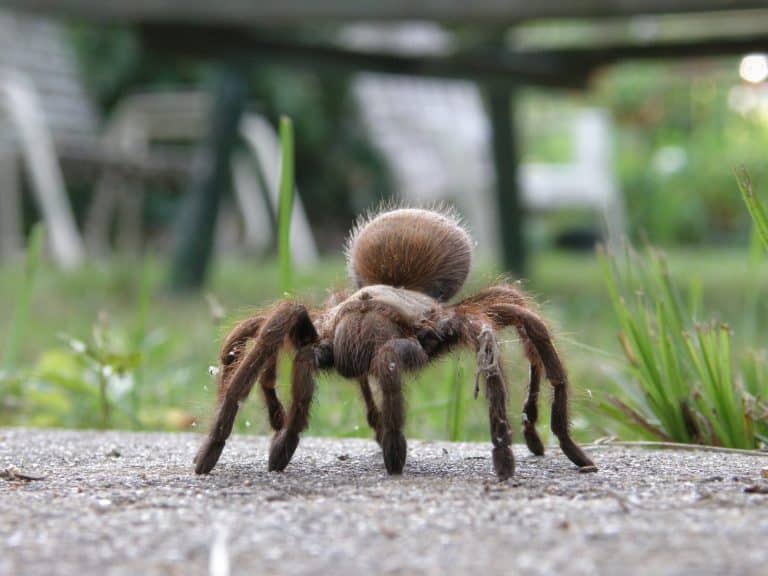
The Texas brown tarantula can grow to two inches in length, with leg spans up to four inches long.
©texas brown tarantula/Shutterstock.com
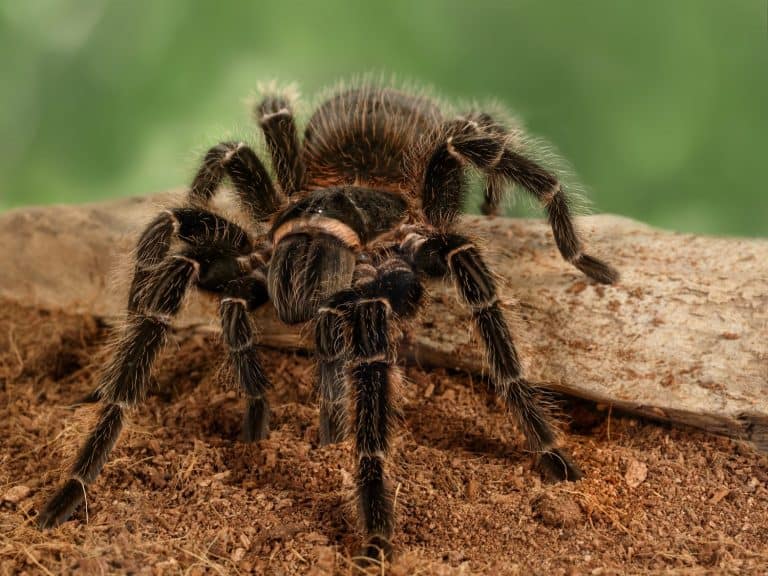
The Texas brown tarantula (Aphonopelma hentzi) is one of the biggest spiders in Texas. Adults can grow to 2 inches in length, with leg spans of between 5-6 inches.
Texas brown tarantulas are dark brown with red hairs covering their legs and body. As their name suggests, they’re members of the tarantula family and are ground spiders that eat ground-dwelling insects, like cockroaches and beetles. These spiders live throughout Texas. Female Texas brown tarantulas can live 20–30 years in the wild, while the average lifespan for males is between one and seven years, as they tend to die within a year of mating.
Texas brown tarantulas can bite, but they are generally not aggressive and rarely bite humans unless they feel threatened. Their bite is not considered dangerous, though it can be painful, similar to a bee sting. Texas brown tarantulas also have urticating hairs on their abdomens that they can flick off as a defense mechanism, which can cause itching or irritation.
2. Giant Crab Spider
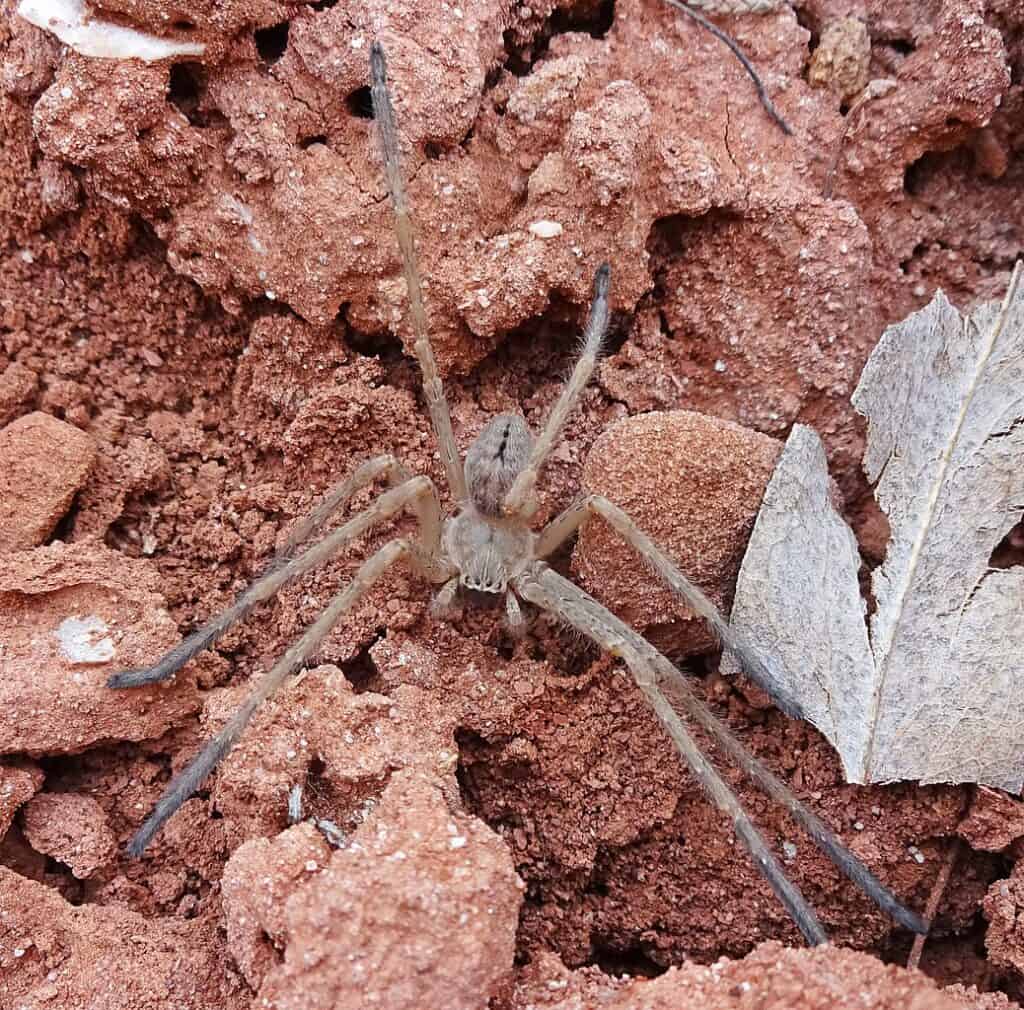
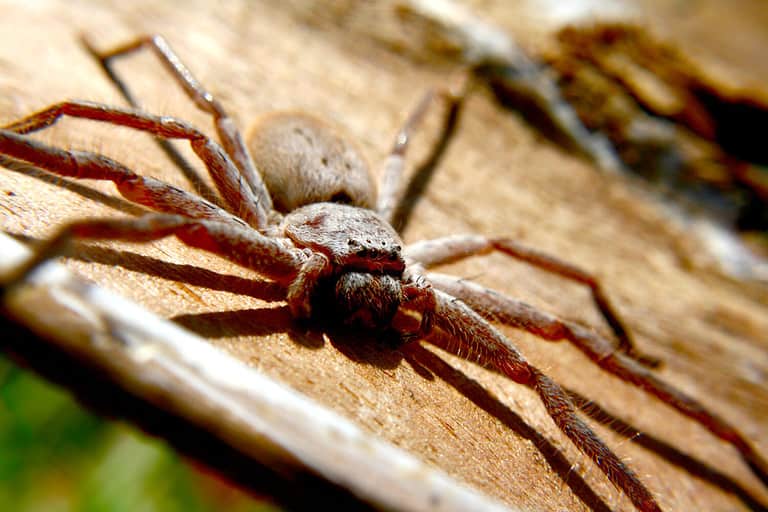
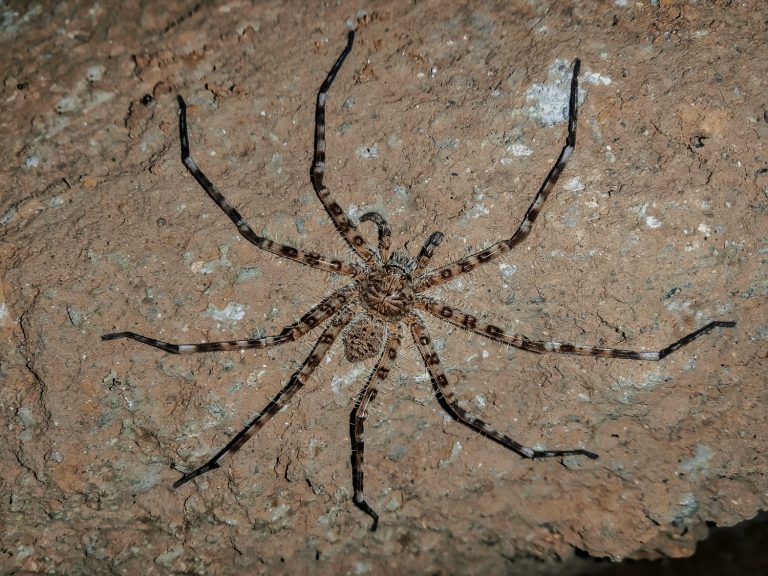
The giant crab spider gets its name from its superficial resemblance to crabs.
Most crab spiders are on the small side. But, as you might have guessed from their name, giant crab spiders (Olios giganteus) break the mold. Giant crab spiders are some of the biggest spiders in Texas. Their bodies only grow to about 0.75 inches long, but their legs can reach 4–5 inches in length.
Giant crab spiders have light, sand-colored bodies with darker tips on each leg. They often have a ‘Y’ marking on their abdomen. They are mostly desert-dwelling spiders found in the Southwest. Like most of the biggest spiders in Texas, giant crab spiders don’t spin webs; they are ambush predators. Masters of camouflage, they lie in wait and strike at unsuspecting insects that come within reach. Giant crab spiders are not aggressive and will only bite if they feel threatened. While their bites are painful, they are not medically significant.
1. Carolina Wolf Spider
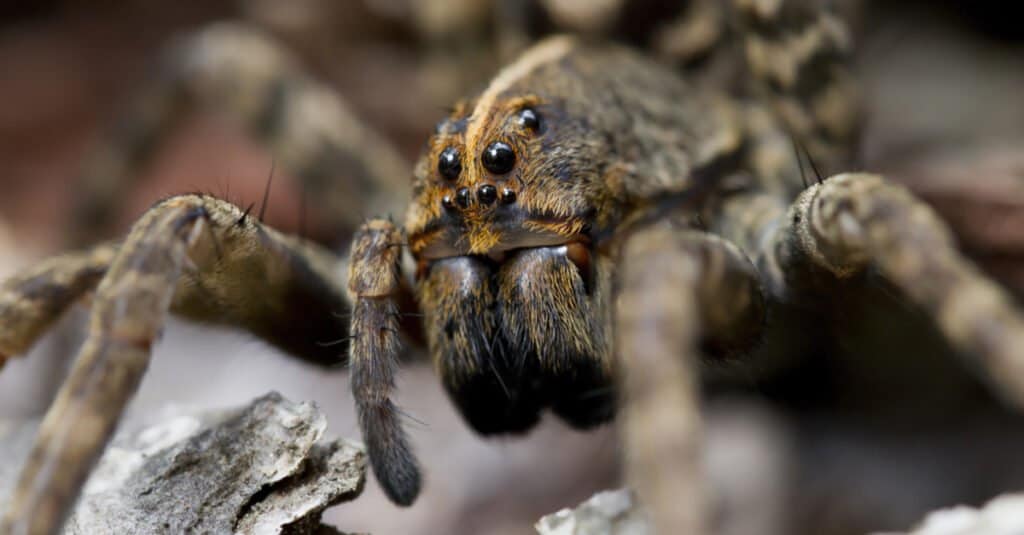
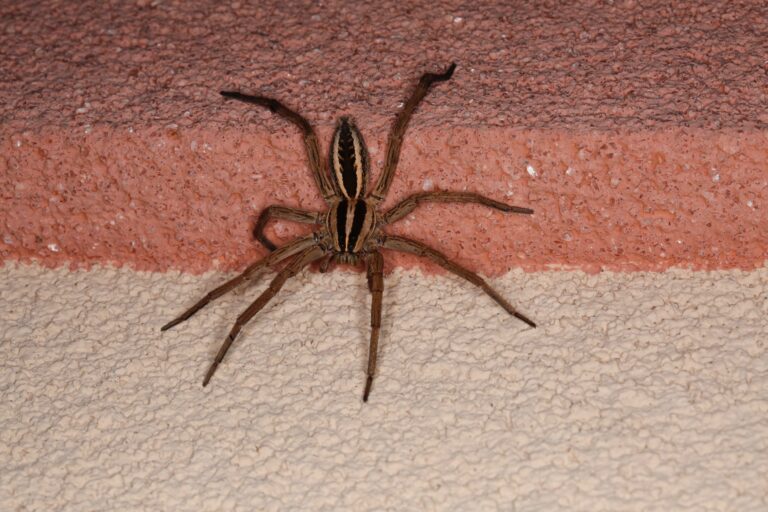
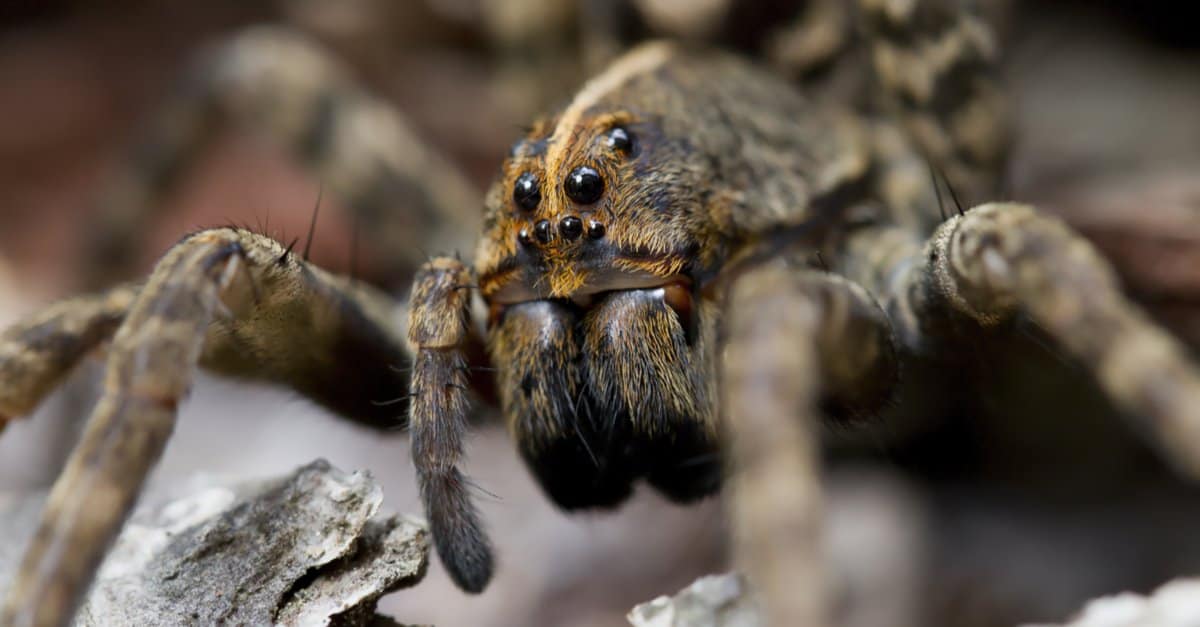
The Carolina wolf spider dwarfs all other types of wolf spiders.
©Will E. Davis/Shutterstock.com
Carolina wolf spiders (Hogna carolinensis) are some of the biggest spiders in Texas. They can grow up to 1.5 inches in body length, with a leg span between 3-4 inches.
These spiders are dull gray, brown, with long legs and four pairs of differently sized eyes. They’re larger than brown recluse spiders, with dark brown and tan stripes running down their bodies. Carolina wolf spiders don’t trap their prey in webs. Instead, they chase insects down and attack them. Carolina wolf spiders aren’t dangerous to humans.
Inch for inch, the Carolina wolf spider is the largest in Texas. Other spider species, like the huntsman spider and giant crab spider, might have longer legs, but overall, they are not as large as the Carolina wolf spider. That’s why, when it comes to the biggest spiders in Texas, the Carolina wolf spider reigns supreme.