














Quick Take
- Owning a Volpino Italiano requires entry into a tiny global population of only a few thousand dogs.
- Missing the 45-minute movement threshold triggers metabolic behavior issues regardless of Volpino size.
- This ancient breed nearly vanished from Italy despite its long lifespan and exceptional vitality.
- The training process must be abbreviated to accommodate the specific 15-minute breed focus threshold.
The origins of the Volpino Italiano date back to ancient Europe, allowing nobles to have a companion and watchdog in a small package. The breed beat extinction in the 1980s as a result of efforts by Enrico Franceschetti and the Italian Kennel Club.
Straight from Italy, the Volpino Italiano isn’t quite as popular as some other breeds, but it has a friendly, active, and intelligent demeanor. It dates back to ancient Europe, though there are only a few thousand left in the world. As a companion dog, the small nine-pound pup loves to be a couch potato as much as they love to run outside. With a sweet and exciting temperament, anyone lucky enough to find a Volpino Italiano is among a select few.

3 Pros and Cons of Owning a Volpino Italiano
| Pros | Cons |
|---|---|
| Friendly: This pup loves to spend time with family, cuddling up with their loved ones whenever they nap. | Tends to bark: The Volpino Italiano is quite vocal when it is unhappy. |
| Small: As little as nine pounds, this dog is ideal for a home that wants to have a smaller animal. | Energetic: As small as this breed is, it has a fast metabolism and needs at least 45 minutes of walking time to avoid behavior issues. |
| Easy to train: Due to their intelligence and love of treats, most Volpino Italiano dogs are easy to train. | Delicate: This dog is not best suited for homes with small children who may drop them while carrying them around. |
Size and Weight
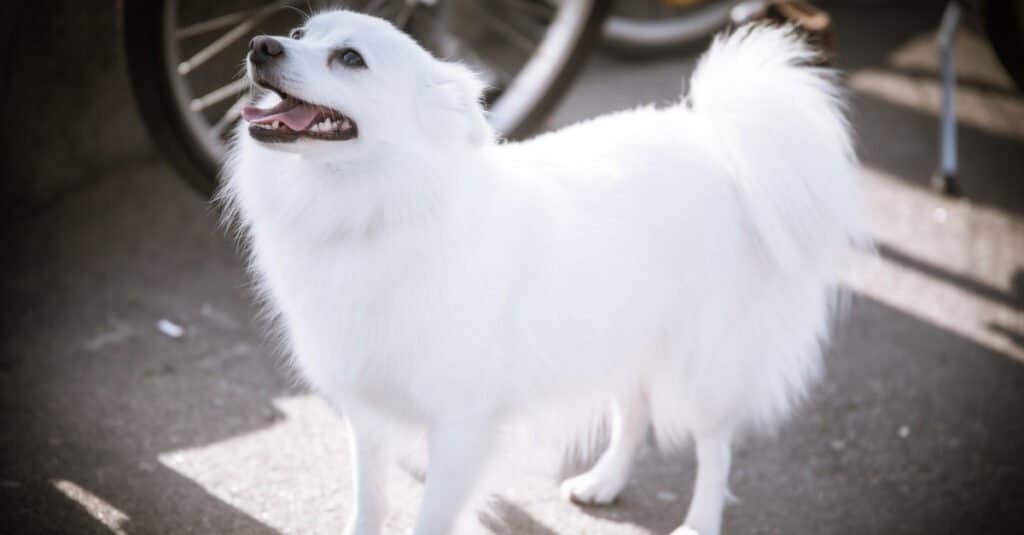
Volpino Italianos are capable of reaching a maximum of 12 inches in height.
©Honcharuk Andrii/Shutterstock.com
The Volpino Italiano, also known as simply Volpino, is quite small and rare. The weight and height vary slightly between males and females, as the former are just a bit larger. While males stand about 11 to 12 inches tall, females only reach a height of no more than 11 inches. Their weight is also similar, but the male leads at 9.9 to 12 lbs. The female is just 9 to 9.9 lbs. at their full weight.
Origins

The Volpino Italiano’s origins go back to ancient Italy.
©iStock.com/Bigandt_Photography
The Volpino Italiano’s origins are both illustrious and common all at once. Bred since ancient times, this canine with a deceptively adorable and somewhat pampered appearance was cherished for its excellent guarding instincts.
The forebears of this pet, which bears a close resemblance to the German Spitz, a close cousin, lived alongside commoners struggling to make a living. Luckier members of the breed got to live a pampered, cosseted lifestyle in the villas and palaces of nobles.
The central role they played in Italian life was incidentally immortalized by classical luminaries of the arts such as Michelangelo, Bellini’s protege, Vittore Carpaccio, and Enrico Coleman.
Common Health Issues
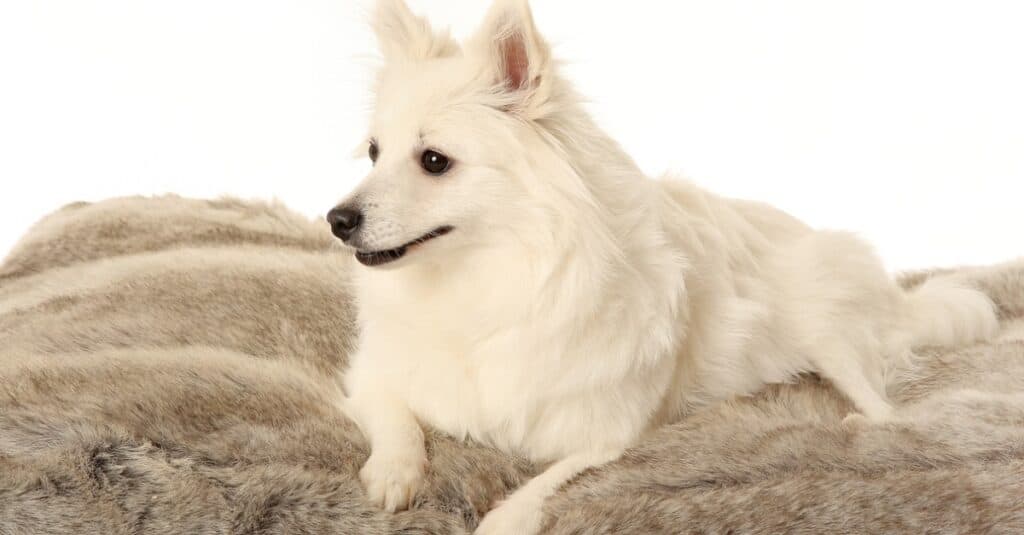
The volpino italiano is generally healthy and longlived although it is prone to patellar luxation.
©iStock.com/Bigandt_Photography
The Volpino Italiano has very few health risks. In fact, the reason that they almost went extinct (despite their long lifespan) had nothing to do with their health — it was a lack of interest in perpetuating the breed in Italy. Still, by knowing their predisposition to certain conditions, you can keep your dog much healthier.
One of the most common health issues that the Volpino deals with is primary lens luxation, which is hereditary. The eye disease eventually causes pain and blindness. Their eyes may also be impacted by cataracts, causing a cloudy layer over the lens and impairing vision. It blocks out light from the retina, though it may be possible to break up the cataract with the use of an ultrasound at a vet’s office.
Patellar luxation is concerning for the Volpino Italiano because there are no symptoms in some dogs. Others show how much pain they are in with limping and lameness. This condition can lead to surgical correction, but it is not fatal for most dogs.
Temperament and Behavior

The volpino italiano is friendly, capable of getting along with other dogs, and rather talkative.
©Natalia Fedosova/Shutterstock.com
The rareness of the Volpino Italiano has not lost its vivacious personality along the way. This small dog always seems to be up to something, though it is quite playful with all family members. They even have a good relationship with other dogs and cats to entertain themselves. They can be a little more vocal than other breeds with their barking, getting a bit noisy when someone comes in the house, or when they disagree with their commands. Still, a little training can get rid of the behavior.
Though it isn’t likely that the Volpino will have the same “small dog syndrome” behavior that other dogs of this size might have. However, it is best to keep an eye out for certain personality changes, like random aggression or a refusal to behave.
Even as the night winds down, this dog just wants to curl up with someone and fall asleep with someone who shows how much they care. They bond with their family more than anyone else, so they might have more standoffish behavior with strangers.
How to Take Care of the Volpino Italiano
Taking care of the sprightly Volpino Italiano involves multiple considerations for their food, grooming, training, and even exercise. Even as a puppy, take note of these tips to make sure that you raise your dog right.
The Best Dog Food
High-quality dog food — whether it is made at home or purchased from a store — is a must for the Volpino Italiano. Their metabolism is quite fast, so they need enough calories to support it. Since their size varies, find a brand that specializes in toy dog breeds, and consult with a vet to ensure that you don’t overfeed or underfeed your pet. Always have fresh water available to keep this breed hydrated.
Because of the eye problems the Volpino Italiano can develop, including primary lens luxation, owners should ensure their dogs are getting adequate nutrition to set their Volpino Italiano up for lifelong health from head to toe.
Maintenance and Grooming
With a fluffy double coat and a dense undercoat below, the necessity to groom the Volpino Italiano is clear. Though you might expect to spend hours at a time, that’s not the case at all. By brushing two to three times a week, the dead hairs in their coat come out before they start shedding at all. If you want to do all of this grooming at home, make sure to buy a pin brush, a slicker brush, a de-matting tool, and a comb.
Baths only need to occur occasionally, allowing your dog to go a few months at a time between shampooing. Too many baths cause incredible dryness and irritation in the skin, which is difficult to combat. Trimming their nails regularly also prevents injury or splitting.
Training

The volpino italiano’s obedience can be earned for the price of a treat or two.
©iStock.com/DevidDO
Training a Volpino Italiano can be rather easy, considering that they’ll show off and obey for just a small treat. Positive reinforcement is necessary while training, though you’ll still only get about 15 minutes of focus. Training them while they are still young is the best way to get them used to the commands, but even the older dogs of this breed work hard to learn with the right incentive.
Exercise
The Volpino Italiano is known for their active and excitable temperament, and you’ll need to be able to keep up with it. With their fast nature, any activity that challenges their body and mind is best for their behavior. Having space to run is crucial, even though their small size may lead you to believe that they are perfect for apartments. If you want to keep them happy inside, they’ll need a major basket of toys to stimulate them, plus regular walks.
Make sure not to leave them outside all day. As happy as they will be to roam, their coat is heavy and warm. They need to be kept in cooler environments to prevent overheating, and they need time with their owner.
Puppies
Caring for a Volpino Italiano puppy isn’t much different from caring for an adult. They’ll still need the high-quality dog food that adults need, but most brands offer a puppy variation. Training and socialization at an early age are best, making them more comfortable with taking after an alpha owner. The average Volpino gives birth to four to six puppies in one litter.

Because this breed is so small, it is important to supervise young children when around these dogs.
©Natalia Fedosova/Shutterstock.com
Volpino Italiano and Children
The best part about this dog is how good it is with the whole family. However, supervision around small children is crucial. They are rather small animals, and children tend to pick them up without being aware of how much damage can be done if they are dropped. As friendly as they are, an adult should be in the room at all times to keep the dog from being hurt.
Dogs similar to Volpino Italiano
If the Volpino is the wrong dog for your home, consider adopting a Pomeranian, a German Spitz, or an American Eskimo dog.
- Pomeranian: The Volpino is often confused for the similarities it has to the Pomeranian, matching the fun and active personality that dog lovers enjoy.
- German Spitz: With gray and white markings to complement this dog, it comes from the same family as the Volpino and loves cold temperatures.
- American Eskimo dog: Bred with the German Spitz, this dog is only a little bigger than the Volpino.
Volpino Italiano Pictures
View all of our Volpino Italiano pictures in the gallery.

Natalia Fedosova/Shutterstock.com
Sources
- Wikipedia / Accessed October 12, 2021
- American Kennel Club / Accessed October 12, 2021
- vetSTREET / Accessed October 12, 2021
- PetGuide / Accessed October 12, 2021
- PetKeen / Accessed October 12, 2021