Even the biggest skeptics believe in the magic of animals. These creatures, both the incredibly small and the massively huge, have magnificent abilities that humans only dream of possessing. For example, some animals can revert back to their juvenile stage to start life over, alter their bodies to glide through the air, or survive in harsh conditions like outer space. There is a lot we can learn from animals!
Although there are many, many creatures who fascinate us, we’ve narrowed it down to the top 10 animals that seem to break the laws of physics. These animals are so extraordinary they deserve a spot on Ripley’s Believe It or Not!
1. Flying Snakes
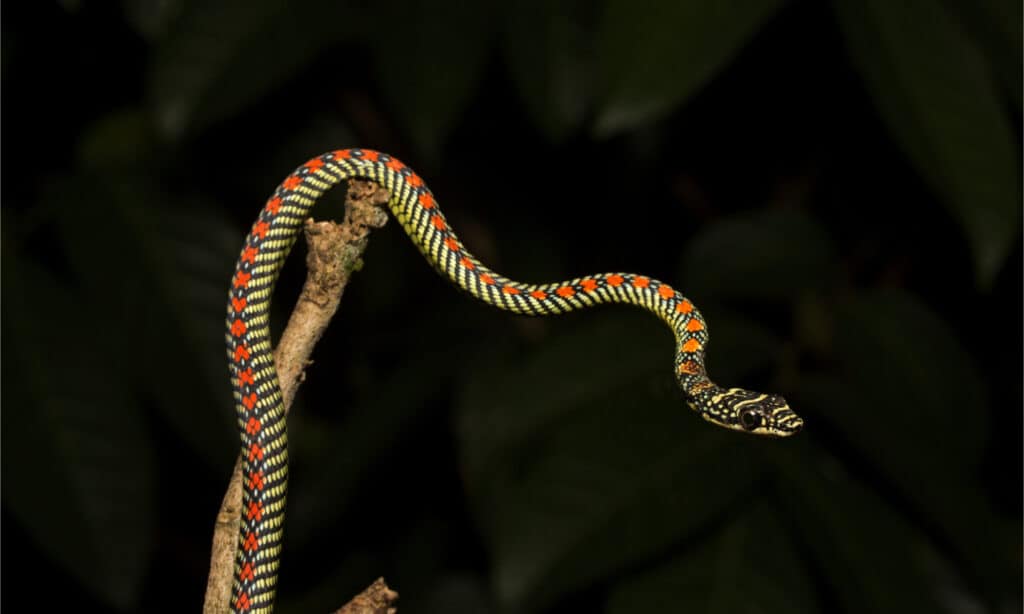
Flying snakes appear to fly even without wings.
©Vince Adam/Shutterstock.com
Yes, this sounds like something out of Indiana Jones’ worst nightmare, but it’s actually true. A type of southeast Asian snake appears to fly in a feat that defies logic.
Flying snakes (Chrysopelea ornata) can glide at speeds up to 25 miles per hour and as far as up to 300 feet at a time. It looks like they are swimming through the air as they move, but they are actually gliding from tree to tree to find food. They do this by moving to the end of a tree limb, twisting their bodies into a J shape, and then flinging themselves off the branch toward their target. These reptiles look like they’re flying, but without wings, they must flatten their ribs and make themselves wider to catch air and glide long distances (kind of how frisbees move).
These snakes can be found in Southeast Asia, India, Sri Lanka, and China, although, good luck seeing them, as they are usually found high in the trees.
2. Basilisk Lizards
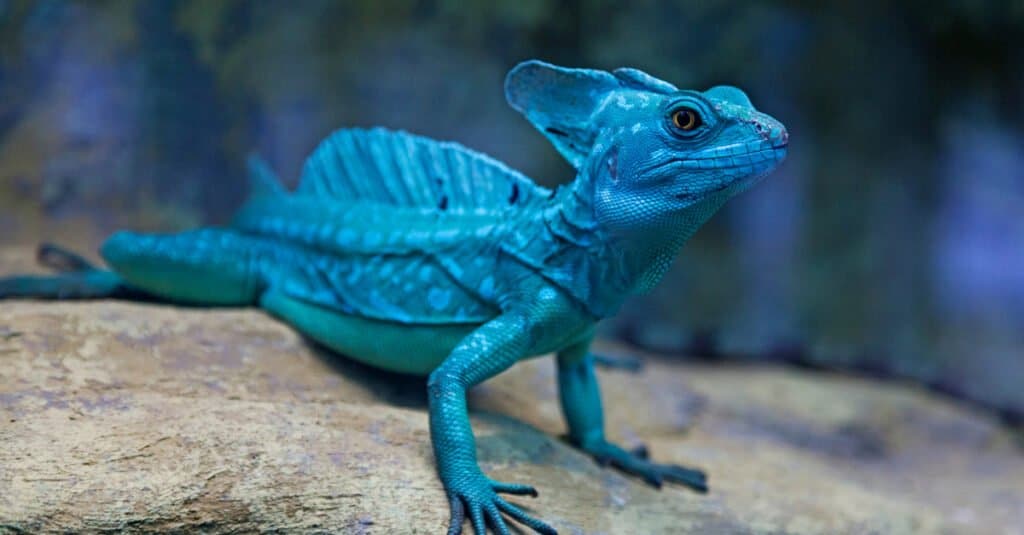
These cool lizards are nicknamed “the Jesus lizard” for their ability.
©Peter Ekvall/Shutterstock.com
The basilisk lizard (Basiliscus) is much smaller than the huge basilisk from the Harry Potter series; however, you might still think it’s magical based on the way it seems to walk on water. These lizards run up to 15 miles per hour over rivers and streams, appearing to defy the normal laws of gravity as they race across the surface of the water.
This ability has earned the agile reptile the nickname “Jesus lizard”. It accomplishes this trick with its long-toed back legs and feet, which slap the water as it runs, creating air pockets that keep it afloat.
3. Tardigrades
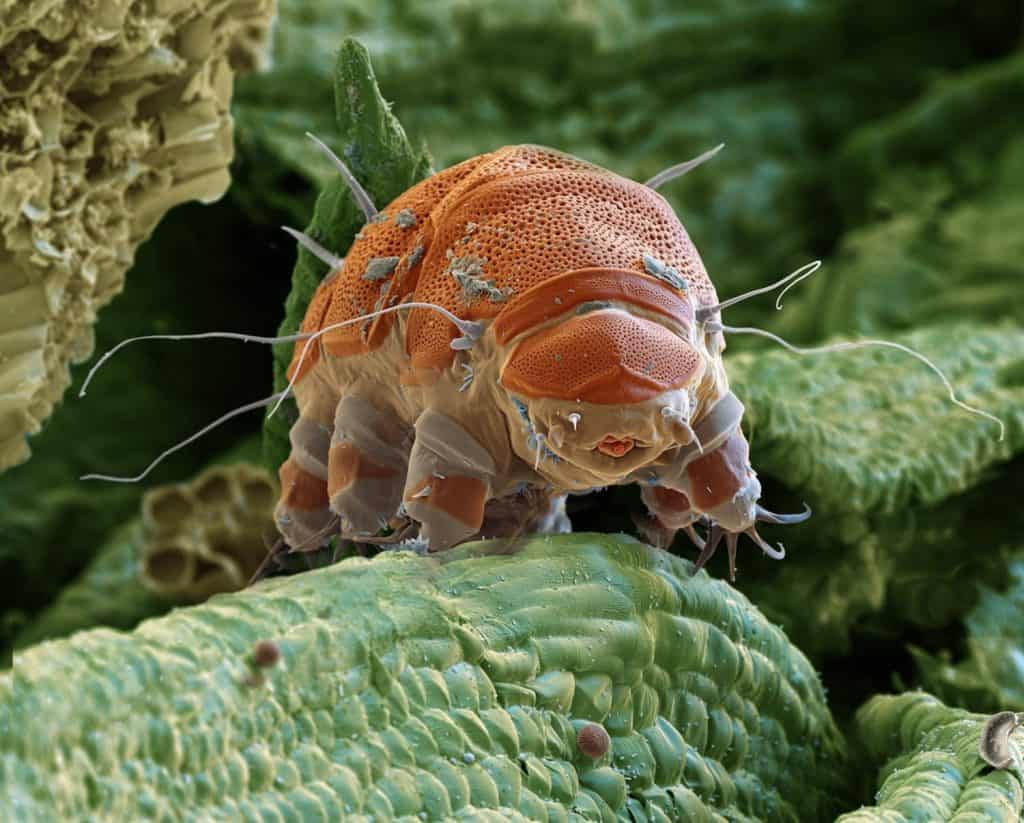
These tiny creatures only reach a size up to 0.05 inches long.
©TajdidProtik/Shutterstock.com
Also known as water bears or moss piglets, tardigrades are tiny invertebrates that accomplish what no human ever could: survive in space. Tardigrades can endure the vacuum of space and have been known to survive in temperatures as low as -328°F and as high as 304°F — and even toxic chemicals, radiation, boiling alcohol, and low- and high-pressure environments don’t affect them.
This otherworldly ability to survive extreme environments is due to something called cryptobiosis, which occurs when metabolism slows and the body’s normal chemical reactions are drastically reduced to help them survive harsh environments.
4. Flying Spiders
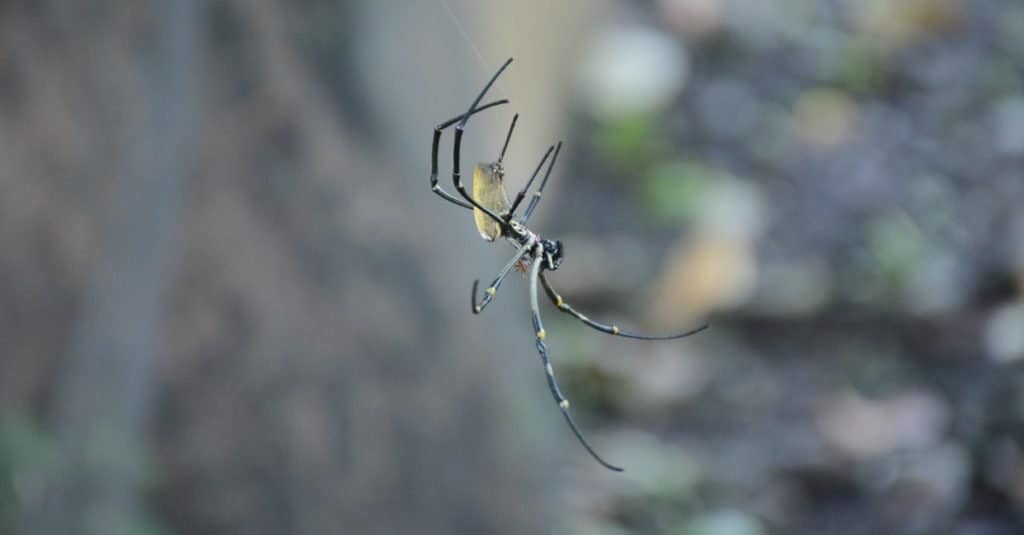
Flying spiders crawl somewhere high before they release silk balloons to “fly.”
©Anggi Paramita Sovinc/Shutterstock.com
As if spiders didn’t give us the creepy crawlies enough, there are spiders that can seemingly fly. It works like this: flying spiders will climb somewhere high, let out silk, and float on these silk balloons up to two miles in the air. To propel them, electric fields help lift the spiders even when the air is still, allowing them to “fly” whenever there is an electric field nearby.
5. Cats

How are cats always able to land on their feet?
©yordanka caridad almaguer/Shutterstock.com
Cats don’t actually have nine lives, but they are able to fall so gracefully it’s like gravity doesn’t affect them the same way it affects us. Cats can orient themselves mid-air to ensure they always land on their feet due to the righting reflex — a skill kittens learn as young as 3-4 weeks old. Cats can also twist and move easily due to their highly flexible spine. And, by the way, it doesn’t matter if they jump or fall. They will still land on their feet almost every time.
6. Goats
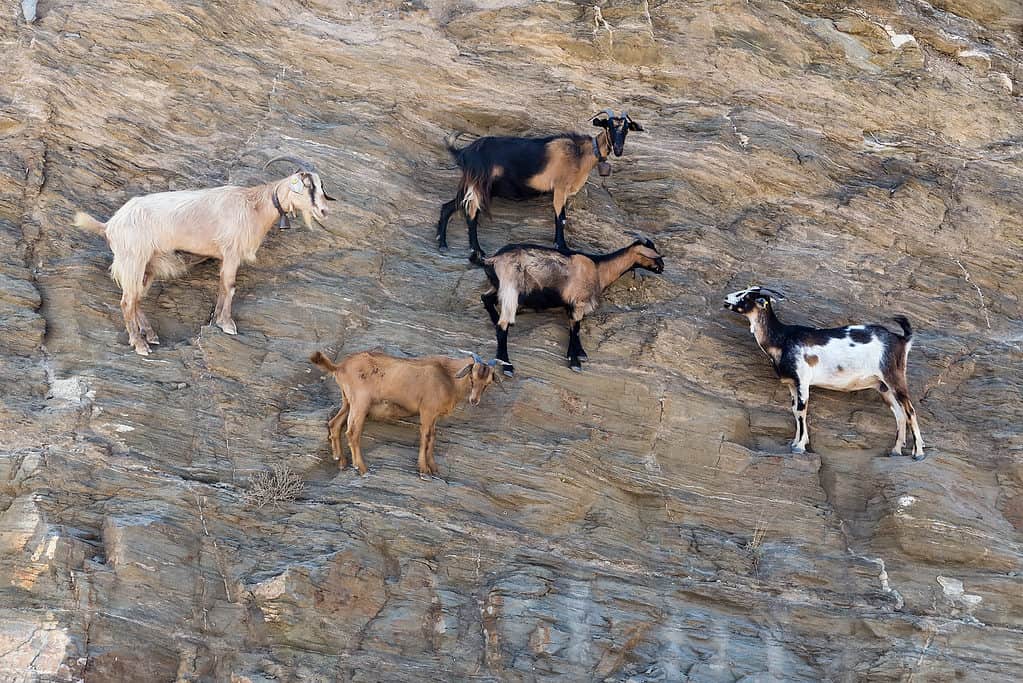
Somehow, goats can climb mountains like nobody’s business.
©Ververidis Vasilis/Shutterstock.com
Goats defy gravity every day by the way they climb mountains without a care in the world. Mountain goats are often seen on nearly vertical cliff walls without falling, in an impressive feat that would make even experienced mountain climbers nervous. This is because they learn the skills to climb mountains just a few days after being born.
Specialized split hooves help goats grip onto rocks and ledges, with a soft inner concave part that works like a suction cup to give them traction at high altitudes. They also have strong neck and shoulder muscles and great eyesight, allowing them to track the best paths up the mountain.
7. Elephants
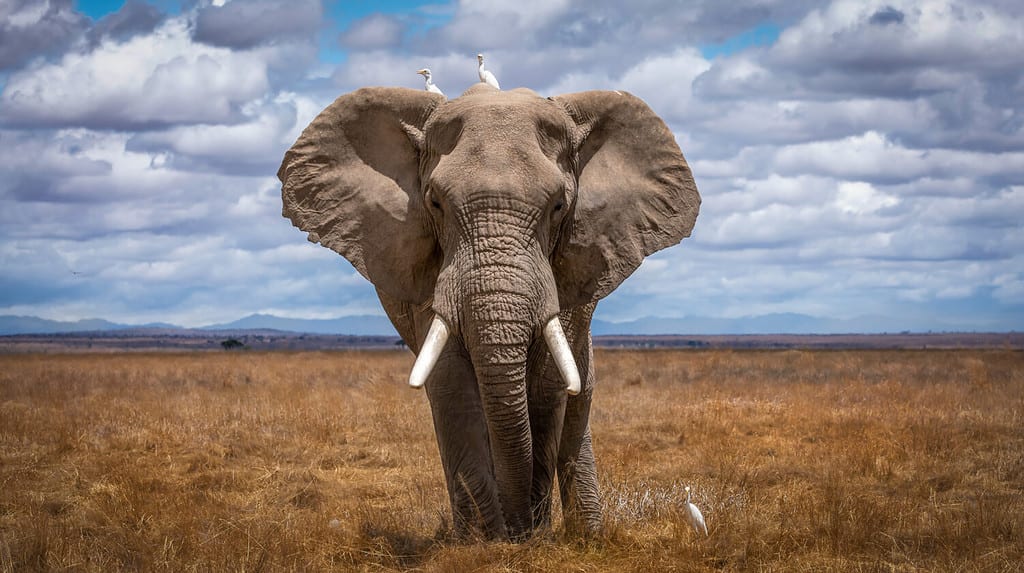
Elephants don’t let distance stop them from communicating with other elephants.
©Cautron Live/Shutterstock.com
Long before cell phones were invented, elephants already had a way to communicate with other elephants across miles. They can make long-distance, low-frequency rumbles through their mouth or trunk to communicate warnings, emotions, desires, and more, with other elephants hearing the call approximately 6 miles away!
When they need to communicate something even further, elephants will use seismic communication. One elephant sends a low-frequency call, and other elephants can pick up the message from dozens of miles away by paying attention to the vibrations in the ground. Their sensitive feet can alert them to mating calls and warnings, as well as to where the sound is coming from and how far away it is. Talk about an amazing (and practical!) special talent.
8. Peregrine Falcons
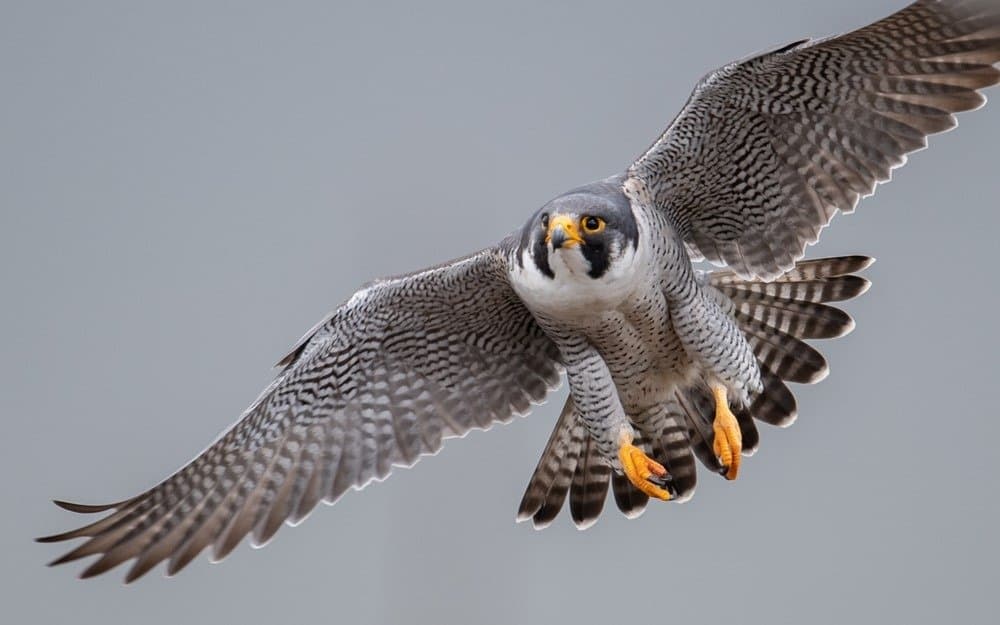
A peregrine falcon moves incredibly fast.
©Harry Collins Photography/Shutterstock.com
Known as the fastest animal on Earth, the peregrine falcon (Falco peregrinus) can reach speeds of up to 240 miles per hour during its hunting dive (stoop). These incredible fliers are one of the most powerful predatory birds on the planet, sporting a hooded beak, dark tear marks, and grey and brown feathers. They soar and dive to catch prey, while barely making a sound.
They can also travel incredible distances, with some birds migrating up to 15,500 miles (25,000 kilometers) in a single year. The world is truly its oyster.
9. Immortal Jellyfish
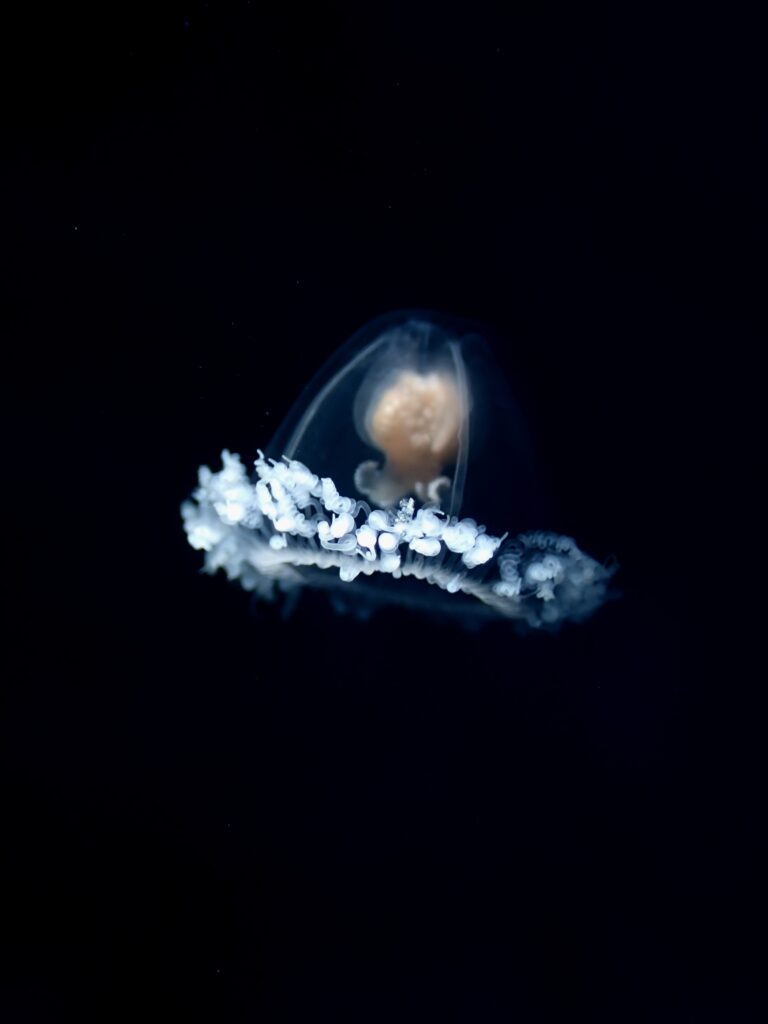
This jellyfish discovered the fountain of youth as it appears to stay young forever.
©Karajohn/Shutterstock.com
Did a jellyfish figure out how to defy space and time to live forever? Perhaps it has, because this immortal jellyfish (Turritopsis dohrnii) has an incredible ability to revert back to its juvenile state and almost start its life over again. These tiny jellyfish (roughly 4 to 5 millimeters in diameter) start out as larvae before developing into a polyp, then becoming a medusa. When facing the stresses of life — injury, starvation, or aging — the jellyfish undergoes transdifferentiation to reprogram its cells and transform back to the polyp stage. After hitting this reset button, they continue to grow again. Pretty cool, right?
10. Greenland Shark
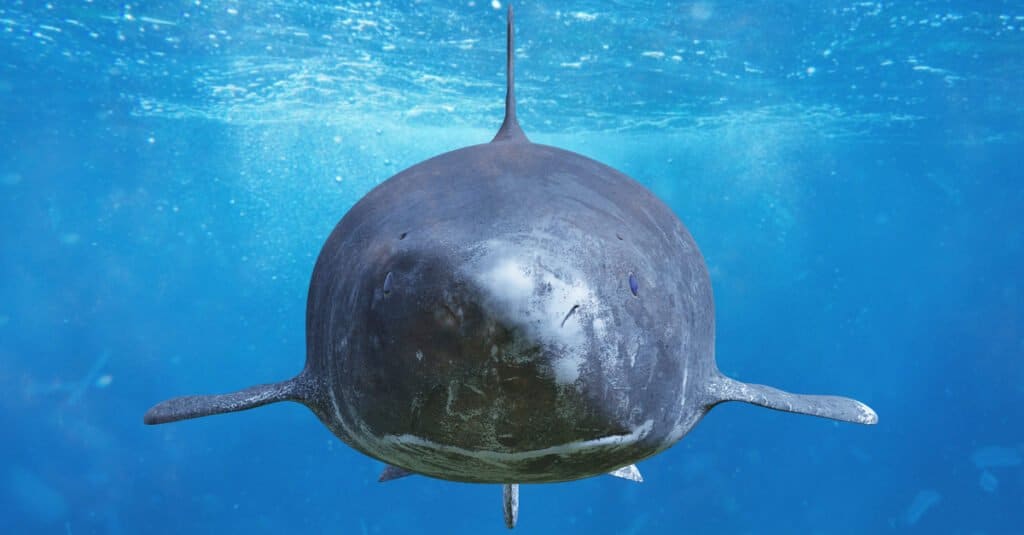
Greenland sharks don’t reach sexual maturity until 150 years old.
©Dotted Yeti/Shutterstock.com
Greenland sharks (Somniosus microcephalus) are the grandpa sharks of the animal kingdom. They are the longest-lived animal with a backbone, and may live up to 400 years or more, with some estimates suggesting a possible maximum of around 500 years. Researchers studied the radiocarbon dating of proteins in female Greenland sharks, estimating the oldest to be about 392 years old, with a possible age range somewhere between 272 years and 512 years.
They live in the North Atlantic and Arctic Oceans, where the water temperature ranges from 29 to 50 degrees Fahrenheit. They weigh up to 2,000 pounds and grow up to 24 feet long. Greenland sharks are slow-moving, with a sluggish metabolism, and swim at just 0.75 miles per hour.
Greenland sharks don’t reach sexual maturity until they are 150 years old, and when pregnant, their gestation period is estimated to last between 8 and 18 years!