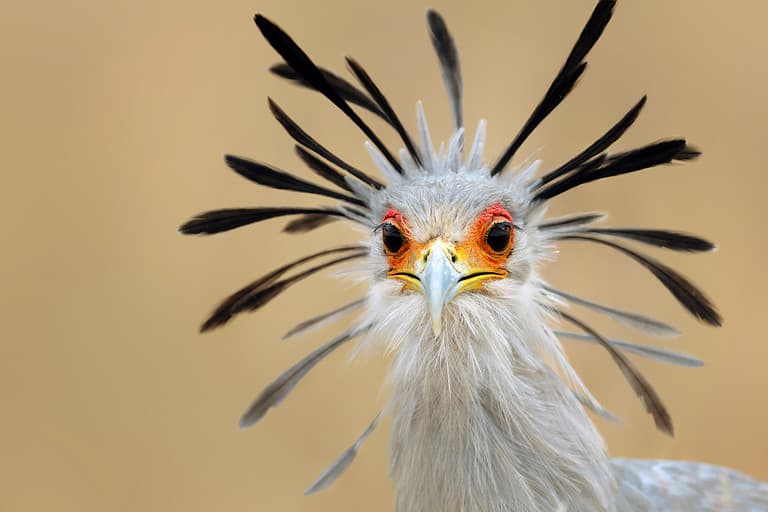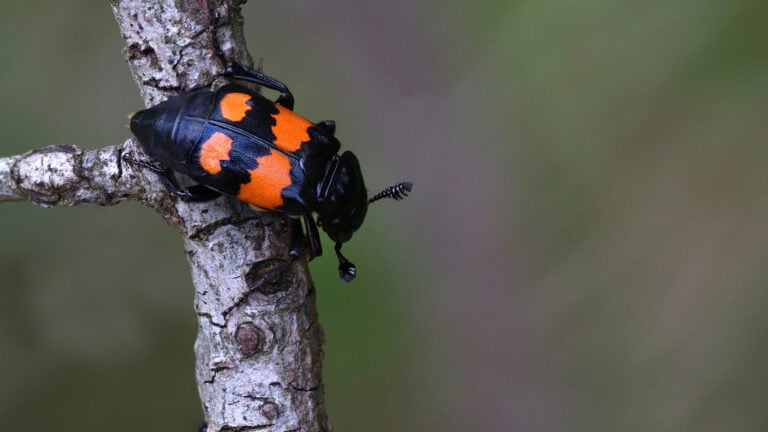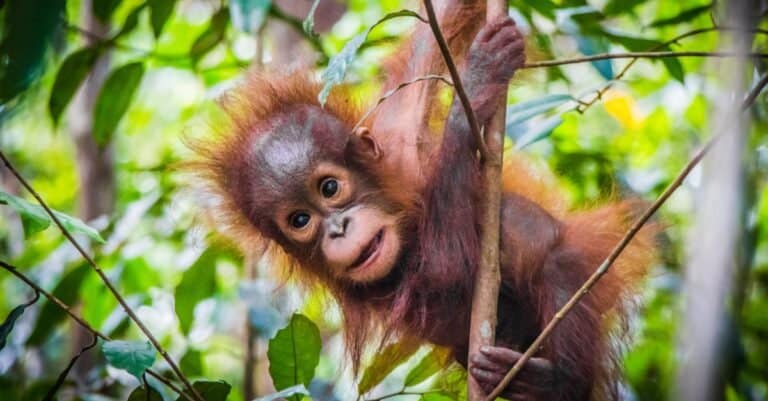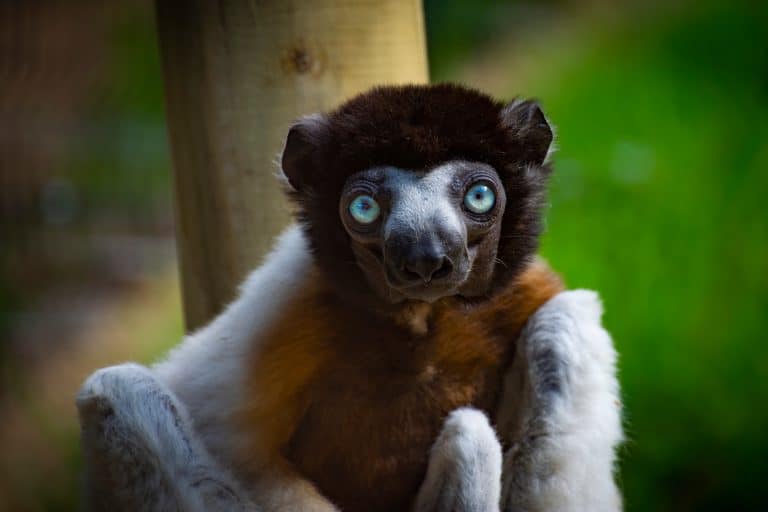

The color orange has many different practical uses in the animal kingdom. A bright and lavish display of orange feathers can help a bird attract a mate. Alternatively, the stealthy movements of the orange tiger, whose prey perceive its fur as green, can help it ambush an unsuspecting target. Continue reading to discover the top 10 most lovely wild animals with orange fur, skin, scales, or feathers.
10. Painted Bat
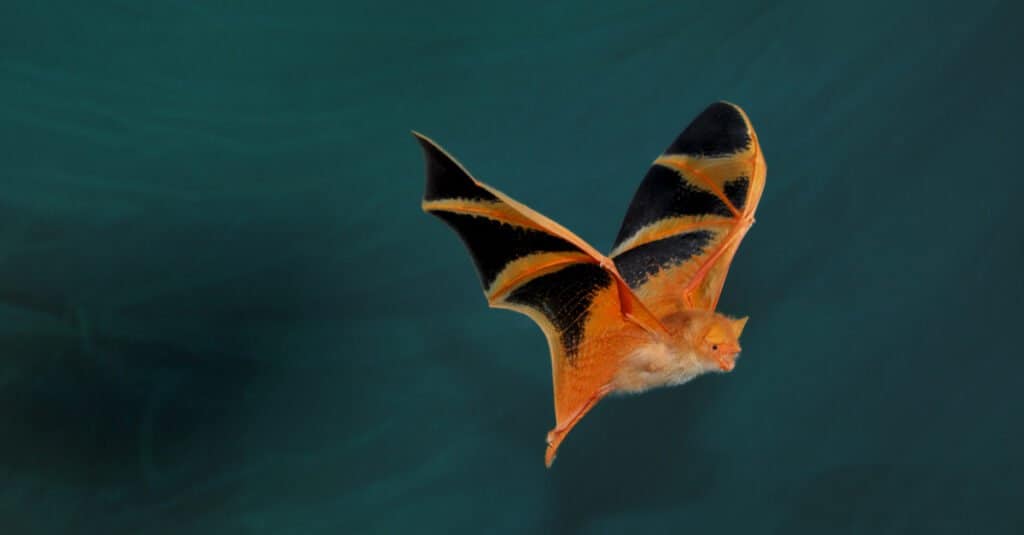
This lovely orange animal, the painted bat, is native to Southern Asia.
©PITOON KITRATANASAK/Shutterstock.com
Native to Southern Asia, the painted bat (Kerivoula picta) has woolly orange hair on its body, while its wing membranes are black. This color scheme may provide camouflage to help it blend in with its roosting sites, which include tree hollows, trunks, dense foliage, and human buildings or huts. Painted bats form small family units consisting of a breeding pair and their immediate offspring. Usually, they produce only a single pup per breeding season. Some painted bats are crepuscular instead of nocturnal.
9. Goldfish
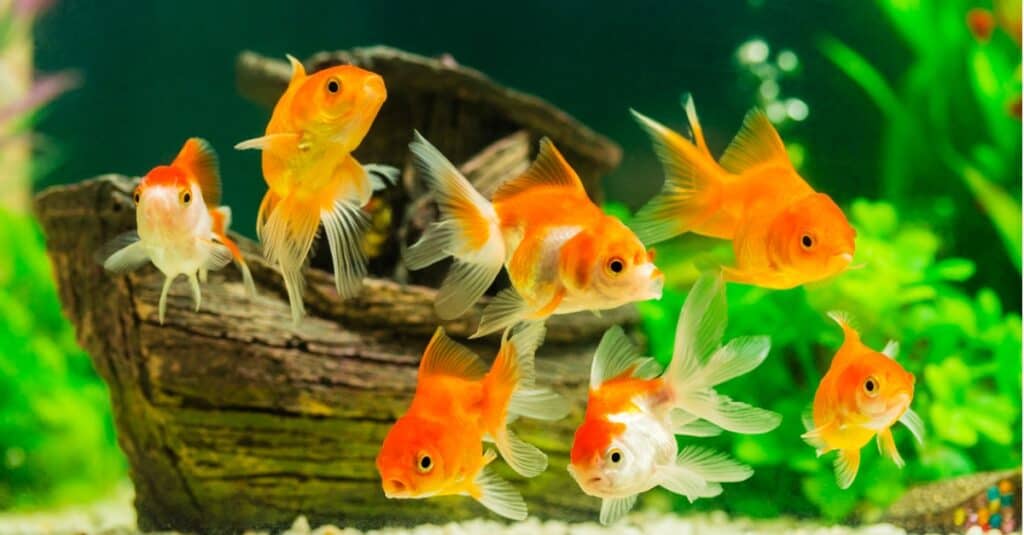
This lovely orange animal, the goldfish, has dozens of different breeds.
©iStock.com/satit_srihin
The goldfish (Carassius auratus) is a lovely orange animal that was bred from a small freshwater brown or gray carp native to East Asia. More than a thousand years ago in imperial China, the species was selectively bred for color. Golden orange is by far the most popular in the aquarium trade, but red, yellow, brown, white, and black also exist.
There are dozens of different breeds of goldfish in total; some have swollen hoods on their heads, while others have upturned eyes. They can live up to 25 years in captivity, although the average lifespan is 10 to 15 years.
8. Clownfish
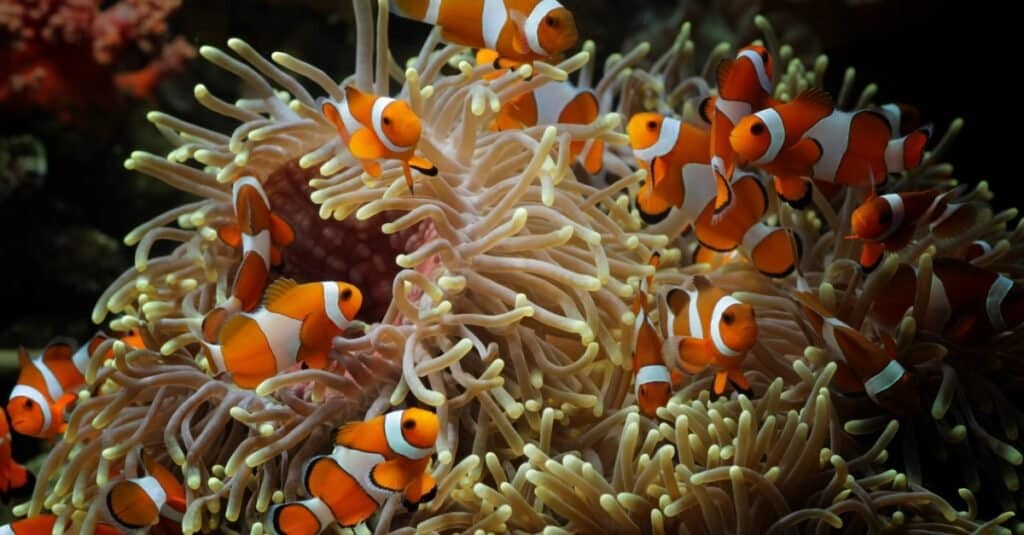
This lovely orange animal, the ocellaris clownfish, is the species of the protagonist of Finding Nemo.
©iStock.com/agus fitriyanto
The clownfish (Amphiprion) is a group of some 30 species that form a symbiosis with sea anemones. The anemone provides a haven from dangerous predators, while the clownfish brings food to the anemone and preens it for parasites. They have evolved the ability to acquire immunity to the toxins of their host anemones by carefully touching the tentacles with different parts of their bodies, gradually building up a protective layer of mucus. The most recognizable species is the common or ocellaris clownfish (Amphiprion ocellaris), featured in Finding Nemo. They are characterized by three white vertical rings separated by black lines around their orange bodies. Many species are endemic to the Indian and Pacific oceans.
7. Oriole
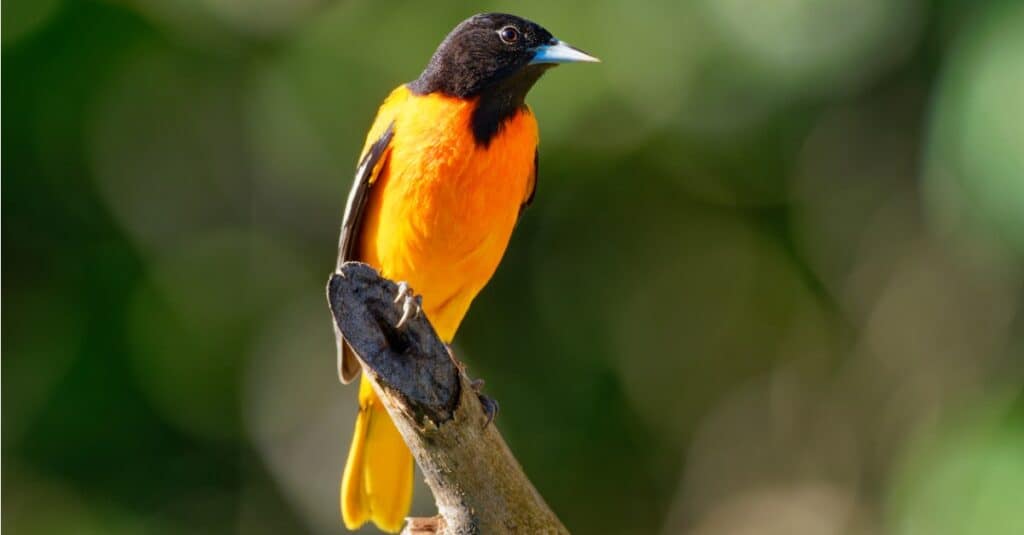
The male of this lovely orange animal, the oriole, has contrasting yellow and orange bodies.
©iStock.com/phototrip
Orioles (Oriolus or Icterus) are a large group of songbirds with slender bodies and pointed bills. There are dozens of different species, divided into New World or Old World types. Males have contrasting yellow or orange bodies with black heads and backs, whereas females and juvenile birds tend to have duller gray plumage. Males are more colorful than females because the intensity of their plumage signals their health and vitality, making them more desirable during mating season. The most well-known species is the Baltimore oriole (Icterus galbula) of Eastern North America. Males can appear anywhere from yellowish orange to deep, intense orange.
6. Golden Lion Tamarin
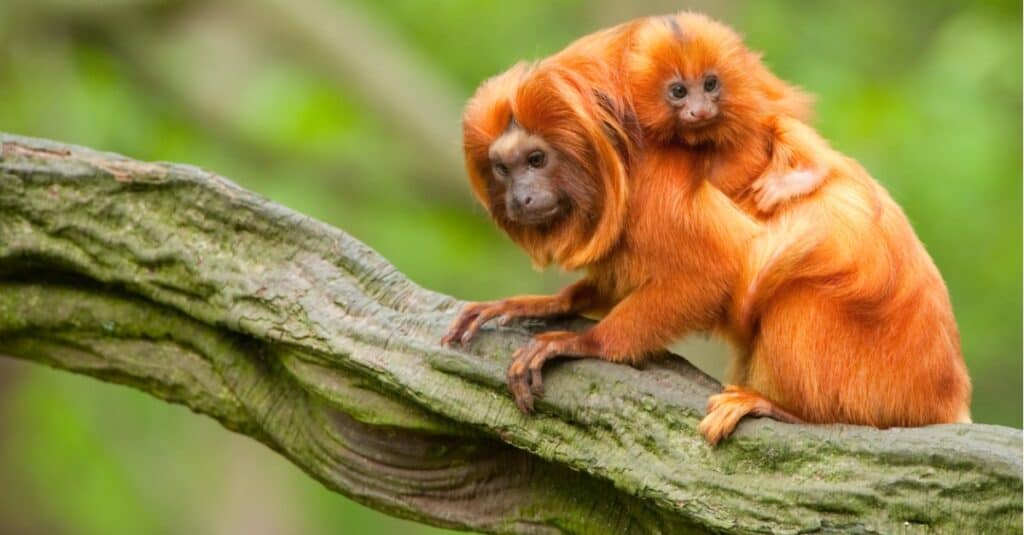
The golden lion tamarin is a lovely orange animal that has a relatively small body.
©iStock.com/Enjoylife2
The small endangered golden lion tamarin (Leontopithecus rosalia) is native to the coastal forests of Brazil. It gets its name from its bright ginger hair that covers everything except for its face and feet. While the body measures only 6 to 10 inches long, the tail is comparatively enormous, ranging from 12 to 15 inches long. They use their tails to climb and cling to trees.
In the wild, the golden lion tamarin lives in small family units of two to eight individuals. The family consists of a breeding pair, their offspring, and any close relatives. After mating, the female usually gives birth to twins; both offspring are born fully furred and open-eyed. They sleep together in tree holes during the night for both warmth and protection.
5. Monarch Butterfly
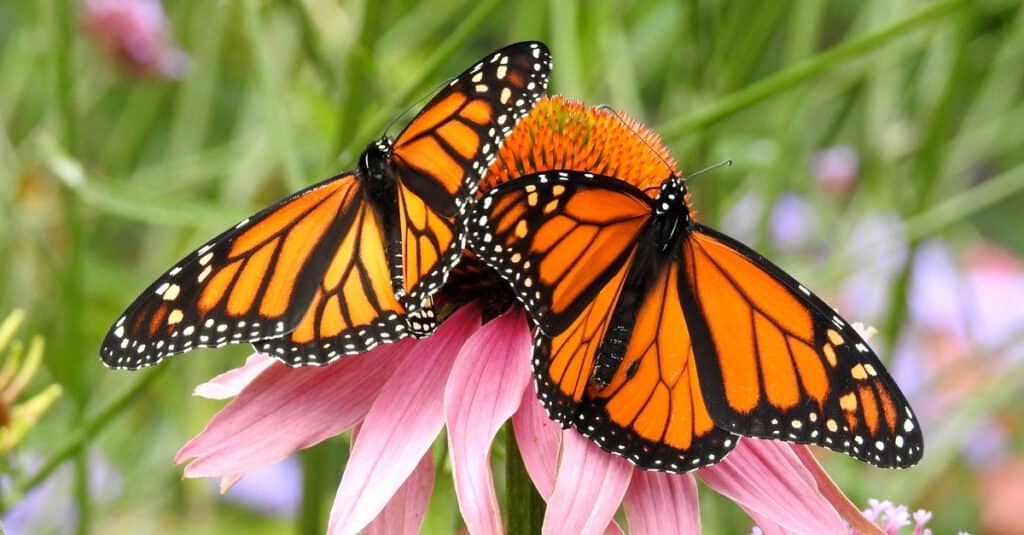
The monarch butterfly is one of the more well-known lovely orange animals.
©Kate Besler/Shutterstock.com
Monarch butterflies (Danaus plexippus) are lovely orange animals characterized by large wings, measuring up to four inches long, with tawny orange separated by black veins. White spots also occur around the fringes of the wings. Monarch butterflies typically produce four to five generations per year, with each generation living about four to five weeks, except for the final generation, which can live several months and undertake the migration south for the winter in Eastern North America. When it completes the journey (up to 2,800 miles in some cases), the butterfly hibernates in the mild temperatures of mountain forests. It makes the opposite journey north in the spring to begin the entire reproductive cycle over again.
The larvae depend on milkweed plants throughout their entire range for food until they’re ready to complete metamorphosis into adults.
4. Cock-of-the-Rock
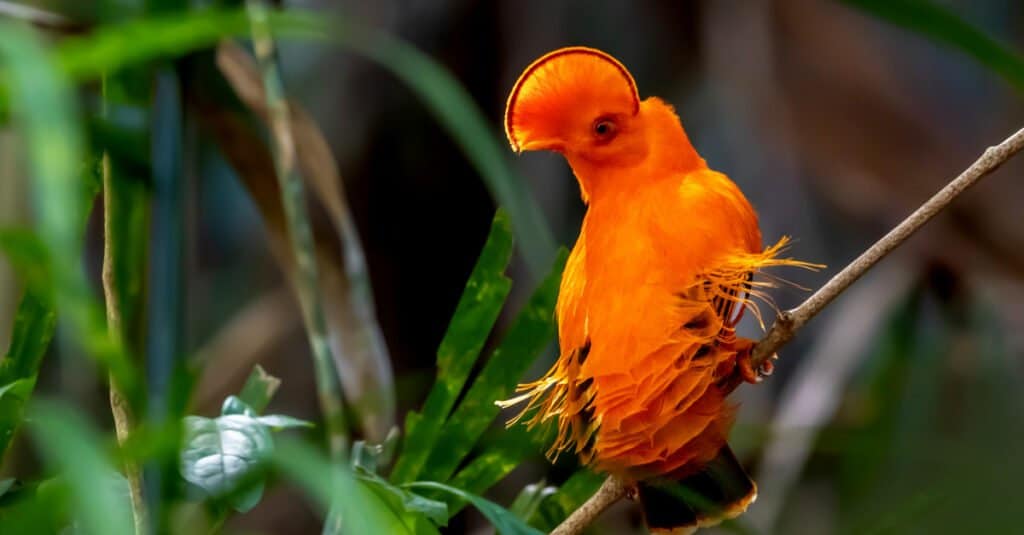
The Guianan cock-of-the-rock is a lovely orange animal that is native to South American forests.
©Wang LiQiang/Shutterstock.com
The Andean cock-of-the-rock (Rupicola peruvianus) and the Guianan cock-of-the-rock (Rupicola rupicola) are the two species that comprise this genus of perching songbirds. Both species are native to the humid forests of South America at elevations up to nearly 8,000 feet. The males are covered in bright orange and gray/black plumage with a huge crest on their head, whereas the much more demure female has duller plumage and a smaller crest.
The breeding season for cock-of-the-rocks begins when the birds gather for a ritualized courtship display called a lek. The mere sight of a female is enough to trigger an intense dance competition among the males. She then chooses the best male dancer by nibbling at his feathers or pecking his neck. Some males will have multiple mates per season, while others may have none. The chicks hatch with small ginger tufts of down feathers growing in all directions.
3. Red Fox
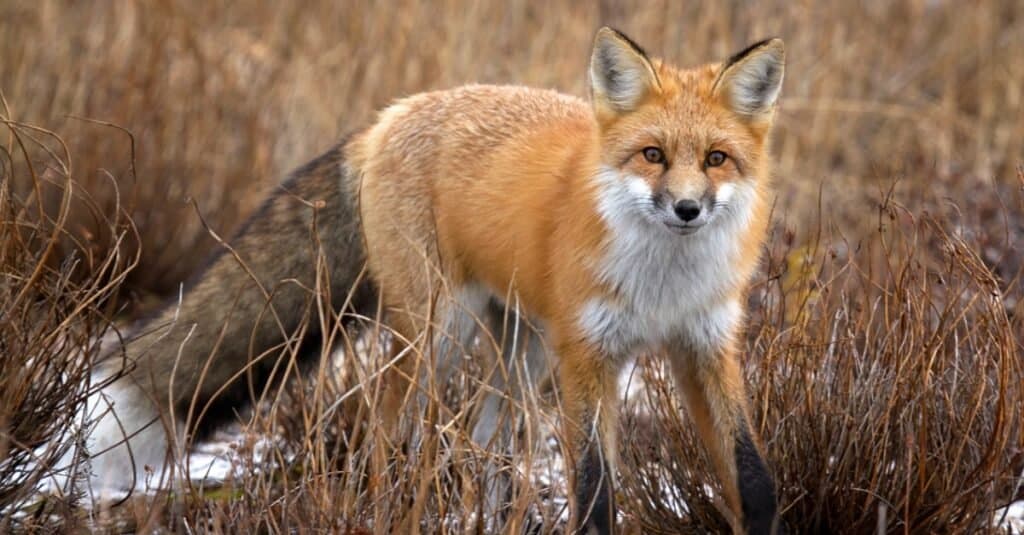
The red fox has beautiful reddish-orange fur, making it one of the most lovely orange animals.
©iStock.com/Lynn_Bystrom
The red fox (Vulpes vulpes) is one of the most common animals in all of North America. Measuring 36 to 42 inches long, it is covered in reddish-orange fur with a white chest and black markings around the tail and feet. It has numerous other color morphs as well, including gray, silver, and cross morphs. Their preferred habitats are mixed forest and grassland ecosystems, but they can live anywhere, from deserts to tundra. These highly adaptable animals have even thrived near human cities and suburbs.
Their dense reddish-orange fur, which consists of a soft undercoat and long outer guard hairs, is highly prized. Many are raised on fox farms until approximately 10 months of age for their fur, which is used to make clothing. They have also been the traditional target of the popular sport of fox hunting, dating back to 16th-century England.
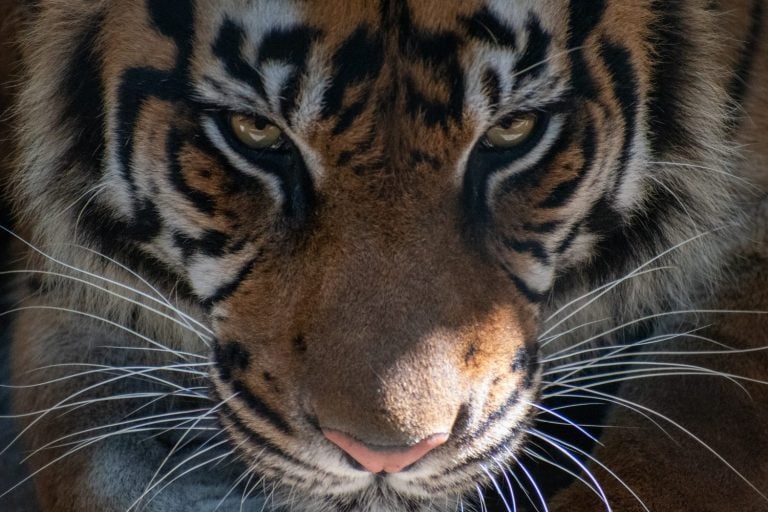
2. Tiger
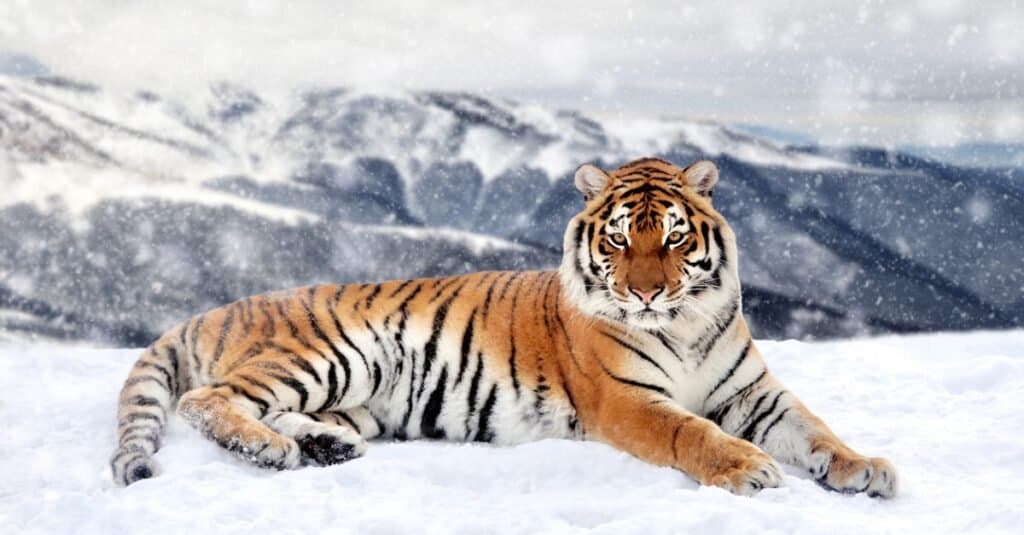
This lovely orange animal is endangered.
©iStock.com/Byrdyak
The tiger (Panthera tigris) is the largest living cat species in the world, but it has become endangered over the past few centuries. Several distinctive subspecies are recognized, including the Bengal tiger, Siberian tiger, and Indochinese tiger. Tigers come in various shades of orange and brown with white on the underside and black stripes along the entire body. Each pattern is unique to the individual, like a human’s fingerprint. There are three additional color variations: golden, white with stripes, and white with very few stripes. These rare color morphs are scarcely found in the wild anymore, but they are carried on in captivity.
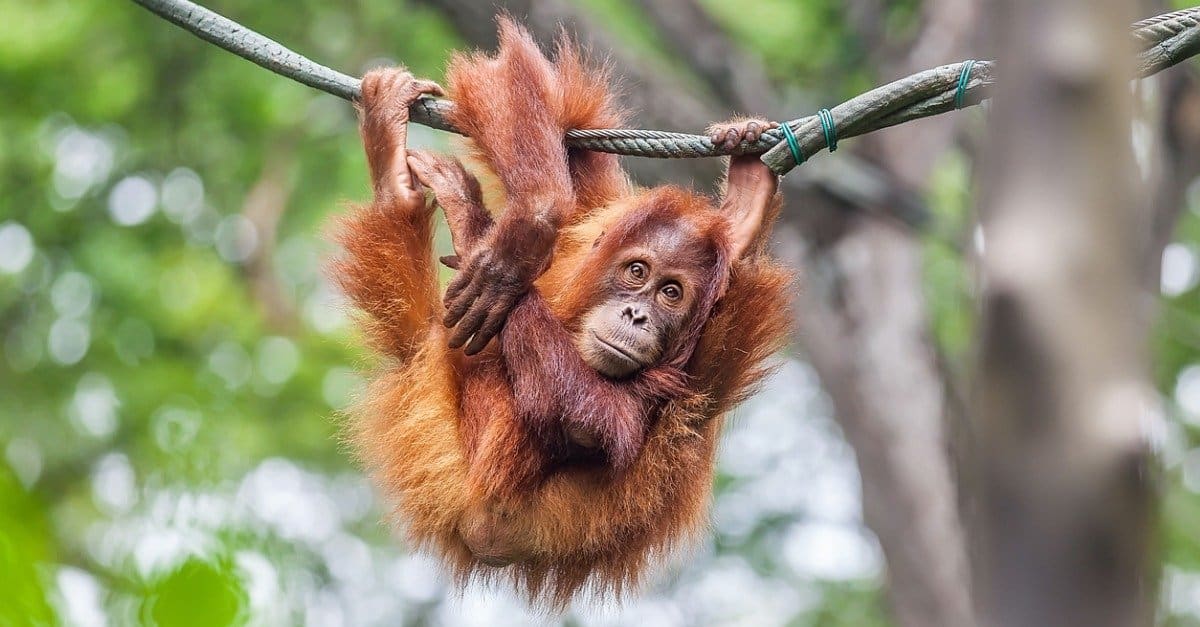
1. Orangutan
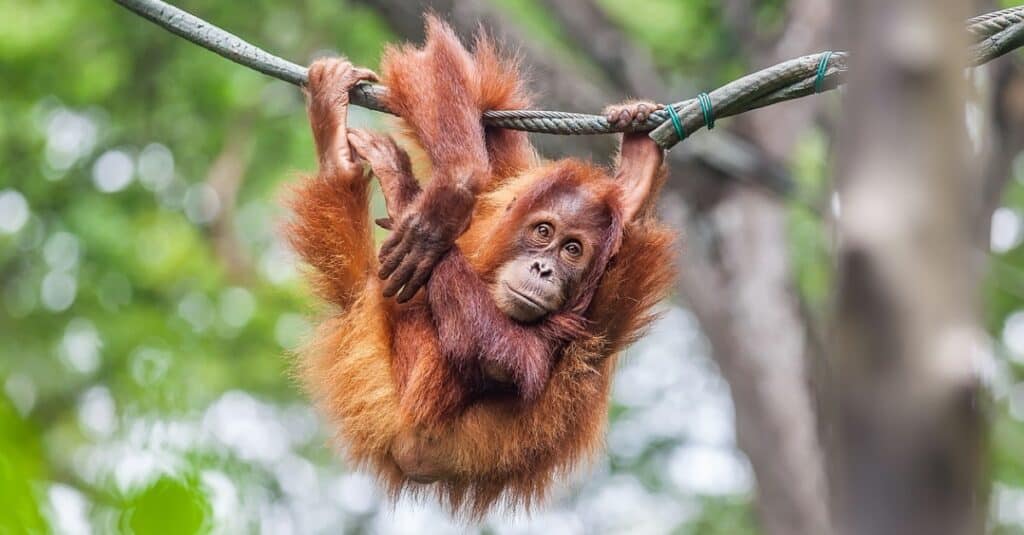
There are three species of orangutans contained in the genus Pongo.
©iStock.com/molishka1988
The orangutan (Pongo) is a genus of three orange-colored primate species, two of them from the Pacific island of Sumatra and another from Borneo. With their long, powerful limbs, orangutans spend most of their time in trees, foraging for wild fruits such as figs, mangosteens, and lychees. Dominant males, which can weigh up to 200 pounds, are also known as flanged males. They develop prominent flanged cheek pads and a large throat sac that enables their loud calls. An unflanged male lower in the group hierarchy resembles a female. Ginger or brown fur covers most of their bodies except for their faces, although some males also develop a long beard.
Unfortunately, orangutans are becoming rare throughout their natural range. While numbers stood at around 230,000 in the early 20th century, the wild orangutan population has now declined to fewer than 100,000 individuals.