
Quick Take
- Argentine ants are a non-native, invasive species in the United States.
- They compete with bumble bees for prized nectar sources.
- Bumble bees fight back, but the battle may be impacting its natural pollination behavior.
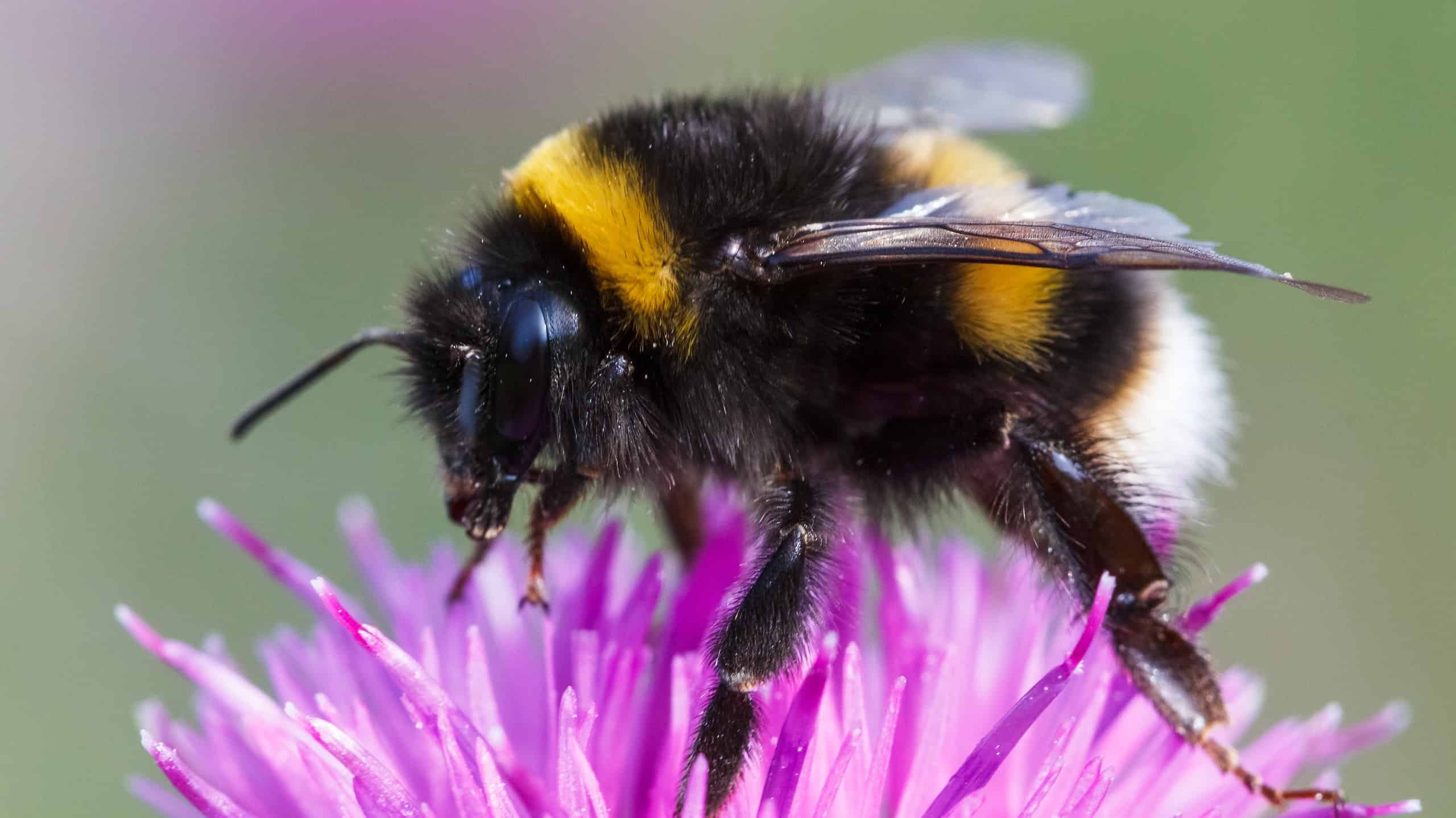
It’s a battle most humans will never witness. The humble bumble bee defending itself against an aggressive and invasive ant population. But even if you don’t see it firsthand, the conflict could have a ripple effect that goes far beyond the survival of its adversaries.
Read on to discover how an invasive ant species poses a threat to native bumble bee populations in the U.S., what scientists have discovered, and what bees are doing to fight back.
Argentine Ants Are the Bumble Bee’s Enemy
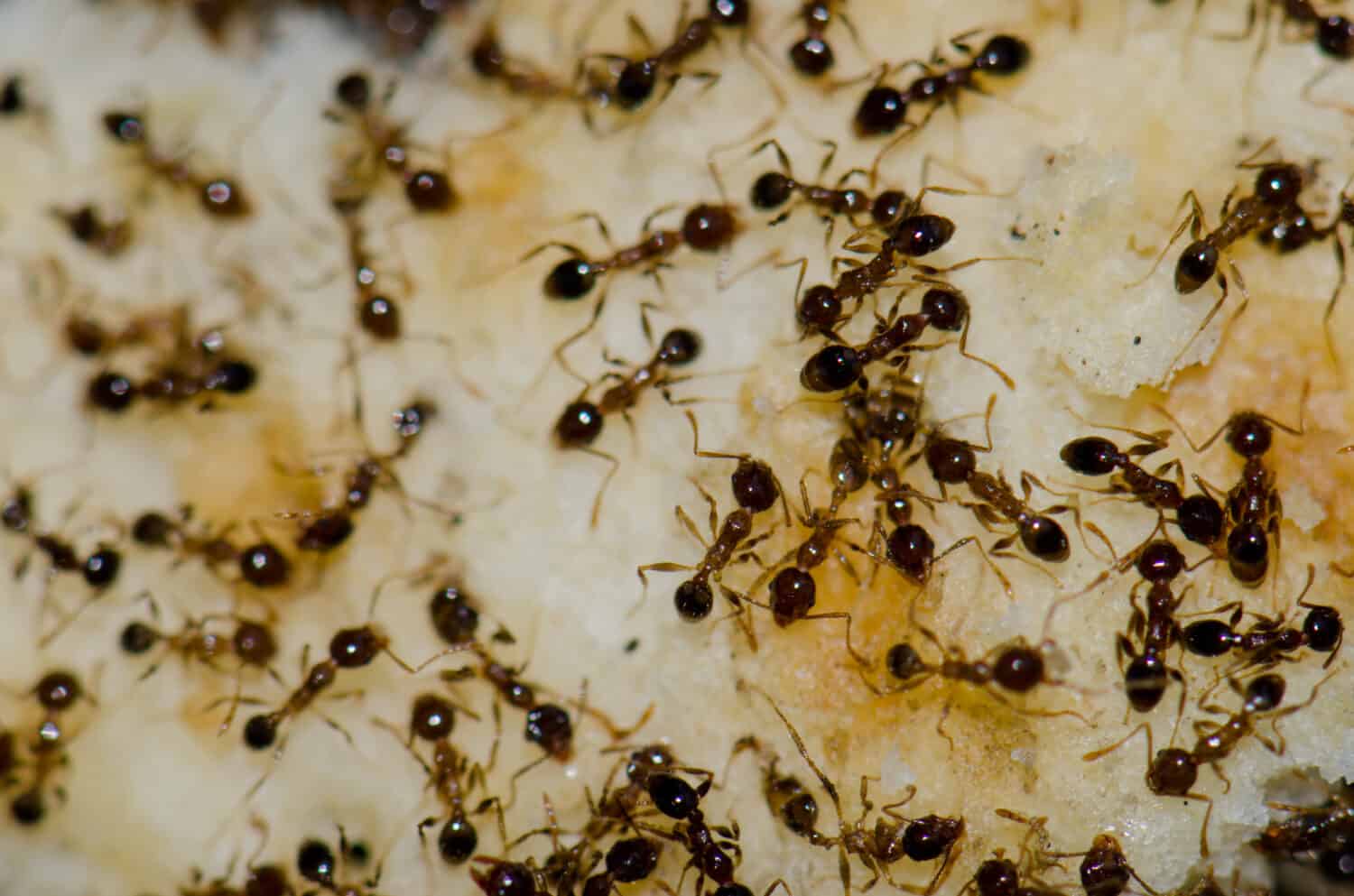
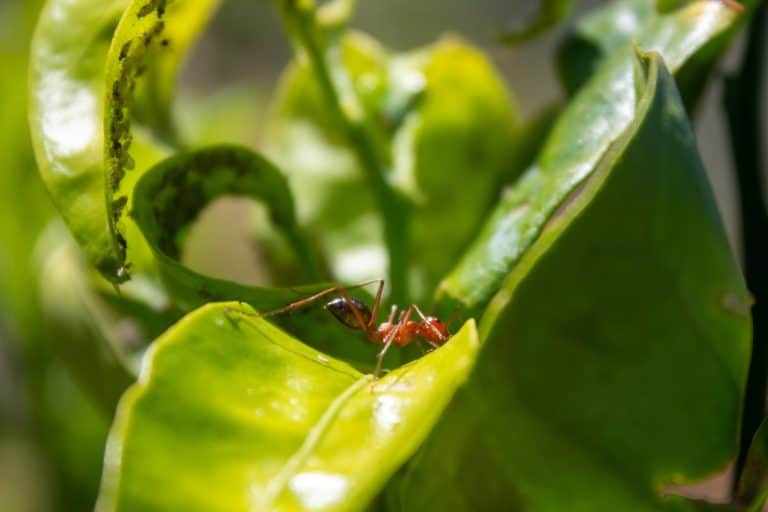
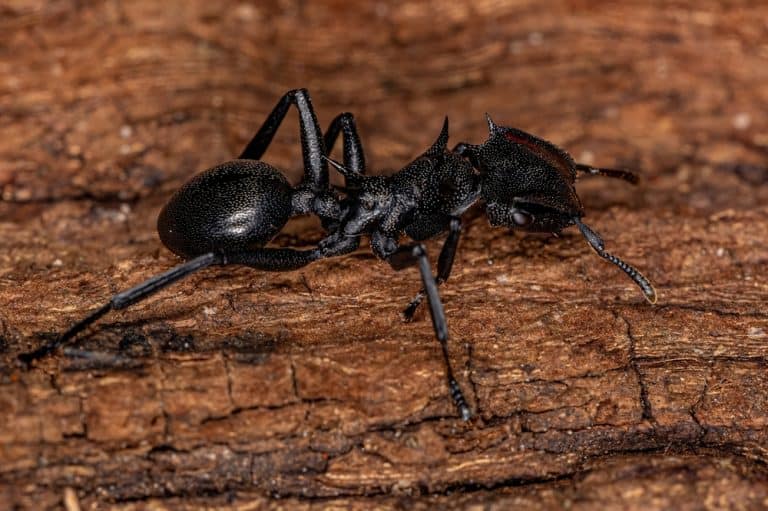
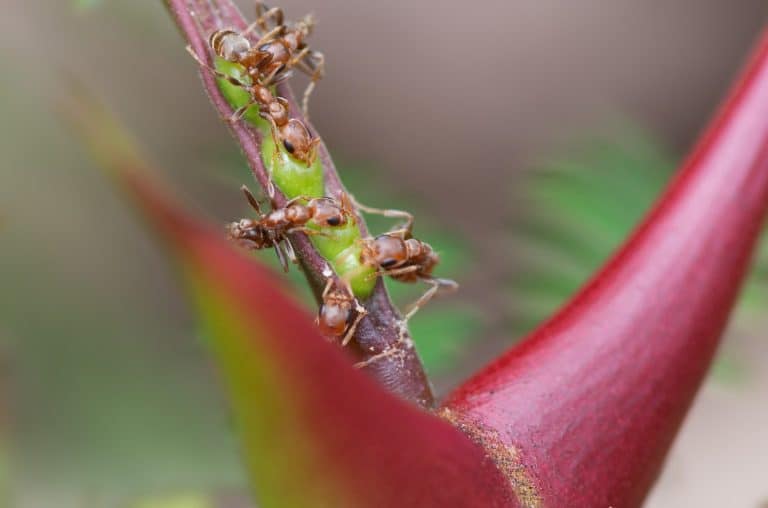
Argentine ants are an invasive species in the United States. They are native to South America.
©Victor Suarez Naranjo/Shutterstock.com
Argentine ants are non-native, invasive pests in the United States. Native to South America, these tiny insects were introduced to the U.S. in the late 1800s, likely via cargo ships. Today, these marching invaders are fully established in warm climate locations like California and the southeastern United States.
Argentine ants are small, coming in at just 1/8 inch long. They are dull brown and emit a musty odor when crushed. These ants live in large colonies where multiple queens also reside. Unlike some other ant species, Argentine ants don’t mind merging their colonies with the colonies of other Argentine ants. This can result in supercolonies with millions of ants living in one communal home.
While they tolerate each other, they can be aggressive with other ant species. They don’t sting, but they do bite. Mostly, though, they overwhelm with sheer numbers. A large colony of Argentine ants can displace native ant populations. They also don’t shy away from attacking young lizards and birds. Argentine ants also compete for food sources that some young wildlife rely on to survive.
Most often, humans come in contact with Argentine ants at home. These ants form long trails and march right into kitchens and bathrooms, looking for food and water. Most people view Argentine ants as a nuisance.
Not so in the animal world.
Why These Ants Pose a Threat

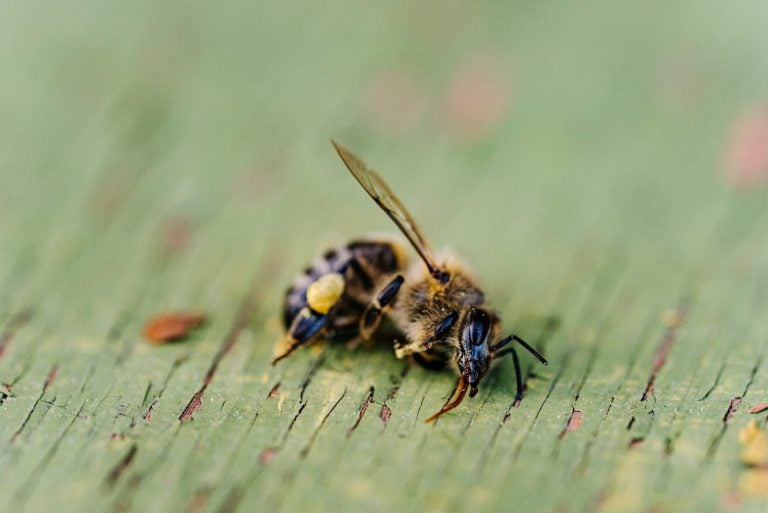
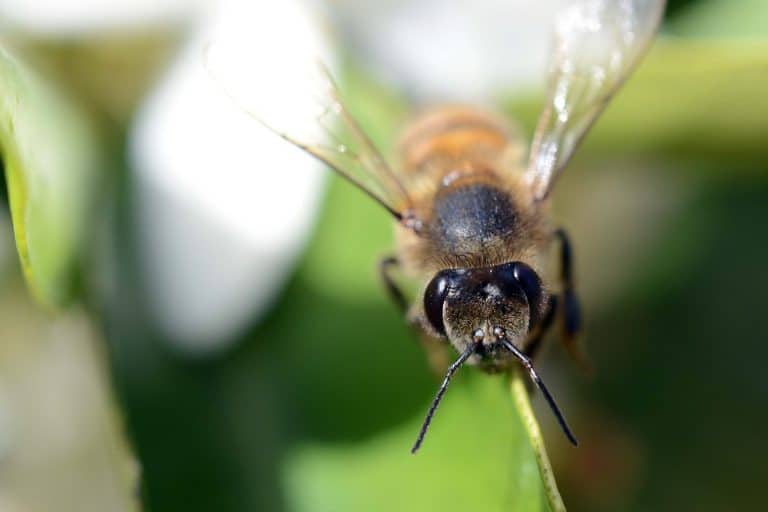
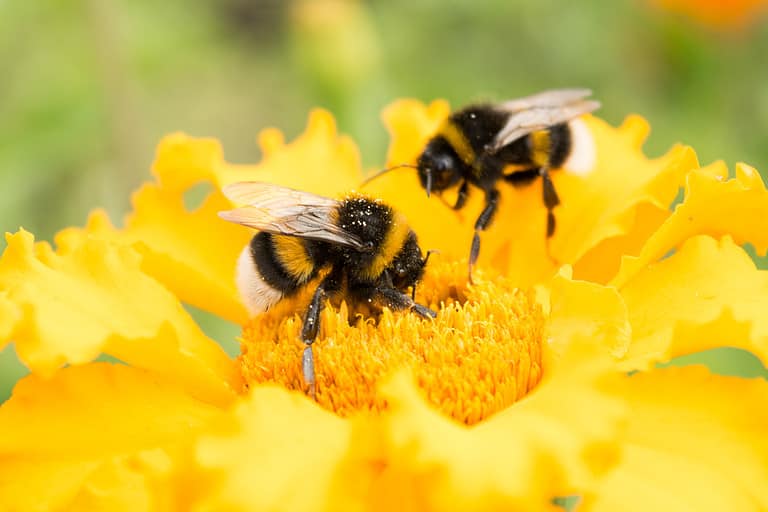
Argentine ants compete with bumble bees for nectar sources.
©nnorozoff/iStock via Getty Images
Unlike human interactions, Argentine ants are more than a mere annoyance to bumble bees. A recent study published in the Journal of Insect Science found that the presence of Argentine ants in nectar sources can negatively impact the natural pollination process.
The presence of these non-native insects disrupts the natural behavior of pollinators like bumble bees. The study analyzed over 4,300 behaviors of more than 400 bumble bees. The study took place in a lab at University of California-Riverside. The purpose was to determine how Argentine ants might be negatively impacting the bees’ pollinating decisions.
Six separate bee colonies were placed into the large, shared environment. Argentine ants were present on some nectar sources, but not all. What researchers discovered was that, everything else being equal, bumble bees try to avoid nectar sources where Argentine ants are present.
The study found that two-thirds of bumble bee behaviors at nectar resources involved direct interactions with Argentine ants. When a bee gets nectar from an ant-infested source, there is a high likelihood the bee will be bitten.
The study suggested two things, both of which put the natural pollination cycle at risk.
When Argentine ants consume nectar that would otherwise go to natural pollinators, there’s less food for natural pollinators like bumble bees. Likewise, when natural pollinators avoid natural pollination sources to avoid aggressive Argentine ants, pollination rates are at risk overall.
How Bumble Bees Are Fighting Back
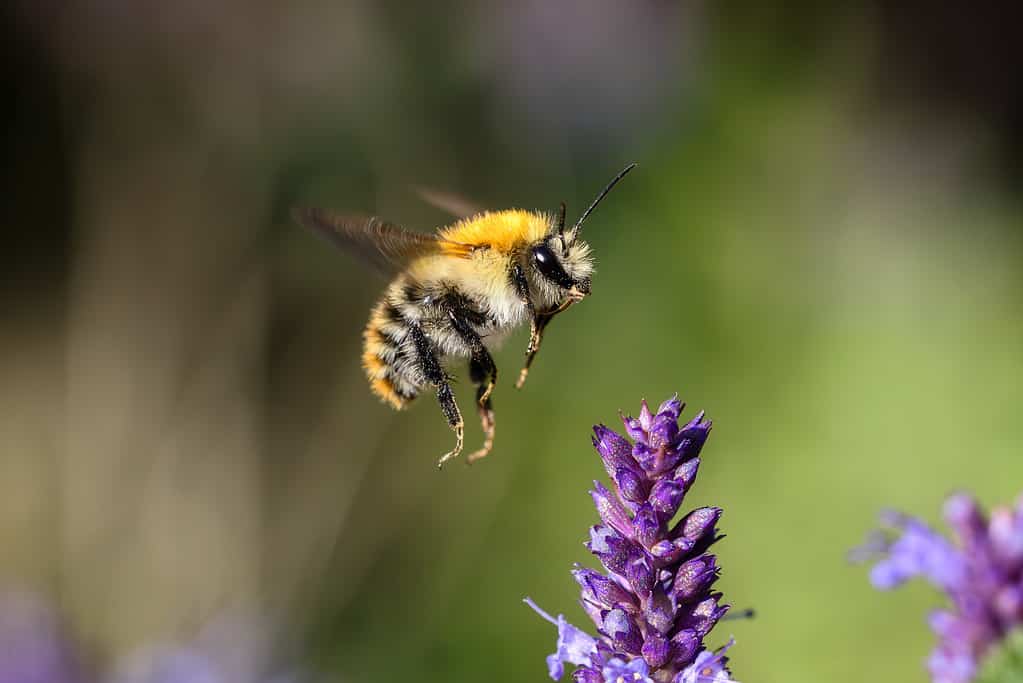
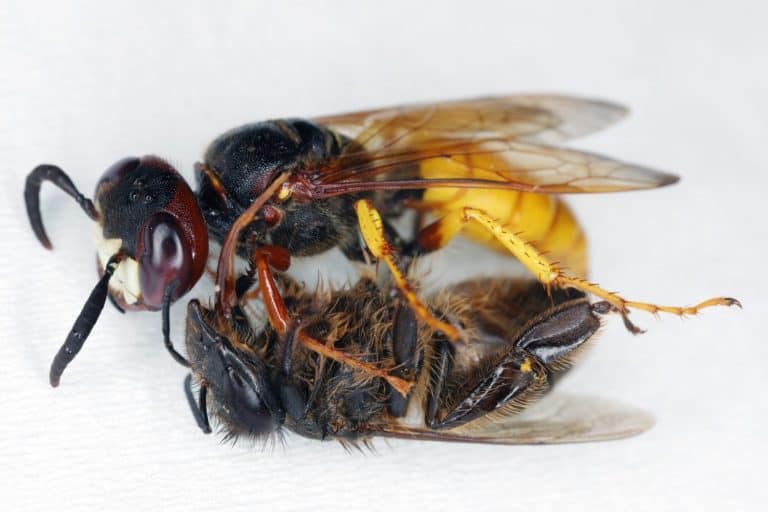
Bumble bees use their strong mandibles to decapitate the ants.
©chris-mueller/iStock via Getty Images
Bumble bees don’t necessarily let the ants’ presence deter them from pollinating altogether. When the bumble bees encounter the ants at a nectar source, they simply adopt a more aggressive approach themselves. This leads to the battle of bee versus ant that researchers observed in the lab.
What was surprising was how the bumble bees chose to deal with their ant adversaries.
While bees can sting without dying, they choose a different method to battle Argentine ants, according to the researchers involved in the study. The researchers didn’t find any stung ants during their observations, but they did find more than a few ant heads embedded on bee legs. Researchers concluded that the bees used their powerful mandibles, a strong biting jaw, to vanquish their foes by decapitating them.
This strategy, and the bees’ larger size, meant that most bees were victorious over the aggressive ants. However, winning the battle may not mean also winning the war.
Researchers note that fighting with the ants changed the bees’ pollinating behavior. Instead of vanquishing its foes and getting back to the business of pollinating, the agitated fighter bees stayed in attack mode.
Researchers note that this prolonged agitation wastes the bees’ energy and prevents them from bringing ample amounts of food back to their colonies. Experts aren’t sure how that might impact the colony’s overall health. Additional research is needed.