
Animals living in the mountains must have special adaptations to survive. They must be able to walk well in snow and on ice. Especially at the highest elevations, where the air is thinner, they must be able to breathe, and their diet and habitat are determined by what is available at these heights. Continue reading to discover 10 mountain animals that have special adaptations that allow them to live at the highest elevations on Earth.
Brown Bear
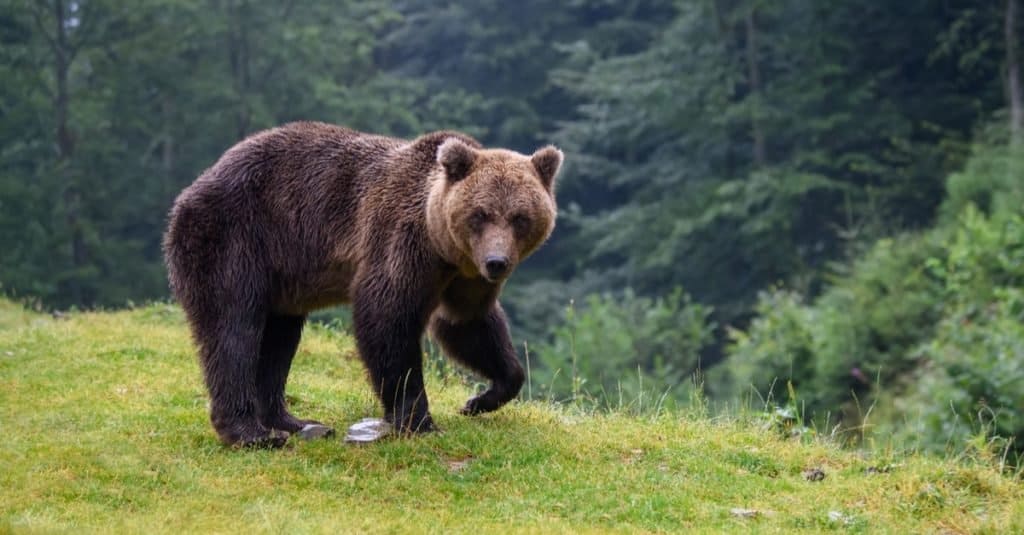
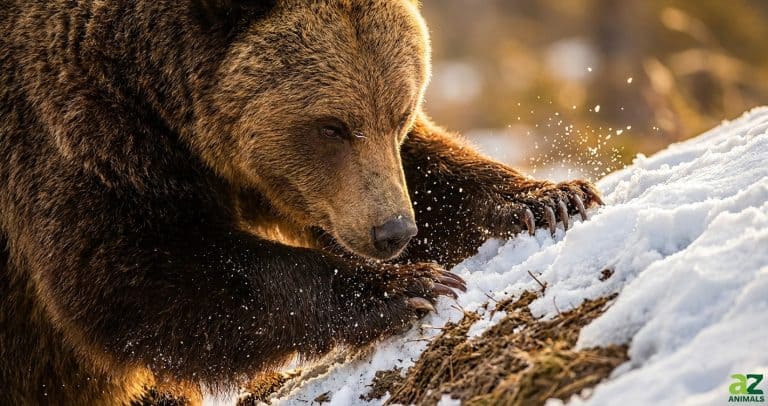
Wild adult Brown Bear (Ursus arctos) in the mountain forest. Brown bears are generally loners who will only seek a mate for short periods.
©Volodymyr Burdiak/Shutterstock.com
Brown bears live in many locations around the world, including up to 16,400 feet above sea level. The brown bear has long blunt claws that they use to dig up food, even when buried in ice and snow. Brown bears are at the top of the food chain, powerful enough to break the necks of many animals with a single swipe. These apex predators are omnivores who will eat almost anything. Their thick layer of fat helps to keep them warm. Brown bears have a great sense of smell, smelling prey up to 1 mile away.
Brown bears survive tough winter conditions at high elevations by hibernating. During hibernation, brown bears lower their body temperature by 8-12 degrees. As they slumber, their bodies break down stored fat for energy. This process helps them survive without eating or drinking for as long as 7 months
Himalayan Tahr
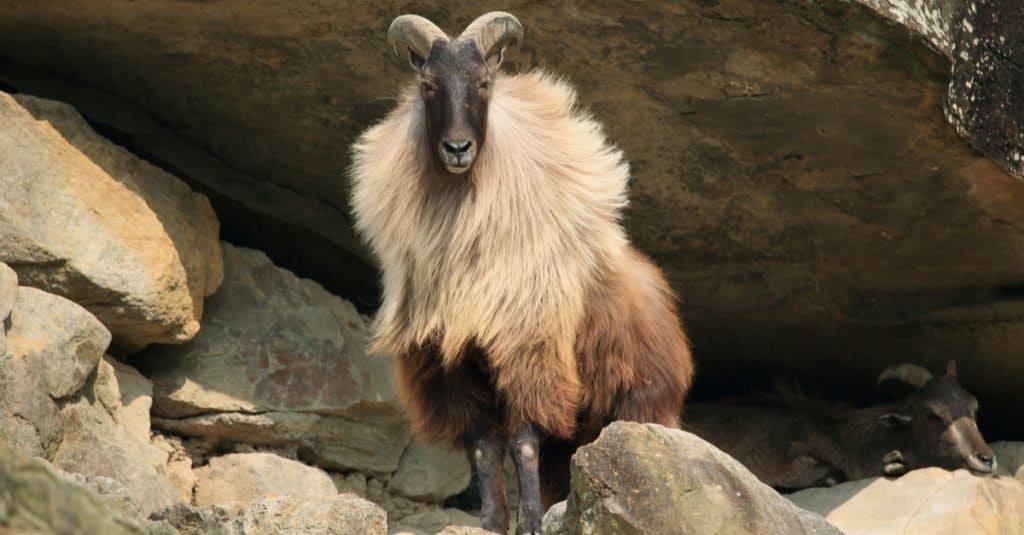
The Himalayan Tahr’s flexible, rubbery hooves help them to move quickly and confidently over rocky terrain.
©Japan's Fireworks/Shutterstock.com
The Himalayan tahr lives at elevations of up to 16,400 feet above sea level. This animal has a thick two-layered coat that grows long in the winter. The extra length and the thick undercoat help insulate the tahr during cold weather.
The hooves of the Himalayan tahr have adapted to walking on rocky mountainsides. Their hooves have a hard outer cover that protects their feet in rocky terrain. The hoof interior is more malleable, allowing tahrs to maintain their footing on uneven ground. Nimbly traversing the rugged ground, tahrs move to higher ground to feed during the day. They often rear up on their hind legs, using their front legs like arms to reach vegetation that other animals cannot access. Once evening arrives, tahrs move to lower, warmer elevations to rest.
Lammergeier
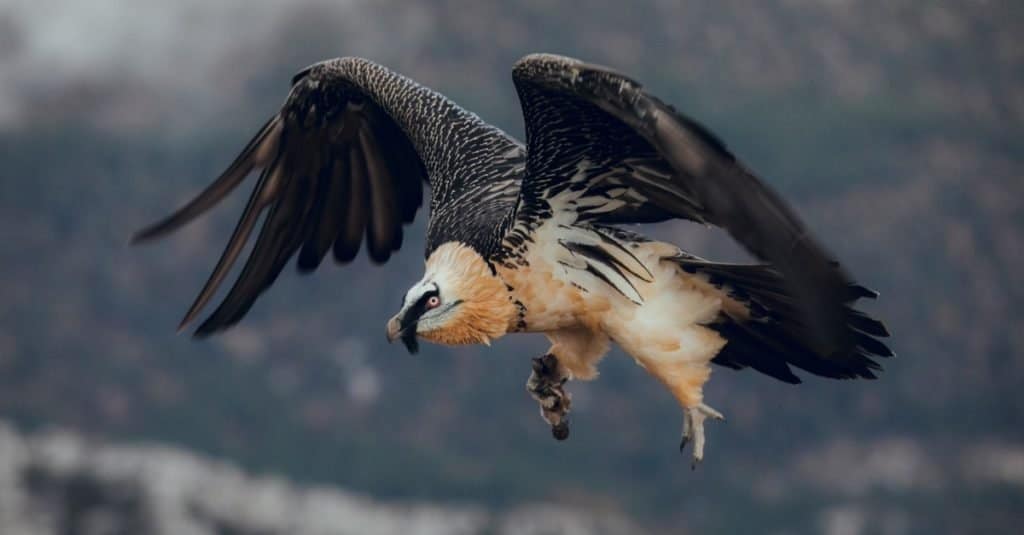
The lammergeier is a scavenger that will drop bones from tremendous heights to shatter them into swallowable pieces.
©Aitor Lamadrid Lopez/Shutterstock.com
The lammergeier (Gypaetus barbatus) also called the bone-eating vulture, lives at altitudes of up to 14,764 feet above sea level. The sole member of the genus Gypaetus, its name means lamb eater in German, but this scavenger is also known as the bearded vulture, the bearded vulture-eagle, the bone breaker, and the ossifrage.
The lammergeier is a unique type of Old World vulture, closely related to the Egyptian vulture, but it has distinct characteristics that set it apart from other vultures. Lammergeiers are more closely related to hawks and eagles. These birds eat a diet composed of about 80% bones, so they can easily find food left by other animals. The lammergeier is known for its penchant for tossing heavier bones from great heights onto rocks to break them before consuming them. The lammergeier’s stomach acid has a pH level of about 1, so it can digest most bones in under 24 hours. These birds have no natural predators.
Tibetan Sand Fox
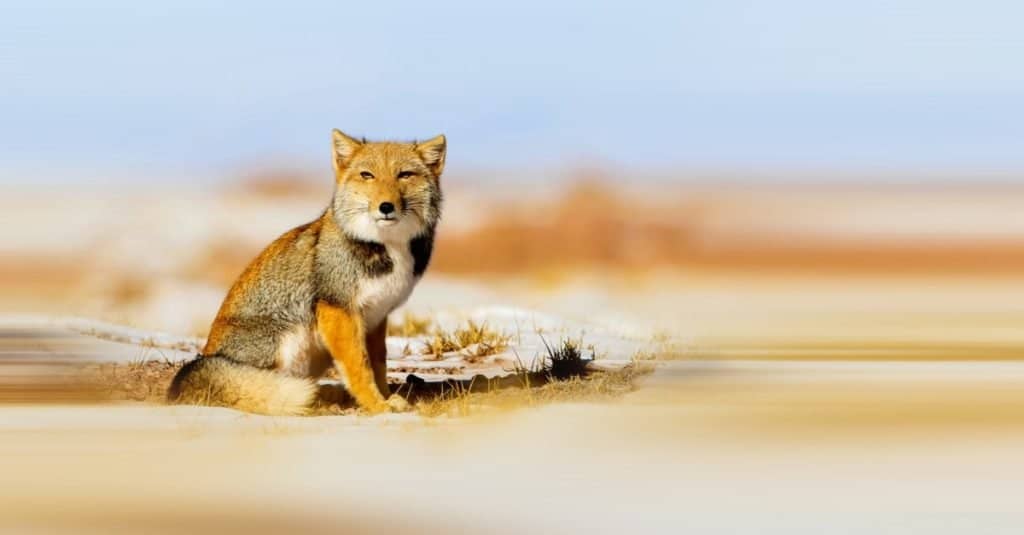
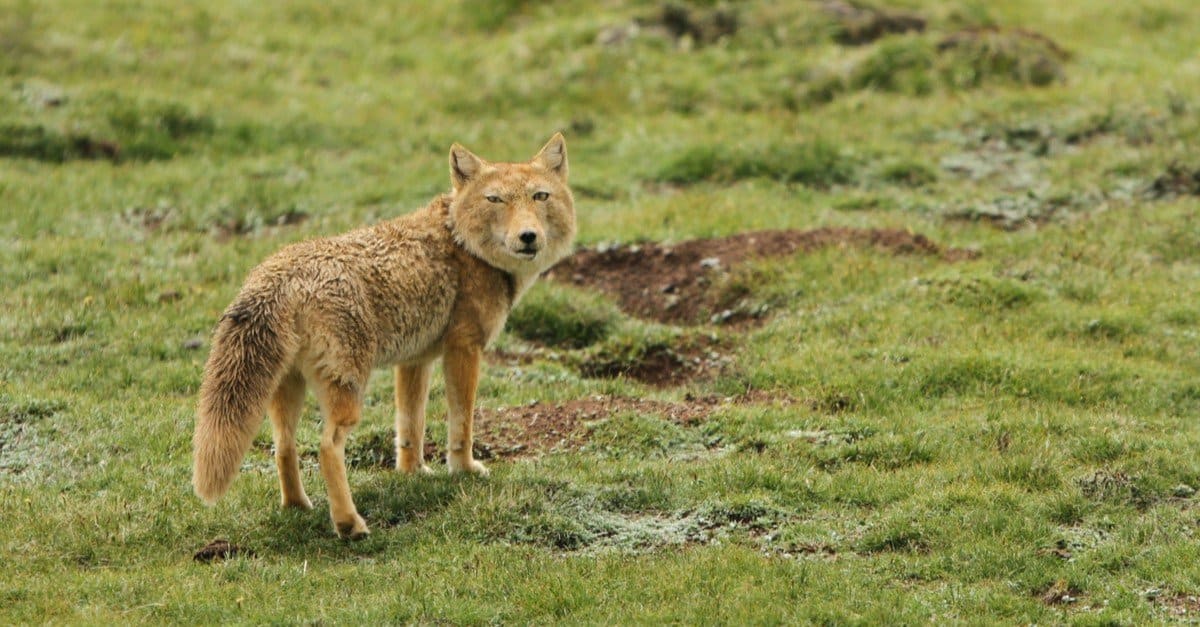
It’s unknown exactly why the Tibetan fox developed its signature square head.
©Wang LiQiang/Shutterstock.com
The Tibetan sand fox lives in altitudes up to 17,100 feet above sea level. These animals have thick fur coats, so it is easy for them to withstand the cold. Found in India, Nepal, Tibet, and Western China, these foxes prey on hares, marmots, pikas, and lizards. Occasionally survival might mean teaming up with the mighty predator of the heights, the brown bear. Using its quick reflexes, a sand fox will snatch a fleeing mammal that has been disturbed by the lumbering bruin.
The Tibetan sand fox has powerful jaws, which makes it able to eat a variety of meat. Males and females usually bond for life, and they work together as a team when they hunt. They have a keen sense of hearing, making it easier for Tibetan sand foxes to hear their favorite meal of rodents scampering as they attempt a quick getaway.
Himalayan Marmot
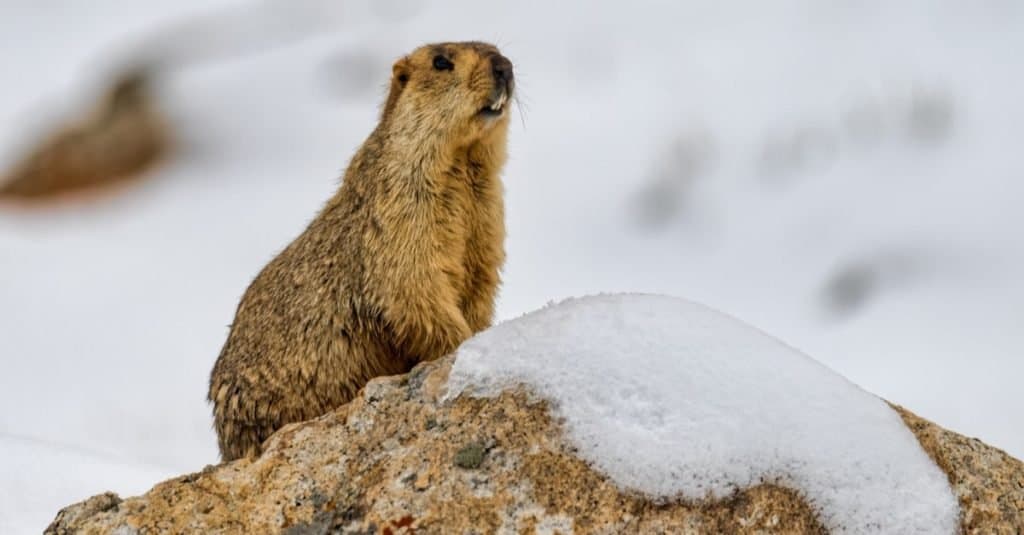
Himalayan Marmots have large incisors that grow continuously and are kept in check with frequent gnawing.
©Kamal Hari Menon/Shutterstock.com
The Himalayan marmot lives in elevations up to 18,000 feet above sea level. They live in dens 30 feet deep in the ground with their families up to 6 months out of the year. Each of their front feet has four toes with long concave claws, allowing them to burrow better. With more than one animal in the burrow, it is easy for these mountain animals to keep warm. This is especially true of the pups. While all Himalayan marmots stay in the burrow for about 6 months annually, females with young often spend another two months. While females are in the den, males are usually close by, on the alert for any signs of danger. When Himalayan marmots hear or see danger, they communicate through a low series of alarm calls, which they repeat every 5-to-20 seconds.
Researchers found that the Himalayan marmot has a genetic adaptation, absent in marmots that live at lower altitudes. This adaptation makes it easier for Himalayan marmots to breathe in the thinner air while helping control their body temperature.
Kiang
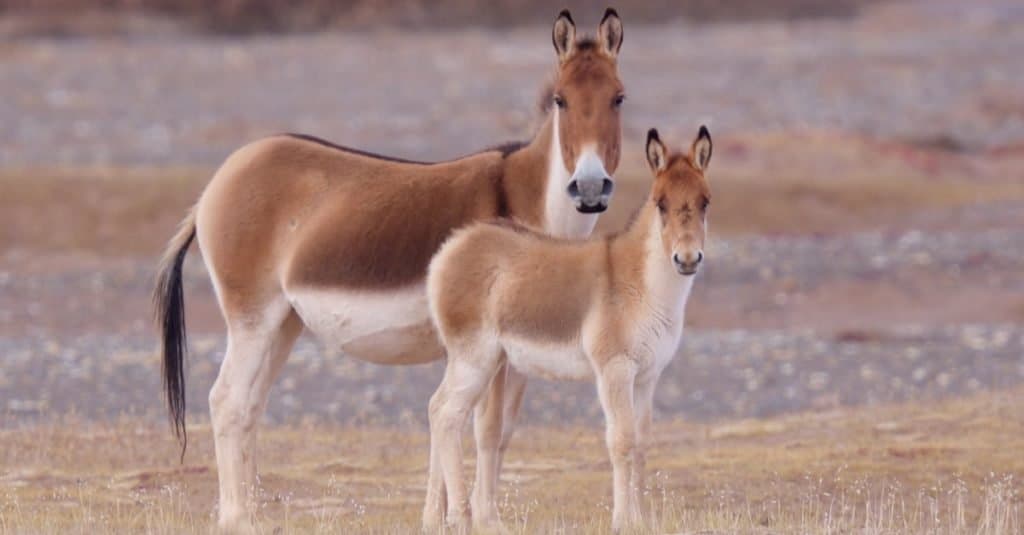
The summer coat of the kiang is 1.5 cm long but doubles in length in the winter.
©Hugh Lansdown/Shutterstock.com
Kiangs live at elevations of up to 17,700 feet above sea level. These mountain animals, the largest of the wild asses, develop a longer coat in the winter to keep them warm, while a short coat keeps them cool in the summer. Their only predators are wolves.
Kiangs live in groups of up to 400 animals. These tightly cohesive groups can travel a long way for food because kiangs have very stout legs. When food is most plentiful in July and August, they put on up to 90 extra pounds, which they can convert to energy when the grass is harder to find in the winter.
Chiru
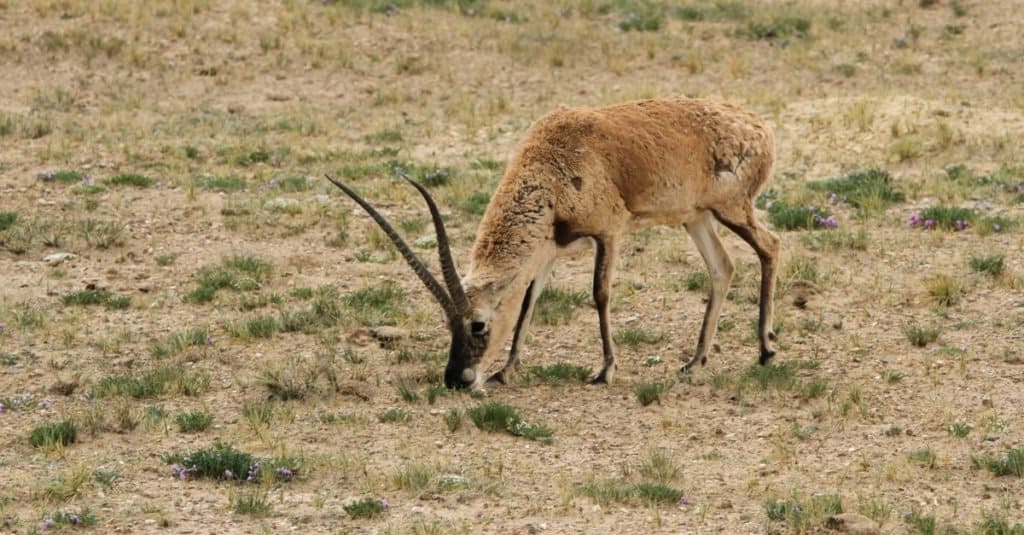
Despite its antelope-like appearance, the chiru is not related to the antelope.
©Agami Photo Agency/Shutterstock.com
Chirus, also called Tibetan antelopes, live in elevations up to 18,040 feet above sea level. Chirus are native to Northwestern regions of China and Ladakh, India. These animals migrate to warmer, lower elevations during the winter while staying in higher elevations during the summer. The chiru’s wooly coat keeps them warm.
Chirus rest in depressions that they dig in the ground. It is believed that the depressions also help conceal them from oestrid flies, whose larvae are parasites which burrow beneath the skin of mammals.
Goa
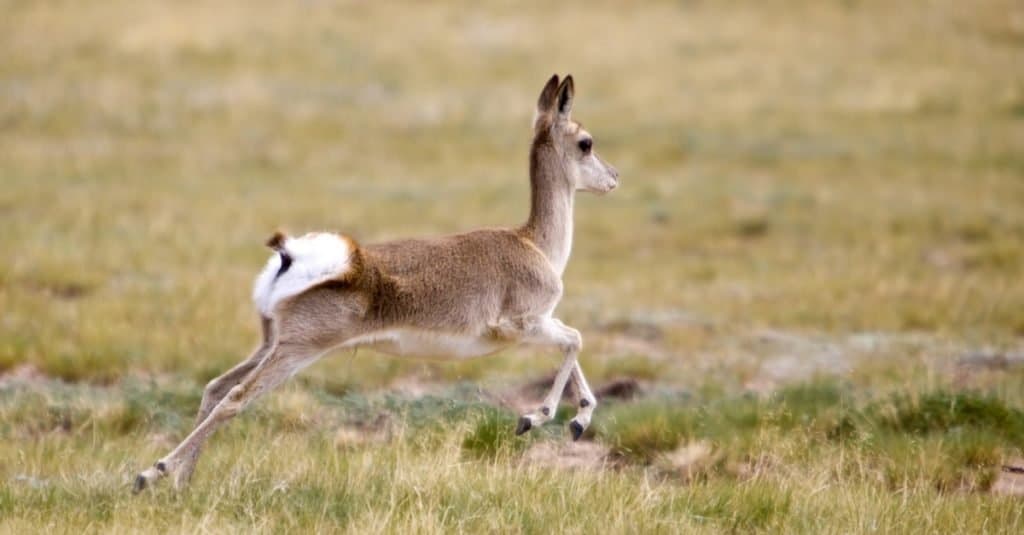
A goa, will flick its tail or stomp its feet to warn others of a lurking predator.
©Lian Deng/Shutterstock.com
The goa, known as the Tibetan gazelle, live in elevations of 18,860 feet above sea level. These mountain animals can run at a sustained of 60 miles per hour. They have special air sacs in their broad nostrils, which allow them to take in more oxygen from their high-altitude habitats. The Tibetan gazelle has a double coat. Its outer coat is wooly to help keep them warm. Their coat gets longer in the winter and shorter in the summer. They also have a very dense undercoat.
Yak
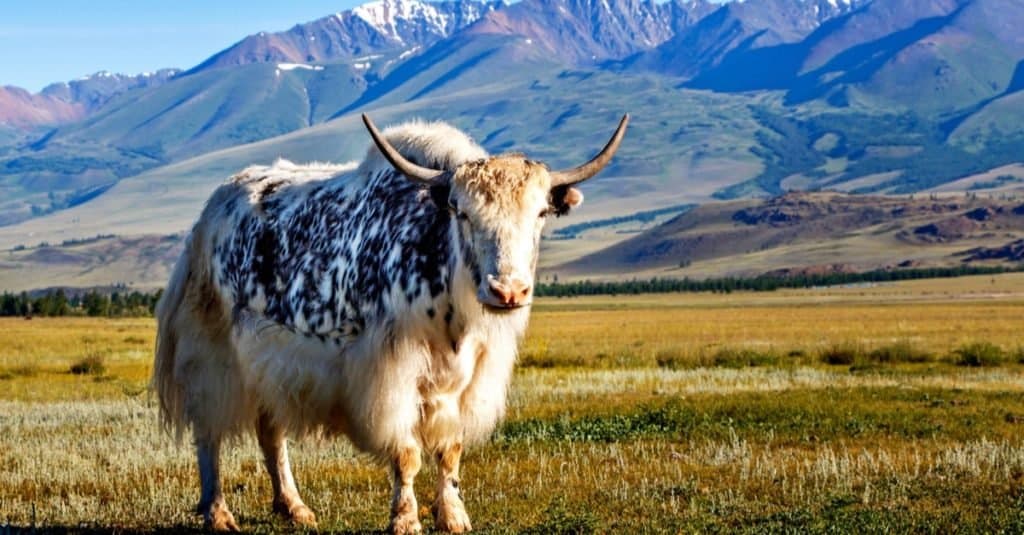
Yaks live at the highest altitude of any mammal.
©SakSa/Shutterstock.com
Yaks can live up to 20,000 feet above sea level. The thick tongue of the yak helps it lick moss and lichen off rough surfaces. While there are not many nutrients in the diet that the yak consumes, they have a rumen. Chewing their cud, like a cow, helps them get more nutrients out of the available food. The rumen in the yak is extremely large. Therefore, they can take in more food at one time and let it sit until they are ready to eat it. Their long intestine is also longer than in most animals. This further helps them get more nutrients from their food.
Yaks have larger hearts and lungs than other bovines. They also have a higher red blood cell count. These adaptations help keep the animal’s blood flowing in extreme cold. Like many mountain animals, yaks also have a very dense, water-resistant coat. Broad hooves designed to traverse snowy and icy surfaces, give yaks an uncanny ability to navigate steep, icy terrain.
Alpine Chough
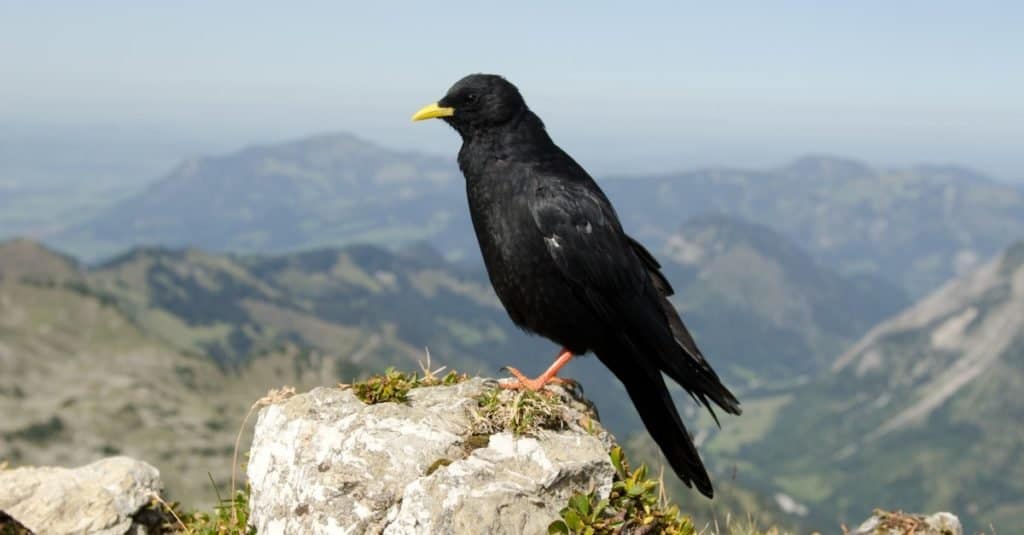
The Alpine chough nests in cavities and fissures on inaccessible rock faces.
©Wolfgang Kruck/Shutterstock.com
The Alpine chough can live up to 26,500 feet above sea level. This bird builds nests higher than any other bird in the world. Their broad, powerful wings and tails help them withstand strong winds. They also have deeply slotted wing tips making it easier for them to maneuver. These birds fly in flocks, using air currents to reduce the energy expenditure of flight. They nest in rocks, which helps protect them from strong winds.