
Quick Take
- Neanderthal teeth suggest these "primitive" humans had a surprisingly sophisticated response to dental pain, one that predates modern dentistry by tens of thousands of years. See prehistoric dental care →
- Ancient plaque is rewriting the Neanderthal diet, and what it reveals contradicts the image of the meat-obsessed caveman. Explore their real diet →
- Teeth fossils unearthed in the U.K. hint that the relationship between Neanderthals and modern humans lasted far longer and got far more intimate than scientists previously believed. Discover the interbreeding evidence →
- Chemical traces locked inside 250,000-year-old teeth exposed something alarming about the Neanderthal environment, something no bone or stone tool could have revealed. See what teeth chemicals reveal →
Have you ever thought of the secrets your teeth hold? For Neanderthals, teeth are time capsules, preserving secrets from the past. For instance, did you know that Neanderthals lived alongside early modern humans and interbred with them? Even though Neanderthals went extinct around 40,000 years ago, some of their DNA is present in modern human genomes. In fact, it’s common to have 1% to 4% of Neanderthal DNA if you live outside of Africa. Studying teeth has also provided a glimpse into what these ancient humans ate, how they chewed their food, and what their environment was like. Read on to find out more about Neanderthal teeth.
About Neanderthal Teeth
Your front teeth might be big, but they’re nothing compared to the size of ancient humans’ teeth. Neanderthals’ front teeth were very large with long roots, and they had the appearance of shovels. They also had bumps on the inside of their back teeth, and their back teeth were usually less worn than their front teeth.
Their front shovel-like teeth were extra strong, which made them perfect for processing tough foods like tree bark and raw meat. They also had to be strong enough to pick up the slack when other teeth failed. It was common to lose teeth due to their tough lifestyle and diet. When one tooth was lost, the other teeth had to be strong enough to compensate.
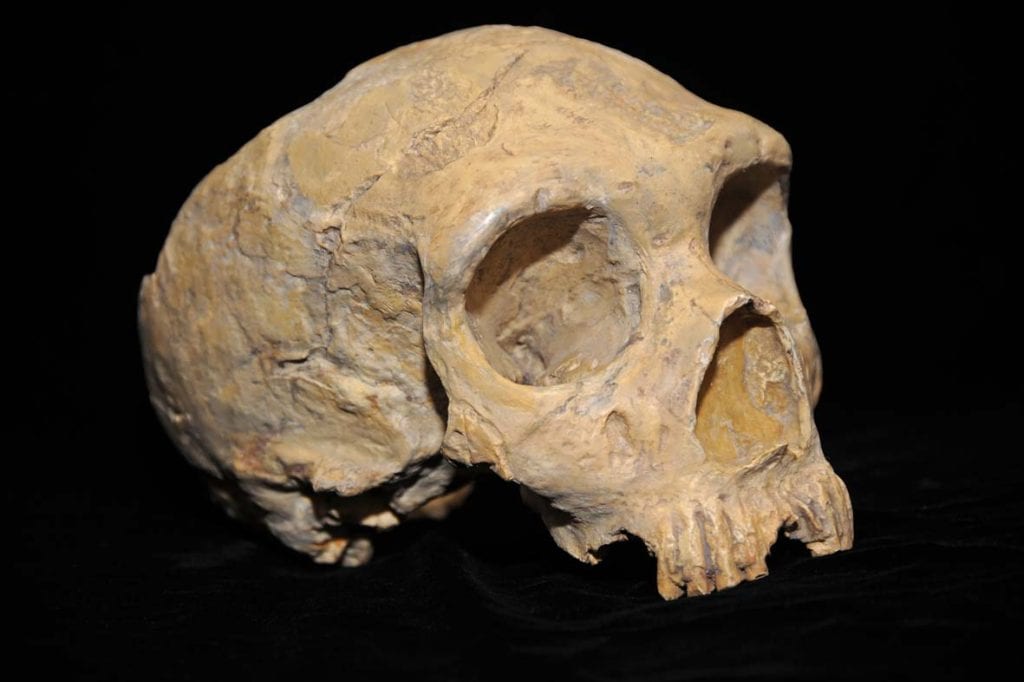
Neanderthals had large front teeth with long roots.
Why Are Teeth the Best Fossils?
Teeth are one of the best fossils to study. Ancient teeth tell us a lot about how Neanderthals lived, what they ate, and what their environment was like. For instance, scientists from the Icahn School of Medicine at Mount Sinai in New York conducted a study on 250,000-year-old Neanderthal remains. By studying the barium, lead, and oxygen levels in teeth, they could learn all sorts of things about how Neanderthals nursed their babies, the chemicals in their environment, and more. Their study showed that some Neanderthals were exposed to lead, likely from a contaminated food or water source.
Looking at tooth shapes can also help us figure out how different groups of humans are related to each other, which tells us about their evolutionary connections. If two populations have similar dental traits, there’s a good chance they’re closely related.
Dental Morphology: Distinct Neanderthal Features
It turns out that Neanderthal teeth develop completely differently than those of modern humans. This discovery challenges previous beliefs that we shared some of their dental morphology. Neanderthals had a different pattern of tooth development than modern humans, with a shorter growth period. Fast tooth growth indicates that Neanderthals developed more quickly and that a long childhood is a more recent development.
Another major difference between Homo sapiens and Neanderthal teeth has to do with pulp chambers and tooth roots. As noted above, Neanderthals had significantly larger tooth roots than modern humans do. They frequently exhibited a condition called taurodontism, where the pulp chamber was even bigger than usual.
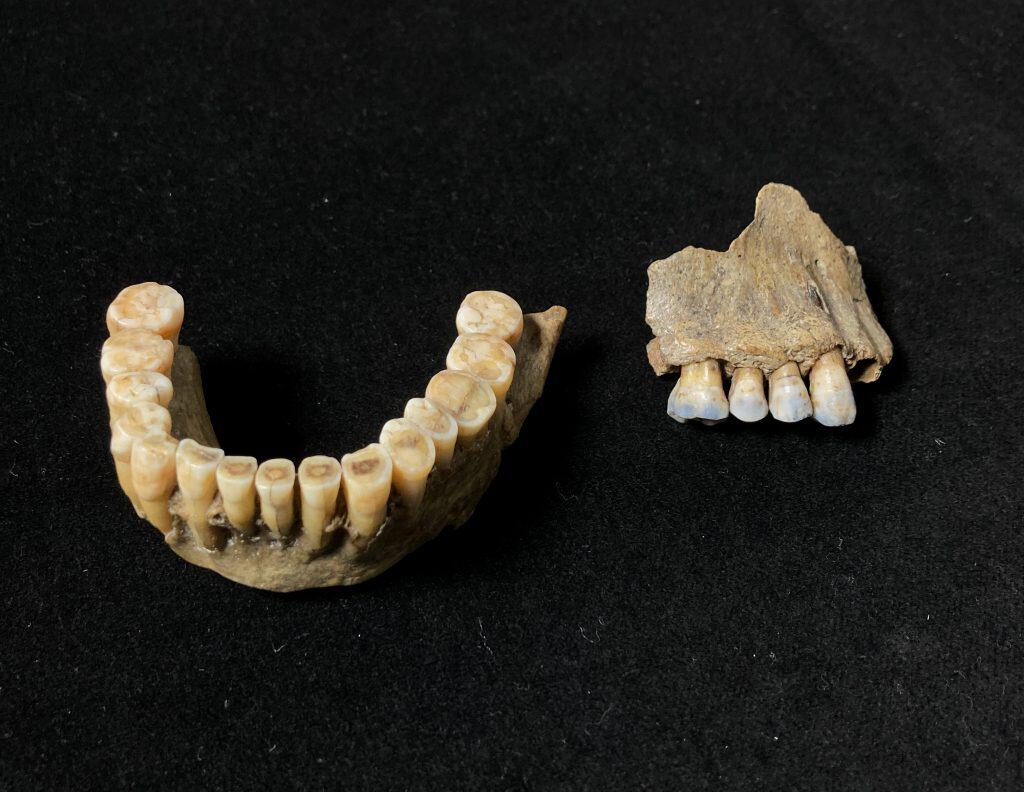
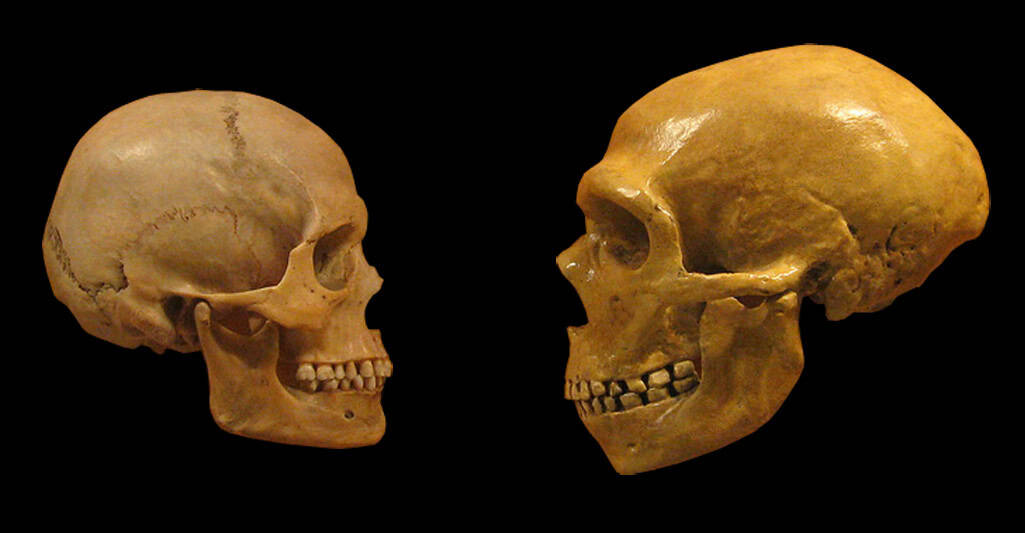
Neanderthal teeth have distinct structural differences from modern human teeth.
Evidence of Prehistoric Dentistry
They may not have had dentists, but Neanderthals might have used toothpicks and other tools to clean their teeth and relieve pain. Dental abscesses were likely a common occurrence. Rather than suffering through the pain, research suggests these ancient humans were clever enough to find ways to relieve it. A study led by a University of Kansas researcher suggests Neanderthals were using dental tools as far back as 130,000 years ago.
The evidence? Toothpick grooves and scratches on tooth fossils. This tells researchers that Neanderthals had enough awareness to know when it was their teeth that were causing them pain. The study took place at the Krapina site in Croatia, where researchers have made several other important Neanderthal discoveries, including ancient jewelry made from eagle talons. Findings like these reshape how we view these ancient people.
What Did Neanderthals Eat?
Plaque is bad for your teeth, but it is excellent for studying the past. Analyzing ancient plaque helps scientists learn all about the Neanderthal diet. The gunk on your teeth, or plaque, forms from proteins and microbes. Over time, it hardens to create dental calculus, which preserves these traces of microbes and food particles. Researchers can study dental calculus from hundreds of thousands of years ago to learn what ancient people ate.
DNA extracted from Neanderthal dental calculus tells an intriguing story about how these extinct humans survived. For instance, traces of Penicillium mold and salicylic acid from poplar bark have been found in the calculus. This suggests that Neanderthals had methods for dealing with ailments like stomach bugs and pain.
Studying dental calculus has also shed light on the truth about plant-eating tendencies among Neanderthals. Sheep, rhinos, and woolly mammoths weren’t something they could always rely on. While some Neanderthals ate mostly meat, others had to survive on a more plant-based diet with foods like mushrooms and pine nuts. Sometimes they even ate tree bark and moss.
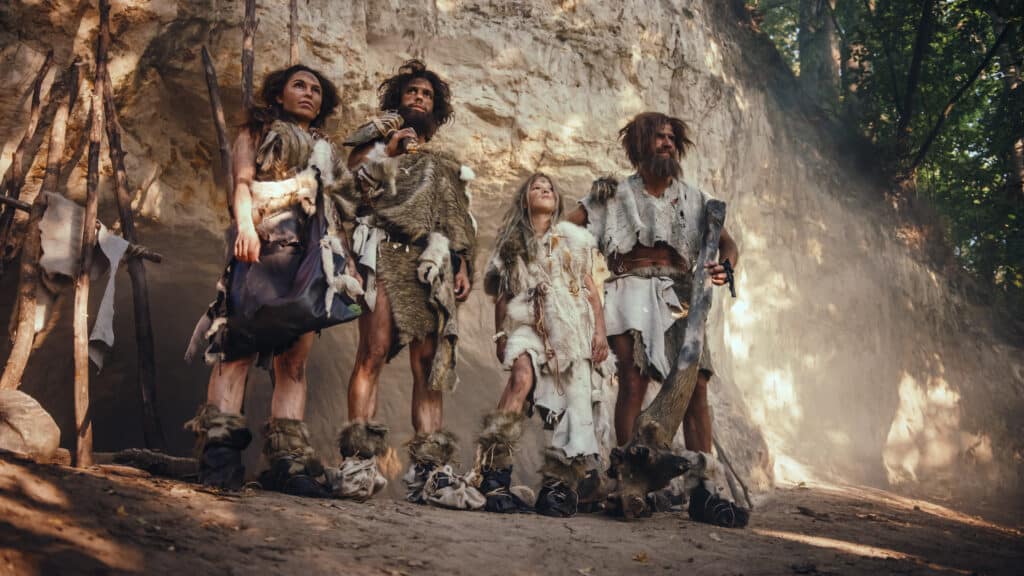
Neanderthals ate a lot more than just meat; they also ate a variety of plants like mushrooms.
©iStock.com/gorodenkoff
Neanderthal Teeth Reveal Ancient Romance
Neanderthal teeth fossils found in Jersey in the U.K. are completely changing how we look at history. It turns out that Neanderthals and humans were interbreeding for a lot longer than previously thought. The teeth, which are less than 48,000 years old, belong to one of the youngest known Neanderthal populations.
This means they overlapped with modern humans. The discovery hints at the possibility of a hybrid population. So, while modern humans’ dental morphology and that of Neanderthals are distinctly different for most, it’s not the case for all. Some modern humans inherited Neanderthal genes related to tooth development.