
The word “turtle” is an umbrella term that applies to all members of the order Testudines. This includes turtles and tortoises, which are both hard-shelled animals. While they’re in the same family, there’s a reason you’ll never find a snapping turtle floating in the open ocean, or a sea turtle swimming upstream in a river. Within the turtle family, there are several types of animals. This includes freshwater turtles, which are mostly aquatic or semi-aquatic and live in rivers, lakes, and ponds.
Sea turtles, which are fully aquatic, live in the ocean. Terrestrial turtles, known as tortoises, are a separate group that primarily live on land. While all turtles may be semi-aquatic, they are not all the same. Despite their similar appearances and many common traits, freshwater and sea turtles are vastly different. Here’s how you can tell them apart, and why each is found only in its own habitat.
Appearance and Physical Features
At first glance, both turtles look identical. However, their bodies are adapted to the environments in which they live. Each type of turtle has features that allow it to survive in rivers, lakes, ponds, or the ocean. Depending on how much time a turtle spends in water versus on land, it requires different built-in tools for survival.

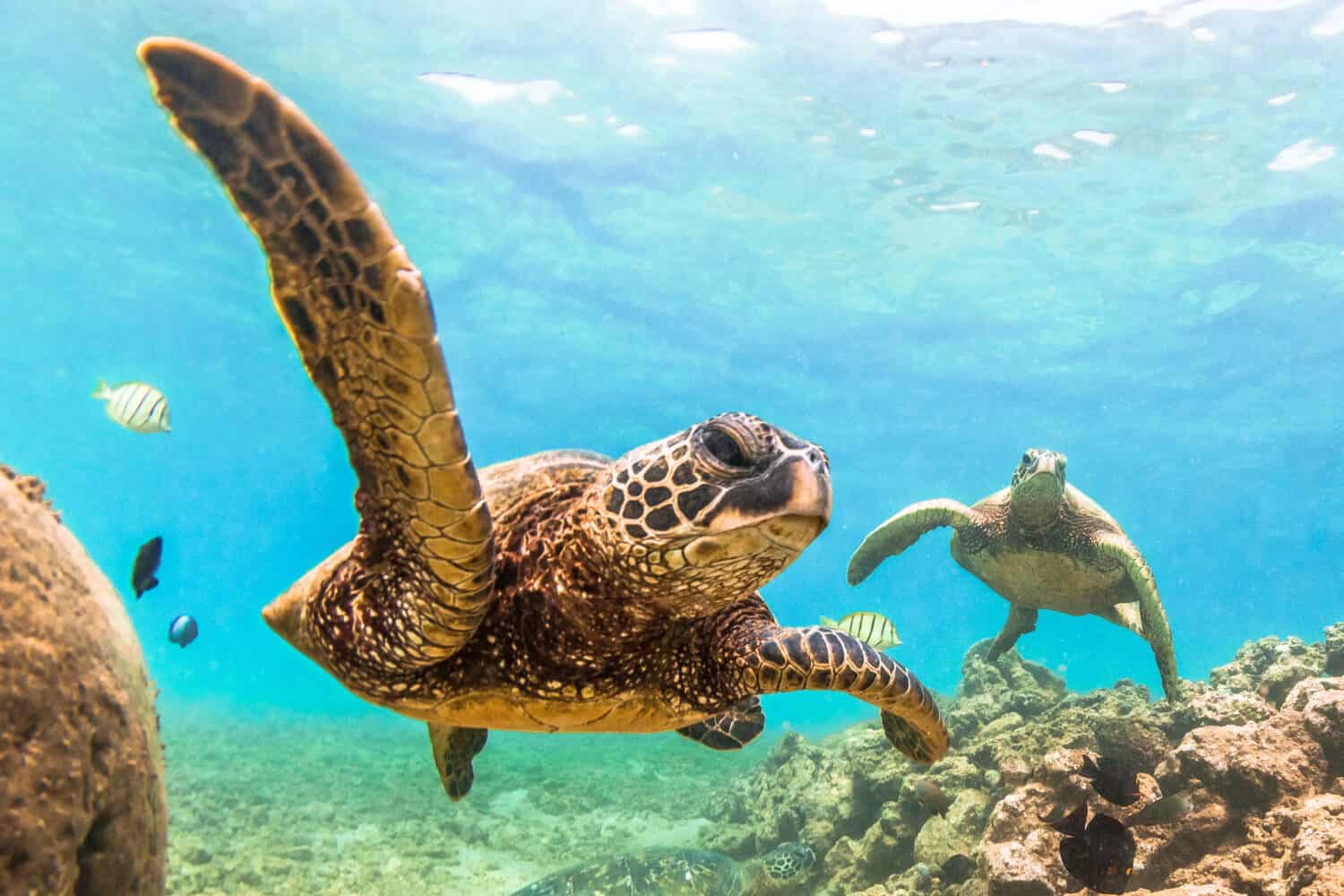
Sea turtles have flippers that help them glide through the water.
©wasan bunchusuphakit/Shutterstock.com
Freshwater Turtles and Their Retractable Heads
Freshwater turtles are a type of turtle that spend time both in the water and on land. Because they often walk on solid ground, their feet look different from a sea turtle’s. Many freshwater turtles have webbed feet to help them swim. However, their toes are typically more separated than those of sea turtles, allowing them to walk more easily on land. This is helpful when evading predators, but freshwater turtles have another natural defense against enemies. They can retract their heads into their dome-shaped shells. This protects their soft tissue and prevents their heads from being open to attack. Some freshwater turtles have flatter shells, depending on their habitat. This is intended for more swimming, rather than walking on land.
Sea Turtles and Their Flippers
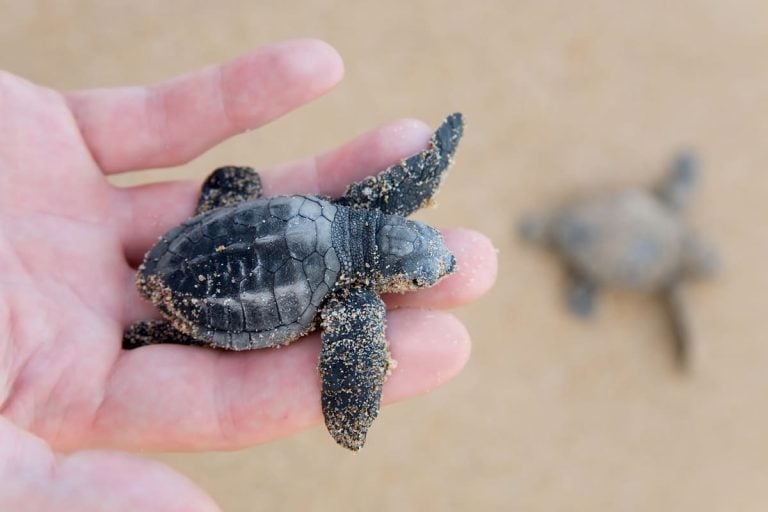
Sea turtles have powerful flippers instead of feet, which help them swim quickly through the water. The webbing between their flippers aids in swimming, which is essential since they spend most of their lives in the water. Sea turtles rarely walk around on land unless they’re laying eggs. Once these have hatched, baby sea turtles make their way to the sea, which is where they spend most of their lives. Sea turtles can’t retract their heads like freshwater turtles, but their oval-shaped shells help them move efficiently through the water.
Turtle Habitats
Freshwater and sea turtles never inhabit the same environments. They both have different lifestyles that are better suited to the open ocean or sheltered freshwater. Where one migrates long distances, the other remains local, and this separates the two.
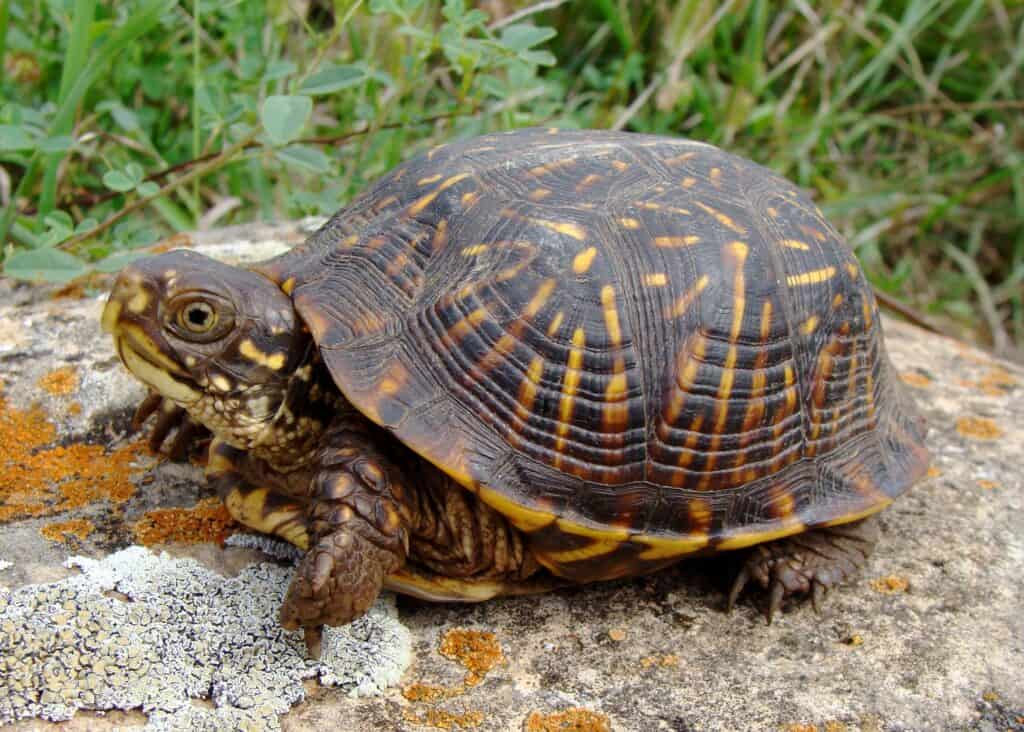
The ornate box turtle is only found in the United States.
©Matt Jeppson/Shutterstock.com
Freshwater Turtles Are Also Known As “River Turtles”
“River turtle” is simply another name for freshwater turtles, but not all freshwater turtles inhabit rivers. They can be found in lakes and ponds as well. Depending on the species, a freshwater turtle may spend its entire life in the same body of water. If there’s enough food, shelter, and a safe place for hatchlings, there’s no reason to leave. Freshwater turtles require sunny spots for warmth and use the land surrounding a pond, lake, or river to lay eggs. The only reason a freshwater turtle would leave their habitat is due to overcrowding, potential threats, or pollution.
Sea Turtles Migrate Long Distances in the Ocean
Simply put, sea turtles are an aquatic species. They spend the majority of their lives in the water, making them better suited to the ocean. Like freshwater turtles, sea turtles are cold-blooded and have a slow metabolism. The combination of the two allows them to remain submerged underwater for extended periods of time. Everything from their shell shape to their flippers is designed to help them survive a full-time life underwater. Most sea turtles only leave the water to reproduce, but some species, like the green sea turtle, have been observed basking on land in places such as Hawaii.
Feeding and Diet
A turtle’s environment determines its food sources. Freshwater and sea turtles have very different diets, based on the plant and animal life available in their habitats. This is another reason why one would never be found in the other’s environment. For example, you’d never find a jellyfish in a pond, nor would you find insects swimming in the ocean.
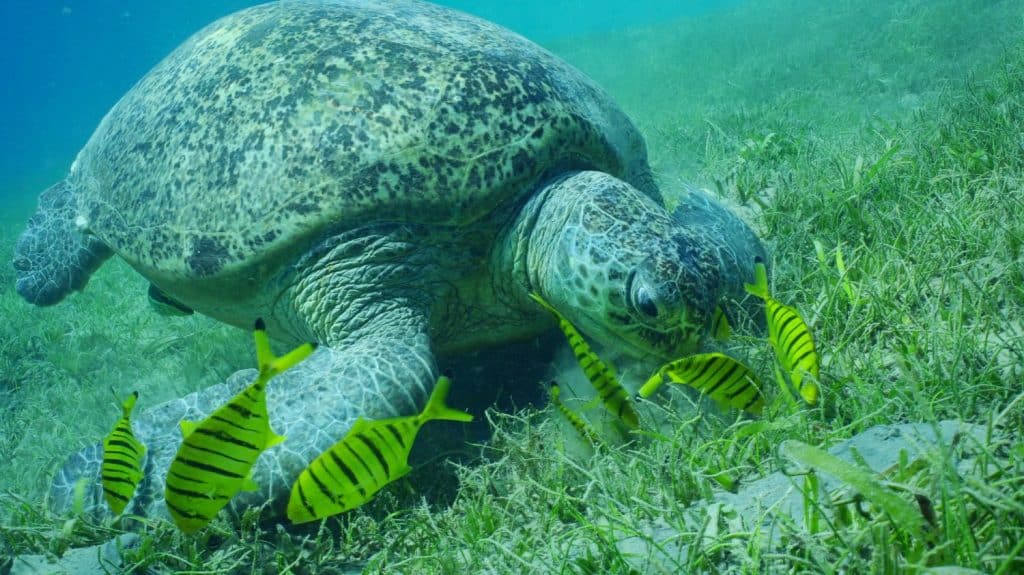
Sea turtles consume anything from algae to small fish.
©Andriy Nekrasov/Shutterstock.com
Freshwater Turtle Diet
Depending on the species, freshwater turtles can be omnivores, carnivores, or herbivores. Most are typically omnivores, but freshwater turtles will consume a wide variety of food. Many prey on insects, including mosquitoes, mealworms, crickets, earthworms, and snails. Aquatic insects make up a large part of the protein in a freshwater turtle’s diet. Some may even consume small fish or crustaceans. Aquatic plants account for the fiber in their diets, and many will eat fallen fruit from tree overhangs. Carnivorous freshwater turtles also eat carrion and are skilled at scavenging.
Sea Turtle Diet
A sea turtle’s diet is unique because it varies by age and species. Green sea turtles primarily consume both plants and small invertebrates as juveniles, but transition to an herbaceous diet as they age. Others, like the loggerhead and Kemp’s Ridley sea turtle, are primarily carnivorous their entire lives. They consume anything from crustaceans to conch, and will even prey on sea cucumbers and small fish. Many sea turtles also consume seagrass, which is abundant in the regions of the ocean they inhabit.
Lifestyle & Lifespan
Freshwater and sea turtles lead vastly different lives. Because of this, they also have drastically different life spans. While this varies by species, sea turtles typically live almost twice as long as their freshwater counterparts. Several factors contribute to their long lives, but it all depends on the time it takes to reach full maturity.
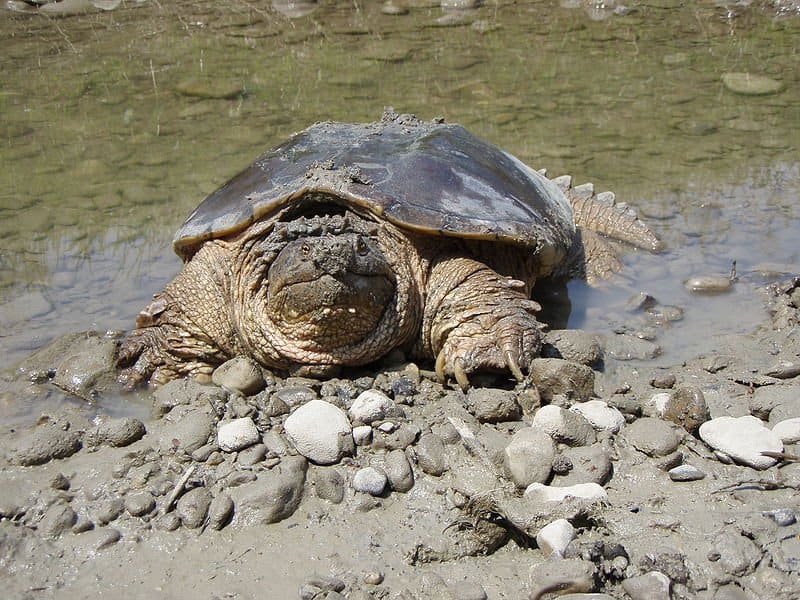
Freshwater turtles often leave the water to bask in the sun.
©Ontley – Public Domain
Freshwater Turtles Burrow Where They Live
Compared to the life of a sea turtle, freshwater turtles are relatively sedentary. They rarely leave the body of water they inhabit unless they sense a threat or are forced to find better nesting or feeding grounds. The water they live in is typically slow-moving, allowing them to remain in the same area for up to 30 years. Some turtles, such as the African sideneck turtle, may even burrow into the ground to escape harsh temperatures. Aside from this, they spend much of their time in the water scavenging, hunting, and taking shelter. Most freshwater turtles live between 20 and 40 years, though some species can live 50 years or more.
Sea Turtles Migrate and Travel on Currents
Starting from the moment they’re born, sea turtles face a long journey. As hatchlings, they must make it to the ocean to survive, a harrowing test for newborns. Once they make it to the open water, they spend years drifting. Little is known about this phase of a sea turtle’s life, only that recent research shows that juveniles actively swim and forage for food. These are often called the “Lost Years,” and it takes decades for them to reach sexual maturity. Between 10 and 50 years of age, sea turtles reach sexual maturity and begin mating. They can migrate thousands of miles in a single lifetime. Due to their extraordinarily long lives, some sea turtles live between 50 and 80 years. In some rare cases, sea turtles can reach 100 years or more.