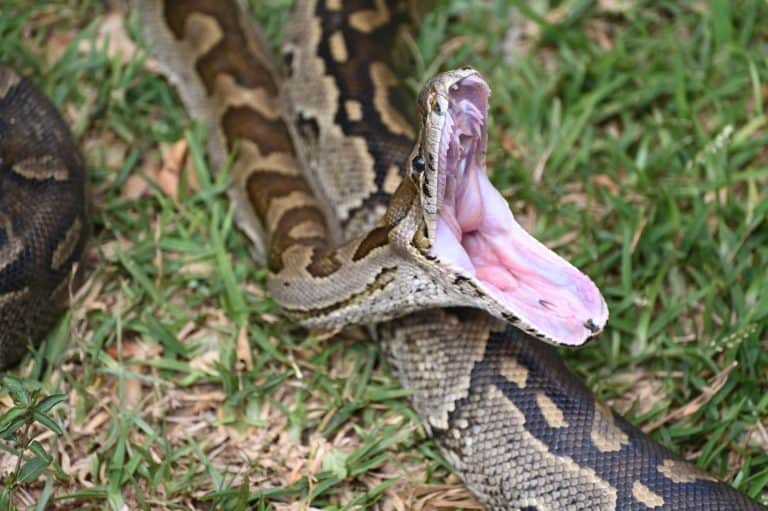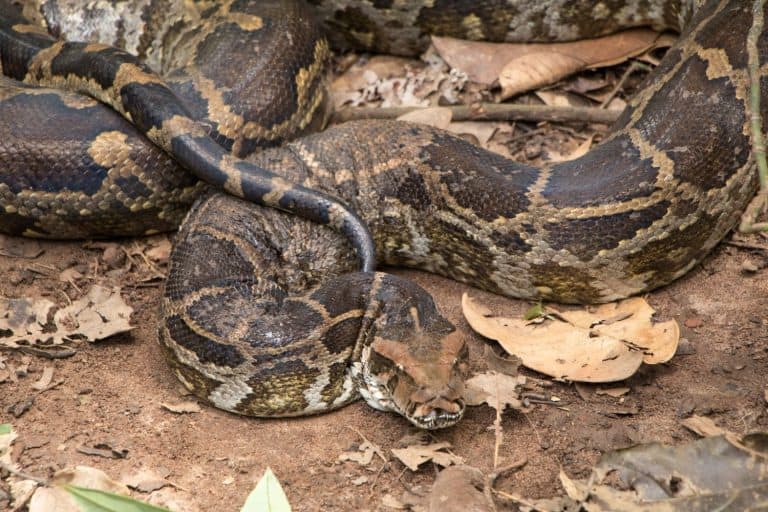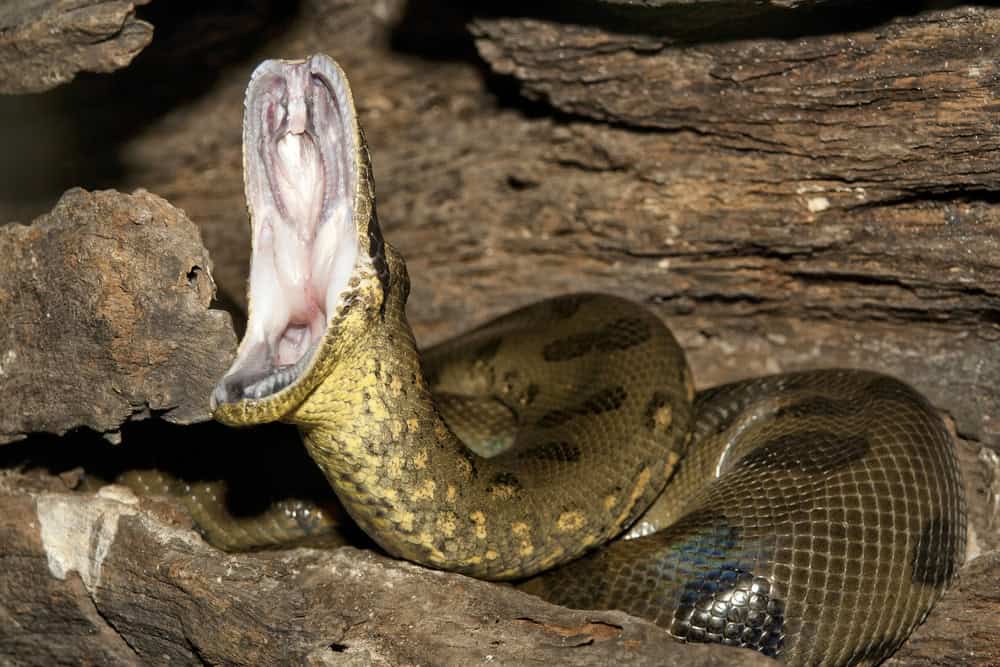

Anacondas are magnificent reptiles. They are semi-aquatic snakes found in tropical South America, and there are several different species. The anaconda in this Instagram clip has opened its mouth wide and is moving it from side to side in what looks like a yawn. It’s likely, however, that this is simply a jaw realignment after a huge meal. Read on to find out more about anacondas, how they eat, and why they may need a jaw reset.
Anaconda Giant Meals
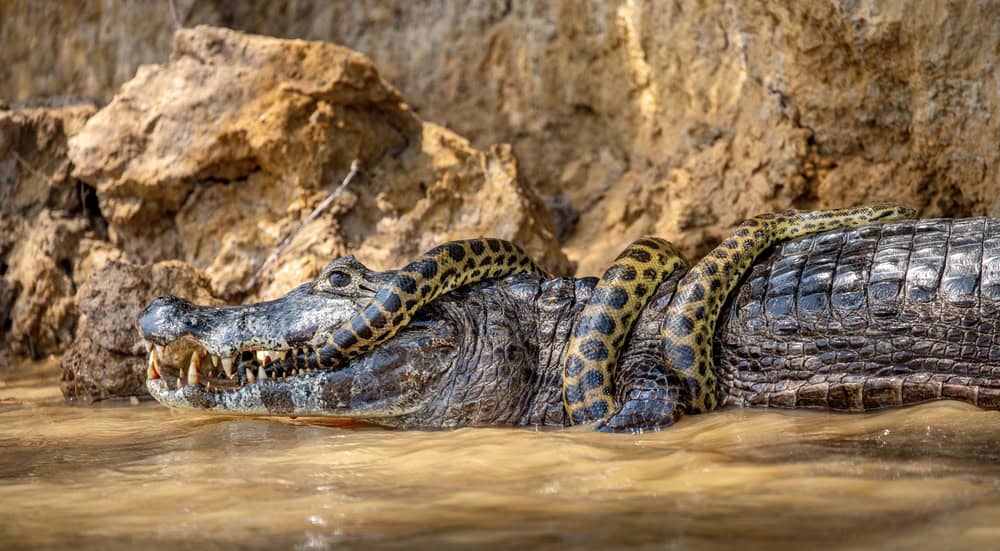
Adult anacondas eat huge meals.
©GUDKOV ANDREY/Shutterstock.com
Anacondas are among the largest snakes on the planet. They can grow to over 20 feet and are thick and muscular creatures. They are non-venomous and hunt by lurking in rivers and using the murky water to sneak up on prey. Once they have secured the prey with their sharp teeth, they wrap their bodies around it and constrict. This overwhelms the circulatory system of the stricken animal, cutting off blood supply to its brain, and it dies. Fully grown anacondas eat very large meals! An adult can eat a caiman and a capybara; there are even rare reports of them eating a jaguar. All of these can be swallowed whole.
Flexible Jaws and Yawning
It may seem physically impossible for a snake to fit a jaguar inside its mouth, but anacondas manage it. Their jaw joints are mobile, and they have unfused ligaments on each side of their mandibles. This means that they can open their jaws wide enough to accommodate even large prey. That said, anacondas have died trying to swallow a meal that was too big for them!
Once large prey is swallowed, anacondas may move their highly flexible jaws around to realign them. The shuddering, gaping, and stretching movement makes sure that the connective tissue and loose joints are all back in place. The gentle flexing realigns the jaw, preparing it for the next meal. However, these snakes can go for months between meals, so there is no rush!