
Quick Take
- A 15-year experiment finally put the 'good genes' hypothesis to a real test, and the results weren't quite what scientists expected. See the hypothesis tested →
- More mates helped, but something else mattered even more for a species' survival against extinction. Discover what mattered more →
- Scientists long believed mate competition shrinks a population's genetic variety, but this study challenged that assumption head-on. See the genetic findings →
- The findings could reshape how conservation programs manage endangered species, and the reasoning behind them might surprise you. Explore the conservation implications →
For 15 years, researchers at the University of East Anglia have been running a lab experiment to answer one question: Does the number of male mates a female has help make a species more resilient to extinction?
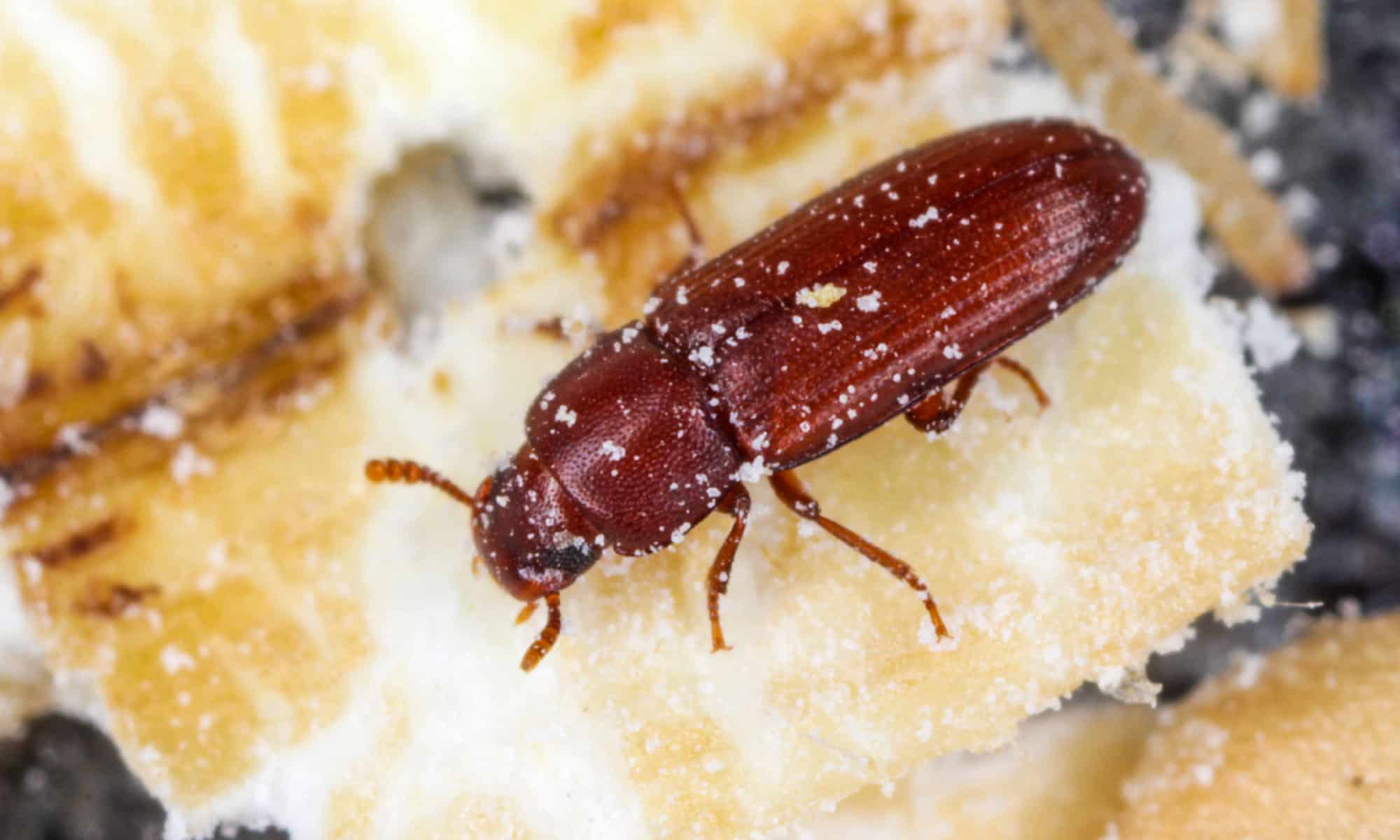
They recently answered that question in a new study just published in the journal Proceedings of the National Academy of Sciences (PNAS). The species they studied? Red flour beetles.
Continue reading
The Experiment
Researchers split populations of red flour beetles, Tribolium castaneum, into two groups and studied them for 156 generations (15 years). One group consisted of a female paired with a single male. The other group paired a single female with five males competing to mate with her.
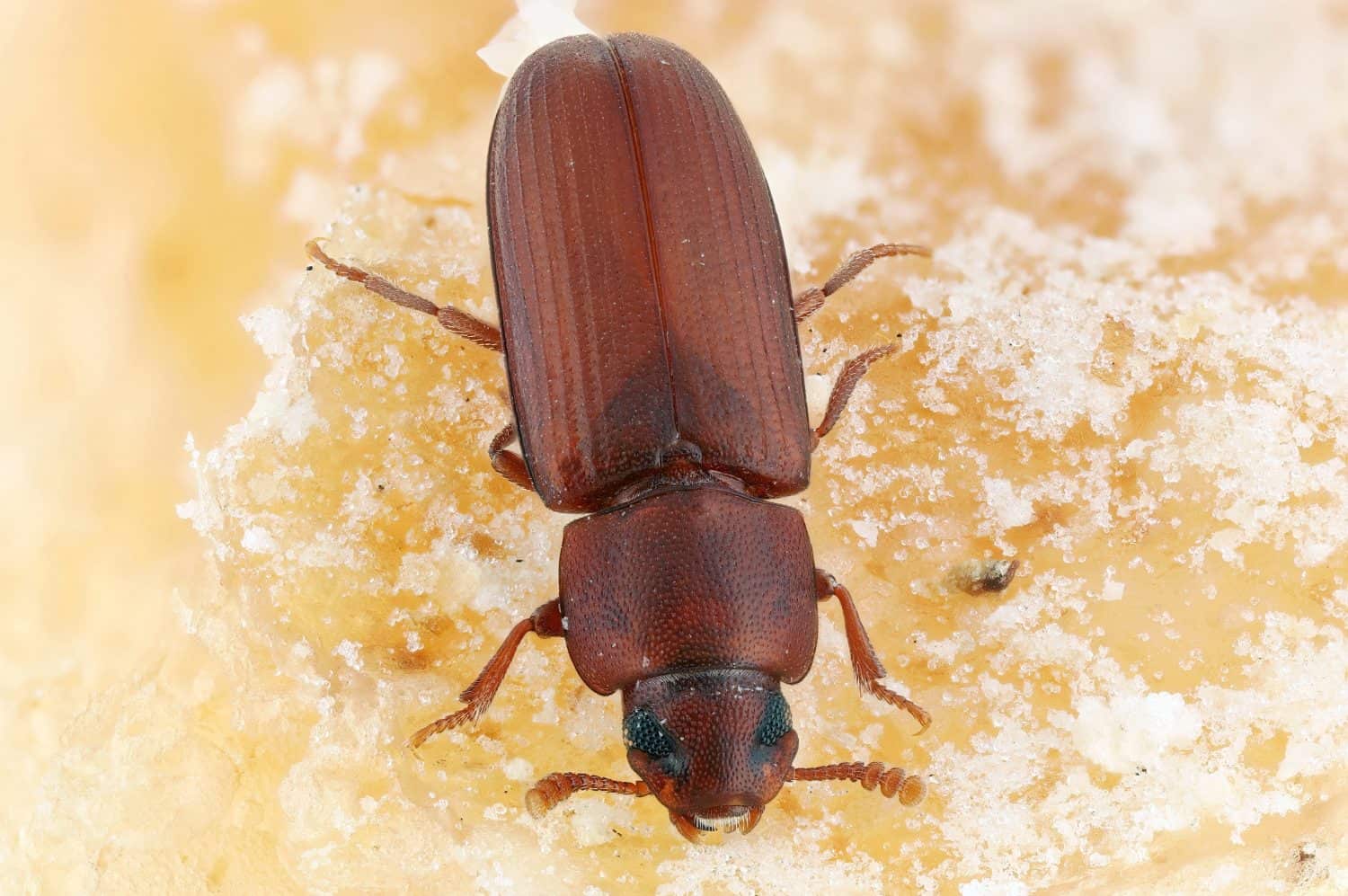
Red flour beetles were the species involved in the study.
©Tomasz Klejdysz/Shutterstock.com
To ensure consistency, the population sizes were kept equal between the groups. This ensured that the only difference was whether mate competition and female choice existed. The team then sequenced DNA from 84 beetles, 42 from each group, to compare them with each other.
What They Discovered
After comparing the DNA from both groups, the researchers determined that after 156 generations, the group where females had their choice of male partners showed substantially fewer harmful genetic mutations.
Harmful mutations are changes in DNA that can disrupt how a gene works. Once the gene no longer functions as it is supposed to, the organism is put at additional risk. For the group where one female always mated with the same male, the rate of harmful DNA mutations was higher.
“In simple terms, we found that beetle populations where females could potentially mate with multiple males ended up with healthier genomes,” Dr. Michael Pointer, a study author from UEA’s School of Biological Sciences, said in a press release announcing the study. “This genetic advantage appeared to have real-world consequences because populations carrying higher levels of harmful mutations were far more likely to become extinct when subjected to inbreeding.”
However, across both groups, harmless genetic mutations were about the same. The study also found that overall genetic diversity among both groups was statistically the same. This was an important finding because it helped dispel the long-held belief that strong mate competition shrinks a population’s genetic diversity over time.
The Impact of Inbreeding
Researchers took the experiment one step further to see what effect, if any, sibling-to-sibling mating might have on future generations. They specifically wanted to determine how many generations could survive before the lineage died out entirely.
Researchers in the current study started with inbreeding data collected during an earlier 2015 study by a different UEA research team.
What the researchers found this time around was that the population where females had their choice of mates survived inbreeding better overall. However, that finding came with a caveat. Researchers realized that the amount of harmful genetic mutations a population carried mattered more than how many mates were available.
It turns out that it isn’t just about how the beetles mated, but which ones had cleaner DNA — it was the genetic quality that determined survival rates.
Testing the “Good Genes” Hypothesis
For decades, scientists have believed that when females can choose their mates — or when males have to compete — the males with the fewest harmful mutations tend to win. The males with poor genetic health don’t get to reproduce. Over time, this natural selection acts as a filter to keep the species healthy.
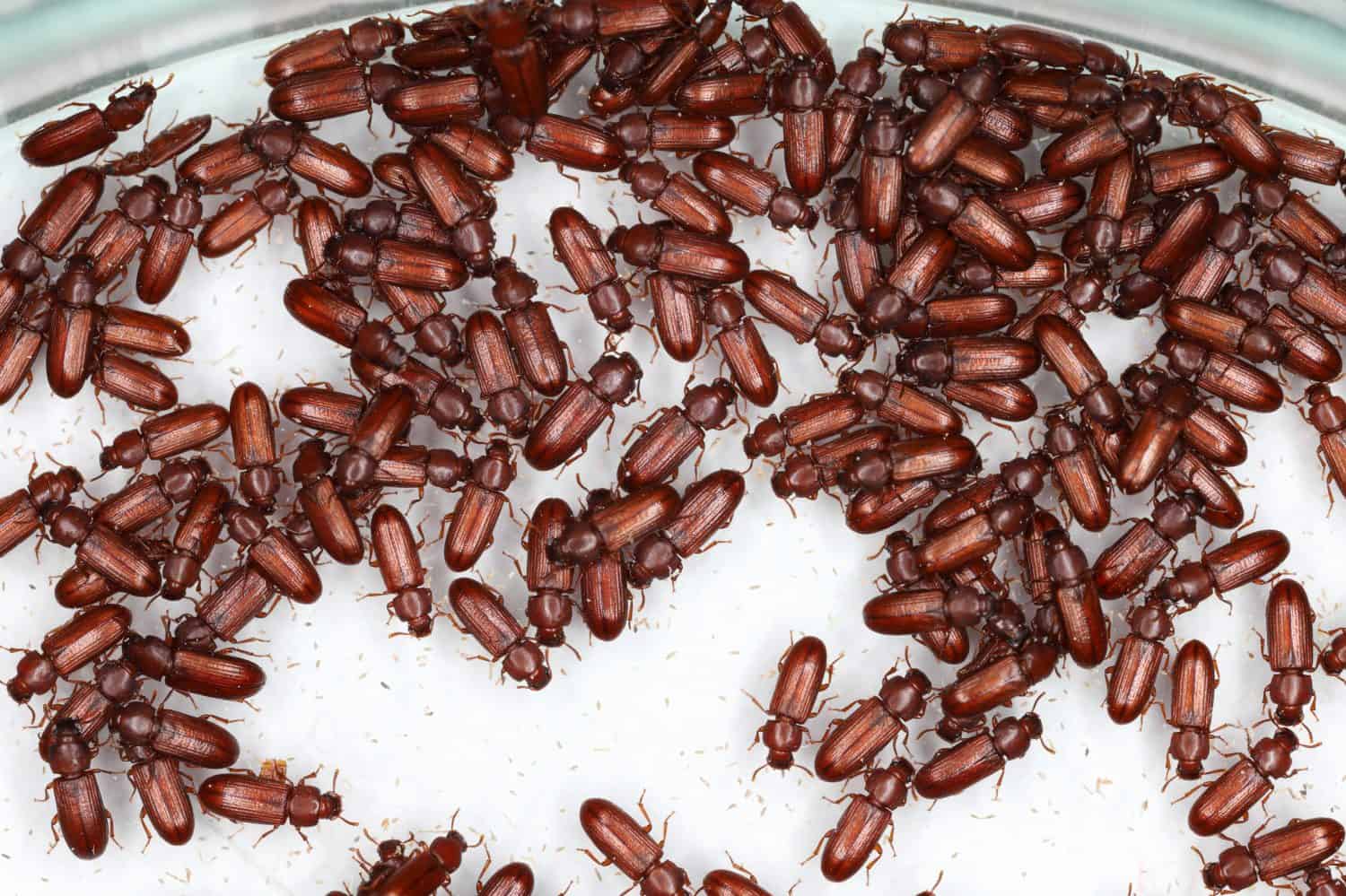
Female beetles who chose among several mates produced offspring with cleaner DNA.
©Tomasz Klejdysz/Shutterstock.com
“Over many generations, this process acts like a biological quality-control system, helping purge damaging mutations from the population,” Pointer said in the press release. “Our work provides direct genomic evidence for this hypothesis.”
Earlier studies hinted at this, but the most recent study is the first time there’s been concrete DNA evidence to support the claim.
What This Study Means for Conservation
The study’s senior author, Professor David Richardson, also from UEA’s School of Biological Sciences, said in the press release that many endangered species already suffer from small populations and inbreeding. This, in turn, allows harmful mutations to show up more often and raises extinction risks.
“Conservation programmes, whether in the wild or in captivity, should think carefully about restoring natural levels of sexual selection. Allowing females to mate with multiple males could help populations to naturally eliminate damaging genetic variants and improve their long-term chances of survival,” he said.
But why choose red flour beetles? Because they breed fast enough to test evolutionary theory over many generations in a relatively short period of time. For researchers, this opened the door to a study with implications for many other species.
“Experimental beetle populations allow us to test fundamental evolutionary principles over hundreds of generations, something that would be impossible in larger animals,” Richardson said in the press release. “The battle for mates may help nature battle against extinction.”