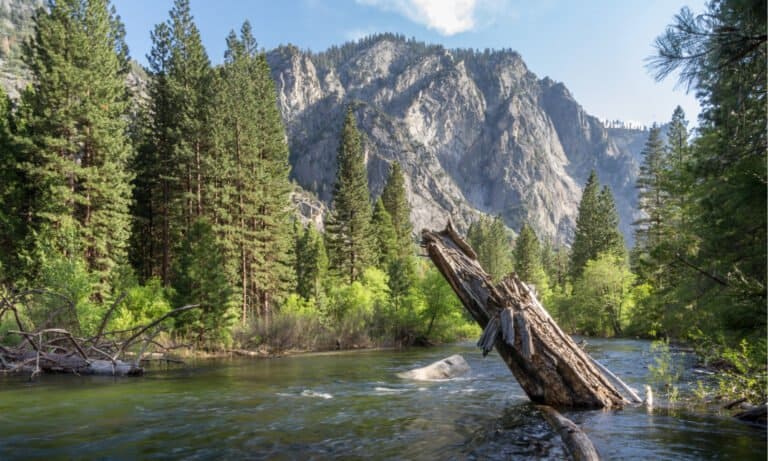

North Dakota is a fairly large state with a lot of unique environments. From the Badlands to the Mouse River State Forest, this state has a little bit of everything. As such, it’s easy to find a wide variety of different creatures living within its borders. We’re going to explore an assortment of the largest animals in North Dakota. We’ll show you seven different species and types of animals, and help you discover the big animals with which you share the land.
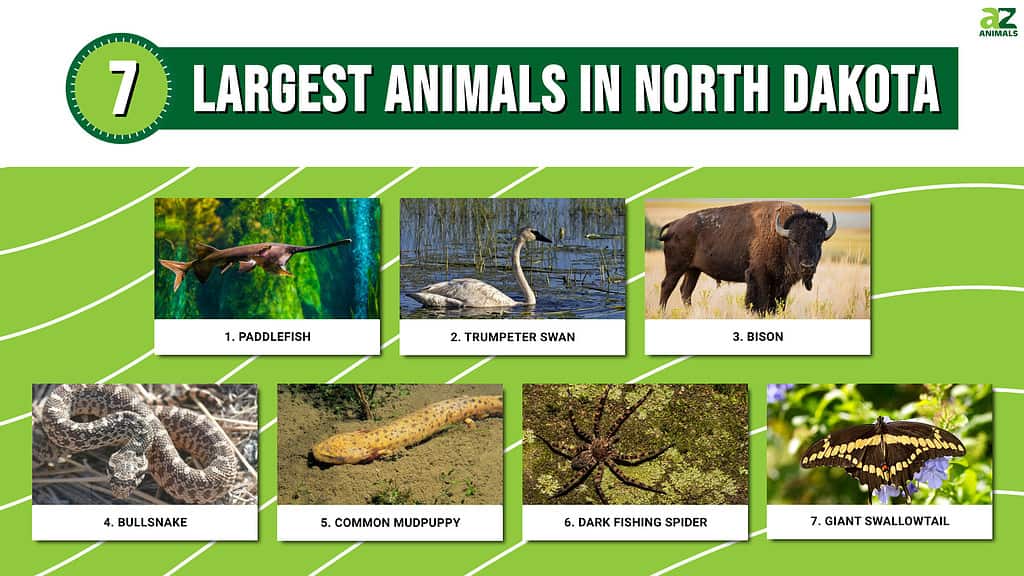
The 7 Largest Animals in North Dakota
When we consider the largest animals in North Dakota, we’re not going to stick to one particular group of creatures. Instead, we’re going to cast a wide net and talk about fish, mammals, and other kinds of creatures. That way, you can come away from this article knowing about a variety of the largest animals that call this state home.
1. Paddlefish
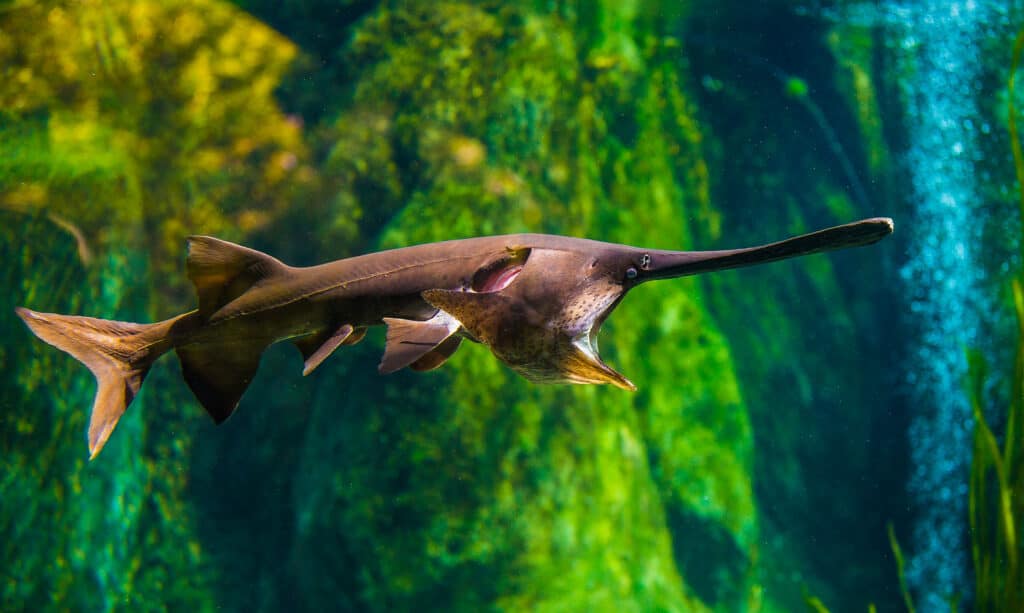
American Paddlefish use their large gills and mouths to capture zooplankton.
©Saran Jantraurai/Shutterstock.com
| Scientific Name | Size | Location |
|---|---|---|
| Polyodon spathula | 3 to 4.5 feet | Most often found in rivers, but they can live in oxbow lakes and bayous, too. |
The paddlefish is the largest fish in North Dakota. This fish can measure up to 4.5 feet long. However, the longest one ever caught in the state measured closer to 6 feet long and weighed an incredible 131 pounds.
These fish are not very common throughout the state, though. Paddlefish are found in the Missouri River and the Yellowstone River, particularly in the confluence area between them. Some have even been found in Lake Sakakawea. They mostly consume plankton, small fish, and insects.
2. Trumpeter Swan
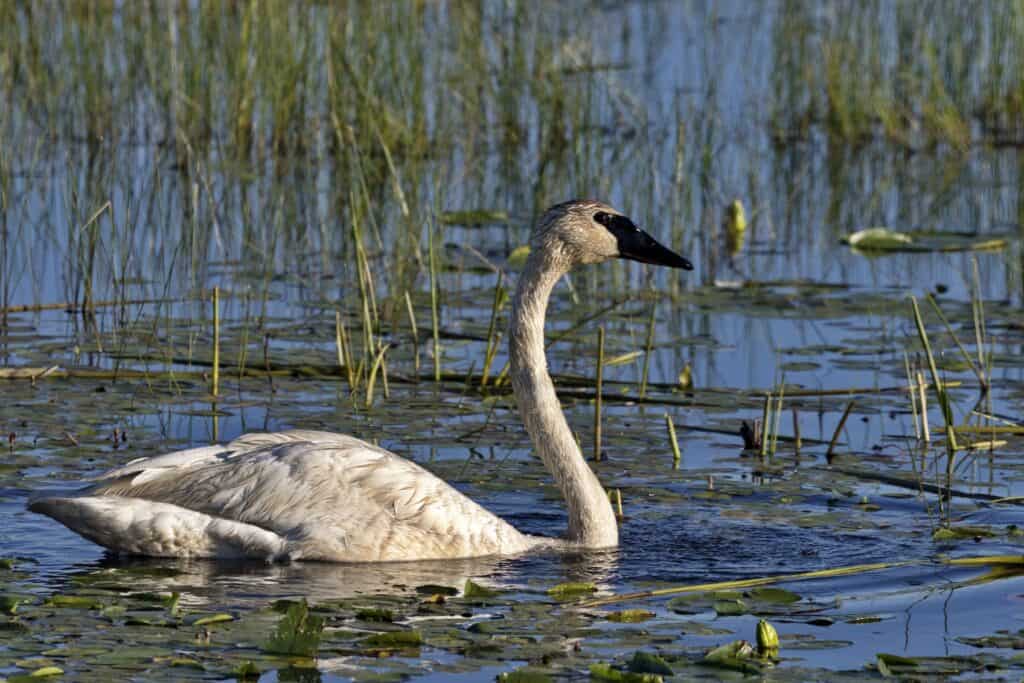
Trumpeter swans, who can live as long as 24 years and only start breeding at the age of 4–7, form monogamous pair bonds as early as 20 months.
©Florence-Joseph McGinn/Shutterstock.com
| Scientific Name | Size | Location |
|---|---|---|
| Cygnus buccinator | Wingspan is between 4.5 and 6 feet | They live near lakes and ponds in Northeastern North Dakota. |
The trumpeter swan is the largest bird in North Dakota. That fact may disappoint some people that wanted to see a bird of prey swoop in and take the top spot. However, the trumpeter swan is simply too large. This species has a wingspan between 4 and 6 feet long, and weighs up to 25 pounds.
The most incredible fact was that these birds were almost extirpated in the U.S. less than 100 years ago. Now, thousands of these swans can be seen throughout the country.
When they come to North Dakota, they typically live in the northern and eastern sections of the state. They live in wetlands near lakes and ponds.
3. Bison
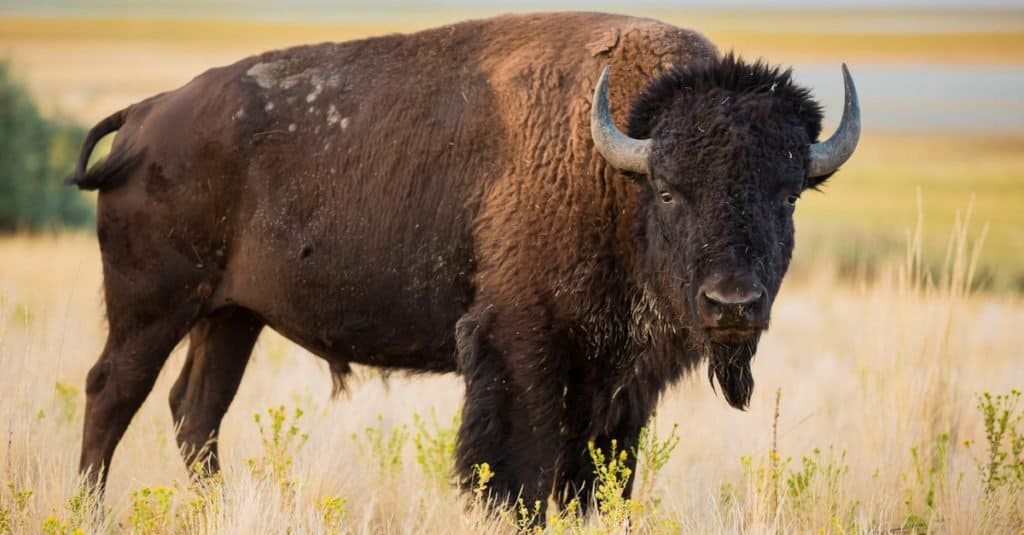
American Bison, the largest mammal in North America, help to maintain a healthy and balanced ecosystem by aerating the soil with their hooves and dispersing native seeds.
©O.S. Fisher/Shutterstock.com
| Scientific Name | Size | Location |
|---|---|---|
| Bison bison | 7 to 11.5 feet | Theodore Roosevelt National Park, the Cross Ranch Nature Preserve, and a few other spots. |
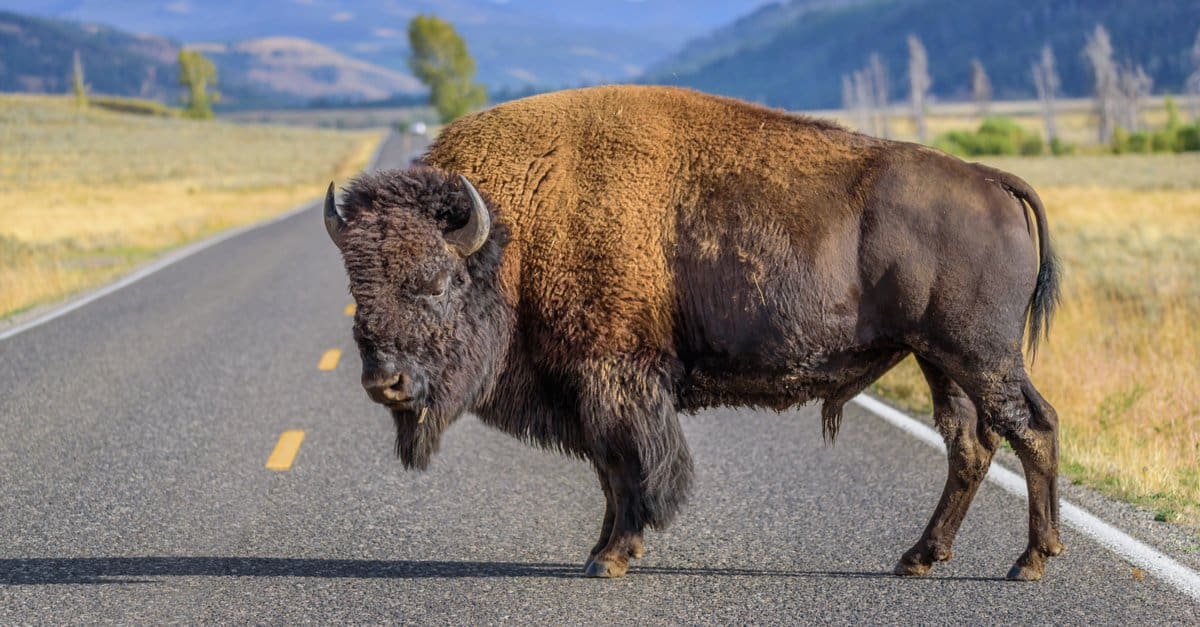
The bison is the largest animal in North Dakota as well as the largest native animal to the United States. This mammal can measure up to 11.5 feet long from nose to tail. Moreover, they can weigh upwards of 2,000 pounds at their heaviest!
These creatures were also brought back from the brink of extinction through careful breeding and livestock efforts. As a result, you can see a few herds in the Theodore Roosevelt National Park and the Cross Ranch Nature Preserve. Yet, they remain rare in much of the state.
They prefer open grasslands and meadows, but they can also use forests when they want some cover from predators or the elements.
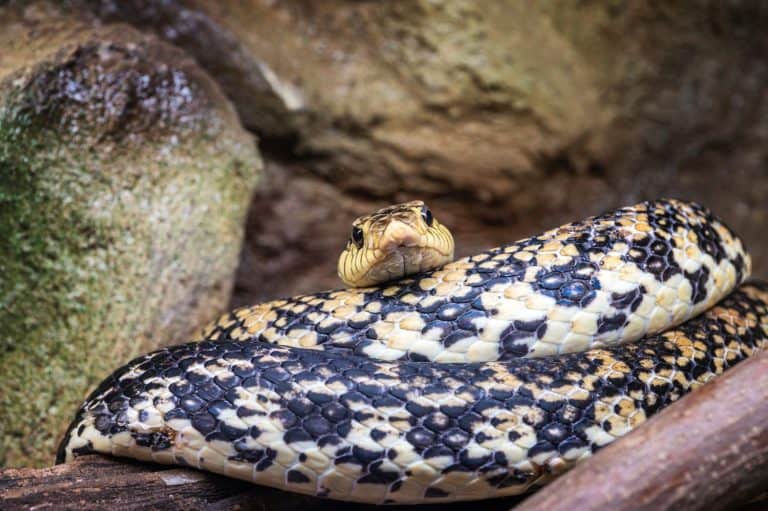
4. Bullsnake
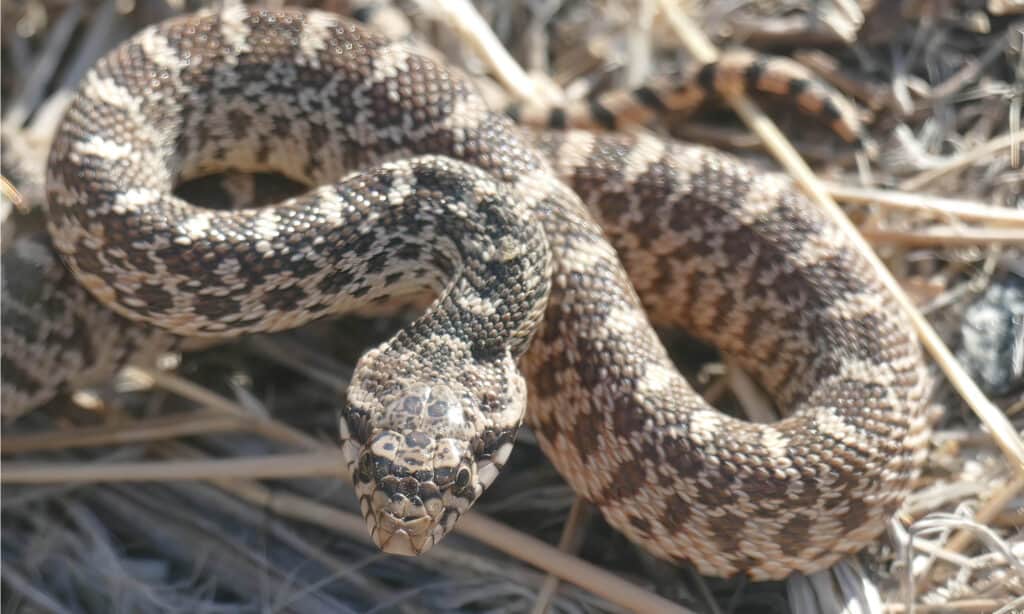
The Bullsnake is similar to the Western Rattlesnake. It has black, brown, reddish or white dorsal blotches on a yellow, cream-colored or beige ground.
©steve estvanik/Shutterstock.com
| Scientific Name | Size | Location |
|---|---|---|
| Pituophis catenifer sayi | 4 to 6 feet, up to 8 feet | Found in the western portion of North Dakota, most heavily concentrated in the central-west portion of the state. |
The bullsnake is a subspecies of the gopher snake, hence their trinomial name. This subspecies can measure upwards of 8 feet long, but most of them only measure about 6 feet long at the most.
You’ll often see them in colors such as yellow, brown, white, and black. It’s hard to mistake them for rattlesnakes, too. After all, they have a thin body rather than a thick and heavy one. They are not terribly common throughout the state. Most often, they are located in the central-west portion of the state.
These constrictors often hunt small mammals as well as birds. So, they serve an important purpose for pest control.
5. Common Mudpuppy
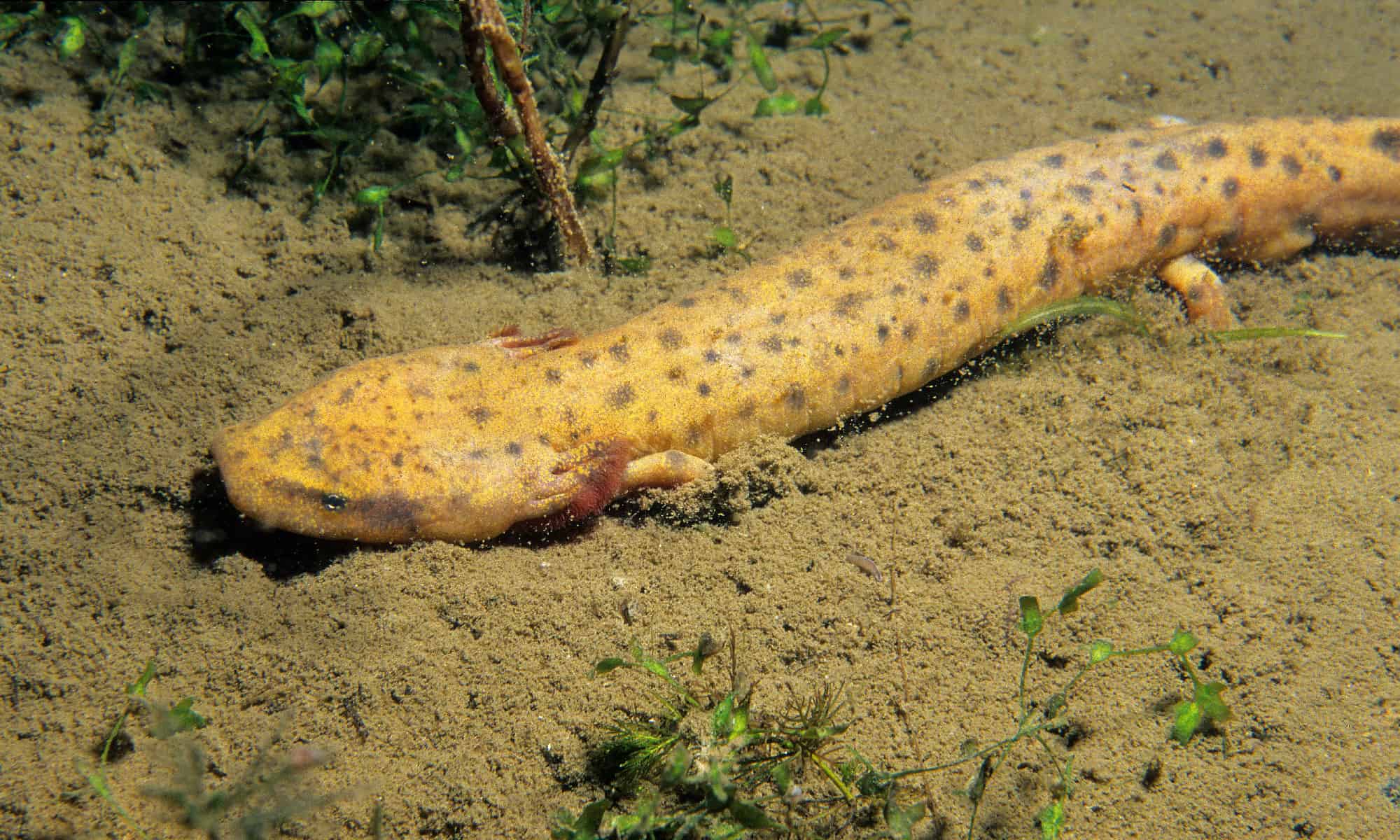
Mudpuppies only come out during the day if the water is murky.
©RLS Photo/Shutterstock.com
| Scientific Name | Size | Location |
|---|---|---|
| Necturus maculosus | 8 to 17 inches | Live in lakes, rivers, and other bodies of water in eastern North Dakota. |
The common mudpuppy is found in lakes, rivers, streams, and many other bodies of water throughout the easternmost portion of North Dakota. You’ll find them along the Red River and its tributaries in the state. However, they frequently hide under the cover of large rocks, branches, and logs.
Mudpuppies can measure up to 17 inches at its largest, but the average one only grows about 13 inches. They eat an assortment of creatures including worms, insects, and mollusks.
6. Dark Fishing Spider
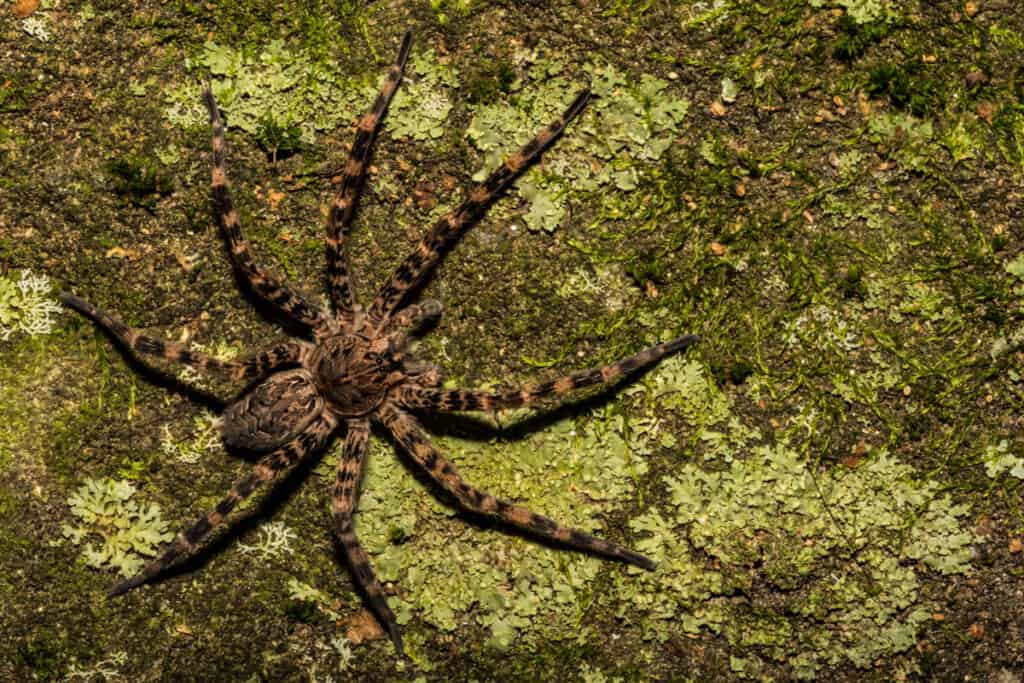
The dark fishing spider can run across the surface of water or dive into the water to catch prey.
©iStock.com/JasonOndreicka
| Scientific Name | Size | Location |
|---|---|---|
| Dolomedes tenebrosus | 2 to 4.5 inches legspan | Found close to the water in trees, on the ground, or by human structures on or near water. |
The dark fishing spider is the biggest spider in North Dakota with a legspan that can measure up to 4.5 inches. These spiders are widespread throughout the state, but they’re usually located near a body of water. They hunt for their prey in and around water, but they can often be spotted on the ground, on trees, and human structures near water.
The spider is easily identified by its mottled black and brown body and W-shaped patterns on the abdomen. This spider is not a threat to humans, but it sure can look like one!
7. Giant Swallowtail
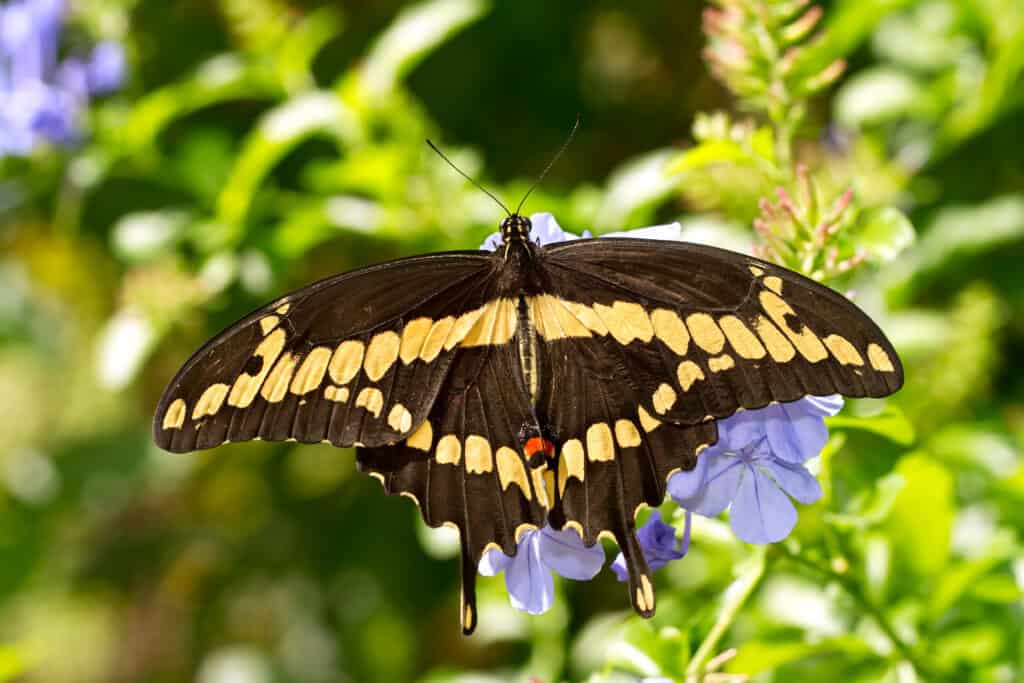
Giant swallowtails are rare in North Dakota.
©Lorraine Hudgins/Shutterstock.com
| Scientific Name | Size | Location |
|---|---|---|
| Papilio cresphontes | 5.5 to 7.5 inches | Found in forests and orchards with citrus fruit, but they’re rare in North Dakota. |
The giant swallowtail is the largest insect in North Dakota, but it is a rarity. This large butterfly has a wingspan that can reach up to 7.5 inches at its largest. The butterfly is known for having a black body along with a horizontal bright yellow or pale-yellow pattern that stretches across its forewings.
They also have a second yellow pattern that forms a U-shape across their hindwings. You can find these butterflies in citrus orchards and forests, but not often. Typically, they don’t venture far north, but they have been seen in Canada.
Staying Safe Among Large Animals in North Dakota
We’ve gone over the largest animals in North Dakota and shown you where they live and how big they get. While this information is certainly valuable, it’s also important to consider learning about animals that can hurt people in this area.
For example, you should avoid contact with and be aware of bison, elk, prairie rattlesnakes, gray wolves, and other large predators. Learn what they look like and where they’re located before venturing into the wild parts of this state.
Summary of 7 Largest Animals In North Dakota
| Rank | Largest Animal | Location |
|---|---|---|
| 1 | Paddlefish | Rivers, but they can live in oxbow lakes and bayous, too |
| 2 | Trumpeter Swan | Near lakes and ponds in Northeastern North Dakota |
| 3 | Bison | Theodore Roosevelt National Park, the Cross Ranch Nature Preserve, and a few other spots |
| 4 | Bullsnake | Western portion of North Dakota |
| 5 | Common Mudpuppy | Lakes, rivers, and other bodies of water in eastern North Dakota |
| 6 | Dark Fishing Spider | Close to the water in trees, on the ground, or by human structures |
| 7 | Giant Swallowtail | Forests & orchards with citrus fruit but they’re rare in North Dakota |