
Foxes are among one of the most adaptable animals in the world. They can live in a range of habitats, including forests and fields. Their intelligence and adaptability have served them well, allowing them to live in various areas – including Vermont.
In this article, we’ll look at everything you need to know about foxes in Vermont, including types of foxes and where to find them.
What Kind of Foxes Live in Vermont?
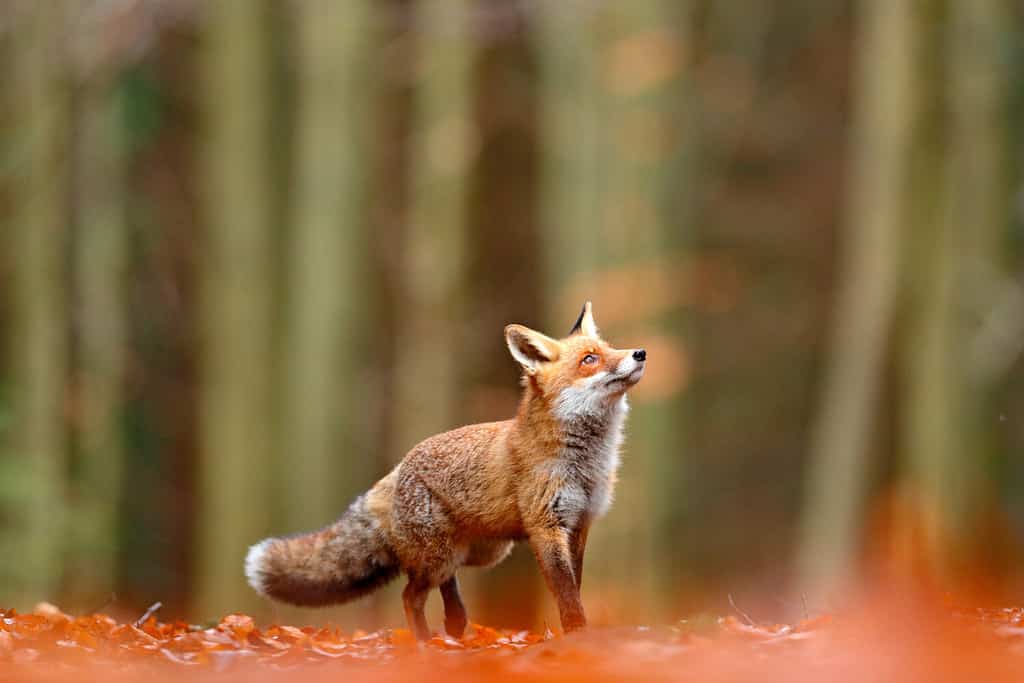
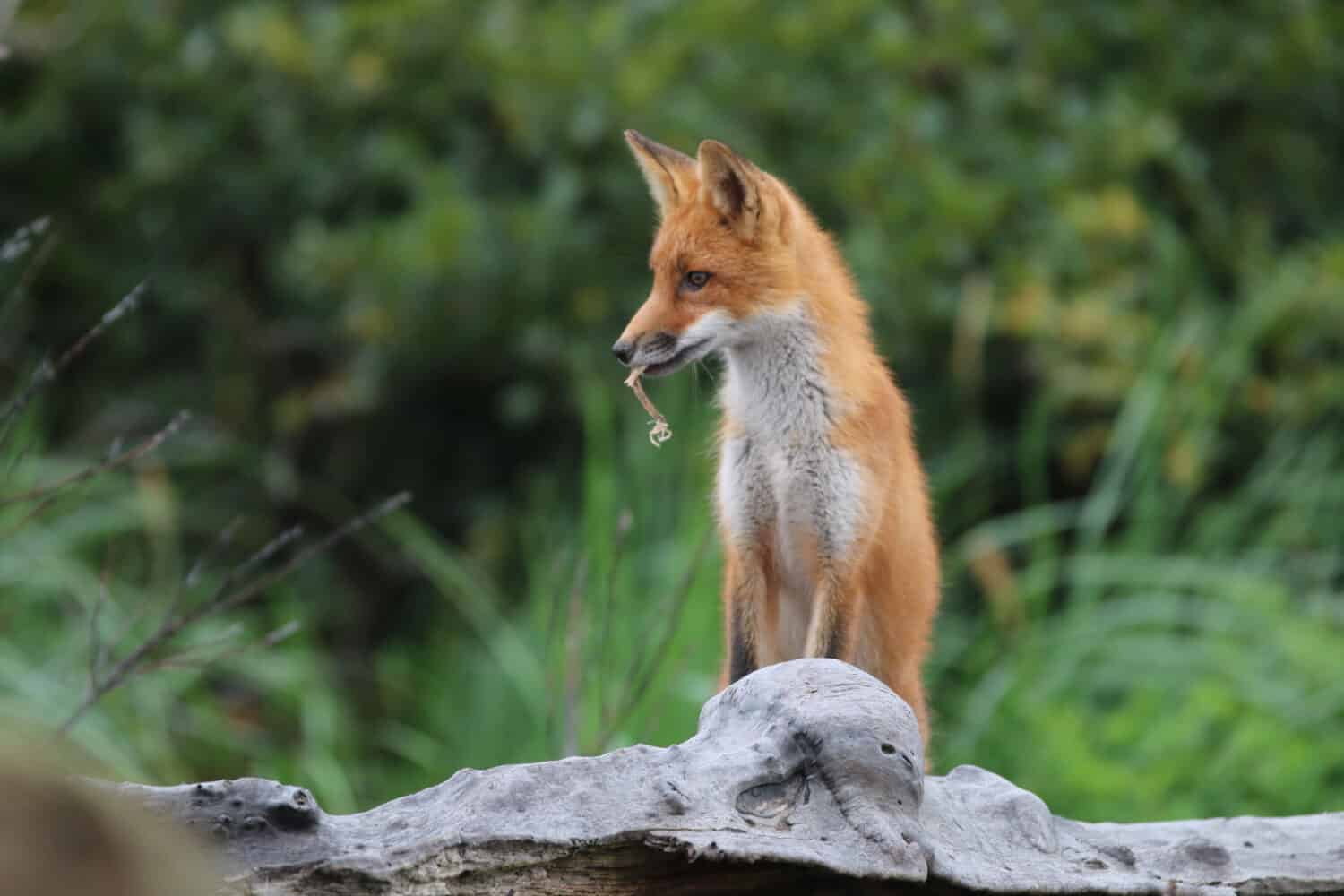
Red foxes are the most abundant in Vermont.
©Ondrej Prosicky/Shutterstock.com
There are two species of foxes that you can find in Vermont: the red fox and the gray fox. The red fox is the most common species and is very widespread. If you see a fox in Vermont, it is probably a red fox. The grey fox is much more secretive and difficult to find.
The red fox has a reddish-brown coat, hence its name. However, their color can vary widely; they aren’t always “red” in the traditional sense. They have a white belly and chest, along with black ears. You can identify them thanks to the white tip on their tail.
These foxes were originally native to Europe, Asia, and North Africa. However, they were introduced to North America by European settlers. Since then, they have spread throughout much of North America, including Vermont.
The grey fox is a bit different. They have a mostly grey coat, though they do have some reddish patches. They also have a black stripe that runs down their back and tail. They’re native to North America and are the only member of the genus Urocyon.
They’re also the only canid that can climb trees – thanks to their rotating wrists.
What Do Foxes Eat in Vermont?
Foxes are omnivores and very opportunistic. In other words, they will eat just about anything. Their diet is mostly dependent on the available foods, which allows them to live in many different places. They’ll eat:
- Rodents
- Rabbits
- Eggs
- Insects
- Fruits
- Nuts
- Berries
- Carrion
- Seeds
They usually look for food during the dawn and dusk. They will hunt and scavenge equally, depending on what is available. Foxes use their keen sense of sight, smell, and hearing to locate their prey or find other foods. They’ll cache extra food for later consumption.
They do not have a fixed territory or den like other canines. Instead, they can roam a wide area in search of food or shelter. They will use a different den just about every year, depending on the season. Foxes typically live in dens made by other animals, like woodchucks or skunks.
However, if necessary, they may use hollow logs, rock piles, or dig their own. They may even share a den with other foxes (or even other species).
How Do Foxes in Vermont Reproduce?
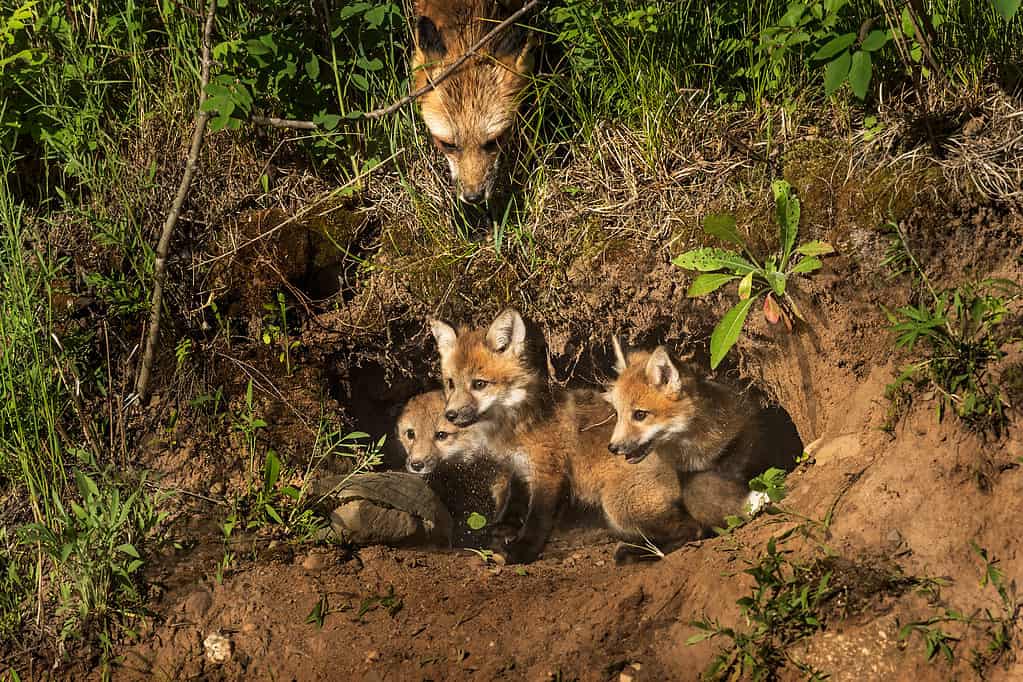
Red foxes give birth in a den, typically one made by another animal.
©Geoffrey Kuchera/Shutterstock.com
Foxes typically mate in late winter or early spring – between January and March. They have a gestation period of around 53 days, after which the vixen gives birth to 2 to 12 kits. The babies are born completely blind and helpless (a bit like puppies). They weigh only four ounces each, though they grow very quickly.
The mother and pups stay in the den for the first few weeks. The father brings the mother food and protects the den.
Around the second week, the babies will open their eyes and start to explore a bit. They’ll start solid foods around six weeks and are weaned around eight weeks. They learn to hunt from their parents and will play with their siblings.
Many foxes stay with their family until fall or winter, when they will disperse.
Where are Foxes in Vermont Found?
Red foxes and gray foxes can be found in different areas in the state. They have different habitat preferences and behaviors.
The red fox prefers forests and open areas. They will heavily use the “transition area” between woodlands and fields. However, they also require a suitable den site, though they can dig this themselves. They prefer to use other animals’ dens, though, so they may prefer to live where burrowing animals do.
This species can live in a range of different areas, though. You may find them in surprising habitats, like urban areas.
The gray fox is much pickier about where it lives. It prefers dense hardwood forests, though they will also live in hardwood/softwood mixed forests. They spend much of their time along the banks of streams and rivers or in overgrown fields. During the day, these foxes stay hidden, which makes them much more difficult to see.
They’re very territorial compared to red foxes and often have a very small home range.
What Are Threats to Foxes in Vermont?
Foxes are up against serious threats every day. In Vermont, they’re affected by:
- Habitat loss and fragmentation: As humans develop more and more land, foxes lose natural habitats where they can live. These habitats may also be divided into smaller and smaller portions, which can force them into the open or hamstring their reproductive efforts.
- Hunting and trapping: Foxes are regularly hunted and trapped for their fur (or for sport). They may also be killed as predators on farms, where they may prey on livestock.
- Diseases: Foxes can get sick, just like any other animal. They can carry several serious diseases, including rabies, parvovirus, and distemper.
- Predation: Foxes have several natural predators that may kill them. For instance, they may be injured by coyotes, bobcats, and even large birds of prey. Dogs can also harm foxes (if they can catch them).
Of course, many of these things can also be positive for foxes. For instance, hunting can help keep the population in check, preventing the spread of diseases and maintaining ecological balance. Predators can have a similar effect on foxes.