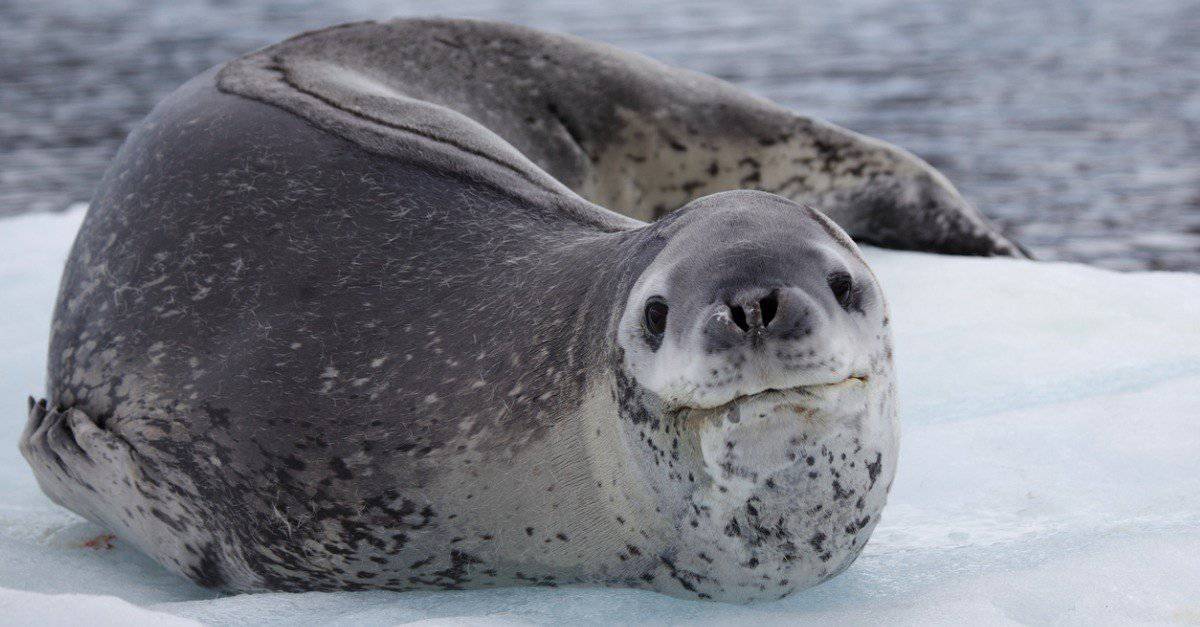

Leopard seals, or sea leopards, are fierce predators with formidable hunting skills. Leopard seals are among the few seal species that feed on warm-blooded animals, including other seals. With a thick layer of blubber, these earless seals spend their lives in Antarctic or sub-Antarctic waters. We’ve combed through fascinating details about these creatures and compiled a list of 10 incredible leopard seal facts.
1. Leopard Seals Are Bigger Than You Think
Female leopard seals can reach up to 12 feet and over 1,000 pounds.
When you think of seals, you may think about adorable creatures at the zoo. However, leopard seals are actually huge, powerful predators. Females are larger than males and can reach up to 12 feet and over 1,000 pounds. The largest ever recorded weighed over 1,300 pounds and measured almost 13 feet long.
2. Leopard Seals Are One of the Deadliest Mammals in the Antarctic
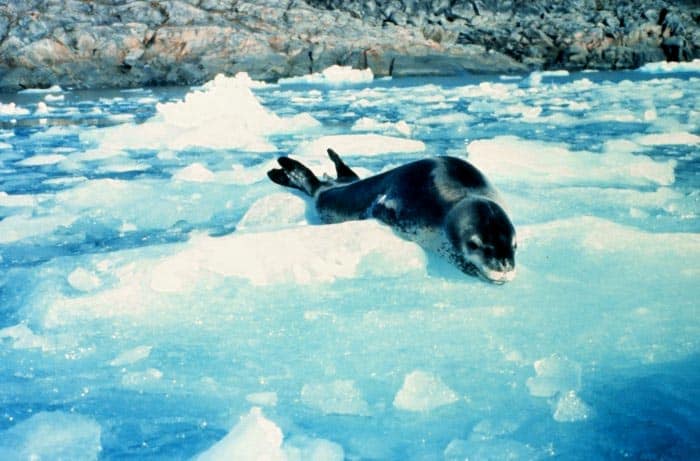
Leopard seals are large predators that inhabit the waters of Antarctica.
©Dave Mobley – Public Domain
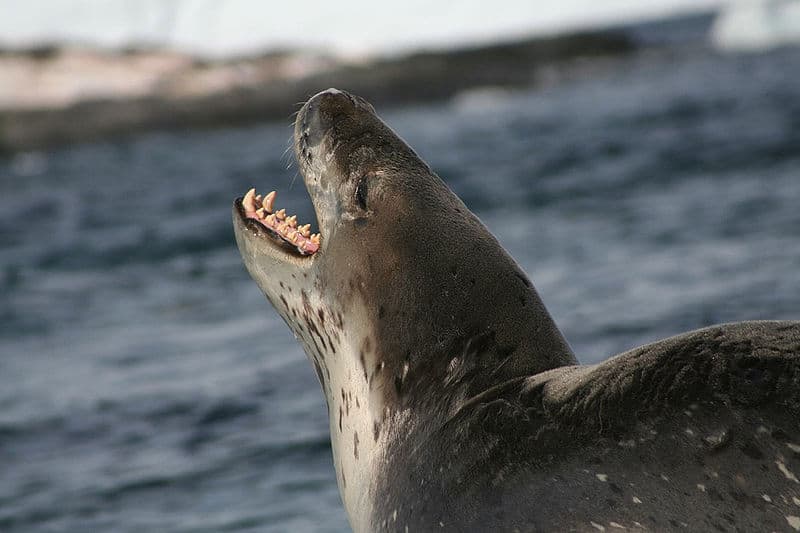
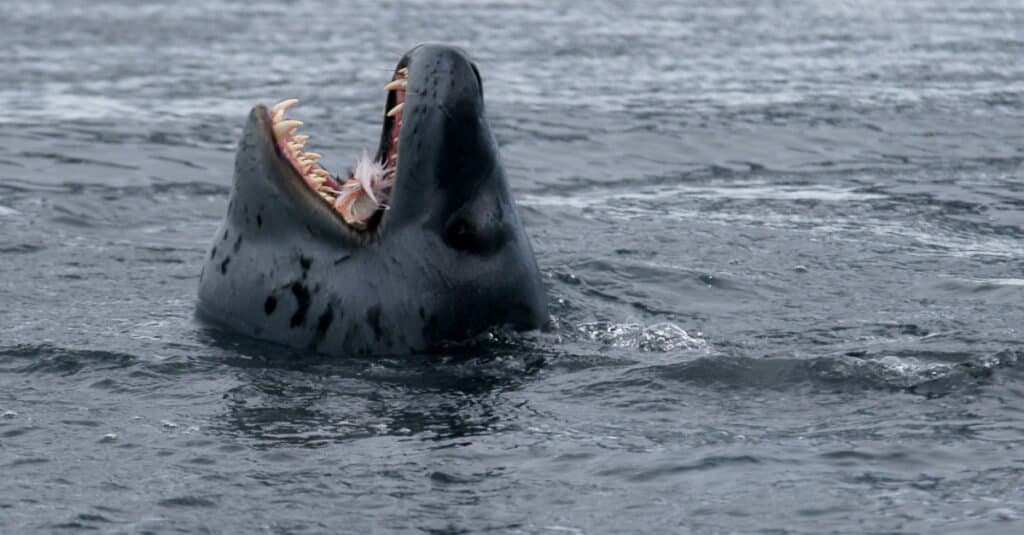
Leopard seals are giant predators that roam Antarctic waters. They are the second-largest seal in the Antarctic ecosystem, behind elephant seals. Unlike their chubby cousins, leopard seals have long, muscular bodies and exceptionally powerful jaws filled with serrated teeth. Their jaws can open to 160 degrees and clamp down with incredible force. These bite-and-tear eaters easily rip penguins and baby seals to shreds by jerking their heads from side to side.
3. A Leopard Seal Killed a Scientist
Kirsty Brown is the only documented case of a human being killed by a leopard seal.
©iStock.com/serengeti130
Scientists have been diving and snorkeling in Antarctica for decades without any casualties from leopard seals. But that changed in July 2003 during a snorkeling trip on the Antarctic Peninsula.
Kirsty Brown, a British marine biologist, was struck by a leopard seal, pulled underwater, and held there for several minutes. Despite rescue and resuscitation efforts, Kirsty passed away. It is unknown why the seal attacked her, but researchers believe it could be due to increased human presence around these creatures. Scientists worry this incident could lead to more life-threatening encounters.
4. Leopard Seals Are Solitary Animals
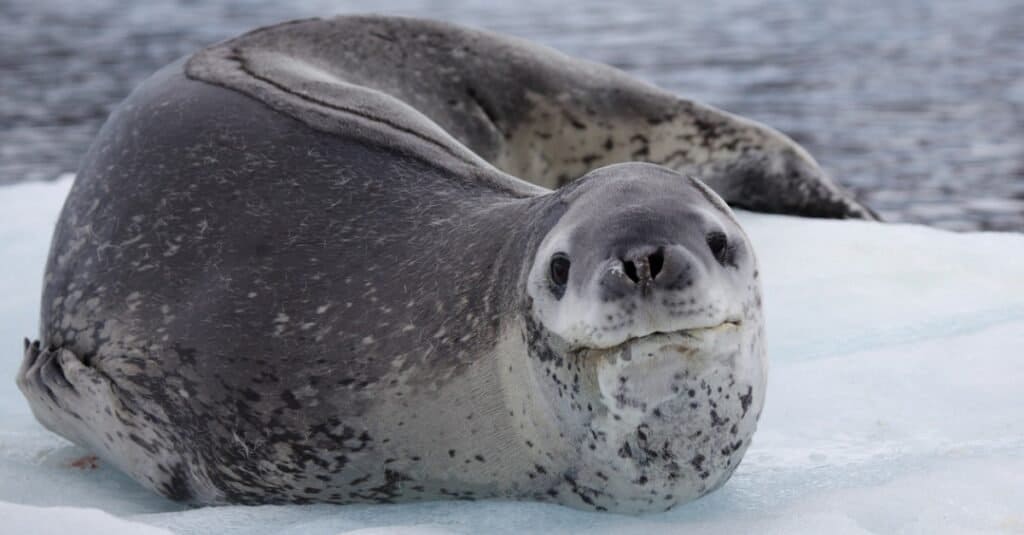
Leopard seals are solitary animals.
©Mogens Trolle/Shutterstock.com
This fact might surprise you, but leopard seals are actually solitary animals. Although some species of seals live in large communal colonies, the leopard seal does not. Instead, they prefer to live and hunt alone and are often aggressive to other seals, particularly around food.
5. Leopard Seals Feed on Sharks in New Zealand
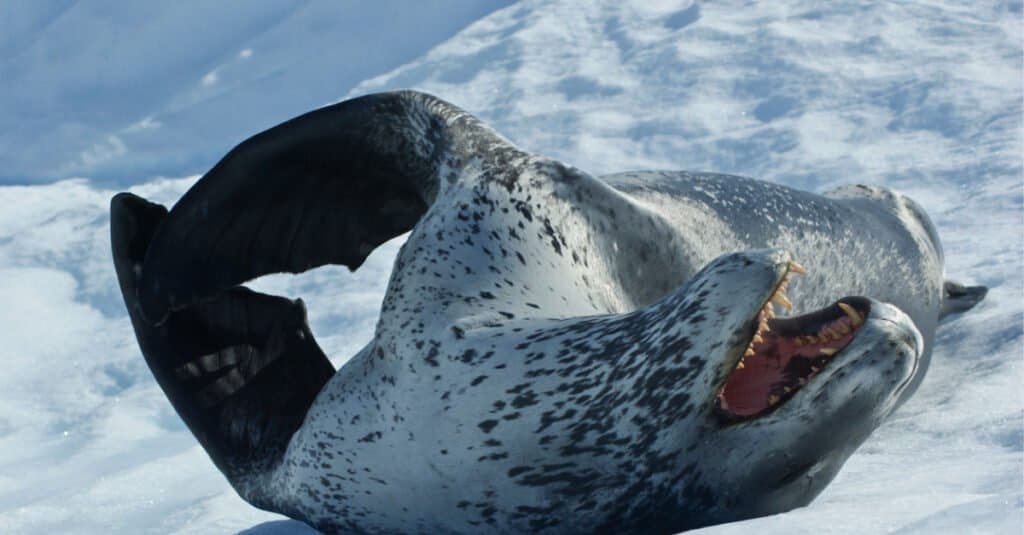
Leopard seals like to feed on penguins and other seals.
©iStock.com/Bkamprath
We know that leopard seals prey on penguins and other seals, but for the first time, there is evidence that they also prey on sharks. In 2021, scientists led a study to understand these predators better. The team studied and analyzed copious amounts of leopard seal scat and made the astonishing discovery of shark remains.
New Zealanders see more and more leopard seals these days, and researchers believe it could be because they are looking for more food options due to climate change. It is unknown whether these seals have always hunted sharks or if this is a new behavior. Nevertheless, predators feasting on predators is concerning and a possible disruption in the fragile ecosystem.
6. Leopard Seals Steal from Each Other
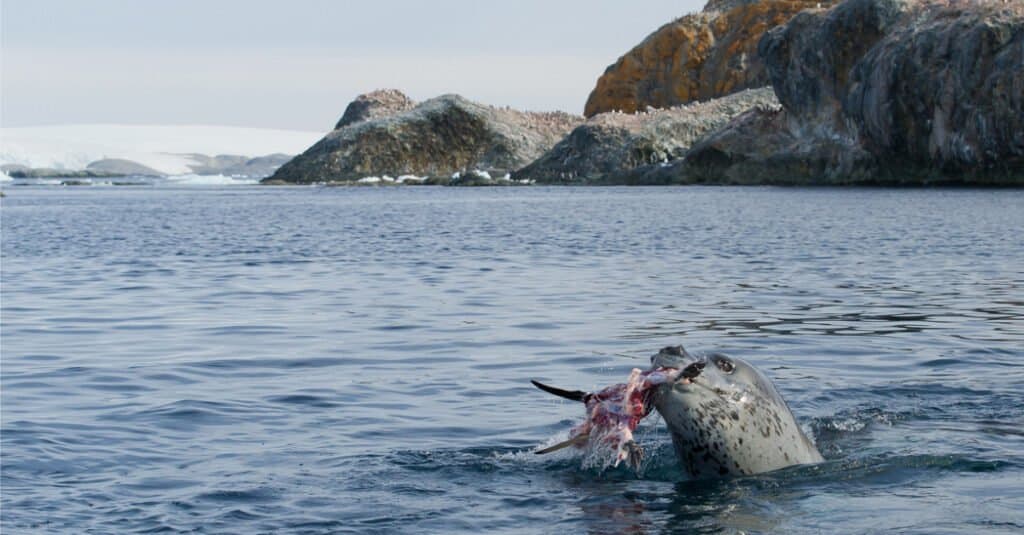
Leopard seals are thieves.
©iStock.com/mzphoto11
Scientists have always speculated that leopard seals engage in cooperative hunting, where they willingly pass food back and forth. But new evidence suggests that leopard seals are, in fact, big bullies.
A National Geographic team attached cameras to several of these seals and witnessed them outright steal food from each other. This thievery does not end peacefully. The two will strike each other with their powerful jaws until one releases its grip. Unfortunately, it is usually the smaller one that goes without a meal.
Food stealing (kleptoparasitism) is not unknown in the animal kingdom, but it is very rare amongst marine mammals.
7. These Apex Predators Enjoy Singing Underwater
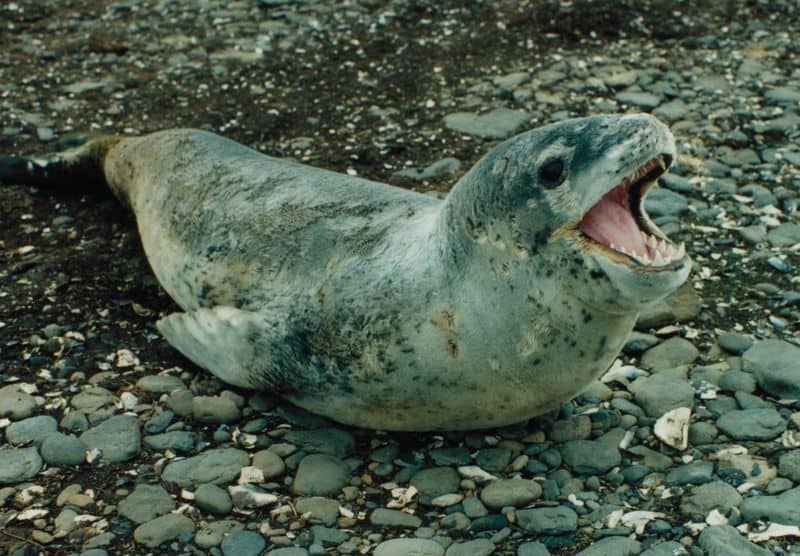
Leopard seals produce song-like calls during mating season.
©B.navez / Creative Commons – Original
While they may not sing in the way that humans do, leopard seals use vocalizations for many purposes. Male and female seals produce song-like calls during mating season, but the males are the loudest and most committed.
They will often make “trills” and “hoots” all night, every night. These broadcast calls help them locate and select a mate. Seals share common sounds, but each combines them into unique sequences. Male leopard seals also sound different based on their age.
8. Leopard Seals Like to Play with Their Food
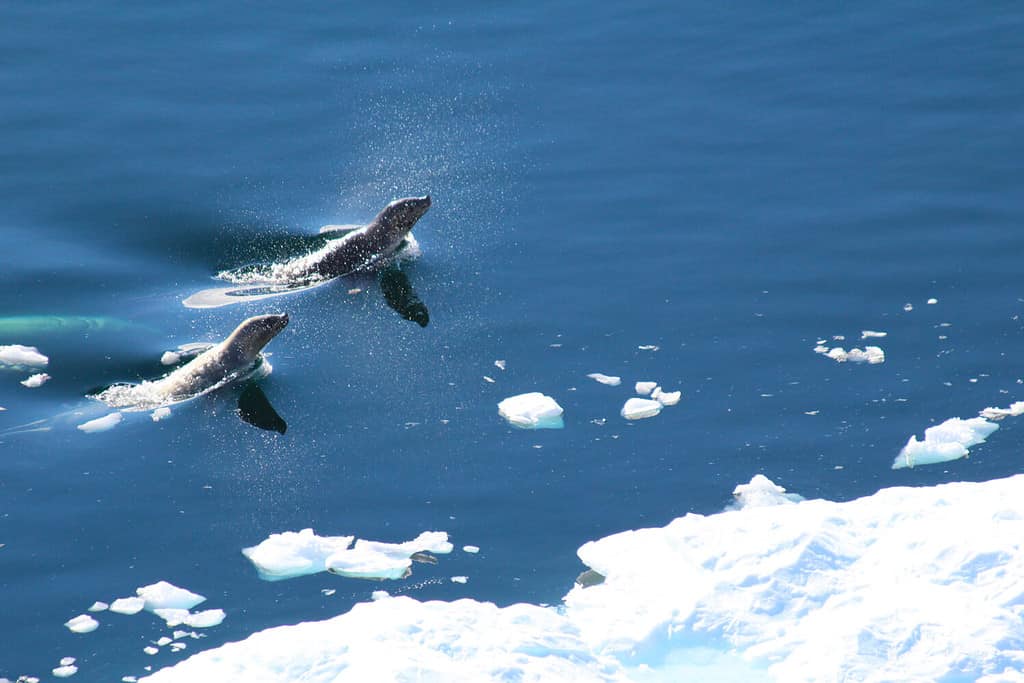
These animals are known to be the bullies of the Antarctic.
©Marco Ramerini/Shutterstock.com
Leopard seals are the bullies of the Antarctic, and they enjoy playing with and taunting their prey. When a leopard seal has eaten its fill for the day, it will often play a cat-and-mouse game with frightened penguins.
The seal will chase the penguin back and forth from the shore until it finally lets it return to safety. There is no other point to this charade other than the seal finds great enjoyment from the game. Researchers speculate it may also be a way to train young leopard seals in hunting.
9. The Gestation Period for a Leopard Seal is 11 Months
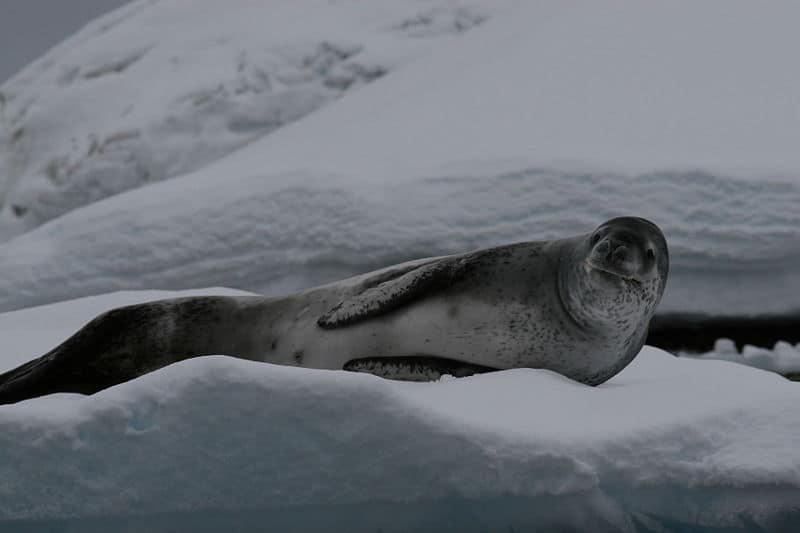
Mother leopard seals are pregnant for 240 days.
©Gilad Rom / Creative Commons – Original
When a female leopard seal reaches two to six years old, she is ready to start breeding. After mating with a bull, the female undergoes a process called delayed implantation. Delayed implantation ensures that the pup won’t be born until the summer by delaying the fertilization of the egg for three months. The mother is pregnant for around 240 days.
To give birth, the mother seal eats more food than usual and then hauls herself onto the ice. The seal pups must fend for themselves only a few weeks after birth.
10. Leopard Seals Only Have One Natural Predator
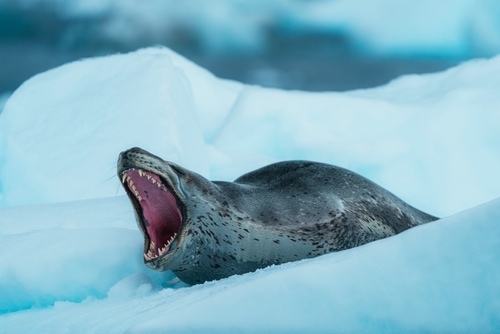
Leopard seals are killed by orcas.
©James_Castleden/Shutterstock.com
Orcas are the only known predators of leopard seals. These giant marine mammals love to prey on seals. Leopard seals are not known for having a long lifespan, but if they manage to evade a killer whale, they can live for up to 26 years.