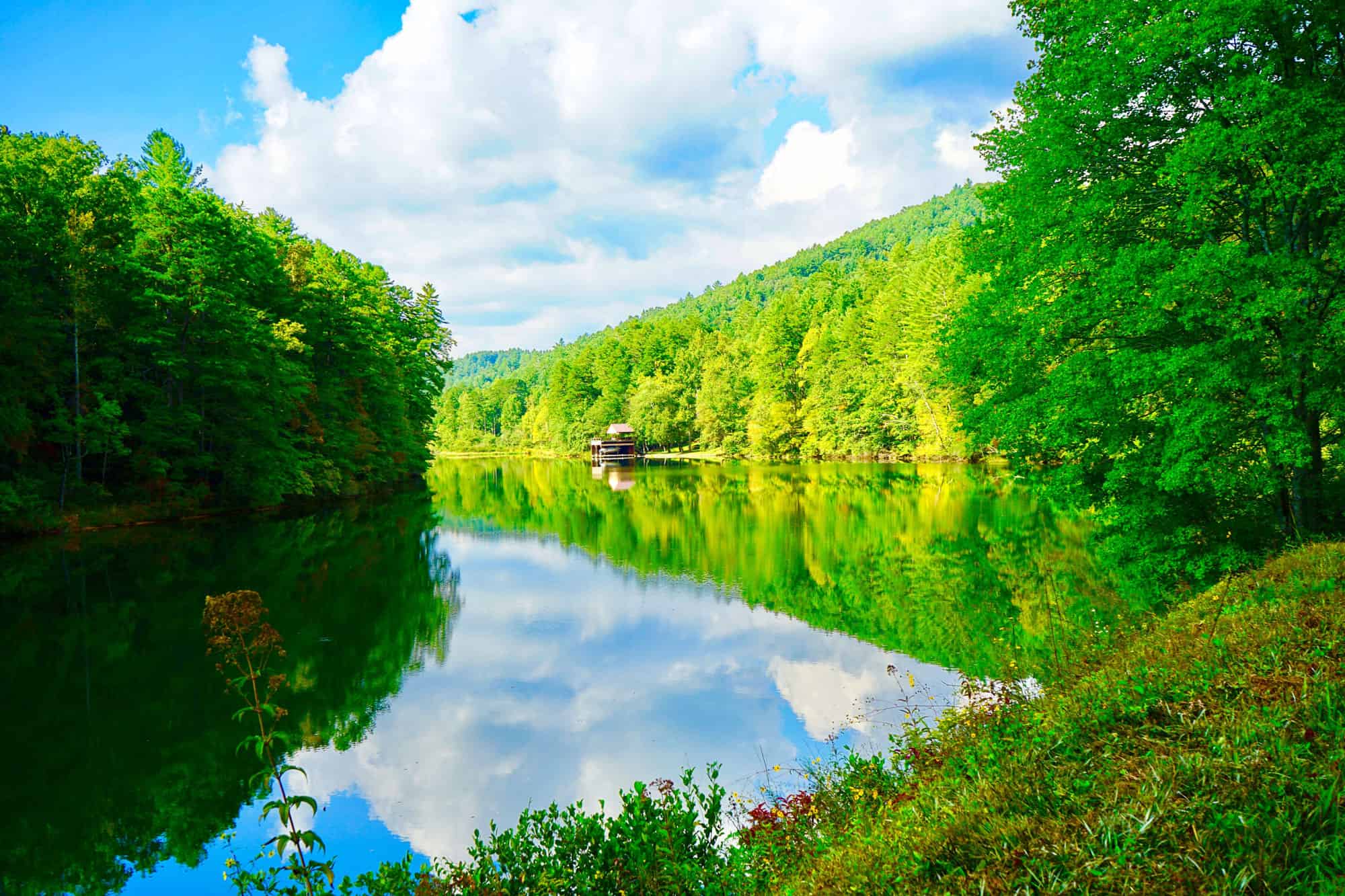

Nestled in North Georgia is Lake Burton, a small gem in the wilderness. It’s known for its tranquil water and abundant fishing opportunities. Plus, you can also camp and explore the lake.
In this article, we’ll briefly examine this lake, its location, size, depth, and more. This lake is exceptionally versatile, with plenty of things to do, so you can find something for just about anyone.
Location
Lake Burton is situated in northeastern Georgia, USA, encompassing parts of Rabun County. It is nestled within the Chattahoochee-Oconee National Forest, offering visitors a breathtaking backdrop of the Blue Ridge Mountains.
The lake is pretty accessible by road, with several different entry points. Therefore, it is an easy lake to explore.
History
This lake is newer (at least, as far as lakes are concerned). It was constructed in 1919 when the Tugalo Dam was built. The dam was later enlarged, creating the lake as we know it today. This lake was developed initially for hydropower generation. However, the lake quickly grew as a recreation destination.
The area around the lake was once home to several smaller communities. However, today, it is within a national forest. The remnants of these settlements can still be explored.
Size
Lake Burton spans about 2,775 acres, making it one of the state’s largest reservoirs. It provides many water-based activity opportunities, including boating and water skiing. Plus, there are many things to do around the lake, too.
Depth
Lake Burton’s depth varies greatly. In some places, it is pretty shallow. However, it can also reach a depth of 100 feet in some areas. This variation provides a rich ecosystem with many different habitats for different fish species.
Water Level
The water level of Lake Burton is subject to seasonal fluctuations influenced by factors such as rainfall and water management practices related to hydropower generation. Some locals have noticed that the lake can vary greatly in depth. During periods of heavy rain, the water levels can get very high.
Fishing
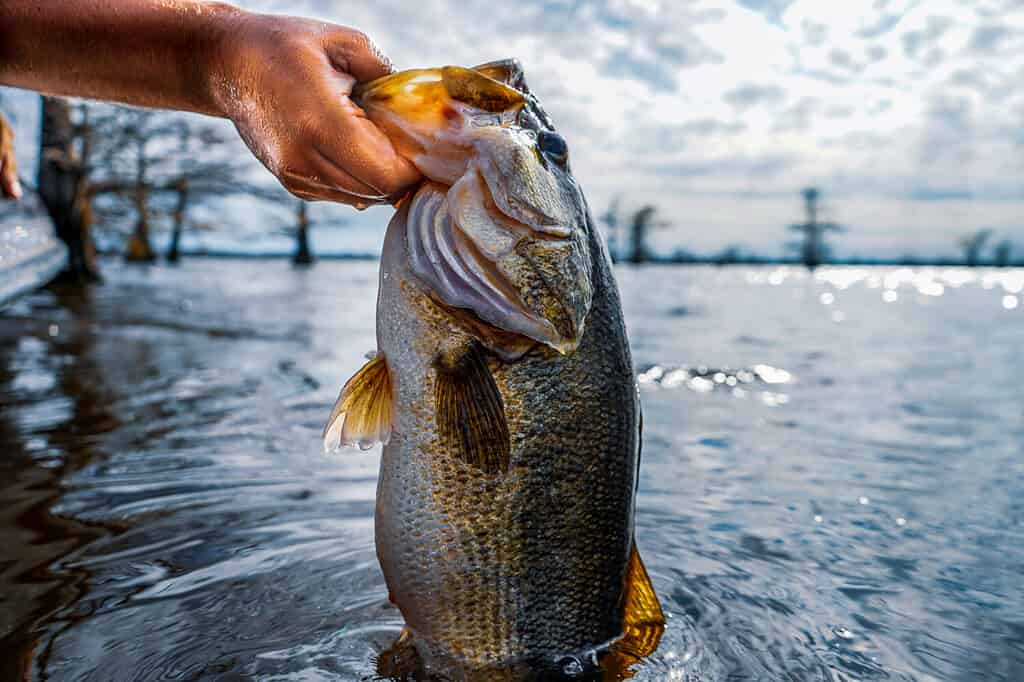
Several types of bass in Lake Burton are open for fishing.
©Maclane Parker/Shutterstock.com
Lake Burton is known for being a premier fishing destination. The lake has plenty of fishing opportunities, as several different fish species live there. Largemouth, spotted, and striped bass are among the prized catches, along with crappie, bluegill, and catfish.
Fishing is allowed in the lake. However, you must have a fishing license and abide by state regulations. Often, this means only catching a certain number of fish during specific time frames. Don’t head to the lake to fish without checking these regulations.
Geology
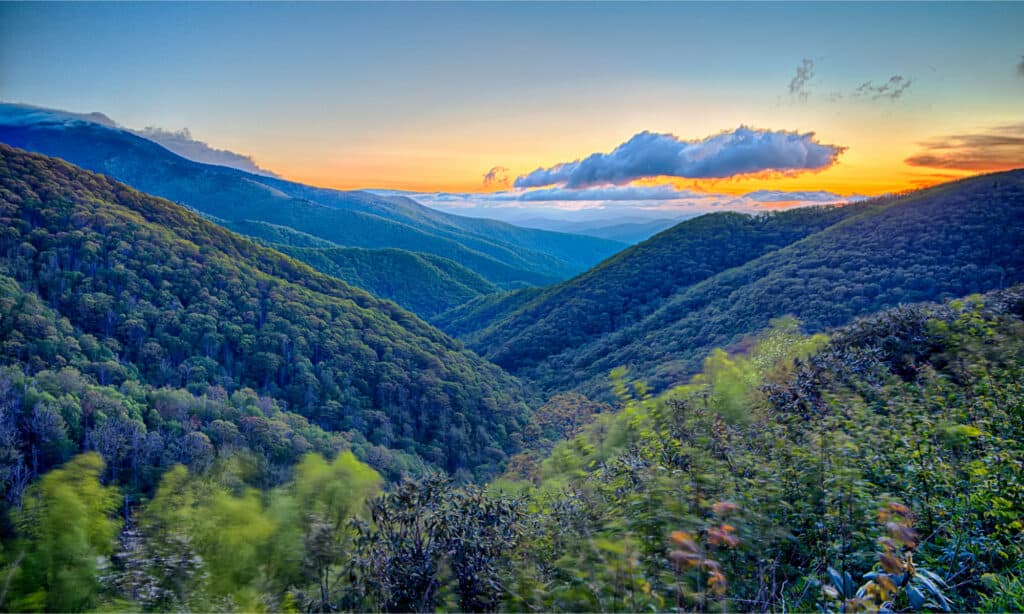
The lake sits in the Blue Ridge Mountains, a segment of the Appalachian range.
©digidreamgrafix/Shutterstock.com
Lake Burton is in the Blue Ridge Mountains, with much of its geology coming from this range. This area is a segment of the Appalachian mountain range, making it exceptionally picturesque. It features plenty of lush forests, diverse flora, and many captivating rock formations.
This geology makes the region awe-inspiring and draws many tourists every year.
Boating and Other Activities
Lake Burton can be a great place for boating. Visitors are free to bring their own boats or rent them from nearby marinas. The lake also offers other water sports, like skiing and tubing. Alternatively, you can just go on a leisurely cruise.
There are also non-motorized activities available, like kayaking and paddleboarding. Swimming is also allowed in designated areas. However, you should follow all the safety rules of the lake.
Camping
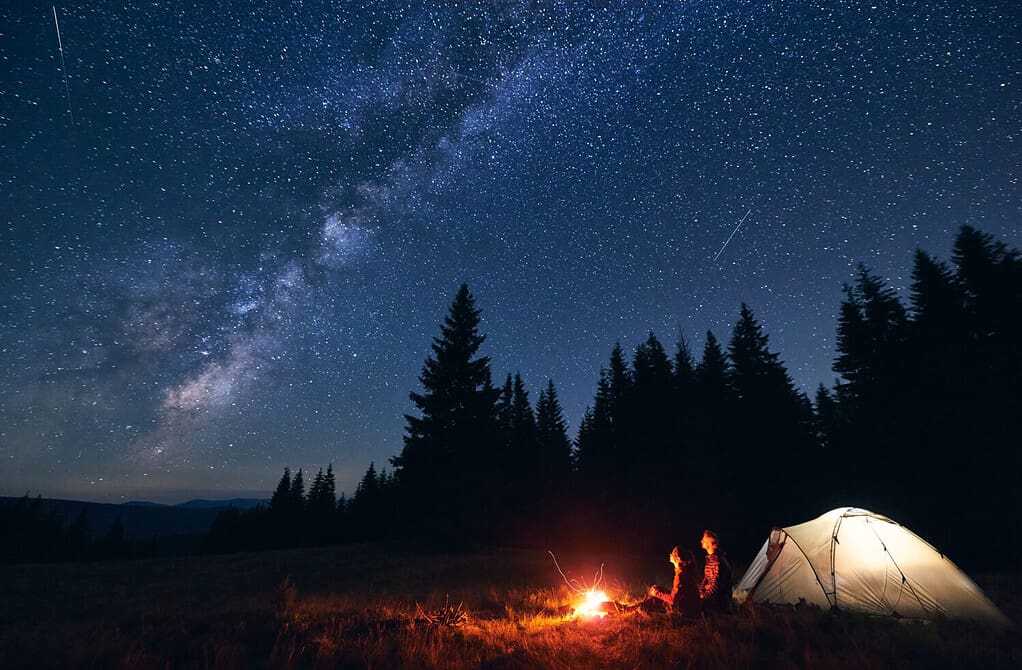
Lake Burton doesn’t allow camping explicitly. However, there are several campgrounds located fairly close to the lake.
©anatoliy_gleb/Shutterstock.com
Camping directly on the shores of the lake isn’t permitted. However, nearby campgrounds allow you to camp while keeping a close distance to the lake. Many different camping options include tent camping, RV camping, and cabins. Moccasin Creek State Park is located on Lake Burton and features over 50 campsites.