

J
Species Profile

Jackdaw

Coloeus

Pale eyes, loud flocks, city-smart corvids
Justas in the wilderness/Shutterstock.com

Jackdaw Distribution

Click a location to explore more animals from that region

Invasive Species
Loading map...
The western jackdaw (Coloeus monedula), also known as the Eurasian jackdaw, the European jackdaw, or simply the jackdaw

At a Glance

Genus Overview This page covers the Jackdaw genus as a group. Stats below are general traits shared across the genus.
Also Known As Western jackdaw, Eurasian jackdaw, Common jackdaw, Daurian jackdaw, European jackdaw
Diet Omnivore
Activity Diurnal+
Weight 0.27 lbs
Status Least Concern
Did You Know?

Genus Coloeus has only two living species, spanning Europe-North Africa and temperate East Asia.

Scientific Classification

Genus Overview "Jackdaw" is not a single species but represents an entire genus containing multiple species.

Jackdaws are small social corvids (genus Coloeus) known for their pale eyes, vocal calls, and flexible nesting in cavities, cliffs, and buildings. They forage opportunistically on insects, seeds, scraps, and carrion, and often form large communal roosts.

Kingdom
Animalia
Phylum
Chordata
Class
Aves
Order
Passeriformes
Family
Corvidae
Genus
Coloeus

Distinguishing Features

  • Small corvid with pale/whitish iris
  • Highly social; roosts and flocks
  • Cavity nester in trees and buildings
  • Omnivorous, opportunistic forager

Physical Measurements

Males and females differ in size

Length
1 ft 2 in (1 ft 1 in – 1 ft 3 in)
Weight
1 lbs (0 lbs – 1 lbs)
0 lbs (0 lbs – 1 lbs)
Tail Length
5 in (5 in – 5 in)
5 in (5 in – 6 in)
Top Speed
40 mph
flying

Appearance

Primary Colors
Secondary Colors
Skin Type Feathers
Distinctive Features
  • Small corvids: roughly 32-39 cm long across genus.
  • Wingspan typically about 62-74 cm; compact, rounded-winged.
  • Mass ranges about 0.14-0.27 kg, varying by species and sex.
  • Pale, light-colored iris gives characteristic "pale-eyed" appearance.
  • Black cap and wings contrasting with gray nape or body.
  • Some populations show cream/white neck or flank patches.
  • Short, stout bill; fairly short tail for a corvid.
  • Highly social; flocks and large communal roosts are typical.
  • Opportunistic diet: insects, seeds, scraps, carrion; varies locally.
  • Nests in cavities: cliffs, trees, buildings, chimneys; very flexible.
  • Lifespan spans ~5-20+ years across species and conditions.

Did You Know?

Genus Coloeus has only two living species, spanning Europe-North Africa and temperate East Asia.

Across the genus, adults are roughly 32-39 cm long with wingspans about 64-74 cm.

Body mass across Coloeus is typically about 140-270 g, varying by species, sex, and season.

Both species are famous for pale, light irises that stand out against dark facial feathers.

They readily nest in cavities: tree holes, cliffs, chimneys, church towers, and gaps in buildings.

Diet is broadly omnivorous- insects, seeds, grains, scraps, and carrion-shifting with habitat and season.

Jackdaws often form large communal roosts, with flock members exchanging constant contact calls.

Unique Adaptations

  • Pale iris may aid individual signaling and recognition during close-range social interactions in dense flocks.
  • Compact, agile flight and strong feet help them maneuver into narrow cavities and cling to ledges.
  • Versatile bill use enables probing soil, picking insects, and handling human food waste in urban settings.
  • High vocal flexibility-rapid calls and chatter support flock cohesion in crowded roosts and colonies.
  • Plumage variation across the genus includes grey-naped forms and contrasting pale-bodied morphs in East Asia.

Interesting Behaviors

  • Strong flocking: foraging, traveling, and roosting often happen in noisy, coordinated groups.
  • Flexible nesting: pairs use cavities in cliffs, trees, and buildings; availability can drive local colony size.
  • Opportunistic feeding: they switch between insects, seeds, refuse, and carrion depending on season and place.
  • Pair bonds are typically long-term, with mates coordinating nest defense and chick-feeding.
  • Movement varies: some populations are resident, while others (especially farther north/east) migrate or wander seasonally.

Cultural Significance

Jackdaws feature widely in European stories and sayings as clever, talkative birds. Their habit of nesting in church towers and towns made them familiar neighbors, appearing in fables, poems, and everyday folklore.

Myths & Legends

Aesop's fable "The Jackdaw and the Feathers" tells of a jackdaw disguised in borrowed plumage, then exposed and rejected.

Aesop's "The Jackdaw and the Pigeons" portrays a jackdaw painting itself white to join pigeons, only to be discovered.

Richard Barham's poem "The Jackdaw of Rheims" tells of a jackdaw stealing a cardinal's ring and facing dramatic judgment.

Conservation Status

LC Least Concern

Widespread and abundant in the wild.

Population Increasing

Protected Under

  • EU Birds Directive
  • Bern Convention
  • National wildlife laws

You might be looking for:

Eurasian Jackdaw

60%

Coloeus monedula

Commonly intended by “jackdaw”; a small, grey-naped corvid widespread across Europe and western Asia, often nesting in buildings and cliffs.

View Profile

Daurian Jackdaw

40%

Coloeus dauuricus

East Asian jackdaw with distinctive pale/whitish neck collar in many plumages; occurs in Mongolia, China, and adjacent regions.

View Profile

Life Cycle

Birth 5 chicks

Lifespan

In the Wild
0 years
In Captivity
10–30 years

Reproduction

Mating System Monogamy
Social Structure Socially Monogamous
Breeding Season spring to early summer (Mar-Jun)
Breeding Pattern Lifelong
Fertilization Internal Fertilization
Birth Type Internal_fertilization

Behavior & Ecology

Social Flock Group: 60
Activity Diurnal, Crepuscular
Diet Omnivore insects
Seasonal Migratory 932 mi

Temperament

Highly social
Curious
Bold
Opportunistic
Wary

Communication

chattering calls
short caws
contact calls
alarm calls
begging calls
allopreening
bill-touching displays
body posture signals
aerial flocking maneuvers
nest-site guarding

Habitat

Biomes:
Temperate Forest Temperate Grassland Mediterranean Boreal Forest (Taiga) Alpine Freshwater Wetland +1
Terrain:
Plains Hilly Plateau Valley Mountainous Coastal Island Riverine Rocky Karst +4
Elevation: Up to 6561 ft 8 in

Ecological Role

Generalist mesopredator and scavenger in human-modified landscapes

insect control seed dispersal nutrient recycling carrion removal

Diet Details

Main Prey:
Beetles Caterpillars Grasshoppers and crickets Earthworms Snails and slugs Spiders Small rodents Bird eggs and nestlings Carrion +3
Other Foods:
Cereal grains Seeds Berries and soft fruits Nuts and acorns Human food scraps Food waste at livestock areas

Human Interaction

Domestication Status

Wild

No true domestication. Across Eurasia, jackdaws (Coloeus) have long lived alongside people by exploiting buildings for nesting and human food waste; individuals are sometimes hand-reared, but populations remain wild.

Danger Level

Low
  • Pecking or scratching when handled
  • Zoonotic disease risk from droppings
  • Noise and roost guano
  • Minor property damage from nesting

As a Pet

Not Suitable as Pet

Legality: Often protected; keeping usually illegal or permit-required.

Care Level: Expert Only

Purchase Cost: Up to $800
Lifetime Cost: $5,000 - $20,000

Economic Value

Uses:
Agriculture Tourism Research

Types of Jackdaw

2

Explore 2 recognized types of jackdaw

Quick Take

  • Jackdaws may be able to do something most birds can't, and that something involves recognizing you personally. Their intelligence explained →
  • Their scientific name is literally a reference to theft, and the story behind it is stranger than it sounds. Origins of the name →
  • Jackdaw pairs bond for life, yet their colonies are built almost entirely on a foundation that defies typical animal social logic. How their bonds form →
  • A jackdaw nest can hatch chicks at very different times, and for the last ones born, that timing can be fatal. Asynchronous hatching details →

There are two recognized species of jackdaw: the western or Eurasian jackdaw, which can be found almost anywhere between Western Europe, western Asia, and western North Africa, and the Daurian jackdaw, which calls eastern Asia home. As members of the Corvid (crow) family, they are highly intelligent and sociable. The corvid family as a whole ranks among the few groups of tool users in the entire animal kingdom. They hold an important symbolic role in many cultures, and they are attracted to shiny trinkets, which is probably why they are often caricatured in stories as thieves.

The jackdaw’s name comes from the word “jack,” which may mean “small” or refer to its characteristic call, and “daw,” which is a native English name for the bird. However, some say “jack” comes from the jackdaw’s call that sounds like a hard “tchack.”

A detailed wildlife infographic titled 'JACKDAW: THE INTELLIGENT CORVID' featuring bird illustrations, diet icons, and life cycle facts on a green and white background.
They use tools, mimic human speech, and form lifelong bonds—discover the hidden genius of the bird world’s most clever corvid. © A-Z Animals

Classification and Scientific Name

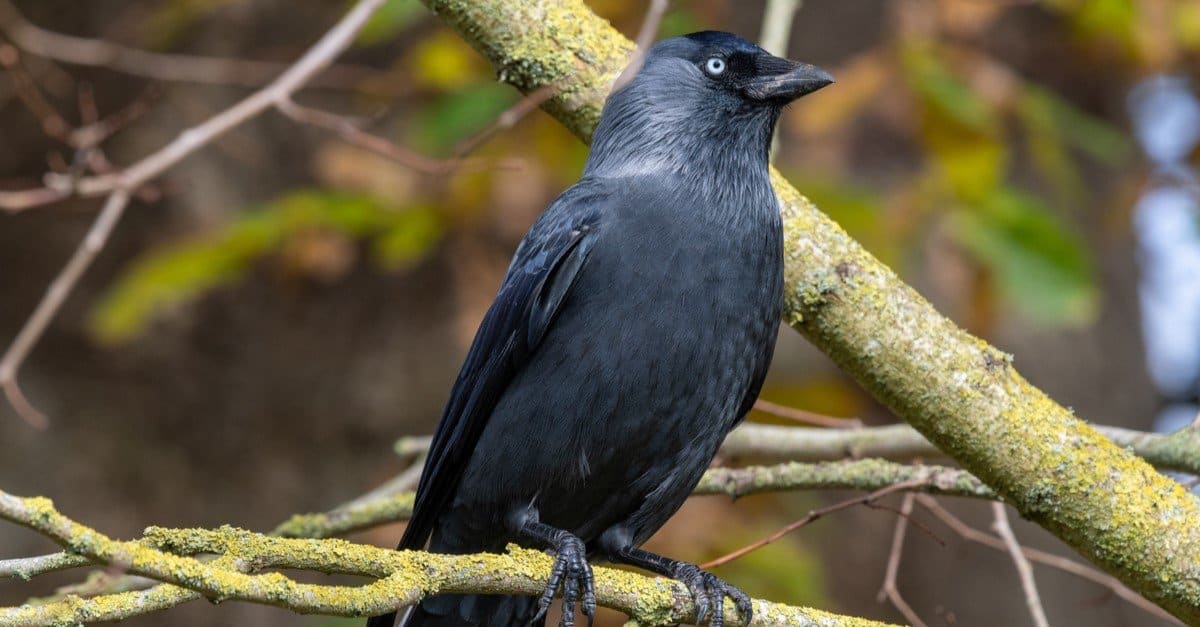
Jackdaw (Coloeus monedula) perching on a branch.

The Eurasian Jackdaw (Coloeus monedula) gets its species name from money since it has a penchant for stealing shiny coins and trinkets.

The scientific name of the western or Eurasian jackdaw species is Coloeus monedula. Monedula is derived from a Latin word meaning money, in reference to the jackdaw’s penchant for stealing shiny trinkets. This species is found in Great Britain, western Europe, Scandinavia, northern Asia, and northern Africa. There are four subspecies: the Nordic, Western Eurasian, Eastern Eurasian, and Algerian jackdaws.

The scientific name of the Daurian jackdaw is C. dauuricus. It can be found in southeastern Siberia, Mongolia, northern China, and southeastern Tibet, wintering south to southern China. The name comes from the Dauria region of eastern Russia.

Appearance

The jackdaw is the smallest crow in the UK, and the eastern jackdaw is slightly larger than the western one. They measure about 13 to 15 inches in length and around 8.5 ounces in weight.

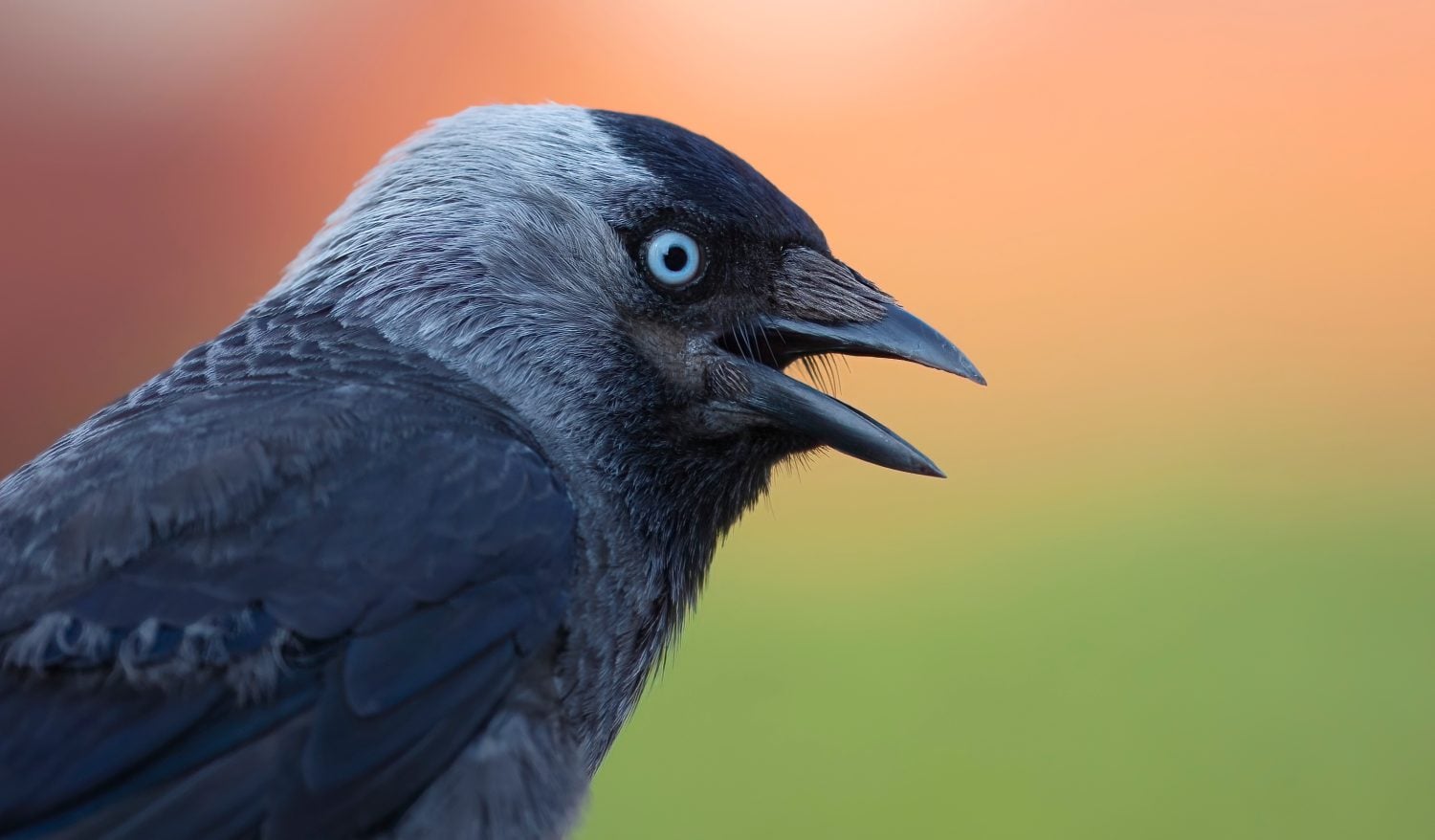
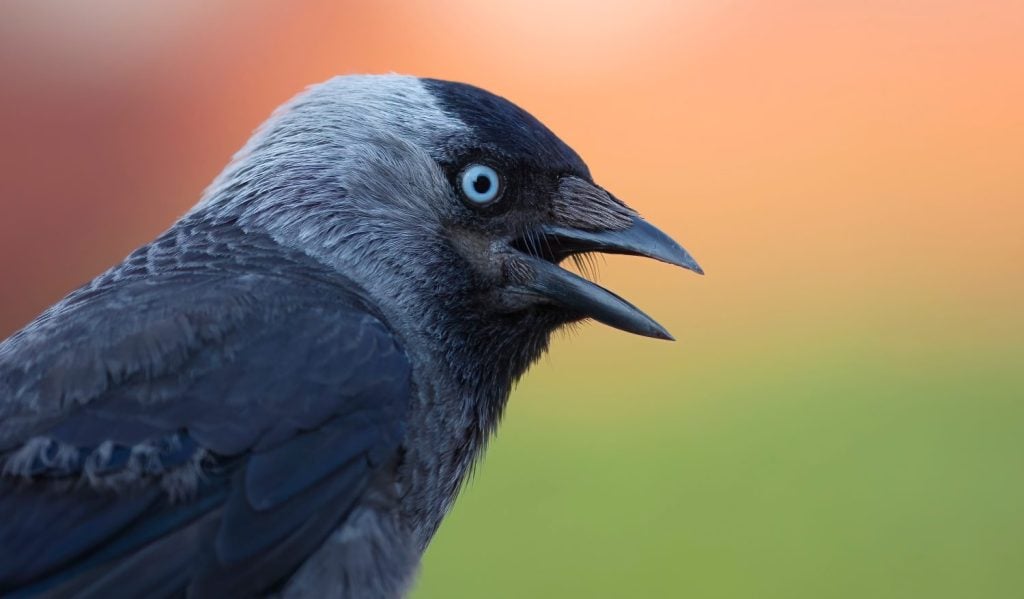
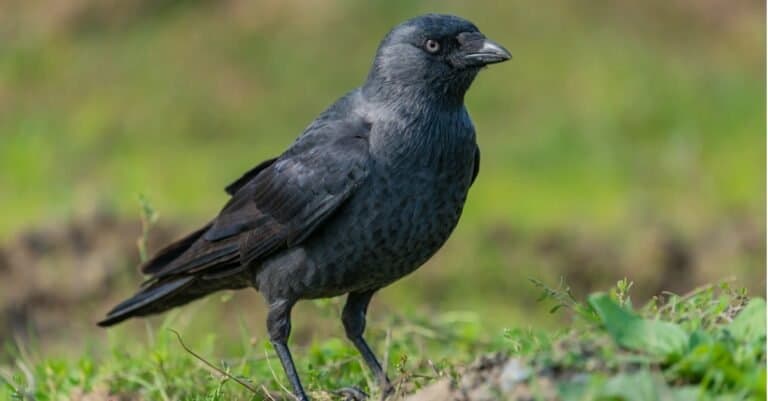
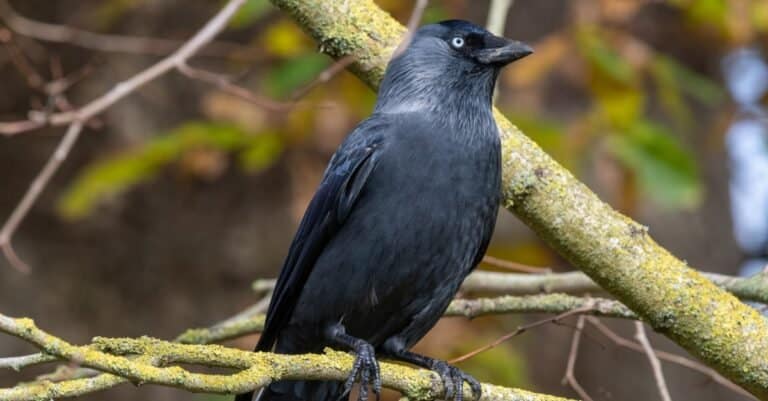
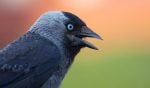
While sporting a familiar crow-like dark plumage, the western jackdaw is most easily identified by its pale white or grey iris and the light grey nape (the back of the head and neck). The eastern species’ adults have white feathers at the nape, and the iris is dark.
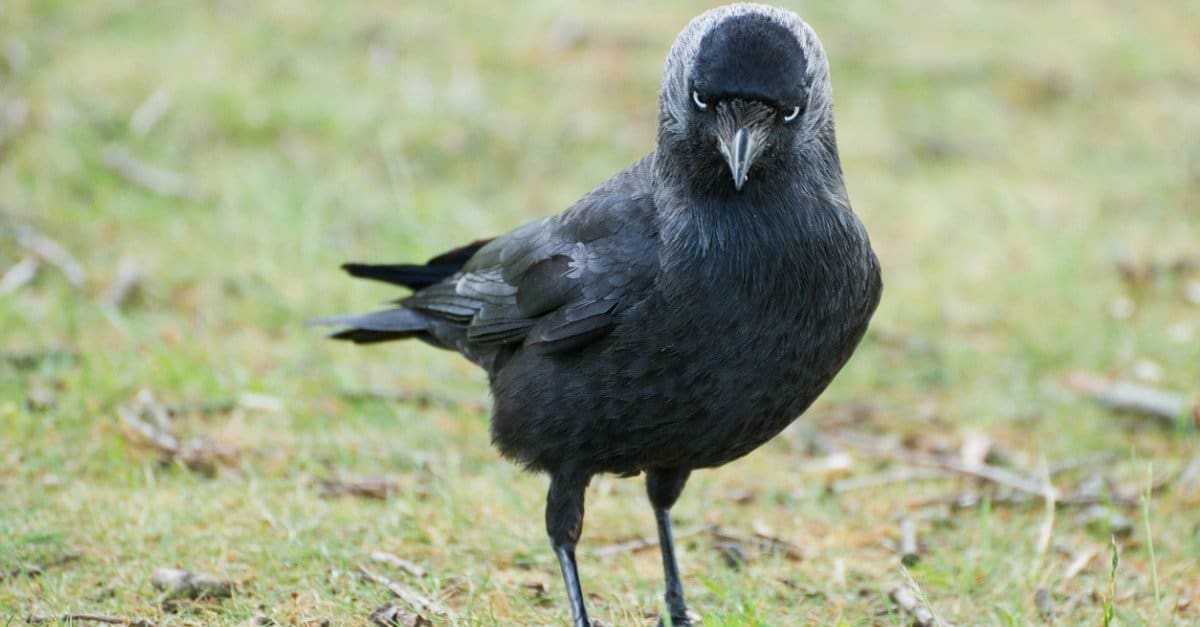
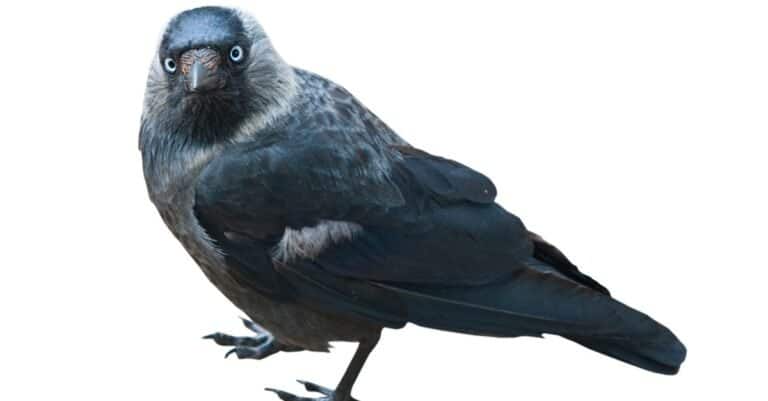
close up of a jackdaw

The grey nape of the neck and the white iris identify this Jackdaw as a member of the Eurasian species.

Juveniles tend to have dull plumage with brown irises and take time to achieve their adult form. They also have strong black beaks and black legs.

This bird has an annual molting season in the summer and autumn when it replaces its entire plumage. Its feathers will start turning gray with age.

Behavior

The basis of the jackdaw’s “society” is the mating pair, which usually bonds for life. Together, the pair roosts and feeds in even larger colonies, sometimes consisting of many thousands of birds. While the colony members are almost completely unrelated to each other, they do work together to find food and resources. If one member of the colony has found an ample source of food, then it will sometimes alert other members about the location as well.

These birds make several sounds to communicate with each other. The most common is the familiar jack or chak greeting for which they are named. They also have alarm calls, mating calls, and roosting calls. The Daurian jackdaw has a more nasal sound.

As members of the Corvidae family, jackdaws are thought to be some of the most intelligent animals on the planet. They can use tools, solve problems, and perhaps even recognize individual human faces.
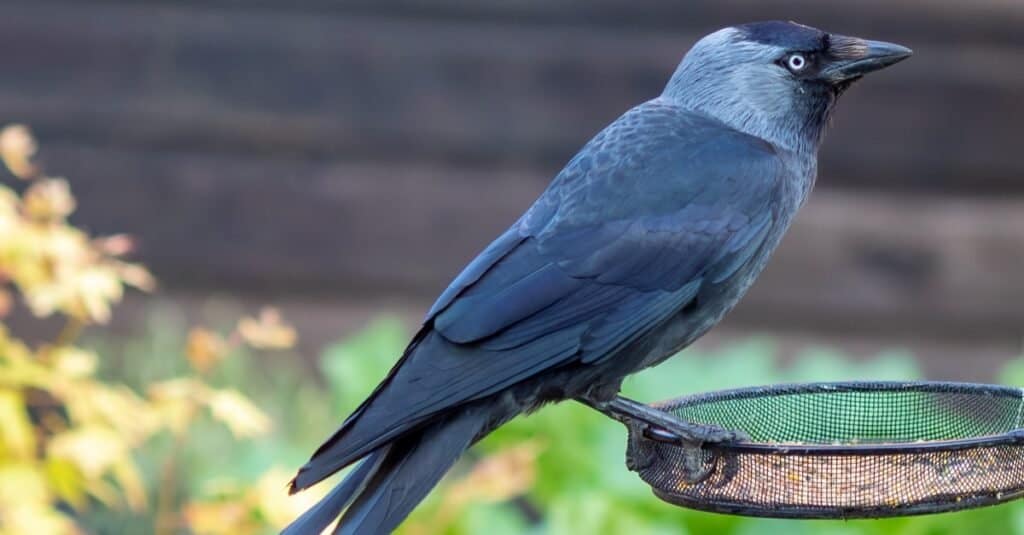
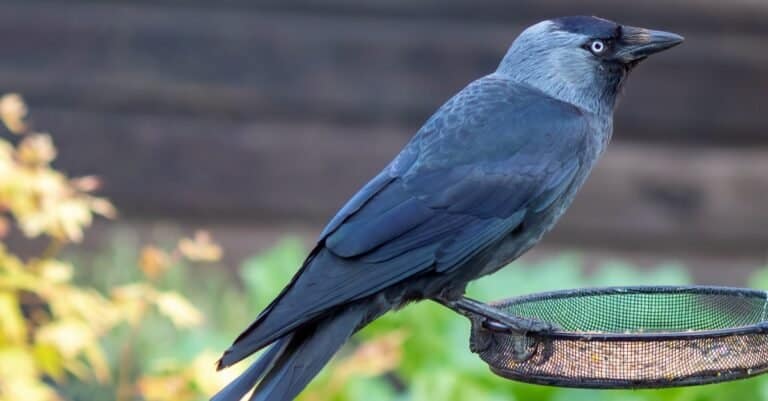
A split tailed Jackdaw sitting on a bird feeder.

The Jackdaw is one of the most intelligent animals because it can use tools to solve problems.

While the jackdaw should not be kept as a pet, this bird can be tamed and even taught various tricks. One of the most interesting facts is that it has the remarkable ability to mimic human voices.

Habitat

Both species of jackdaw are normally found in farmlands, open woodlands, cliffs, and even urban habitats. Most jackdaws stay in the same place all year round, but the northernmost populations do migrate south for the winter. They can be seen flying in massive formations during the late autumn months.

Diet

This bird is a scavenging omnivore. Large colonies can be seen foraging along the ground, sometimes side by side with crows and rooks.

The jackdaw’s diet largely consists of seeds, fruits, and small invertebrates like insects, snails, and spiders. If it happens to come across abandoned carrion or untended bird eggs, then it will make a quick meal of those as well. It also has a habit of raiding garbage bins, landfill sites, and gardens.

Reproduction, Young, and Molting
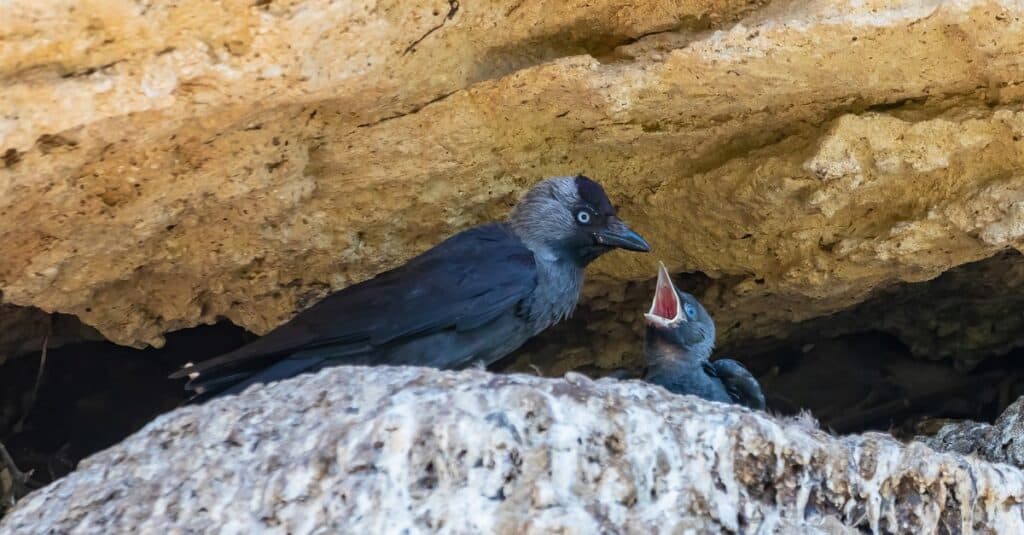
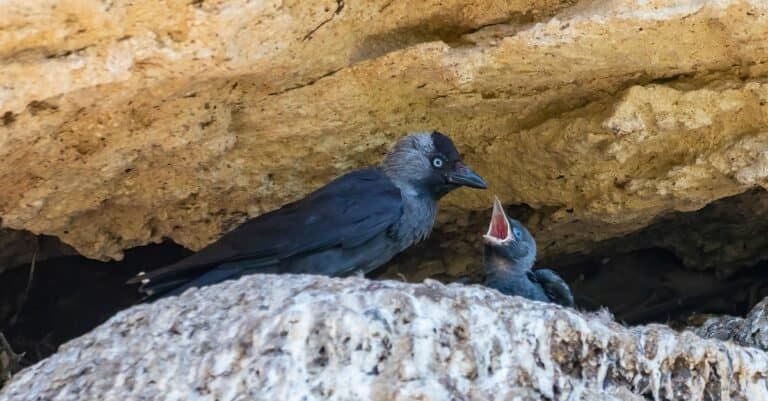
Western Jackdaw, Coloeus monedula, feeding its chick in the nest.

This Western Jackdaw is feeding its chick in a nest that is perhaps in a cliff.

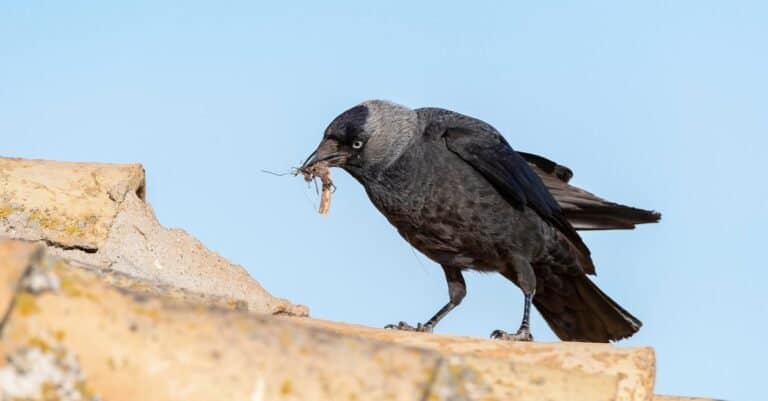
jackdaws will nest in almost any kind of cavity roughly equal to their body length, including tree holes, chimneys, cliffs, attics, and buildings. The nest itself consists of an outer section lined with larger sticks and an inner section lined with wool or hair.

A male and female bird will form a strong monogamous bond, often pairing for life. During the annual mating season from April to July, the female will produce a brood of four to six eggs. She is responsible for most of the incubation duties, while the father is responsible for foraging all of the food.

The eggs hatch asynchronously (meaning at different times) in the general order in which they were laid. Sometimes the first chick will have already begun to fledge after about a month, while the last chick is only just beginning to emerge from its egg. However, if food is running particularly low, then the final chicks might be left to die.

This bird has an average lifespan of about five years in the wild, but it can be cut short by predators, disease, and starvation.

Predators and Threats

Highly adaptable and versatile, this bird faces few threats in its natural habitat apart from predators. It is preyed upon by birds of prey, stoats, weasels, polecats, wild and domesticated cats, and rodents. Many of these predators will steal eggs whenever they spy an opportunity, but some will prey upon the adults as well. Jackdaws will cry out for help and mob predators to drive them away.

Population and Conservation Status

It is estimated that there are somewhere between 40 million and 85 million mature individual Eurasian jackdaws in the wild. The population of the Daurian is smaller but still significant. The IUCN Red List considers both the Eurasian and Daurian jackdaws to be species of least concern.

View all 52 animals that start with J

Sources

  1. Britannica / Accessed November 5, 2021
  2. Discover Wildlife / Accessed November 5, 2021
  3. Bird Fact / Accessed November 5, 2021
  4. IUCN / Accessed November 5, 2021
Heather Ross

About the Author

Heather Ross

Heather Ross is a secondary English teacher and mother of 2 humans, 2 tuxedo cats, and a golden doodle. In between taking the kids to soccer practice and grading papers, she enjoys reading and writing about all the animals!

Thank you for reading! Have some feedback for us?


Jackdaw FAQs (Frequently Asked Questions)

Northern populations do tend to migrate south for the winter.