
Quick Take
- Lake Winnipeg, which is the remnant of a former glacier, supports an abundance of wildlife.
- Lake Malawi is a meromictic lake, meaning its water layers do not mix.
- Lake Baikal is the world’s deepest lake with a depth that exceeds 5,000 feet.
Lakes are large bodies of landlocked water formed through geological processes such as glacier melting, volcanic activity, tectonic plate movement, or human activity. Unlike shallow ponds, where sunlight reaches the bottom, lakes are often deep and have layers of thermal stratification, with the bottom water remaining much colder than the surface water. North America has the highest concentration of large freshwater lakes, due to glacial lakes in Canada and Alaska and the Laurentian Great Lakes (Huron, Ontario, Michigan, Erie, and Superior), which hold 20% of the world’s surface freshwater. However, three of the 12 largest freshwater lakes in the world are in Africa. Continue reading to discover more about the largest freshwater lakes in the world.
12. Lake Ontario
Lake Ontario, located on the border of Canada and the United States, is the smallest of the Great Lakes by area. Although Lake Ontario has the smallest surface area of the five Great Lakes, it is actually the second deepest. It also holds more than three times as much water as Lake Erie.
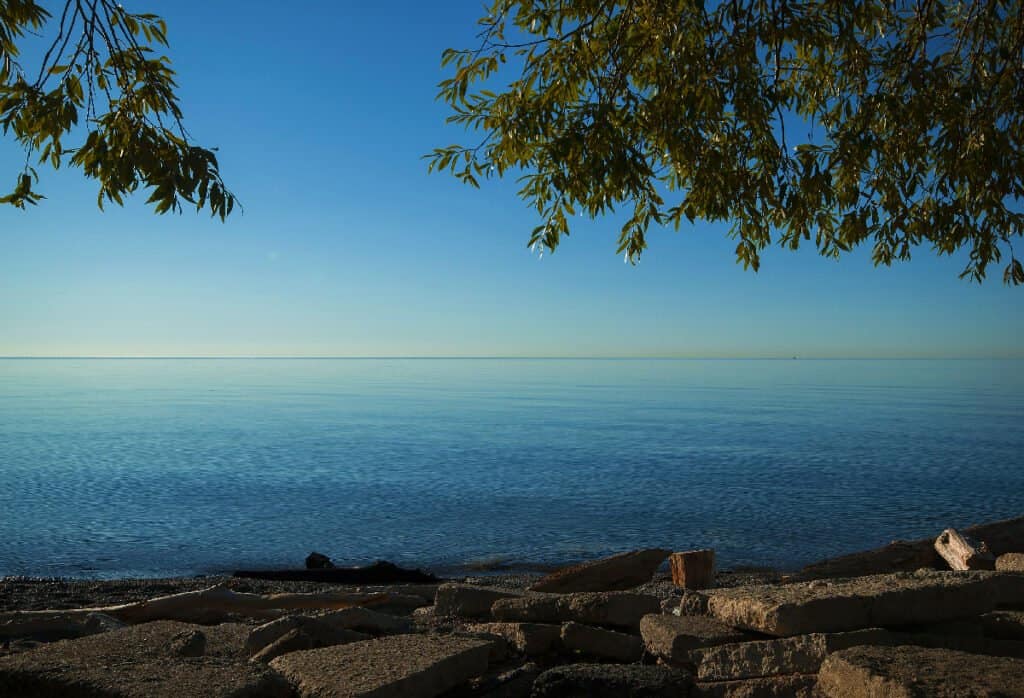
Lake Ontario provides drinking water to approximately 9 million people in Canada and New York State.
©Michael J. Eves/Shutterstock.com
| Area | Length | Depth | Volume |
| 18,960 km2 7,320 sq mi | 311 km 193 mi | 244 m 801 ft | 1,639 km3 393 cu mi |
Lake Ontario is the final link in the Great Lakes chain, receiving water from the other four before draining into the St. Lawrence River and out to the Atlantic Ocean.
11. Lake Winnipeg
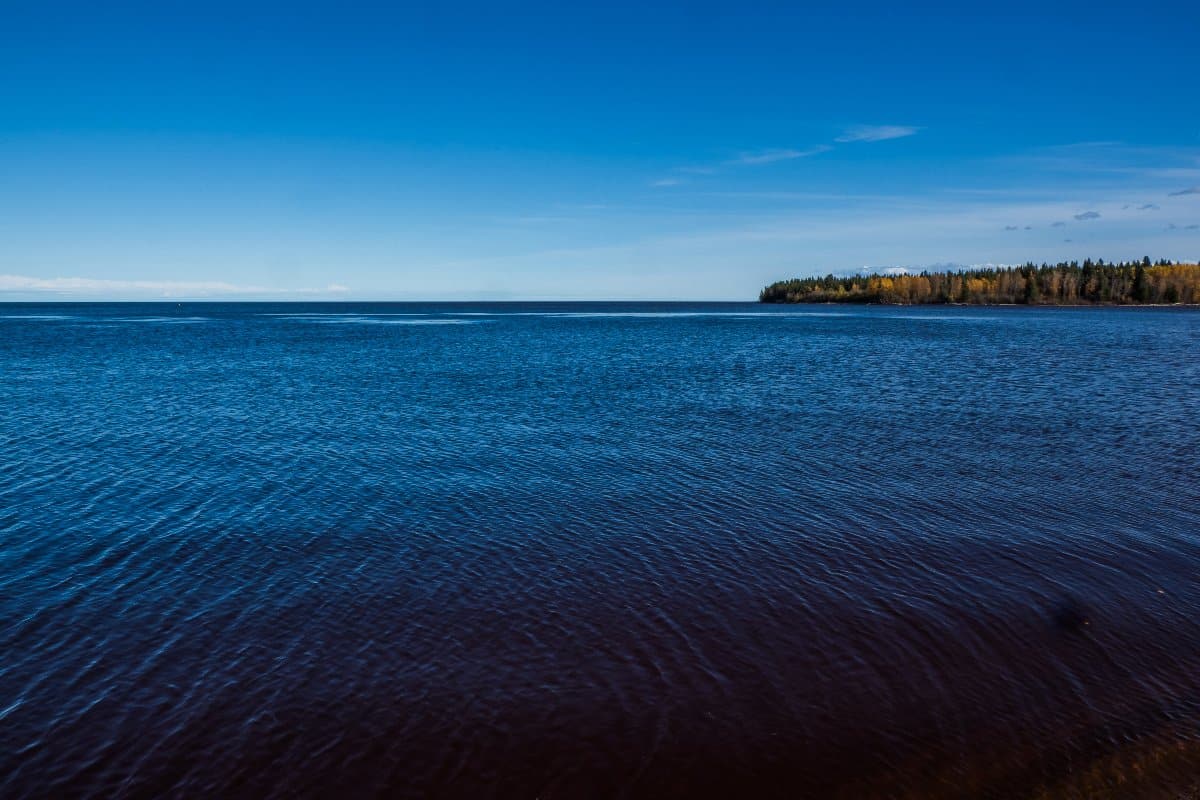
Lake Winnipeg, located in Manitoba, Canada, is a major recreational and commercial fishing hub. The lake is fed by several rivers, including the Red, Saskatchewan, and Winnipeg rivers, and drains via the Nelson River into Hudson Bay.
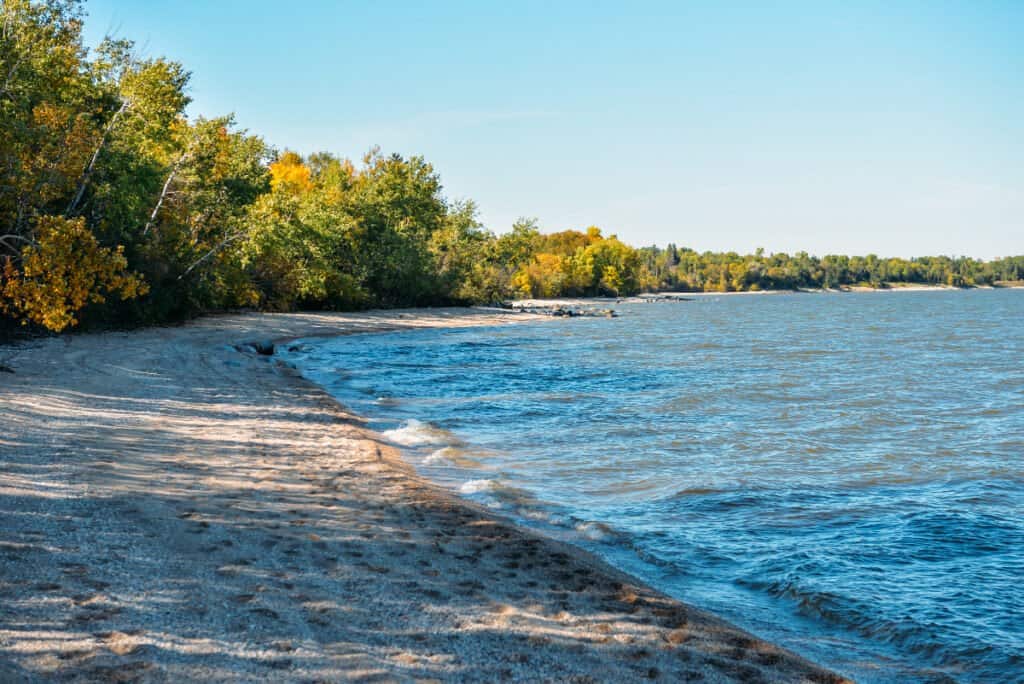
Lake Winnipeg features numerous sandy beaches and scenic spots.
©lastdjedai/Shutterstock.com
| Area | Length | Depth | Volume |
| 24,514 km2 9,465 sq mi | 425 km 264 mi | 36 m 118 ft | 283 km3 68 cu mi |
Lake Winnipeg is a significant tourist destination, known for its extensive white sand beaches and popular summer activities like swimming, sailing, and boating, along with renowned fishing for walleye and perch.
10. Lake Erie
Located on the border of the United States and Canada, Lake Erie is the smallest by volume and warmest of the Laurentian Great Lakes.
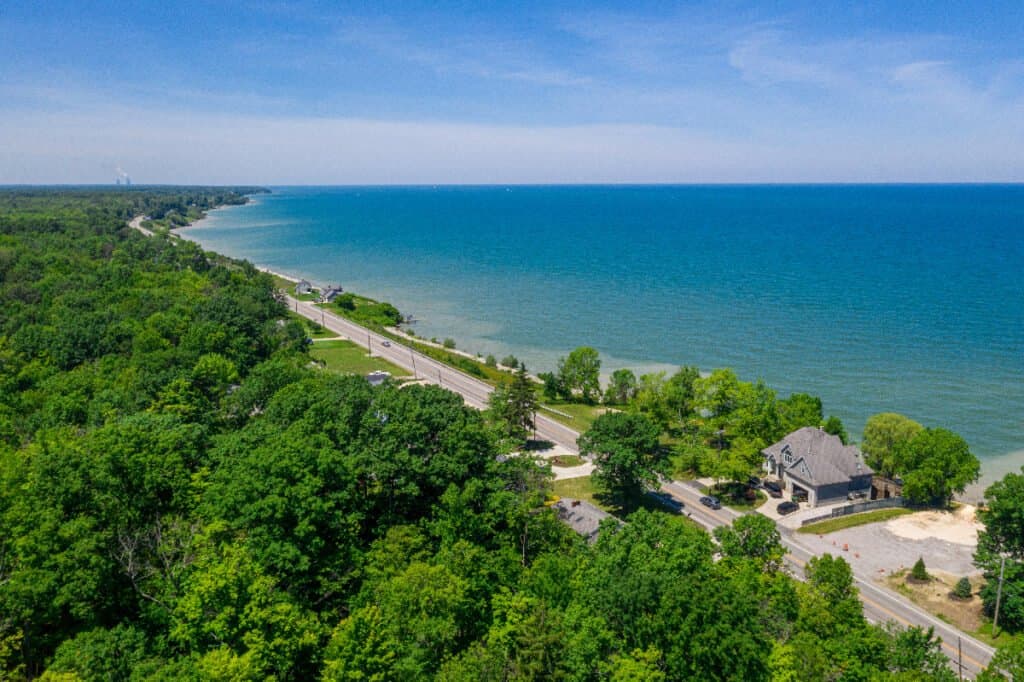
Due to its shallow depth, Lake Erie experiences rough waters, resulting in the highest concentration of shipwrecks in the Great Lakes.
©IanSkylake17/Shutterstock.com
| Area | Length | Depth | Volume |
| 25,700 km2 9,900 sq mi | 388 km 241 mi | 64 m 210 ft | 489 km3 117 cu mi |
Lake Erie is one of the busiest inland waterways in the world. It serves as a major shipping lane with high traffic, supports the most valuable freshwater fishery in the world, and is heavily used by recreational boaters.
9. Great Slave Lake
At 2,014 feet, Great Slave Lake is the deepest lake in North America. Located in the Northwest Territories of Canada, the lake is popular for both commercial and sport fishing. Great Slave Lake is also an essential transportation corridor and a hub for historic and modern mining, particularly for diamonds and gold.
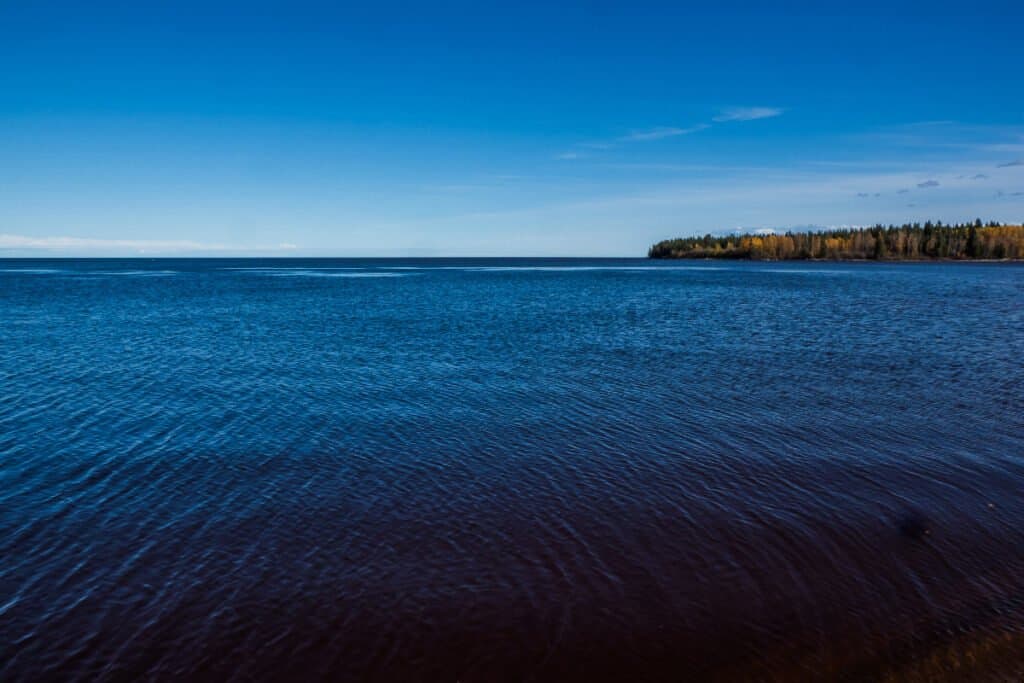
Historically, the area around Great Slave Lake was inhabited by the Cree, who enslaved the Dene people; this history is reflected in the lake’s present-day name.
©norikko/Shutterstock.com
| Area | Length | Depth | Volume |
| 27,000 km2 10,000 sq mi | 480 km 300 mi | 614 m 2,014 ft | 1,560 km3 370 cu mi |
8. Lake Malawi
Lake Malawi, also known as Lake Nyasa or Lake Niassa, is a massive African Great Lake, situated in the East African Rift Valley between Malawi, Mozambique, and Tanzania. Known for its immense biodiversity, it hosts over 1,000 cichlid fish species, and acts as a crucial economic hub for fishing, transportation, and tourism.
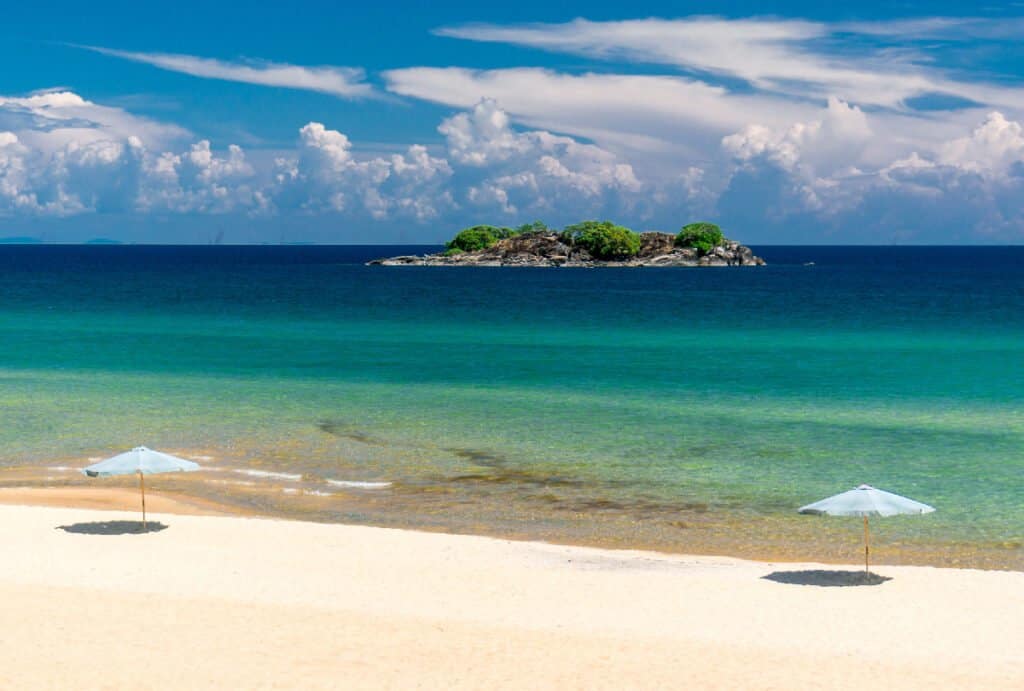
Lake Malawi has more species of fish than any other lake in the world.
©Scott Biales DitchTheMap/Shutterstock.com
| Area | Length | Depth | Volume |
| 29,500 km2 11,400 sq mi | 579 km 360 mi | 706 m 2,316 ft | 8,400 km3 2,000 cu mi |
Lake Malawi is suffering from overfishing, plastic pollution, climate change-driven water level changes, and agricultural sedimentation resulting from fertilizer and pesticide runoff.
7. Great Bear Lake
Located in the Northwest Territories near the Arctic Circle, Great Bear Lake is the largest lake located entirely within Canada. Due to its remote location, it is largely untouched and considered one of the most pristine lakes in the world.
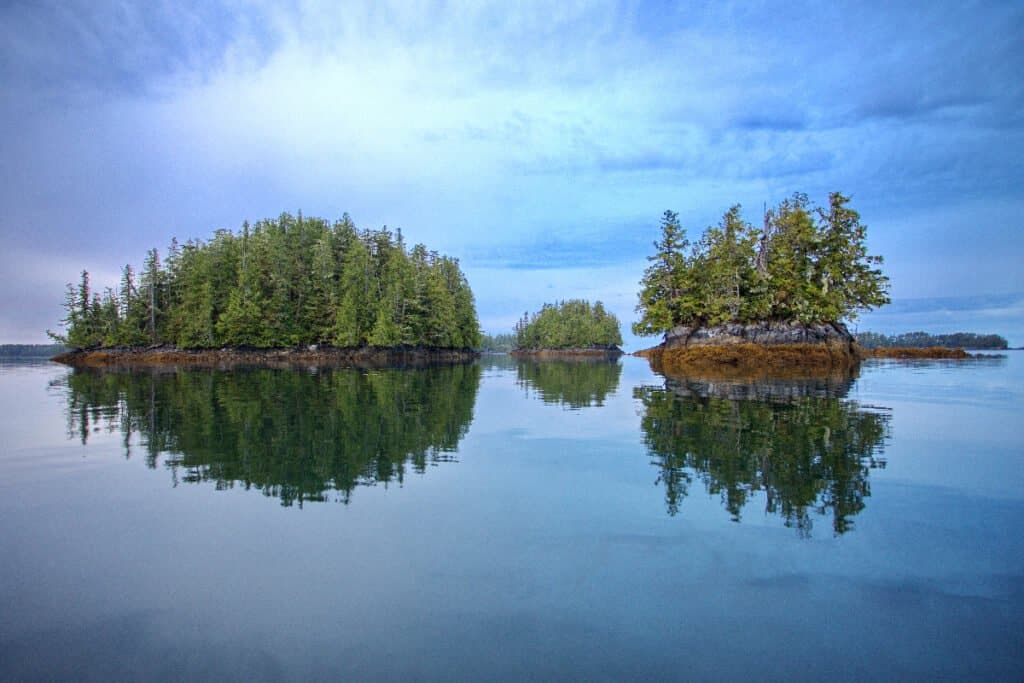
Great Bear Lake is extremely remote, with limited accessibility.
©Kevin Lings/Shutterstock.com
| Area | Length | Depth | Volume |
| 31,000 km2 12,000 sq mi | 373 km 232 mi | 446 m 1,463 ft | 2,236 km3 536 cu mi |
Commercial fishing is prohibited on Great Bear Lake, and sport fishing is heavily regulated as a catch-and-release undertaking.
6. Lake Baikal
Located in Southern Siberia, Lake Baikal is the world’s oldest and deepest freshwater lake, and it is continuing to grow. The lake was formed millions of years ago by tectonic activity within the Baikal rift valley, in which the Earth’s crust separates. The Baikal rift is seismically active, with thousands of small tremors occurring annually, deepening and widening the lake.
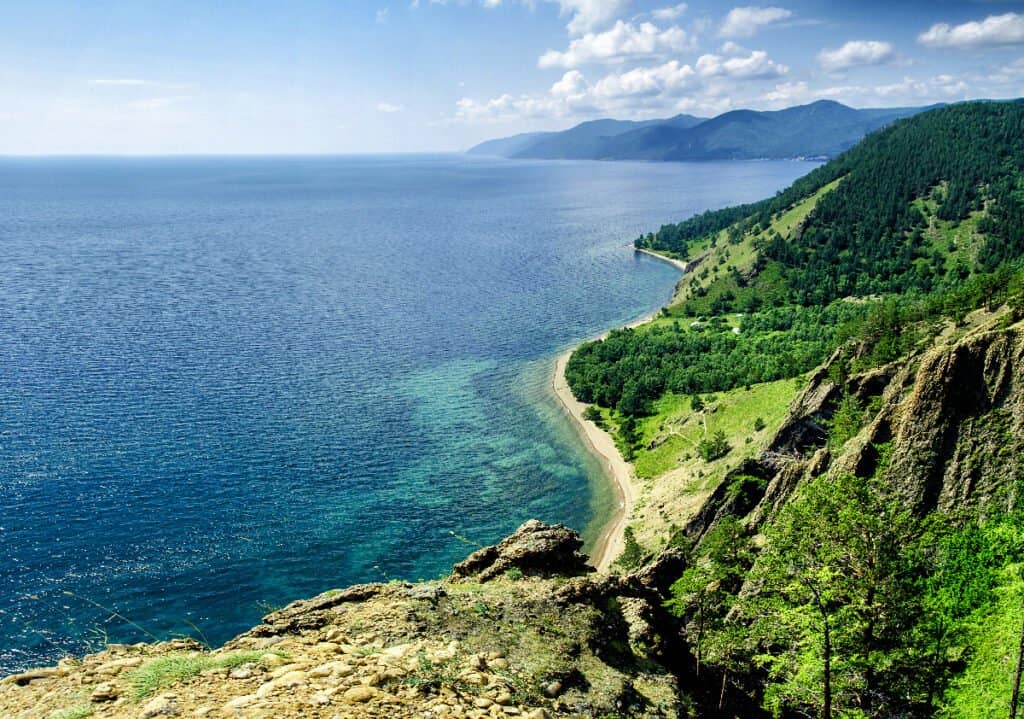
Lake Baikal is the deepest lake in the world
©Julia Kuzenkova/Shutterstock.com
| Area | Length | Depth | Volume |
| 31,500 km2 12,200 sq mi | 636 km 395 mi | 1,637 m 5,387 ft | 23,600 km3 5,700 cu mi |
Lake Baikal supports millions of tourists annually for summer hiking and winter ice adventures. The lake contains 15 commercially exploited fish species, the most notable of which is the endemic Omul. However, restrictions have been introduced to prevent its depletion.
5. Lake Tanganyika
Lake Tanganyika is the second-largest freshwater lake by volume, only holding less water than Lake Baikal. It is also the world’s longest freshwater lake. The lake, located in Tanzania, Burundi, the Democratic Republic of the Congo, and Zambia is over 400 miles long.
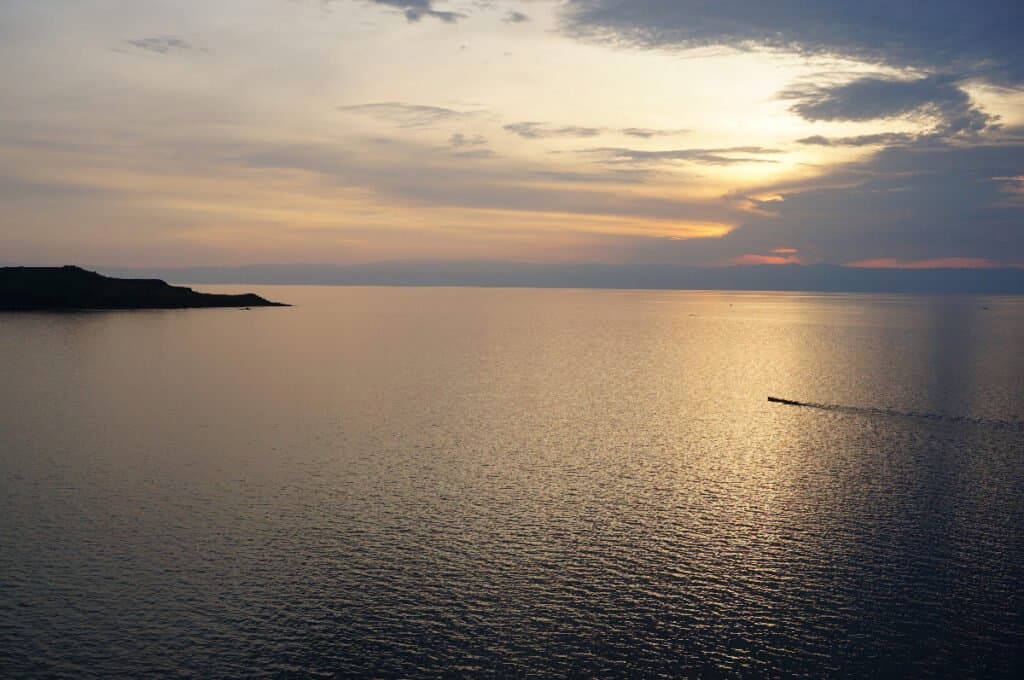
Lake Tanganyika is the world’s longest freshwater lake, and it has shorelines in four countries
©Naoki Kakuta/Shutterstock.com
| Area | Length | Depth | Volume |
| 32,600 km2 12,600 sq mi | 676 km 420 mi | 1,470 m 4,820 ft | 18,900 km3 4,500 cu mi |
Lake Tanganyika is home to over 250 cichlid species, making it a hotspot for snorkeling and diving.
4. Lake Michigan
Lake Michigan is the third-largest Great Lake by surface area and the only one located entirely within the United States. Bordered by Michigan, Indiana, Illinois, and Wisconsin, Lake Michigan was formed by glaciers 10,000 to 14,000 years ago, when the Laurentide ice sheet retreated northward, leaving behind vast amounts of meltwater that filled deep basins carved by the glacier’s weight.
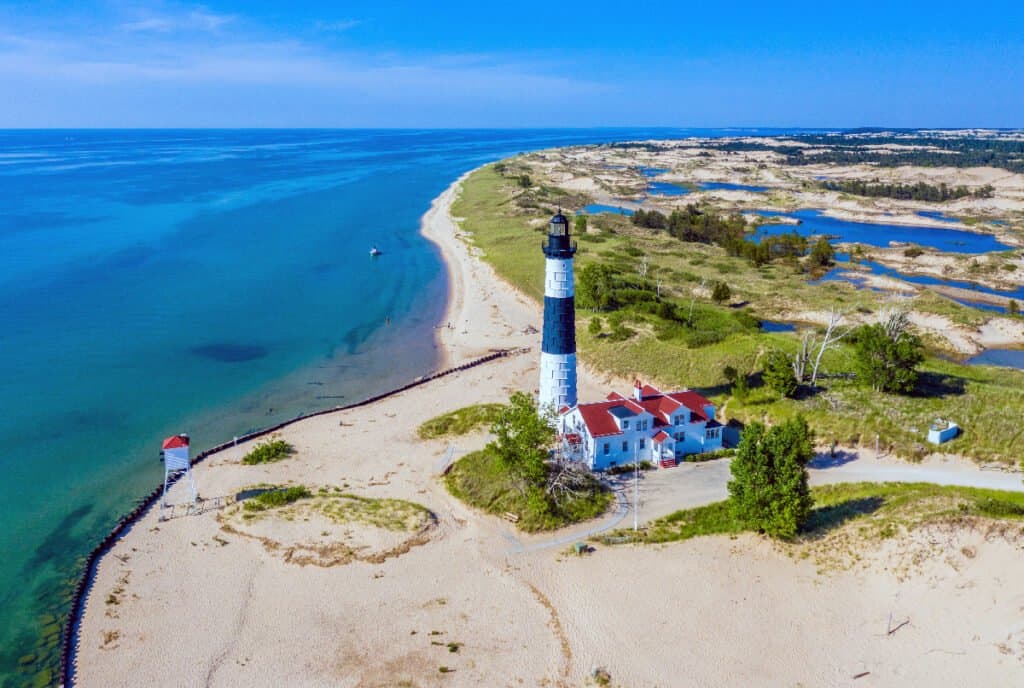
Lake Michigan is the largest lake located entirely within the United States.
©Frederick Millett/Shutterstock.com
| Area | Length | Depth | Volume |
| 58,000 km2 22,000 sq mi | 494 km 307 mi | 281 m 922 ft | 4,900 km3 1,200 cu mi |
Lake Michigan provides drinking water for millions of people, supports industrial transportation, and is a popular destination for tourism and fishing.
3. Lake Huron
Lake Michigan and Lake Huron are actually a single body of water known as Lake Michigan-Huron. Joined by the wide and deep Straits of Mackinac, they share the same surface elevation and constantly exchange water, functioning as one lake rather than two separate ones.
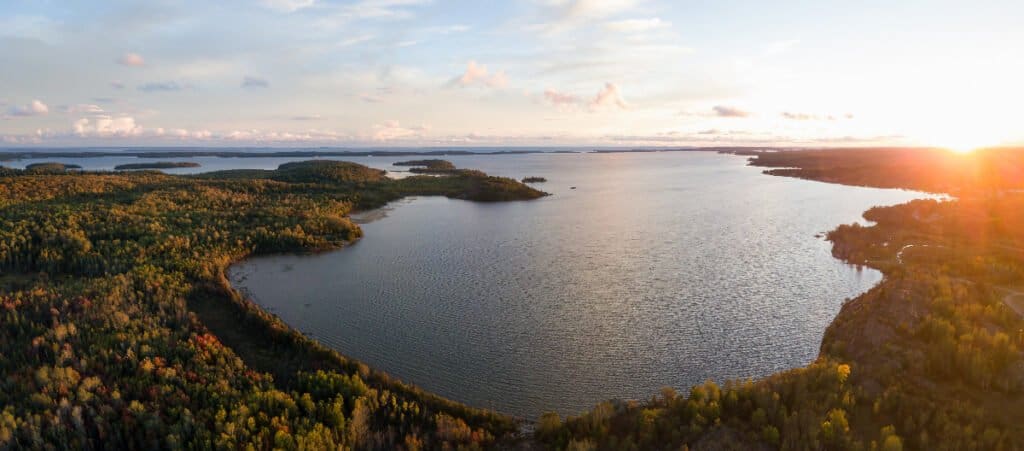
Lake Huron is known for its rough waters, which have contributed to over a thousand shipwrecks concealed in its depths.
©EB Adventure Photography/Shutterstock.com
| Area | Length | Depth | Volume |
| 59,600 km2 23,000 sq mi | 332 km 206 mi | 229 m 751 ft | 3,540 km3 850 cu mi |
Lake Huron is the second-largest Great Lake by surface area and possesses the longest shoreline of all Great Lakes. Bordered by Michigan and Ontario, it is known for its sandy beaches and numerous shipwrecks. Lake Huron was the first of the Laurentian Great Lakes to be explored by Europeans.
2. Lake Victoria
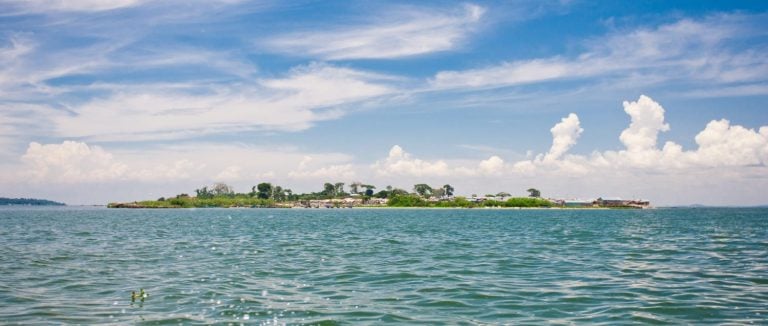
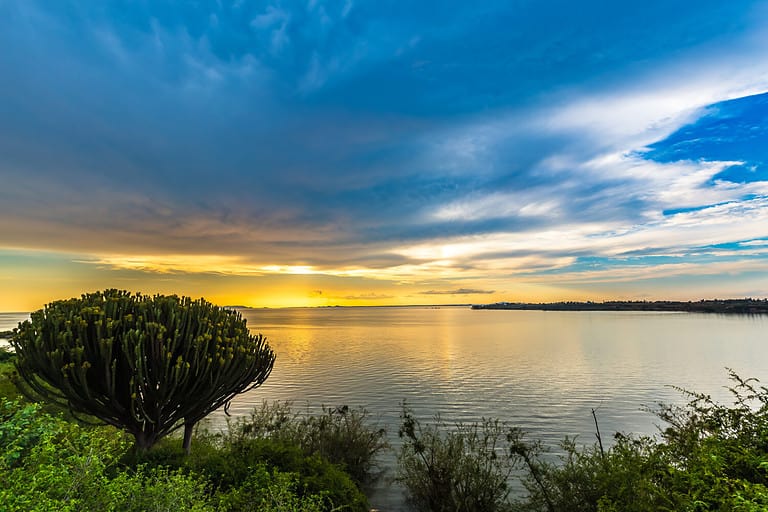
Located in Kenya, Uganda, and Tanzania, Lake Victoria is the largest lake in Africa. Although it is shallow compared to many of the world’s largest lakes, it still holds a massive volume of water, acting as a crucial reservoir for the Nile River and supporting the livelihoods of over 30 million people in the surrounding region.
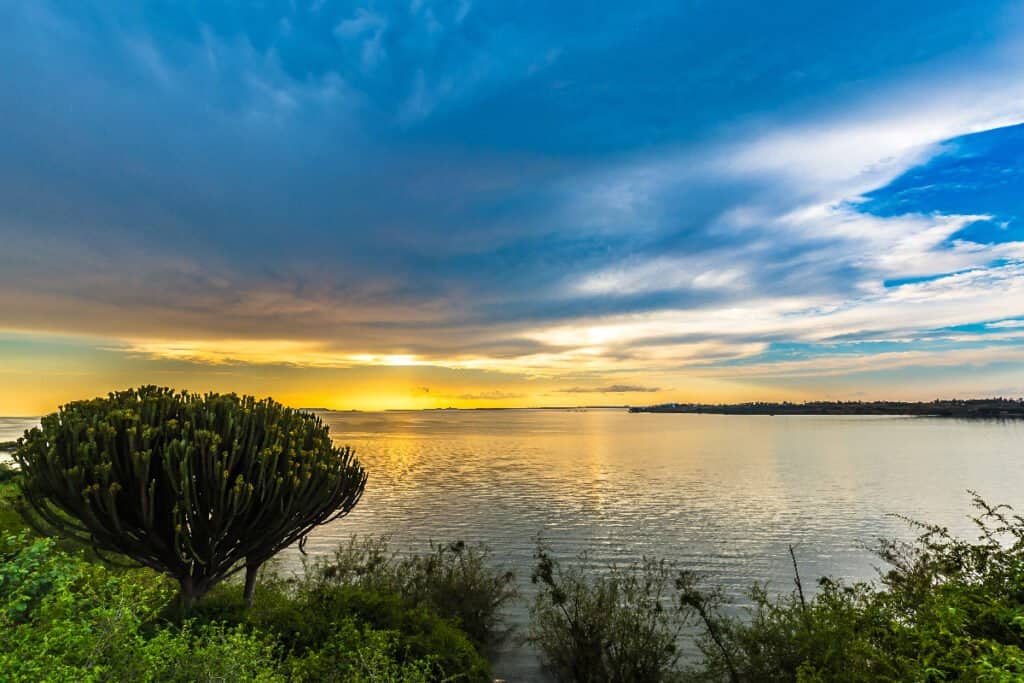
The equator passes through the northern part of Lake Victoria.
©Stefan Haider/Shutterstock.com
| Area | Length | Depth | Volume |
| 68,870 km2 26,590 sq mi | 322 km 200 mi | 84 m 276 ft | 2,750 km3 660 cu mi |
While the majority of the lake lies in the Southern hemisphere, the equatorial line crosses the northern section, splitting the lake between the Northern and Southern Hemispheres.
Climate change is causing extreme water temperature changes in Lake Victoria, triggering mass fish deaths (especially tilapia and Nile perch) through oxygen depletion and increased toxic algae blooms.
1. Lake Superior
Lake Superior is the largest freshwater lake in the world, covering over 31,000 square miles and boasting a depth of 1,300 feet. This Great Lake, shared by the United States and Canada, is a significant resource for transportation, fishing, and hydroelectric power, while holding roughly 10% of the world’s surface fresh water.
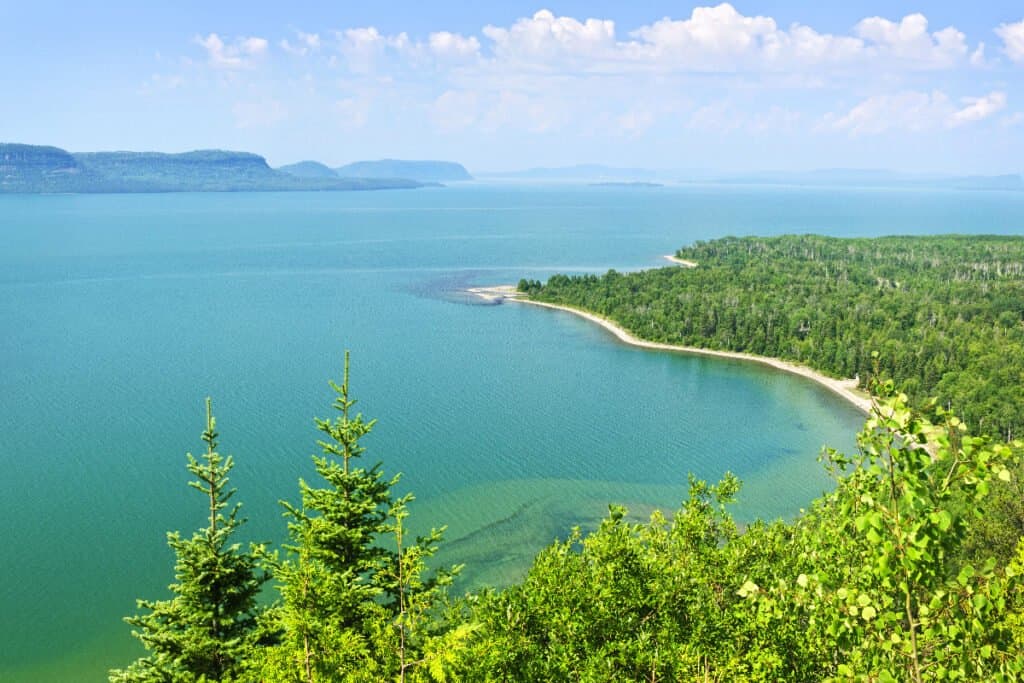
The largest freshwater lake in the world, Lake Superior, borders Canada and the United States.
©Elena Elisseeva/Shutterstock.com
| Area | Length | Depth | Volume |
| 82,100 km2 31,700 sq mi | 616 km 383 mi | 406 m 1,333 ft | 12,100 km3 2,900 cu mi |
Lake Superior contains over 80 species of fish. The lake also supports a major tourism industry centered on activities like kayaking, shoreline hiking, and fishing.