
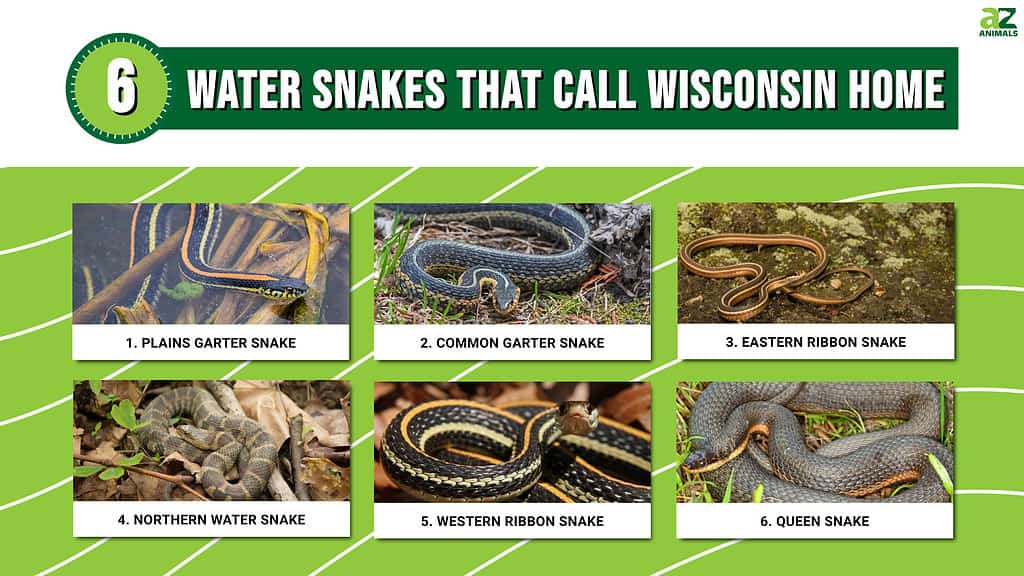
With borders that include the Montreal River, Lake Michigan, and Lake Superior, it’s easy to understand why Wisconsin has many diverse wetland habitats. Although there are many different animals that live in these habitats, some of the most fascinating are snakes. Wisconsin is home to 21 species of snakes and six of them are water snakes. So, let’s learn about the water snakes in Wisconsin and discover if any of them are dangerous!
1. Plains Garter Snake (Thamnophis radix)
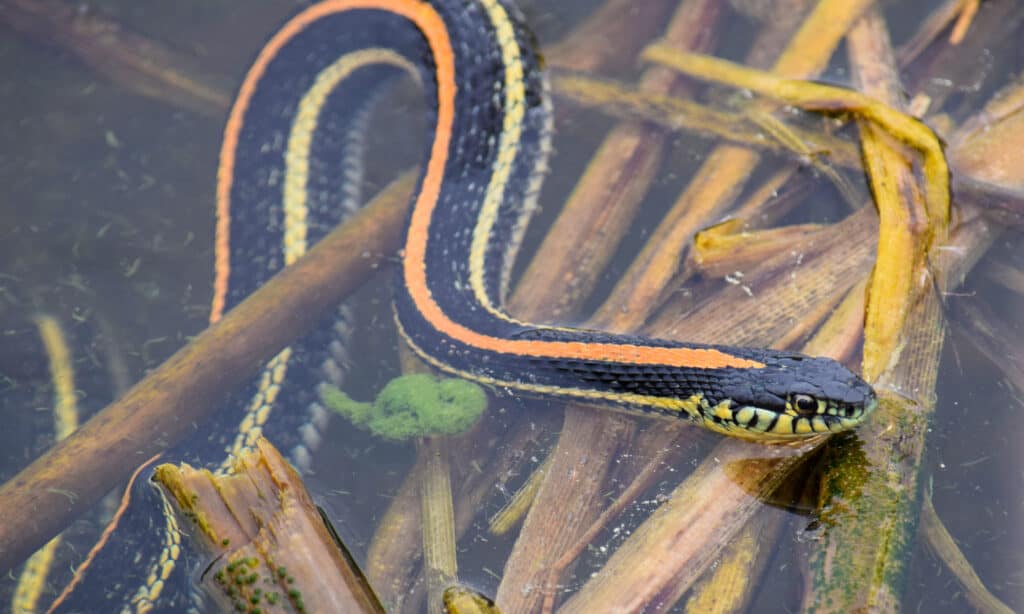
Plains garter snakes are a threatened species in Wisconsin.
©Alyssa Metro/Shutterstock.com
Occurring mainly in the southern region of the state, the plains garter snake is a species of special concern in Wisconsin. They range between 15 and 28 inches long and are greenish-brown to black with distinctive orange or yellow stripes. Plains garter snakes also have greenish-gray bellies with a row of dark spots. They live in moist areas such as stream edges and wet prairies and are active from the middle of March to the beginning of November. They eat a variety of amphibians, earthworms, and slugs. Plains garter snakes usually mate during the spring so the juveniles are born in July or August.
2. Common Garter Snake (Thamnophis sirtalis)
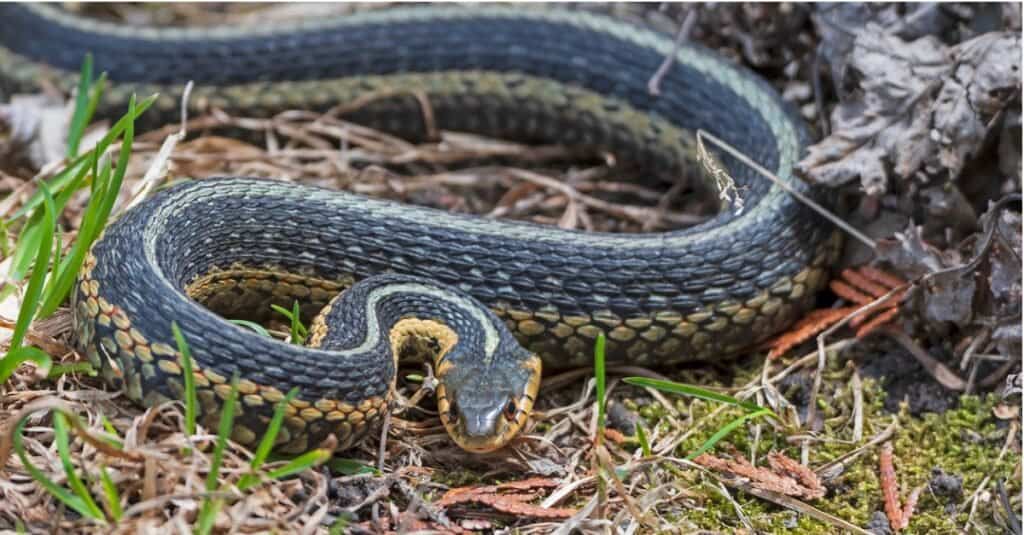
Common garter snakes are mildly venomous to their prey but are not dangerous to humans.
©iStock.com/Wildnerdpix
The next water snake in Wisconsin is another garter snake. Common garter snakes occur statewide and live in a variety of habitats, although they typically stay close to water. Such habitats can include the areas surrounding swamps, ponds, and streams. Common garter snakes are accomplished swimmers and prey mainly on frogs and toads, although they also eat a variety of fish, lizards, worms, and snails. These snakes are not dangerous to humans but they do contain a mild venom in their saliva which they chew into their prey. Common garter snakes are approximately 20 to 30 inches long. Their appearance varies depending on the subspecies but typically involves a dark body with three yellowish-colored stripes.
3. Eastern Ribbon Snake (Thamnophis saurita)
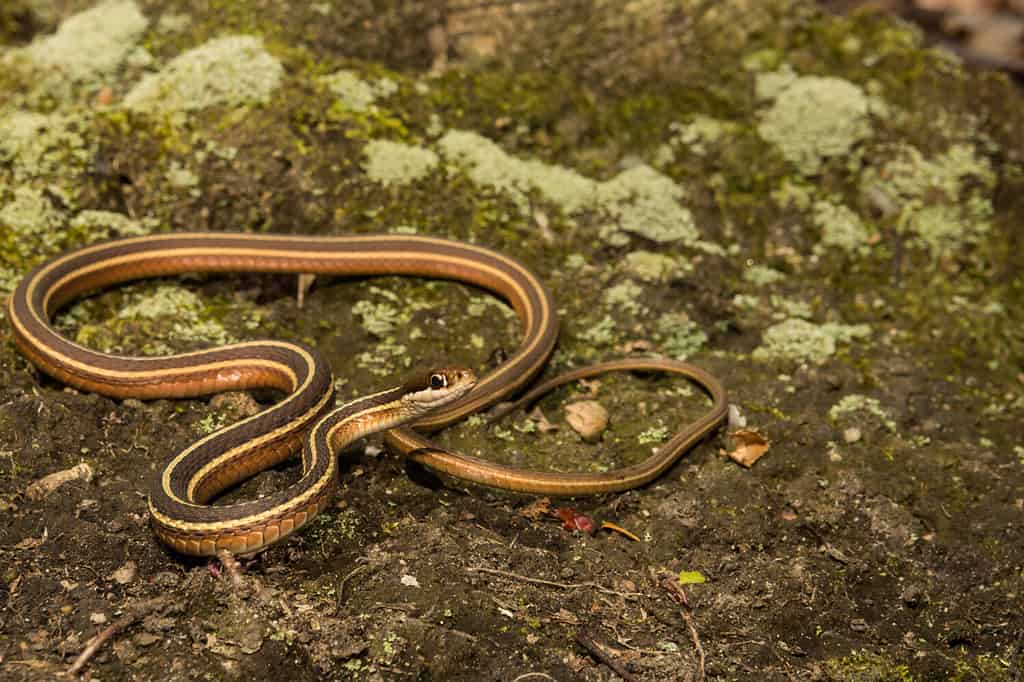
The eastern ribbon snake has a long tail which can be up to 40% of its total length.
©Jay Ondreicka/Shutterstock.com
Eastern ribbon snakes are approximately 18 to 36 inches long and have yellow stripes over a brown ground color. They also have a yellowish-colored belly and keeled dorsal scales. Eastern ribbon snakes also have particularly long tails which can make up around 40% of their entire length. They are a state-endangered species and only inhabit counties in the south and eastern regions. They typically live in the areas around swamps, streams, and rivers. Eastern ribbon snakes mainly eat amphibians, although they will also eat fish and insects.
4. Northern Water Snake (Nerodia sipedon)
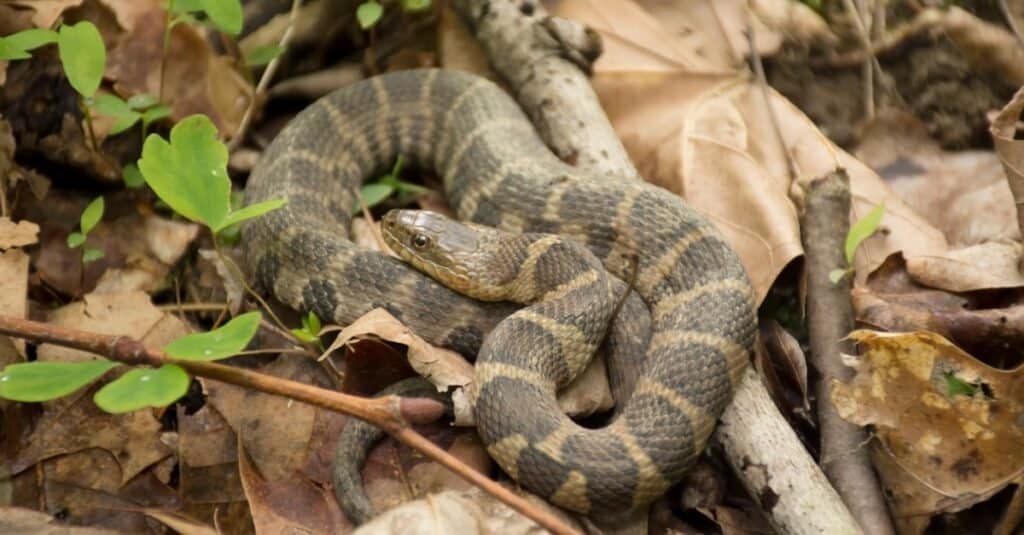
Northern water snakes live in most freshwater habitats across Wisconsin.
©iStock.com/IcemanJ
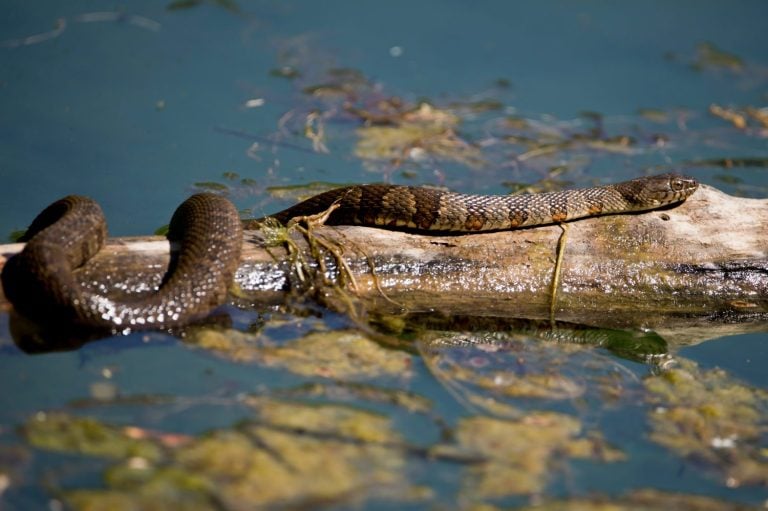
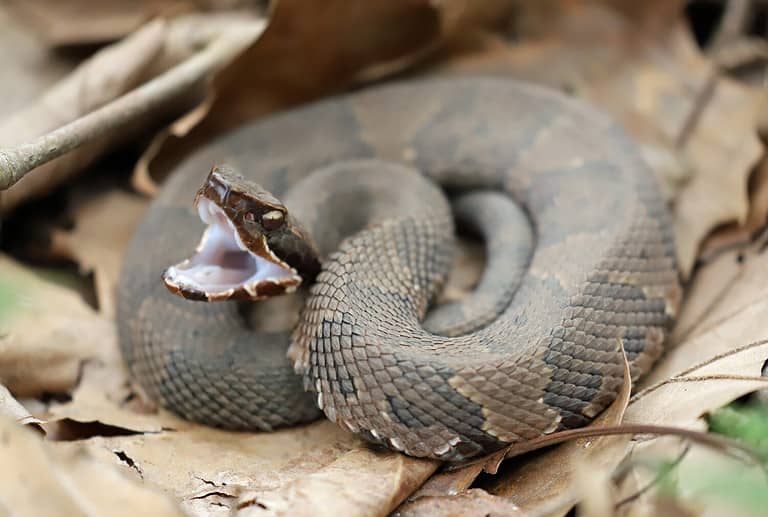
The only true water snake in Wisconsin is the northern water snake which occurs statewide. Northern water snakes are approximately five feet long and have powerful bodies. They are typically brown with dark brown to black markings. They have a series of crossbands that begin at their neck but then become blotches as they travel further down the body. Northern water snakes inhabit most freshwater habitats and prey on a variety of fish. They also sometimes eat frogs, birds, rodents, turtles, and salamanders. Although cottonmouths do not occur in Wisconsin, northern water snakes are the snakes that are most commonly misidentified as them in areas where they share the same range.
5. Western Ribbon Snake (Thamnophis proximus)
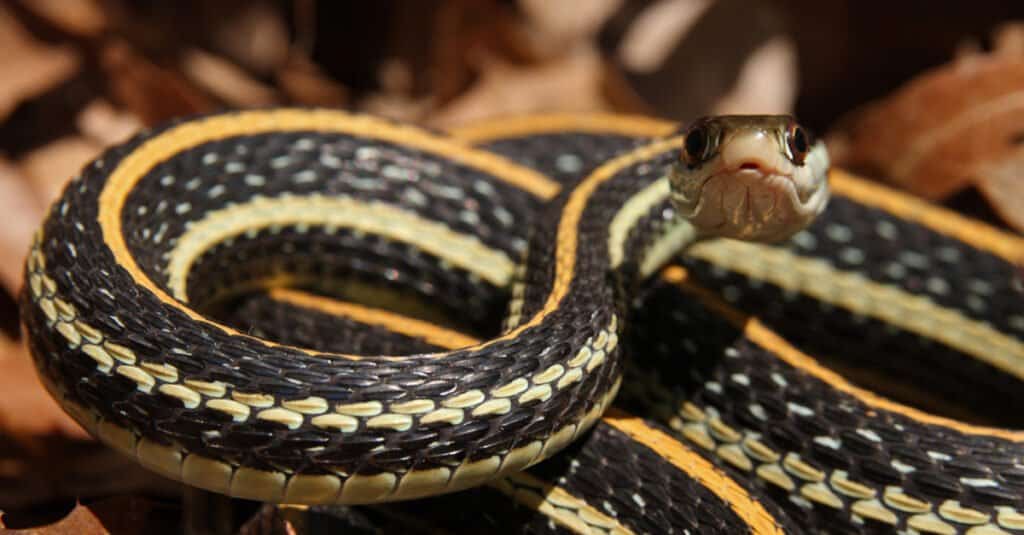
Western ribbon snakes typically live close to swamps and streams.
©Ryan M. Bolton/Shutterstock.com
The next snake is the western ribbon snake which is a state-endangered species. They only live in scattered locations across the state, although these are mainly centered in the southeastern region. Western ribbon snakes almost always live close to aquatic locations, such as swamps, ponds, and streams. They also inhabit wet meadows and wet woodlands. Western ribbon snakes are typically 20 to 30 inches long, although specimens as long as 42 inches have been observed. They are usually black or dark brown with a white belly. However, they also have an orange stripe down their back and a yellow-to-cream stripe along each side.
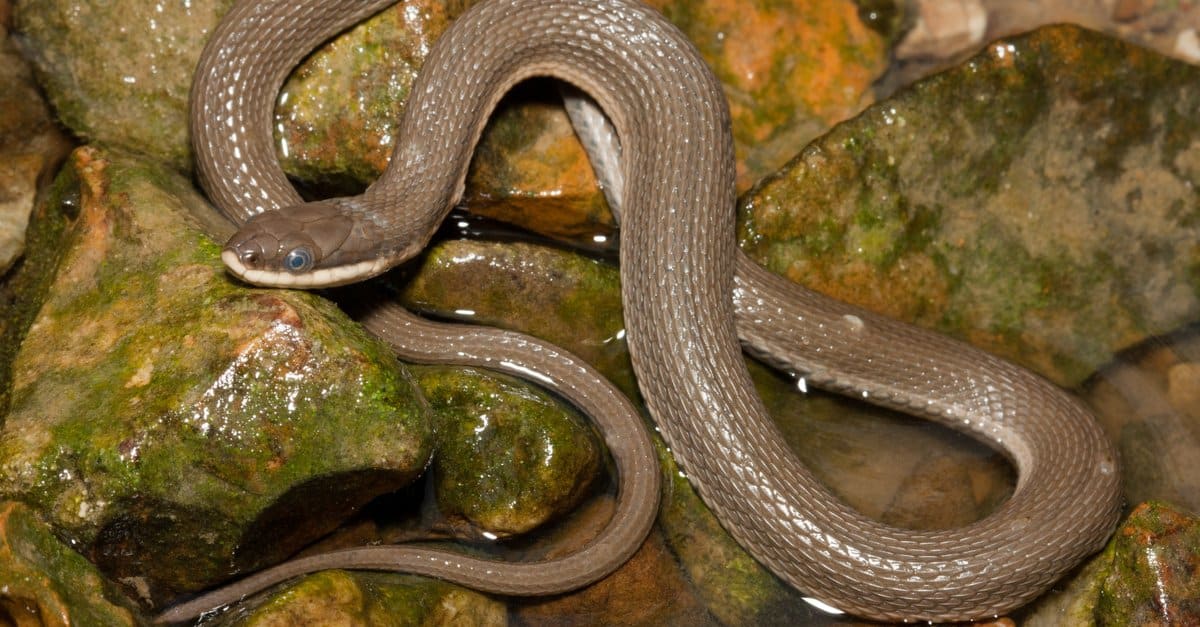
6. Queen Snake (Regina septemvittata)
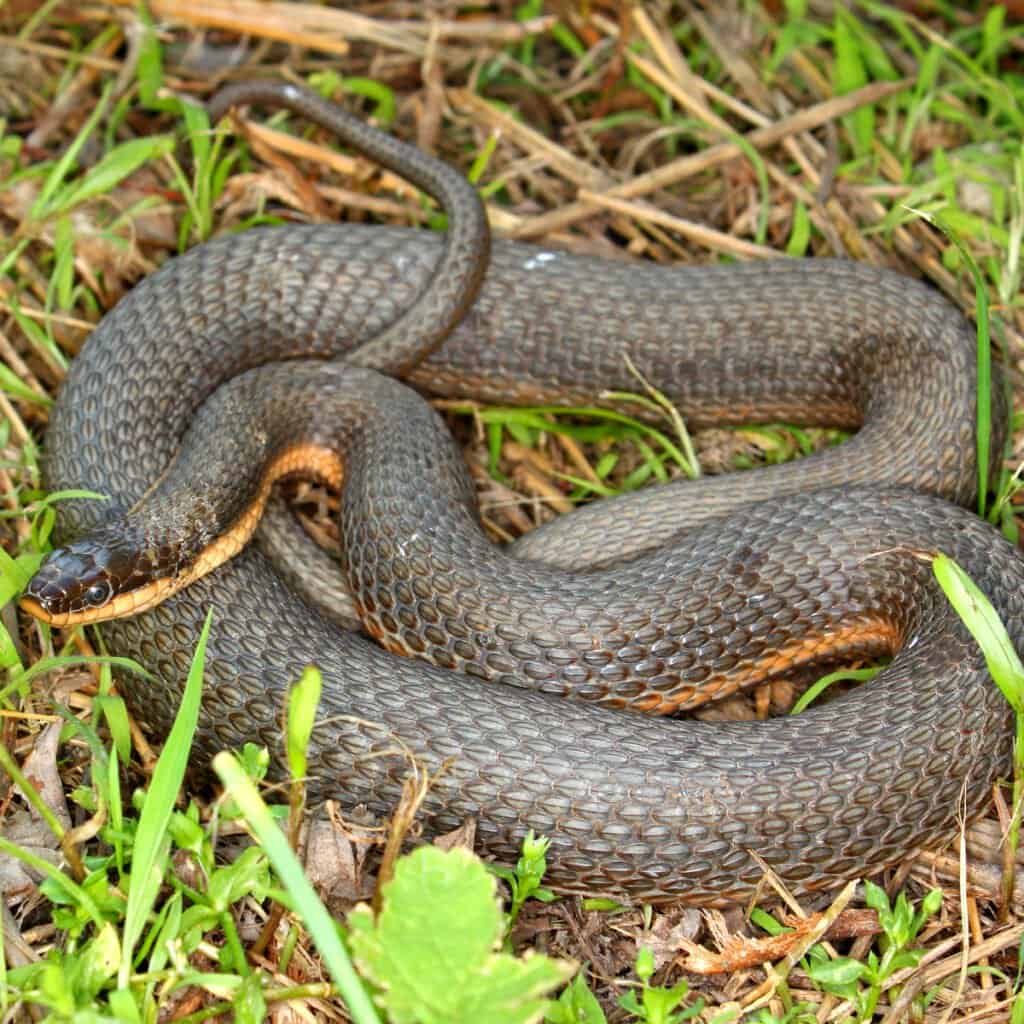
Queen snakes have large scales on their head and chin to protect them while hunting in rocky-bottomed streams.
©Jason Patrick Ross/Shutterstock.com
The final snake on our list today is the queen snake which is another state-endangered species. Queen snakes only occur in the far southeast corner of the state where they inhabit shallow, rocky-bottomed streams. Queen snakes have slender bodies with narrow, flattened heads. They also have large scales on the top of their head and underneath their chin to protect them when they are hunting between the rocks for prey. They are 15 to 24 inches long and have brown bodies with yellow bellies as well as several dark brown stripes. Queen snakes are not venomous and prey almost exclusively on freshly molted crayfish.
Summary of 6 Water Snakes That Call Wisconsin Home
| Name | Length in Inches | Diet |
|---|---|---|
| Plains Garter Snake | 15-18 | Amphibians, earthworms, and slugs. |
| Common Garter Snake | 20-30 | Mainly frogs and toads, but also fish, lizards, worms, and snails. |
| Eastern Ribbon Snake | 18-36 | Mainly amphibians, but also fish and insects. |
| Northern Water Snake | 60 | A variety of fish and sometimes frogs, birds, rodents, turtles, and salamanders. |
| Western Ribbon Snake | 20-30+ | Frogs, toads, tadpoles, small fish, spiders, earthworms, and newts. |
| Queen Snake | 15-24 | Freshly molted crayfish. |