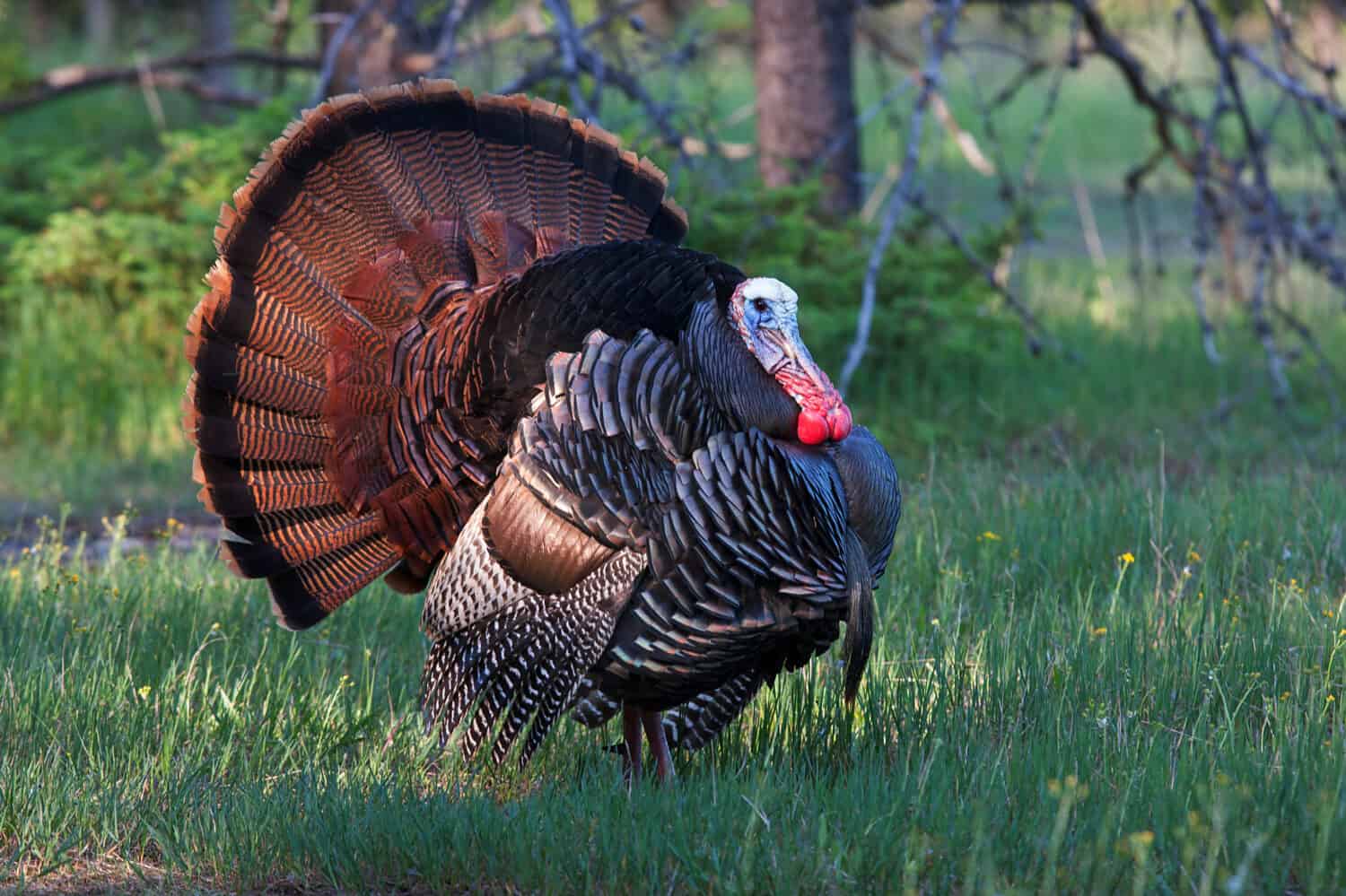

Like most states, turkey hunting in Georgia involves following several regulations. For instance, you can only hunt during certain times of the year, and you may only take so many turkeys each season. There are also licensing requirements and specific gear regulations to consider.
However, turkey hunting in Georgia is surprisingly simple, especially compared to some other states. While there are many regulations you need to consider, many of these are very straightforward.
Turkey Season Timing in Georgia
Unlike other states, Georgia only has a spring turkey season. They do not allow hunting turkeys in the fall like most surrounding states.
The spring turkey season in Georgia typically starts in late March or early April, depending on the exact year. It runs until May, providing a few short weeks for hunting.
Spring is the breeding season for turkeys. The males are trying to call females, so they are often very active and vocal during this season. Therefore, spring is the best time to bag a mature gobbler.
License Requirements
To hunt legally in Georgia, you need a hunting license. This fact is true for hunting practically any animal, including turkeys. Luckily, you only have to purchase a license once a year – no matter how many times you go hunting.
Resident hunters can purchase a license for cheaper than non-resident hunters. Youth hunters (under 16) and older hunters may get further discounts.
Those who are active-duty in the military and stationed in Georgia may also be eligible for savings, depending on the exact circumstances.
A Georgia Big Game License is also required. This license costs $10 for residents and $25 for nonresidents. This license allows you to hunt turkeys and other big game, specifically.
Depending on exactly how you plan to hunt, you may need to purchase more licenses or stamps. For instance, hunting in some public areas requires an additional license to be purchased. You may also need one for archery.
You can purchase a license through several different channels. For instance, you can purchase them online through the Georgia Department of Natural Resources website or another authorized vendor. You can also go to a department office or purchase a license in person at an authorized vendor.
When purchasing a license, be sure to have your identification and any other certificates needed to complete your purchase.
Turkey Bag Limits in Georgia
Georgia only allows hunters to take a certain number of turkeys each season. This regulation helps ensure the turkey population remains stable and sustainable for decades to come. It’s important to follow these bag limits closely.
That said, bag limits can be a bit complicated. They vary based on the location. Furthermore, bag limits can change over time as more information about the turkey population becomes available.
In spring, hunters are typically only allowed to harvest one to two gobblers. Females are focused on nesting and caring for their young, so bagging them is prohibited. The exact number of gobblers can depend on the year and location, so be sure to check before you hit the field.
Usually, you’re allowed to take two gobblers total, but only one at once. Furthermore, you can only take one per area. To get the second, you must travel to a different area to prevent overhunting.
Georgia’s turkey population has been declining over the years. Therefore, they are starting to reduce bag limits and shorten the hunting season.
Tagging and Reporting
Right after taking a turkey, you must fill out your harvest record with the date and location of the kill. Then, you must report the turkey online within 24 hours. You can enter the information through the state’s app or by calling 1-800-366-2661 at the kill site.
Even if you don’t have service, reporting the information on the app will allow it to sync and send the information when service becomes available.
If you don’t have the app, you can report the kill online within 24 hours. Be sure to copy your confirmation number and place it on your Harvest Record.
Legal Hunting Hours and Restrictions
Legal hunting hours during hunting season usually begin at sunrise and end at sunset. It’s important to check the state’s official hours and not only rely on your eyesight when hunting around sunrise and sunset.
Some areas may have other regulations, as well. For instance, some public areas may have shorter hunting hours.
Hunting Methods and Gear
Georgia allows you to use various hunting methods and gear when taking turkeys. Turkey calling is one of the most common methods, as it attracts turkeys readily in the spring. Some hunters also use decoys when hunting, as these can help lure in toms. However, proper placement is important. It’s something that you have to practice with.
Scouting is also vital for spring turkey hunting. You need to understand turkey habits, roosting sites, and feeding areas.
You can also use various different weapons when hunting turkeys. Use shotguns with No. 2 or smaller shot, any muzzleloading firearm, and any air rifle of at least .30 caliber. You can also use an air bow that utilizes unignited compressed gas or air.
When hunting turkey, hunters aren’t required to plug shotguns.
Popular Places for Turkey Hunting in Georgia
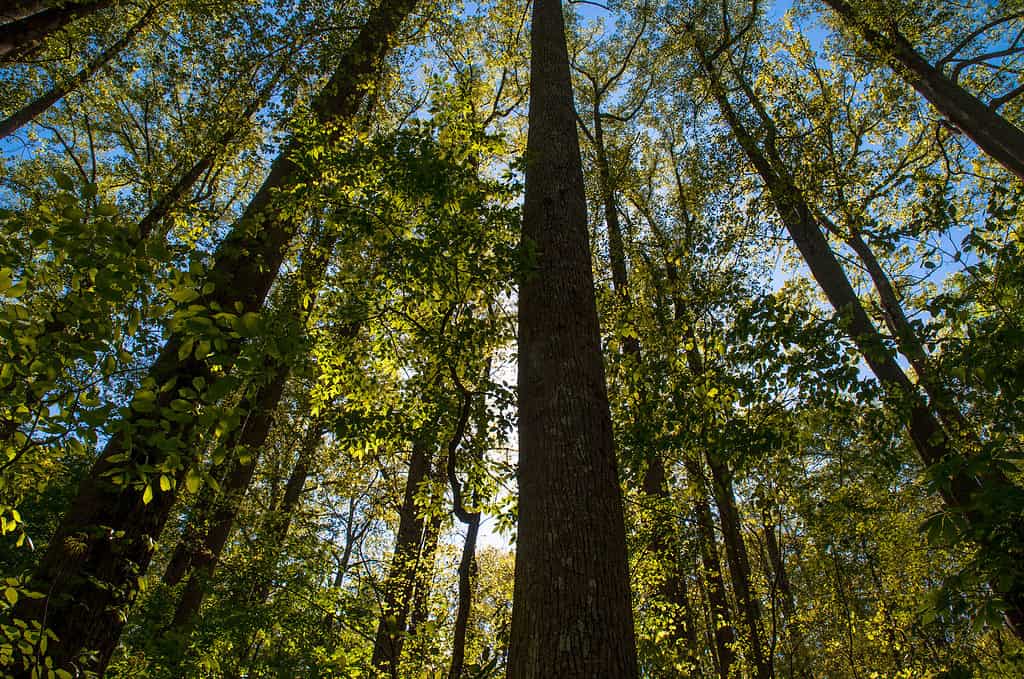
The Chattahoochee National Forest is a popular place to hunt, but the dense forest can make it challenging to find a suitable hunting spot.
Georgia is home to many public areas that can be utilized for turkey hunting. However, some spots are more popular than others, largely because they have more turkeys in them. Remember, if you want to bag two gobblers, you have to take them from different areas.
Chattahoochee National Forest
This forest is located in northern Georgia and offers tons of wilderness and turkey habitat. Therefore, it often has a high reproductive rate that allows for more successful turkey hunting.
The terrain can be very dense and challenging, though. It isn’t the best option for all hunters.
Oconee National Forest
In central Georgia, the Oconee National Forest provides some successful hunting grounds for wild turkeys. This national forest is known for its wildlife diversity, making it a pretty successful place to hunt turkey.
There is a mix of hardwoods, pines, and open areas. Therefore, it is a popular area for turkeys. This forest is popular with both beginners and experienced hunters, as there are often many opportunities to take a turkey.
Piedmont National Wildlife Refuge
Located in the heart of Georgia, the Piedmont National Wildlife Refuge offers managed turkey hunting opportunities. This refuge is known for its thriving turkey population. However, it has its own regulations that hunters have to follow that may make it a bit more challenging to successfully take a turkey.
Okefenokee National Wildlife Refuge
In the southern part of the state, many hunters like this national refuge. This wilderness area is quite swampy but is still home to many eastern wild turkeys. It’s a bit more challenging for hunters to move through the area, though.
In many cases, you must use boats to access prime turkey hunting locations. Many people love the ruralness of this area, but it isn’t as straightforward to hunt as other locations.
Private Lands
Many hunting clubs and private landowners in Georgia offer access to prime turkey hunting areas. If you own your own land, you can often hunt turkeys there, and this is often pretty straightforward. However, you can also ask local landowners for permission to hunt on their land.
In many cases, hunting clubs also own land that club members can hunt on. If you’re interested in investing in a membership or lease, utilizing private land can make for some very productive turkey hunting.
Public Wildlife Management Areas
Georgia’s Wildlife Management Areas are scattered across the state and offer many turkey hunting opportunities. These areas may or may not have a turkey population, as they tend to be less closely managed than national forests and other public lands.
These areas all have their own regulations, though. It’s important to ensure that turkey hunting is allowed and that you meet all other regulations.