H
Species Profile

Hare

Lepus

Built for speed, born ready
WildlifeWorld/Shutterstock.com

Hare Distribution

Click a location to explore more animals from that region

Invasive Species
Loading map...

Found in 89 countries

Size Comparison

Human 5'8"
Hare 11 in

Hare stands at 16% of average human height.

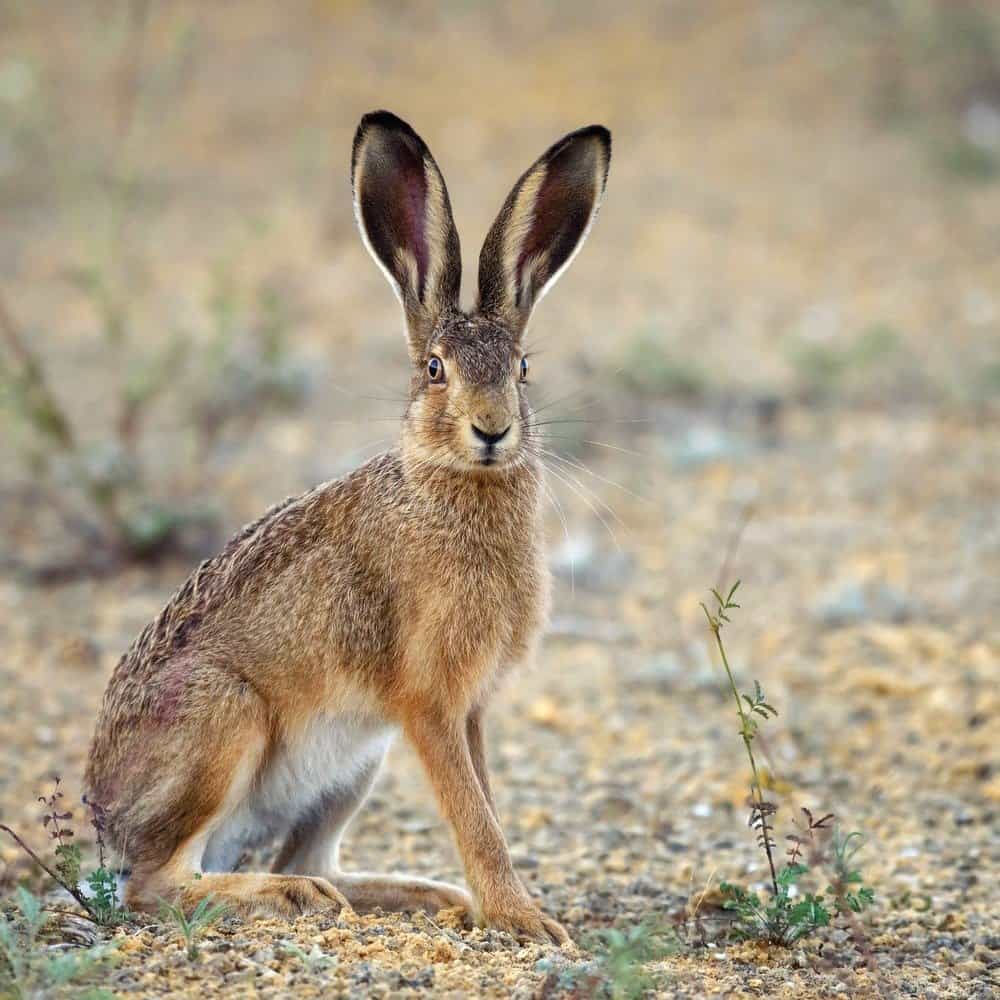
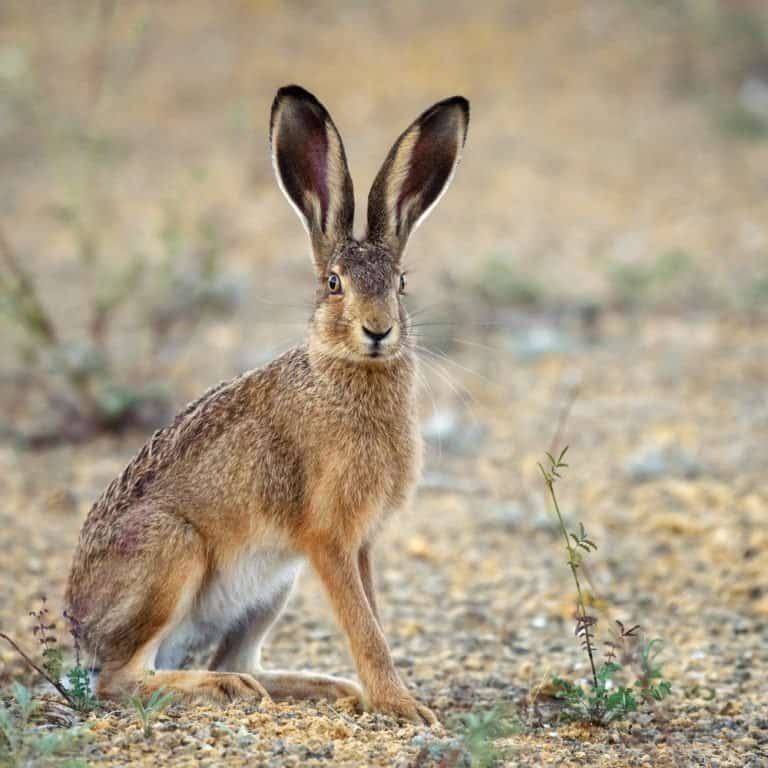
European hare sits on the ground

At a Glance

Genus Overview This page covers the Hare genus as a group. Stats below are general traits shared across the genus.
Also Known As Jackrabbit, Jackass rabbit, Leveret, Bunny, Rabbit
Diet Herbivore
Activity Crepuscular+
Lifespan 2.5 years
Weight 7 lbs
Status Not Evaluated
Did You Know?

"Jackrabbits" are not rabbits-most are hares in the genus Lepus.

Scientific Classification

Genus Overview "Hare" is not a single species but represents an entire genus containing multiple species.

Hares (genus Lepus) are fast-running lagomorph mammals closely related to rabbits. Compared with most rabbits, hares typically have longer ears and legs, are more adapted to open habitats, and their young (leverets) are usually born furred and with eyes open (precocial).

Kingdom
Animalia
Phylum
Chordata
Class
Mammalia
Order
Lagomorpha
Family
Leporidae
Genus
Lepus

Distinguishing Features

  • Long hind legs and powerful running ability; zig-zag escape behavior
  • Relatively long ears (often with dark tips in some species)
  • Precocial young (leverets) typically born above ground in shallow forms rather than burrows
  • Herbivorous diet; hindgut fermentation and coprophagy (re-ingesting soft feces) for nutrient extraction

Physical Measurements

Males and females differ in size

Height
1 ft 5 in (12 in – 1 ft 10 in)
Length
2 ft (1 ft 3 in – 2 ft 11 in)
2 ft 2 in (1 ft 5 in – 2 ft 11 in)
Weight
7 lbs (2 lbs – 15 lbs)
7 lbs (3 lbs – 15 lbs)
Tail Length
3 in (1 in – 5 in)
3 in (2 in – 5 in)
Top Speed
43 mph
Around 50-70 km/h

Appearance

Primary Colors
Secondary Colors
Skin Type Dense mammalian fur with seasonal molting; generally thick insulating underfur plus longer guard hairs. Ears are large with relatively thin, more sparsely furred skin compared with the body (enhancing heat exchange and hearing).
Distinctive Features
  • Lepus species range in size: body length about 40–75+ cm; weight about 1–7+ kg; ears about 7–17 cm long; hind feet about 10–20 cm, varying by species and environment.
  • Long hind limbs and elongated feet adapted for rapid acceleration and sustained running; many species are among the fastest lagomorphs in open habitats.
  • Long ears (often with darker/blackened tips or edges) that aid hearing and, in hot-climate species, thermoregulation; ear size tends to be larger in warmer/arid environments and smaller in cold climates (with exceptions).
  • Typically rest above ground in shallow depressions ("forms") rather than living in extensive burrow systems; reliance on cover and speed varies by habitat (more open-country species emphasize sprinting/zig-zag escape).
  • Precocial young (leverets) are generally born furred with eyes open and are relatively mobile early; exact litter size, number of litters per year, and timing vary widely by latitude and local conditions.
  • Behavior/ecology generalization: mostly crepuscular to nocturnal feeding, with daytime resting; some populations show more daytime activity in cooler seasons or low-disturbance areas.
  • Diet: strict herbivores-grasses, forbs, leaves, shoots; bark/twigs used more in winter or in arid/low-forage periods. Degree of browsing vs grazing varies by species and habitat.
  • Hares (Lepus) live in many habitats: tundra and alpine zones, boreal forest edges, temperate grasslands/steppes, Mediterranean scrub, deserts/semi-deserts, and agricultural mosaics. Some prefer shrubs or woodland edges.
  • Lifespan range across Lepus: commonly ~1-5 years in the wild (high juvenile predation), with documented maxima typically ~8-12+ years in favorable conditions and in captivity (varies by species and husbandry).
  • Seasonal coat change is present in many species; in several northern/high-altitude species the coat shifts to white in winter (degree of whitening can vary by region), whereas many temperate/arid species retain brown/gray coats year-round.
  • Tail usually short with contrasting upper vs underside; overall silhouette is long-limbed and "rangy" compared with most rabbits, reflecting less burrow dependence and stronger cursorial (running) specialization.

Sexual Dimorphism

Hares (Lepus) usually show little difference between males and females. Coat pattern and color look alike. If different, females are often a bit larger, and males may have visible testicles in the breeding season. Differences vary by species and place.

  • On average, slightly smaller in some species/populations (not universal).
  • Seasonal external testes/scrotal visibility during breeding periods; otherwise overall appearance closely matches females.
  • On average, slightly larger/heavier in some species/populations (not universal).
  • Nipples/teat condition may be more apparent in lactating females; otherwise external appearance closely matches males.

Did You Know?

"Jackrabbits" are not rabbits-most are hares in the genus Lepus.

Across the genus, adults range roughly from ~40-75 cm head-body length and about ~1-7 kg, depending on species and habitat.

Many hares rely on shallow "forms" (day beds) instead of burrows, using stillness and camouflage as a first defense.

Several northern species grow a white winter coat, timed by day length more than temperature.

Hares can run at very high speeds and evade predators with sudden zigzags and sharp turns rather than long, straight sprints.

Leverets (hare young) are typically born furred with eyes open, able to move shortly after birth-unlike most rabbits' altricial kits.

Male hares may "box" by springing upright and striking with forepaws, a behavior often seen during the breeding season.

Unique Adaptations

  • Elongated hind limbs and lightweight build for rapid acceleration and efficient running in open terrain.
  • Large ears that aid hearing and, in many warm-climate species, help shed heat (ear size varies with climate).
  • Wide-set eyes providing a broad field of view to detect predators while feeding.
  • Cryptic coats matched to local soils/vegetation; some species undergo seasonal color change to white for snow camouflage.
  • Precocial reproduction: leverets are relatively well-developed at birth, reducing reliance on burrows and enabling use of exposed habitats.
  • Powerful digestive strategy typical of lagomorphs (hindgut fermentation and re-ingestion of soft pellets) to extract more nutrients from fibrous plants.
  • Dense fur on feet in cold- or snow-adapted species improves insulation and traction; less developed in hotter, rocky habitats.

Interesting Behaviors

  • Crepuscular activity is common (dawn/dusk feeding), but timing varies by species, season, hunting pressure, and temperature.
  • "Forming": many species rest in a shallow scrape in grass or snow, relying on immobility until a last-moment dash.
  • Zigzag escape runs and sudden side-steps ("jinking") are typical anti-predator tactics; some open-country species favor longer chases.
  • Boxing and chasing bouts occur in breeding season; in some cases females strike persistent males, and males also spar.
  • Flexible diets: mostly grasses and herbs in greener seasons; many browse twigs, bark, and buds in winter or dry periods-diet breadth varies widely with habitat.
  • Social spacing is often loose rather than truly solitary: individuals may tolerate neighbors in good habitat but spread out when food is scarce.
  • Long-distance movements can occur where snow depth, drought, or cropping cycles shift food availability; other populations are strongly resident.

Cultural Significance

Hares (Lepus) have been hunted for food in parts of Europe, Asia, North America, and Africa. They appear in rural traditions like hare coursing and sayings (e.g., "mad as a March hare") and stand for speed, being alert, fertility, and spring.

Myths & Legends

The "Moon Hare" story appears worldwide: in Chinese tales the Jade Rabbit pounds an elixir of life on the Moon; in Japan a hare pounds mochi; in Mesoamerica a rabbit links to Quetzalcoatl.

In Celtic and British folklore, hares (Lepus) were linked to magic and change; stories say witches or shape-shifters turned into hares to slip away, so people treated hares with special caution.

Medieval and early modern European traditions sometimes viewed the hare as a liminal creature tied to spring and fertility; later popular culture retained this seasonal link in stories that connect hares with Eastertime imagery.

In Anishinaabe (Ojibwe) tradition, Nanabozho/Manabozho-often translated as the Great Hare-is a powerful culture hero and trickster whose adventures explain aspects of the world and teach moral lessons.

Southern and Central African folktales in several traditions feature a clever Hare as a trickster figure who outwits stronger animals through speed and cunning, a role comparable to other global trickster animals.

European literary tradition popularized the "March hare" as a symbol of springtime restlessness and chaotic energy; it appears in English proverb and later in Lewis Carroll's Mad Hatter's tea-party as the famously erratic March Hare.

Conservation Status

NE Not Evaluated (genus-level hub); constituent Lepus species span multiple categories (commonly LC, with some NT/VU and at least one EN, plus a few DD)

Has not yet been evaluated against the criteria.

Population Unknown

Protected Under

  • National and subnational wildlife/game laws regulating harvest and seasons (varies widely by country and species)
  • Protected-area networks (national parks, reserves) covering parts of many species' ranges
  • Species- or region-specific legal protection/recovery measures for threatened/endemic Lepus taxa in some jurisdictions

You might be looking for:

European hare

20%

Lepus europaeus

Large open-country hare native to Europe; introduced elsewhere; classic “hare” in much of Europe.

Snowshoe hare

20%

Lepus americanus

North American boreal-forest hare with seasonal white coat and oversized hind feet for snow.

View Profile

Arctic hare

15%

Lepus arcticus

High-Arctic hare adapted to tundra environments; thick fur and cold tolerance.

View Profile

Black-tailed jackrabbit

15%

Lepus californicus

Common western North American hare (“jackrabbit”); long ears, fast runner in open habitats.

Mountain hare

10%

Lepus timidus

Eurasian hare of uplands and northern regions; often turns white in winter.

Life Cycle

Birth 3 leverets
Lifespan 3 years

Lifespan

In the Wild
1–8 years
In Captivity
2–14 years

Reproduction

Mating System Polygynandry
Social Structure Solitary
Breeding Pattern Transient
Fertilization Internal Fertilization
Birth Type Internal_fertilization

Hares (Lepus) usually mate with many partners (polygynandry). They are solitary; mating is brief, with internal fertilization and induced ovulation. Males compete by chasing; mothers care for young and fathers do not.

Behavior & Ecology

Social Drove Group: 1
Activity Crepuscular, Nocturnal, Cathemeral, Diurnal
Diet Herbivore Tender, nutrient-rich green growth (fresh grasses and forbs) when seasonally available; many species shift to buds/twigs/bark in winter or during drought.

Temperament

Size diversity across Lepus: adults range roughly from ~0.7-7 kg in mass and ~35-75 cm head-body length (ears and hind legs also vary greatly with species and climate).
Lifespan across the genus is typically short in the wild (often ~1-5 years due to predation and exposure), but maximum longevity across species can reach roughly ~10-13+ years, especially in captivity or low-risk conditions.
Generally wary, vigilant, and flight-prone; relies on early detection and rapid escape rather than social defense.
Often intolerant of close conspecific approach outside breeding/food concentrations; may show spacing/avoidance and occasional aggression (chasing, boxing) during mating competition.
Flexibly tolerant in temporary aggregations when resources are abundant; dominance is usually subtle and situational rather than strongly hierarchical.

Communication

High-pitched scream/squeal Commonly when distressed or captured
Grunts/snorts during close interactions or aggression
Soft clucks/whimpers Reported in some species, especially in close-range contexts
Visual signals: upright/laid-back ear positions, body postures, chasing displays, and boxing during courtship and competition
Scent marking: urine spraying, fecal pellet deposition, and use of scent glands Marking intensity often increases during breeding
Tactile contact: brief nudges or contact during courtship/mating interactions
Locomotor/escape cues: explosive sprinting and zig-zag running can function as deterrent signaling to predators and as part of mating chases

Habitat

Biomes:
Temperate Grassland Temperate Forest Boreal Forest (Taiga) Tundra Alpine Desert Hot Desert Cold Mediterranean Savanna Tropical Dry Forest Wetland +5
Terrain:
Mountainous Hilly Plateau Plains Valley Coastal Island Riverine Volcanic Rocky Sandy +5
Elevation: Up to 17060 ft 5 in

Ecological Role

Widespread medium-sized herbivores and key prey species that link plant communities to higher trophic levels across open and semi-open ecosystems (grasslands, shrublands, tundra, deserts, agricultural mosaics).

Regulate vegetation through grazing/browsing, influencing plant community composition and structure Provide major prey base for carnivores and raptors (supporting predator populations) Contribute to nutrient cycling via feces/cecotropes and carcasses Disperse some seeds incidentally (externally on fur or via ingestion of small seeds/fruit) Create localized habitat effects through repeated feeding trails and resting/cover use

Diet Details

Other Foods:
grasses Sedges and rushes Forbs and herbaceous plants Leaves Buds and new growth Twigs and woody browse Bark Agricultural crops Fruits and berries Lichens and tundra plants +4

Human Interaction

Domestication Status

Wild

Hares (genus Lepus) are not domesticated. Unlike the European rabbit, they do not breed well in homes, are easily frightened and stressed. People keep hares only in wildlife care, zoos, research, or with permits. Some wild hares were introduced to new places, but not domesticated.

Danger Level

Low
  • Bites and scratches when handled or cornered (notable mainly during capture/rehab)
  • Zoonotic disease risk when handling carcasses or live animals (e.g., tularemia in some regions; external parasites such as ticks/fleas; general enteric pathogens)
  • Allergic reactions to dander/fur in sensitive individuals
  • Indirect hazards such as vehicle collisions in areas with high hare densities

As a Pet

Not Suitable as Pet

Legality: Hares (Lepus): laws vary. Many places treat native hares as wildlife and ban keeping them as pets or require permits for care, education, or research. Captive-bred hares are rare and rules often limit capture, transport, and possession.

Care Level: Expert Only

Purchase Cost: Up to $1,500
Lifetime Cost: $5,000 - $25,000

Economic Value

Uses:
Food/subsistence and commercial game meat Recreational hunting and related tourism Fur/pelts and traditional crafts (variable and often reduced in modern markets) Research and education (ecology, disease, physiology, climate adaptation) Ecosystem roles (prey base supporting predators; grazing/browsing effects) Agricultural/forestry nuisance damage (crop feeding, bark stripping, seedling loss) Cultural significance (folklore, symbols, seasonal traditions)
Products:
  • Game meat
  • Pelts/fur (where utilized)
  • Taxidermy specimens
  • Hunting licenses/permits and guide services (indirect economic activity)
  • Educational/research specimens and data (non-consumptive)

Relationships

Related Species 7

European rabbit
European rabbit Oryctolagus cuniculus Shared Family
Cottontail rabbit
Cottontail rabbit Sylvilagus Shared Genus
Volcano rabbit Romerolagus diazi Shared Family
Pygmy rabbit Brachylagus idahoensis Shared Family
Amami rabbit Pentalagus furnessi Shared Family
Riverine rabbit Bunolagus monticularis Shared Family
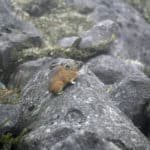
Pikas
Pikas Ochotona Shared Order

Ecological Equivalents 4

Animals that fill a similar ecological role in their ecosystem

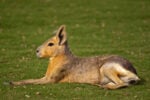
Patagonian mara
Patagonian mara Dolichotis patagonum Open-country, cursorial (running-adapted) herbivore with strong predator-avoidance behavior. Convergent body plan and ecology with large hares in grasslands and shrublands.
Springhare Pedetes capensis Nocturnal/crepuscular, open-habitat herbivore that uses speed and powerful hind limbs to evade predators; fills a similar grazing/browsing niche in parts of Africa.
Ground squirrels Medium-sized, open-habitat herbivores/omnivores that are key prey for many of the same raptors and carnivores; they occupy overlapping grassland-steppe food webs.
Pikas Ochotona spp. Lagomorph herbivores occupying alpine and subalpine systems; they overlap with some Lepus species in high-elevation environments and share similar plant diets and predator suites.

Types of Hare

32

Explore 32 recognized types of hare

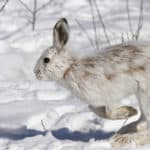
Snowshoe hare
Snowshoe hare Lepus americanus
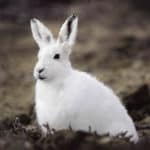
Arctic hare
Arctic hare Lepus arcticus
Alaskan hare Lepus othus
Mountain hare Lepus timidus
European hare Lepus europaeus
Iberian hare Lepus granatensis
Italian hare Lepus corsicanus
Broom hare Lepus castroviejoi
Cape hare Lepus capensis
Scrub hare Lepus saxatilis
Savanna hare Lepus victoriae
Abyssinian hare Lepus habessinicus
Ethiopian hare Lepus starcki
Antelope jackrabbit Lepus alleni
Black-tailed jackrabbit Lepus californicus
White-tailed jackrabbit Lepus townsendii
White-sided jackrabbit Lepus callotis
Tehuantepec jackrabbit Lepus flavigularis
Black jackrabbit Lepus insularis
Japanese hare Lepus brachyurus
Korean hare Lepus coreanus
Manchurian hare Lepus mandshuricus
Tolai hare Lepus tolai
Yarkand hare Lepus yarkandensis
Woolly hare Lepus oiostolus
Yunnan hare Lepus comus
Hainan hare Lepus hainanus
Burmese hare Lepus peguensis
Indian hare Lepus nigricollis
Himalayan hare Lepus microtis
Sichuan hare Lepus sechuensis
Philippine hare Lepus luzonicus

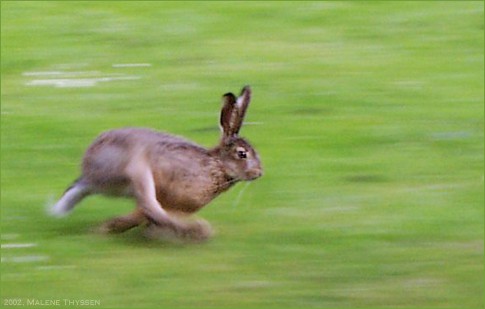
The hare is one of the fastest land mammals in the world.

This speed is absolutely critical to its survival. Lacking any other formidable defenses at its disposal, the hare is a small and timid animal that can outrun predators with incredible bursts of speed and endurance. The hare is a very common sight, but many fall victim to ferocious predators or human hunters before they can die of natural causes.
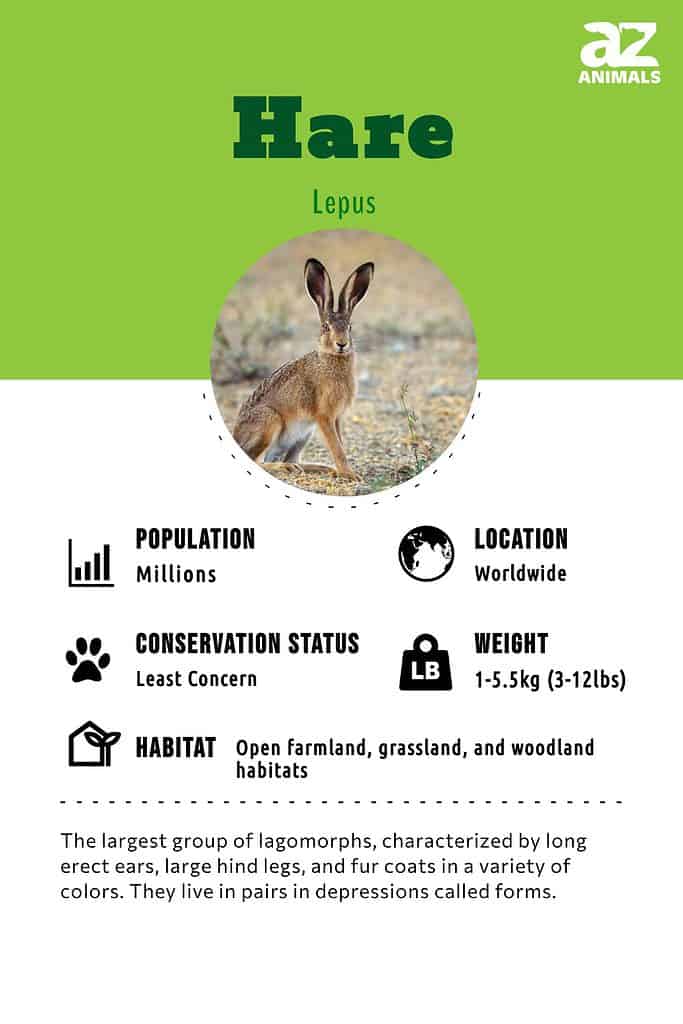
3 Hare Facts

  • The hare is an animal that has been featured prominently in the mythology and folklore of human societies around the world. The legend of the White Hare, in which the spirit of a woman takes the form of a hare and haunts the earth at night, is a central pillar of some British folklore. These animals are also a common motif in literature and art, including Alice’s Adventures in Wonderland. In some traditions, it is depicted as a trickster.
  • The hare is a nocturnal animal that spends the night awake and the day sleeping.
  • The hare’s front teeth never stop growing throughout its life. The animal must grind the teeth down by chewing on grass.

Scientific Name

The hare is not a single species, but rather an entire genus known as Lepus (which is the Latin name for the hare). As you might already know, genus is the level of scientific classification directly above species. There are approximately 30 species within the genus Lepus. There is quite a bit of popular confusion between the terms hare, jackrabbit, and rabbit. Hare and jackrabbit are interchangeable terms that describe the same thing, but the term rabbit applies to a different genus of animals entirely. More confusingly, five species of rabbits are actually called hares, including the endangered hispid hare of Nepal and the red rock hares of Africa.

Hare vs. Rabbit

Hares and rabbits are both animals that belong to the same family of Leporidae and the order of Lagomorpha (although they were once considered rodents). The main differences are the hare’s larger ears, more solitary lifestyle, and the tendency to bear young above ground rather than in burrows. Because of the young lack protection, they must be ready to fend for themselves immediately after birth. Another difference is that with their longer muscle fibers, hares are better suited for long-distance running.

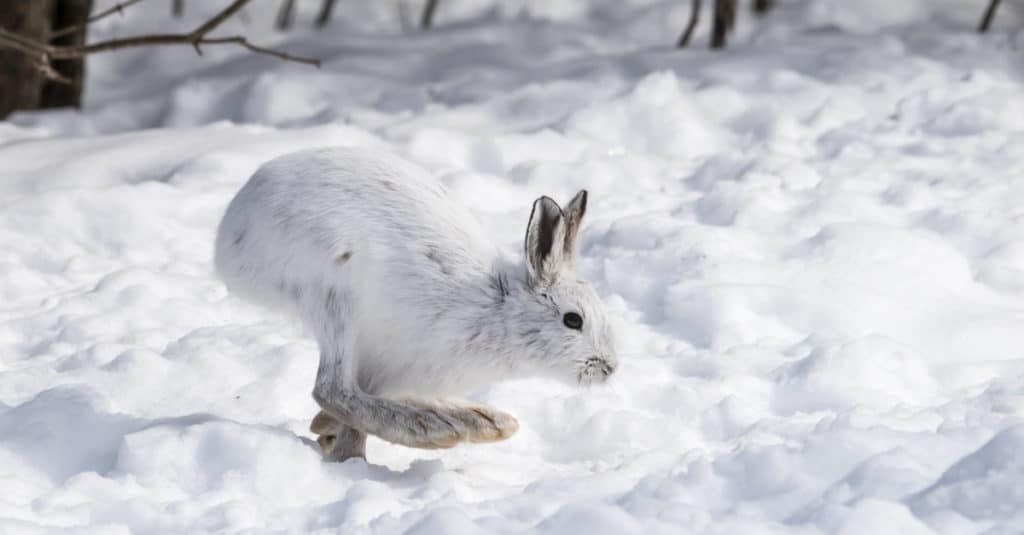
These animals have a rather distinctive appearance characterized by their extremely long ears, long hind legs, short snout, big eyes, and stout body. They are typically adorned with white, black, gray, tan, or reddish-orange colors to blend in with the surroundings. Some species turn white during the winter months or remain white all year long as a form of camouflage in the snow. In order to change color, these hares molt in the spring.
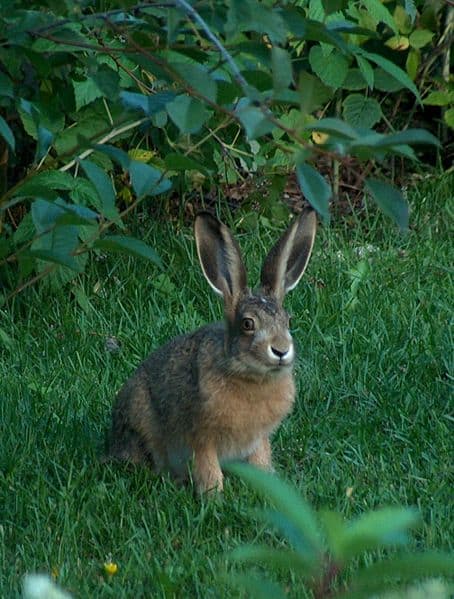
Hares differ from rabbits in that they have larger ears, a more solitary lifestyle, and bear young above ground rather than in burrows.

Evolution

Hares and rabbits are believed to be descended from a ground dwelling ancestor dubbed Hsiuannania. This creature was native to China and lived during the Paleocene Era in China. This animals was discovered in a few teeth and jaw bone artifacts, but they can definitely be placed as originating in Asia.

Types of Hares

There are about 40 species of hares in the world. They are divided into three different genera: Lepus, Caprolagus, and Pronolagus. Below are 32 types of hares:

  • Abyssinian Hare – Native to East Africa. Silvery gray with black patches.
  • African Savanna Hare – Native to Africa. Grayish-brown with reddish-brown markings.
  • Alaskan Hare – Native to Alaska. Does not burrow.
  • Antelope Jackrabbit – Native to Arizona and Mexico. One of largest breeds with huge ears.
  • Arctic Hare – Native to Arctic Circle. They have thick coats and burrow to stay warm.
  • Black Jackrabbit
  • Black-tailed Jackrabbit
  • Broom Hare
  • Burmese Hare
  • Cape Hare – Native to Africa, India, and Arabia.
  • Chinese Hare – Native to China, Taiwan, and Vietnam. 
  • Corsican Hare
  • Desert Hare – Native to United States and Mexico. Habitat is desert regions. Huge ears help them stay cool in the heat.
  • Ethiopian Hare – Native to Ethiopia.
  • Ethiopian Highland Hare – Native to Ethiopian Highlands.
  • European Hare – Native to Europe and parts of Asia. Most common species in Europe. Habitat is open areas.
  • Granada Hare – Native to Iberian Peninsula.
  • Hainan Hare – Native to Hainan Island, China. Weighs up to 3.3lbs, colorful coat.
  • Indian Hare – Native to India with seven sub-species. Status: Least Concern.
  • Japanese Hare – Native to Japan. Habitat is mountains and hills, forests and brushes. 
  • Korean Hare
  • Manchurian Hare – Native to China and Russia.
  • Mountain Hare – Native to Russian and Northern Europe. Large in size with a coat that changes seasonally.
  • Scrub Hare
  • Snowshoe Hare – Native to North Merica. Coat changes colors with the seasons.
  • Tehuantepec Jackrabbit
  • Tolai Hare
  • White-sided Jackrabbit – Native to North America and Mexico.
  • White-tailed Jackrabbit – Native to North America and Canada.
  • Wooly Hare – Native to China, India, and Nepal.
  • Yarkand Hare – Native to Tarim Basin, China. Straight coat with grayish-black stripes. Status: Endangered.
  • Yunnan Hare
Snowshoe Hare

The Snowshoe Hare is one of the 40+ species of hares.

Appearance and Behavior

Hares are the physically largest animals in the order of Lagomorphs. They are even larger than the closely related rabbits and the pikas. Measuring about 16 to 28 inches from head to tail, they are a little larger than the typical house cat. The body is complemented with 6-inch feet and 8-inch ears. The heaviest species is the arctic hare at around 11 pounds. The male is known as a jack, while the female is called a jill. Both are fairly similar in size and appearance, though females do tend to be a little larger, which is uncommon for a mammal.

These solitary animals tend to form in small pairs or family units called a drove. The only time they will congregate among other hares is to find an appropriate mate. Unlike rabbits, they tend to live exclusively above ground. If they need to seek out safety, then they will usually hide in grasses or shrubs.

Although they may not look it, hares are physically remarkable creatures with a finely developed sense of hearing, smell, and vision. Their wide angle of view allows them to detect predators coming from anywhere around them except for a small blind spot in front of their noses. They also produce pheromones from scent glands, which might play a role in mating. Some species are capable of short bursts of speed between 40 and 50 MPH and more consistent speeds of around 30 MPH. Thanks to their powerful hind limbs, they can leap 10 feet in the air. They are also excellent swimmers that can traverse rivers and large bodies of water without a problem.
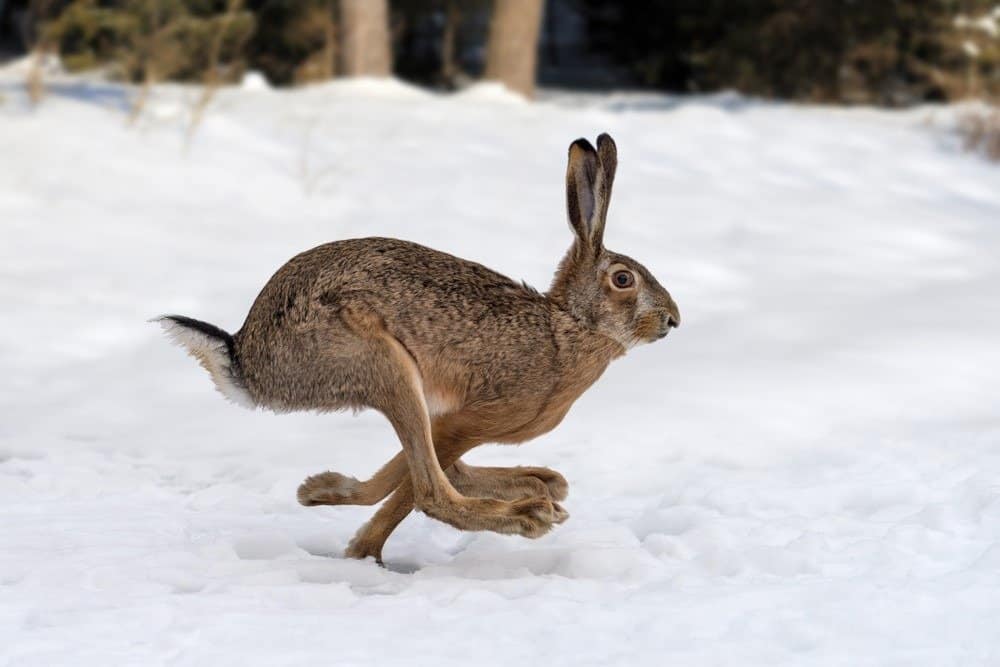
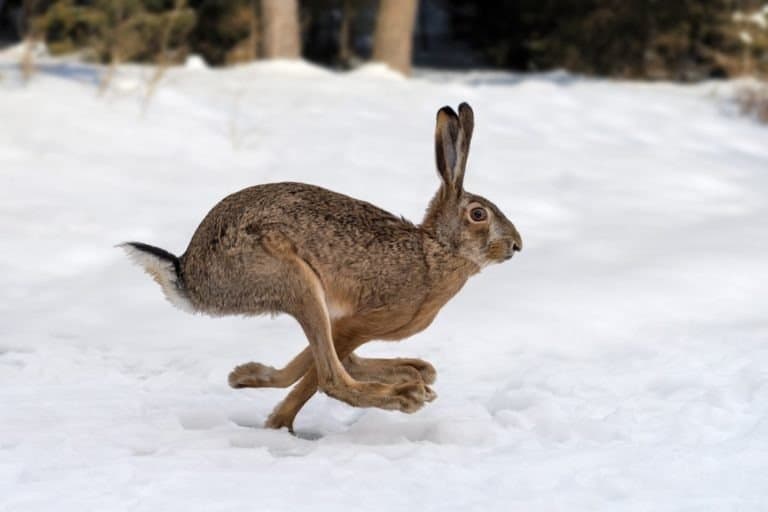
Hare running in the winter forest

In the order of Lagomorphs, hares are the physically largest group of animals.

Long Ears

The hare has impressively huge ears. In relation to body size, they are perhaps the largest among all living mammals. It is believed that they have long ears for two different reasons. First, the ears allow them to hear sound from almost any direction. Second, the ears serve to dissipate body heat and keep the hare cool, especially during the warmer months of the year. This is essential for the animal’s survival since these animals cannot sweat or pant to work off heat. In fact, when light shines through the ear, you can sometimes see the dense patchwork of blood vessels inside of it that will swell in the heat to lower body temperatures.

Habitat

These animals occur naturally throughout Europe, Asia, Africa, and North America. Because of the large number of habitats to which this genus has adapted, each species inhabits a different geographical range. The snowshoe hare is a well-known species that occurs from Alaska to the mountainous regions of California and Nevada. The African hare, as the name implies, inhabits much of Africa. The arctic hare is one of the few species adapted for the frigid extremes of northern Canada and Greenland.

The European hare — which inhabits Europe, the Middle East, and as far east as Siberia — is perhaps the most common species of hares in the world. In recent centuries, it has been introduced into Australia, New Zealand, South America, and parts of North America as hunting game. But after spreading out of control, the species is now considered a pest in many parts of the world, as it consumes crops and outcompetes local species.

Wherever it’s found, these animals prefer to inhabit open plains such as meadows, grasslands, deserts, tundra, and savannas. Although this sometimes exposes them to predators, their remarkable speed often allows them to get away even in relatively flatlands. If they need to hide, then hares will conceal themselves in the grass, shrubs, or hollows. Only a few species live in more forested regions.

Diet

Hares are herbivorous animals that mostly consume grasses in the wild. This is supplemented with nuts, fruits, vegetables, and fungi. Composed of tough cellulose, grass is extremely difficult to digest. Because these animals lack the multi-chambered stomach of cattle, deer, and other ruminants, it is believed that they have evolved to eat their own droppings, which contain many undigested nutrients. This gives them a second chance to digest whatever nutrients remain in the food.

What Do Hares Eat
Hares consume herbs, grasses, twigs, and shrub bark.

Predators and Threats

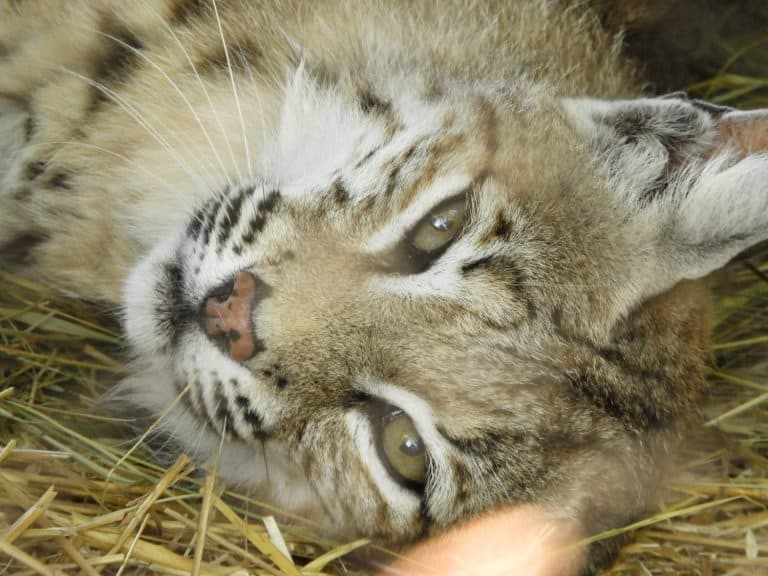
Hares are the natural prey of many large cats, birds, and reptiles around the world. The snowshoe hare is the most common prey animal of the powerful lynx. This species goes through an unusual boom/bust cycle in which numbers crash from overhunting and then slowly begin to recover. This cycle takes place over a regular eight to 11-year time span. Meanwhile, both the brown hare and the European hare are the prey of the fox. Other common predators include bobcats, hawks, eagles, snowy owls, wolves, coyotes, bears, and even weasels.

The hare has traditionally been a common source of food for people, and they are still among the most hunted animals today. Most of this hunting is responsibly done. However, an even greater threat is habitat loss and fragmentation, which has caused numbers to decline around the world.
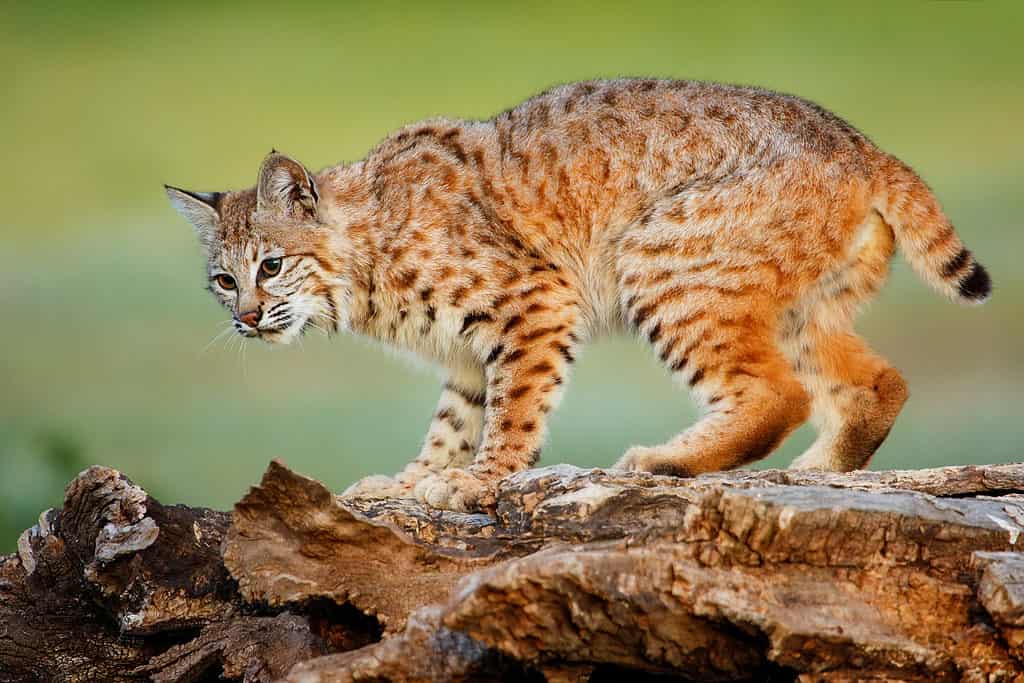
Bobcat on log

The bobcat is a common predator of hares.

Reproduction, Babies, and Lifespan

The hare’s breeding season is quite competitive and feisty. Males will fight each other for access to females, while the female will force the male to chase her as a test of his stamina and determination. This also serves the purpose of helping the animal to stay fit. If the female is not ready to mate at all, then she may box the male right across the face with a stern punch. The hare’s breeding season varies quite a bit by species. Some species can breed at any time throughout the year, while others only breed during the spring and summer months.

Both hares and rabbits have a reputation for a prolific rate of reproduction. The female can typically produce one to eight children in a single litter (rarely up to 15) with up to three litters per year. The amount of young usually depends on the abundance of food. The mother will typically carry the children for around 40 days. Hidden in large grasses or depressions, the young hares, also known as leverets, are born with their eyes open and their fur completely grown. They are able to begin hopping within minutes of emerging from the womb. This is because they won’t have the protection of a larger group. The mother herself only visits the children once every day for very short periods, usually to nurse them.

Weaning usually begins around 10 days of life and lasts up to 23 days. Although they are functionally independent soon after birth, sexual maturity takes about one to two years in most species of hares. The typical lifespan is between four and eight years in the wild. If a hare avoids disease and predation, then the maximum possible lifespan is around 12 years.
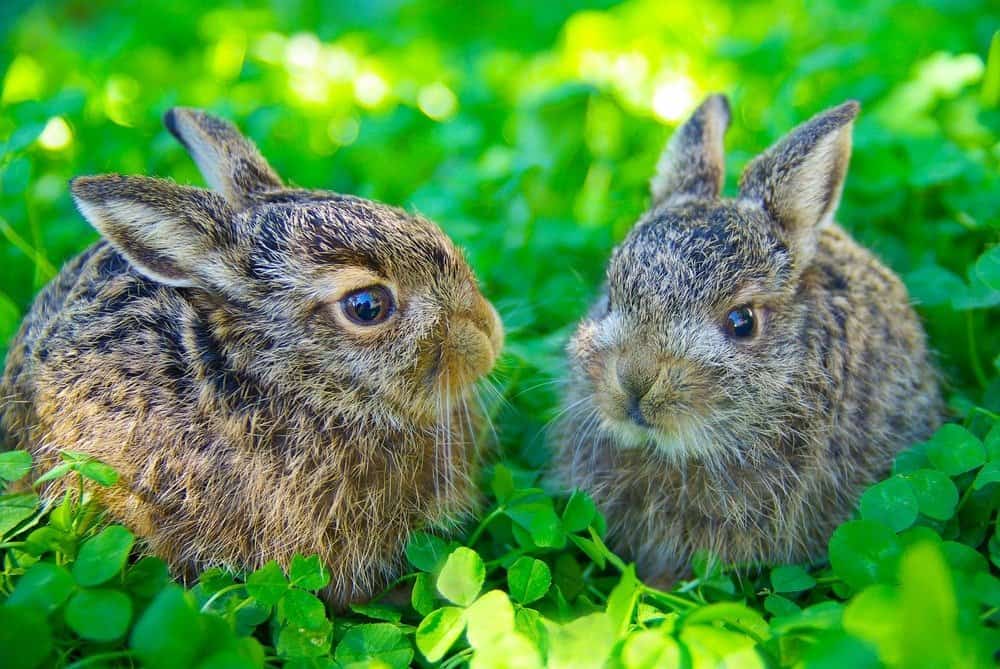
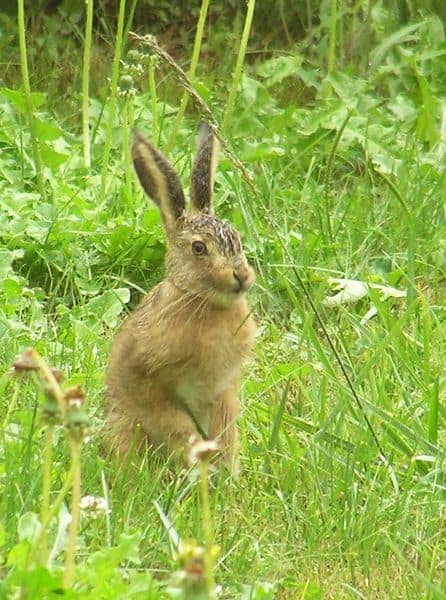
Wild European Hare Babies siting in a clover field

Young hares, also known as leverets, are born with their eyes open and their fur completely grown.

Population

The majority of hare species appear to be in relatively good health. According to the IUCN Red List, which tracks the conservation status of many animals, most hare species are currently classified as least concern. A few species, like the Corsican hare, the white-sided jackrabbit, and the black jackrabbit, are vulnerable. The Hainan hare of Hainan, China, and the Tehuantepec jackrabbit of Mexico are both endangered to extinction. Exact population figures are not available, but some species appear to be declining from agriculture and other habitat loss.
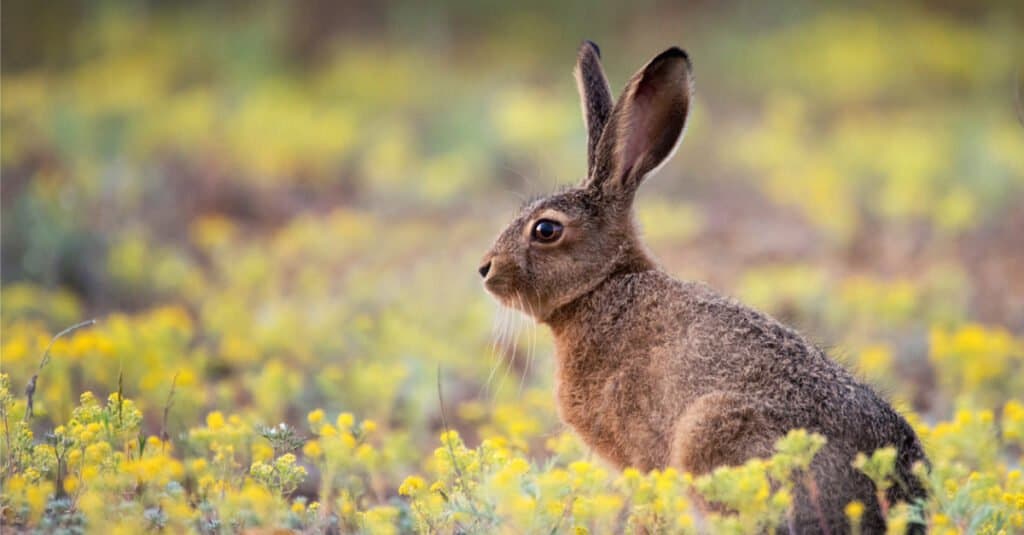
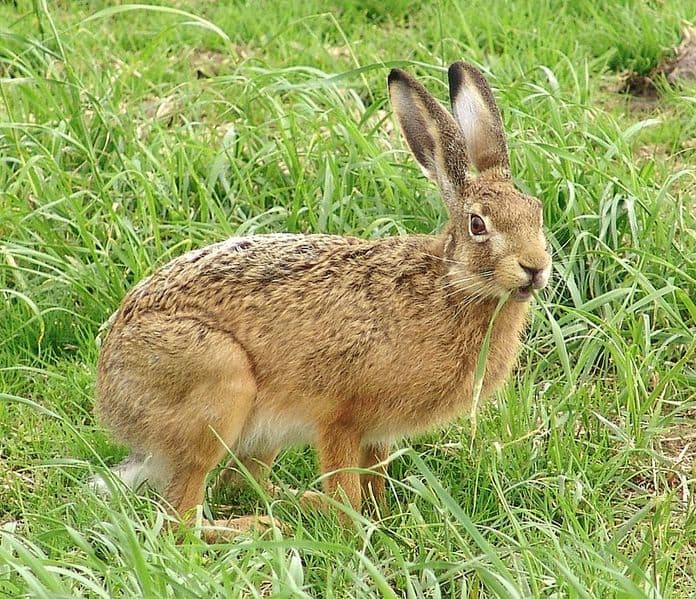
What Do Jackrabbits Eat - European Hare

The IUCN Red List classifies the hare as a species of least concern.

Human Consumption

Hare meat and blood have both been used across the globe through centuries as a source of protein. Hare are available everywhere and their numbers are plenty, which is why hunting activities are unregulated compared to other game. They have also been used for sport hunting activities, in America, many European countries and the UK.

Hare meat is not seen as a great survival food due to its low fat content compared to beef, lamb/goat, turkey and even chicken. However, the leanness does make it a healthy choice as it is a great source of protein. Here are some nutritional facts (Per 100g) about hare meat, which produces 173 calories when consumed:

  • Protein: 33g of protein can be found in 100g meat, fulfilling 66% of daily requirement for an average human body.
  • Fats: Only contains 3.5g fat and 1.1g of saturated fat.
  • Cholesterol: 123mg can be found in 100g meat.
  • Vitamins: good source for Vitamin B.
  • Minerals: contains iron, Potassium and Sodium.

How to Cook Hare

Typically hare are cooked over a spit, grilled, roasted or fried for making sandwiches or eating with sauce. Here are a few popular recipes from around the globe:

Hare Stew

All around the world, especially in Europe hare meat is slow cooked with various vegetables such as onions, tomatoes, potatoes, carrots, celery, garlic and sprinkled with regional sauce and spices.

  • In Italy agrodolce sauce is used to make the stew, which is a sweet tasting sauce made with wine, raisin and pine nuts, sugar, vinegar and bitter chocolate.
  • In Germany, UK, France, wine and hare blood is used for making the gravy or sauce thick.
  • Other ingredients, such as dry white wine, sour cream, bacon, eggs, garlic, mushroom are also used regionally to create delicious dishes.

Other Uses

Jugging Hare: The blood of hare is collected in a process called Jugging. The blood is then used to cook the rabbit meat and to thicken the gravy or sauce. The hare is first skinned and the entrails are removed, then the hare is hung upside down so all the blood accumulates in the chest cavity. The hare can be hung for long period of time for collecting the blood. Which is why it is mixed with red wine to prevent coagulation and refrigerated.

Their pelts have been and are still used for creating winter wear by the native population living in Americas, Europe, and the Polar regions.

Hare in Mythology and Folklore Around the Globe

Hare have been seen in may cultures and folklore as bringers of prosperity, fertility and abundance. They are also seen as a representation of moon deities, resurrections and rebirth. Here are some facts you would find interesting:

Celtic Mythology: The Celts saw Hares as connectors to the Otherworld and it was forbidden to eat them. There are many stories in Celtic mythology about shapeshifting hare that turn into people.

Native American: Many native Americans saw the hare as demiurge, probably due to their proclivity to multiply so swiftly, and worshipped them.

Egyptian: Egyptians saw the hare as a representation of procreation and immortality.

Africa: African natives see the hare as a trickster who survives through the use of great wit.

Greek: In Greek mythology hare are associated with Eros and Aphrodite, and they were seen as a romantic gift to be given to partners and potential love interests.

East Asia: In Japan, Vietnam Thailand, Sri Lanka, Korea, Cambodia and India, the hare is seen as a Moon deity. The Chinese see the hare as a companion to moon goddess Chang’e.

The Asian festival of Mid-Autumn festivals are a celebration of the Moon deities and has risen through the the legends of the moon goddess.

Another great example of celebration of the hare is the Easter Bunny who represents the starting of spring, which is essentially a celebration of fertility, rebirth and reproduction.

View all 287 animals that start with H

Sources

  1. David Burnie, Dorling Kindersley (2011) Animal, The Definitive Visual Guide To The World's Wildlife / Accessed November 7, 2008
  2. Tom Jackson, Lorenz Books (2007) The World Encyclopedia Of Animals / Accessed November 7, 2008
  3. David Burnie, Kingfisher (2011) The Kingfisher Animal Encyclopedia / Accessed November 7, 2008
  4. Richard Mackay, University of California Press (2009) The Atlas Of Endangered Species / Accessed November 7, 2008
  5. David Burnie, Dorling Kindersley (2008) Illustrated Encyclopedia Of Animals / Accessed November 7, 2008
  6. Dorling Kindersley (2006) Dorling Kindersley Encyclopedia Of Animals / Accessed November 7, 2008
  7. David W. Macdonald, Oxford University Press (2010) The Encyclopedia Of Mammals / Accessed November 7, 2008
  8. Britannica / Accessed November 1, 2020
  9. National Geographic / Accessed November 1, 2020
Abby Parks

About the Author

Abby Parks

Abby Parks has authored a fiction novel, theatrical plays, short stories, poems, and song lyrics. She's recorded two albums of her original songs, and is a multi-instrumentalist. She has managed a website for folk music and written articles on singer-songwriters, folk bands, and other things music-oriented. She's also a radio DJ for a folk music show. As well as having been a pet parent to rabbits, birds, dogs, and cats, Abby loves seeking sightings of animals in the wild and has witnessed some more exotic ones such as Puffins in the Farne Islands, Southern Pudu on the island of Chiloe (Chile), Penguins in the wild, and countless wild animals in the Rocky Mountains (Big Horn Sheep, Mountain Goats, Moose, Elk, Marmots, Beavers).
Connect:

Thank you for reading! Have some feedback for us?


Hare FAQs (Frequently Asked Questions)

Rabbits and hares are sometimes hard to tell apart, but you can identify a hare by its larger size, huge ears, and tendency to live in pairs instead of large groups. Another difference is the tendency to bear young above ground rather than in burrows. Hares also produce offspring that can survive on their own from the moment of birth.