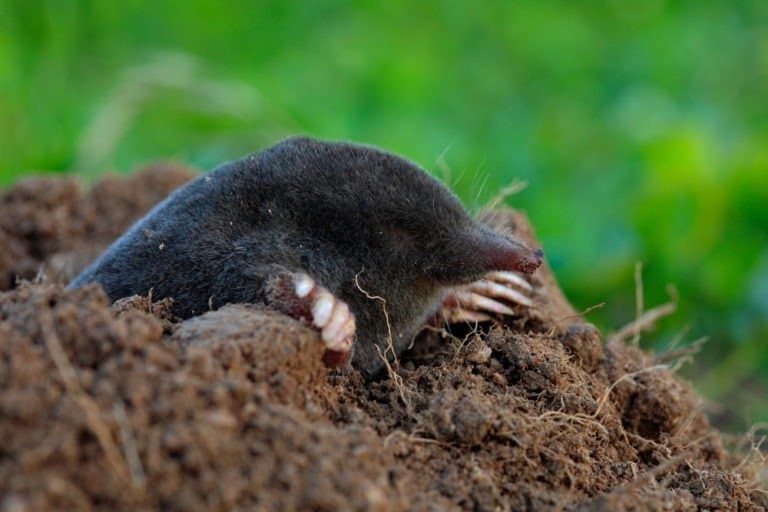










Quick Take
- Some animals look exactly like moles but share absolutely no ancestry with them, and the reason why is stranger than you'd expect. Meet the look-alikes →
- Moles have a secret biological weapon in their saliva that changes how they hunt, making their approach more calculated than most predators twice their size. Discover the paralyzing saliva →
- The star-nosed mole's face looks bizarre for a reason that makes it one of the most sensory-advanced hunters underground. Explore the star-nosed mole →
- Moles dig tunnels as a survival strategy, but the same burrows that protect them also make them one of the hardest pests for humans to stop. See why moles are hard to stop →
In human culture, moles have sometimes conjured up images of industry and hard work. With their massive claws, they hollow out an impressive system of tunnels and chambers underneath soft, moist soil.
These complex underground labyrinths provide protection, a source of food, and an entire home for the mole. This is critical to moles’ survival because they are otherwise defenseless against both humans and predators. It has proven to be a remarkably successful survival strategy that enables moles to flourish around the world.

An Incredible Animal: 4 Mole Facts
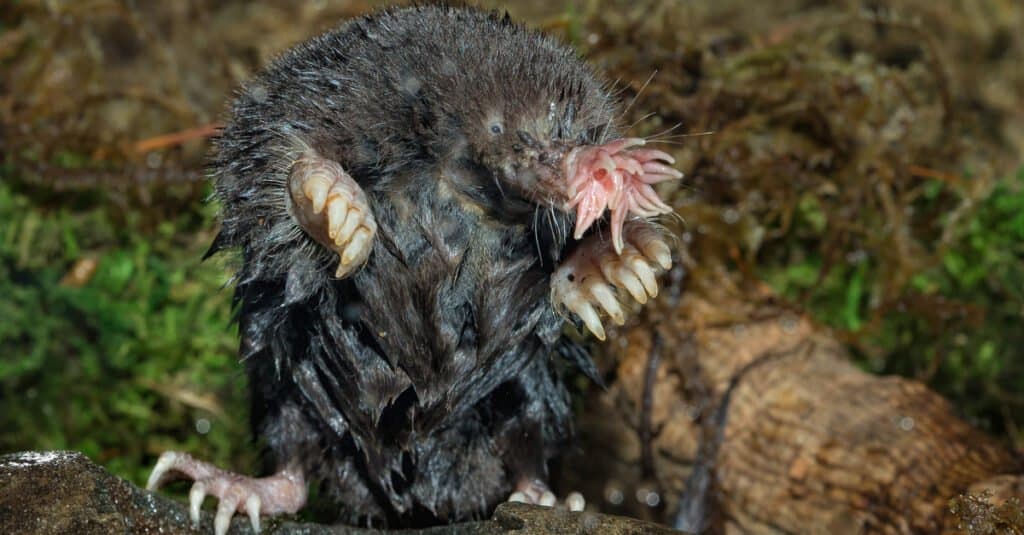
The tentacles that surround a star-nosed mole’s nose have roughly 100,000 nerve endings on them.
©Agnieszka Bacal/Shutterstock.com
- During the Middle Ages, the English word for the mole was actually moldwarp. This has its origins in a Germanic word possibly meaning earth thrower. The term “making a mountain out of a molehill” probably originated later, in the English Tudor period around the 1500s.
- Moles have sometimes been hunted for their short, soft coat of fur. In order to make it easier for the mole to move around in the tunnels, this fur can bend in any direction.
- The star-nosed mole is perhaps the strangest-looking species of mole. Picture 22 tentacle-like structures jutting out from the nose. These tentacles make the star-nosed mole extremely sensitive to vibrations and electricity produced by prey.
- Moles can dig up to 15 feet of tunnels in an hour.
Evolution and Origins
Moles have an evolutionary lineage that dates back to various epochs, including the Oligocene Epoch (33.9 to 23 million years ago) in Asia and the Mediterranean region, and the Late Oligocene Epoch (28.5 to 23.8 million years ago) in North America.
Regarding their classification and history, the 42 species of moles that are considered “true” belong to three subfamilies within the Talpidae family, which is classified under the broader category of insectivorous mammals. Shrews, from the Soricidae family, are close living relatives of moles and hedgehogs, all united within the order Eulipotyphla.
Classification and Scientific Name
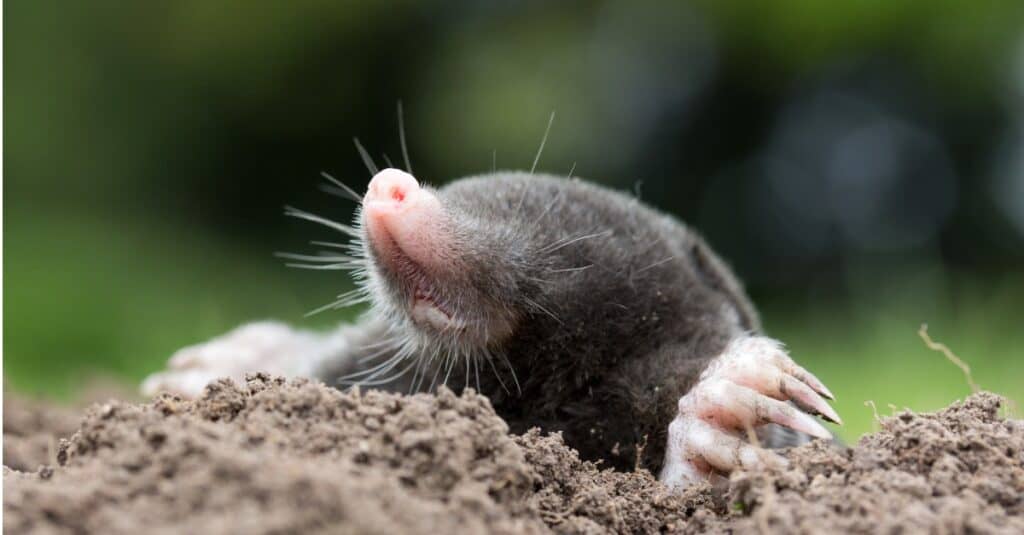
Moles are classified in the family Talpidae.
©iStock.com/juefraphoto
Mole, as a term, refers to any species in the family Talpidae (which simply means “mole” in Latin). The earliest of the species probably evolved in the Eocene Epoch some 34 to 55 million years ago somewhere in Europe and then spread out from there over the ensuing millions of years.
There are some 42 species currently living. These species are spread out among some 10 genera. Together, the entire family is known as the true moles. This family belongs to the order Eulipotyphla, which also includes shrews and hedgehogs.
In addition to the true mole family, there are several species that resemble a mole, but are not actually part of the mole lineage. One of them is the golden mole of sub-Saharan Africa. This family is actually part of an entirely separate order called Afrosoricida. Another is the marsupial mole of Australia. It is more closely related to other marsupials like kangaroos than their true mole counterparts.
These creatures are an example of convergent evolution: two distinct lineages that evolved separately but adapted similar traits for similar lifestyles. In this case, they each independently evolved shovel-like paws, poor eyesight, and an elongated body. There are many differences that attest to their separate lineages. The pouch of the marsupial mole is one example.
Appearance and Behavior
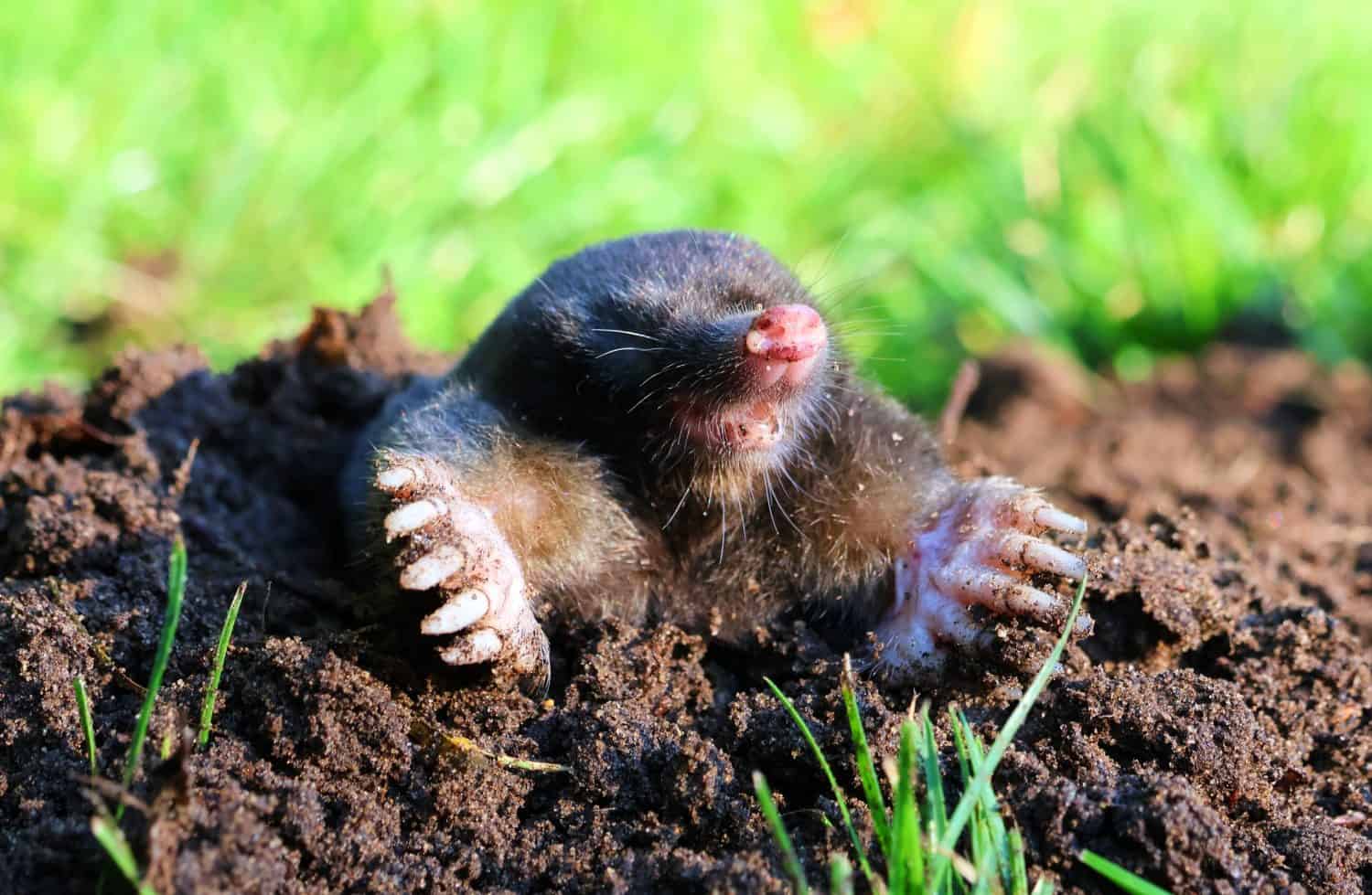
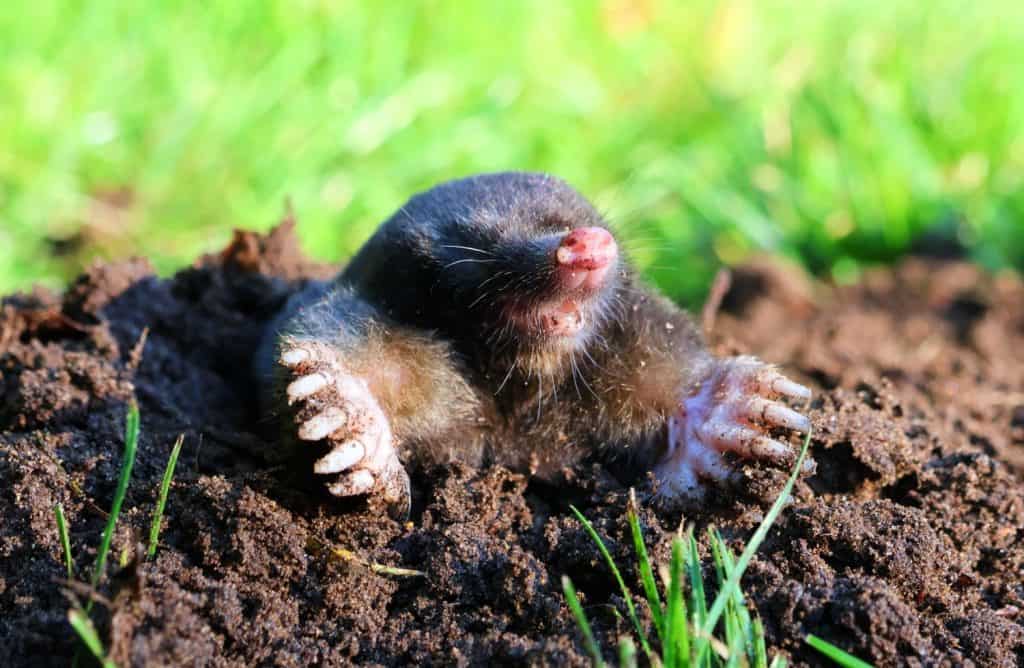
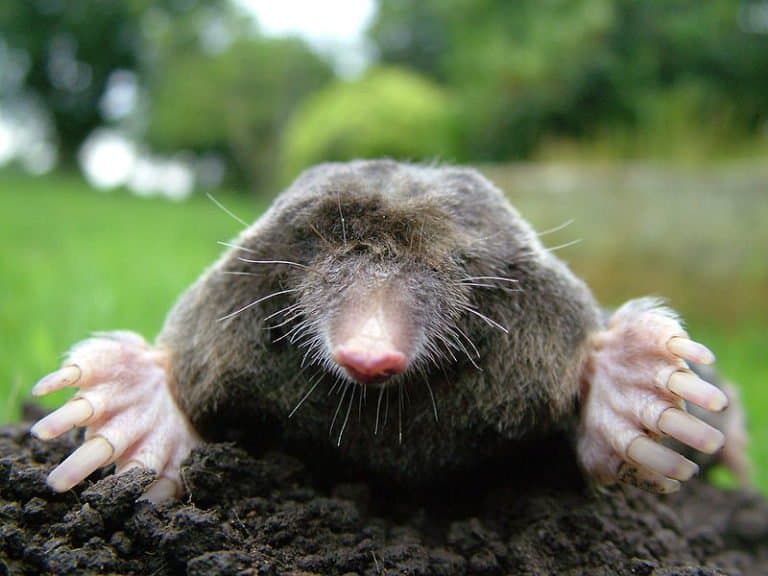
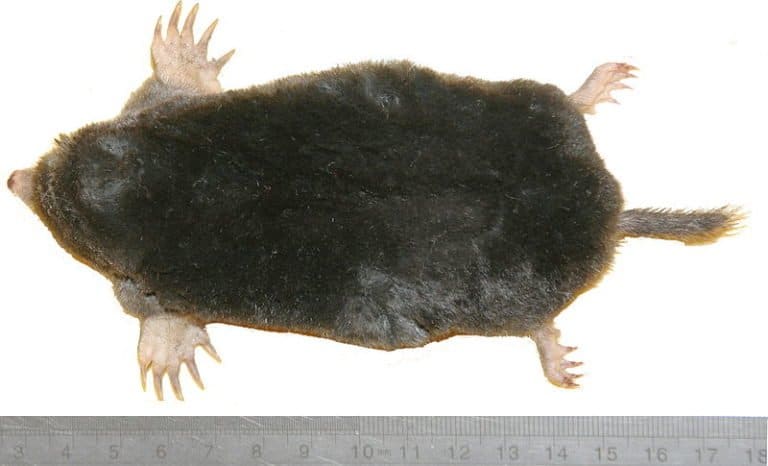
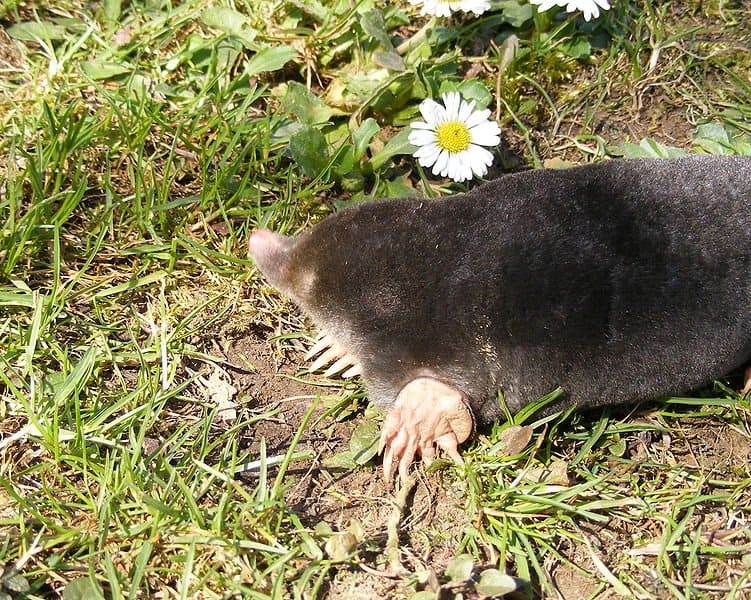
The mole is an animal with a striking, distinctive appearance, well-adapted for its burrowing lifestyle. Its massive hands, short limbs, and sharp claws enable it to burrow through the ground with relative ease. These hands also sometimes make excellent paddles for swimming. Most remarkably, these huge forepaws contain two thumbs each. Whereas the other fingers have multiple joints, the thumbs are only composed of a single bone.
This digital arrangement appears to be unique among moles, as it is absent in the closely related shrews. Other interesting features of the mole include the small, beady eyes and the lack of visible external ear flaps. This is complemented by a short tail and a hairless pointed snout lined with whiskers. The long, flat body is covered in black or brown fuzzy fur as well.
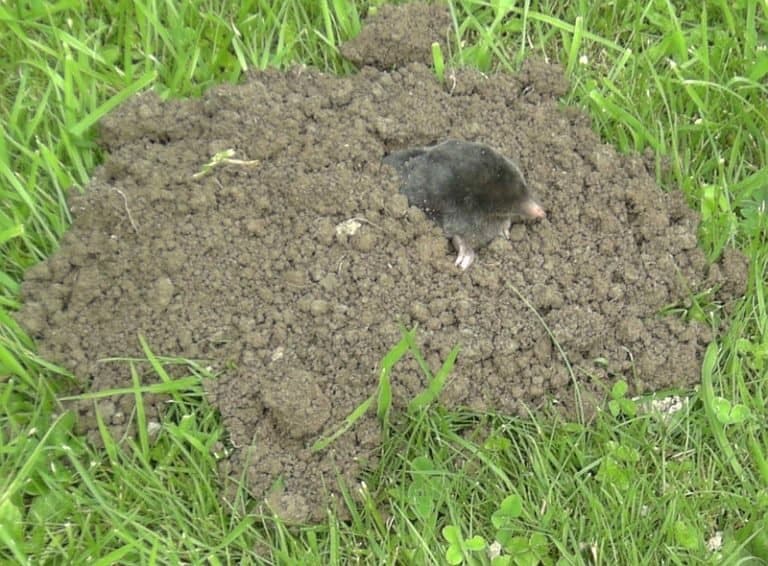
This creature digs through the ground with a swift fore-and-aft motion, which resembles a swimming stroke. It will then push the loose soil to the surface, creating the well-known molehill. The mole digs much more easily in moist soil, though it can also churn through dry soil. The underground tunnels are quite complex, extending perhaps hundreds of feet in every direction and containing both storage and nesting areas.
These chambers can exist a full 15 feet underground. When needed, the mole is a master of improvisation. It can create entirely new underground networks in a matter of hours.
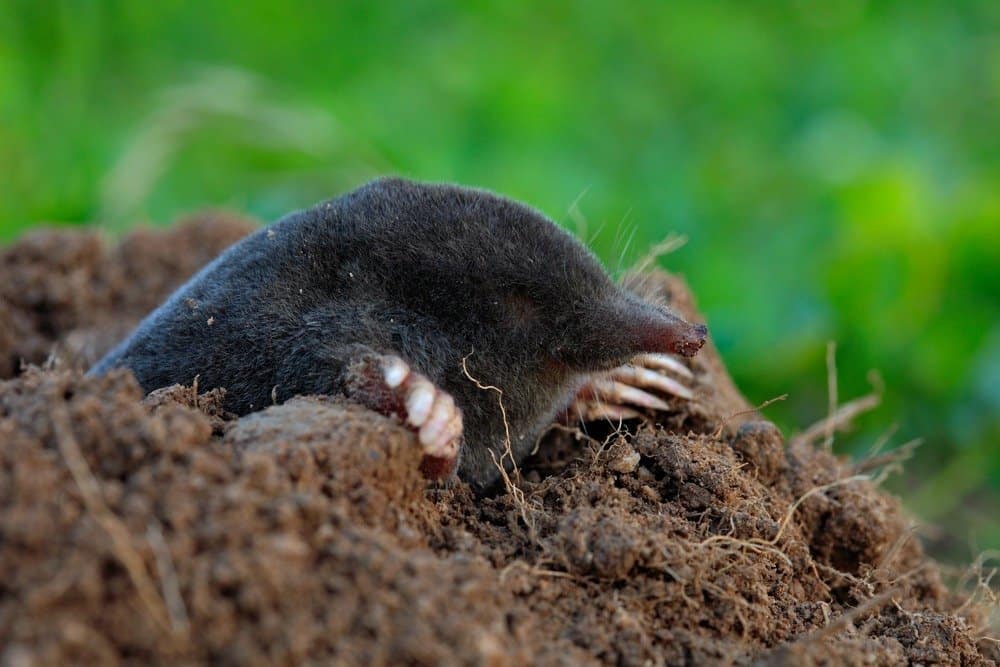
Moles can create entirely new underground networks in a matter of hours.
©Ondrej Prosicky/Shutterstock.com
Moles spend the majority of their lives underground, only traveling to the surface to gather nest material and find water during droughts. They do almost everything else underground, including feeding and copulation. The mole has evolved unique hemoglobin (oxygen-carrying molecules) in the blood to survive long periods of low oxygen while underground. They are active both day and night during short spurts of wakefulness in between intervals of sleep.
The mole family is an incredibly diverse group that has evolved unique characteristics to cope with the various ecosystems in which it resides. For instance, the American, Chinese, and Japanese shrew moles have long tails, external ear flaps, and smaller hands. They spend more time above ground than the typical mole.
Some species of Russian moles, on the other hand, are amphibious creatures with webbed feet, water-repellent fur, long tails, and closable facial openings to prevent water from entering. They still nest in burrows but come out to forage underwater for their food. Finally, the European mole has the ability to construct a large mound above ground, composed of nearly 2,000 pounds of soil. This formidable structure contains the same network of tunnels and rooms as a normal underground burrow.
These creatures differ quite a bit in terms of size too. The American shrew mole is the smallest mole. Its body measures less than 2 inches and weighs no more than an ounce. The largest is the Russian desman, which measures up to 9 inches and weighs nearly 8 ounces.
The typical mole species is somewhere in between these two extremes. It measures about 6 inches in length and weighs about 4 ounces, or less than the size of a chipmunk. Males are called boars, while females are called sows. The sexes are very similar in size and appearance, but female anatomy may undergo significant changes during the breeding season.
The mole compensates for its poor vision with a powerful sense of hearing and touch. The hairs on the snout and claws are capable of sensing the surrounding environment with remarkable detail. The mole also uses scent glands to mark its territory as a warning to intruders. The mole is a solitary creature that will aggressively defend its territory from any perceived threats. A group of moles, which is called a labor, may come together at certain times of the year for the breeding season. Some moles are also known to take over an absent neighboring burrow when given the opportunity.
Habitat
The mole family is present on every major continent except for Antarctica. It prefers temperate ecosystems with moist or loose soil, including prairies, floodplains, forests, coastal dunes, wetlands, gardens, cultivated fields, and lowland or alpine meadows. In warmer climates, the mole is primarily restricted to the cooler mountainous habitats. Given their massive range, this is a very diverse family with lots of different physical characteristics, habitats, and survival strategies.
What Does the Mole Eat?

The mole’s favorite food is earthworms, insects, and other small invertebrates. This is supplemented with seeds, roots, tubers, fungi, and small mammals. Some species have specialized diet requirements. In the case of some amphibious moles, they will also eat fish and amphibians. The mole has a special toxin in its saliva that immobilizes prey so it can store and consume the meat at a later time. The creature can consume its entire body weight in food every single day to support its energy-intensive digging habits.
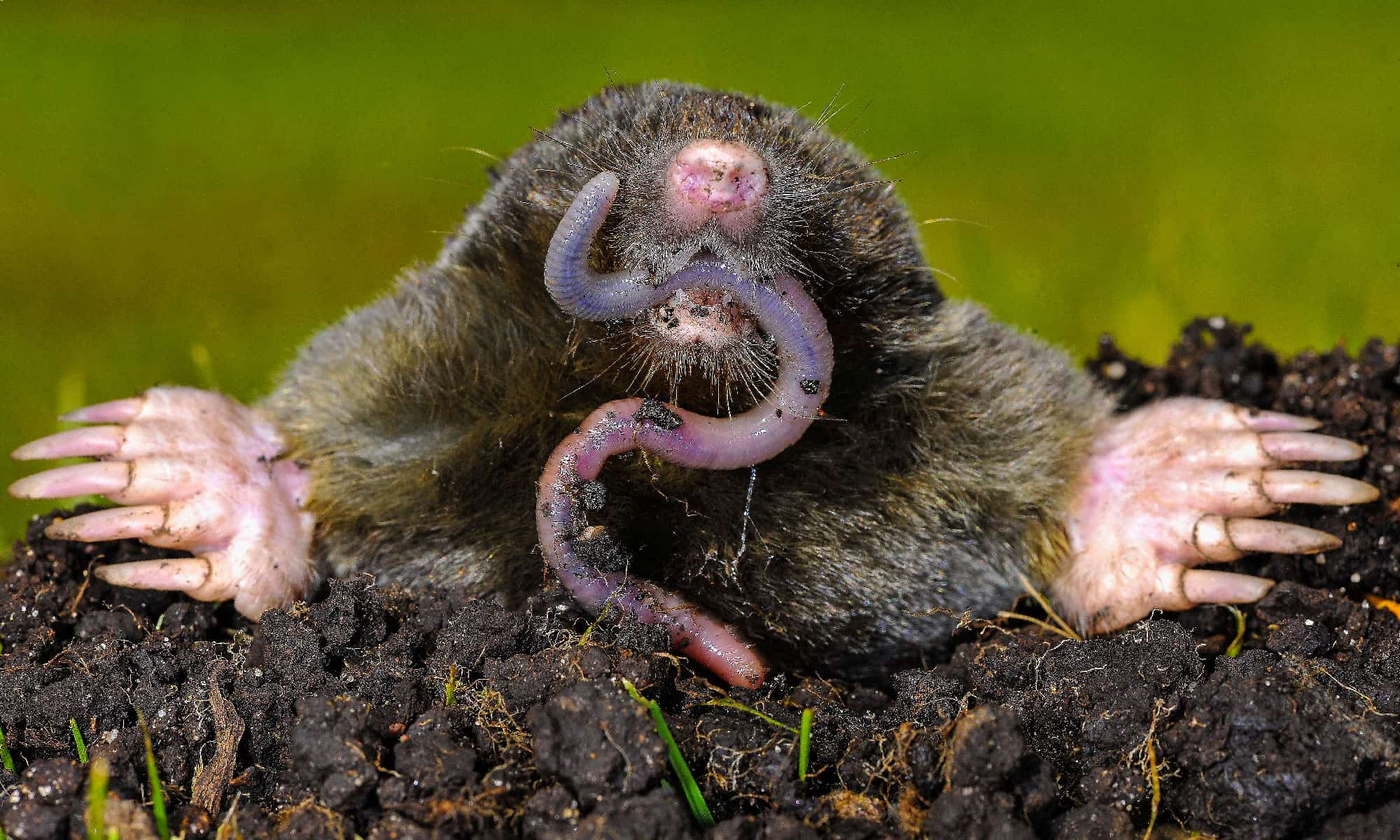
The mole enjoys feasting on earthworms, insects, and other small invertebrates.
©CezaryKorkosz/Shutterstock.com
Predators and Threats
The small and defenseless moles are often preyed upon by foxes, coyotes, weasels, snakes, hawks, and owls. Because the moles are so vulnerable above ground, the burrow provides a natural defense against most predators. However, this may not protect the mole from predators with strong digging ability.
Habitat loss isn’t too much of a problem for this group. Because moles prefer agriculture and gardens, they have adapted very well to human habitats. However, this also marks them as annoying pests that can disrupt or ruin crops, even though they sometimes consume other insects and pests as well. This brings to mind images of uprooted plants and piles of soil.
Many moles end up being hunted or poisoned by humans to prevent this kind of damage. A more humane strategy is to use noxious chemicals to drive them away or catch them in traps and transport them elsewhere. Usually, it is not the crops and plants they are consuming, but rather the worms and insects near those crops. The plants are mere casualties of the mole’s intense foraging behavior.
Reproduction, Babies, and Lifespan
Most of the species have a single breeding season that lasts throughout the spring months. Much of the action occurs underground, beginning with the search for an appropriate mate. Males will travel up to half a mile to look for a female’s burrow. If no existing tunnel is available to connect the respective burrows, then the males may dig entirely new tunnels.
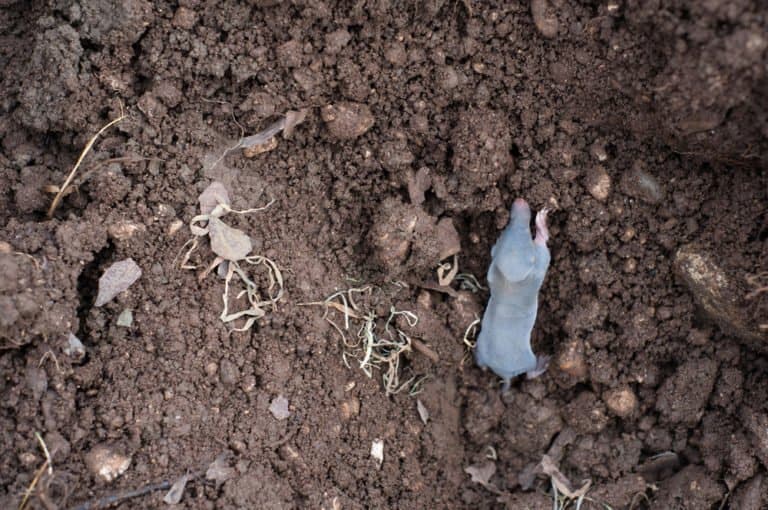
After copulation, the female is largely left alone to rear the young alone, without help from the male. She carries the young for approximately a month and then gives birth to a litter of three to five pups. These pups are born hairless and blind in a nest of dry vegetation, but they grow and develop rapidly toward maturity after only a few months of life.
The mother will fully wean her pups after about a month. They will then leave the nest and begin to seek their independence shortly afterward. This is the time they are most vulnerable to predators. If they survive, the young are ready to reproduce the following spring. The typical lifespan of a mole is only about three years in the wild.
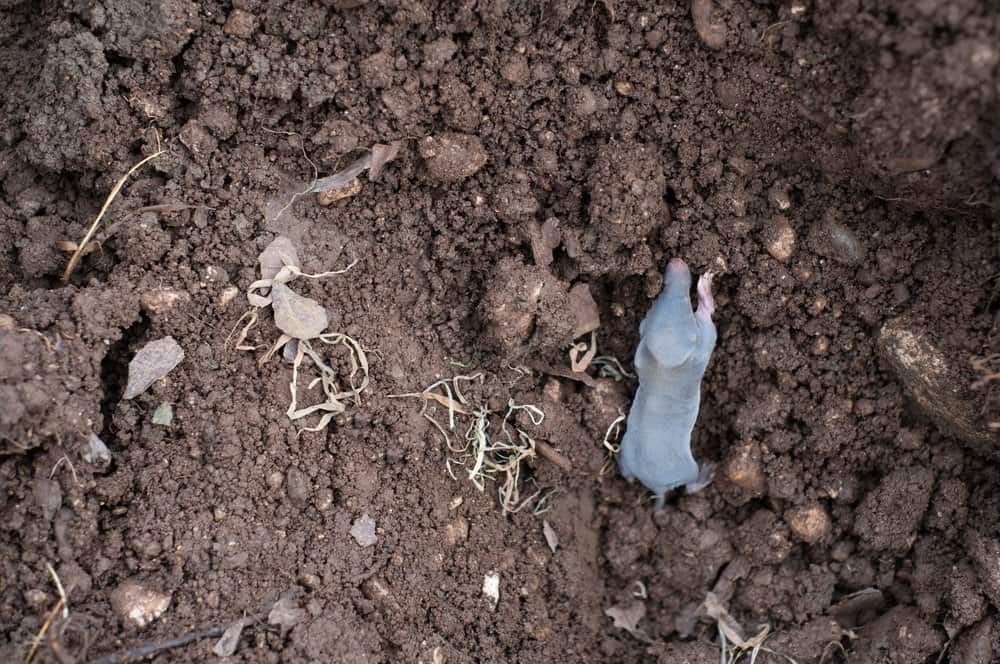
Three to five pups are born at a time.
©Sebastjan Medved/Shutterstock.com
Population
Based on conservation estimates, the mole family as a whole appears to be thriving. According to the IUCN Red List, which tracks the conservation status of numerous species, these creatures are mostly listed as being of least concern. However, there are several exceptions, including the Etigo mole of Japan and the Russian desman (both endangered), the vulnerable Pyrenean desman of Spain, and the near-threatened Sado mole of Japan. It is not entirely clear how many moles are currently living, but many populations appear to be stable, though some are decreasing in number.
Mole Pictures
View all of our Mole pictures in the gallery.

Sources
- Britannica / Accessed November 8, 2019
- Live Science / Accessed November 8, 2019
- Havahart / Accessed November 8, 2019