





M
Species Profile

Monitor Lizard

Varanidae

Big brains, bigger tongues.
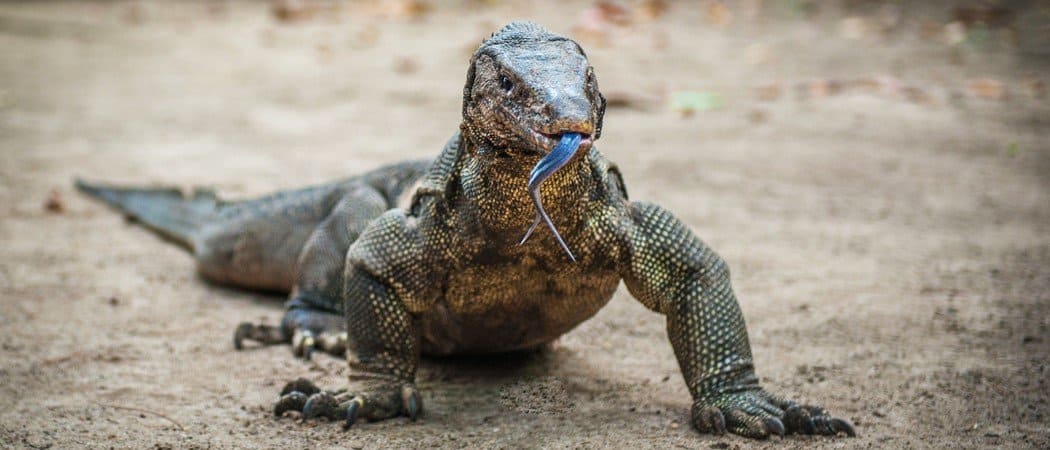
elena_photo_soul/Shutterstock.com

Monitor Lizard Distribution

Click a location to explore more animals from that region

Invasive Species
Loading map...

Found in 70 countries

Monitor Lizard in the Borneo island

At a Glance

Family Overview This page covers the Monitor Lizard family as a group. Stats below are general traits shared across the family.
Also Known As Goanna, Biawak, Bayawak, Waran
Diet Omnivore
Activity Diurnal+
Lifespan 12 years
Weight 90 lbs
Status Not Evaluated
Did You Know?

Varanidae spans a huge size range: from ~20 cm pygmy monitors to ~3 m Komodo dragons.

Scientific Classification

Family Overview "Monitor Lizard" is not a single species but represents an entire family containing multiple species.

Monitor lizards (family Varanidae) are large to medium-sized squamate reptiles, best known from the genus Varanus. They are active, primarily carnivorous/omnivorous foragers with strong limbs, long necks and tails, and well-developed sensory abilities.

Kingdom
Animalia
Phylum
Chordata
Class
Reptilia
Order
Squamata
Family
Varanidae

Distinguishing Features

  • Elongate body with powerful limbs and long, laterally compressed tail in many species
  • Forked tongue used for chemosensory tracking (similar functional use to snakes)
  • Generally active, wide-ranging foraging behavior and high intelligence for reptiles
  • Typically robust skull and sharp, recurved teeth; diets range from invertebrates to vertebrates and carrion

Physical Measurements

Males and females differ in size

Length
♂ 3 ft 11 in (9 in – 10 ft 2 in)
♀ 3 ft 3 in (8 in – 8 ft 6 in)
Weight
♂ 9 lbs (0 lbs – 198 lbs)
♀ 9 lbs (0 lbs – 154 lbs)
Tail Length
♂ 2 ft 4 in (4 in – 5 ft 7 in)
♀ 1 ft 10 in (3 in – 5 ft 3 in)
Top Speed
12 mph
running
Venomous

Appearance

Primary Colors
Secondary Colors
Skin Type Dry, keratinized, overlapping scales with a pebbled look; many have robust cranial osteoderms and very tough skin. Tail scalation varies from round (terrestrial/arboreal) to laterally compressed (semi-aquatic) forms.
Distinctive Features
  • Measurements (range across family): ~20-25 cm to ~3 m total length; roughly tens of grams to ~70-90+ kg in the largest species.
  • Lifespan (range across family): commonly ~8-30+ years, with smaller species shorter-lived and large species often longer-lived (especially in captivity).
  • Elongate body with long neck, powerful limbs, and strong, curved claws for digging and climbing.
  • Long, muscular tail used for balance, propulsion in water (in some), and defense.
  • Forked tongue with strong chemoreception (Jacobson's organ), aiding active hunting and scavenging.
  • Typically diurnal, wide-ranging foragers; activity levels and home-range sizes vary strongly by habitat and body size.
  • Diet breadth: many are carnivorous (invertebrates to vertebrates and carrion); some are more omnivorous, and small species may be largely insectivorous.
  • Habitat diversity across Africa-Asia-Australia: deserts, savannas, forests, mangroves, river systems, and coastal zones; arboreal and semi-aquatic lifestyles occur in multiple lineages.
  • Reproduction: oviparous; clutch sizes vary widely, and some species use termite mounds or burrows for nesting.
  • Oral secretions/venom-associated glands occur in the family; effects on humans are usually mild and vary by species.

Sexual Dimorphism

Often subtle to moderate: males commonly grow larger with broader heads, thicker necks, and more robust tail bases, especially during breeding. Degree of dimorphism varies widely among species and populations, and some show minimal visible differences.

♂
  • On average larger body size and mass in many species.
  • Broader, more muscular head and thicker neck common in adult males.
  • Thicker tail base with hemipenal bulges (when visible).
  • More frequent or intense combat scars in some species due to male-male rivalry.
♀
  • Often smaller and more slender-bodied in species with male-biased size dimorphism.
  • Gravid females may show pronounced abdominal distension during egg development.
  • In some species, females exhibit reduced head width relative to males.

Did You Know?

Varanidae spans a huge size range: from ~20 cm pygmy monitors to ~3 m Komodo dragons.

Many monitors "smell" by flicking a forked tongue to deliver scent particles to the Jacobson's (vomeronasal) organ.

They're among the most athletic lizards-built for endurance walking, climbing, digging, and (in several species) powerful swimming.

Several species (famously Komodo dragons) can reproduce by parthenogenesis (females producing offspring without mating).

Some monitors possess mild venom glands; in large species this can contribute to prey shock and prolonged bleeding.

Diet is flexible across the family: mostly carnivory, but many species also scavenge and some regularly eat fruit, eggs, and crustaceans.

Different "life styles" occur within the family: arboreal, terrestrial, semi-aquatic, desert-dwelling, and island giant forms.

Unique Adaptations

  • Forked tongue + highly developed chemosensory system (vomeronasal organ) for tracking prey and navigating complex environments.
  • Long necks and strong limb girdles for active pursuit and powerful digging/climbing; generally more "endurance-built" than many lizards.
  • Robust tails used for balance, propulsion in water (in semi-aquatic species), and defense (whip-like strikes in some).
  • Skull and tooth diversity: from slender, gripping teeth in insect/vertebrate hunters to laterally compressed, serrated teeth in giant species-reflecting varied prey.
  • Efficient cardio-respiratory performance for a reptile: supports sustained movement and active hunting compared with many other squamates.
  • Physiological flexibility: species occur from humid mangroves and rainforests to arid interior deserts, showing broad tolerance to heat and water availability.
  • Reproductive versatility: most lay eggs, often using warm nesting sites (e.g., soil banks or termite mounds in some regions); a few can reproduce via parthenogenesis under certain conditions.

Interesting Behaviors

  • Active, wide-ranging foraging: many species patrol large home ranges compared with most lizards; smaller species often forage more locally.
  • Tongue-flick trail-following: individuals can track prey, carrion, and even mates by chemical cues.
  • Opportunistic feeding: predation and scavenging are both common; group feeding occurs at large carcasses in some species.
  • Burrow use and digging: many species excavate shelters or use termite mounds, hollow logs, rock crevices, or mammal burrows (varies by habitat).
  • Climbing and swimming specializations: some are strongly arboreal; others are semi-aquatic and hunt fish, crabs, and amphibians.
  • Bipedal "periscoping"/stance: some monitors rear up to survey surroundings or during conflict displays.
  • Seasonal shifts: activity, reproduction, and diet often track rainfall/temperature cycles; timing varies across Africa, Asia, and Australia.

Cultural Significance

Across Africa, Asia, and Australia, monitor lizards (Varanidae), called goannas in Australia, are both respected and hunted for meat, eggs, skins, and pets. As predators and scavengers they control pests and eat carrion, sometimes causing conflict with people. Their boldness and intelligence also draw media and nature tourism.

Myths & Legends

Komodo Island and Flores, Indonesia: a legend says a woman or princess had twins — human boy and Komodo dragon. Elders stopped the boy from hunting the dragon, calling it family and should be respected.

Aboriginal Australia (various language groups): "goanna" ancestors appear in Dreaming/Dreamtime narratives as creator beings or culture heroes whose travels and actions shape landforms, waterholes, and law; goannas also serve as clan totems in multiple regions.

Northern Australia: some Dreaming stories describe ancestral goannas associated with fire-either carrying it, stealing it, or teaching its use-linking monitors with the spread of fire-making knowledge and the transformation of the landscape.

In parts of Island Southeast Asia, large monitor lizards (Varanidae) are treated with caution and respect; people often avoid harming them, seeing them as protectors, ancestors, or strong signs linked to homes or villages.

Conservation Status

NE Not Evaluated

Has not yet been evaluated against the criteria.

Population Unknown

Protected Under

  • CITES: Varanus spp. largely listed on Appendix II; Varanus komodoensis listed on Appendix I
  • National wildlife protection laws and hunting/trade regulations in many range states (varies by country and species)
  • Protected-area networks across Africa, Asia, and Oceania provide partial habitat refuge (coverage and enforcement vary)

You might be looking for:

Komodo Dragon

22%

Varanus komodoensis

Largest living lizard; endemic to a few Indonesian islands; apex predator/scavenger.

View Profile

Nile Monitor

20%

Varanus niloticus

Large, semi-aquatic African monitor commonly encountered near water.

View Profile

Asian Water Monitor

18%

Varanus salvator

Widespread in South and Southeast Asia; highly adaptable and often found in wetlands and urban edges.

View Profile

Savannah Monitor

14%

Varanus exanthematicus

African savanna species; frequently kept in the pet trade.

View Profile

Perentie

10%

Varanus giganteus

One of Australia’s largest monitors; arid-zone specialist.

Life Cycle

Birth 15 hatchlings
Lifespan 12 years

Lifespan

In the Wild
4–30 years
In Captivity
5–40 years

Reproduction

Mating System Polygynandry
Social Structure Solitary
Breeding Pattern Transient
Fertilization Internal Fertilization
Birth Type Internal_fertilization

Across Varanidae, adults are mostly solitary; mating occurs during seasonal breeding periods when ranges overlap. Males compete (often via combat) and may mate with multiple females, while females may also mate with multiple males; no pair bonds form.

Behavior & Ecology

Social Aggregation Group: 1
Activity Diurnal, Crepuscular, Cathemeral, Nocturnal
Diet Omnivore Animal prey-especially large insects and small vertebrates; carrion is readily taken when available (some species also consume fruit seasonally).
Seasonal Hibernates

Temperament

Generally alert, highly investigative foragers; responses range from shy to very bold.
Often wary and evasive in the wild; habituated individuals can become tolerant around humans.
Territoriality varies: many defend core basking/feeding areas; others overlap broadly with minimal conflict.
When threatened may bluff (inflation, hissing) or escalate to biting, clawing, tail-whipping.
Feeding behavior is opportunistic: active hunting, digging, climbing or swimming depending on species.
Diet spans mostly carnivory to omnivory; scavenging is common where large carrion is available.
Body size across family spans ~20 cm to >3 m total length; ~0.02 kg to 70+ kg.
Lifespan across species is roughly ~5-30+ years (longer in larger species and captivity).

Communication

Hissing and forceful exhalations during threat displays
Low growls/rasps in close-range antagonistic encounters Reported in larger species
Tongue-flicking to sample airborne/ground chemicals; primary social and foraging information channel
Visual postures: body inflation, head elevation, lateral presentation, gaping to deter rivals/predators
Physical signaling: tail lashing, pushing, wrestling/locking during male-male contests
Chemical cues via feces/urates and glandular secretions; likely important in mate/territory assessment
Tactile interactions during courtship and combat; gripping with jaws/claws can occur

Habitat

Biomes:
Tropical Rainforest Tropical Dry Forest Savanna Desert Hot Desert Cold Mediterranean Temperate Grassland Temperate Forest Temperate Rainforest Freshwater Marine Wetland +6
Terrain:
Mountainous Hilly Plateau Plains Valley Coastal Island Riverine Volcanic Karst Rocky Sandy Muddy +7
Elevation: Up to 6561 ft 8 in

Ecological Role

Versatile predators (often mesopredators; sometimes apex predators on islands) and opportunistic scavengers across tropical/subtropical ecosystems; diet breadth and trophic impact vary strongly with body size, habitat (arboreal/terrestrial/semi-aquatic), and local prey availability.

regulation of insect and small-vertebrate populations removal of carrion and associated nutrient recycling linking terrestrial and aquatic food webs in semi-aquatic species potential seed dispersal where fruit is consumed influencing nest success of ground- and burrow-nesting animals via egg predation

Diet Details

Main Prey:
Insects and other arthropods Invertebrates Eggs Small reptiles Amphibians Birds Mammals Fish Carrion +3
Other Foods:
Fruit Flowers and nectar soft plant matter

Human Interaction

Domestication Status

Wild

Danger Level

High
  • Large interspecific variation: many small monitors pose mainly a bite/scratch risk, while the largest species can cause severe injury or rarely fatal outcomes.
  • Deep lacerations and puncture wounds from strong jaws and serrated/recurved teeth; significant tearing injuries can occur during defensive thrashing.
  • Claw injuries during handling/escape attempts; powerful tail whips can bruise or fracture small bones.
  • Infection risk from oral bacteria and contaminated wounds; prompt cleaning and medical evaluation are important after significant bites.
  • Handling/containment hazards: strong, intelligent escape behavior; risk to children and pets; bites often occur during feeding or improper restraint.
  • Human-wildlife conflict risks: defensive attacks when cornered, guarding nests, or habituated individuals approaching food sources; risk increases with animal size and habituation.

As a Pet

Not Suitable as Pet

Legality: Laws vary by country, state, and species. Many monitors (most Varanus spp. on CITES Appendix II; Komodo dragon Appendix I) need permits for trade. Some areas ban large monitors or require safe cages.

Care Level: Expert Only

Purchase Cost: $100 - $10,000
Lifetime Cost: $5,000 - $100,000

Economic Value

Uses:
Pet and captive-breeding trade (variable legality and sustainability) Leather/skin trade Meat and eggs (regional use) Traditional medicine and cultural uses (regionally) Ecotourism and wildlife viewing (notably large species) Research and education (physiology, behavior, venom/anticoagulant compounds) Ecosystem services (predation/scavenging; sometimes pest control)
Products:
  • live animals (captive-bred and wild-caught; species-dependent regulation)
  • leather goods (belts, wallets, fashion items from monitor skins)
  • meat/eggs in some local markets
  • display animals for zoos/education programs
  • tourism revenue in areas with habituated populations
  • biomedical/biochemical research insights from saliva/venom-associated proteins (not a consumer 'product' but an economic/research output)

Relationships

Related Species 6

Gila monsters and beaded lizards Helodermatidae Shared Order
Earless monitor lizard
Earless monitor lizard Lanthanotus borneensis Shared Order
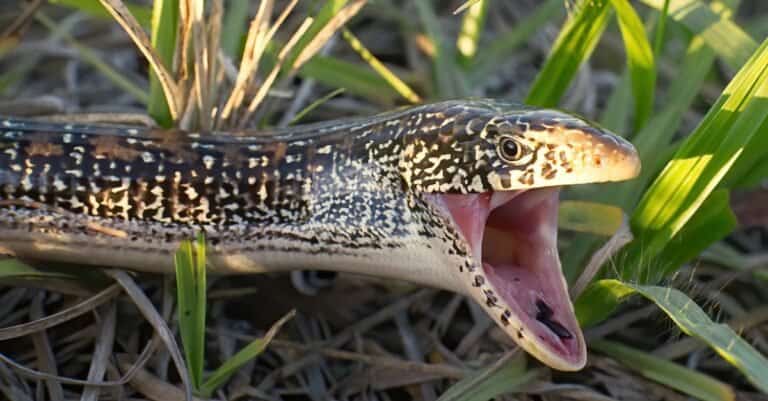
Alligator lizards, glass lizards, slowworms
Alligator lizards, glass lizards, slowworms Anguidae Shared Order
Plated lizards Gerrhosauridae Shared Order
Knob-scaled lizards Xenosauridae Shared Order
Crocodile lizard Shinisaurus crocodilurus Shared Order

Ecological Equivalents 6

Animals that fill a similar ecological role in their ecosystem

Tegus
Tegus Salvator spp. Large, active, diurnal lizard foragers. Many occupy a similar mesopredator/omnivore niche and take comparable prey (invertebrates, vertebrates, eggs, and carrion).
Crocodiles
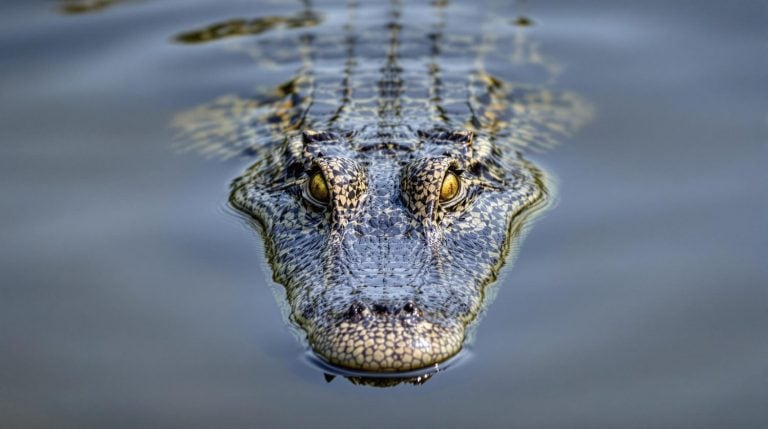
Crocodiles Crocodylus spp. In rivers and mangroves, large aquatic monitors overlap with crocodiles as opportunistic predators and scavengers; crocodiles also act as major predators of monitors.
Large python Pythonidae In tropical systems, large pythons and monitor lizards can both act as upper-level predators and scavengers; they prey on similar animals (birds, mammals, reptiles) and sometimes prey on each other.
Mongoose
Mongoose Herpestidae In parts of Africa and Asia, mongooses and smaller monitor lizard species overlap as opportunistic hunters of eggs, small vertebrates, and invertebrates in open habitats.
Raptors
Raptors They share diurnal hunting periods and can target similar prey sizes. Raptors are also key predators of juvenile and smaller monitors.
Small-to-medium crocodilian-like niche on islands On some islands and savannas, the largest monitor lizards (Varanidae) function as dominant terrestrial and shoreline predators and scavengers, roles otherwise often filled by mammalian carnivores or semi-aquatic crocodilians.

Types of Monitor Lizard

28

Explore 28 recognized types of monitor lizard

Komodo dragon
Komodo dragon Varanus komodoensis
Asian water monitor
Asian water monitor Varanus salvator
Nile monitor
Nile monitor Varanus niloticus
Savannah monitor
Savannah monitor Varanus exanthematicus
Perentie Varanus giganteus
Lace monitor
Lace monitor Varanus varius
Sand goanna Varanus gouldii
Argus monitor Varanus panoptes
Spiny-tailed monitor
Spiny-tailed monitor Varanus acanthurus
Black-headed monitor Varanus tristis
Mertens' water monitor Varanus mertensi
Mangrove monitor Varanus indicus
Crocodile monitor
Crocodile monitor Varanus salvadorii
Emerald tree monitor
Emerald tree monitor Varanus prasinus
Quince monitor Varanus melinus
Dumeril's monitor Varanus dumerilii
Rusty monitor Varanus semirubidus
Timor monitor Varanus timorensis
Bengal monitor Varanus bengalensis
Desert monitor Varanus griseus
White-throated monitor Varanus albigularis
Blue tree monitor Varanus macraei
Black rough-necked monitor Varanus rudicollis
Cunningham's monitor Varanus cunninghami
Rosenberg's goanna Varanus rosenbergi
Yellow monitor Varanus flavescens
Gray's monitor Varanus olivaceus
Australian pygmy monitor Varanus sparnus

Lizards in the monitor lizard family are among the largest lizards in the world.

These reptiles are mainly native to Asia, Africa, and Australia, but can also be found in parts of the Americas due to the illegal pet trade. Monitor lizards are known for their large claws, powerful tails, long necks, and well-developed legs. They can move quickly and powerfully in pursuit of prey. Most monitor lizards are terrestrial and largely carnivorous. Depending on the size of the lizard, they will eat anything from insects and birds to small mammals.

5 Incredible Monitor Lizard Facts!

  • Monitor lizards are considered to be the most intelligent of all lizards and some of the most intelligent reptiles in general.
  • Monitors do not blink and they have very good vision. Scientists have observed monitors watching planes in the sky.
  • Unlike many other reptiles, many monitor lizards have high metabolisms and burn energy like mammals.
  • As pets, monitors have been observed seeking human attention and wanting to play.
  • Monitors are alert and skilled predators. As dangerous as they are to smaller animals, their bites are not fatal to humans

Monitor Lizard Scientific name
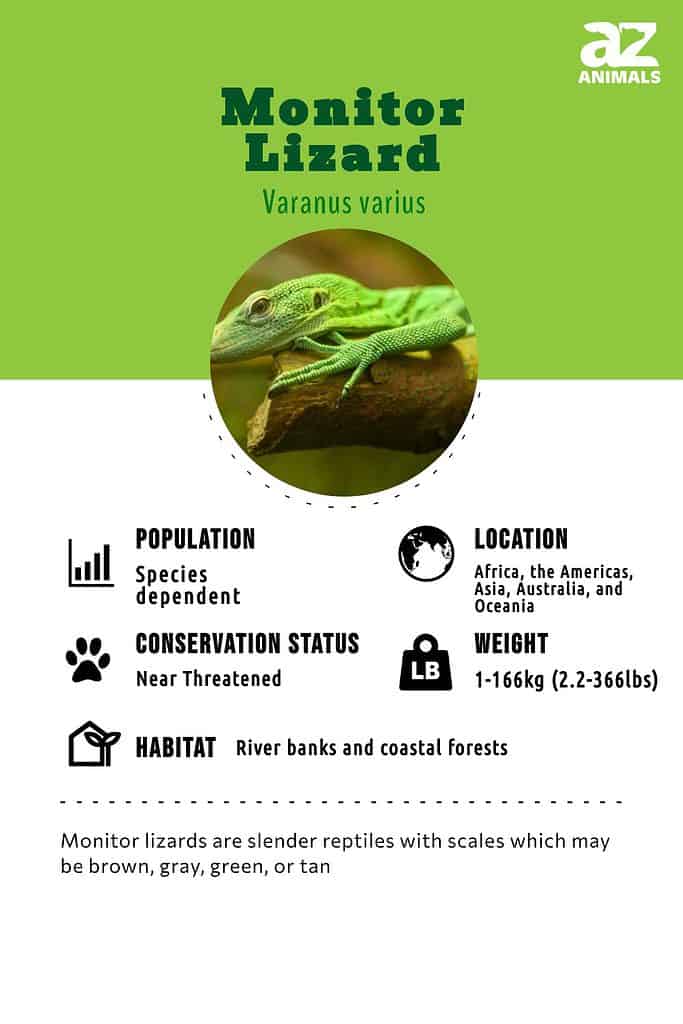
The monitor lizard belongs to the kingdom Animalia, the phylum Chordata, the class reptilia, the order Squamata, the family Varanidae, and the genus Varanus. There are a number of subgenera for the monitor lizard, including the following:

  • Empagusia
  • Euprepiosaurus
  • Odatria
  • Papusaurus
  • Philippinosaurus
  • Polydaedalus
  • Psammosaurus
  • Solomonsaurus
  • Soterosaurus
  • Varanus

The scientific name Varanus comes from an Arabic word that means dragon or lizard beast. The standard English name for the monitor lizard may come from the reptile’s habit of standing on its hind legs to look around.

Types

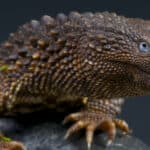
The genus Varanus consists of a wide range of species. The earless monitor is a rare species of monitor that lives in Borneo. It is the only species in the monitor subfamily Lanthanotinae. It looks much like other monitors with an elongated body, but has smaller limbs than normal.

Examples of other species include:

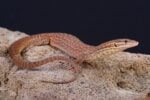
  • Ackies dwarf monitors (Varanus acanthurus): These varanids live in western Australia and are notable for their reddish coloration with cream-colored dots. They are mostly insectivorous although they may nibble on cat or dog food when in captivity. They are capable of growing up to 27 inches long.
  • Argus monitors (Varanus panoptes): Capable of growing to 5 feet, they are terrestrial and love to burrow. Although kept as pets, they are not above using their sharp claws to scratch while they attempt to squirm free. They are native to Australia and New Guinea.
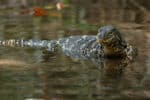
  • Asian water monitors (Varanus salvator): Second only to the Komodo in size, these varanids are semi-aquatic, and are powerful swimmers. They live among mangroves, swamps, or wetlands, and are capable of growing to 6½ feet.
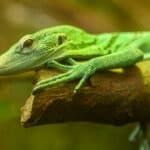
  • Emerald tree monitors (Varanus prasinus): These arboreal monitors are especially popular among pet owners owing to their bright colors. However, they are not above relying on their teeth when they feel frightened. The reptiles are capable of growing to approximately 40 inches.
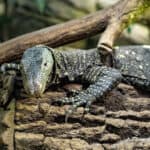
  • Crocodile monitors (Varanus salvadorii): Dark green with yellow spots, these monitors are rather reclusive and are noted for their especially long tails. They live in the rainforests and mangrove swamps of New Guinea and West Papua.
  • Gray’s monitors (Varanus olivaceus): Terracotta colored with wide darker bands about their bodies, and a generous sprinkling of yellow spots, these varanids are capable of growing to 6 feet. Arboreal and reclusive, they prefer to eat the fruit of the pandan tree, although they are also partial to crabs, birds, and spiders.
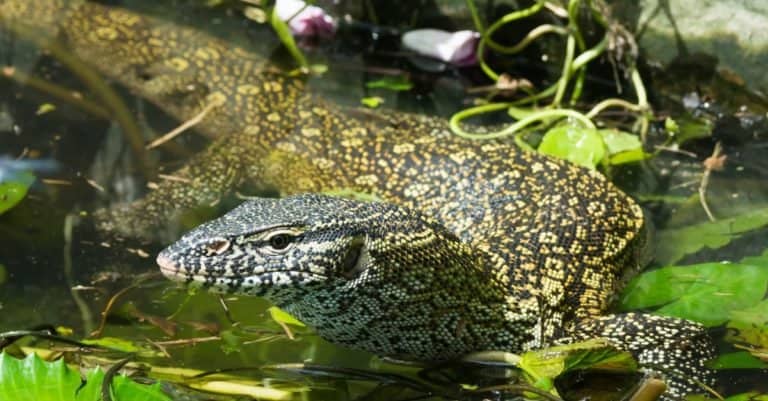
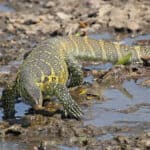
  • Nile monitors (Varanus niloticus): Capable of growing to 7 feet, they are the largest varanids in Africa. They live along the Nile and are capable climbers and swift runners. Florida is also home to a feral population of escaped and abandoned monitors which were once pets.
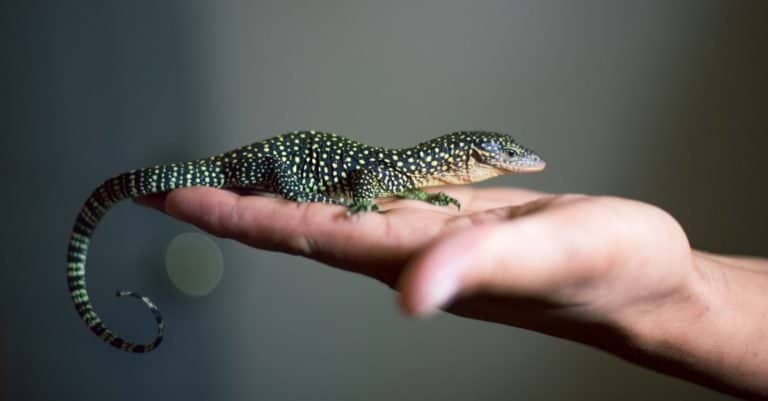
  • Peacock monitors (Varanus auffenbergi): Shy and reclusive, these small varanids are colored with thin paler bands and thicker dark bands flecked with turquoise dots. They are capable of growing to 60cm and are excellent climbers.
  • Black-throated monitors (Varanus albigularis ionidesi)
  • Black tree monitors (Varanus beccarii)
  • Dumeril’s monitors (Varanus dumerilii)
  • Earless monitor lizard (Lanthanotus borneensis)
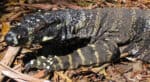
  • Lace monitors (Varanus varius)
  • Mangrove monitors (Varanus indicus)
  • Peach-throated monitors (Varanus jobiensis)
  • Rock monitors (Varanus albigularis)
  • Roughneck monitors (Varanus rudicollis)
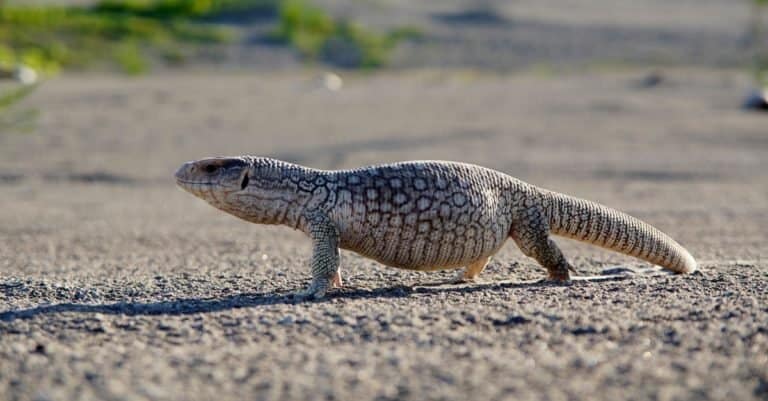
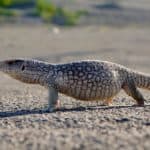
  • Savannah monitors (Varanus exanthematicus)
  • Timor monitors (Varanus timorensis)

Evolution

Experts believe that monitor lizards’ ancestors originated in Asia, based on their discovery of the Archaeovaranus which lived there during the Eocene era between 56 and 33 million years ago.

It is however worth noting that the Saniwa which was also a varanid and another close cousin, lived in Wyoming 48 million years ago, during the same era. It shared the same traits common to monitors in the present day such as a tail which was nearly double its body length and a finely tapered snout.

However the story of the genus dates as far back as 66 million years ago, or even further, during the Late Cretaceous era, when monitor lizards’ evolutionary branch separated from earless monitors’, who happen to be their closest cousins.

Appearance
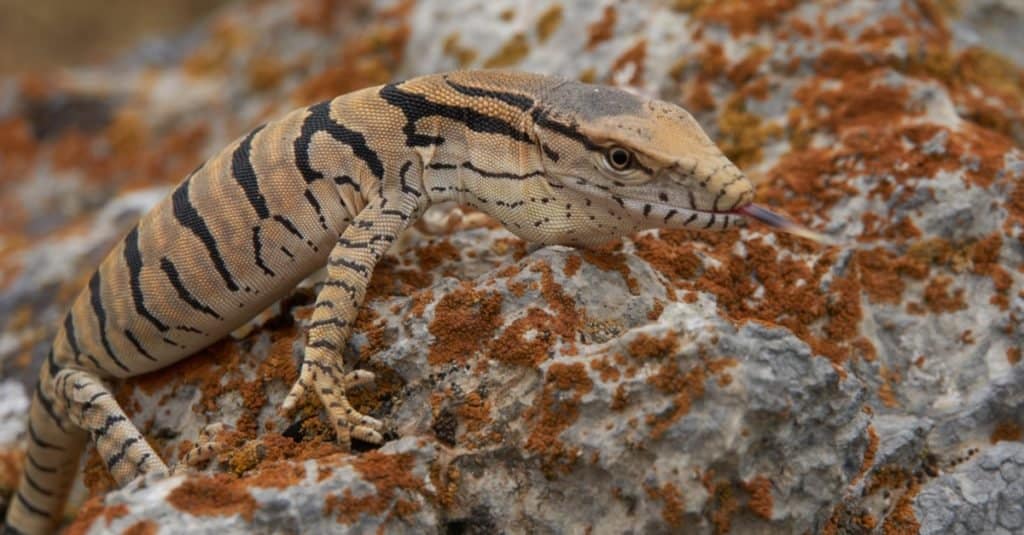
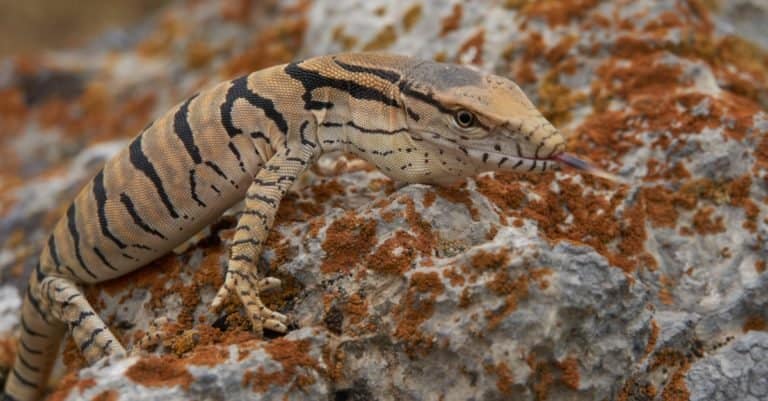
Young desert monitor lizard (Varanus griseus). Kyzylkum desert, Uzbekistan.

Types of monitor lizards vary widely in their appearance and size. The smallest species of monitor grows to only eight inches in length. However, several species are quite large and can grow to lengths between seven and ten feet. No matter what size they are, monitor lizards tend to have thick, solid bodies, long necks, well-developed legs, and long tails. Colors vary widely with mottled shades of brown, black, gray, green, yellow, and blue being most common.

Komodo Dragon vs. Monitor Lizard
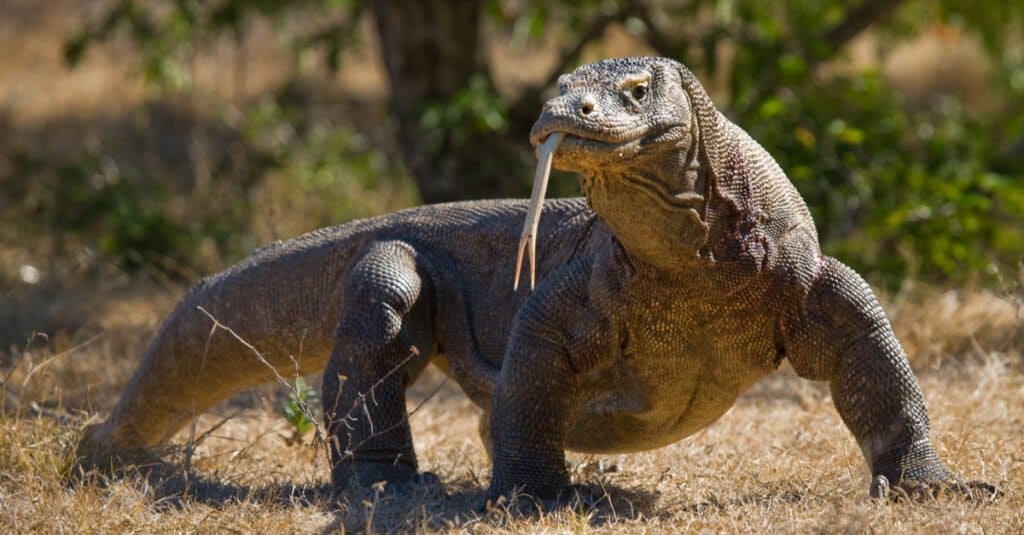
Are Komodo dragons poisonous or dangerous

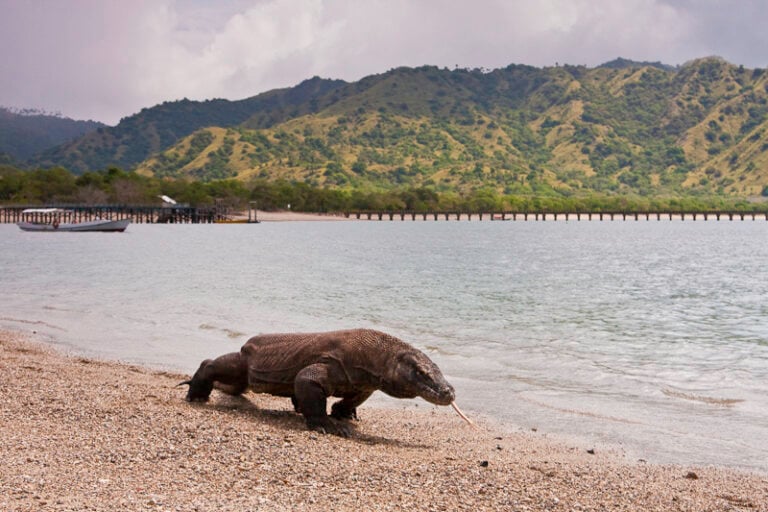
Komodo dragons are the largest types of monitor lizards and are capable of growing to 10 feet

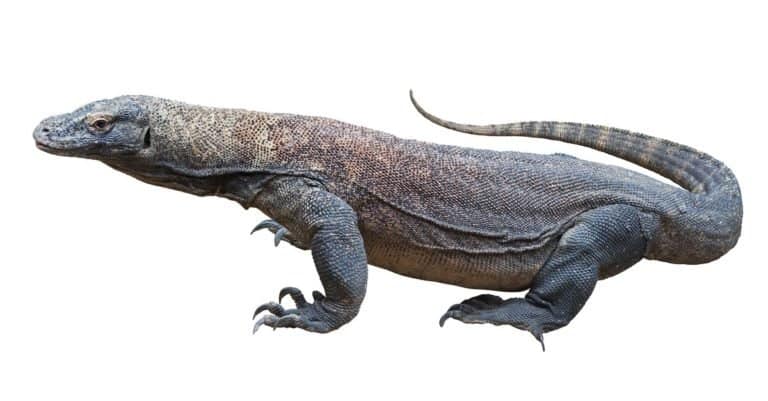
The Komodo dragon is actually a type of monitor lizard. Its scientific name is Varanus komodoensis. The Komodo dragon is the largest species of monitor lizard, and it can grow up to ten feet long and weigh 300 pounds. Komodo dragons are also generally known to be the most dangerous types of monitor lizards, and some attacks on humans have been recorded.

Komodo dragons look generally similar to other monitor lizards, but they tend to have larger and heavier frames. Most other types of monitors have a more slender appearance. The skin of a Komodo dragon is also unusual compared to other monitors. It has tiny bones called osteoderms throughout its skin, which reinforces its toughness against predators.

The dragon’s skin is thus very rugged and rough.

Behavior

Monitor lizards are generally solitary reptiles, but in some areas with limited water resources, monitors will gather in groups of up to 25. Otherwise, monitor lizards typically lead solitary lives until they come together to breed. Monitors are mostly terrestrial and move about most comfortably on land — especially with the larger species. There are a few arboreal and aquatic monitor species as well.

Most monitors are completely carnivorous. Monitors generally avoid humans but can be dangerous if provoked. They are faster than they appear and have strong jaws and tails. Monitors can be very aggressive in protecting their territory or food. Many monitors are active hunters that stalk and chase down their prey. Other types of monitors are more interested in scavenging.

Habitat
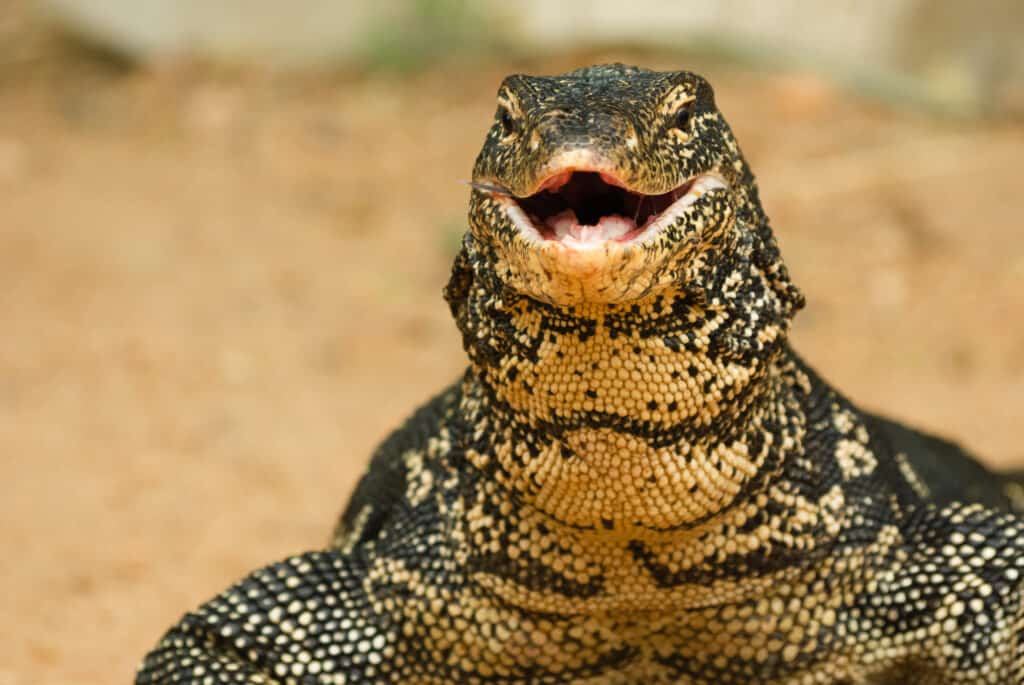
Some monitor lizards are aquatic, others arboreal, and most, terrestrial

These lizards are readily found in Africa and Asia as well as islands in Oceania. They can now be found in parts of the Americas, but they are considered an invasive species due to their non-native status. Monitor lizards in the Americas originated from the exotic pet trade. Monitor lizards adapt to many environments. They can be found in jungles and rainforests, but also in aquatic areas and hot and dry areas.

Water monitors like the Asian water monitor live in coastal areas with semiaquatic habitats such as swamps and mangroves. They also adapt to places with canal systems, such as those found in Sri Lanka.

Arboreal monitors like the Timor tree monitor spend most of their time in trees. They have long tails and sharp claws that are well-suited to climbing through branches and trees.

Diet

These lizards’ diet depends on where the reptile lives as well as its size and type. Tree monitors tend to eat insects and birds. Some species of tree monitor eat mostly fruit. Water monitors tend to eat anything they can find in the water. This includes fish, water birds, insects, eggs, and water mammals or reptiles. These lizards that largely live on land, such as the Komodo dragon, may eat a wide variety of live prey as well as carrion. The diet of the Komodo dragon consists of about 50% deer native to its island. Komodo dragons are also known to eat pigs and cattle if they can get them. These lizards are opportunistic predators.

For a complete analysis of what monitor lizards eat, we’ve published ‘What Do Monitor Lizards Eat? 11 Foods in their Diet.’

What eats monitor lizards?

Large adult monitors have few predators. Smaller monitors and baby lizards may be eaten by birds, other reptiles and lizards, wild cats, and humans.

What does a monitor lizard eat?

A wide variety of food including fruit, insects, birds, fish, mammals, and reptiles.

Predators and threats

bald eagle in flight

Birds of prey are known to feed on monitor lizards

For the largest species of these lizards, the main predator is humans. Some types of monitors are hunted by humans for their skin in the leather trade. The only exception to this is the Komodo dragon, which has rough and rugged skin not suitable for leather. For all types of monitors, the young lizards are preyed on by other lizards, snakes, large birds, fish, and big cats. Smaller lizards are also preyed on by these animals both when they are young and when they are adult size.

The conservation status of these lizards depends on the species. For example, the Komodo dragon is considered vulnerable. On the other hand, the Asian water monitor has a conservation status of least concern. The Panay monitor lizard is considered endangered. These lizards mainly lose their numbers due to threats to their habitat, decreasing water resources, and hunting from humans.

Pets
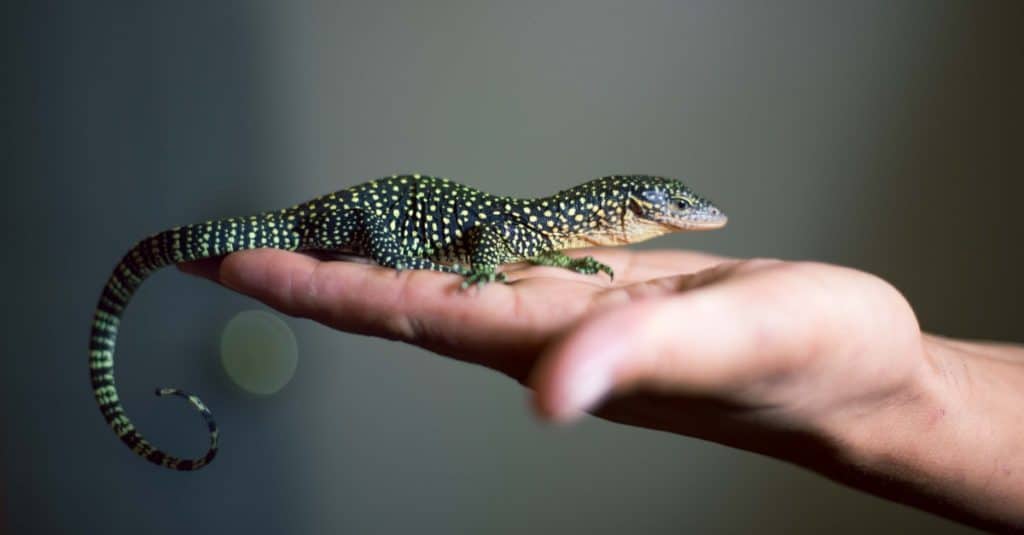
Newly Hatched Monitor Lizard on Hand

Monitor lizards are rather popular among exotic pet enthusiasts

There are five different species of Monitor Lizards that can be owned as pets, these are:

  • The Ackie Monitor
  • Blackthroat Monitors
  • Whitethroat Monitors
  • Water Monitors
  • Savannah Monitors

The Ackie is one of the best monitor lizard species to own as a pet. Ackies are a relatively small species by monitor standards, and that alone has its advantages. Ackies will usually measure about 2 – 3 ft as adults and come in shades of yellow and red.

There no personality difference that separates the two color variations.

Although, these pets are exotic and rare, they are becoming more popular with time.

Reproduction, Babies, and Lifespan
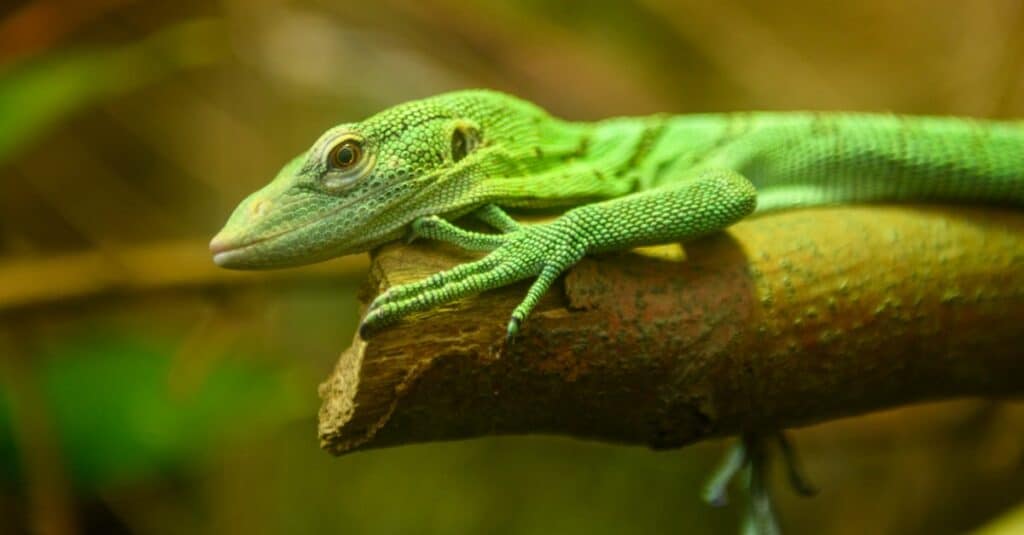
close up of an emerald tree monitor

Most young monitor lizards take to tree branches to increase their chances of survival

Males will often fight to mate with females. The Komodo dragon usually mates between May and August, and eggs are then laid around September. Female lizards are often antagonistic towards the male, which means the male has to fully restrain them during mating or they may get injured.

These lizards typically lay their eggs in a concealed nest in the ground. They might also lay them in hollow tree stumps. The exact method differs depending on the species. For example, the Komodo dragon might lay its eggs in abandoned ground bird nests, or they might lay them in holes in the ground or hills. Some monitor species can lay as many as 30 eggs. Komodo dragons lay about 20. Nile monitors have a clever way of laying eggs where they dig them into termite mounds. The termites will naturally cover the hole, thus providing a secure and warm place for the eggs. When the eggs hatch, the baby lizards often eat the termites before leaving the mound.

As young lizards and unhatched eggs are attractive to many predators, not many young lizards survive from the original clutch. Young land monitors may spend much of their early life in trees to avoid predators.

Most of these lizards can live at least 20 years. Komodo dragons may take as long as nine years to reach full maturity. They can live up to 30 years. Larger monitors tend to live longer than smaller species.

Population

There are roughly 80 species of these lizards in the world. The smallest species live in trees or water, and population data is unknown for most of them. The rare earless monitor lizard is an example of a species whose population data is unknown. It’s considered vulnerable due to its small range. However, the earless monitor is nocturnal and is not often seen by locals. Many of the smallest monitors have unknown data. Large species like the Komodo dragon are protected in some areas to keep their numbers from dwindling. Loss of food sources and habitat are the main reasons for monitor populations going down. If food and habitat are plentiful, then monitor populations in these areas tend to increase.

In Captivity

There are plenty of zoos across the country where you can see Komodo dragons and other monitor lizards, including the following:

Similar Animals

  • Iguana: Large and colorful, they’re considered an invasive species in some regions and a favorite among pet enthusiasts in others. Find out about this reptile which is capable of growing up to 7 feet.
  • Komodo dragon: With a maximum length of over 10 feet it is simply immense. And it’s not only dangerous but clever too. Discover all you need to know about this powerful ambush predator.
  • Skink Lizard: Some are aquatic, others are arboreal. And they’re found all over the planet. Here’s all you need to know about these reptiles capable of laying eggs and birthing live young at the same time.
View all 329 animals that start with M

Sources

  1. Wikipedia / Accessed March 2, 2021
  2. National Parks / Accessed March 2, 2021
  3. Britannica / Accessed March 2, 2021
  4. Daily Science Journal / Accessed March 2, 2021
  5. Biology Dictionary / Accessed March 2, 2021
  6. Switch Zoo / Accessed March 2, 2021
  7. National Geographic / Accessed March 2, 2021
  8. Pet Helpful / Accessed March 2, 2021

Dana Mayor

About the Author

Dana Mayor

I love good books and the occasional cartoon. I am also endlessly intrigued with the beauty of nature and find hummingbirds, puppies, and marine wildlife to be the most magical creatures of all.
Connect:

Thank you for reading! Have some feedback for us?


Monitor Lizard FAQs (Frequently Asked Questions)

Most monitor lizards are largely carnivorous. However, many are omnivores and eat fruit and vegetables along with meat.