Peacock
 Verified by: AZ Animals Staff
A group of peafowls is called a muster.
Advertisement
Peacock Scientific Classification
Read our Complete Guide to Classification of Animals.
Peacock Conservation Status
Peacock Facts
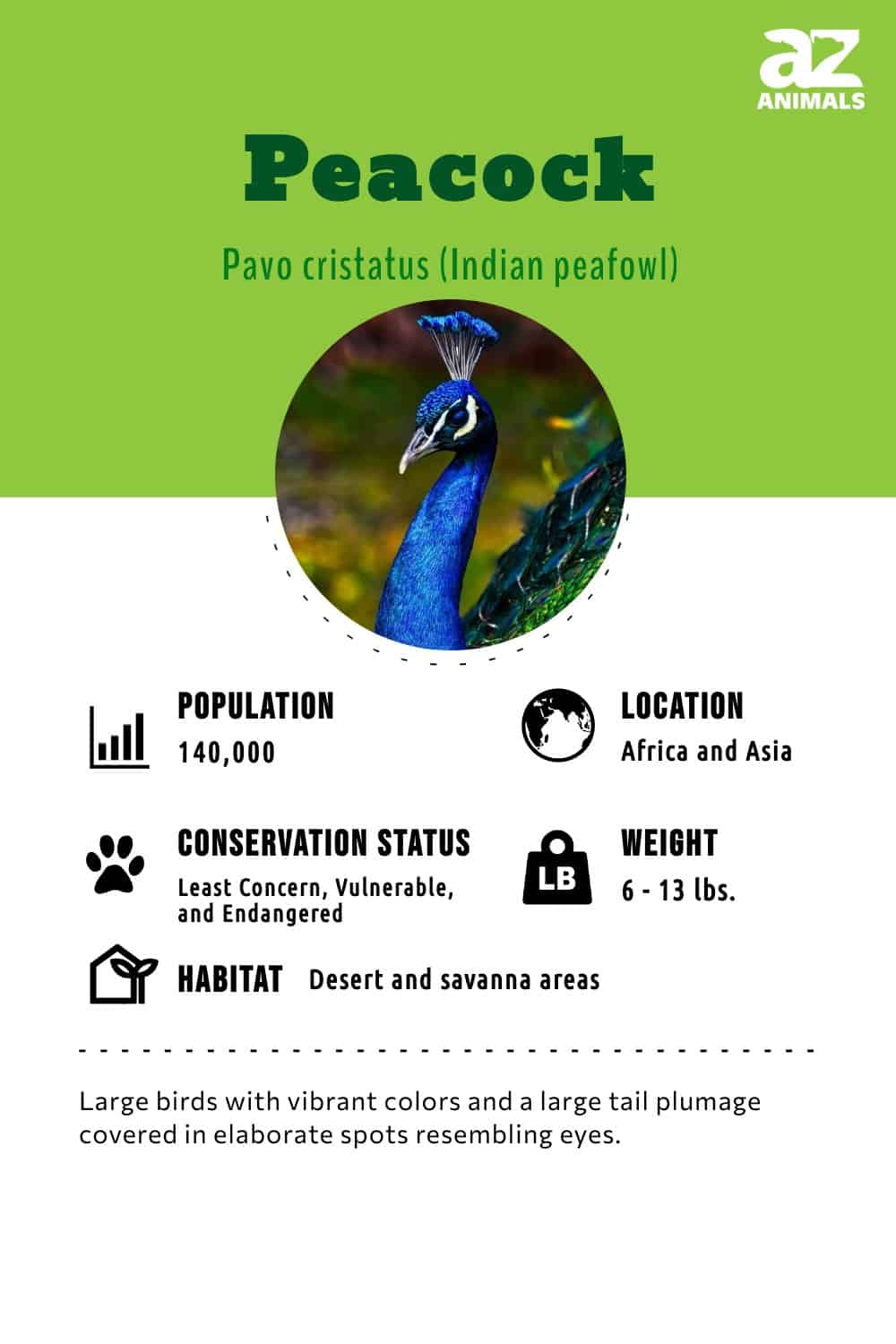
- Main Prey
- Grains, Seeds, Insects
- Fun Fact
- A group of peafowls is called a muster.
- Distinctive Feature
- Long tail feathers and colourful tail of males
- Wingspan
- 3-10 ft
- Incubation Period
- 27-30 days
- Habitat
- Desert and savanna areas
- Predators
- Dogs, Raccoon, Tiger, Wild cats
- Diet
- Omnivore
- Lifestyle
- Solitary
- Favorite Food
- Grains
- Type
- Bird
- Average Clutch Size
- 6
- Slogan
- Most commonly found on the Indian mainland!
- Nesting Location
- Ground
- Age of Molting
- 3 years

 © Drop of Light/Shutterstock.com
View all of the Peacock images!



How to Add Us to Google News


“Peacocks are among the biggest flying birds on earth.”
Peacocks are famous for their large, iridescent tail feather plumage. While it is the most widely recognized feature of peafowls, only males have these beautiful tail colorings. Some species have plumage that is smaller than the commonly known blue peacock, or Indian peacock which is what most people picture when they think of a peacock.
Amazing Peacock facts!
- Peacocks use their unique plumage both to attract mates and to discourage predators by appearing bigger.
- The eye-like spots on the tail feathers are called ocelli.
- Peafowls are protected under the 1972 Indian Wildlife Act.
- A muster, pride, or ostentation refers to a group of these birds.
- Blue is the rarest color in nature, making peacocks one of the few blue animals across the world!
You can check out more incredible facts about peacocks.
Where To Find Them
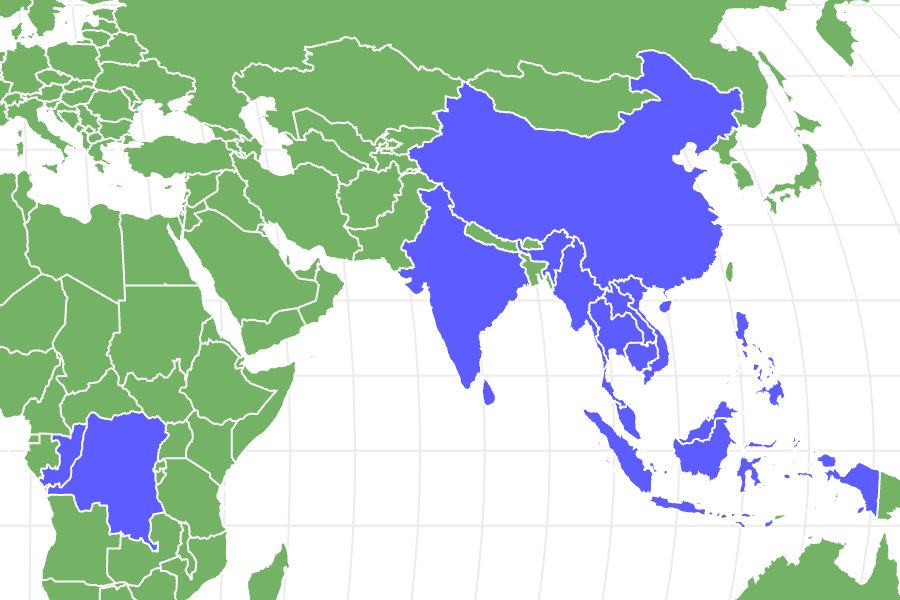
The origin of these birds is Asia. The blue peacock, specifically, has origins in India. This is why they are commonly called Indian peacocks or peafowls. They can also be found in the wild in Africa, where the lesser-known Congo peacock has its origin. You can also find peafowls in some areas of Australia. They prefer their habitat to be in a warm climate, so the best places to find them would be locations such as the desert and savannah. The best time of year to observe peafowl is in the summer because it is breeding season and they are likely to be more active. These birds show the most activity in the morning and around dusk. They like to live in forest areas as well. These birds can also be seen in zoos around the world. Generally, most captive peafowls in zoos are Indian peacocks. There are also a large number of people who own peacocks as pets or have them on their farms.
Nests
Peahens build their nests on the ground, in a shallow hole padded with grass. They usually make their nests in areas that are sheltered by bushes, shrubs, or other vegetation, to keep the eggs safe from predators.
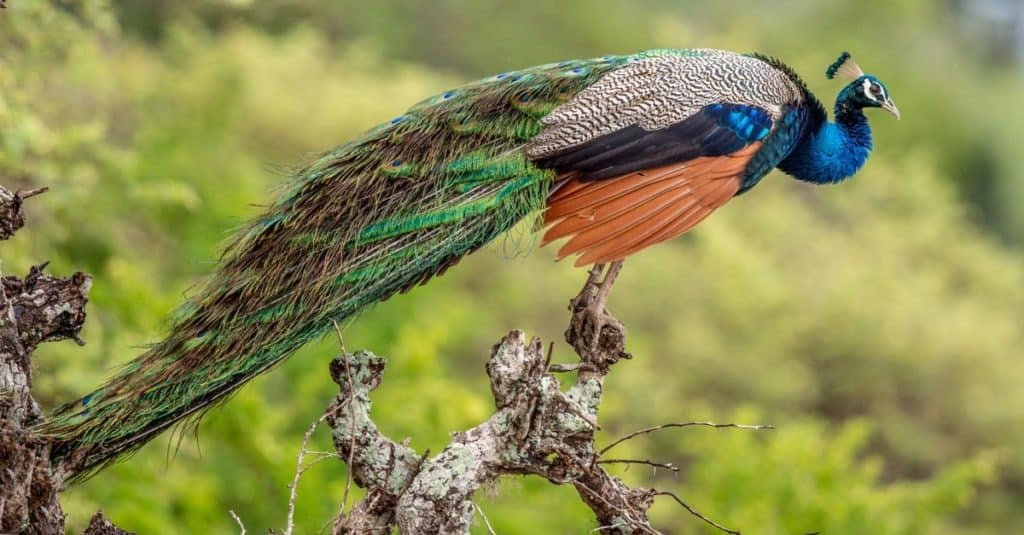
Peacocks show the most activity in the morning and around dusk.
©Sergey Uryadnikov/Shutterstock.com
Scientific Name and Types of Peacocks
There are three species of peafowl and they all have different colors. Their class is Aves class and they belong to the Galliformes order. Peafowls are most closely related to pheasants. The two species both belong to the Phasianidae family and are ground birds.
- Indian Peacock – Pavo cristatus is the scientific name for the Indian Peacock, the most populated and most commonly known species today. While they have been introduced to other areas, they originated in India. They are known for their stunning blue color.
- Green Peafowl – The scientific name for Green peafowl is Pavo muticus. They are also called Indonesian Peafowl. They can be found in Indochina and Southeast Asia. The chest and neck of the Green Peafowl is green for both males and females. The Indian peacock and the Green peacock are subspecies belonging to the Pavo genus.
- Congo Peafowl – This peacock has the scientific name of Afropavo congesnis and is a member of the Afropavo genus. They are also called African Peafowl and can be traced to the Congo Basin. While they still have some stunning colors, they are not as colorfully adorned as their Asian cousins.
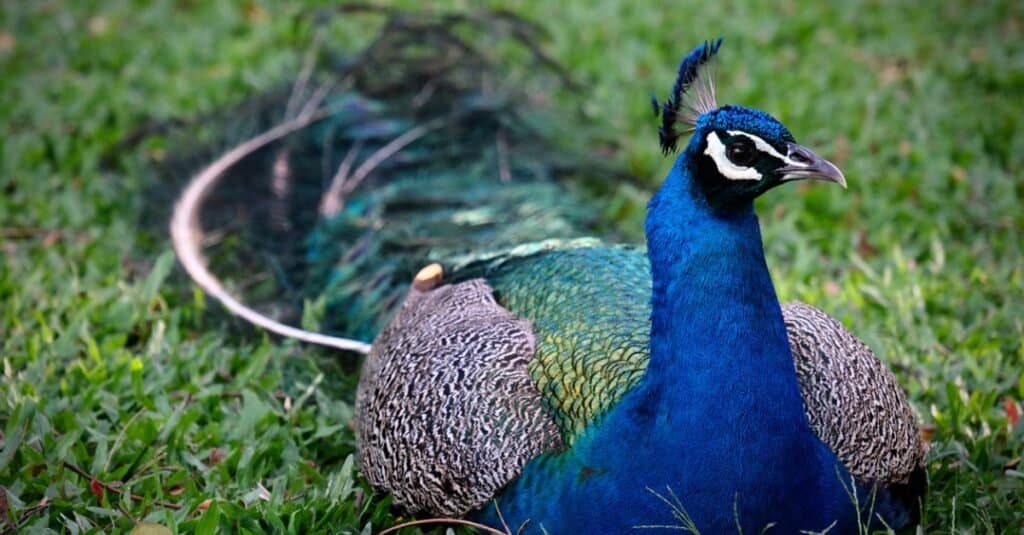
Peacocks belong to the Phasianidae family and are ground birds.
©iStock.com/Marina_Poushkina
History and Evolution
Because the peacock has such an obvious physical difference from the peahen, it became a fascinating study for scientists, especially Charles Darwin. He was actually stumped at the adaptation of the males’ long and beautiful train which makes the peacock truly amazing. He finally came to the conclusion that the appearance of a rich, vibrant train was advantageous for mating, and ultimately it outweighed the disadvantages of the encumbrance of such a tail.
The peacock is the national bird of India for good reason. They truly are one of the most visually striking birds in all of the animal kingdom. Moreover, they can be found in different mythologies, such as in Greek and Hindu.
Size, Appearance, & Behavior
The bird’s size and appearance vary by type. Generally, these birds can weigh between eight and a half to 13 pounds and grow roughly two to ten feet long. Their height can range from just under three feet to a little over four feet tall. The Indian peacock is striking. These spots are called ocelli.
As its name suggests, the Green peacock is usually a green hue and has a similar-looking plumage to the Indian peacock when it spreads its tail feathers. The Congo peacock’s appearance is somewhat different from the other two subspecies. The colors of a Congo peacock can be brown or gray and the train, or tail feathers, are significantly smaller than the others.
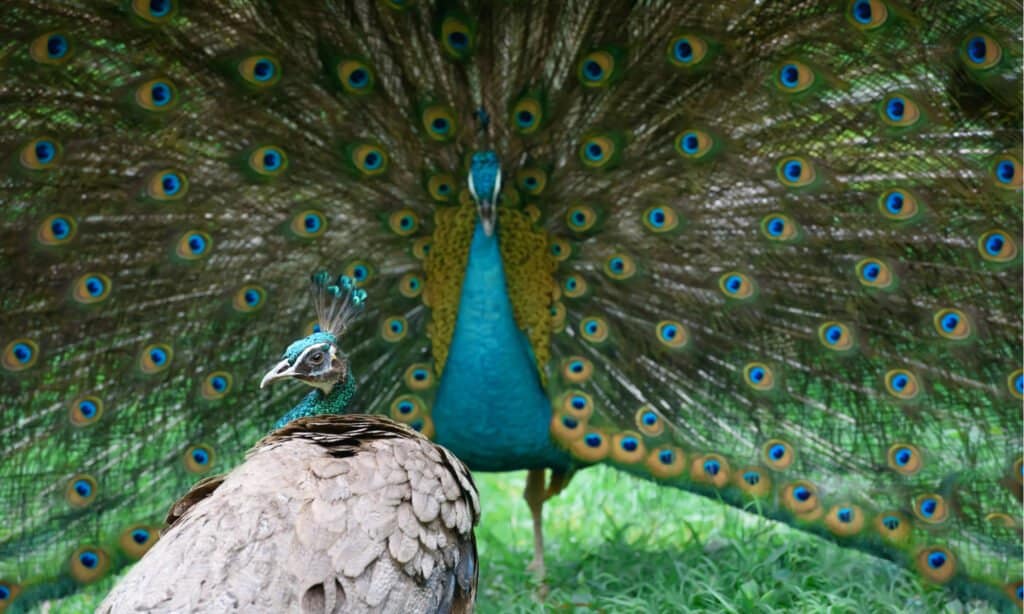
Female peafowls, called peahens, are usually smaller than males and have neutral colors rather than bright hues. Peahens also do not have the tail feather plumage males have. Some peafowls are all white. These are commonly referred to as albino peacocks. However, it is scarce for a peafowl to be a true albino. These birds have a condition called Leucism, which differs greatly from albinism. Most white peacocks are not albino at all.
Peafowls, like many other animals, use sound to communicate. A screeching sound is used to warn of a nearby predator. Peacocks will use a songlike sound as a mating call to attract peahens. The sounds made by peafowls can be extremely loud. Peacocks also fan out their train, or tail feathers to make themselves look bigger in defense of predators.
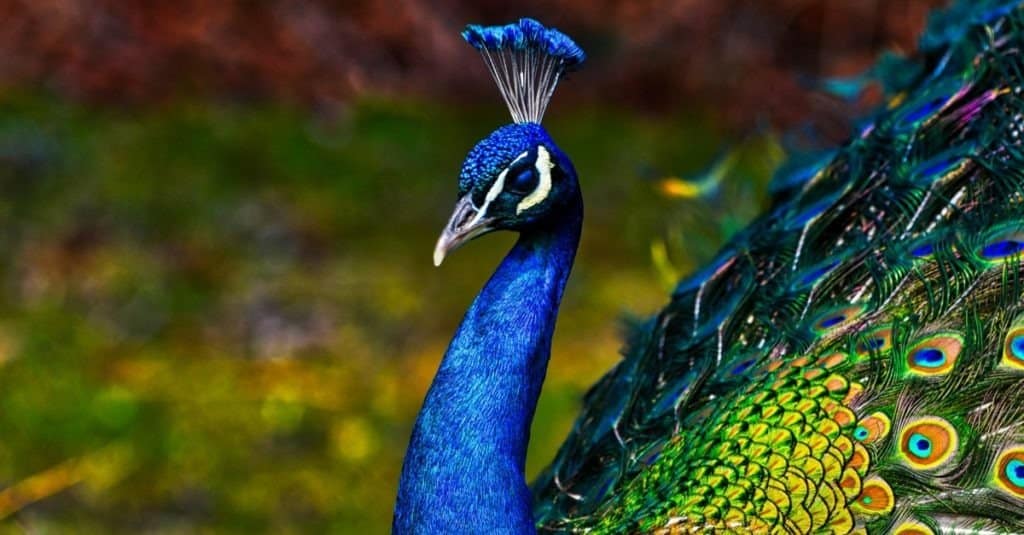
The Indian peacock is a striking, vibrant blue color with a large tail plumage covered in elaborate spots resembling eyes.
©Katerina Cechova/Shutterstock.com
Diet
Peafowls are omnivores, which means they eat both plants and animals.
What do they eat?
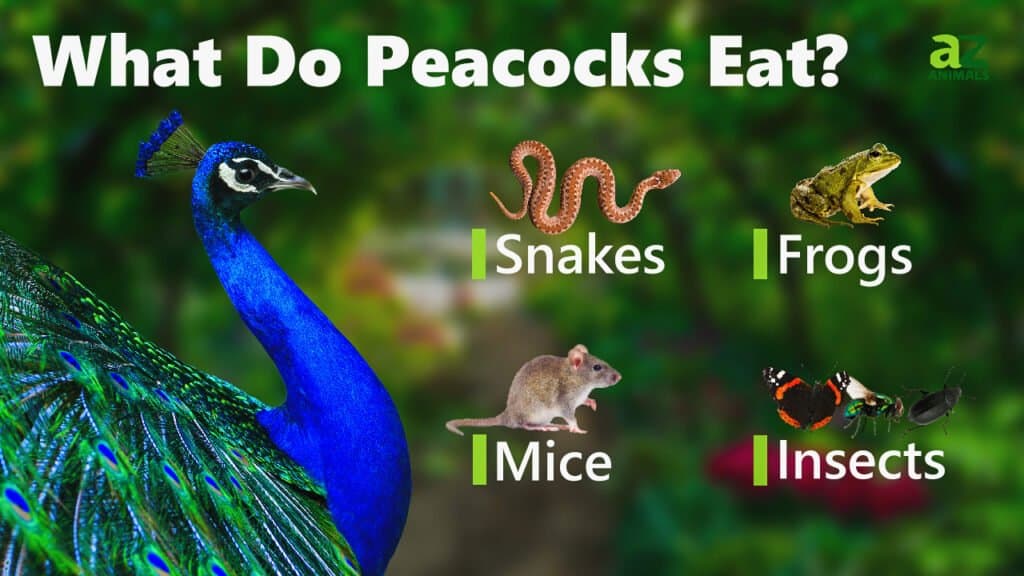
The diet for these birds generally consists of a variety of plants and plant matter, including grass, roots, flowers, fruits, and seeds. They also feed on many insects, worms, and amphibians such as snakes and frogs. For a complete list of foods peacocks eat, check out our “What Do Peacocks Eat?” page.
Predators, threats, and conservation status
In the wild, peafowls have an array of natural predators.
What eats them?
Some animals that prey on peafowls include wild cats such as tigers and leopards, wild dogs like the dhole, and even medium-sized mammals such as raccoons. Predators will stalk and attack the birds unless they get away. They fly up into trees to evade threats when they can.
Another threat to these animals is humans. Poaching and habitat loss are two of the biggest problems for these birds caused by humans. Poachers illegally kill peacocks to obtain and sell their iridescent tail feathers, meat, and sometimes eggs.
According to the IUCN, International Union for the Conservation of Nature, the Indian peafowl status is least concern. The status of the green peafowl is endangered. The Congo peafowl is listed as vulnerable.
Conservation efforts for these birds include a protection act, animal sanctuaries, captive breeding, and continued research and education. Human intervention can help safeguard these fascinating animals.
Poaching and habitat loss are two of the biggest problems for these birds caused by humans.
©Anna Kucherova/Shutterstock.com
Reproduction, Babies, and Lifespan
Peacocks are known to mate with many peahens during mating season. They mate by aligning their cloacas which are their reproductive parts. Once the peahen lays its eggs, it incubates them similarly to how a chicken would incubate its eggs. The incubation period can last between 27 and 30 days. A baby peafowl is called a peachick. Each baby is taken care of solely by the mother.
Peachicks can walk as a baby, only days or sometimes moments after hatching, and can fly short distances when they are a few weeks old. They begin molting at three years old and their feathers grow back fairly quickly. Peafowls have a typical lifespan ranging between 12 and 20 years of age but have been known to live more than ten years longer in captivity.
Read here to know more about the lifespan of peacocks.
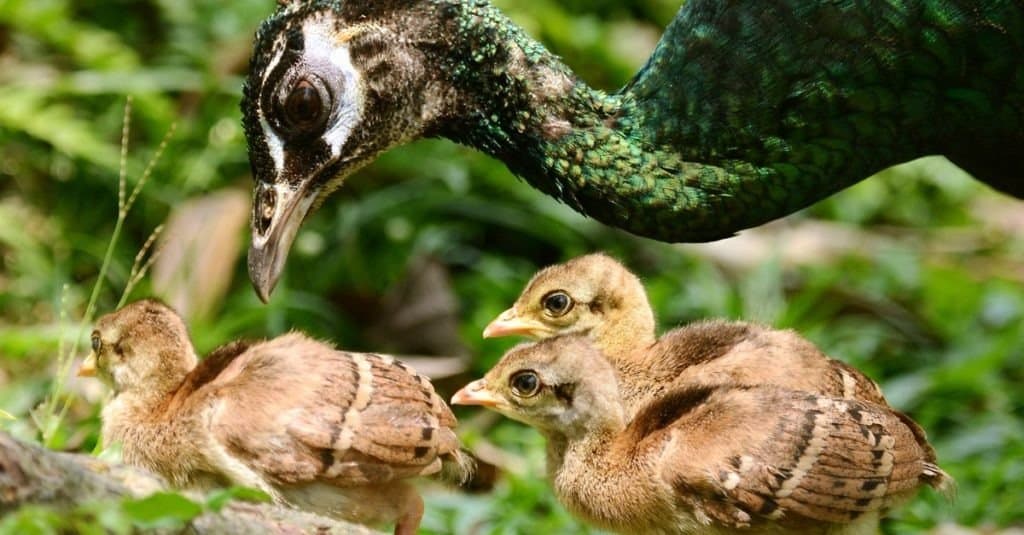
A baby peafowl is called a peachick. Each baby is taken care of solely by the mother.
©dangdumrong/Shutterstock.com
Population
The Indian peafowl status is the least concern, meaning the population continues to thrive in the wild and is not threatened at this time. There are currently over 100,000 of these birds around the world. The Green peacock is considered endangered with less than 30,000 remaining in the wild. The Congo peafowl, with numbers below 10,000, is vulnerable. That means the population is declining, mostly due to habitat loss, and they are at risk of becoming endangered.
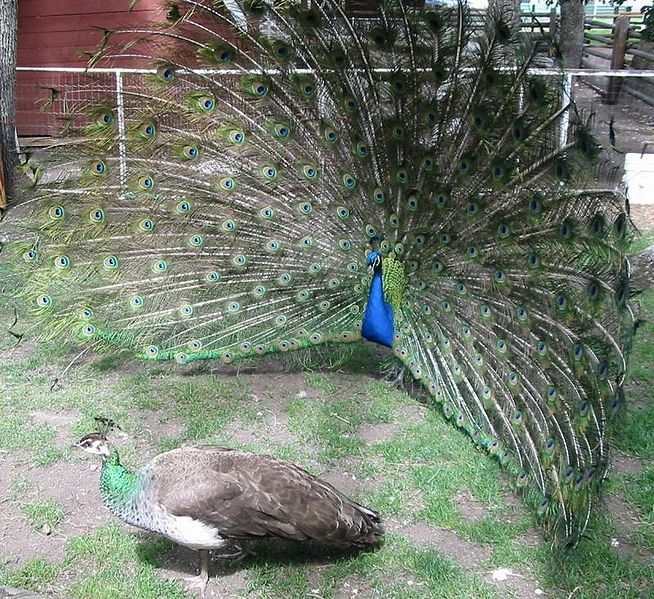
Some breeds of peacock are in the Least Concern category and some are in the Vulnerable category of conservation status.
©Darkros – Public Domain
Peahens and Peafowl
Peafowl is the correct term for what most people would call a peacock. This includes both males and females. Only the male is technically called a peacock. The females are called peahens. Peacocks and peahens can easily be identified as male or female based on their physical appearance. Peahens look somewhat plain compared to their male counterparts.
More To Read
- Male vs Female Peacocks: Can You Tell the Difference?
- Peacock Poop: Everything You’ve Ever Wanted to Know
How to Add Us to Google News

Peacock FAQs (Frequently Asked Questions)
Are Peacocks herbivores, carnivores, or omnivores?
Peacocks are Omnivores, meaning they eat both plants and other animals.
What Kingdom do Peacocks belong to?
Peacocks belong to the Kingdom Animalia.
What class do Peacocks belong to?
Peacocks belong to the class Aves.
What phylum to Peacocks belong to?
Peacocks belong to the phylum Chordata.
What family do Peacocks belong to?
Peacocks belong to the family Phasianidae.
What order do Peacocks belong to?
Peacocks belong to the order Galliformes.
What type of covering do Peacocks have?
Peacocks are covered in feathers.
What genus do Peacocks belong to?
Peacocks belong to the genus Pavo.
In what type of habitat do Peacocks live?
Peacocks live in desert and savanna areas.
What is the main prey for Peacocks?
Peacocks eat grains, seeds, and insects.
What are some predators of Peacocks?
Predators of Peacocks include dogs, raccoons, tigers, and wild cats.
What are some distinguishing features of Peacocks?
Peacocks have long tail feathers, and males have colorful tails.
How many eggs do Peacocks lay?
Peacocks typically lay 6 eggs.
What is an interesting fact about Peacocks?
Peacocks are most commonly found on the Indian mainland!
What is the scientific name for the Peacock?
The scientific name for the Peacock is Pavo cristatus.
What is the lifespan of a Peacock?
Peacocks can live for 12 to 20 years.
What is the Peacock's wingspan?
The Peacock has a wingspan of 120cm to 300cm (47in to 118in).
Is a peacock a bird?
Yes, peafowls are birds.
Is a peacock a mammal?
No. Peacocks are part of the Phasianidae family, which are birds.
Can a peacock kill a human?
Although it is not common, due to its size and strength, an aggressive peacock can kill a human.
Where are peacocks mostly found?
Peafowls are mostly found in Asia, specifically in India.
Do peacocks kill chickens?
Peacocks do not usually kill chickens.
What is a peahen?
A peahen is a female peafowl.
Do Peacocks Migrate?
No. Peafowls are not migratory birds.
How many eggs does a peahen lay?
A peahen typically lays six eggs but can lay up to eight, or as few as two.
How fast does a peacock fly?
A peafowl can fly as fast as ten miles per hour.
What is a peacock’s Wingspan?
An Indian peacock’s wingspan is between three and ten feet long when displayed.
When do peafowls leave the nest?
Peachicks can leave the nest not long after hatching, but will usually stay with the mother until they reach at least two months of age and will often stay much longer.
How do Peacocks have babies?
Peacocks lay eggs.
How do you tell the difference between male and female peacocks?
You can tell the difference between male and female peacocks based on their tail feathers and body colors. Male peacocks are much more visually impressive than female peacocks.
Thank you for reading! Have some feedback for us? Contact the AZ Animals editorial team.
Sources
- Science Kids, Available here: https://www.sciencekids.co.nz/sciencefacts/animals/peacock.html
- Britannica, Available here: https://www.britannica.com/animal/peacock
- National Geographic, Available here: https://www.nationalgeographic.com/animals/birds/group/peacocks/
- Sciencing, Available here: https://sciencing.com/life-cycle-peacock-5800786.html
- Global Giving, Available here: https://www.globalgiving.org/projects/conservation-of-national-bird-of-india/
- The Arboretum, Available here: https://www.arboretum.org/explore-2/wildlife/peacocks/
- Thoughtco, Available here: https://www.thoughtco.com/peacock-facts-4690664