


Quick Take
- Beaskis are famously friendly, though there is a specific household situation where that reputation falls apart fast. See the hunting instinct caveat →
- One common dog food ingredient could quietly threaten your beaski's heart, and most owners never think to check the label for it. Check the legume-free advice →
- Crossbreeds are often assumed to be healthier, but beaskis still have a vet checklist that surprises most new owners. See the vet checklist →
- Training a beaski seems straightforward, but there is one mistake that makes every session backfire. Avoid the session mistake →
The beaski is a hybrid breed created by crossing a beagle with a husky. This designer dog breed is known for being playful, loyal, energetic, and unique in appearance. With the vibrant colors of a beagle mixed with a husky’s stern and cold-eyed appearance, beaskis are attractive, yet hardworking, dogs that fit well into active families.
The beaski’s parents are well-known dogs. Beagles as a distinct breed were developed in Great Britain in the 19th century, though small hounds similar to beagles have been described in England as far back as the 14th century. In the 16th century, a smaller variety known as the ‘pocket beagle’ existed, but this type is now extinct. The larger beagle we know today originated in Great Britain about 200 years ago. Siberian Huskies originated in Siberia, where they were bred by the Chukchi people primarily for pulling sleds. When they were brought to Alaska in the 1900s, they gained fame and popularity for their heroic deeds.

Ownership: 3 Pros and Cons
| Pros | Cons |
|---|---|
| Friendly personality! Beaskis naturally like to work with other dogs and get along well with their owners. If you’re looking for a working dog with a great attitude, a beaski is a good bet. | Heavy shedding: Both beagles and huskies are heavy shedders. Expect to brush your dog regularly, and remember to take them to the groomer when the weather warms up. |
| Active lifestyle! Beaskis love to run, play, and follow their owners around. Although they need a lot of exercise, beaskis pay it back by always being ready for a new activity. | Stubborn tendencies: Beaskies are strong-willed dogs that get distracted easily. Although they love to learn commands, you may need to keep training sessions short to ensure their effectiveness. |
| Unique appearance! With the copper coat of a beagle and the stunning blue eyes of a husky, it’s hard to deny that beaskis are some of the best-looking designer dogs on the market. | Hunting instinct: Beagles love to hunt, and huskies have their own prey instincts. Because of this, you should keep an eye on your beaski around very small animals. |
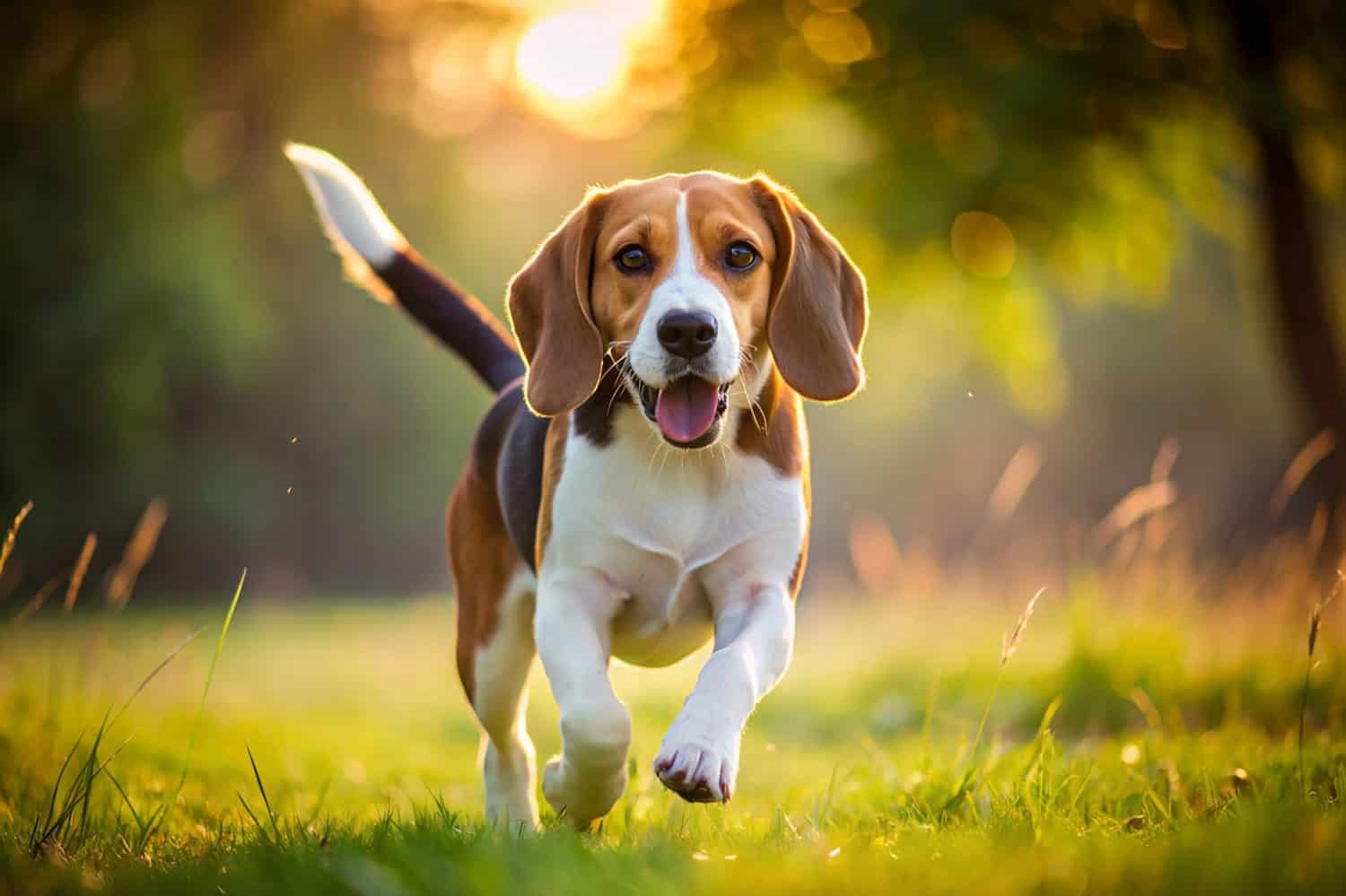
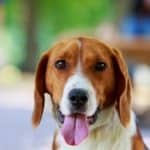
The beagle (think Snoopy) is one of the parent dogs of the beaski and one of the most popular breeds in America.
©michael_coelho/Shutterstock.com
Beaski Size and Weight
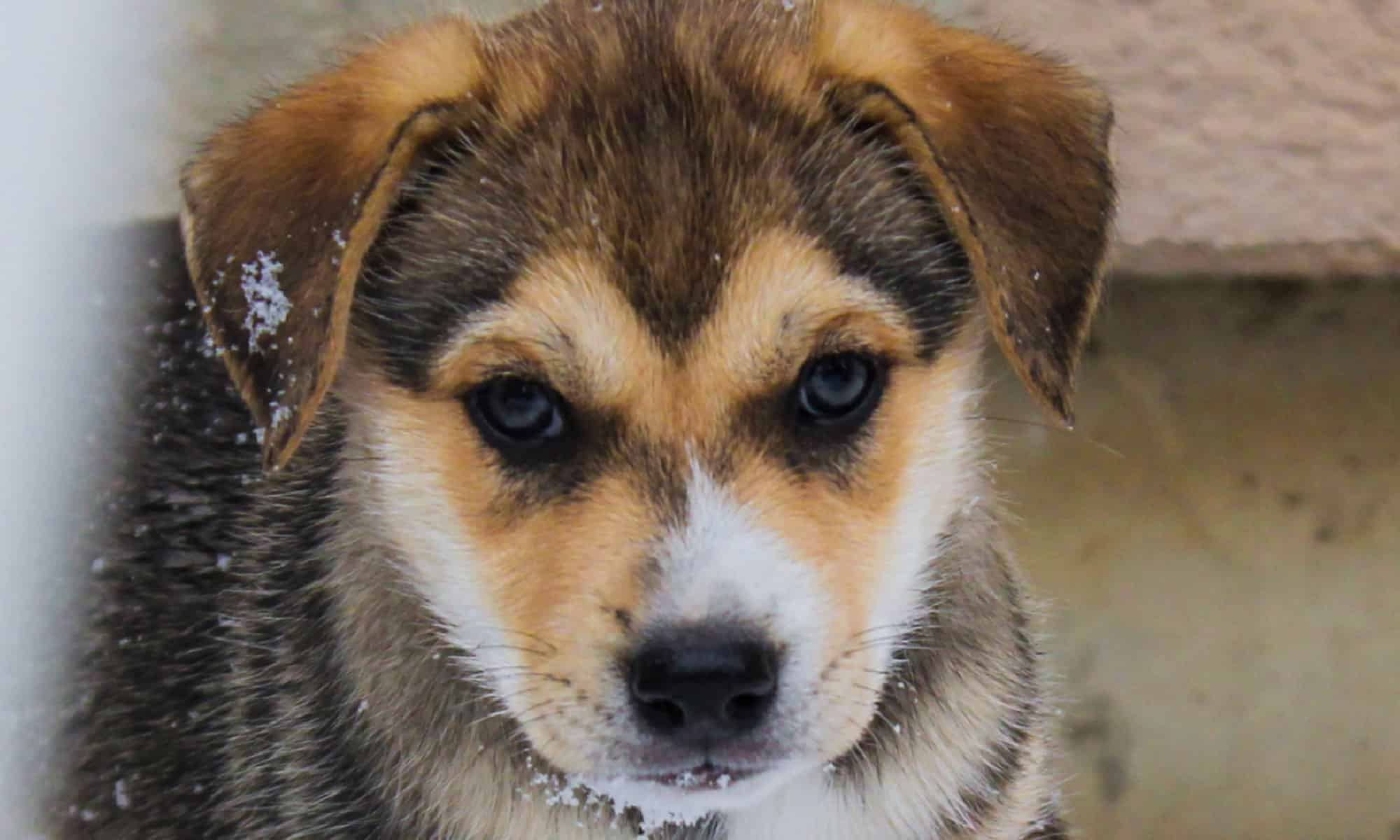
Beaskis are medium to large-sized dogs with short but thick coats of fur, floppy ears, and incredibly bright eyes. You can expect your female beaski to weigh between 30 and 40 pounds, while male beaskis weigh between 40 and 50 lbs. Most male beaskis stand between 18 and 22 inches tall, and females are between 16 and 20 inches tall. The more your beaski takes after its husky parent, the taller and larger it will be. Female beaskis are usually smaller than their male counterparts, although the difference is often less than expected.
Common Health Issues
As a crossbreed, the beaski is usually healthier than either of its parent breeds and has a comfortable, long lifespan. However, these dogs are still prone to some of the same genetic issues as both their beagle and husky ancestors. Some of the most serious concerns include heart defects, spinal or joint issues, and canine epilepsy. Many beaskis also suffer from cataracts and other eye problems. Take your beaski puppy to the vet right away, and make sure it gets checked for the following conditions:
- Hip dysplasia
- Intervertebral disc disease
- Heart defects
- Vision issues
- Epilepsy
- Hemophilia
Temperament
Beaskis are friendly, loyal, energetic, and hardworking dogs with excellent personalities. You can expect your beaski to regularly display excited and active behaviors such as running, chasing, digging, and playing with toys. Beaskis are always ready for a new activity, so don’t be afraid to take your dog along for a morning run or a hiking adventure in the mountains. These dogs are very high-energy and don’t wear out easily; however, if you give them enough exercise, they will always have an even and loving temperament.
One thing that many beaski owners have noticed is that their dogs are stubborn and easily distracted. Remember to spend plenty of time with your beaski, and give it the attention it needs to develop a strong relationship. If your beaski is getting tired or frustrated, end the activity so that it can run around and burn off steam. A combination of positive attention and plenty of exercise should help make sure that your beaski is always in a good mood.
Care
Beaskis are fun dogs to own, but they do require a lot of care and maintenance. A beaski puppy isn’t a good choice for a first-time dog owner or a family that doesn’t have a lot of room to run around. With that said, if you can give your beaski everything it needs, you’ll be amazed at how happy and loving these dogs really are.
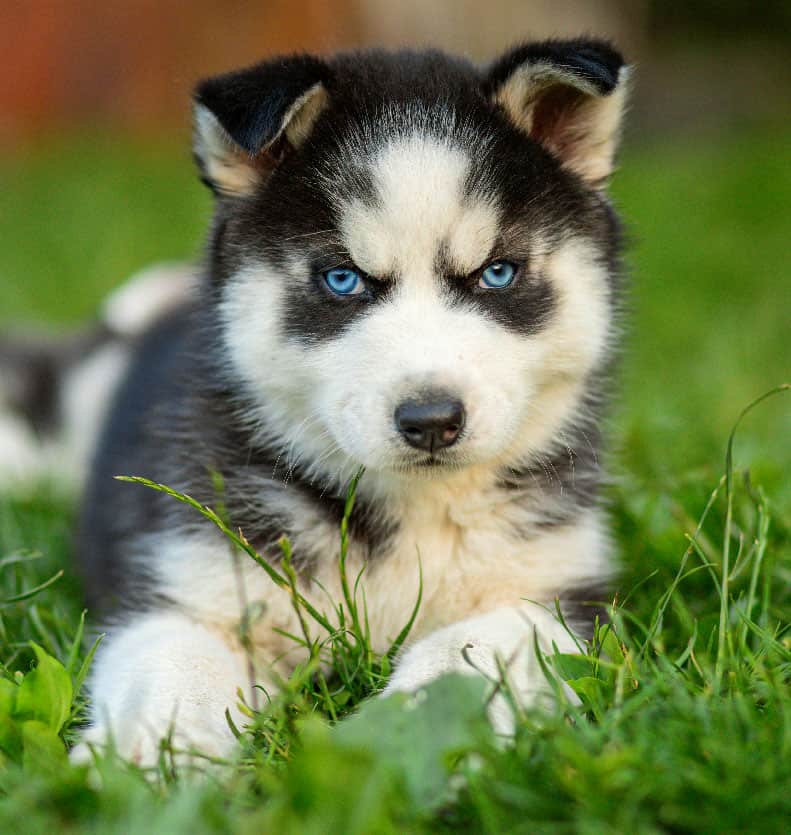
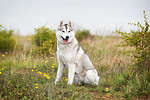
The Siberian Husky is one of the parent dogs of the beaski and the reason that some beaskis have blue eyes.
©iStock.com/Andrii Zorii
Best Dog Food
Beaskis are high-energy dogs that consume a lot of calories. Look for a quality dog food that focuses on proteins and healthy fats. Beaskis love to eat, so consider breaking up their daily intake into three portions instead of two.
Remember, this breed has a propensity towards heart defects, so read up on the link between legumes in dog food and dogs’ heart failure and the benefits of legume-free dog food.
Maintenance and Grooming
Beaskis have thick double coats of fur that need to be brushed regularly to minimize shedding. Turn your brushing routine into a bonding moment with your dog; the more often you brush them, the less you’ll have to struggle with your beaski’s short attention span. You should also take your beaski to the groomer regularly to get the undercoat trimmed, especially during the warm months of the year.
Training
Beaskis are loyal dogs, but they have stubborn personalities and short attention spans. To get the most out of training sessions, keep them short and to the point. Start working on basic commands as soon as your beaski comes home, and get it in the habit of running through a quick training routine every day. Use regular reinforcement and plenty of treats to make sure that your new dog understands what you are asking of it and is ready to respond on a moment’s notice.
Exercise
Beaskis are incredibly high-energy dogs that need a lot of exercise. In addition to a long daily walk, your beaski also needs a yard or another space to run around. If your beaski doesn’t get enough exercise, it may start exhibiting anxious or destructive behaviors.
Puppies
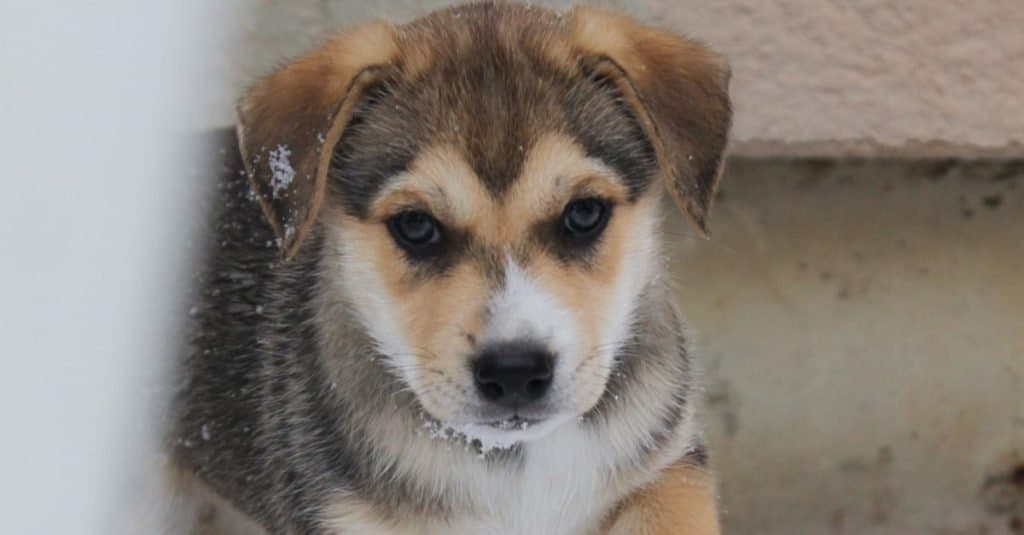
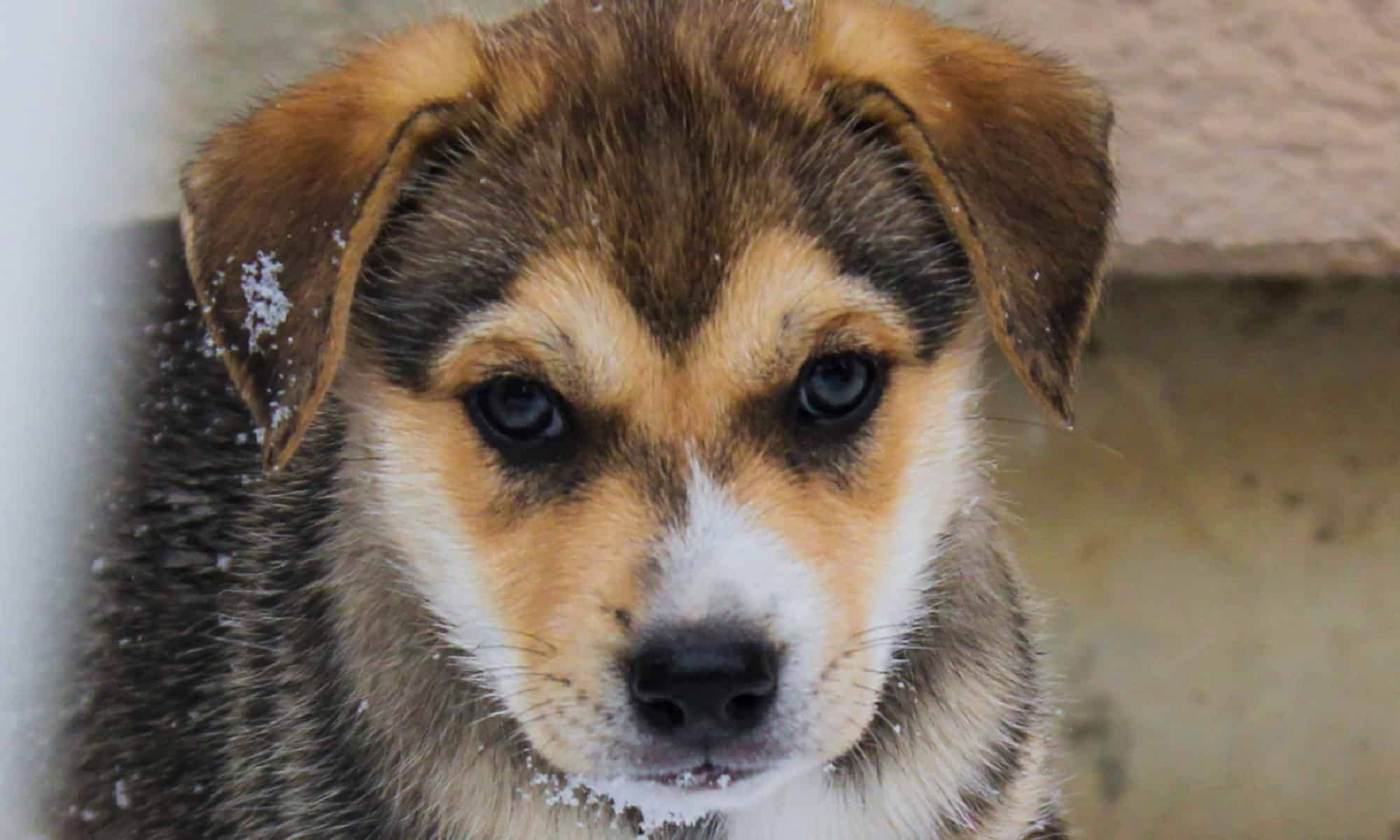
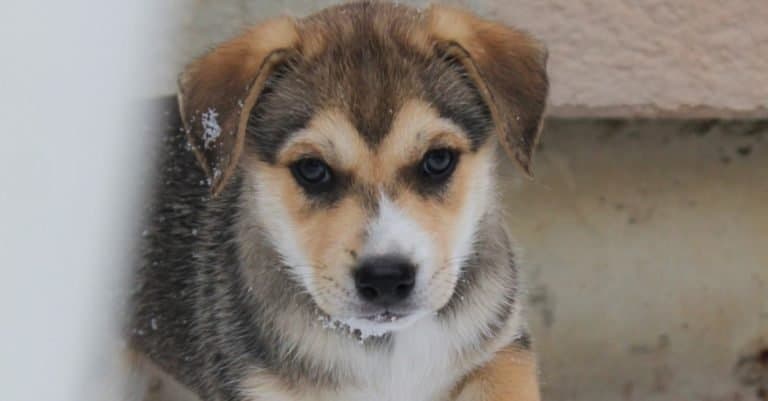
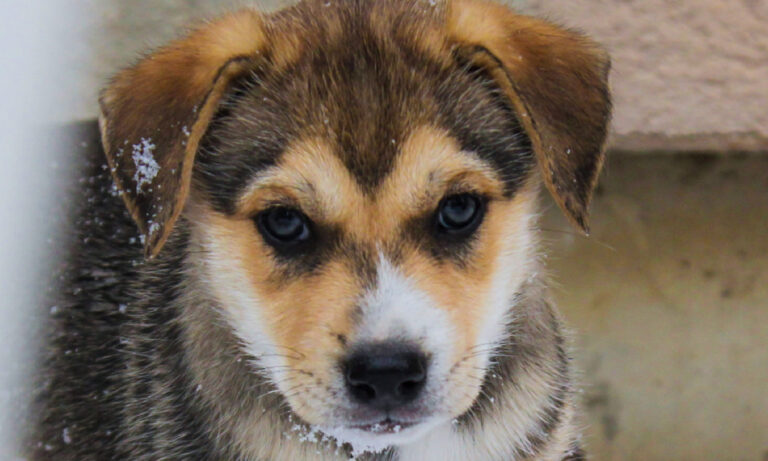
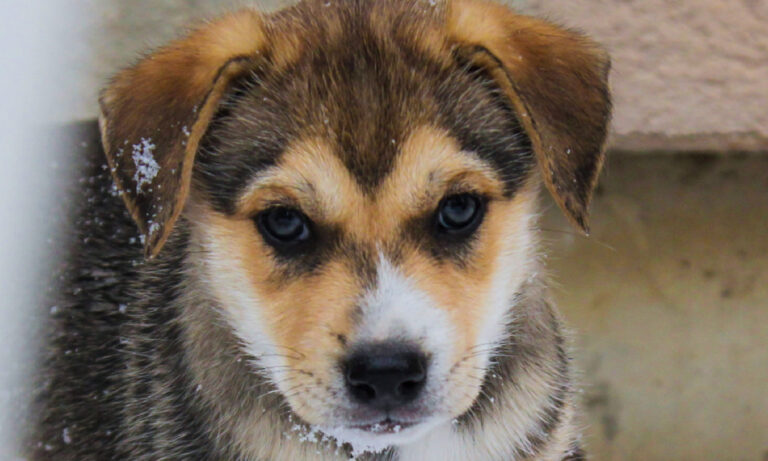
This Beaski puppy has been showing its playful and adventurous nature out in the snow.
©iStock.com/Abigail S
Beaski puppies are small, playful, and incredibly adventurous. Keep a close eye on your new puppy to make sure it doesn’t get into trouble, especially if it has a large space to explore. It’s also wise to start training your puppy to make sure it responds quickly to its owner’s voice.
Children
Beaskis are friendly dogs that get along well with other dogs. However, because of their strong hunting and prey instincts, beaskis are not necessarily a good choice to spend time with children, especially if the children are too small to understand a dog’s natural boundaries. Keep an eye on your beaski when it is playing around kids, and be sure to retire it from the social situation if you notice that it is getting irritated, nervous, or tired. Despite the cautions, generally speaking, beaskis are such friendly and loving dogs that they make a good family pet.
Similar Dogs
Beaskis are unique designer dogs with a very distinct personality. If you’re looking for something similar, try adopting another beagle or husky mix. Some of the best choices include the Gerberian Shepsky, the poogle, and the huskador.
- Gerberian Shepsky: If you’re looking for a hardworking dog that’s a bit bigger and more attentive than a beaski, the Gerberian Shepsky is an excellent choice.
- Poogle: Poogles have the friendly nature of a beagle with the poodle’s hypoallergenic coat.
- Huskador: The huskador is a hybrid that combines the husky’s hardworking personality with the friendly nature of a black lab.
Beaski Pictures
View all of our Beaski pictures in the gallery.

iStock.com/Abigail S
Sources
- Doggie Designer / Accessed May 11, 2021
- 101 Dog Breeds / Accessed May 11, 2021
- Global Dogs / Accessed May 11, 2021
- How To Train Your Dog / Accessed May 11, 2021
- Wagwalking / Accessed May 11, 2021
- Love Your Dog / Accessed May 11, 2021