
One of the most bizarre-looking land mammals is the enormous yet gentle elephant, with its huge ears, long trunk, and those massive feet. Why are their feet shaped like that, anyway? Do elephants have toes? As it turns out, elephants’ uniquely designed feet are perfectly suited for their long daily treks through their native habitats. After all, elephants have to eat almost constantly to maintain the energy needed to sustain their huge bodies, so they’re always moving to find new sources of food. You’d need pretty strong feet too if you walked 5–12 hours and up to 15 miles each day.
Join me as I take a closer look at elephant feet and toes, their strange features, and the convenient design that allows them to support thousands of pounds of weight on a daily basis.
This post was updated on September 21, 2025 to clarify the average hours and distance walked, taxonomic classification, and the need for toenail trimming in captivity.
Do Elephants Have Toes and Toenails?
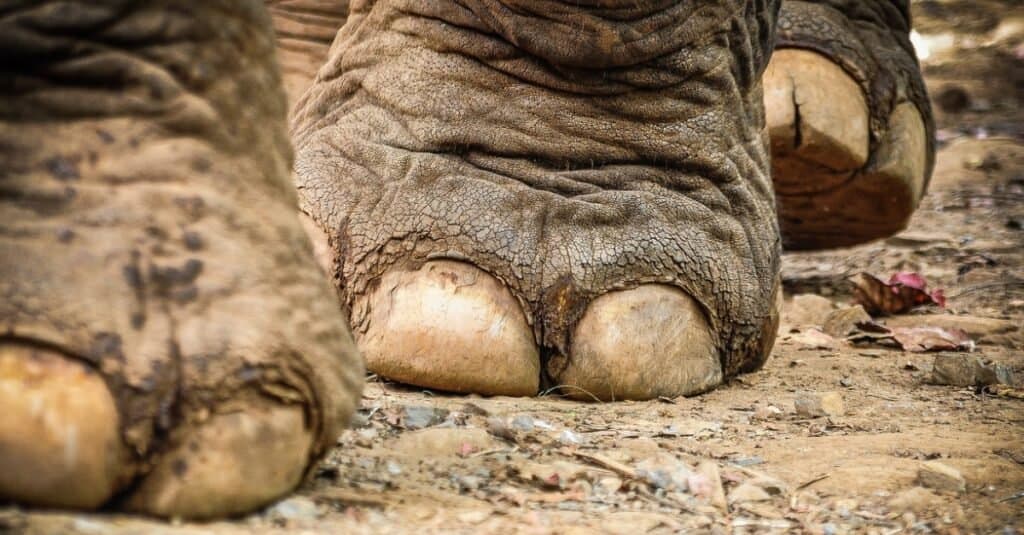
A close-up look at elephants’ feet, toes, and toenails
©iStock.com/marco giovanelli
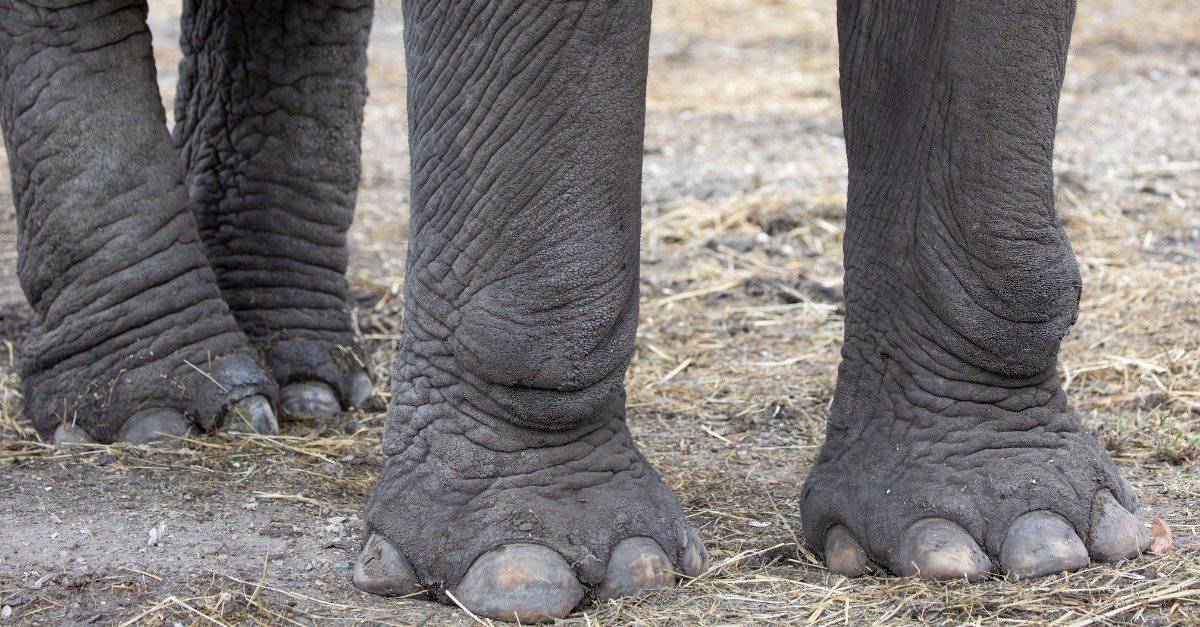
If you look closely at an elephant’s strange, stump-like feet, you’d notice they do, in fact, have toes attached to them! However, not every toe has its own toenail attached.
All elephant species typically have five toes per foot, but their toenails vary slightly by species. Both African forest elephants and Asian elephants have front feet with five toenails each, while their back feet only have four toenails each. African bush elephants are a bit unique, though, as they have four toenails on their front feet and three toenails on their back feet.
Elephants’ large, wide, rounded toenails are made of very thick keratin. This is the same durable yet flexible material that makes up our fingernails and hair. Keratin is also the same material in various other kinds of animals’ scales, feathers, and horns.
Interestingly, while wild elephants’ toenails are trimmed by simply being worn down over time during long walks on rough, textured surfaces, elephants in captivity sometimes need toenail trims, to prevent infection or painful overgrowth. In modern accredited zoos, enclosures with sand, rough flooring, and walking space often help keep nails worn naturally. The need for trimming usually depends on husbandry and flooring.
Are Elephants’ Feet Actually Hooves?
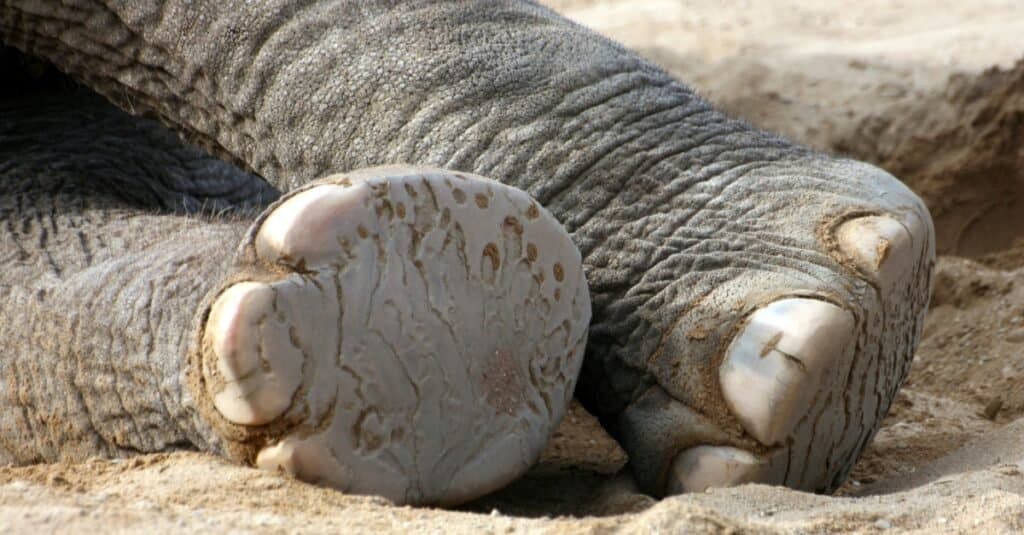
The rough, worn surfaces of an elephant’s feet
©iStock.com/stefon
Elephant feet are not hooves, nor are they paws or claws! They don’t have any specialized name; they’re just feet.
Ungulates such as goats and horses walk directly on top of their enlarged nails, or hooves. Modern taxonomy places elephants in order Proboscidea, with manatees and hyraxes in related but separate orders, all within Afrotheria. They have a similar foot structure to ungulates with a few key differences.
Elephants differ from both odd- and even-toed ungulates in that they don’t walk directly on their nails. They actually walk on their tiptoes and have true separated toenails instead of hooves. Other species with their own unusually shaped feet include aardvarks, hyraxes, and manatees.
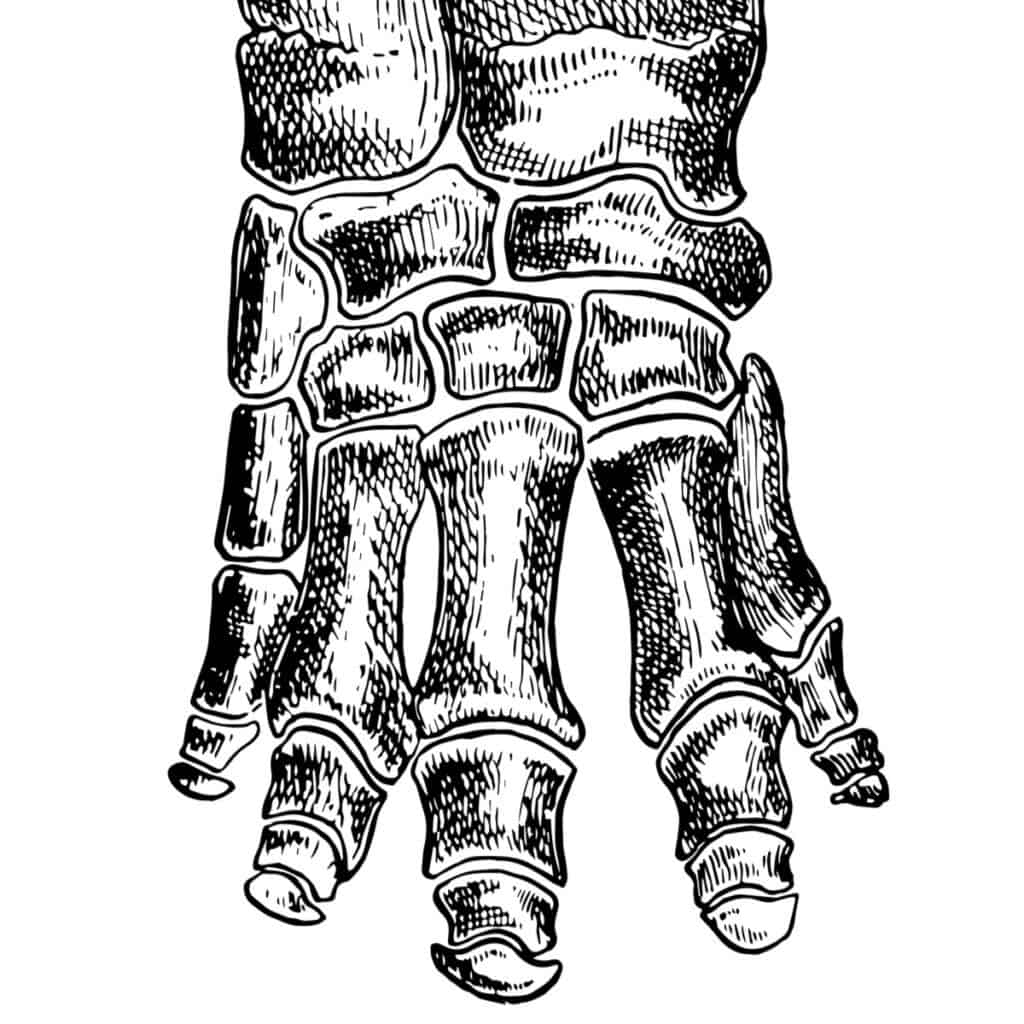
This illustration of the bones inside an elephant’s foot show how they walk on their “tip toes”
©Morphart Creation/Shutterstock.com
Understanding Elephant Feet: Shape and Structure
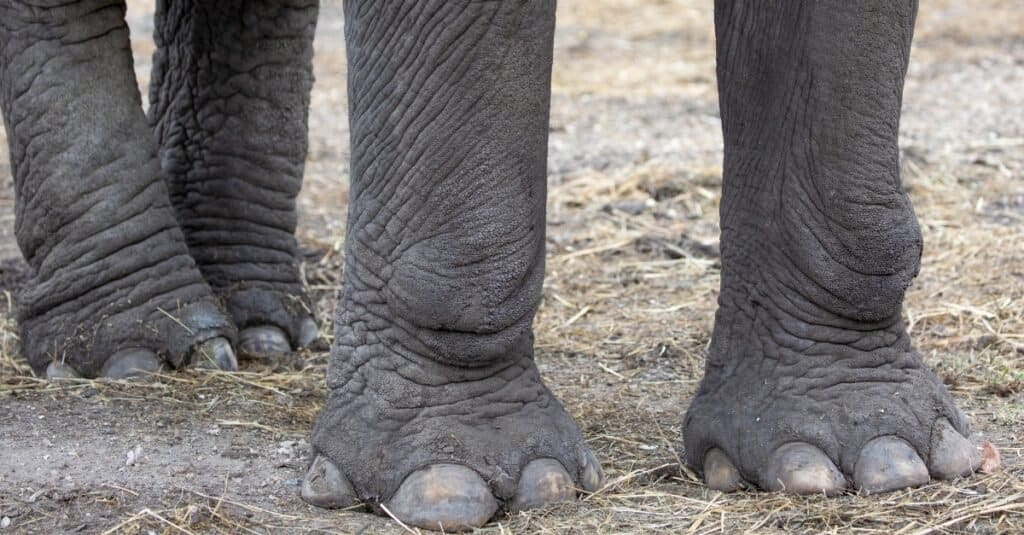
Although they appear to be flat-footed, elephants actually walk on their tiptoes
©iStock.com/joruba
Elephants’ feet are shaped in a strange, almost prehistoric looking way, with their stocky, stumpy build and large, hard toenails. At first glance, their feet don’t seem to be very well suited to keeping these massive creatures upright. They appear to be flat, but in reality, elephants walk on their tiptoes rather than flat-footed.
This is because the heel bones in an elephant’s feet rest on top of a cartilaginous, cushiony fat pad. Researchers have found that this fat pad fills up the space behind the elephant’s toes and helps to more evenly distribute their weight as they walk.
Additionally, elephants have large, hidden false toes known as predigits lodged inside of their fat pads. These also help to offset the immense pressure from their weight pressing down on the bones of their feet. This is especially helpful for elephants, as they must walk long distances for up to 12 hours each day to find food!