
If you own a crested gecko or are thinking of adopting one, you’ve probably wondered how long their lifespans are. Knowing how much time and money you’ll need to invest in your pet’s life can help you decide if you’re up to the task of caring for them and plan how to fit them into your budget and lifestyle.
However, simply knowing how long these unique lizards live on average will only give you a rough idea of how long your specific gecko will live. Read on as we take an in-depth look at the many factors that affect both wild and crested geckos’ lifespans. We’ll also cover how you can maximize not just how long your scaly companion lives, but also their overall quality of life under your care!
How Long Do Wild Crested Geckos Live?
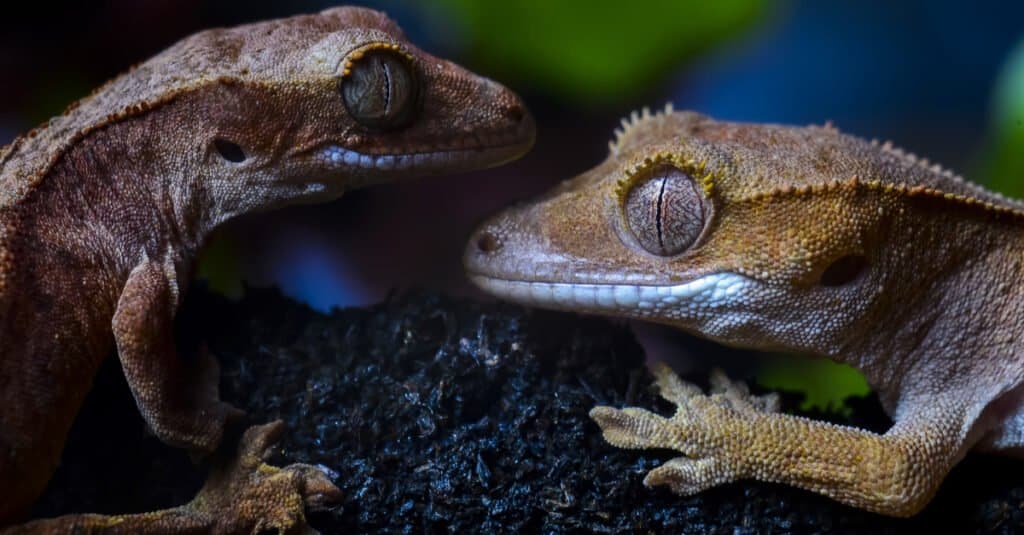
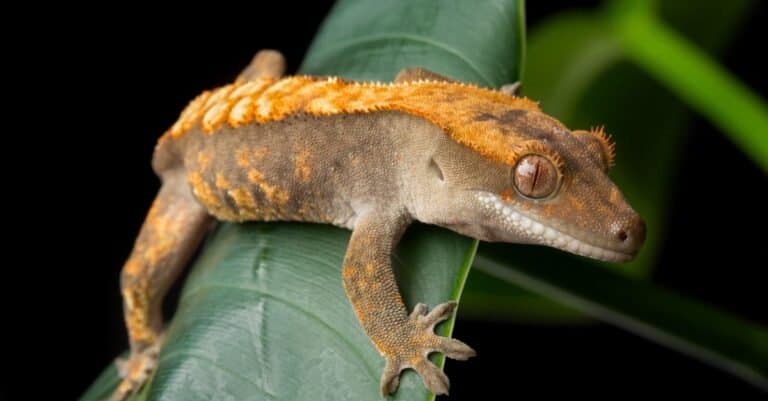
Researchers believed crested geckos were extinct until 1994.
©Sefa Kaya/Shutterstock.com
It is estimated that crested geckos live for around 5 to 15 years on average in the wild. This is a fairly wide range compared to most reptiles’ estimated lifespans for a few interesting reasons.
To start, we don’t know as much about crested geckos’ lifespans in the wild as we do about other reptiles. This is largely because most wildlife researchers believed these shy little geckos were extinct until they were rediscovered in 1994. As a result, we don’t have nearly as many documented studies of their day-to-day lives in the wild as, say, bearded dragons or iguanas, which have been studied far more extensively.
Thankfully, we do have a general idea of how long crested geckos live in captivity (more on that below). Additionally, we know that captive animals tend to live much longer than their wild counterparts. There are many factors responsible for this disparity, but essentially, captive reptiles, in particular, usually live in very carefully monitored and controlled enclosures. They also don’t have to worry about predators, illnesses, injuries, or food scarcity as much as wild reptiles do.
How Long Do Pet Crested Geckos Live?
Crested geckos kept as pets or otherwise kept in captivity typically live for around 15 to 20 years. This makes them surprisingly long-lived for such a small species.
As we touched on earlier, we have very little data when it comes to wild crested geckos’ lifespans or even their lifestyles in general. Although they were initially discovered in 1866 by Alphonse Guichenot, the geckos were soon after believed to be extinct. It wasn’t until they were rediscovered in 1994 that researchers began studying them again.
These New Caledonian geckos have only been in the pet trade since they were rediscovered. Because of this, just like with wild crested geckos, we didn’t have a very accurate idea of their potential lifespans when they first became domesticated on a large scale.
However, crested geckos very quickly became popular pets amongst beginner and expert reptile hobbyists alike. Today, they’re nearly as common as leopard geckos as pets, so in recent years, there’s been plenty of data to provide a reliable estimate of their lifespans in captivity. They’re also hardy animals, making them pretty forgiving of occasional mistakes as far as their temperature, humidity, and dietary needs.
What Factors Affect Wild Crested Geckos’ Lifespans?
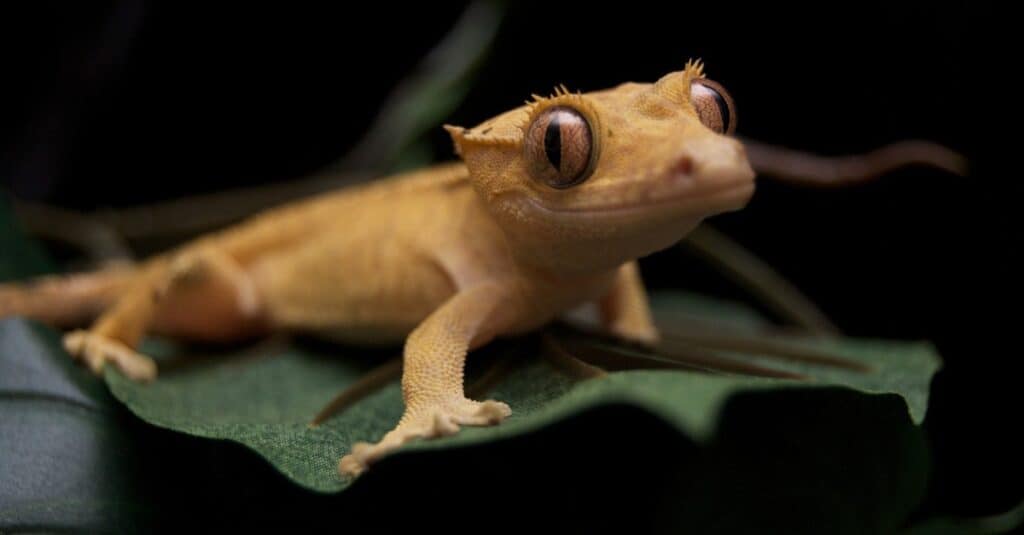
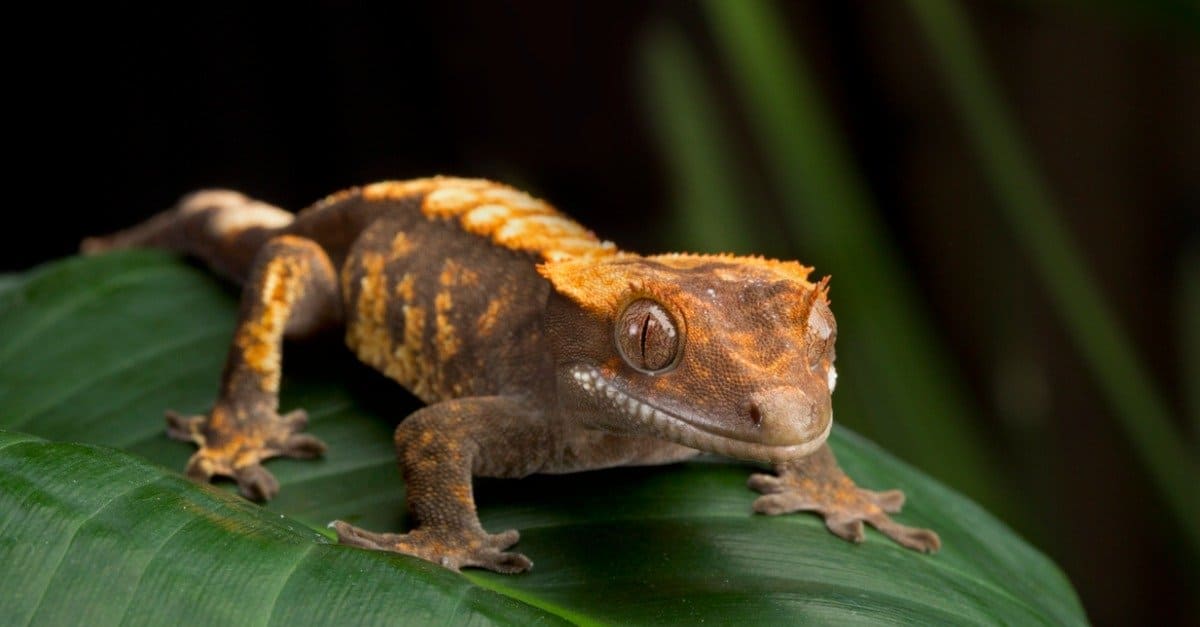
Wild crested geckos have more stressors to deal with than those in captivity, including predators and harsh weather fluctuations.
©iStock.com/ajbulla
For wild crested geckos, many factors could potentially interfere with how long they live. Some of the most notable ones include:
- Predation
- Habitat loss
- Weather fluctuations
- Food scarcity
- Competition for food, water, and shelter
- Higher levels of parasites and other illnesses
- Increased levels of stress
- Lack of access to veterinary care
We do know that, like most animals, crested geckos encounter more danger and unpredictability in the wild than in captivity. While captive geckos usually don’t have to worry about food scarcity or predators following them around, those in the wild are constantly at risk of losing their next meal, their shelter, or even their lives. If a wild gecko becomes ill or injured, they most likely won’t be able to get treated by a vet, unlike a captive lizard.
Today, the IUCN Red List classifies crested geckos as vulnerable. Their populations in the wild are on the decline, which unfortunately means their individual lifespans are getting shorter. Hopefully, with more intensive conservation efforts, their lifespans will increase in their native habitat, New Caledonia.
What Factors Affect Captive/Pet Crested Geckos’ Lifespans?

A proper enclosure setup is one of the best ways to maximize your crested gecko’s lifespan.
©Dirk Ercken/Shutterstock.com
Captive crested geckos live longer than those in the wild, mostly because they live in more carefully controlled conditions. Many potential factors can affect the length of their individual lifespans, including:
- Quality of diet and vitamin supplements
- Enclosure size
- Temperature and humidity settings
- Veterinary treatments and yearly check-ups
- Cleanliness of enclosure and substrate
- Genetics (Reptile breeders usually breed geckos with healthier/“favorable” traits)
In optimal conditions, captive crested geckos can live very long lives compared to those in the wild, with 15 to 20-ish years as the general estimate, depending on their genetics and the overall quality of their care. Thankfully, you can directly influence most of the factors that affect captive geckos’ lifespans.
To ensure your crested gecko is happy and healthy for as long as possible, consistently providing top-notch care is essential. Keeping a close eye on your enclosure setup and its temperature, humidity, substrate, and overall cleanliness is necessary so your gecko’s habitat is as safe and comfortable as possible. A varied, healthy diet and yearly veterinary check-ups will also go a long way.
Above all, pay close attention to your gecko’s behavior. Reptiles don’t often display very obvious signs of illness or injury unless their condition is dire. This is mostly a self-defense mechanism to prevent themselves from looking weak to potential predators.
Even when your gecko learns not to perceive you as a threat, pinpointing when they are ill or injured can be tricky without a vet’s help. Find a reputable reptile veterinarian in your area, and see them at least once or twice a year.