





P
Species Profile

Pygora Goat

Capra aegagrus hircus

Big softness in a small goat
yogasundaram/Shutterstock.com

Pygora Goat Distribution

Click a location to explore more animals from that region

Origin Location

This map shows the native origin of the Pygora Goat. As a domesticated species, they are now found worldwide.

Loading map...

Found in 1 country

Size Comparison

Human 5'8"
Pygora Goat 2 ft

Pygora Goat stands at 36% of average human height.

Pygora goat

At a Glance

Domesticated
Diet Herbivore
Activity Diurnal+
Lifespan 10 years
Weight 55 lbs
Status Not Evaluated
Did You Know?

Pygoras were developed in the U.S. (1970s-1980s) by crossing Pygmy goats with Angoras to create a compact fiber animal.

Scientific Classification

The Pygora is a domestic goat breed developed for fiber production; it is known for producing soft, usable fleece with variability in texture/lock structure (often discussed in fiber “types”).

Kingdom
Animalia
Phylum
Chordata
Class
Mammalia
Order
Artiodactyla
Family
Bovidae
Genus
Capra
Species
hircus

Distinguishing Features

  • Domestic goat breed selected for spinnable fiber/fleece
  • Originated from crossing Angora and Pygmy goats (and subsequent selection)
  • Generally smaller-bodied than many standard dairy/meat goat breeds, with notable individual variation

Physical Measurements

Males and females differ in size

Height
2 ft 2 in (1 ft 10 in – 2 ft 6 in)
2 ft 1 in (1 ft 10 in – 2 ft 4 in)
Length
2 ft 11 in (2 ft 4 in – 3 ft 5 in)
Weight
110 lbs (77 lbs – 143 lbs)
99 lbs (77 lbs – 121 lbs)
Tail Length
5 in (4 in – 6 in)
5 in (4 in – 6 in)
Top Speed
19 mph
running

Appearance

Primary Colors
Secondary Colors
Skin Type Typical domestic goat skin under a dense, fiber-producing coat; skin can become irritated if fleece mats, stays damp, or parasites proliferate.
Distinctive Features
  • Domestic fiber breed (Capra aegagrus hircus) developed primarily for spinnable fleece, not meat or dairy.
  • Signature trait: usable fleece with variable structure-often categorized as Type A (ringlets), Type B (mixed), or Type C (cashmere-like).
  • Fleece is typically softer and more hand-spinning friendly than standard hair goats; not the same as Angora mohair.
  • Coat commonly includes longer guard hairs mixed with downy fiber; degree of guard hair varies by animal and fiber type.
  • Requires routine shearing (often 1-2 times yearly) and/or combing to prevent felting, burr accumulation, and skin problems.
  • Higher risk of external parasites (lice/mites) hiding in dense fleece; regular checks and timely treatment are important.
  • Prone to heat stress if fleece is left long in warm weather; shade, water, ventilation, and seasonal shearing are key.
  • Fiber can collect mud and moisture, increasing dermatitis risk; provide dry bedding and manage wet conditions.
  • Standard goat care applies: frequent hoof trimming, balanced minerals (species-appropriate copper/selenium management), and fencing for browsing behavior.
  • Horn status varies (horned or disbudded); beards and wattles may occur, consistent with domestic goat variation.

Sexual Dimorphism

Bucks are usually larger and more muscular, often with thicker horns and a stronger rut odor. Does tend to have a finer head and lighter build, though fleece type and color vary widely in both sexes.

  • Typically heavier body and thicker neck/shoulders
  • More pronounced rut scent and urine spraying behavior in breeding season
  • Often larger horn base and more robust horn growth when horned
  • Beard commonly thicker and longer
  • Generally smaller frame with finer head and neck
  • Udder development with maturity and kidding
  • Often less pronounced odor outside normal husbandry conditions
  • May present slightly finer-looking fleece on face/legs depending on line

Did You Know?

Pygoras were developed in the U.S. (1970s-1980s) by crossing Pygmy goats with Angoras to create a compact fiber animal.

Their fleece is commonly described in three fiber "types" (Type 1, 2, 3), ranging from mohair-like locks to cashmere-like down and blends in between.

Many Pygoras produce multiple usable fibers in one fleece (outer guard hair + soft undercoat), so sorting and skirting can improve spin quality.

They're often easier to handle than larger fiber goats because of their smaller size and generally people-oriented temperament.

Fiber yield and texture can change with age, season, nutrition, and breeding-two goats from the same herd may produce noticeably different fleece.

Because they're domestic goats (Capra aegagrus hircus), they share the species' four-chambered ruminant digestion and can convert browse into fiber efficiently.

Unique Adaptations

  • Fiber specialization vs. the base species: unlike many general-purpose domestic goats, Pygoras are selectively bred for spinnable fleece quality and quantity.
  • High variability in fleece structure: the breed is valued precisely because it can produce distinct lock patterns and micron ranges (Type 1/2/3), allowing different end uses (e.g., luster yarns vs. softer blends).
  • Compact "smallholder" adaptation: Pygmy influence often yields a smaller frame than many Angora-type fiber goats, improving manageability for hobby farms and handspinners.
  • Seasonal coat dynamics: as with other goats, photoperiod influences hair growth cycles; in Pygoras this can be especially noticeable in undercoat development and shedding timing.
  • Ruminant efficiency: as Capra aegagrus hircus, they ferment plant fiber in the rumen, enabling production on browse-heavy diets (with proper mineral balance).

Interesting Behaviors

  • "Browsing" preference: like other domestic goats, Pygoras often choose leaves, shrubs, and weeds over short grass, standing on hind legs to reach higher forage.
  • Social "follow-me" behavior: many bond strongly with herd mates and humans, trailing a familiar person and vocalizing at feeding time.
  • Fleece-related self-care: rubbing on posts, trees, or shelters to help shed debris or relieve itchiness, especially near seasonal coat changes.
  • Curiosity and climbing: goats commonly test objects with lips and may jump onto platforms; providing safe enrichment reduces mischief.
  • Dominance play: light head-butting or posturing within the herd, usually ritualized rather than harmful when space and resources are adequate.

Cultural Significance

Pygora goats (Capra aegagrus hircus) were bred in the late 20th century for small farms to give soft fiber for handspinners and knitters. They are friendly and part of the long story of goats shaped by people for milk, meat, and fiber.

Myths & Legends

In Scandinavian folklore, the Yule Goat is a Christmas symbol from older Norse midwinter customs; once said to bring gifts, it is now often shown as a straw goat decoration.

Greek myth tells of Amalthea, the goat (or goat-nymph) who nursed the infant Zeus; her horn became the cornucopia, a symbol of abundance-an enduring cultural association for domestic goats.

Norse tradition features Thor's magical goats, "Tooth-Gnasher" and "Tooth-Grinder", who pull his chariot and can be eaten and revived, a story often cited about the goat's hardiness and providence.

In parts of European countryside tradition, goats were sometimes kept as "lucky" household animals believed to ward off misfortune-an old superstition that persists as rural anecdote rather than formal religion.

Modern Pygora stories among North American fiber fans say it was created as a "spinner's goat" experiment. Guild members and farm tours repeat this to explain its three fleece types and small size.

Conservation Status

NE Not Evaluated

Has not yet been evaluated against the criteria.

Population Stable

Life Cycle

Birth 2 kids
Lifespan 10 years

Lifespan

In the Wild
6–15 years
In Captivity
8–18 years

Reproduction

Mating System Polygyny
Social Structure Managed Domestic
Breeding Pattern Seasonal
Fertilization Managed Selective
Birth Type Internal_fertilization

In managed herds, a buck services multiple does during fall breeding. Pygoras are fiber goats (Angora×Pygmy) bred by controlled matings; good nutrition and parasite/hoof control support fertility, and attention to hypocalcemia and dystocia risk in small does is advised.

Behavior & Ecology

Social Herd Group: 10
Activity Diurnal, Crepuscular, Matutinal, Vespertine
Diet Herbivore Browse (brambles/leafy shrubs) and high-quality leafy hay

Temperament

Species context (domestic goat): highly social browser; forms dominance hierarchies and strong companion preferences.
Breed distinction (Pygora): fiber-focused goats selected for manageable handling, routine grooming, and fleece harvest tolerance.
HUBS (common across herd): most individuals follow confident leaders; shy goats may lag and need gentler introductions.
HUBS variation: some lines are more people-oriented and vocal, especially if bottle-raised or frequently handled.
Typically alert, curious, and agile; can be mischievous and fence-testing if under-enriched.
Often calm-to-moderate energy when well-fed, with bursts of play (kids) and brief sparring (wethers/bucks).
Care requirement: requires regular grooming and seasonal shearing/combing; mats reduce comfort and increase skin issues.
Care requirement: benefits from climbing/foraging enrichment; boredom increases nuisance behaviors (chewing, pushing gates).
Health concern (fiber breed emphasis): higher risk of external parasites and fleece-related dermatitis if coat isn't managed.
Health concern (goat general): prone to internal parasites, hoof overgrowth/lameness, and copper imbalance if diet is incorrect.

Communication

bleats and contact calls to locate herd mates
maternal calls guiding kids
low grunts during close social interactions
snorts or short cough-like alarms when startled
buck rut vocalizations Seasonal, louder and more frequent
ear and tail positions signaling arousal, submission, or curiosity
head gestures, lateral displays, and controlled horn/forehead pushes to reinforce rank
scent communication via skin glands and urine marking Especially bucks in rut
mutual grooming and close resting as affiliative bonding
foot stamping and sudden posture freezing as warning/alert signals
following/shoulder-to-shoulder contact to maintain cohesion during movement

Habitat

Biomes:
Mediterranean Temperate Grassland Temperate Forest Desert Hot Desert Cold Alpine Boreal Forest (Taiga) Tundra +2
Terrain:
Mountainous Hilly Plateau Plains Valley Coastal Island Riverine Rocky Sandy Muddy +5
Elevation: Up to 18044 ft 8 in

Ecological Role

Domestic herbivorous ruminant; managed browser-grazer and fiber-producing livestock breed

Vegetation management (targeted browsing of brush and weeds) Fuel-load reduction and pasture/edge habitat maintenance when used in managed grazing Nutrient cycling via manure (soil fertility when properly managed) Fiber production for textiles (human-provisioned ecosystem service)

Diet Details

Other Foods:
Pasture grasses Legumes Browse Weeds/forbs Hay Concentrates Minerals and supplements Clean water +2

Human Interaction

Domestication Status

Domesticated

Pygora Goat (Capra aegagrus hircus) is a breed developed in the United States in the 1980s by crossing Pygmy and Angora goats. People chose small size, friendly nature and high-quality fleece. Humans handle Pygoras often for fiber work (shearing, washing, carding, spinning), breeding and showing, 4-H, petting, and brush control.

Danger Level

Low
  • Headbutting, pushing, or accidental knocks (more likely during feeding, rut, or if animals are poorly trained/handled)
  • Bites/pinches during handling; horn-related punctures if horned animals are kept
  • Zoonotic disease exposure typical of goats (e.g., ringworm; rare but possible bacterial/parasite transmission via feces; Q fever risk is mainly around birthing fluids)
  • Allergic reactions/asthma triggers from dander, hay dust, and fleece particulates
  • Injury risk during restraint, hoof trimming, or shearing if improper technique is used

As a Pet

Suitable as Pet

Legality: Pygora goats are often legal where farm animals are allowed, but city, zoning, HOA, and lot-size/setback rules can restrict them. Secure fencing and shelter are often required; some places ban them as pets but allow livestock.

Care Level: Moderate

Purchase Cost: $200 - $800
Lifetime Cost: $5,000 - $20,000

Economic Value

Uses:
Fiber production (handspinning/handcraft markets) Breeding stock and show animals Small-farm agritourism/education Vegetation management (brush control, limited) Manure/compost inputs
Products:
  • Pygora fleece (varied lock/down types; used for yarn, felt, textiles)
  • raw fleece, washed fleece, roving, batts, yarn
  • breeding services and registered kids
  • farm experiences/classes (shearing, spinning, fiber arts)

Relationships

Related Species 7

Bezoar ibex Capra aegagrus Shared Genus
Alpine ibex Capra ibex Shared Genus
Markhor
Markhor Capra falconeri Shared Genus
Nubian ibex Capra nubiana Shared Genus
Domestic sheep
Domestic sheep Ovis aries Shared Family
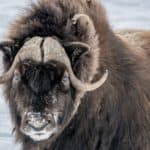
Muskox
Muskox Ovibos moschatus Shared Family
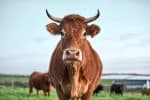
Domestic cattle
Domestic cattle Bos taurus Shared Family

Ecological Equivalents 6

Animals that fill a similar ecological role in their ecosystem

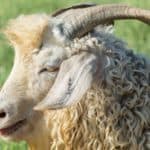
Angora goat
Angora goat Capra aegagrus hircus Selected for mohair. The Pygora (an Angora × Pygmy fiber breed) is smaller and often hardier than full-size Angoras. Fleece is classified as Type A (mohair), Type B (mixed), and Type C (cashmere). Requires shearing about twice yearly and routine parasite control.
Cashmere goat
Cashmere goat Capra hircus Similar niche as a fine-fiber small ruminant. Pygora individuals that produce more downy (Type C) fleece overlap functionally with cashmere production; both benefit from dry bedding, clean coats, and minimizing burr/vegetable-matter contamination.
Pygmy goat Capra aegagrus hircus Shares small size, thriftiness, and management profile—efficient browsers that do well on varied forage. Pygora, however, is consistently selected for usable fleece quantity and quality (lock structure and softness) rather than being bred primarily as a pet or companion.
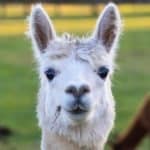
Alpaca
Alpaca Vicugna pacos Comparable role as a domestic fiber animal: shearing-based harvest, fleece grading, and protection from heat stress. Pygoras generally require more browsing- and ruminant-focused parasite management than camelids, but husbandry goals (clean fiber, shelter, regular shearing) are similar.
Angora rabbit Oryctolagus cuniculus Small domestic fiber producer in which grooming and fiber contamination control are central. For Pygoras, key fiber-management parallels include timely shearing and ectoparasite control (lice and mites) to prevent fiber breakage and skin issues.
Domestic sheep
Domestic sheep Ovis aries Both are bred for fiber and follow shearing schedules, so management is similar; however, Pygora goats require more dietary copper than sheep. Do not use sheep-only mineral mixes for goats, and monitor for internal parasites (worms) and hoof problems.

Originally bred in the 1980s as a new species, Pygora goats are a genetic combination of the Pygmy goat and the Angora goat.

The purpose of the new species was to create a softer variety of fleece, resulting in three different types of fiber that can be harvested. The breed only comes from mating in captivity, which is controlled by the owner, and the scientific name of the breed describes this shaggy nature of their coat before being sheared.

5 Incredible Pygora Goat Facts!

  • The Pygora goat was originally created as a crossbreed between the Pygmy goat and the Angora goat in 1987.
  • These goats are primarily bred to offer three types of fleeces – cashmere, mohair-like fleece, and a combination of these two types of fiber.
  • The main use of the Pygmy goat/Angora goat crossbreed is fiber production. They are also used for breeding new goats and to compete in shows.
  • Though these animals only are 5 lbs. as a baby (or “kid), their maximum weight is up to 95 lbs. (if the goat is a male).
  • Pygora goats are found in many colors, including white, red, brown, black, or gray. They are sometimes a combination of these colors.

Pygora Goat Scientific Name

The scientific name of the Pygora goat is “Capra aegagrus hircus.” Sometimes referred to as a pygmy angora goat, this animal belongs to the Mammal class in the Bovidae family.

The word “Capra” comes from the Italian word for nanny goat, while “aegagrus” indicates that the goat is wild. This name is also the same name as a king of Athens in Greek mythology. “Hircus” is potentially from the Latin word “hirtus,” which means hairy or shaggy.

Pygora Goat Appearance

Just as the scientific name of the Pygora goat suggests, this goat can have a rather shaggy and full coat when it has not been sheared. Though they are rather small as a baby, the females will grow to a weight of 64-75 lbs. Males are slightly larger at 75-95 lbs. when they reach adulthood. Males also stand taller than females, reaching 23 inches in height. The female, however, only reaches a height of 18 inches when they are fully grown.

Their coat comes in a range of colors, including black, brown, gray, white, and red. However, they sometimes have a few of these colors in their coat at the same time. However, one of the most interesting aspects of their body is the ability to create three unique types of fleeces. This goat was developed as a hybrid of the Pygmy goat and Angora goat to create this type of flexibility. From their fleece, farmers can harvest cashmere, a mohair-like fleece, and a cross between these two soft yet fine variations.

As these goats are bred, they will live with other members of their species on a farm as a herd. However, this grouping is due to the confines of their habitat, rather than a natural choice. The size of the herd will exclusively depend on the farmer who cares for them.
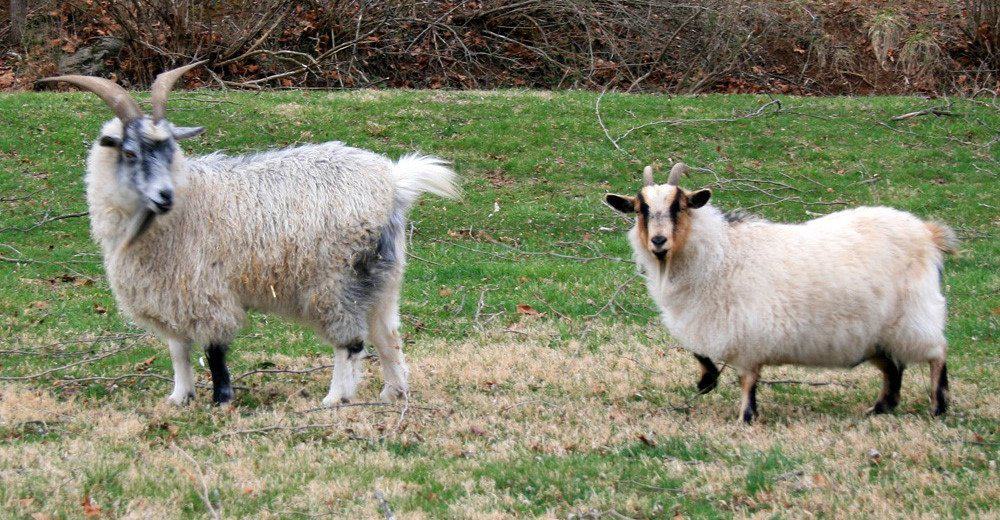
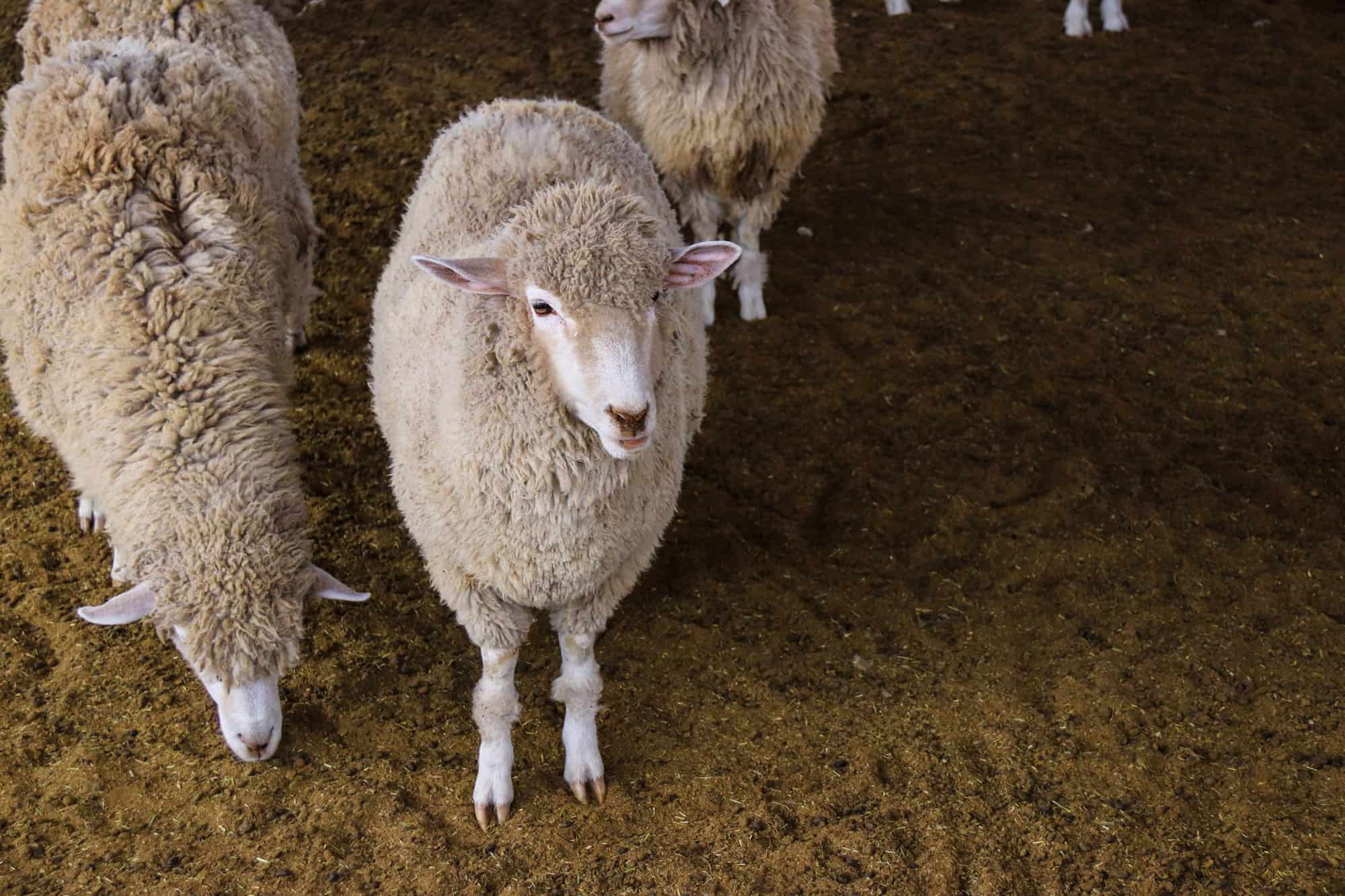
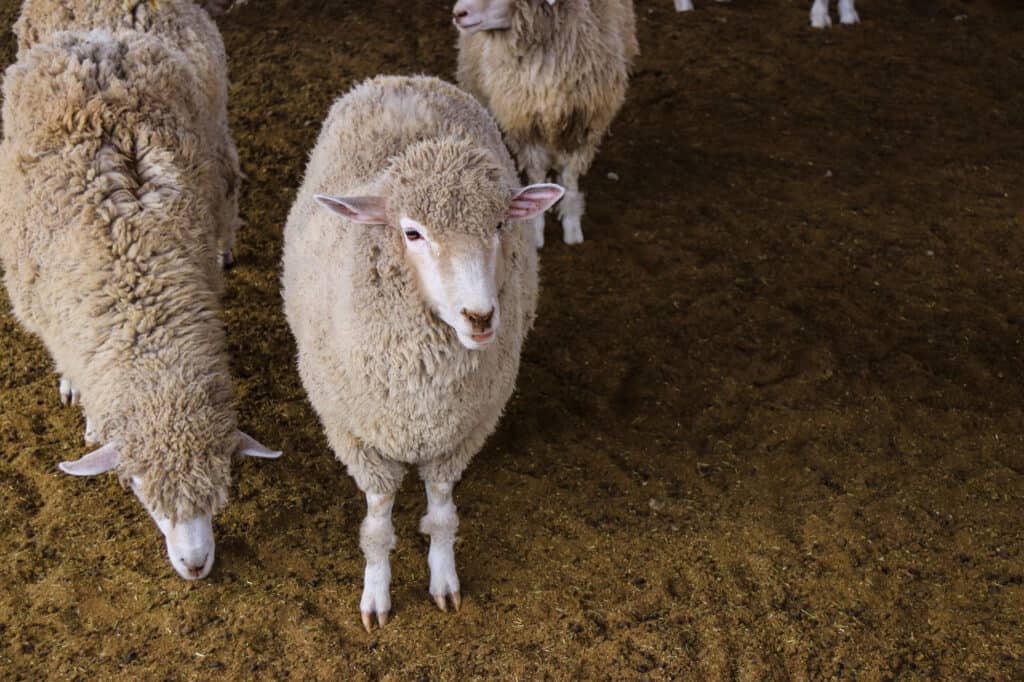
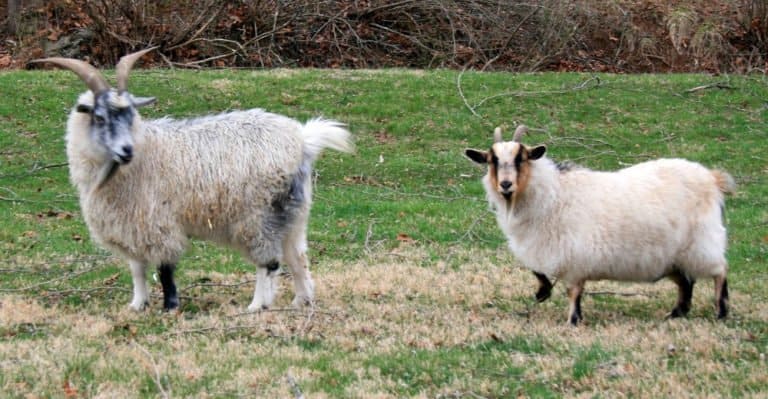
Male and female Pygora Goats standing in the pasture.

Male and female Pygora Goats standing in the pasture.

Pygora Goat Behavior

Friendly and playful, the Pygora goat is a relatively entertaining and fun integration into any farm. In fact, this behavior is exactly why the Pygora goat has made it into so many petting zoos. Their alert demeanor is also incredibly docile, taking after the Pygmy goat genetics.

The Pygora goat often lives within a herd, but this is a matter of the particular farm that they live on, rather than a natural choice (since these goats don’t exist in the wild).

Pygora Goat Habitat

Seemingly only bred within the United States, Pygora goats exclusively live-in settings that require care from a human. Though goats (as a whole) originated in Southwest Asia, the species has been domesticated for several millennia, primarily to use them as meat or for fiber.

Typically, the Pygora goat lives with a herd on a farm, though they are also kept as pets because they are so petite and soft.

Pygora Goat Diet

Any farmer that takes on a Pygora goat will be pleasantly surprised to find that their diet is rather easy to keep up with. These hybrid animals are perfectly content to graze on green grass, though they’ll also consume corn and other grains. The best diet for the goal would be a place that can offer plenty of space to graze, offering hay as a way to balance the diet.

Pygora Goat Predators and Threats

Since the Pygora goat is only bred and raised within a farm setting, the priority of any owner is to keep them safe from harm. Short of being stolen, no real threats exist that could diminish the population of the species. However, breeding improperly or failing to care for and feed the Pygora goats could cause their lifespan to drastically shorten.

These goats have the same predators that any farm animal might – coyotes, foxes, wolves, bears, mountain lions, bobcats, etc. It is up to the farmer to create barriers that can protect the goats and other animals from danger.

Pygora Goat Reproduction and Life Cycle

Pygora goats do not typically reproduce on their own, as they are entirely bred as domestic animals for their fleece. Katherine Jorgenson of Oregon was the first individual to combine the Angora and Pygmy goat breeds to create this variation. Domestic males have to be placed with does during two estrous cycles to get them to breed, much like other goat breeds. While these animals only require one successful breeding session, monogamy isn’t typical within a farm setting.

A doe can become pregnant between 4-6 months of age, which is when they reach sexual maturity. The pregnancy will last between 145 and 153 days before they give birth to their babies or “kids.” They typically weigh about 5 lbs. at birth. While it isn’t uncommon for a doe to have just one baby, there is a chance that she will give birth to up to three.
Producing up to a liter of milk each day, most kids should be weaned after they are 8 weeks old to get the most nutrients from their mother. Even after weaning, some farmers choose to continue milking the Pygora goat to cultivate their milk.

Regardless of gender, the majority of Pygora goats live to be 12-15 years old, and farmers can use them for both their fleece and milk until they are 10 years old.

Pygora Goat Population

Pygora goats are a relatively new species. This hybrid goat was only introduced to the public in the 1980s, and they are only bred with Pygora goats (rather than the other breeds that they are comprised of). While there are no current efforts to conserve the species, their population is primarily driven by the demand of farmers at their discretion.

View all 246 animals that start with P

Sources

  1. Roy's Farm / Accessed July 10, 2021
  2. Elmwood Park Zoo / Accessed July 10, 2021
  3. Rural Living / Accessed July 10, 2021
  4. Wikipedia / Accessed July 10, 2021
  5. Goats / Accessed July 10, 2021
  6. Pygora Breeders Association / Accessed July 10, 2021
  7. Boer Goat Profits Guide / Accessed July 10, 2021
A-Z Animals Staff

About the Author

A-Z Animals Staff

AZ Animals is a growing team of animals experts, researchers, farmers, conservationists, writers, editors, and -- of course -- pet owners who have come together to help you better understand the animal kingdom and how we interact.
Connect:

Thank you for reading! Have some feedback for us?


Pygora Goat FAQs (Frequently Asked Questions)

A Pygora goat is a crossbreed between a Pygmy goat and an Angora goat. It is primarily bred to be a show animal and to produce three types of fiber.