
Michigan is a beautiful state, and for the outdoor lover, it could be the perfect summer vacation destination. But any lover of the outdoors will tell you that it is crucial to know all about the local wildlife you might encounter, especially the potentially dangerous species like snakes. One of the most dangerous snakes in Michigan is the eastern Massasauga rattlesnake, which is the only venomous snake in the state. However, while it is the only dangerous snake in the area, it is far from the largest snake species in the state. It must compete with three other species for the top spot, two of which can reach up to six feet in length!
Eastern Massasauga Rattlesnake
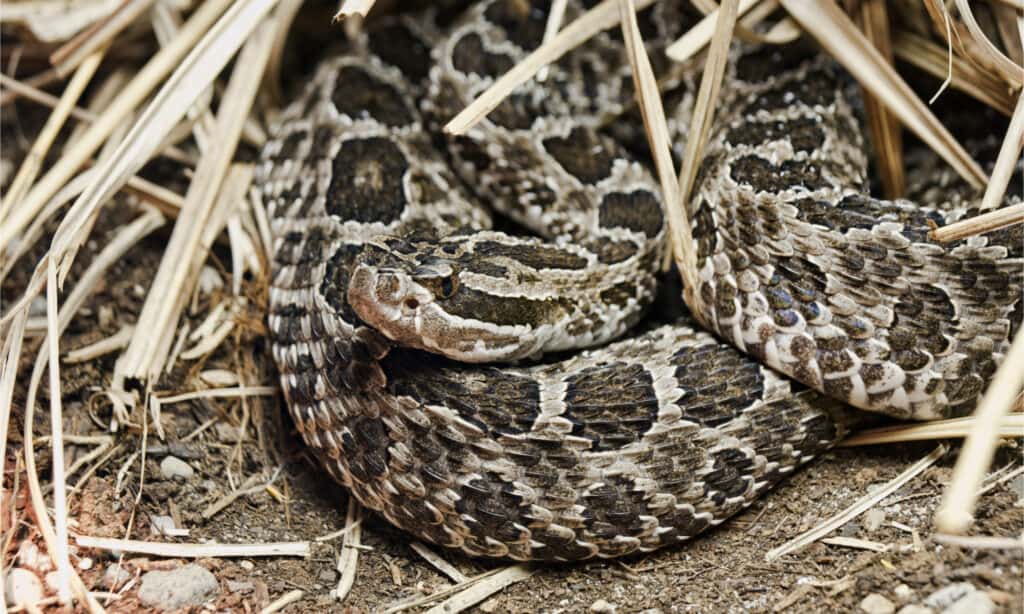
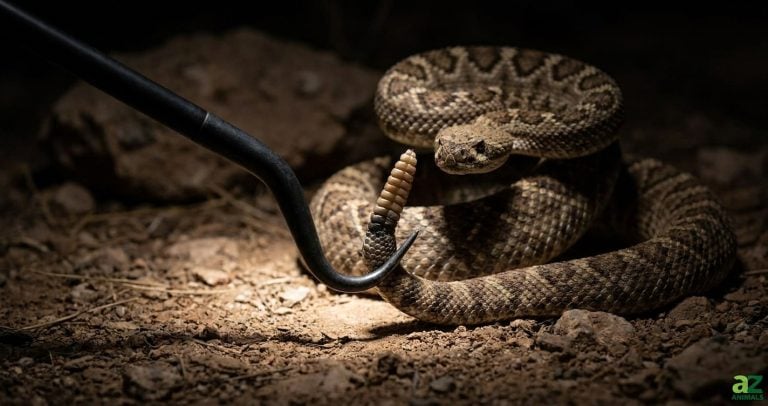
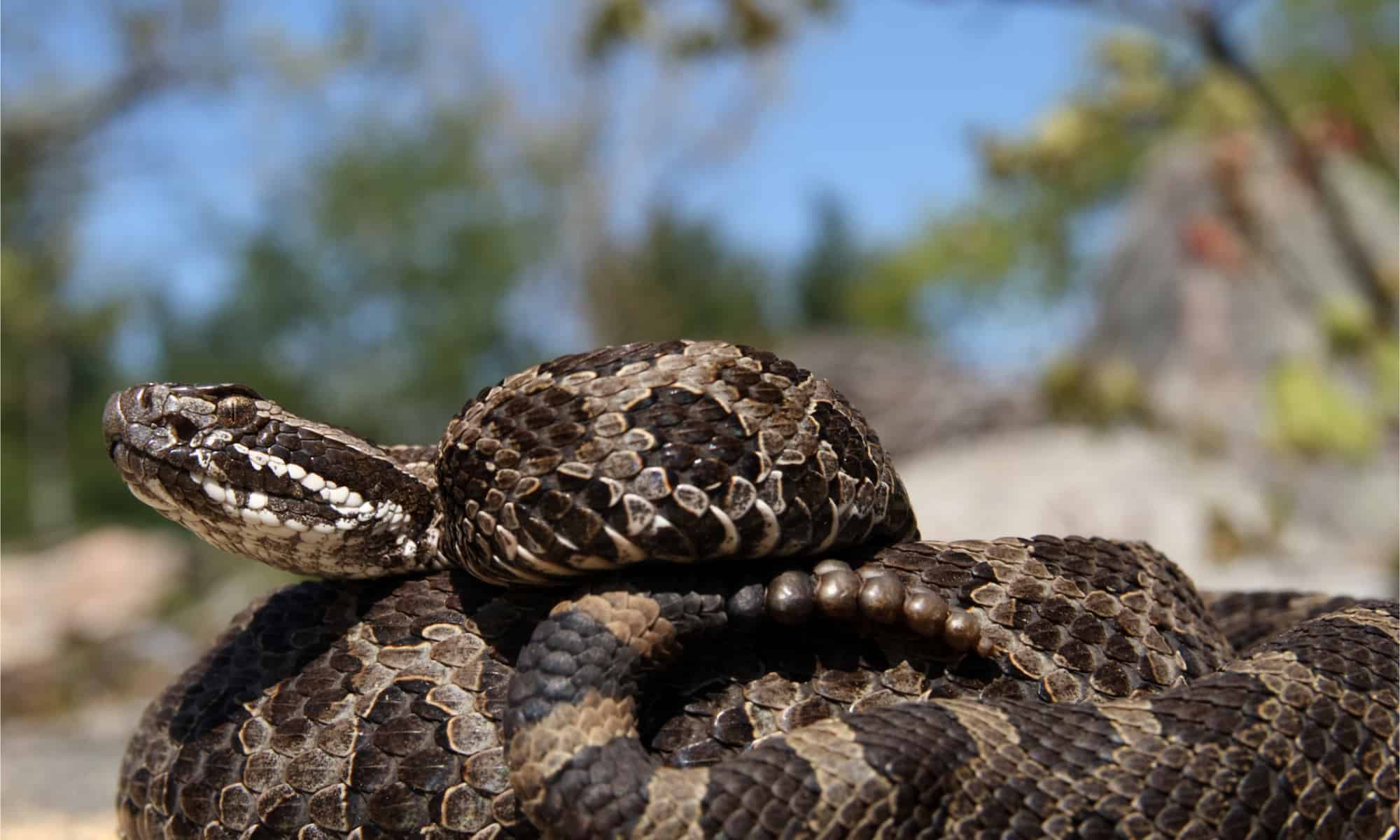
The eastern massasauga rattlesnake is the only venomous snake found in Michigan.
©DnDavis/Shutterstock.com
| Size | 12-36 inches long |
| Location | Wetland areas, primarily found in Southern Michigan |
| Threat | Venomous, with a painful bite that is rarely deadly in adult individuals |
| Behavior | Reclusive and solitary, most bites occur through accidental contact |
The most dangerous snake in Michigan is the eastern massasauga rattlesnake. They can be identified by their brown or gray overall coloring and their darker hourglass-shaped spots along their back. Other markings include three rows of smaller dots along the sides. This species has a thick muscular body and a broad heart-shaped head with slitted pupils and pits common to pit vipers. In Michigan, the massasauga may be difficult to identify, as there are seventeen non-venomous snakes in the area that mimic its markings.
Eastern massasaugas are rarely sighted in Michigan and have only been spotted in the southern regions of the state. The United States Fish and Wildlife Service (USFWS) has classified the eastern massasauga as a Threatened species.
Eastern Fox Snake
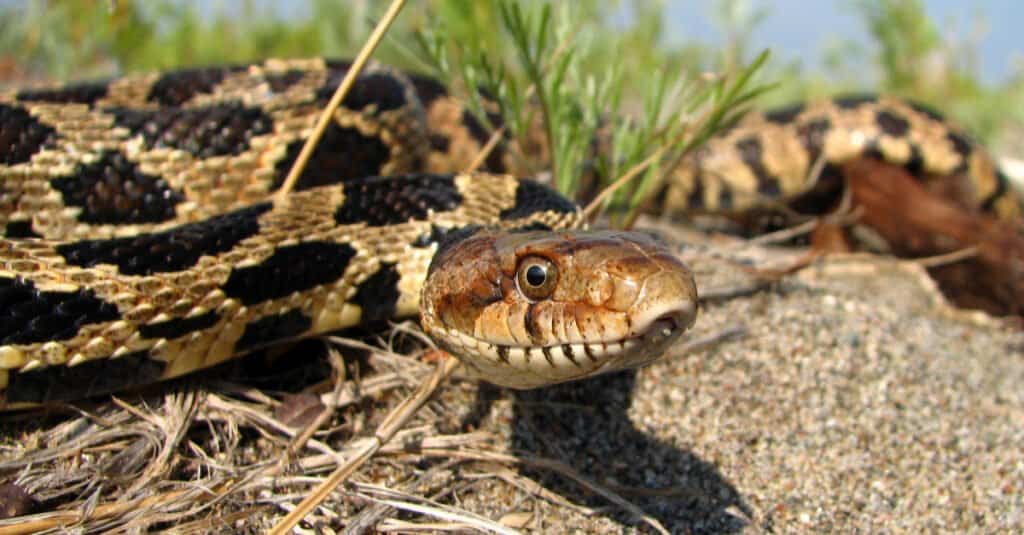
The eastern fox snake is Michigan’s third-largest snake species and is a keystone species in the Great Lakes Basin.
©Ryan M. Bolton/Shutterstock.com
| Size | 36-66 inches long |
| Habitat | Near bodies of water, on the shoreline of rivers, and in urban areas. Primarily found in the Great Lakes Basin region of Michigan |
| Threat | Non-venomous, poses no danger to humans |
| Behavior | Typically mild and docile but will bite if threatened. |
The eastern fox snake can be identified by its light to golden brown overall coloring, brown or black splotches, and its yellow and deep brown checkered underbelly. The species has a lean and agile body, a triangular head, and round pupils.
Eastern fox snakes are strong swimmers and are mostly found near rivers and shorelines, but are also frequently found in urban areas. Like the gray and black rat snake, this species’ numbers are also declining due to loss of habitat, and it is listed as a threatened species in the state.
Grey Rat Snake
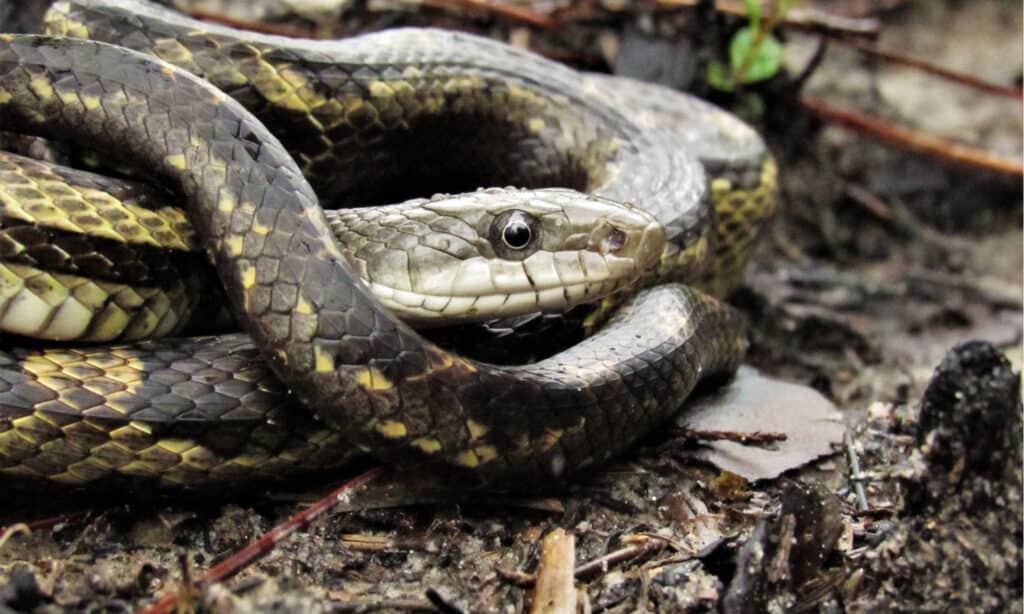
The grey rat snake is tied with the black rat snake as the largest species found in Michigan.
©Gabbie Berry/Shutterstock.com
| Size | 42-72 inches long |
| Habitat | Forested habitats, primarily deciduous forests. They are also found in adjacent open habitats, including shrubby fields, prairies and marsh, and bog edges. |
| Threat | Non-venomous, no danger to humans |
| Behavior | Non-aggressive but tends to shake the tip of its tail to mimic a rattlesnake when threatened. Will bite if provoked. |
The gray rat snake is tied with the black rat snake as the largest species in Michigan, and both are species grouped under the common name “eastern rat snake”. This species can be identified by its medium gray overall coloring and its darker gray blotched markings. Additionally, the species’ underbelly has a distinct light gray and dark gray checkered pattern of markings. Gray rat snakes have a lean and agile body with a small, narrow head and rounded pupils.
The gray rat snake is commonly found in Michigan, but its population is declining. Due to this, they are classified as a species of special concern.
Black Rat Snake
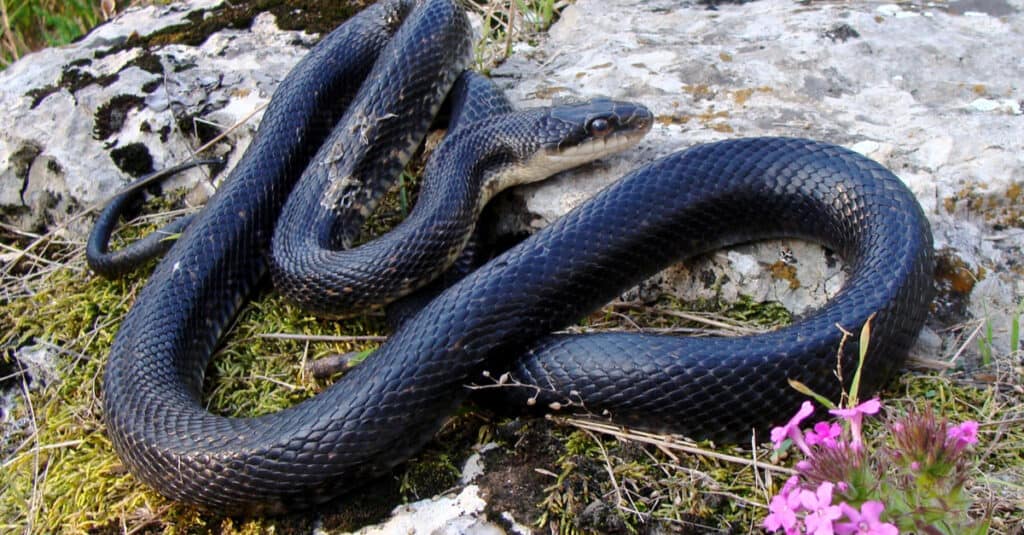
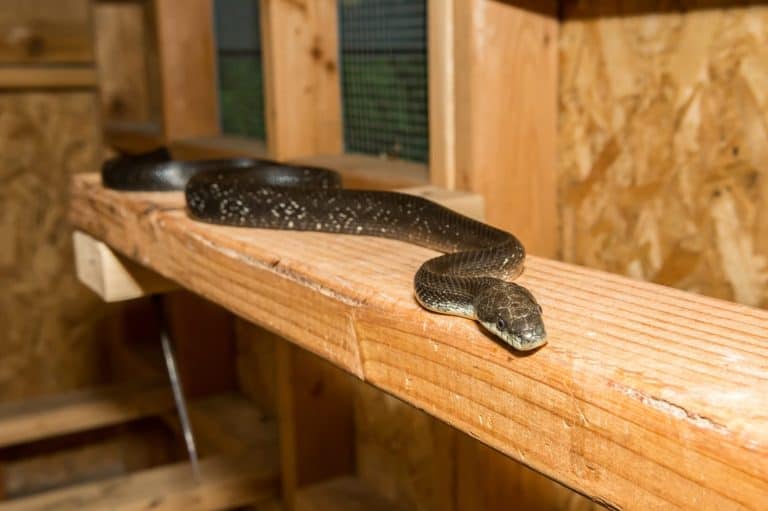
Black rat snakes are tied with the grey rat snake species for the largest snake in Michigan.
©Matt Jeppson/Shutterstock.com
| Size | 42-72 inches long |
| Habitat | Rocky hillsides, in grassy fields, and even in neighborhoods |
| Threat | Non-venomous, no danger to humans |
| Behavior | Non-aggressive, but tends to shake the tip of its tail to mimic a rattlesnake when threatened. Will bite if provoked. |
Another species of rat snake, the black rat snake, is tied with its gray cousin for Michigan’s largest snake species. When young, the black snake is medium gray overall with darker gray blotching along the back. When mature, its coloring darkens to an overall glossy black with a white underbelly that stops at the mouth and chin. Like other rat snakes, it has a long and lean form, a small, narrow head, and rounded pupils.
The black rat snake is commonly found in the same locations in Michigan as the gray rat snake. Due to population decline, it is also listed as a species of special concern.
Why Declining Snake Populations Are A Special Concern
While snakes are one of the more feared members of the animal kingdom, a world without them would be much scarier. In the habitats and ecosystems that snake species are native to, snakes can make the difference between a thriving environment and a struggling one.
In Michigan in particular, the native snakes are a keystone species in the Great Lakes Basin. Keystone species function as both predator and prey, maintaining the balance between overpopulation and underpopulation. The snakes prey on small rodents and other animals, while also acting as prey for larger animals like birds. Without them, the entire ecosystem suffers.