
The United States is home to some truly unique pets, particularly when it comes to snakes. The laws in certain states allow for some reptiles to be kept as pets that are probably better left in the wild. Still, there are people out there who love to own and care for exotic animals. Although many snakes are small, that isn’t the case for the list we have today. If you’ve ever wondered what the largest snake you can keep as a pet is, you are about to find out.
Is It Legal to Own a Large Snake?
When it comes to owning snakes, the United States does not have any specific federal laws prohibiting it. However, the Lacey Act does prohibit the import of some snakes, as well as the transport of snakes that are already in the U.S. across state lines. Nonvenomous snakes can often be kept without special permission, but many states and local jurisdictions have their own restrictions or permit requirements, especially for large constrictor species.
Additionally, some states allow venomous snakes to be owned and traded without any restrictions. Most other states allow venomous snakes to be kept, but with a special permit. There are not many restrictions based solely on size, although the Lacey Act specifically prohibits certain “large” constrictor snakes. With that in mind, let’s learn about the largest snakes you can keep as pets.
The Largest Snake Species You Can Keep as Pets
The following species are large snakes that can be kept as pets. However, there may be certain restrictions due to the Lacey Act or your state’s regulations regarding private ownership of exotic animals.
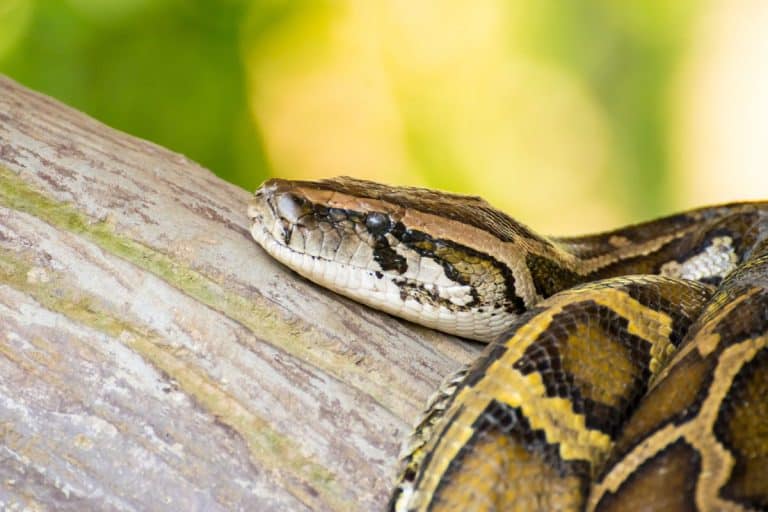
Reticulated Pythons
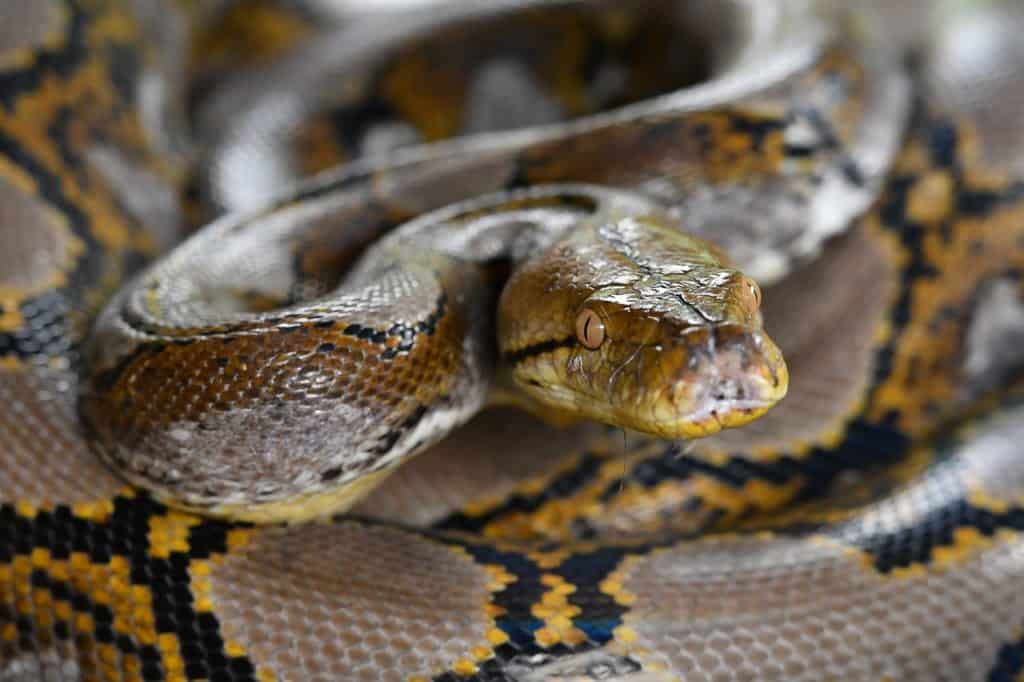
Reticulated pythons are often kept as pets, despite their incredible lengths.
©jaiman taip/Shutterstock.com
The reticulated python (Malayopython reticulatus) is a large snake species native to South and Southeast Asia. It is generally considered to be one of the longest snakes in the world and is kept as a pet, particularly albino and tiger morphs. On average, full-grown snakes in the wild generally measure between 4 feet 11 inches and 21 feet 4 inches. Within that range, these pythons can weigh anywhere from 2 pounds up to 165 pounds.
The biggest factor in regard to the price of a reticulated python is its genetics and morphs. The rarer a morph, the more expensive it will be. However, reticulated pythons are considered “injurious wildlife” under the Lacey Act. They cannot be imported into the U.S., nor can snakes already in the country be transported across state lines. Check your state and local ordinances if you want to own a reticulated python.
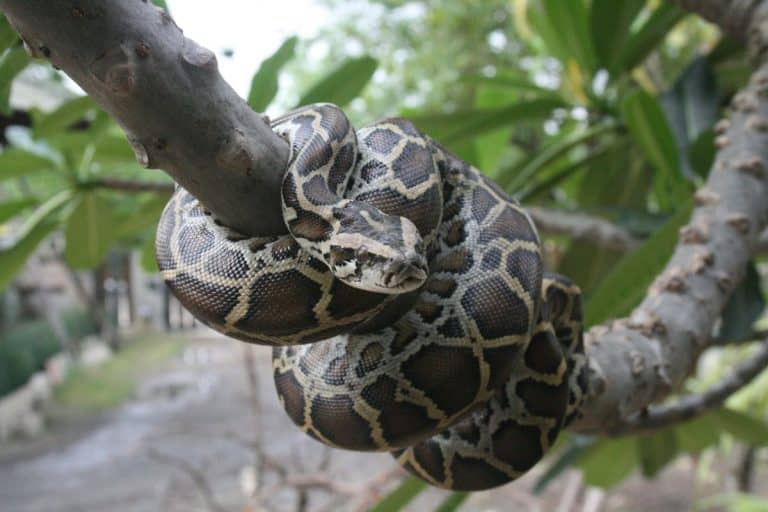
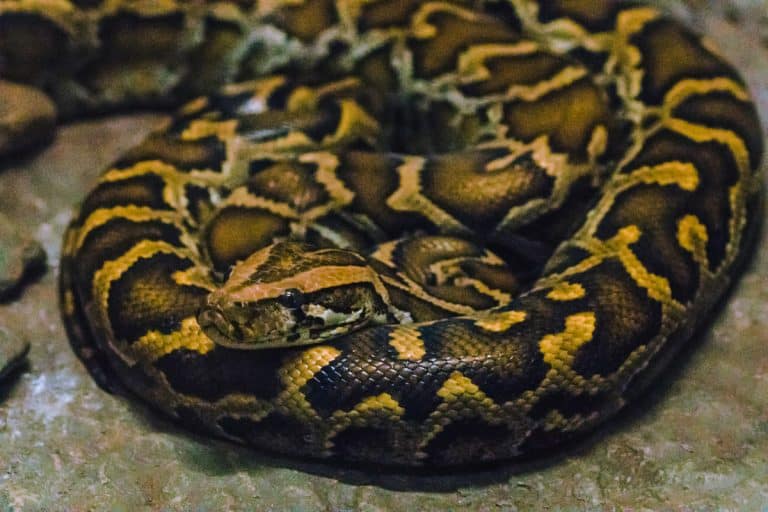
Burmese Pythons
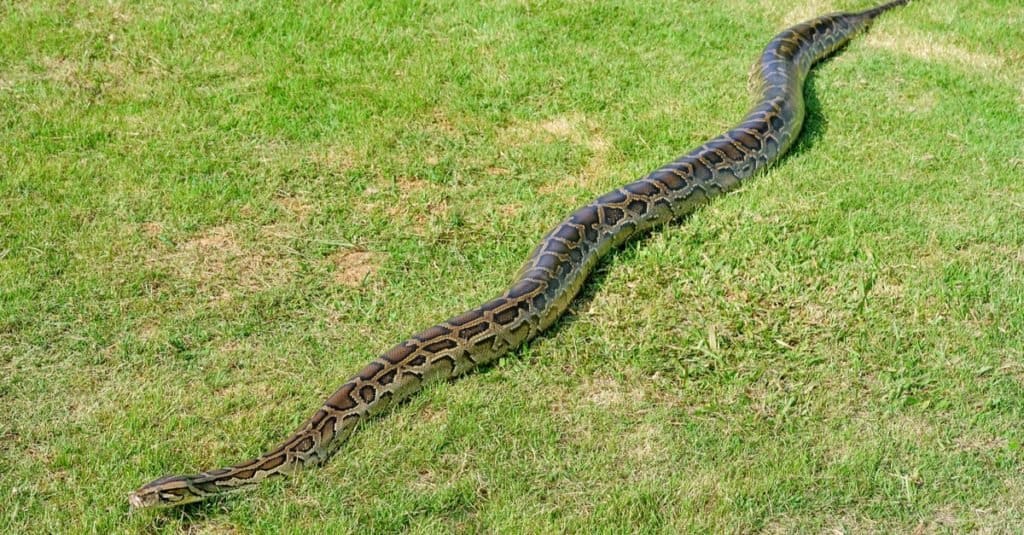
Burmese pythons are sometimes kept as pets but have become an invasive species in Florida.
©Yatra/Shutterstock.com
The Burmese python (Python bivittatus) is among the largest snakes in the world and is native to Southeast Asia. They are sometimes kept as pets in the United States and may accidentally escape into the wild. As a result, Florida now has a problem with a massive population of invasive Burmese pythons living in the Everglades. In the wild, most Burmese pythons will grow to around 16 feet long, although some reports claim they can reach up to 23 feet. Additionally, they can weigh as much as 165 pounds, but that is quite rare.
Burmese pythons are also on the list of species deemed “injurious wildlife.” To own a Burmese python, you must obtain the snake from a seller in your state, as they cannot be imported or transported across state lines. Contact your state and local authorities regarding regulations for ownership.
Rock Pythons
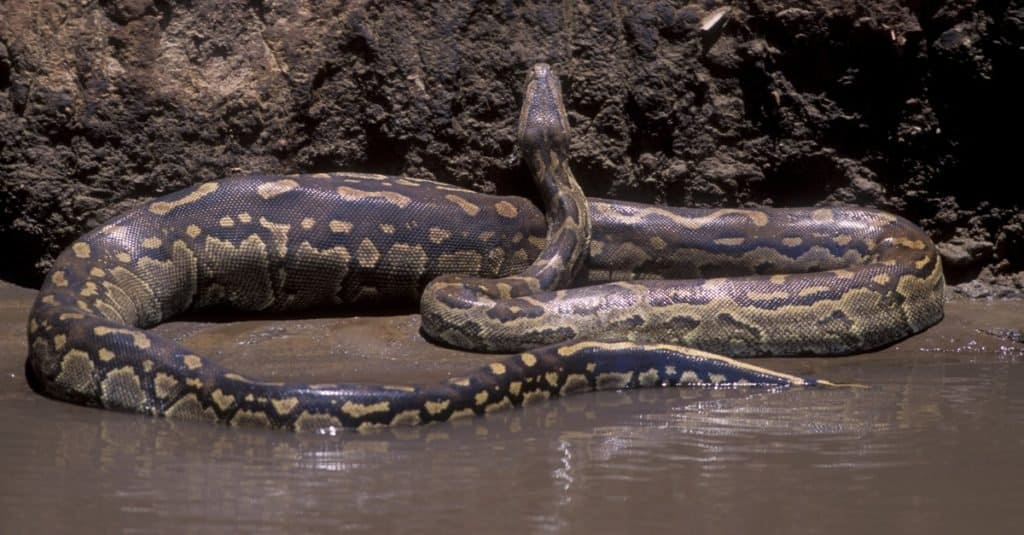
African rock pythons are known for their ability to eat large prey.
©zaferkizilkaya/Shutterstock.com
The African rock python (Python sebae) holds the record as eating the largest prey of any snake around. They have been observed to eat animals as large as crocodiles. These pythons are native to sub-Saharan Africa and are among the heaviest snakes in the world. Generally, an African rock python can grow to over 20 feet long, although few exceed 16 feet. These snakes weigh as much as 201 pounds.
African rock pythons are generally feared in the wild and are not considered good pets. They are aggressive and can seriously harm or even kill small- to medium-sized animals. Additionally, they aren’t readily available for purchase like the first two on our list. They may still be legal to own, depending on the laws and regulations in your state. However, they are considered an invasive species in Florida.
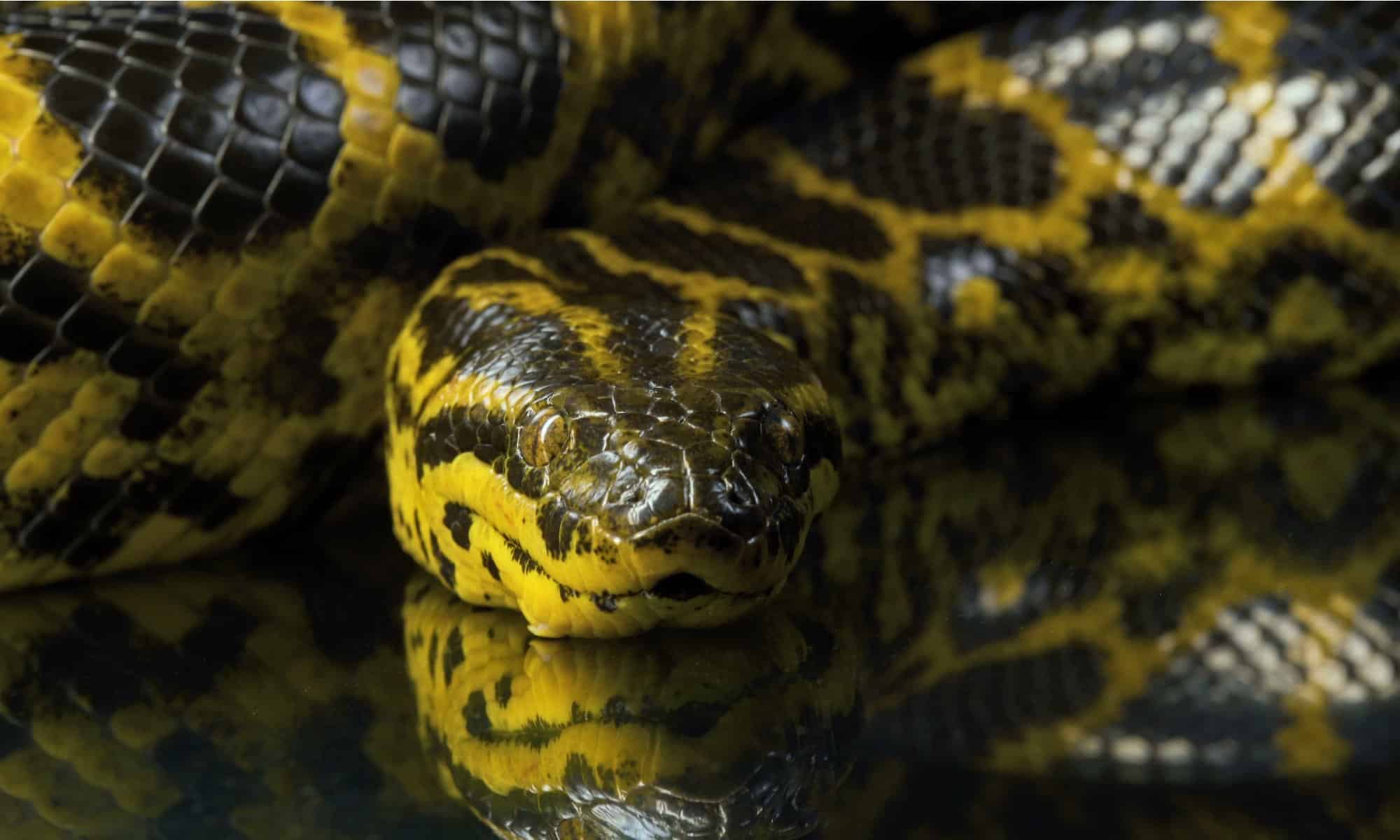
Anacondas
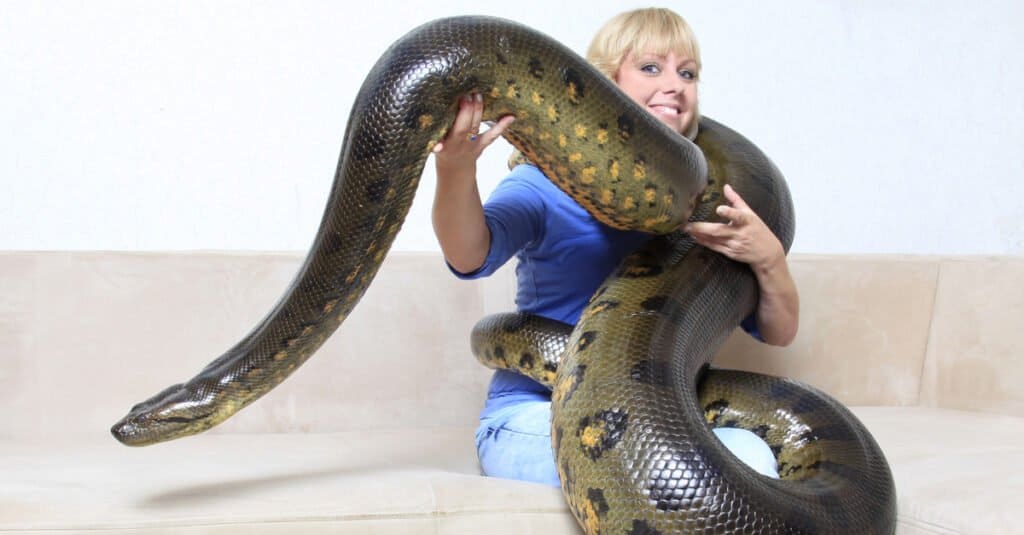
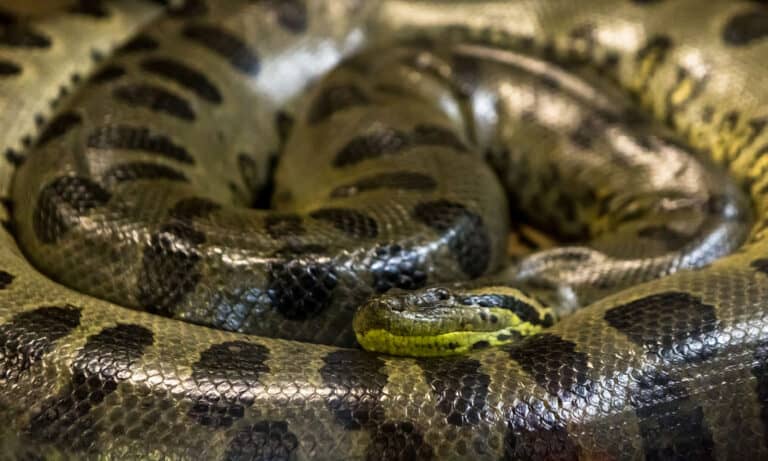
Green anacondas are among the largest snakes in the world and are occasionally kept as pets.
©Holger Kirk/Shutterstock.com
As many would guess, anacondas easily make our list of the largest snakes you can keep as pets. Of the two species available, the green anaconda (Eunectes murinus) is the largest. Green anacondas, also called giant anacondas, are native to South America and hold the record for the heaviest snakes in the world. Additionally, they are among the longest. On average, anacondas can grow to 16 feet 5 inches, with some individuals surpassing 17 feet. Certain folk tales speak of snakes growing 35 to 40 feet long, but none have been verified. The average weight of an anaconda is between 66 and 154 pounds, but green anacondas can reach as large as 550 pounds.
Green and yellow anacondas (Eunectes notaeus) are typically available for purchase, with the smaller yellow anaconda being much more common. Both green and yellow anacondas are considered “injurious wildlife,” so you must find a seller in your state if local laws permit. These snakes cannot be imported into the country or transported across state lines.
Boa Constrictors

A boa constrictor is a large snake that is known to be quite docile when raised in captivity.
©New Africa/Shutterstock.com
Boa constrictors are among the smaller snakes on our list, although small is relative here. These snakes are also called red-tailed boas (Boa constrictor) or just common boas. They are native to South America and are often kept as pets. On average, a boa constrictor can measure between 3 and 13 feet long and weigh between 22 and 33 pounds.
Boa constrictors are often kept in captivity because they tend to become extremely mellow and tame. Additionally, their “smaller” size makes them more suitable for living in tanks in someone’s home. Boa constrictors were removed from consideration as an injurious species, so there are no restrictions for ownership aside from state and local ordinances.
The Best Large Snakes that Make Good Pets
The largest snakes you can keep as pets are not necessarily the best choices for pet ownership. Here is a quick list of some larger snakes that are known for their ease and popularity among reptile enthusiasts:
- blood pythons
- BCI boas (Boa constrictor imperator)
- ball pythons