
Quick Take
- One spider on this list is venomous enough to dominate spider news across an entire country, and yet most people have never heard of it. Meet the redback spider →
- Not all widow spiders are black. One species looks so different it barely registers as a threat, yet shares the same venomous family tree. See the brown widow →
- One of these spiders has venom scientists still can't fully explain. It's so rare that almost no one has studied it. Discover the rare red widow →
- A spider that looks nothing like a black widow is probably living in your home right now, and the good news is that it is completely harmless. About the barn funnel weaver →
Spiders are the subject of scientific fascination and nightmares. While many spiders pose no threat to humans, others, like the black widow, can be harmful. The genus Latrodectus contains true widows such as southern black widows, northern black widows, western black widows, and European black widows. These spiders are known for their striking appearance and venomous bites. Black widows are widely distributed and are found on every continent except Antarctica. One of the most well-known species is the Southern black widow (Latrodectus mactans). It is recognizable by its glossy black coloration and a distinctive red hourglass-shaped marking on the underside of its abdomen. This red hourglass is a key identifier of the species and serves as a warning signal to potential predators and humans alike. Continue reading to learn about six spiders that look like black widows but are not.
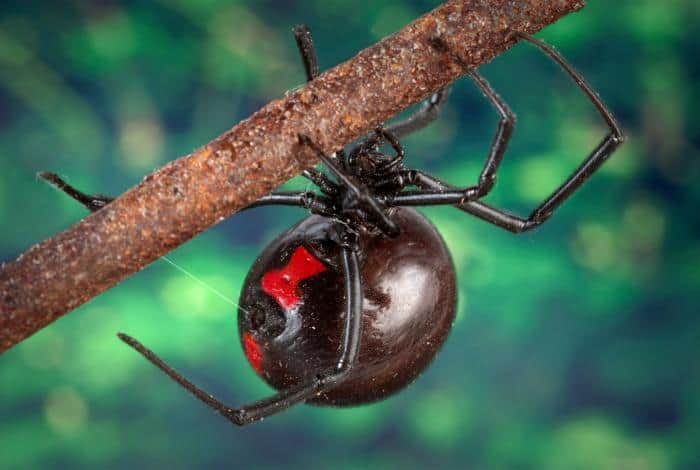
Southern black widows have red markings on their abdomen. They are located on their ventral (belly) side, not their back.
Noble False Widow
The noble false widow (Steatoda nobilis) is a medium-sized arachnid resembling the true black widow but with some distinguishing features. They typically measure between 1/4 and 5/9 inches in length. Their body exhibits a dark brown to black coloration with a bulbous abdomen. One of their key identifying characteristics is the presence of cream-colored markings on their abdomen, which can vary in shape and intensity. Noble false widows are known for their shiny, robust bodies and have eight long, slender legs.
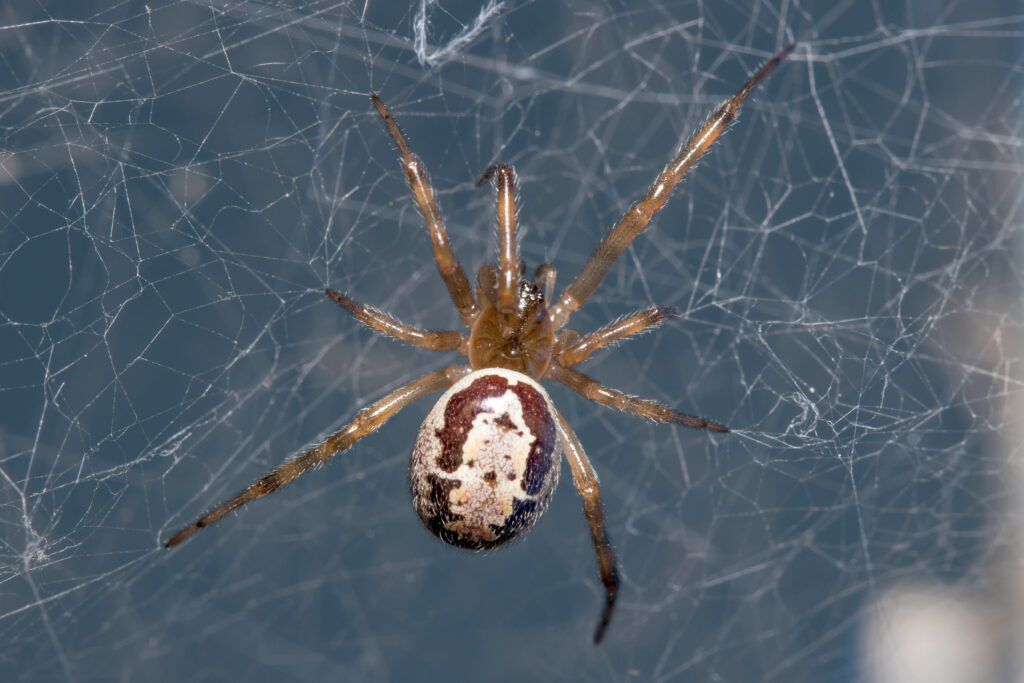
The noble false widow spider is one terrifying spider, and it has the most potent venom of any spider in Ireland.
©JorgeOrtiz_1976/Shutterstock.com
Noble false widows do have venom glands and are technically venomous. However, their venom is comparatively mild and is not considered medically significant to humans. A bite from a noble false widow may cause localized pain, redness, and swelling, and usually resolves without medical intervention. Despite their reputation, noble false widows are generally not aggressive and tend to flee rather than bite during a confrontation.
The noble false widow spider is native to Madeira and the Canary Islands, but its range is expanding to various parts of Europe, including the United Kingdom and Ireland. In recent years, sightings have been reported in locations throughout Europe, likely due to human activities such as international trade and transportation. This spider’s ability to adapt to a range of climates enables it to establish populations in urban and suburban areas, where it can live in and around buildings, gardens, and other human-made structures.
False Black Widow
The false black widow (Steatoda grossa), also known as the cupboard spider, typically measures between 1/4 and 2/5 inches long. They are dark, shiny brown or black and often display a bulbous abdomen. One of the key identifying features of the false black widow, like the noble false widow, is pale, cream-colored markings on its abdomen, which can vary in shape but often resemble a faint hourglass or chevron pattern.
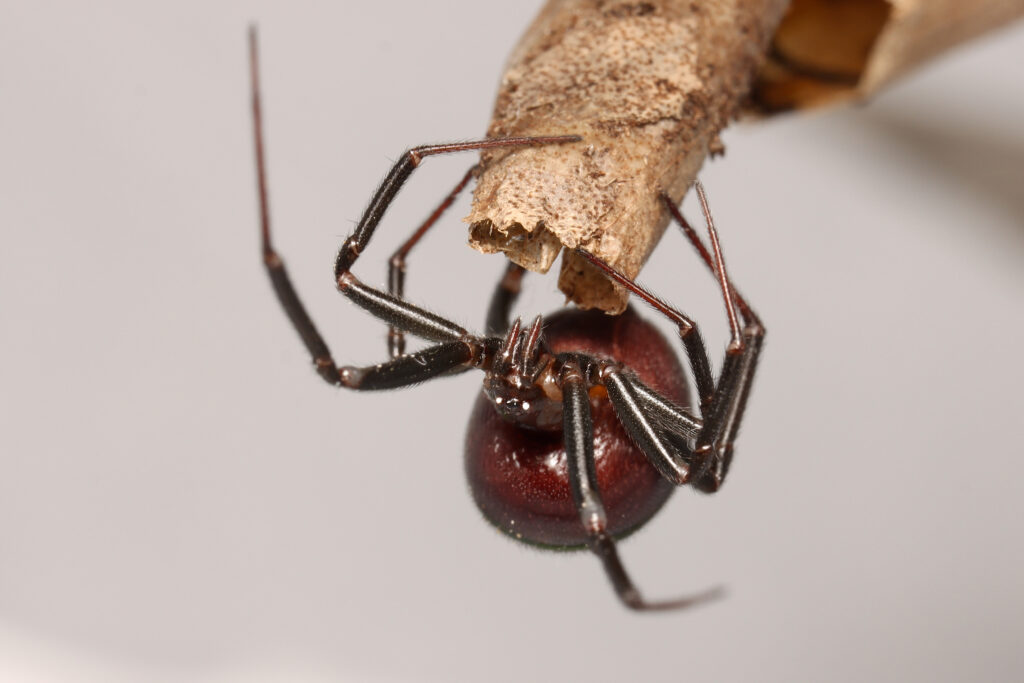
False widow spiders are dangerous to humans but not life-threatening.
©Dan Olsen/Shutterstock.com
While the false black widow does possess venom and is technically venomous, its bite is generally mild and does not pose a threat to humans. The symptoms of a false black widow bite typically include localized pain, redness, and swelling, which usually resolve without medical treatment. These spiders are not known for aggressive behavior and are more likely to retreat than to bite when encountered by humans.
The false black widow has a broad geographical distribution, making it a familiar presence in many regions. This species can be found in North America, South America, Australia, and other temperate and subtropical regions. In these areas, false black widows often thrive in human-made structures, including homes, sheds, and gardens, where they spin their webs to catch insects. This adaptability to urban environments has contributed to their wide distribution, as they readily exploit the shelter and prey sources provided by human habitats.
Red Widow
The red widow spider (Latrodectus bishopi) gets its name from the striking red or reddish-orange color of the female’s abdomen, which often features a distinct hourglass-shaped marking. Males, in contrast, are smaller and less conspicuous, typically displaying a more subdued reddish-brown or tan coloration. A red widow is distinguished from a black widow by its reddish-orange abdomen and generally smaller size, whereas black widows typically have a glossy black appearance with a red hourglass marking on the abdomen.
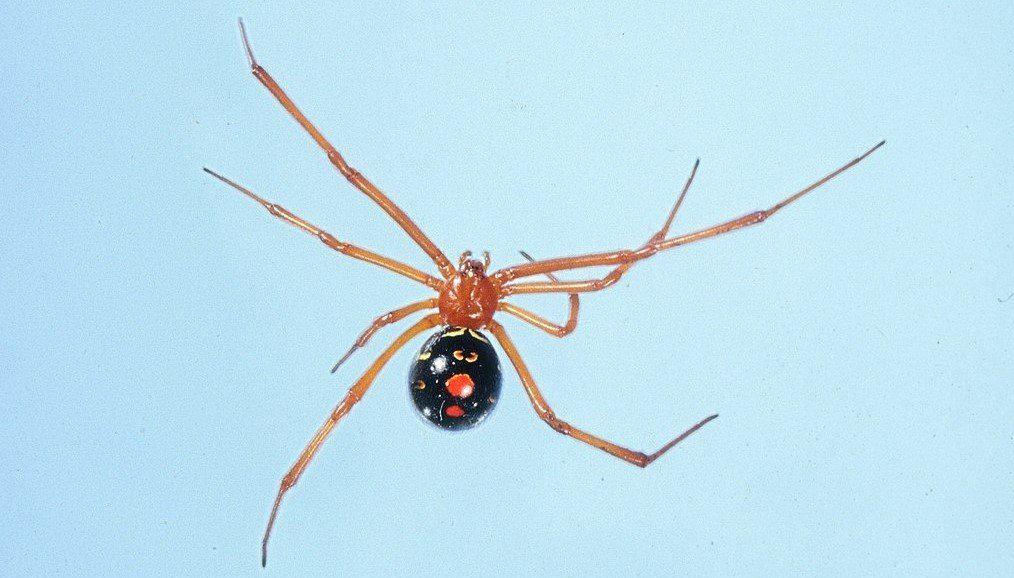
The red widow spider is very uncommon and sports red markings that may look similar to southern black widows.
©Florida Division of Plant Industry Archive / CC BY 3.0 US, via Wikimedia Commons – Original / License
Like other widow spiders, the red widow possesses venomous glands and is considered venomous. However, due to its rarity and limited available research, the potency of its venom and the effects of its bites on humans remain largely unknown. As with any spider species, caution is advisable, and individuals should avoid handling or provoking red widow spiders if encountered in their natural habitat.
The red widow spider has a very limited geographical distribution and is found primarily in the southeastern United States, mainly in Florida. This species has evolved to thrive in the unique ecosystems of the Florida scrub habitat, which is characterized by sandy soils and xeric conditions. Due to its specialized habitat requirements, the red widow’s range remains restricted to a handful of locations in Florida, making it a rare, localized species with a much smaller range than other widow spiders.
Brown Widow
The brown widow spider (Latrodectus geometricus) has a tan to light brown coloration, with a distinct, often orange to yellow, hourglass-shaped marking on the underside of its abdomen. Another key distinguishing feature is the presence of lighter, geometric patterns on its dorsal abdomen, which may resemble a series of hourglasses or bars, hence its scientific name. Brown widows are generally smaller than their black widow relatives, with a body length ranging from 1/3 to 3/5 of an inch. Their legs are adorned with dark and light bands.
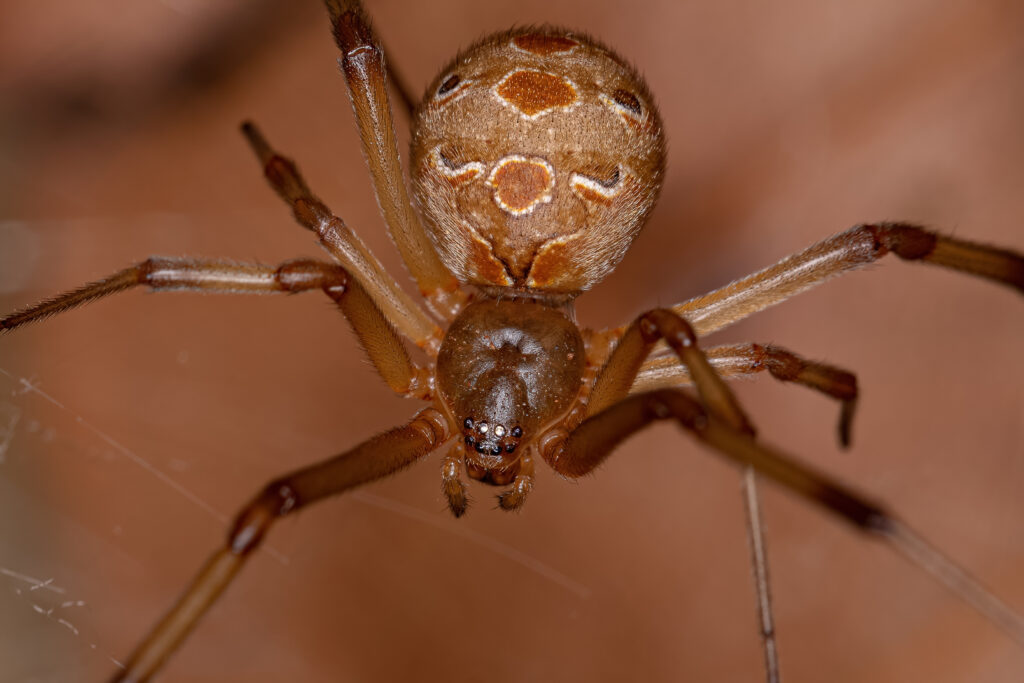
Although their venom is toxic and can cause uncomfortable symptoms, the brown widow is far less dangerous than the black widow.
©iStock.com/ViniSouza128
The brown widow spider is venomous, like other widow spiders, but its venom is considered less potent than that of the black widow. While brown widow bites can cause symptoms such as localized pain, swelling, and discomfort, they are usually milder and rarely result in severe medical complications. The brown widow is generally less aggressive than black widows and is known to bite less frequently when disturbed, which contributes to its reputation as a less dangerous spider.
Brown widow spiders have a worldwide distribution. Native to Africa, though some sources describe this as the prevailing scientific view rather than a certainty, they have established populations in regions beyond their native range due to global trade and human transportation. Brown widows can now be found in the southeastern United States, particularly in Florida, as well as in California, Hawaii, and other southern states. They have also been reported in parts of Europe, Asia, and the Caribbean. This adaptability to a range of climates and environments has contributed to their extensive distribution and makes them a notable and successful invasive species in many regions.
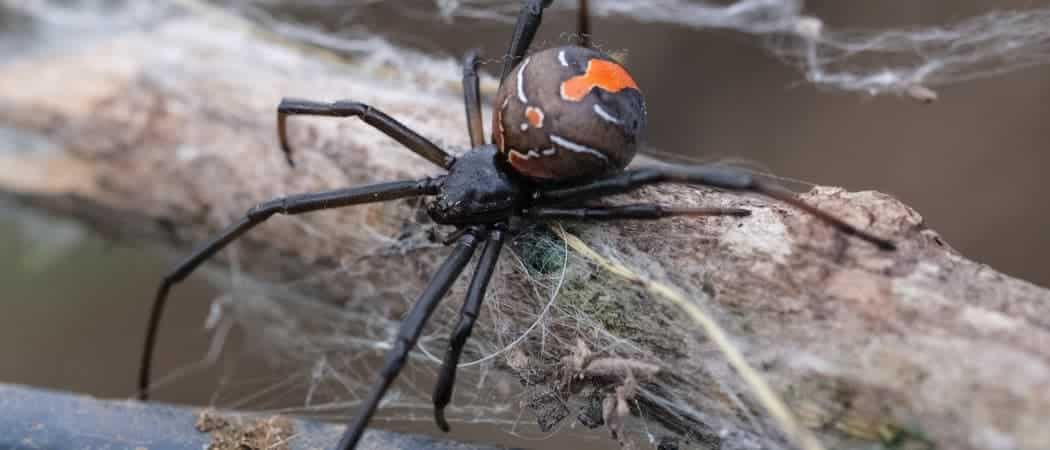
Redback Spider
Redback spiders (Latrodectus hasseltii) are members of the widow spider family and share several similarities with black widows. Redbacks are typically small to medium-sized, with females measuring around 1 centimeter in body length, while males are significantly smaller. Their most distinguishing feature is the prominent red or orange hourglass-shaped marking on the dorsal side of the abdomen. This red hourglass marking appears on the dorsal side, in contrast to the red markings found on the ventral side of the more dangerous southern black widows. The rest of the spider’s body is usually black or dark brown, and it has long, slender legs.
) are members of the widow spider family and share several similarities with black widows. Redbacks are typically small to medium-sized, with females measuring around 1 centimeter in body length, while males are significantly smaller. Their most distinguishing feature is the prominent red or orange hourglass-shaped marking on the dorsal side of the abdomen. This red hourglass marking appears on the dorsal side, in contrast to the red markings found on the ventral side of the more dangerous southern black widows. The rest of the spider’s body is usually black or dark brown, and it has long, slender legs.
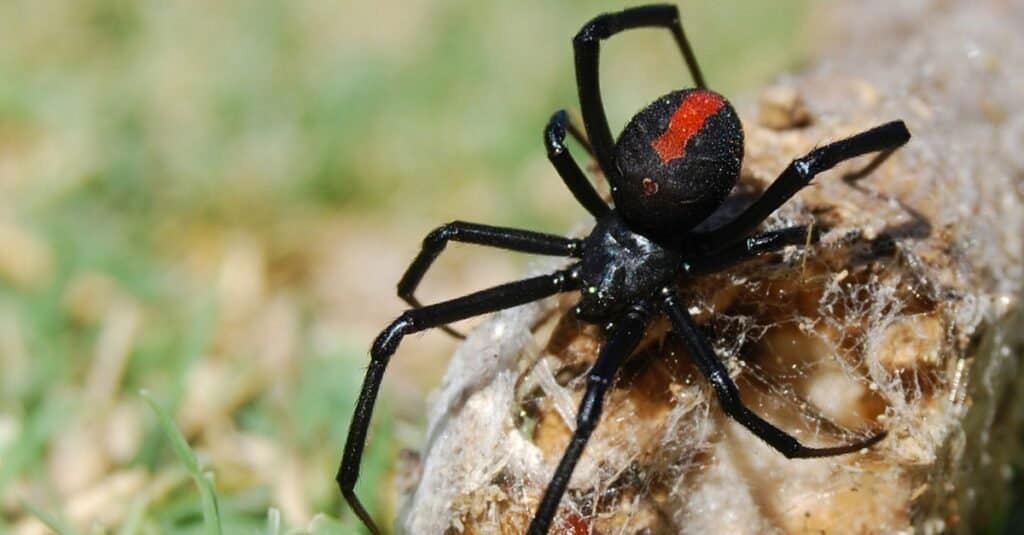
The poisonous Australian redback spider bites can, on rare occasions, be deadly.
©iStock.com/maria72
Redback spiders are indeed venomous, like their black widow relatives. Their venom contains neurotoxins that can cause severe pain, muscle cramps, nausea, and sweating in humans who are bitten. While redback spider bites can be painful and distressing, fatalities are extremely rare, thanks to the availability of antivenom and prompt medical treatment. Unlike black widows, redback spiders are known to spin messy, irregular webs in sheltered locations, such as under rocks, in crevices, or in human-made structures, rather than the classic, organized orb-shaped webs.
Redback spiders primarily live in Australia, and their distribution spans across most of the continent. They are particularly prevalent in urban and suburban areas, where they inhabit dark, sheltered locations such as garages, sheds, and outdoor toilets. While their native range is in Australia, redback spiders have been inadvertently introduced to some other countries, including New Zealand and Japan, although they remain less common in these regions.
Barn Funnel Weaver
The barn funnel weaver (Tegenaria domestica) is typically small to medium-sized. Its body length ranges from 1/4 to 4/5 inches. Barn funnel weavers have elongated, slender bodies with light brown to grayish coloration and often display a series of chevron-like markings on their abdomen. Unlike the shiny black appearance of black widows and their distinctive red or orange hourglass markings, barn funnel weavers lack such vivid markings.
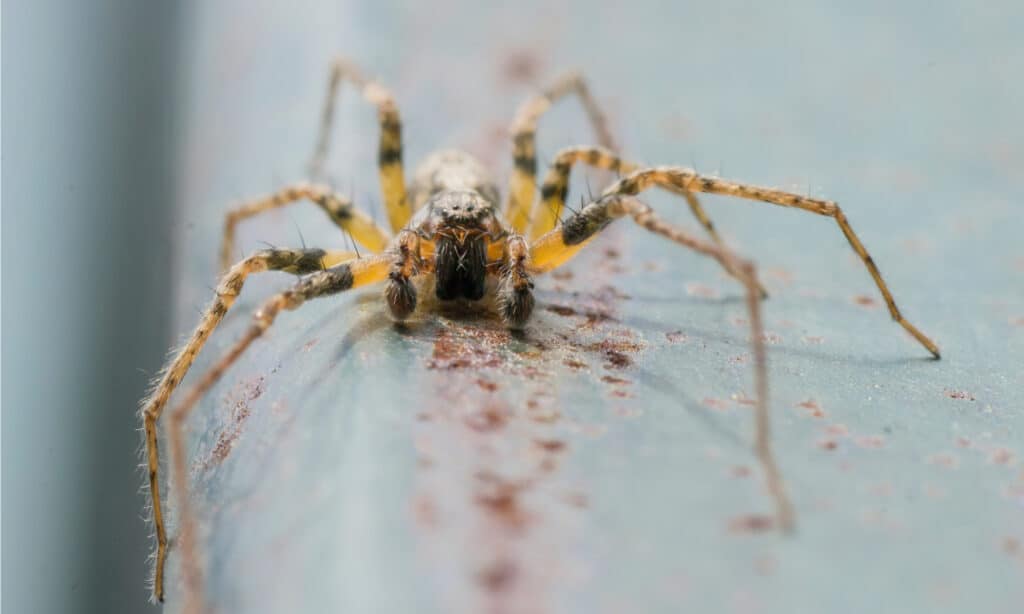
Barn funnel weavers lack red markings on their abdomen.
©Korovko Gleb/Shutterstock.com
Barn funnel weavers are venomous but not dangerous to humans. Their venom is primarily used to immobilize and digest their prey, which consists of insects and other small arthropods. While their bites may cause mild discomfort, redness, and swelling, they do not result in serious medical complications. These spiders are generally non-aggressive and are more likely to retreat when approached by humans.
Barn funnel weavers are widespread across North America, Europe, and parts of Asia. They are commonly encountered in temperate regions, where they inhabit a variety of man-made structures and natural environments. Barn funnel weavers often thrive in human dwellings, including houses, barns, and sheds, where they construct their funnel-shaped webs in corners and crevices to capture prey. Their adaptability to urban and rural settings has contributed to their widespread distribution, making them a familiar and harmless presence in many parts of the world.