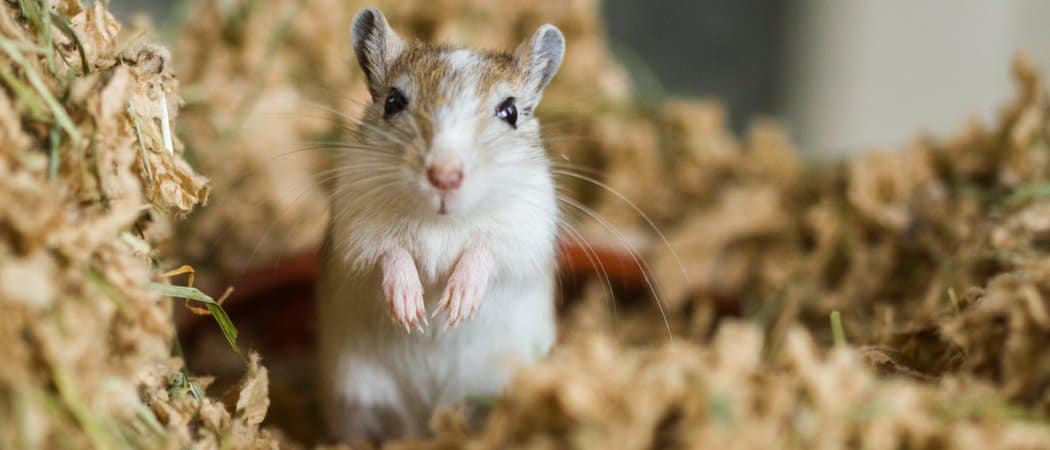

Rodents are found on every major continent. They remain one of the most diverse and prolific groups of animals on the planet. It can be hard to keep track of which animals are rodents; it can also be difficult to track which animals fall under the label of mammal.
If you’ve ever wondered whether rodents are mammals, you’ve come to the right place. We’ll provide you with all the details you need to become a pro on both rodents and mammals.
Are Rodents Mammals? Their Defining Characteristics

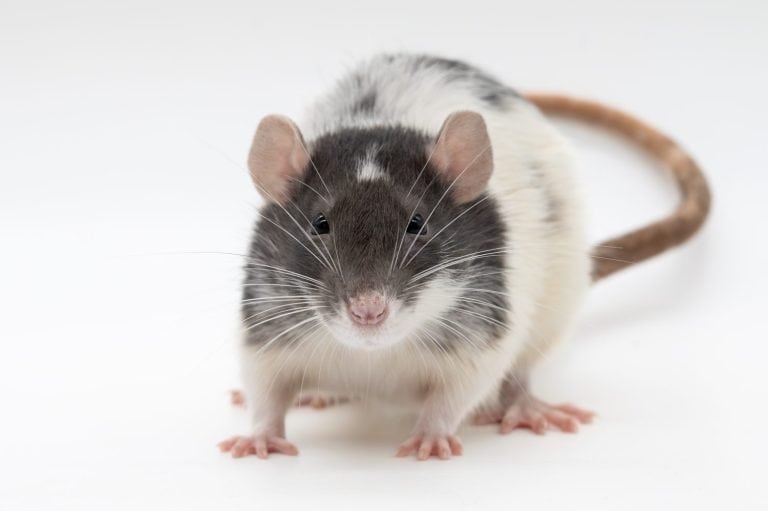
Mice and many other rodents are technically mammals.
©Sergey Bezgodov/Shutterstock.com
Yes, rodents are classified as mammals. Rodents are warm-blooded, milk-producing creatures. There are a number of characteristics defining rodents as mammals. Some of these traits are also unique to rodent species. Let us go over some of those traits in more detail.
Teeth

The teeth of most rodent species make them unique.
©Thurid_with_th/Shutterstock.com
Most rodent species share sets of teeth in common that are designed for efficient chewing and gnawing. If you want to know whether a creature is a rodent or not, you can conclude pretty quickly by looking at a picture of the animal’s dental x-ray. Both the upper and lower jaw contain two incisors each, and a gap between the incisors and the molars, known as the diastema, maximizes the chewing potential of the teeth.
Each rodent also has at least one — but usually multiple — molars and premolars that are often known as “cheek teeth”. Rodent incisors have enamel only on the front side, which helps maintain a sharp edge as the softer dentin on the back wears down, ensuring their teeth are always sharp and growing.
Diets

Most rodents are herbivores.
©paha1205/Shutterstock.com
A lack of canine teeth suggests that rodents aren’t carnivores. Whereas canine teeth are used for ripping and tearing, the sharp incisors of the rodent are more about tearing. These sharp teeth can be used for burrowing, but they also help break down the vegetarian diet of the rodent — which typically includes fruits, seeds, and leaves.
Rodents also have a pouch known as the caecum. This unique part of their physiology allows them to break down the cellulose of tough plant materials thanks to the bacteria that grow within the caecum.
Breeding
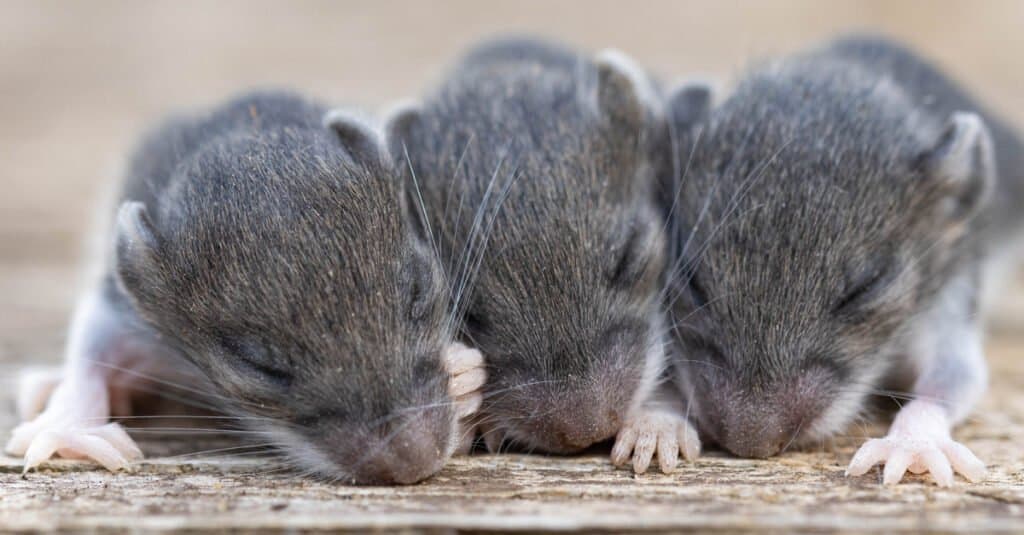
Mice and rats are capable of giving birth at a very young age.
©Jennifer Thornhill/Shutterstock.com
The personalities and characteristics of rodents can vary wildly, but they tend to be prey in the habitats they occupy. Both birds and mammalian predators feed on rodent species. While different rodents employ a variety of different defensive measures against predators, one of their primary methods for maintaining their population is through breeding.
The average female mouse, for instance, can give birth to about 50 pups in a year because they breed often. The typical litter consists of six to eight pups. While that’s not the standard for rodents, large litters and frequent breeding are a commonality among rodent species.
What Are the Different Types of Rodents?
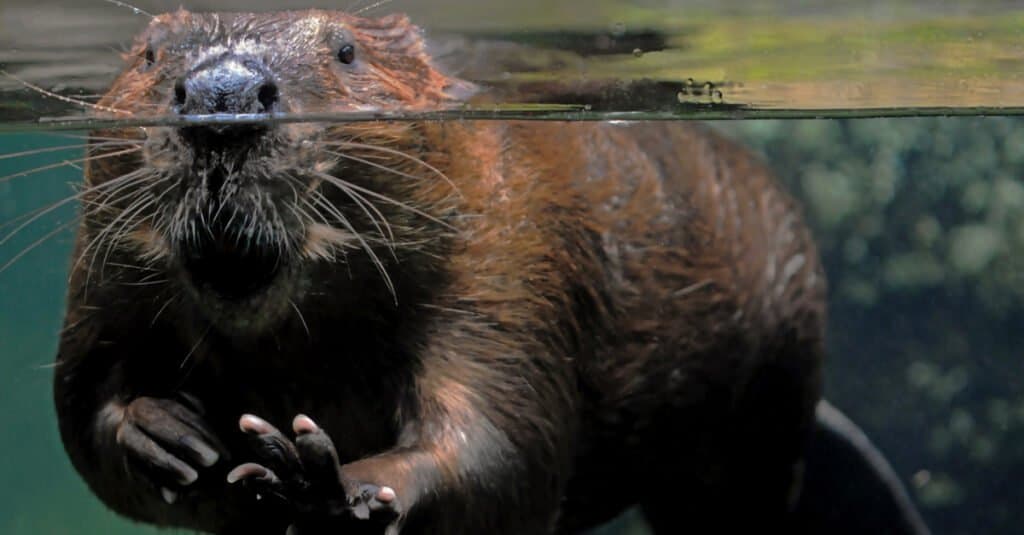
Beavers are a type of rodent and, therefore, mammal.
©karen crewe/Shutterstock.com
Rodentia is an order, which means that every rodent is a member of the class above it — and that each rodent can be identified by a more specific family. The taxonomic classification system makes it easier to identify them by breaking down the entire population into roughly 30 families with their own distinguishing features.
Here are some of the most important and interesting of those families.
- Castoridae — The American and European beaver are the only living members of this species, but their propensity for manipulating the environment makes them critical members of many ecosystems. Both species maintain tight family units and use their sharp incisors to feast on trees which also serve as materials for their dams.
- Sciuridae — Both tree and ground squirrels belong to this family, and they represent a staggering 273 species. They are one of the most prodigious species in the world and have found habitats on every continent other than Australia. Depending on the species, a squirrel may either live in the hollow of a tree or burrow deep beneath the earth.
- Erethizontidae — All the members of this family originate in the Americas, but their most distinguishing features are the painful spines that line their bodies. Also known as porcupines, they’ve developed these unique accessories as a way to protect them from predators. A separate family of porcupines known as Hystricomorpha can be found in Europe, Asia, and Africa and are distinguished by the fact that they have fur in addition to their quills.
- Muridae — Muridae isn’t just the largest rodent family in the world, but it’s one of the largest families in the entire animal kingdom. More than 1300 species belong to this family, and they include common classroom pets like gerbils, rats, and mice. Most murids exhibit good senses of smell and hearing, and that allows them to adapt to a broad variety of ecosystems.
- Heteromyidae — The most distinguishing feature of this family is that they come equipped with cheek pockets that can be used to store food and carry it for long distances. Most but not all members of the species create burrows to help conceal them from predators — and members like the kangaroo rat have extended legs that allow them to hop long distances.
Defining Mammals: Do Rodents Meet This Criteria?
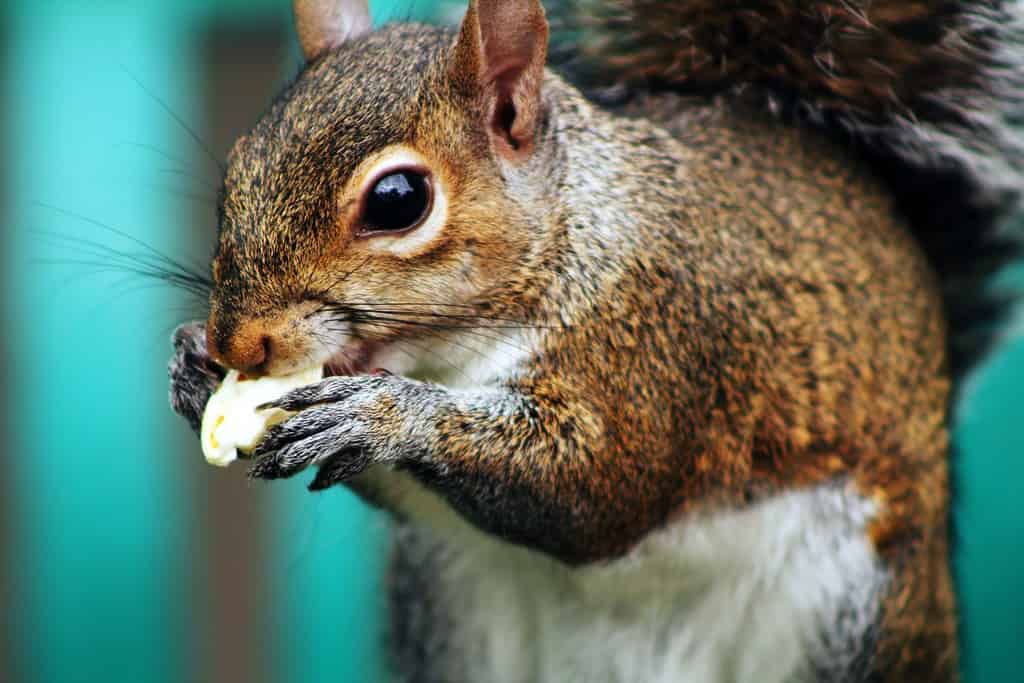
Rodents meet the criteria for mammal classification.
©Photographic Views/Shutterstock.com
An animal needs to meet strict criteria to achieve the definition of being a mammal, but there’s a good reason for that. Recognizing familiar traits that exist between different species allows us to trace genetic familiarity over generations.
All mammals are vertebrates, which is to say that they all have a spinal column that helps direct neurological information from their brains to their body. Mammals have the pride of being the most sophisticated organisms on Earth, including animals as wide-ranging as humans, leopards, and naked mole rats.
All members of the class Mammalia are warm-blooded creatures that nurse their young with milk made from the body and are capable of growing hair. The internal physiology of mammals is universally familiar as well, with all species sharing four-chambered hearts and relatively complex brains when compared to other classes of animals.
So, Are Rodents Mammals?
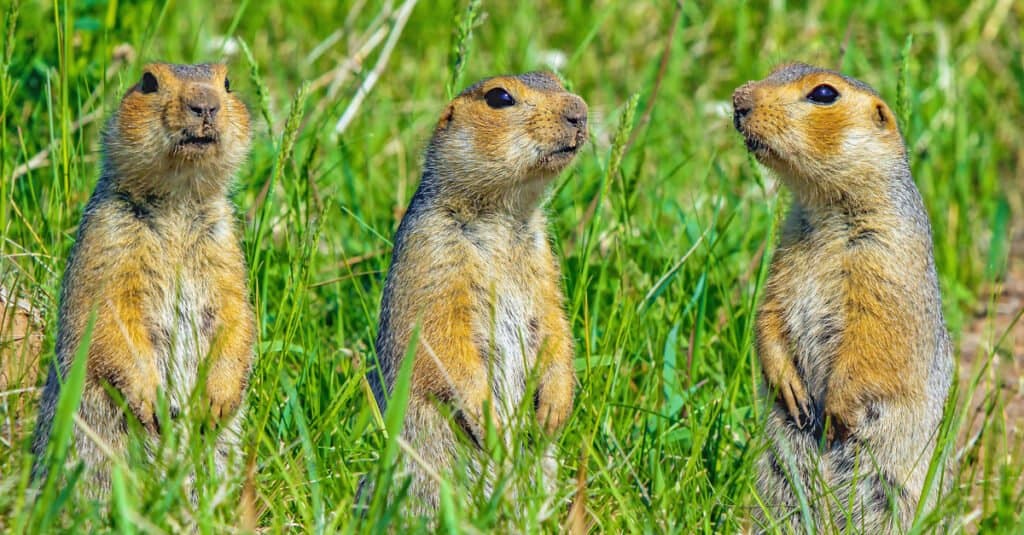
Rodents are among the most populated mammal orders.
©SERGEI BRIK/Shutterstock.com
Mammals can be split up into 19 different orders, and order Rodentia ranks among the most populous. There are roughly 2,000 different species of rodent on the planet, and they constitute roughly 40% of the population altogether — though that shouldn’t be unexpected considering how much the average rodent breeds.