
The copperhead is one of the most famous of all snakes in the United States. Along with that fame, people often confuse other species with copperheads, sometimes with unfortunate results. One of the most commonly confused is the pine snake. Pine snakes share a similar range, habitat, and even have a similar appearance to copperheads. Today, we are going to take a close look at these two amazing snakes and see what makes them unique. Let’s discover everything you need to know about a copperhead vs. pine snake!
Comparing a Copperhead and a Pine snake
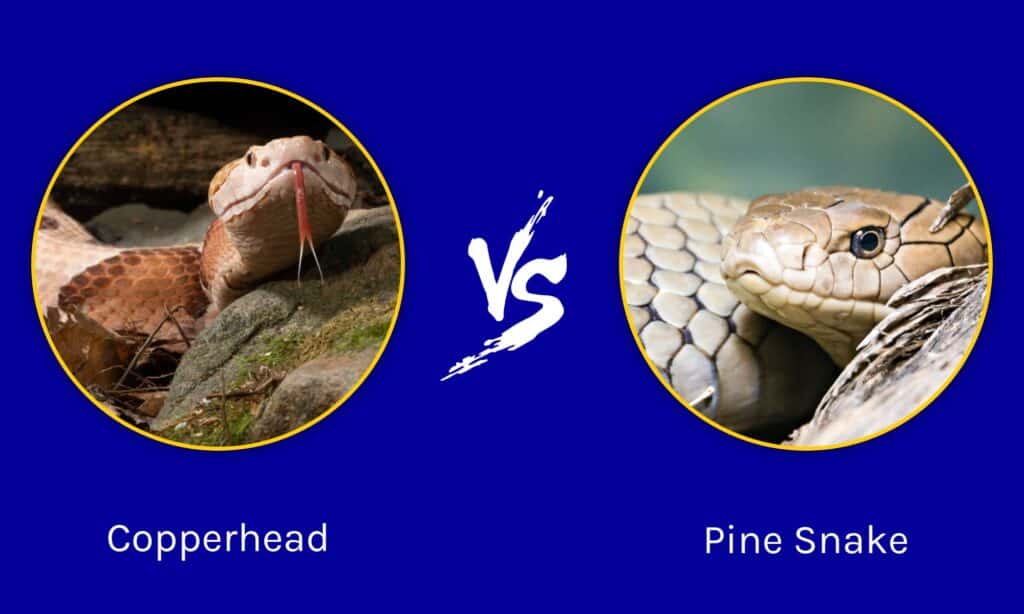
| Copperhead | Pine snake | |
|---|---|---|
| Size | Length: 2-3 feet Weight: 4-12 ounces | Length: 4-6 feet Weight: 4-9 lbs |
| Appearance | Stocky body, copper bodies, dark brown spots, and golden yellow eyes. Triangular head with distinct heat-sensing pits. | Long, heavy snakes with white, yellow, or light gray bodies. Darker speckled pattern near the head, turning into squarish brown blocks towards the tail. |
| Distribution | East coast through the entire southern United States. | Sparse regions through the southeastern United States. |
| Habitat | Varies. Forests, woodlands, rocky regions, swamps, and more. | Pine forests, pine barrens, turkey oak forests, fields, and dry ridges. |
| Venom | Venomous, but rarely fatal. | Nonvenomous constrictors. |
The Key Differences between a Copperhead and a Pine Snake
The main difference between a copperhead and a pine snake is that copperheads are copper-colored, venomous, and live all over the eastern United States. Pine snakes are brown and white, aren’t venomous, and live only in the southeast.
Copperheads and pine snakes are both snakes but aren’t closely related to one another. The copperhead is a venomous pit viper that is related to other pit vipers, including cottonmouths and rattlesnakes. Pine snakes are more closely related to gopher snakes and bull snakes.
Both snakes can be somewhat large, but the pine snake is usually much larger. The copperhead relies on its venom to kill prey, while the pine snake is a powerful constrictor. The average length of a copperhead is usually less than three feet, while pine snakes regularly clear five feet and can even reach six.
Although both snakes have overlapping distributions, the copperhead can be found in a broader range across the US. Copperheads are regularly seen as far west as Texas and as far north as Massachusetts, while pine snakes have a comparatively smaller range in the southeast.
Let’s take a closer look and compare the copperhead and pine snake further.
Copperhead vs. Pine Snake: Size
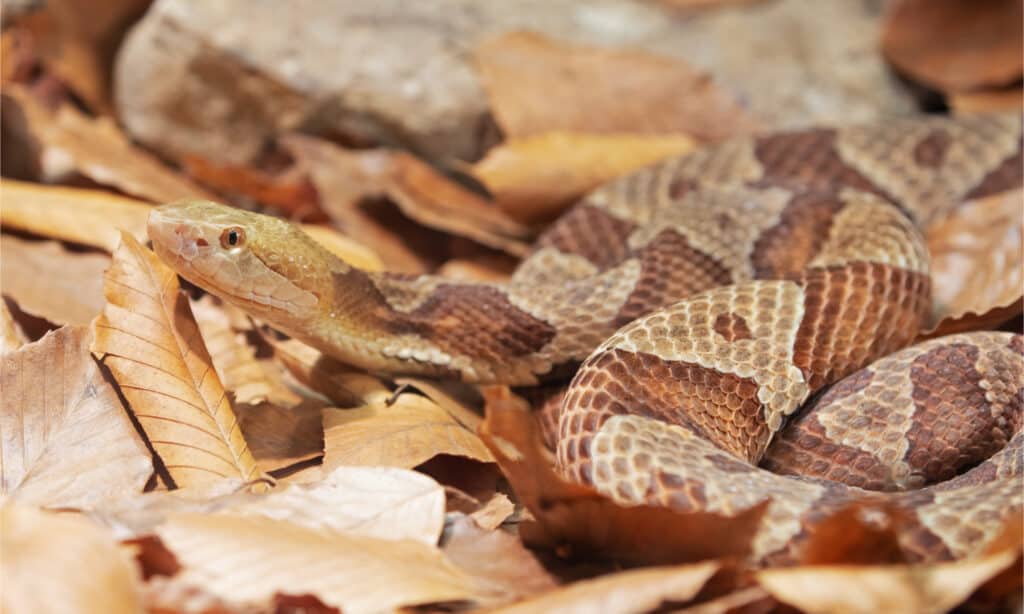
The copperhead is significantly smaller than most pine snakes.
©DnDavis/Shutterstock.com
Copperheads are generally regarded as heavy-bodied snakes. They aren’t as long as many other species, but are stocky for their length. On average, copperheads measure 20 to 30 inches long, with the record being around four feet. Additionally, copperheads weigh four to 12 ounces, a bit less than a pound.
Pine snakes are constrictors that rely on strength and power to overcome prey. As such, they need to be larger to compensate. On average, pine snakes measure four to six feet long and weigh between four and nine pounds. Large pine snakes are among the largest snakes that are native to North America.
Copperhead vs. Pine Snake: Appearance
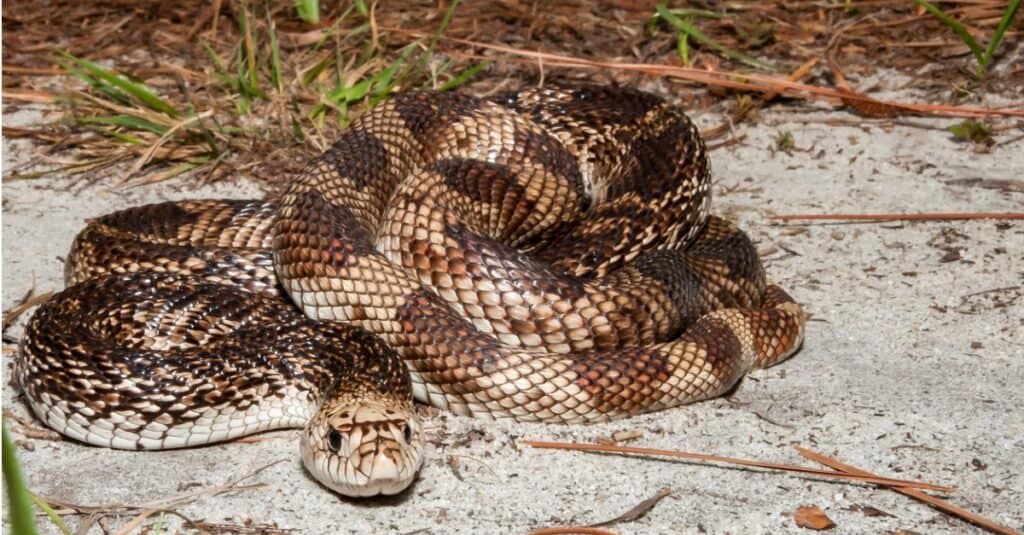
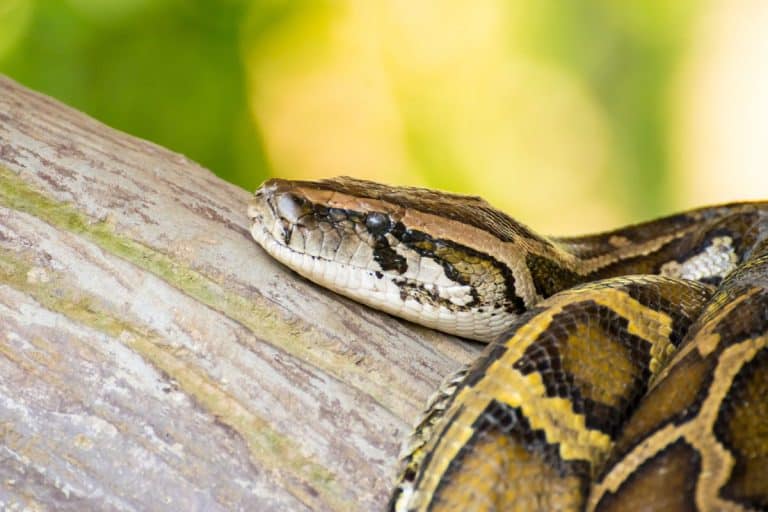
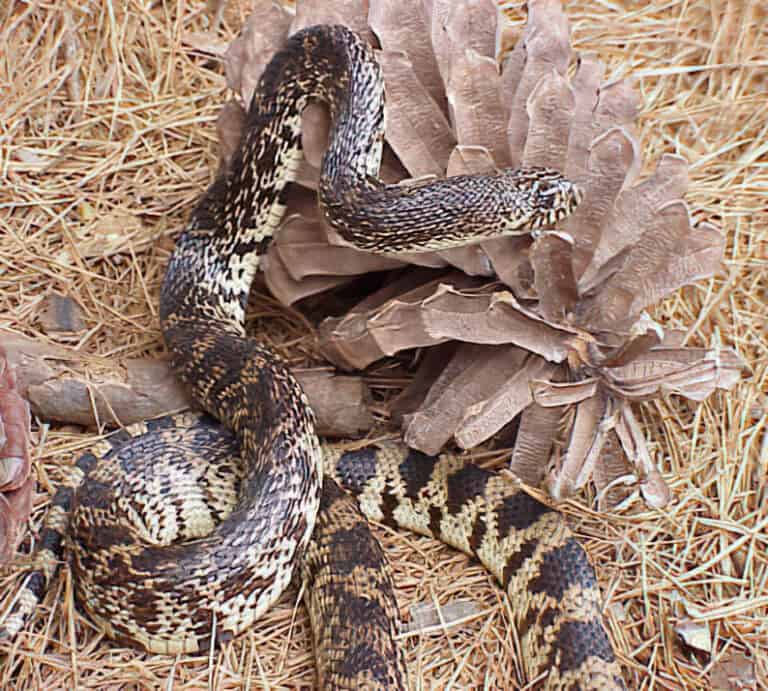
Pine snakes have white bodies with brown or gray patterns across their backs.
©iStock.com/JasonOndreicka
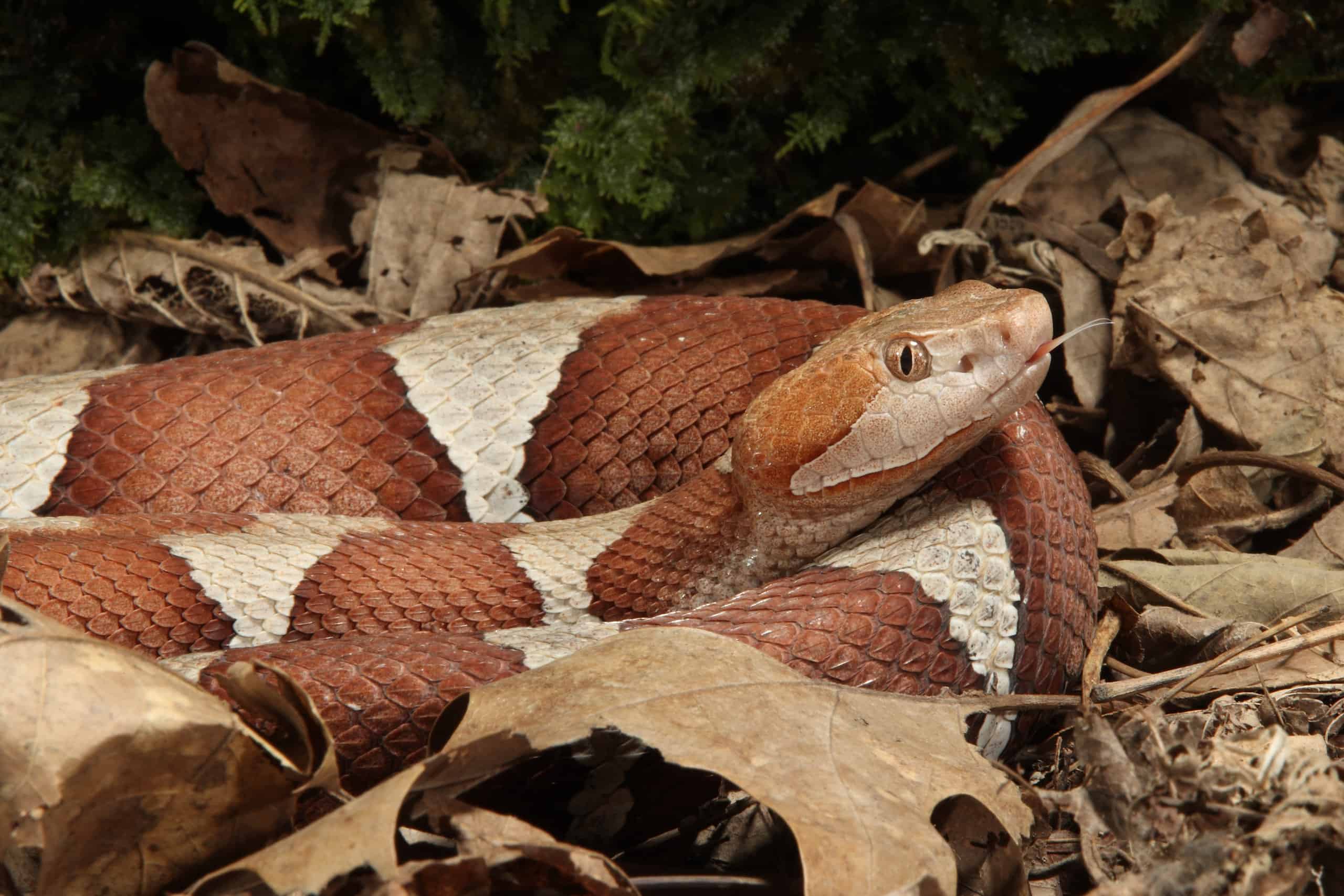
Clues to the copperhead’s appearance can be found in their name! They are copper colored all across their bodies, with darker bands starting at their necks and traveling down their bodies. The dark bands are usually brown and often resemble an hourglass shape, with the thinnest part sitting on the spine. Copperheads have yellow eyes and pits near their snouts in order to sense the heat of potential prey.
Pine snakes are long snakes that usually have an undershading of brown, white, or yellow. A speckled pattern almost covers their bodies near the head, but turns into blocky shapes the further down it travels. Their eyes are black, and their heads have a small point right near the tip of their nose.
Copperhead vs. Pine Snake: Distribution
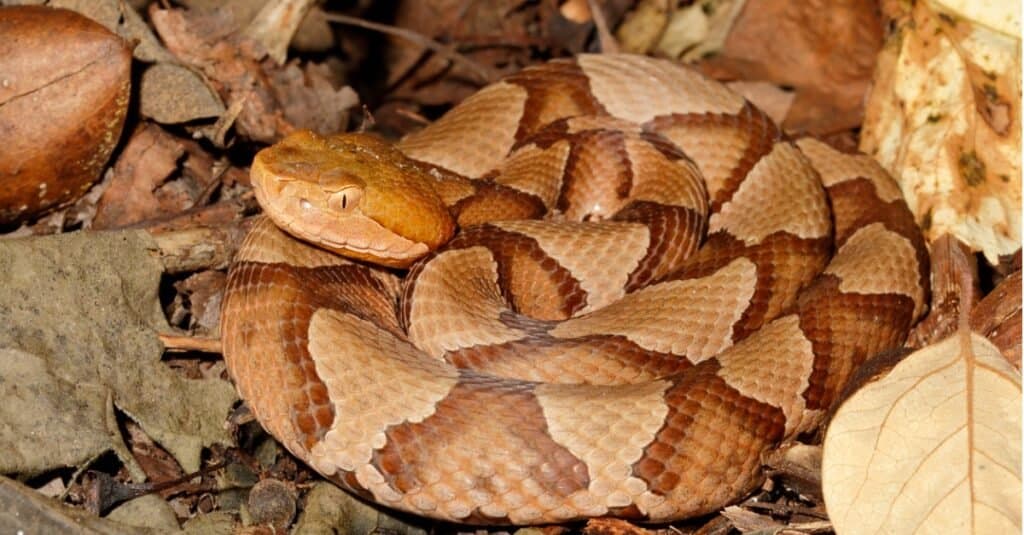
Copperheads can be found across the eastern and southern United States.
©iStock.com/David Kenny
The copperhead can be found across most of the eastern United States. They live across the entire east coast, as far north as Massachusetts. Their western range extends into the Trans-Pecos range in Texas and heads north as far as Illinois.
Pine snakes have a much smaller distribution that is currently shrinking. The most northern population is in New Jersey, but they are quite isolated. Other population pockets are found in the southeast, including North and South Carolina, Georgia, Florida, and a distinct subspecies, the Louisiana pine snake, in Louisiana and eastern Texas.
Copperhead vs. Pine Snake: Habitat
The copperhead is a generalist when it comes to habitat. It can be found almost everywhere, including forests, woodlands, fields, suburbs, rocky outcrops, mountains, swamps, and more.
Pine snakes are much more specific when it comes to their habitat. They generally prefer pine forests and sandy pine barrens, but can also be found in turkey oak forests. Pine snakes spend most of their time underground.
Copperhead vs. Pine Snake: Venom
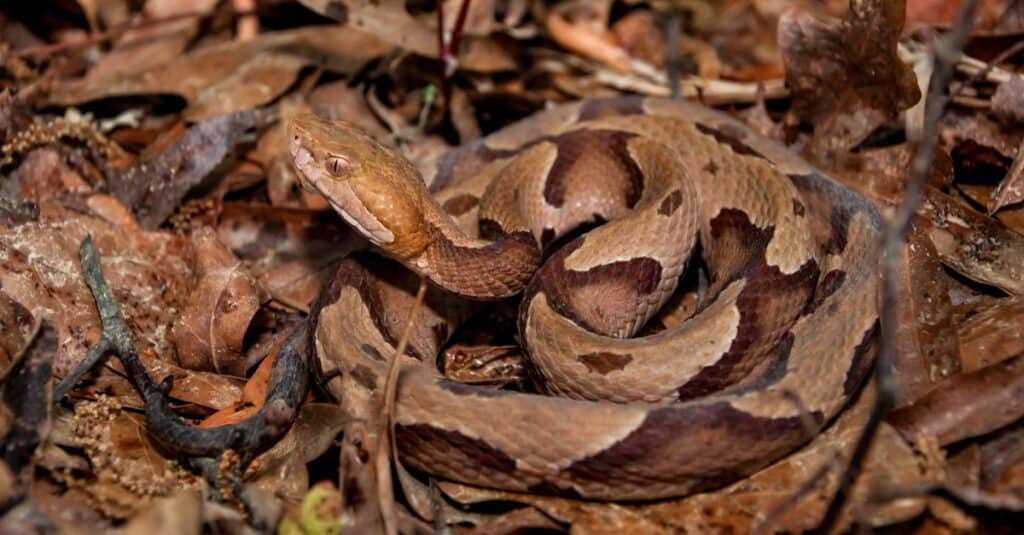
Copperheads are venomous, but pine snakes are not.
©Jay Ondreicka/Shutterstock.com
Another significant difference between these two snakes is how dangerous they are. The copperhead is a member of the venomous pit viper group, along with rattlesnakes and cottonmouths. They aren’t aggressive unless agitated, however, and bites are rarely fatal. In comparison, pine snakes are not venomous. Instead, they use their powerful bodies to constrict prey, which typically consists of small mammals and birds.