
Quick Take
- For an endangered species, losing a morning song isn't just a nuisance. It could be the difference between surviving and disappearing. Learn why song matters →
- When gibbons near a highway do sing, something shifts in how they sing. That shift reveals just how much noise pollution has already changed them. Discover how their calls changed →
- Traffic noise does more than just bother gibbons. It is quietly dismantling the social rituals they depend on to survive. Explore the broader impact →
Despite our best efforts to counteract humanity’s effects on the environment, human activity does damage to the animal kingdom. That damage, however, is not always what you would expect. Sometimes the sheer noise produced by heavy traffic extinguishes animal behaviors that were once commonplace. For the white-handed gibbons that live in the forests of Malaysia, increasing traffic in the area produces a considerable amount of noise. In turn, the gibbons less frequently sing their morning songs, which were once an auditory staple of the region.
This decline in white-handed gibbon morning songs prompted several researchers to investigate the phenomenon. A final-year PhD student at Universiti Sains Malaysia recorded and analyzed morning calls in three different locations with varying levels of ambient noise. They found that the location near a highway had the least amount of white-handed gibbon morning calls. Let’s learn more about why more traffic means less of the whooping and hollering that comprises these animals’ traditional morning songs.
White-Handed Gibbons
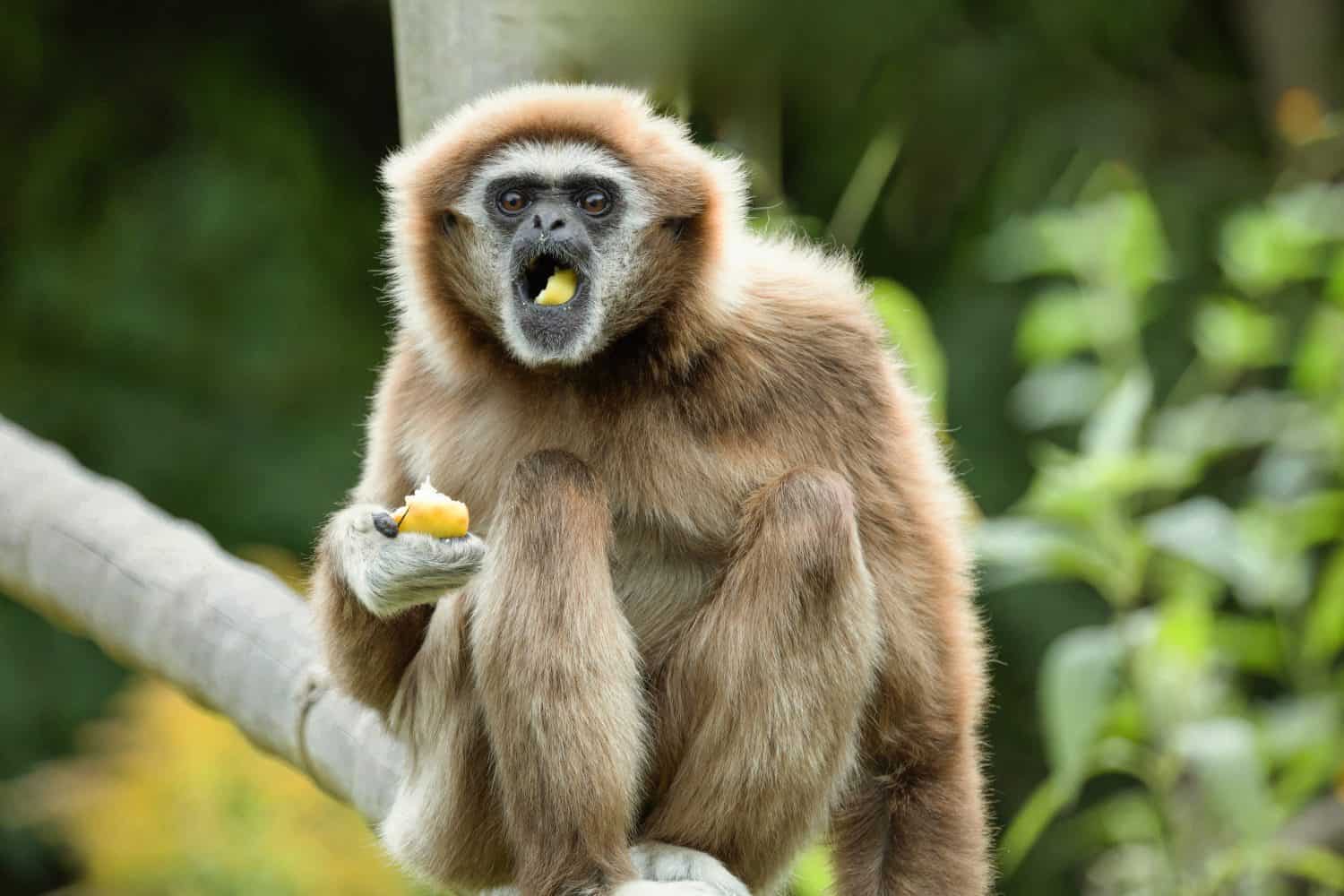
White-handed gibbons are small, agile primates native to the tropical rainforests of Southeast Asia.
©Elen Marlen/Shutterstock.com
Also known as lar gibbons (Hylobates lar), white-handed gibbons are tailless primates that live in the forests of Southeast Asia. Agile and dexterous, these small primates spend most of their lives high up in the forest canopy. They move from branch to branch using brachiation. This form of movement is similar to crossing the aptly named monkey bars. Gibbons swing from branch to branch using their hook-like hands. Appearance-wise, white-handed gibbons come in two distinct color morphs, with fur ranging from black and dark-brown to light-brown, sandy, or blonde shades. They also have striking white hands and feet.
Once widespread in Southeast Asia, white-handed gibbons have faced increasing threats from deforestation, the illegal wildlife trade, and habitat fragmentation. Such issues have resulted in the International Union for Conservation of Nature (IUCN) listing them as an endangered species.
White-handed gibbons are also incredibly social creatures. They live in monogamous family units that rely on complex vocal communication to collaborate and defend territory. These vocalizations also play an integral role in mating. To people who live in Southeast Asia, the morning calls of white-handed gibbons were once a staple of life. In recent years, especially in increasingly urbanized parts of Malaysia, those calls have become few and far between.
Morning Call (Waiting)
These morning calls produced by white-handed gibbons are unique, complex, and can travel up to a half mile through dense tropical rainforest. In places like Malaysia, however, an increasing amount of human-produced noise has slowly drowned out the primate vocalizations. This prompted several researchers to investigate the relationship between white-handed gibbon behavior and noise pollution.
For a week in both wet and dry seasons during 2023 and 2024, Benjamin Galea and colleagues analyzed the morning calls of white-handed gibbons living in three different locations. Each location, including an area near a highway, a popular hiking trail, and a secluded beachfront, had a different level of background noise.
As explained by associate professor Nadine Ruppert and supervisor of the research, gibbon morning songs are an important part of the animals’ routine. She told the Guardian, “Their songs are not just background noise or a way of announcing their presence. They play an important role in communication between groups, territorial interactions and social relationships. So, when we introduce persistent human-generated noise into their habitat, we are potentially interfering with a very important part of their lives.”
The Findings
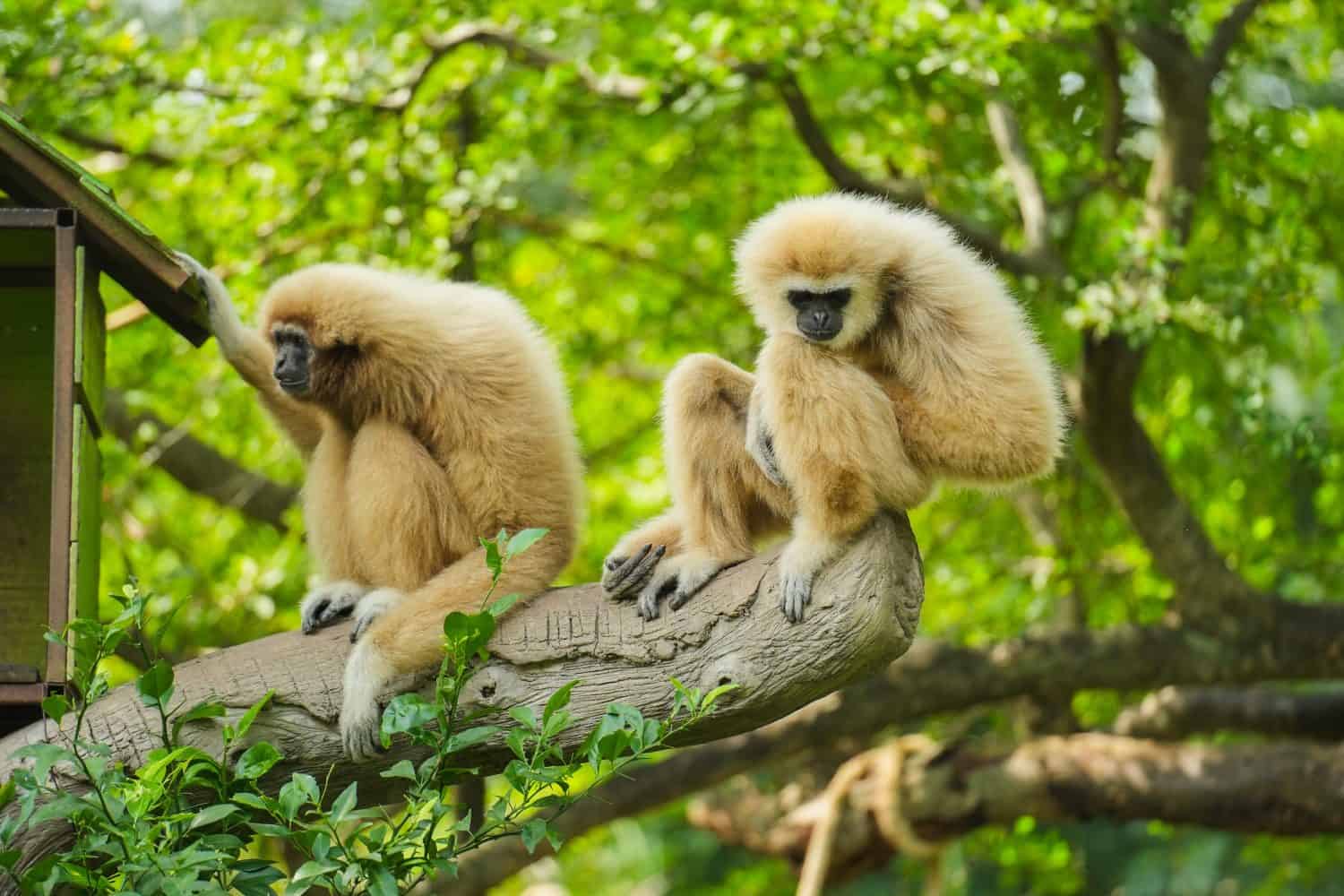
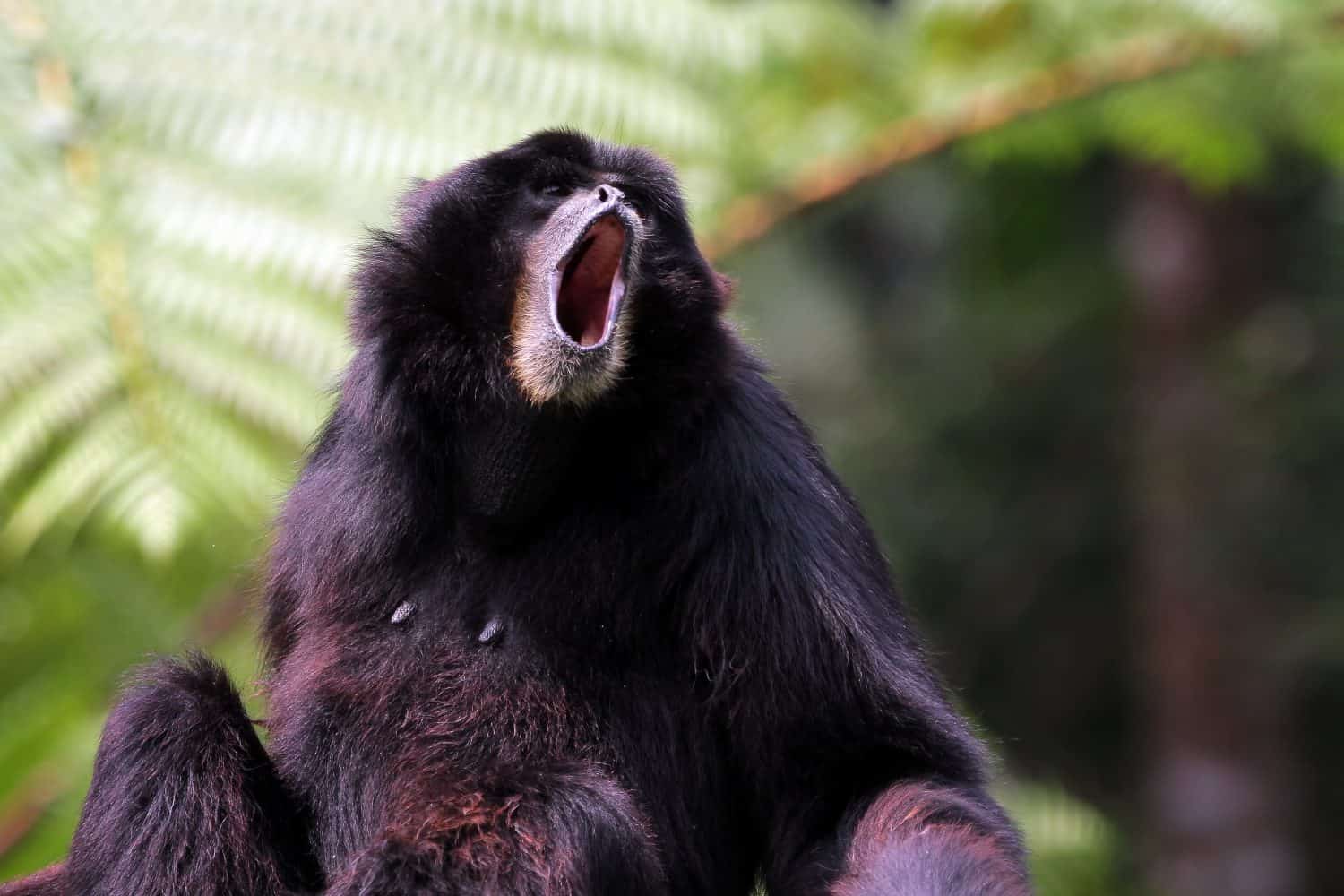
Researchers found that white-handed gibbons living close to the highway produced the least amount of morning calls.
©BaLL LunLa/Shutterstock.com
The research team found that the greater the amount of background noise present, the less likely gibbons were to engage in their morning calls. Gibbons living close to the highway called far less (36%) than those living by the sea (71.4%) and the hiking trail (84.6%). Yet there are nuances to these numbers.
For example, the hiking trail, despite being popular with people, had the most gibbon calls. This might be because it sat close to the territory of another gibbon group, which meant more songs were needed to reinforce territory. Furthermore, those living close to the highway had the least number of calls, but it’s possible that the primates simply sang earlier in the morning, before the researchers started recording. This remains a possibility as the gibbons were already halfway through their morning song routine by the time the research team set up at 6 a.m.
While this research has yet to be peer-reviewed, it points toward a correlative relationship with not just ambient noise in general, but specifically vehicle noise. As lead author Benjamin Galea explained to the Guardian, “They seem to have been able to sing despite the acute noise from humans, but we found that they increase their vocal bandwidth when vehicle noise becomes significant.”
Further Research
When the gibbons located near the highway sang, they seemed to only sing solo songs. It’s possible that traffic noise made it harder for the primates to sing together. The gibbons appear to be relatively adaptable to such noisy incursions, but growing noise pollution could affect their ability to attract mates, warn of incoming predators, and establish territory.
While this research is still in its early stages, it adds to a growing body of knowledge concerning the relationship between animal behavior and noise pollution. For a species like the white-handed gibbon, already classified as endangered, further noise could make it even harder for them to bounce back.
Habitat quality and species conservation are often approached one-dimensionally. Research like this, however, suggests that scientists and conservationists need to think about habitat quality more broadly. After all, without their morning songs echoing through the rainforest, how will the white-handed gibbons survive?