Brookfield Zoo Chicago just got a whole lot cuter thanks to the arrival of a new baby squirrel monkey! And the best part? You can see this precious new arrival in person starting Friday, July 11, at the zoo’s new James & Elizabeth Bramsen Tropical Forests.
Brookfield Zoo’s New Mama and Her Mini-Monkey

Squirrel monkeys use all four limbs to climb and run across tree branches.
©Photo courtesy of Brookfield Zoo Chicago – Original
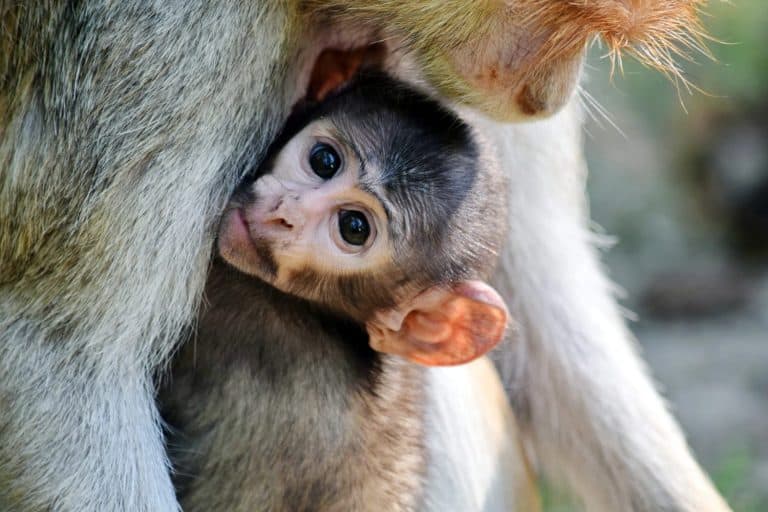
Ten-year-old Gizmo, a seasoned and experienced squirrel monkey mother at Brookfield Zoo, has welcomed an adorable new baby boy to the troop. This little guy is already proving to be expressive, speedy, and agile, ready to explore his new world.
For his first five to 10 weeks, you’ll likely spot this tiny explorer snuggled securely on his mother’s back. From this cozy perch, he’ll be soaking up all the sights and sounds as he learns from his experienced mother. Squirrel monkeys are incredibly skilled climbers, so there will definitely be plenty for him to observe!
Soon after, this adventurous baby will start venturing off on his own, though always under Gizmo’s watchful eye. He’ll be weaned when he is 4 to 6 months old and will transition to a diet of crickets, mealworms, seeds, sweet potatoes, hard-boiled eggs, and other tasty treats.
Why This Birth is a Big Deal

Female squirrel monkeys are the primary caregivers of their offspring.
©Photo courtesy of Brookfield Zoo Chicago – Original
Every new squirrel monkey born at Brookfield Zoo is a tiny step toward a major goal. Though these cute creatures aren’t categorized as endangered just yet, their numbers in the wild are unfortunately declining. Squirrel monkeys face many challenges, including habitat loss, being hunted for food, and being taken for the pet trade.
That’s why Gizmo’s new baby boy is so special. He’s a successful part of a Species Survival Plan (SSP). These conservation and population management programs began in North American zoos and aquariums back in 1981 to ensure a healthy and genetically diverse population of animals in zoos. Most of the species in these programs are already endangered or threatened in the wild, which is why SSPs work hard to ensure there are strong, self-sustaining groups in human care to prevent these incredible animals from disappearing forever.
How Gizmo’s Baby Can Make a Difference

In the wild, squirrel monkeys typically live in groups of 24 to 75 members.
©Photo courtesy of Brookfield Zoo Chicago – Original
The AZA Wildlife Conservation and Management Committee carefully selects animals for SSPs based on their genetic diversity and overall health. This ensures the captive population remains robust and ready for the future.
If wild squirrel monkey populations keep declining, animals like Gizmo and her little one will become even more vital. They can help us learn so much more about their species, and their lineage could even be crucial in supporting the survival of their wild relatives.
The Social Butterflies of the Amazon

A squirrel monkey’s tail can measure 14 to 19 inches long.
©Photo courtesy of Brookfield Zoo Chicago – Original
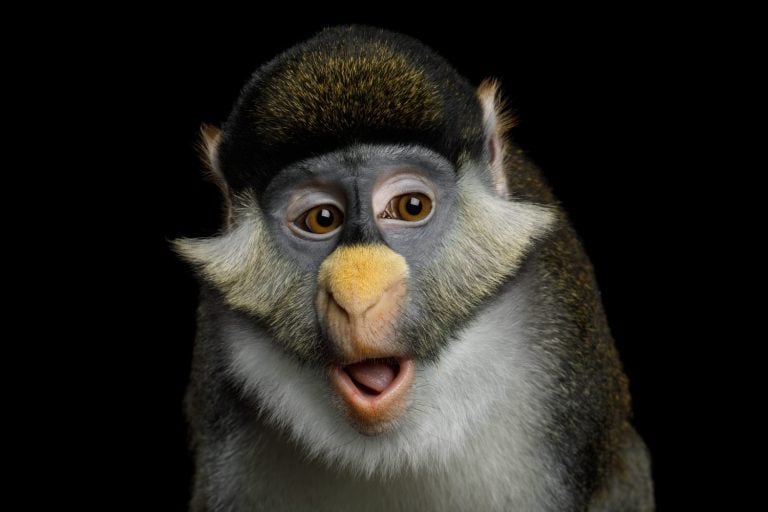
Squirrel monkeys are small, curious creatures known for their expressive faces and inquisitive nature. Their large, black eyes, cute black muzzles, and pink and white framing patterns add to their charming emotional range, as do the 25 to 30 different calls they use to communicate. Squirrel monkeys are highly social, often playing together, meticulously grooming one another, or squabbling over yummy treats.
Gizmo and her new baby are common squirrel monkeys (Saimiri sciureus), also known as Guianan squirrel monkeys. They live in Brazil, Guyana, Suriname, and French Guiana. Their small bodies are surprisingly strong, with long, slender limbs designed for life in the trees. Their short fur is dense and richly colored with a mix of greenish, grayish, golden, and reddish hues.
Just like their namesake, these tiny acrobats aren’t much bigger than your average squirrel, reaching only 10 to 14 inches in length. Males typically weigh 1.3 to 2.8 pounds, while females weigh 0.8 to 1.6 pounds. Common squirrel monkeys are native to the eastern and northeastern regions of the Amazon, where they live in marshes, swamps, riverine areas, mangrove forests, savannah forests, and rainforests.
Ready to Meet the Zoo’s New Baby Squirrel Monkey?

As of July 2025, Brookfield Zoo Chicago has over 100 species participating in SSPs.
©Photo courtesy of Brookfield Zoo Chicago – Original
Who can resist the cute appeal of a baby squirrel monkey? Well, great news: you can now visit Gizmo and her adorable baby boy starting Friday, July 11, in the brand-new James & Elizabeth Bramsen Tropical Forests at Brookfield Zoo Chicago’s Tropic World.
This new-and-improved exhibit is one of the largest and most immersive primate habitats in the United States, featuring an outdoor area that spans nearly three acres. Beyond the undeniable charm of Gizmo and her new baby, guests can enjoy an incredible experience observing other primates from South America, Asia, and Africa across four distinct rainforest environments. And if you’re looking for some hands-on fun, there are plenty of educational activities like a primate “tug-of-war” challenge and colorful pollinator gardens throughout the habitat.
The indoor primate habitat has also undergone impressive renovations. Guests will be greeted by a stunning 48-foot waterfall near the entryway as they make their way through habitats with Asian small-clawed otters, two-toed sloths, a giant anteater, and, of course, our beloved squirrel monkeys.