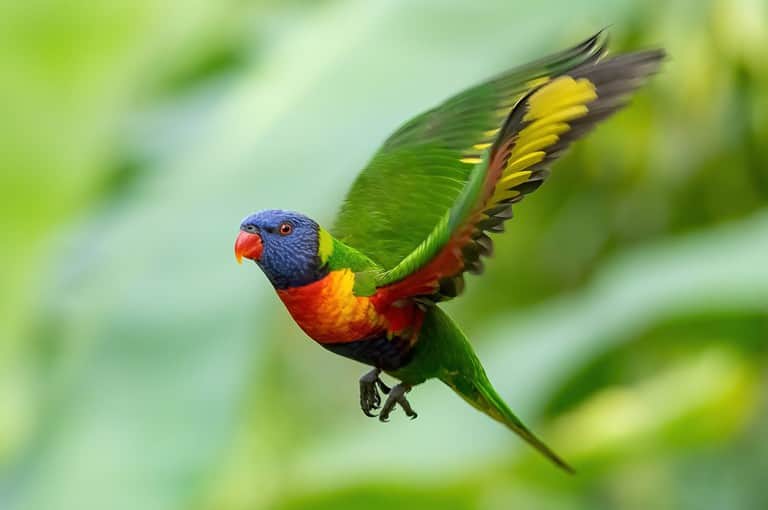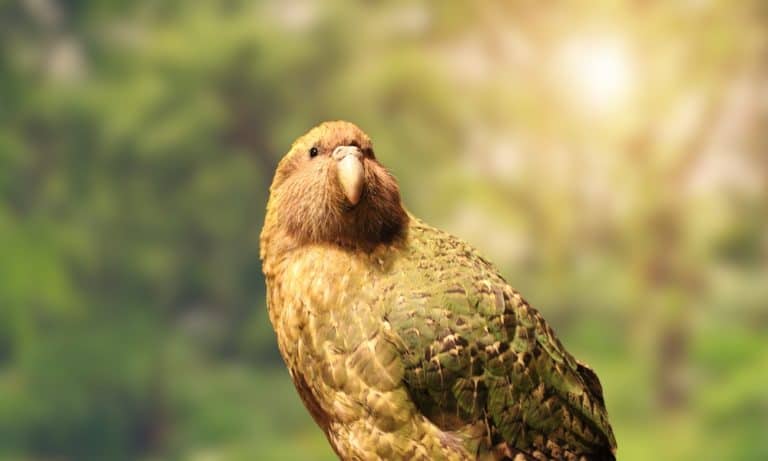

It is always upsetting to hear that a species has become extinct, so imagine the joy when the opposite happens! In Ngururrpa Country in Australia’s interior, a rare bird, once thought extinct, is doing a lot better than anyone could have hoped. Thanks to a new survey, scientists have a lot more information on how to protect the precious night parrot populations in the future.
All About Night Parrots
The elusive night parrot (Pezoporus occidentalis) is a critically endangered bird species. They are a medium-sized, ground-dwelling parrot found in mature spinifex habitats (locally called lanu lanu) in arid and semi-arid regions. These birds were once found throughout Australia’s interior, but their numbers drastically declined in the late 19th century. A combination of pastoralism (releasing livestock onto large, vegetated lands for grazing) and the arrival of feral predators seemed to have sealed their fate. By 2013, they had not been seen for more than 100 years.
But that year, a small population was discovered in south-western Queensland. Since then, they have been spotted in seven locations in central and northern Western Australia. Overall, however, there are probably fewer than 100 of them and they are classified as Endangered under Commonwealth legislation (Environment Protection and Biodiversity Conservation Act 1999.
Night Parrots in Western Australia
Sightings of the night parrots in Western Australia are scattered across large areas of desert. Most of them have been recorded by the indigenous rangers who have used their knowledge of the locality to find them. There is also a lot of local cultural knowledge relating to this species, referring to how hard they are to find and how they do not reveal themselves during fires or hailstorms. Their calls have even been used by parents to warn children not to stray too far from campfires because of evil spirits!
How Have They Survived?
The picture for most of the world’s bird species is bleak, and nearly half of them are in decline. Multiple factors are to blame, and these include agriculture (habitat loss and chemical use), deforestation, climate change, and the introduction of invasive species. In Australia in particular, woodlands have been devastated by clearing and fires. At the same time, the introduction of domestic cats and European foxes has wreaked havoc on ground-nesting and ground-feeding birds, including the night parrot. So, how has this species managed to survive, albeit in small numbers?
Despite this depressing general pattern, there are areas of Australia that are under the stewardship of Indigenous Traditional Owners and therefore have had no vegetation clearance and have never been used for agricultural purposes. Also, these areas are not frequented by cats or foxes, possibly because there are dingoes in the area. Because there are no fires, the mature spinifex forests are stable, and there is very little grazing pressure.
Studying the Night Parrots of the Great Sandy Desert
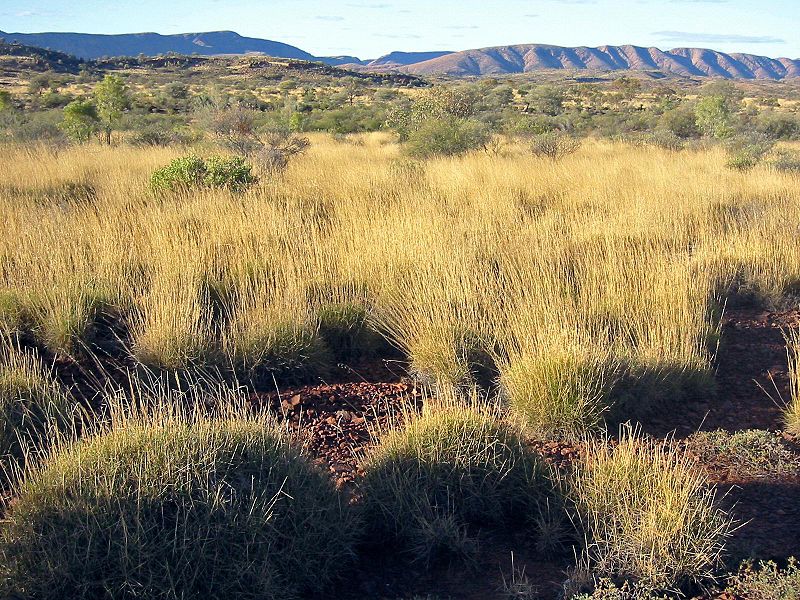
Spinifex is essential for night parrots.
To try to find out more about night parrots living outside Queensland, a study was conducted in central eastern Western Australia, between the communities of Balgo and Kiwirrkurra in an area called the Great Sandy Desert. Here, the Ngururrpa Indigenous Protected Area was declared in 2020. It is a vast area of sandplains and dunefields interrupted by a series of low ranges and mesas. There is sparse Acacia shrubland over spinifex with lakes and claypans. The climate is semi-arid with summer-dominated rainfall.
Surveys were carried out here between 2020 and 2023. Special acoustic recording units called songmeters were used to detect the parrot’s call. They ran all night from 30 minutes after sunset to 30 minutes before sunrise. Potential roosting habitats were selected by assessing vegetation and mapping all patches of lanu lanu (bull spinifex, Triodia longiceps). This is the species of spinifex used as a roost by night parrots in Queensland. Some of the survey sites were so remote that they could only be reached by helicopter! The final decision on the selection of sites was made by the indigenous rangers using their local knowledge. They also selected the exact locations for the songmeters, often placing them near large clumps of spinifex.
Tracking Down the Evil Spirits
When the calls of night parrots were played to the local people, many of them recalled hearing them as children and being told that it was an evil spirit. In this study, the Ngururrpa rangers have successfully combined their Traditional Knowledge of Country with science and technology to find out a lot of useful information about these elusive birds.
The study revealed that night parrots in this area live in habitats very similar to those occupied by the same species in south-western Queensland. Both groups of birds roosted in long-unburnt stands of the same species of spinifex growing on ironstone plains and in close proximity to more productive grasslands. Importantly, there is a seasonal availability of seeds in both areas.
Threatened by Fire
The Ngururrpa night parrots live in a habitat that is more at risk from fire than their Queensland relatives. In Queensland, they live in small pockets of lanu lanu surrounded by areas of sparse vegetation kept low by grazing livestock and native herbivores. These animals act as natural firebreaks. In the Great Sandy Desert, however, their roosting sites are located in a highly flammable landscape made up of spinifex sandplains and dunefields. Fires rip through this habitat every 6-10 years. More studies are needed to establish how the night parrots cope with this. Once the distribution of the birds has been established, burning programs can be more targeted in their protection of key night parrot roosting areas.
Dingoes Are Friends to Night Parrots
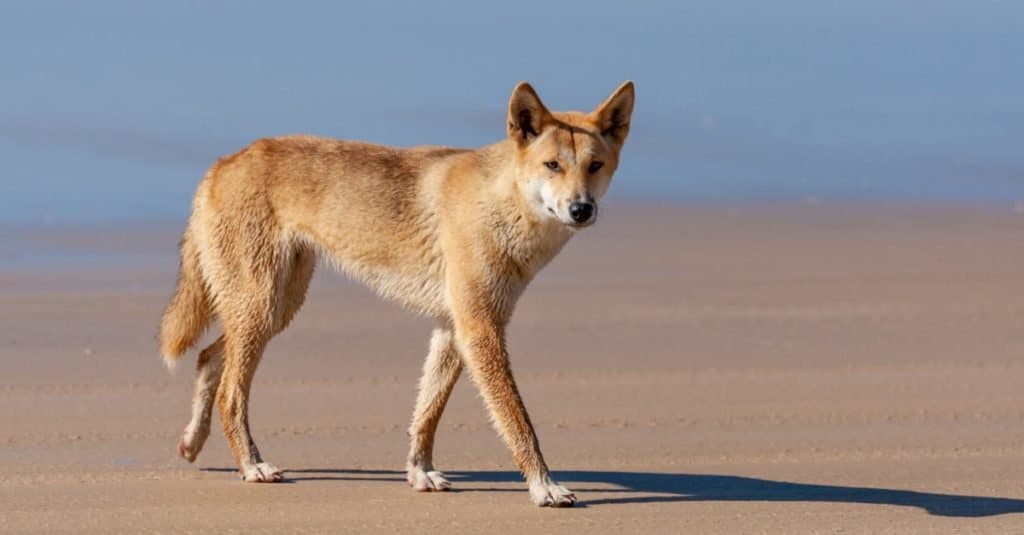
Feral cat populations are kept in check by dingoes.
©Jason Cassidy/Shutterstock.com
Dingoes are a medium-sized canine species found in Australia and are the dominant predator in both the Ngururrpa and Queensland night parrot sites. They were recorded ten times more frequently than cats at Ngururrpa. There is a good reason for this! Dingoes living in the area subsist by eating reptiles, so if they come across a feral cat, it is the perfect prey for them. Dingoes, therefore, likely play an important role in keeping night parrots safe.
Cats are a significant threat to these endangered birds. There are historical accounts of domestic cats bringing the remains of night parrots back to their homes! Cats also threaten the survival of other endangered species, such as the great desert skink (Liopholis kintorei) that lives close to night parrot nesting sites. By hunting the local cat population, dingoes are proving to be good friends to night parrots. Any developments that reduce the local dingo population should, therefore, be avoided.
Foxes and Grazers
Foxes were recorded at Ngururrpa, albeit in small numbers, but they are not found at the Queensland night parrot sites. This is a problem because foxes will take night parrot eggs. It is important, therefore, that fox numbers do not increase! Once again, the dingo may come to the rescue of the night parrot here, as they are known to kill foxes. Also, foxes tend to avoid areas where there are a lot of dingoes.
Finally, animals that graze vegetation compete with night parrots for food. Introducing grazing stock to Ngururrpa IPA would likely be disastrous for the night parrots, as they would compete for the more palatable plants. High densities of camels would have a similar effect, even though they are predominantly browsers. There would also be competition for water and physical disturbance. There are historical reports of night parrots being driven from their roosts by horses and cattle. In this complex web of biological relationships, introducing camels would also deprive dingoes of their water sources.
Keep it Wild
The bottom line is that these very rare birds have only survived because they have found remote and wild locations to live in. The key to protecting them will be to retain that wildness that has kept them safe. What these birds need is an intact landscape, minimal disturbance by humans, and the exclusion of grazing stock. That’s not too much to ask, is it?