
Australia is known for its exceptional biodiversity. The country separated from the supercontinent Gondwana nearly 135 million years ago, and completed its separation from Antarctica over the last 40 million years or so. In doing so, Australia’s species were left to develop largely in isolation. Today, the Australia Wildlife Conservancy shares that 87% of Australia’s mammals, 93% of its reptiles, 94% of its frogs, and 45% of its birds are only found within the continent. The same goes for 24% of its fish. While many of these species are known to scientists and researchers, many are still being discovered every year. In 2025, researchers discovered a new stick insect species they’re calling Acrophylla alta.
Research published in Zootaxa describes how Acrophylla alta was found in the highlands of the Wet Tropics of Queensland, Australia. The Wet Tropics comprise a stretch of significantly biodiverse rainforests home to over 3,500 different species. In fact, the biodiversity within the Wet Tropics is so phenomenal that the rainforests were designated as a UNESCO World Heritage Site in 1988. Although Acrophylla alta marks an exciting discovery, it also stands as a reminder of how much more we have to learn about our natural world.
What are Stick Insects?

Around 3,000 known stick insect species exist worldwide!
©Mey Dyana/Shutterstock.com
Stick insects, part of the order Phasmatodea, are some of nature’s best masters of camouflage. These insects range from less than half an inch to up to a foot long. However, the longest discovered stick insect was around 24.5 inches (or just over two feet). Despite their length, stick insects typically weigh just a few grams, though this depends on specific species. Some even have wings!
Also called “walking sticks,” these insects are usually found in tropical forests and range in color from green and brown to black. They blend into the natural landscape, protecting them from predators like birds, reptiles, or spiders. Stick insects are not hunters themselves. Instead, they are herbivores that feed only on plant matter and leaves.
Stick insects, including the newly identified species, do not bite. However, certain species may spray an acidic substance if they feel threatened, which can cause burning.
Discovering Acrophylla alta
Acrophylla alta may weigh more than the giant burrowing cockroach, which comes in at 35 grams.
©https://www.youtube.com/watch?v=NzF51lfdS-c&t=15s
The discovery of this new species all began with a photo. Ross Coupland, a wildlife expert, had initially received a photo of the insect. As he looked over the photo, it struck him that this might be a previously undiscovered species. Coupland, together with James Cook University professor Angus Emmott, then headed to the Wet Tropics to see what they could find.
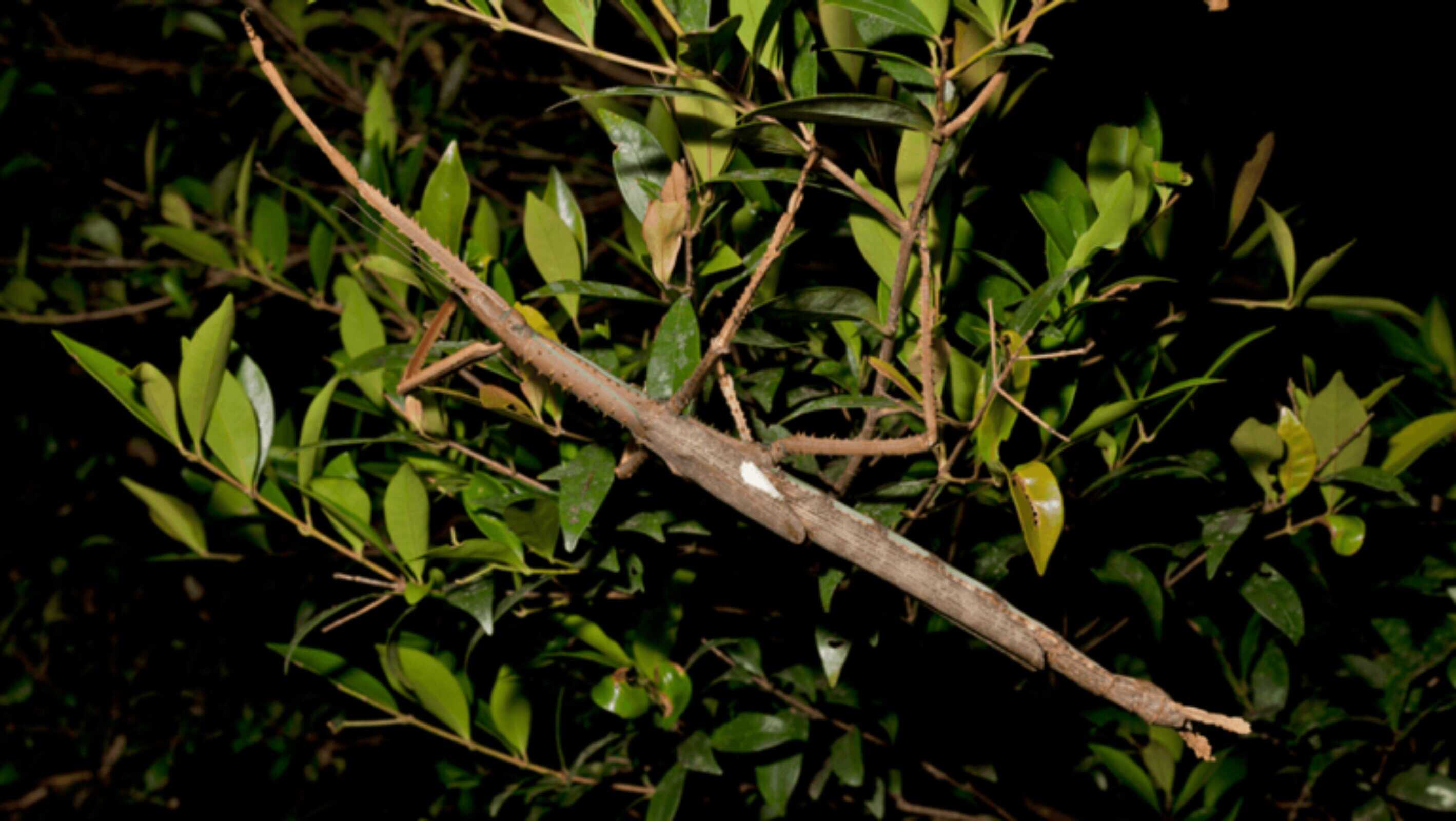
The pair, co-authors of the Zootaxa study, spent several nights searching for the creature. At first, they came up with nothing. Then, one night, they noticed a large female high in the trees, somewhere between Mount Hypipamee and Millaa Millaa. The researchers could tell that the stick insect was female given its size. When it comes to stick insects, females are usually larger and more prominent, while males have smaller bodies and are more minute in size.
After retrieving the stick insect from the tree, which required the use of a long stick, Coupland determined that this was indeed a new species. The female insect also had many eggs (stick insects can lay over 100 eggs at a time!) which were collected by the research team.
Learning More about Acrophylla Alta
Upon further exploration, the researchers named the new species Acrophylla alta. They determined that Acrophylla alta lives higher in the trees. Given that humans cannot easily access the canopies, Acrophylla alta has managed to elude discovery until this point.
The researchers were surprised by how large and heavy Acrophylla alta is. With its length around 22 inches, or just under two feet, and weighing in at 44 grams, the stick insect seems to have overtaken the giant burrowing cockroach as Australia’s heaviest insect. While researchers aren’t exactly sure why the creature is so big, they do have a hypothesis. Essentially, they believe that the climate in the canopies is both cold and wet. Acrophylla alta‘s heftier mass, and sizeable wings, could protect against the elements.
Since the first Acrophylla alta female was found, researchers have also gathered at least one additional female. However, they have yet to find a male. The research team acknowledges that collecting a male sample may be immensely more difficult than the female. That’s because, as stated earlier, the males more easily blend in and are smaller, making them harder to spot.
As a result, the researchers believe they will need to catch a male and female Acrophylla alta in the act of mating to concretely identify a male of this species.
What This Means for Biodiversity
It’s hard to say how many undiscovered species may exist in the world. After all, we can’t know what we don’t know. However, National Geographic shares a recent study which suggests that somewhere around 86% of Earth’s species have yet to be identified.
Acrophylla alta is so compelling because the creature is a reminder that unexplored and unknown species exist all around us. However, they might be slightly out of reach: in the depths of our rivers and oceans or in the treetops stretching above our heads. Learning more about our world’s species can help drive and shape conservation efforts in the future.