
Quick Take
- Despite the name, killer whales aren't actually whales, and what they really are changes how scientists think about their sudden return to UK shores. Discover what orcas really are →
- A government fishing ban on a tiny, overlooked fish may be the most likely reason apex predators are suddenly patrolling Northumberland's coastline. Explore the fishing ban theory →
- Scientists describe UK waters as one of the most hostile environments for orcas on the planet. So why are more of them showing up here than ever before? See what scientists know →
- Locals say the orcas' return is already transforming the regional economy in ways that have nothing to do with conservation. See the local economic impact →
For boat captains in the waters surrounding the Farne Islands off England’s Northumberland coast, orcas were something they rarely saw. That’s all changed within the past two years.
In the past 24 months, boat crews and beachgoers along the Northumberland coast have started seeing the black and white killer whales more and more often. Much more frequently than anyone in the area can recall. After all, orcas have always been rare around these islands and have never previously ventured close to shore.
So, what’s changed? Boat captains have theories, but scientists aren’t sure. What everyone does agree on, though, is that the sightings are a hopeful sign that the sea itself is getting healthier.
What Exactly Are Orcas?
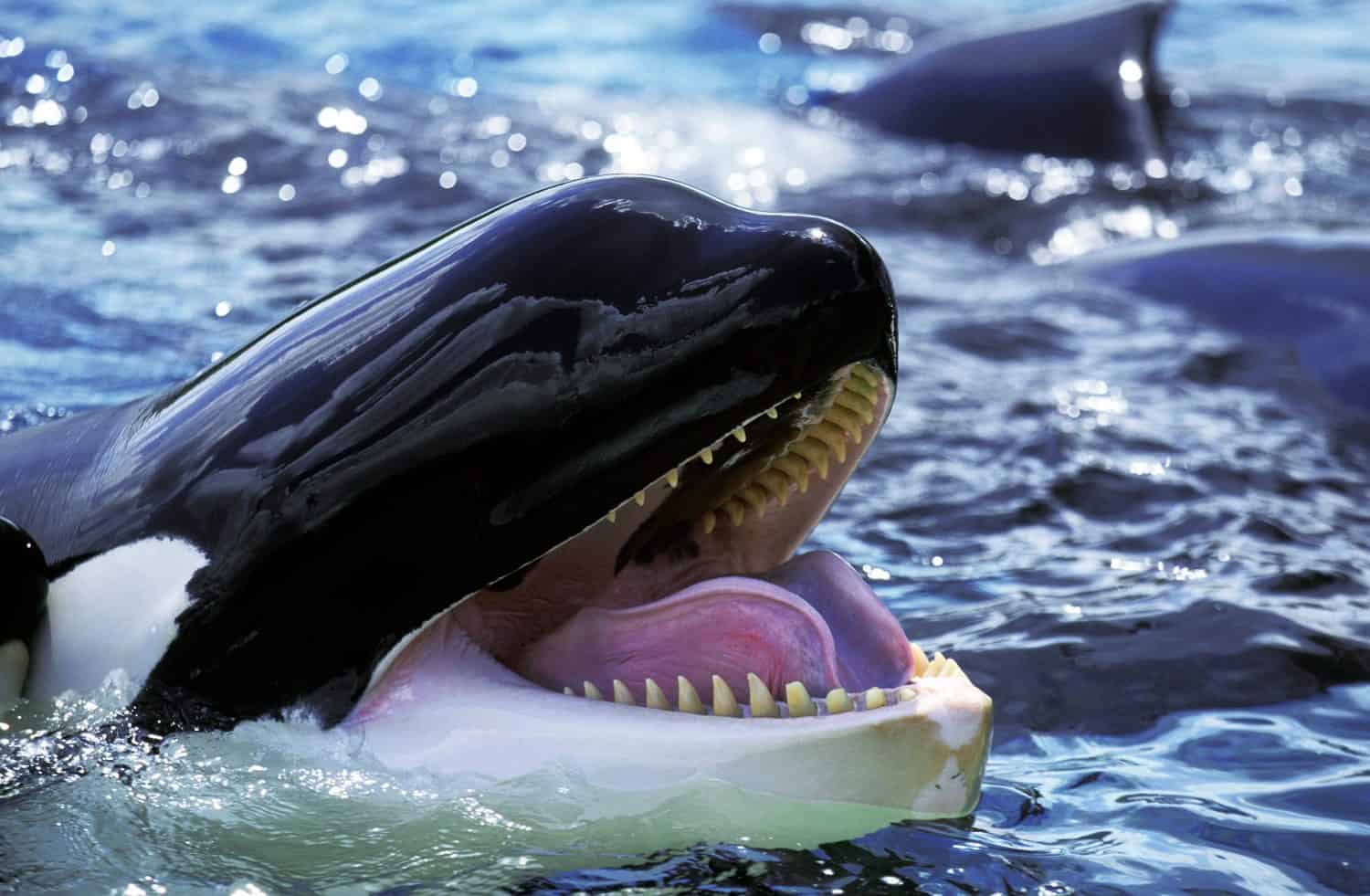
Orcas, also called killer whales, are instantly recognizable due to their unmistakable black and white coloration. Despite their name, they aren’t whales at all. They are actually the largest members of the dolphin family. Males can reach up to 32 feet long.
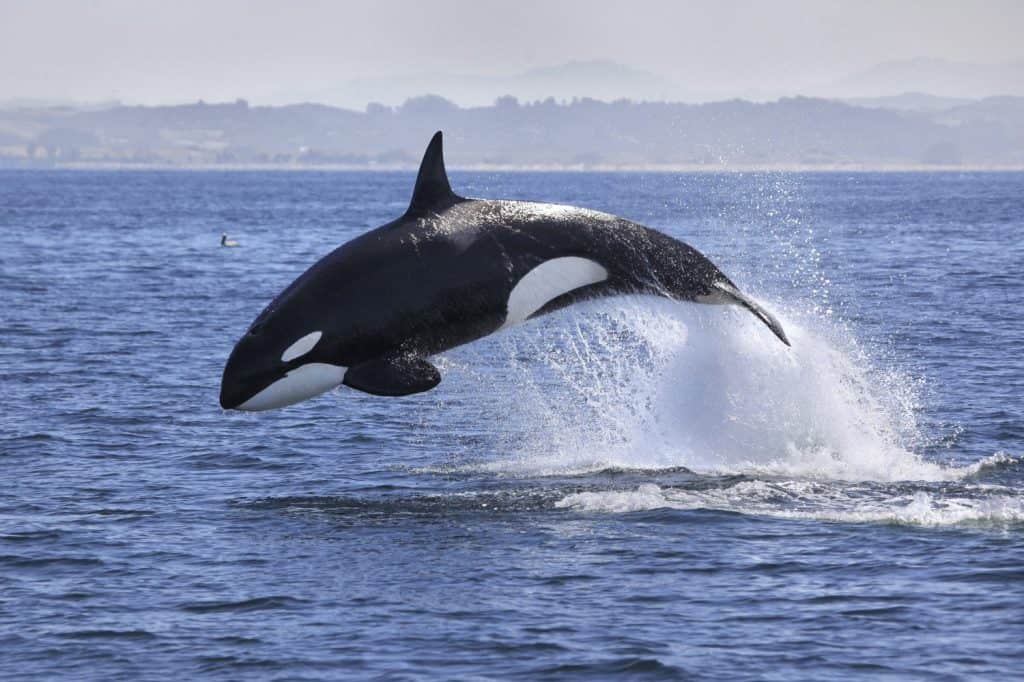
Orca sightings have increased off the Northumberland coast in the UK.
©Tory Kallman/Shutterstock.com
They live in pods of five to 30 animals, which are typically all related. The group is led by the matriarch – the oldest female in the group. They use clicks and calls to communicate underwater. It’s a skill called echolocation. Orcas are found in every ocean and are considered top hunters in the ocean’s food chain.
What’s Known About Orcas In UK Waters
While orcas are present in all the Earth’s oceans, spotting them in UK waters was rare until a few years ago.
Andrew Douglas, owner of Serenity Boat Tours, told The Guardian that until last year, he hadn’t seen any orcas in the area in decades. His first recent sighting was very exciting. “The big dorsal fins on the males are just absolutely huge, it just makes you smile, it’s really cool,” he said.
Researchers have relatively little data on orcas in UK waters. The reason for the sudden increase in orca appearances remains a mystery.
Dr. Julia Sutherland, a researcher at the University of St. Andrews, explained to The Guardian, “What we know about killer whales here in the UK is we’re lacking so much knowledge in comparison to elsewhere in the world, so it’s quite hard to draw really concrete conclusions at this stage.”
What’s Causing More Orca Sightings?
While nobody can pinpoint the exact reason more orcas are suddenly being spotted, there are several theories. One is that there are simply more people around with direct access to social media. They can quickly share their orca sightings with the rest of the world. In fact, several UK organizations, including the Sea Watch Foundation and Shorewatch, rely on citizen scientist sightings for data.
But there could be another reason orcas have made a reappearance: more food.
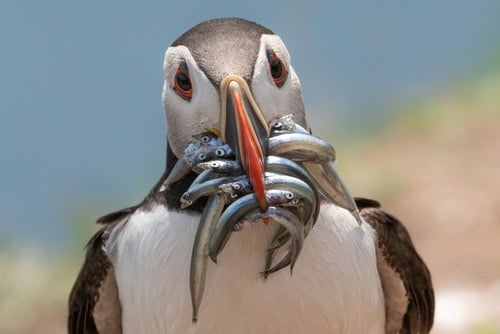
Sand eels are an important part of the food chain in UK waters.
©Rbmurray Photography/Shutterstock.com
Douglas believes a government ban on sand eel fishing may be part of the boost in orca numbers. “That’s the best thing the government’s done so far,” he told The Guardian. “They banned it about two years ago, and that’s made a massive difference straight away.”
Sand eels are small fish that seabirds, seals, porpoises, and whales all depend on, either directly or indirectly. Sand eels occupy a low level in the food chain, so an increase in their population naturally boosts the food supply for higher-level predators.
Scientists agree that more food could be one reason for more orca sightings. Dr. Conor Ryan, an honorary research fellow at the Scottish Association for Marine Science, explained to The Guardian that the sand eel fishing ban was a plausible explanation.
“By removing the bottom of the food chain, what we do is we decrease the biomass of the whole system so there’s less energy, less calories available for everybody in the ecosystem, and usually top predators are the ones that really suffer from that,” he said.
However, researchers have not confirmed that more food is the specific reason more orcas are suddenly in the area. It remains just one of several theories.
Another theory is that orcas are naturally curious and exploratory animals that often travel long distances. For Dr. Luke Rendell, also from the University of St. Andrews, the UK waters are not a prime habitat for killer whales. “The population of orca around the UK is actually one of the most polluted in the world,” he told The Guardian. “Some of it could just be exploration and expanding their knowledge, some of it could be a reduction in the food resources where they were before and needing to explore more.”
The Tourism Benefits
For Douglas, the return of the orcas is a welcome event, regardless of the reason. “Having the orca, it doesn’t half boost things,” he told The Guardian. He said he’s seen “spurts of it getting a lot busier.”
Tourism is central to the local Farne Islands economy, especially in the village of Seahouses. Its harbor is the primary departure point for boat trips to the Farne Islands and an economic hub for local boat operators, shops, and restaurants.
In addition to orcas, the Farne Islands host about 23 different seabird species that nest there seasonally each year. This includes around 37,000 pairs of puffins. Around 3,000 grey seal pups are born on island beaches each autumn.