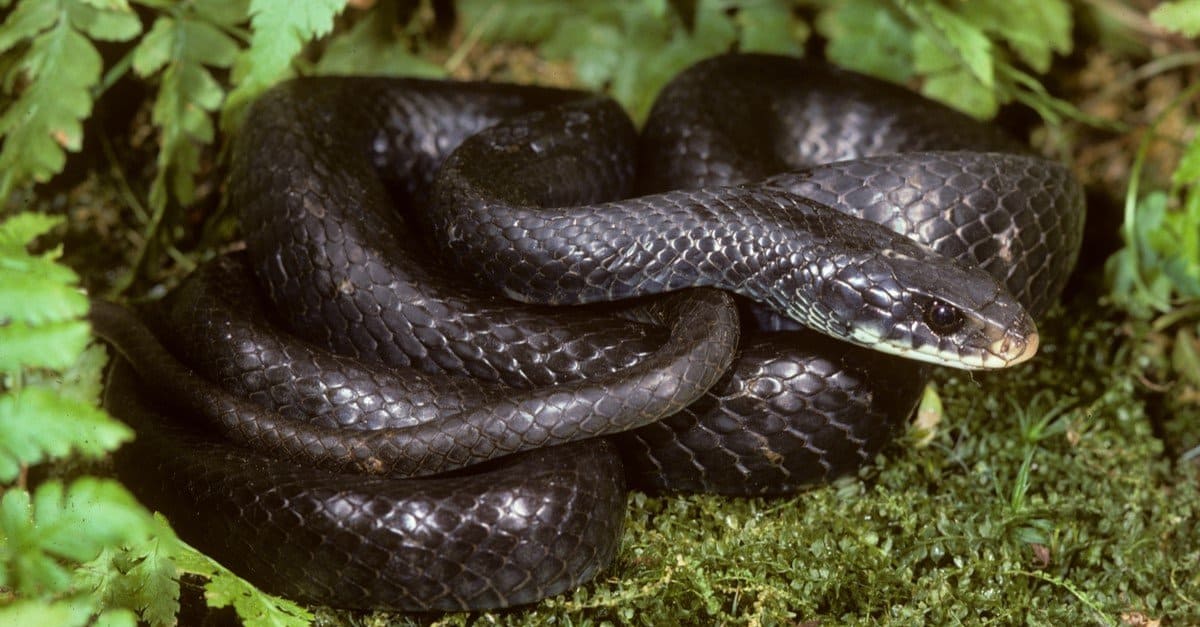

Known as the Green Mountain State, Vermont is home to 11 native species of snakes.
©Katherine Welles/Shutterstock.com
Vermont is a small state that also has a small population. Most of the state is made up of mountains, forests, and lakes. It’s a rugged but beautiful place where people flock for great hiking, fishing, and outdoor activities. Surprisingly, Vermont doesn’t have that many native species of snakes. You might think that a state that has so much open country and mountains would have more native types of snakes, but Vermont only has 11 native species of snakes. Maybe the cold climate is too much for snakes in Vermont to take. If you like being outdoors and don’t want to run into too many snakes, Vermont is the perfect state for you.

Snakes That Live in Vermont
With just a handful of native snake species and only one type of venomous snake, Vermont is a great place for people who love to hike, fish, and spend time in the great outdoors. These are some of the snakes in Vermont that you might encounter:
Eastern Rat Snake
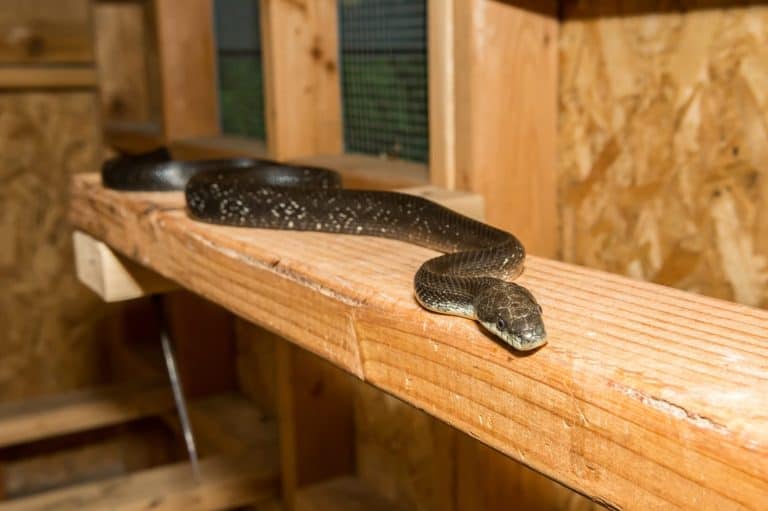
The eastern rat snake is found across the United States, but Vermont is the farthest north you’ll find this long black snake. Eastern rat snakes can be more than six feet long. The longest documented eastern rat snake in Vermont was a whopping 72 inches long. The forests and rocky mountain outcroppings that dominate the Vermont landscape are the habitats that eastern rat snakes prefer, so you may find one of these intimidating black snakes when you’re hiking. Or, if you live in Vermont you may find one hanging out in your barn or outbuildings. Don’t be alarmed. As far as snakes in Vermont go, the Eastern rat snake is very useful because they eat rodents and pests.
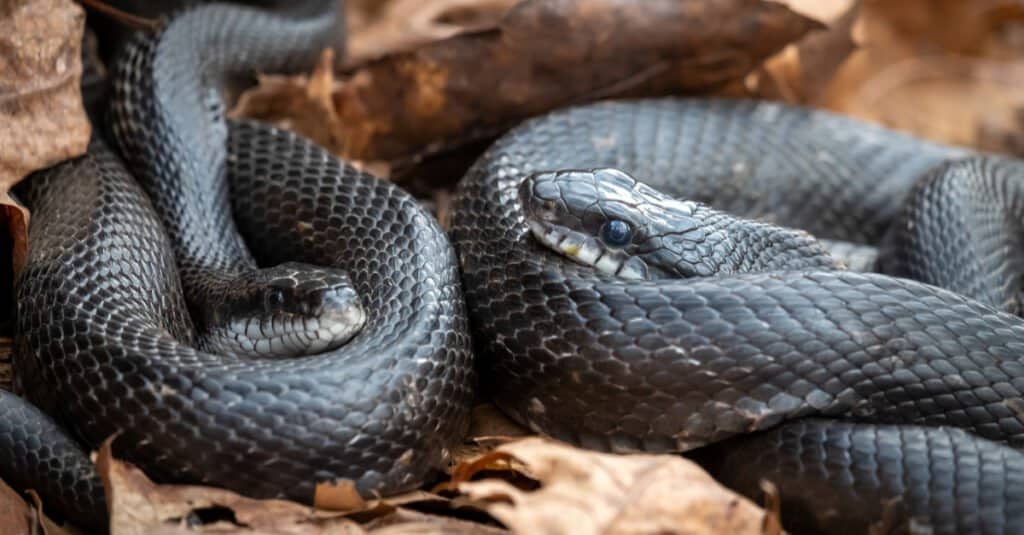
Eastern rat snakes are one of the 11 snakes that live in Vermont.
©samray/Shutterstock.com
North American Racer Snake
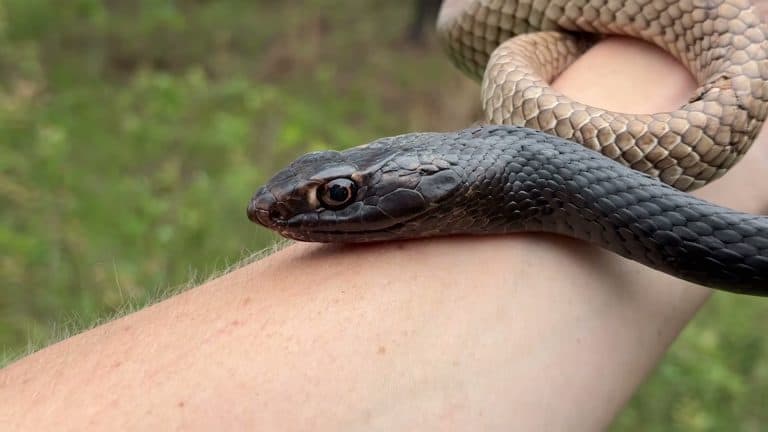
Northern American racer snakes, also called northern black racer snakes, are pretty common in Vermont. They like to hide in leaf litter so the forests of Vermont are a popular habitat for them. These snakes are long. They often get to be longer than six feet. Black racers have thin bodies and black glossy scales. They can move extremely quickly, which is why they are called racers. At top speed, these snakes can move several miles per hour. As much as any snake in Vermont will, black racers like to avoid humans when they can, but if you do come close to one it will usually speed off. They are not confrontational and would much rather leave than fight.
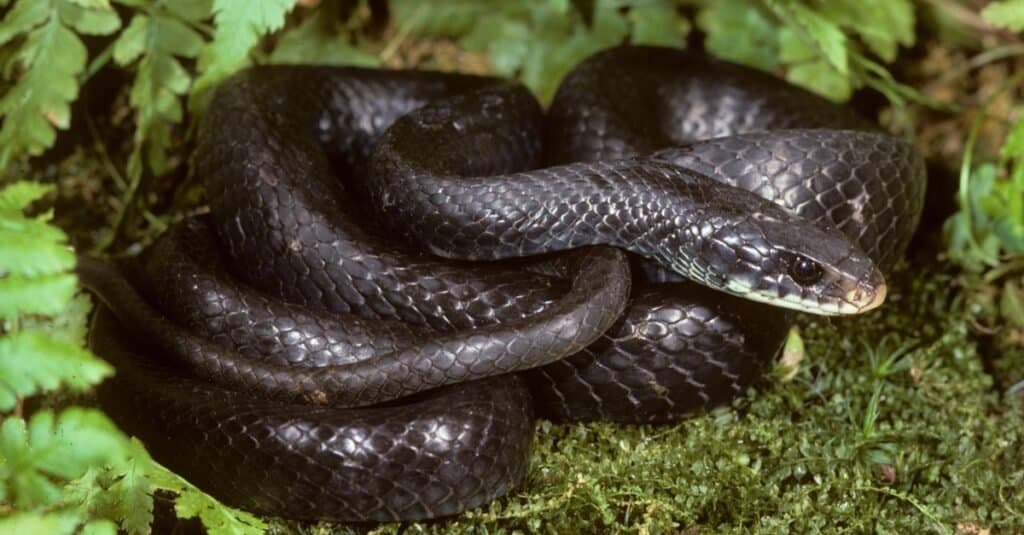
The black racer is a fast and agile snake that can travel at four miles per hour when threatened, hence the name “racer.”
©Breck P. Kent/Shutterstock.com
Common Garter Snake
The common garter snake is exactly that — a common snake in Vermont. Garter snakes are often found in fields, in garages, under mulch in gardens and yards, near sheds, and in many other environments. When you’re outside doing yard work and you see a snake it’s probably going to be a common garter snake. Common garter snakes are only about two to two-and-a-half feet long. These small snakes exhibit a wide range of colors and usually have colors that will help blend in with the foliage in the area. You can always tell a garter snake by the long thin strips that run the entire length of the body.
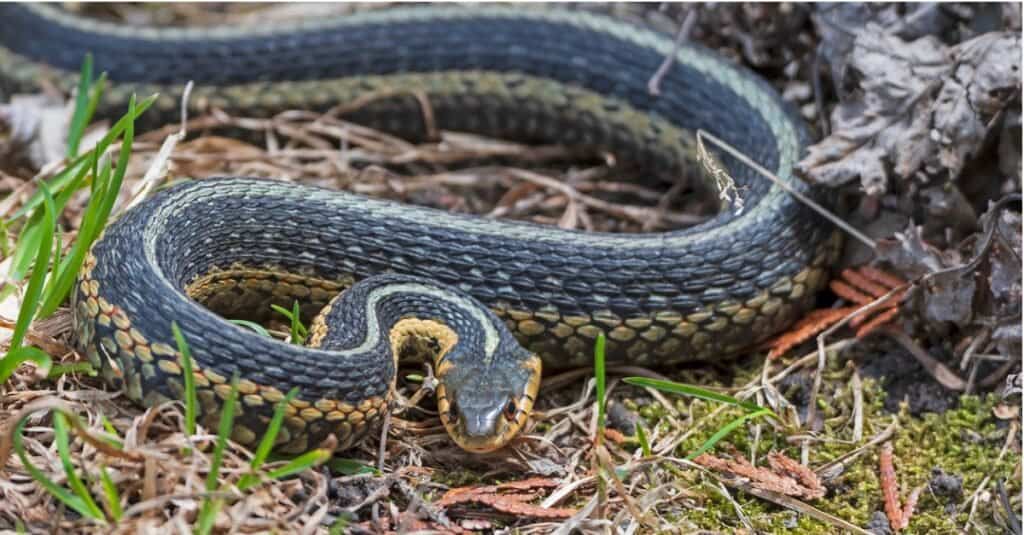
All garter snakes have keeled scales, which means they have a ridge down the center.
©iStock.com/Wildnerdpix
Milk Snake
Milk snakes are on the small end of the scale for snakes in Vermont. They are usually just two to three feet long. What really makes a milk snake stand out is the wide red bands that this snake has. They look just like the wide red bands that the highly venomous coral snake has. But milk snakes are not venomous. They just want you to think they are. If you see a snake that has wide bright red bands and you’re worried it’s a coral snake, look at the color of the thin bands around the red bands. Snakes with thinner white bands are milk snakes. If they are white then the snake is a milk snake and you’re in no danger. Milk snakes are very docile and almost never bite. They can be found in areas at lower elevations in Vermont that feature old fields, buildings, stone walls, and ledges.
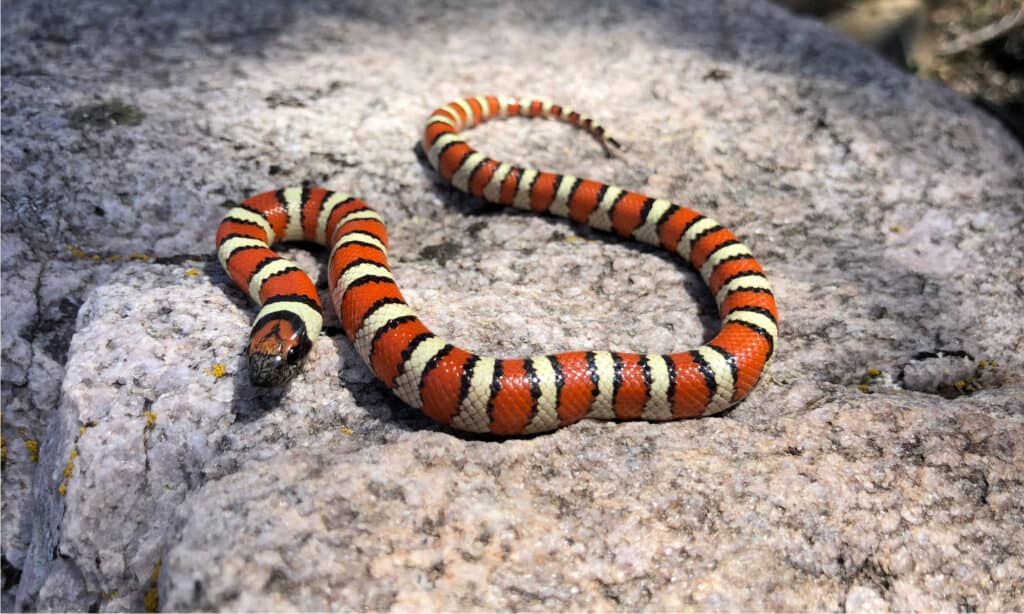
Although they have a venomous look-alike, milk snakes are not venomous.
©Matt Jeppson/Shutterstock.com
Northern Water Snake
There are not many water snakes in Vermont. The northern water snake is the only water snake in Vermont. Typically they are brown, gray, or tan. Their color will help them blend into the color of the water, and the rocks and foliage around the water. Northern water snakes like all kinds of water and can be found in rivers, lakes, streams, and ponds all over Vermont. No matter what color the body of this snake is, the body will be very wide and heavy. Since it’s the only water snake in Vermont you can be sure that if you see a snake in the water in Vermont it’s a northern water snake.
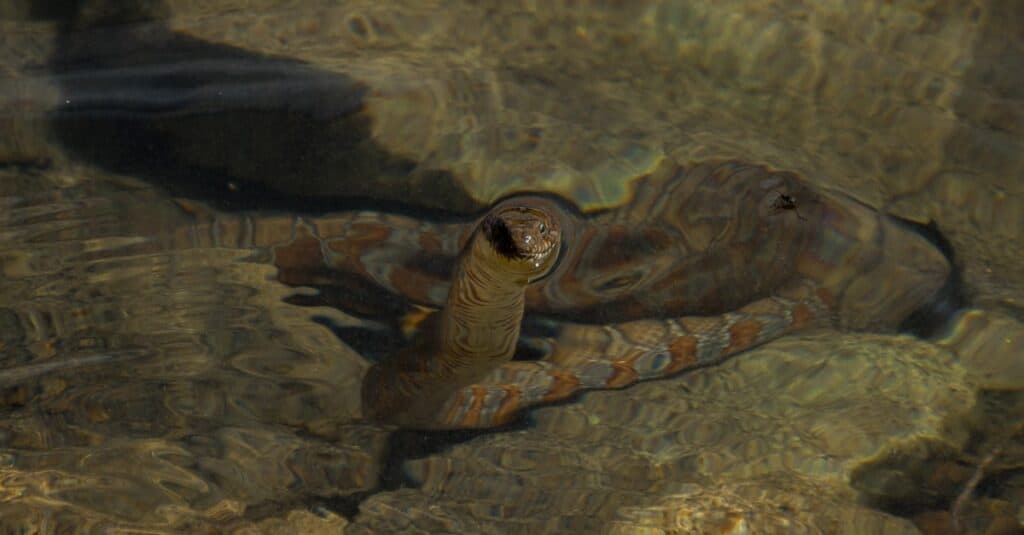
The northern water snake is the only water snake in Vermont.
©iStock.com/manuellacoste
Ring-Necked Snake
Ring-necked snakes are usually just about two feet long, although they can grow up to three feet. Typically, they have a very dark body that’s either dark brown, black, or dark olive. They have a bright yellow, bright red, or bright yellowish-red band in a ring around the neck. This unique feature gives them their name. Ring-necked snakes prefer to stay hidden or underground as much as possible. They stick to areas near forests that have wet soil, mulch, or leaf litter. These areas give them the ability to burrow and hide.
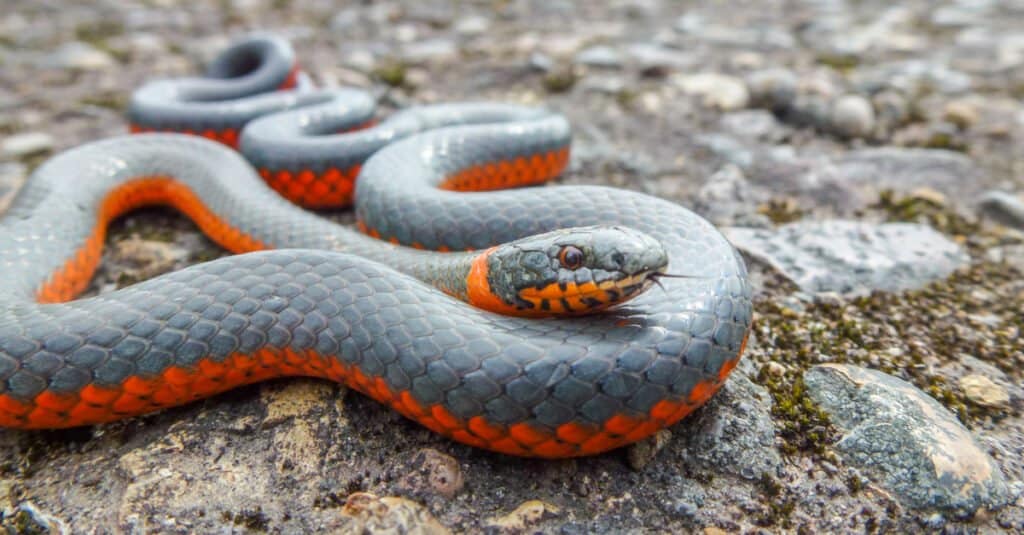
Ring-necked snakes get their name from the red, yellow, or yellowish-red ring around their neck.
©Tom Fenske/Shutterstock.com
Red-Bellied Snake
Red-bellied snakes are instantly recognizable because of their red bellies. These teeny tiny snakes have dark brown, black, or olive body colors with bright red or dull red bellies. Red-bellied snakes are typically very small, usually under a foot long. They never grow longer than slightly over a foot long. Red-bellied snakes pose absolutely no threat to humans. You will see them throughout the state in both the wilderness and in more populated areas.
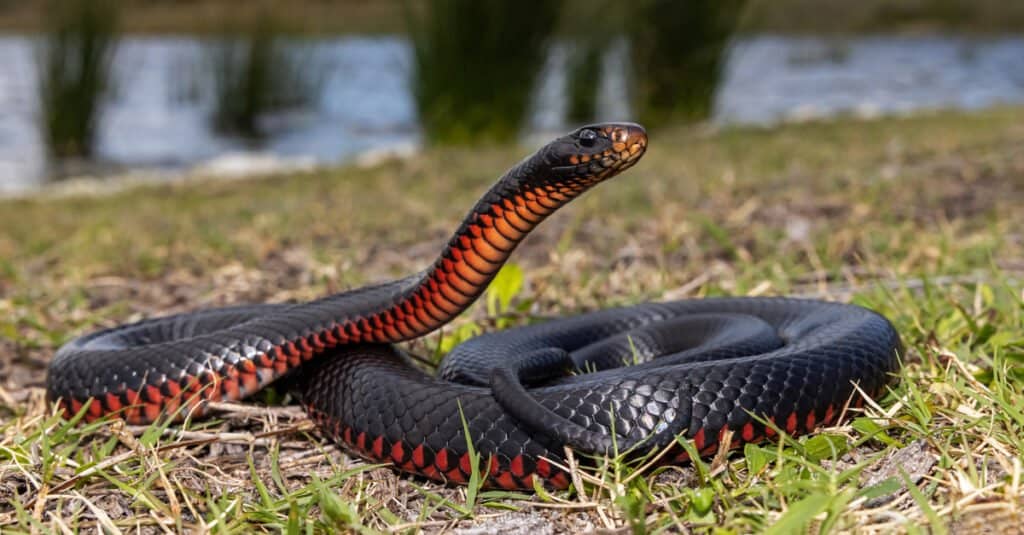
Red-bellied snakes are recognizable because of their red bellies.
©Ken Griffiths/Shutterstock.com
Venomous Snakes in Vermont
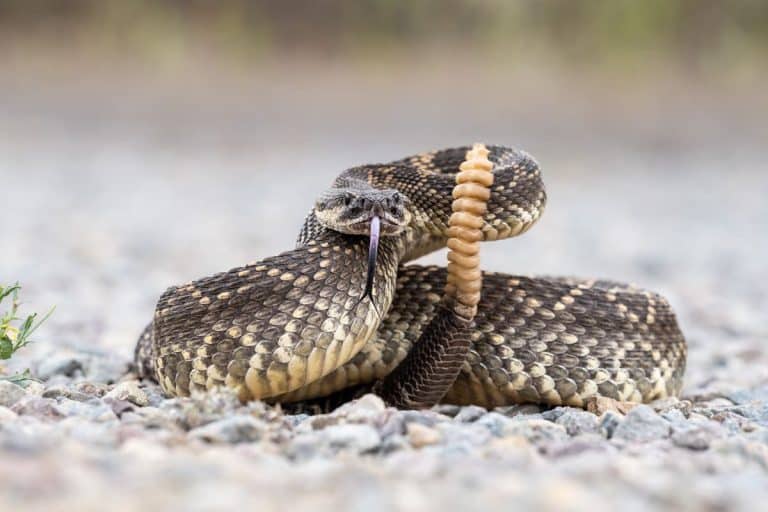
There’s only one type of venomous snake in Vermont, and that snake isn’t very common. When you’re enjoying all the open country in Vermont you can be reasonably sure that you’re not going to encounter a venomous snake. The timber rattlesnake, which is the only rattlesnake and only venomous snake in Vermont, is only found in one part of the state.
Timber Rattlesnake
Timber rattlesnakes are not very common snakes in Vermont as they used to be. A review of the book Timber Rattlesnakes in Vermont and New York: Biology, History and the Fate of an Endangered Species explains that they’ve been persecuted for more than a century. In the past, there were many reported sightings of timber rattlesnakes in and around the Champlain Valley. However, most recently the only reported sightings of timber rattlesnakes in Vermont were in parts of western Rutland County. If you’re not hanging out in western Rutland County you most likely aren’t going to spot a timber rattlesnake.
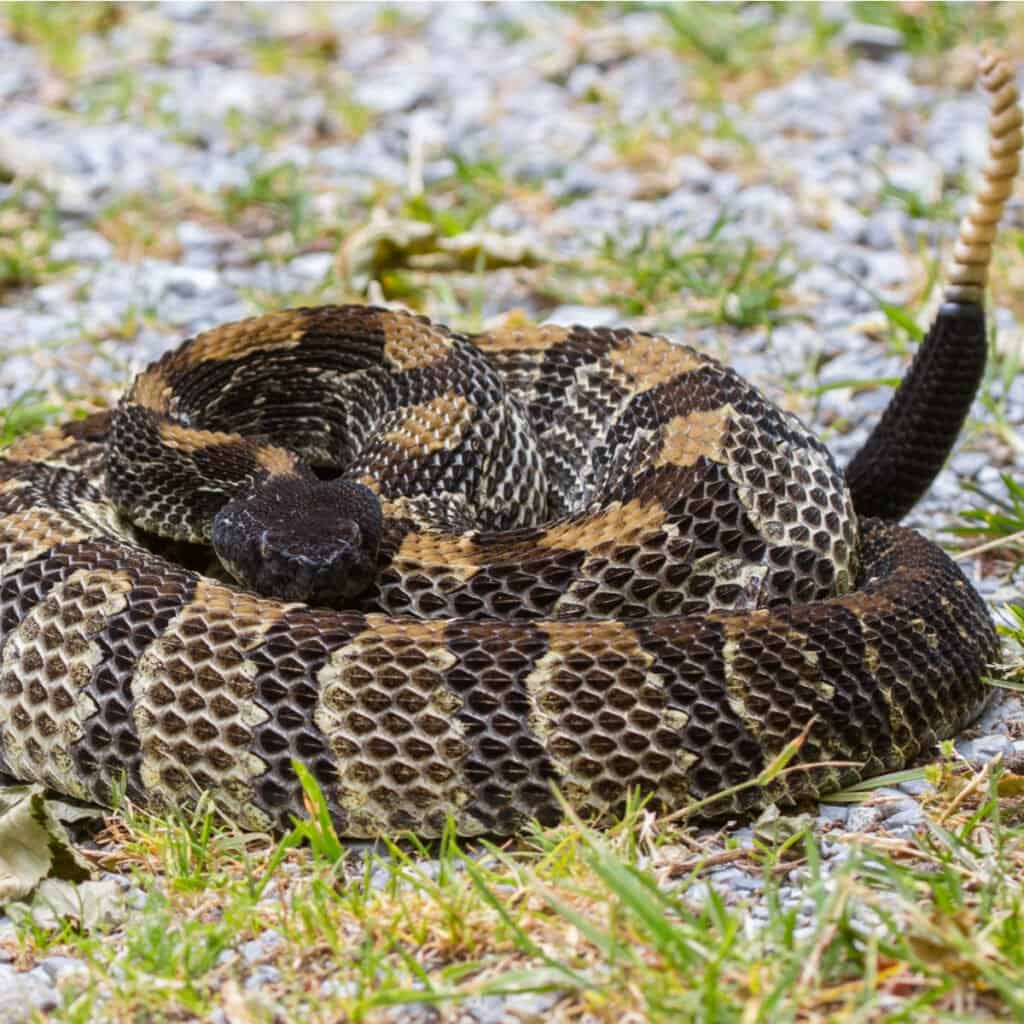
Be careful around timber rattlesnakes in western Rutland County, Vermont.
©Frode Jacobsen/Shutterstock.com
A Complete List of Snakes in Vermont
When you’re outdoors it’s always best to avoid snakes. If that’s not possible and you surprise a snake or one surprises you, the best thing to do is nothing. Even if the snake is not a venomous snake it’s still a wild animal and should be left alone. Many people have a deep and visceral reaction to seeing snakes outdoors but in almost all cases snakes are harmless. Just treat them with respect and usually, they will leave on their own without bothering you. A complete list of the snakes that you’ll find in Vermont is:
- Timber Rattlesnake
- Eastern Rat Snake
- North American Racer Snake
- Eastern Ribbon Snake
- Common Garter Snake
- Milk Snake
- Northern Water Snake
- Red-Bellied Snake
- Smooth Green Snake
- DeKay’s Brown Snake
- Ring-Necked Snake
Summary of 11 Snakes in Vermont
Here’s a recap of some of the snakes present in the state of Vermont that we took a close look at:
| Number | Snake | Habitat |
|---|---|---|
| 1 | Eastern Rat Snake | Forests and rocky mountain outcroppings |
| 2 | North American Racer Snake | Leaf litter in forests of Vermont |
| 3 | Common Garter Snake | Fields, in garages, under mulch in gardens and yards, near sheds |
| 4 | Milk Snake | Widespread at lower elevations in Vermont in old fields, buildings, stone walls, ledges |
| 5 | Northern Water Snake | Rivers, lakes, streams, and ponds throughout Vermont |
| 6 | Ring-Necked Snake | Areas near forests that have wet soil, mulch, or leaf litter |
| 7 | Red-Bellied Snake | Throughout the state in wilderness and in more populated areas |
| 8 | DeKay’s Brown Snake | Urban areas; tend to frequent cities more often than the countryside. Can be found in wetlands, grasslands, and forests |
| 9 | Smooth Green Snake | Marshes, meadows, the edges of streams, and open woods |
| 10 | Eastern Ribbon Snake | Wetlands and near edges of ponds and streams |
| 11 | Timber Rattlesnake | Western Rutland County |
Other Reptiles Found in Vermont

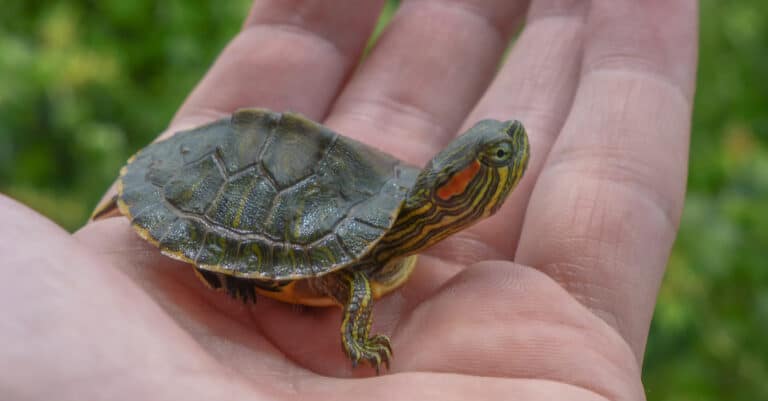
The spotted turtle, endangered in the state of Vermont, is a small, semi-aquatic turtle that reaches lengths of 3.14 to 4.72 inches and has a shell that is dark in color, from black to bluish-black with tiny yellow spots. It is considered one of the smallest breeds of turtles in the United States and although these reptiles are not aggressive and are considered friendly, they do not like to be bothered and males may become combative towards each other.
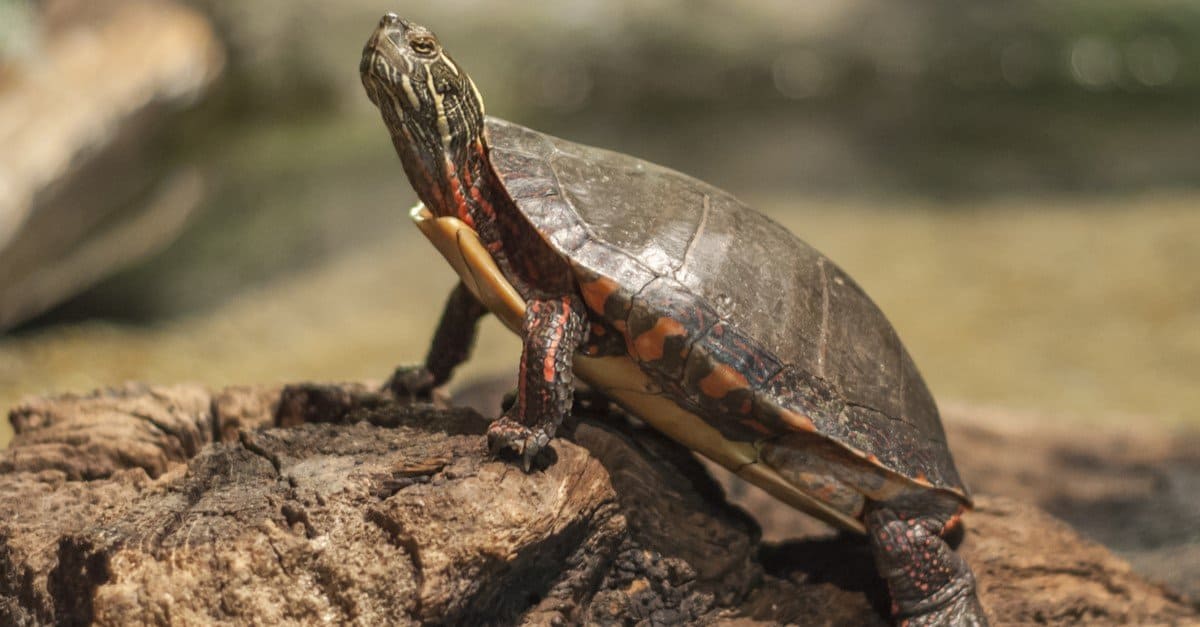
Wood Turtle
©Lmnopg007/Shutterstock.com
The wood turtle is one of only two turtles in the genus Glyptemys and is considered one of the most endangered freshwater turtles in North America. This semi-aquatic turtle grows to lengths of anywhere from 5.5 to 8 inches and can weigh between 2 to 3 pounds and is known to display a rare behavior to obtain food not seen in other reptiles: they stomp their shell and feet on the ground to mimic the falling rain as a ploy to trick worms to come to the surface so they can them eat them.