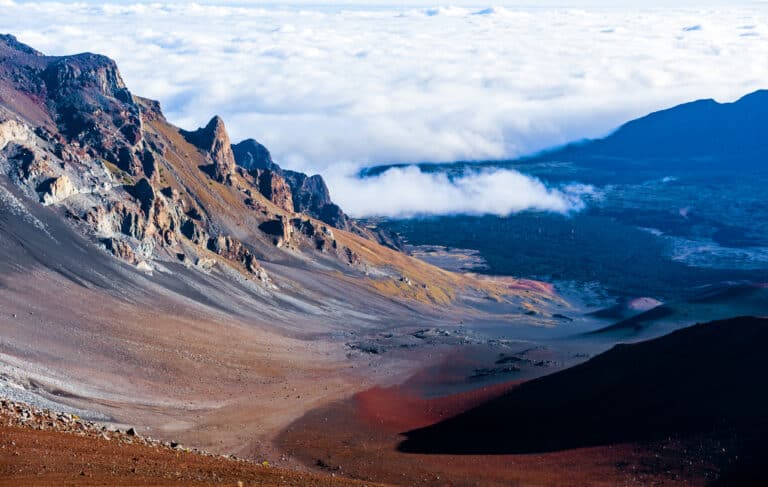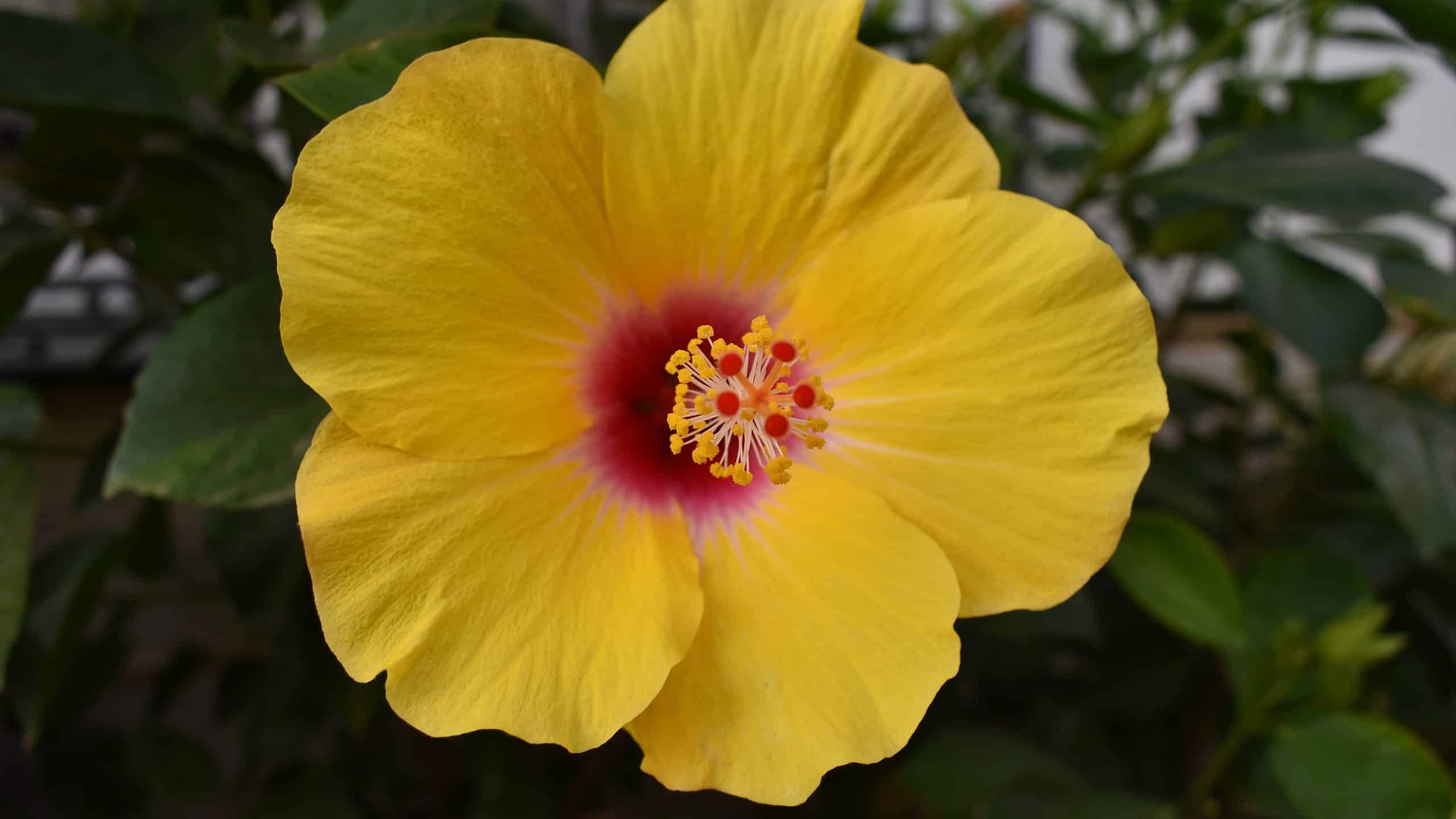

Haiti is a small country that shares the island of Hispaniola with the Dominican Republic. This Caribbean nation takes up about a third of Hispaniola, as well as several other small neighboring islands. The name “Haiti” comes from an indigenous word, “Ayti,” which means “mountainous land.” The truth of this name is reflected in the country’s mountainous geography. It is very mountainous, and most of the land is at least 1,500 feet above sea level. This is particularly evident in the central and western parts of the country, which are full of hills and mountains. Haiti’s terrain includes rocky, coastal cliffs, agricultural plains, many short rivers, and ocean harbors. In general, Haiti has a hot, humid, tropical climate. This weather provides the perfect environment for tropical plants to grow in hot and sunny conditions. Among these plant species is the unofficial national flower of Haiti: the hibiscus. Let’s learn more about this unique tropical weather plant now!
About Haiti
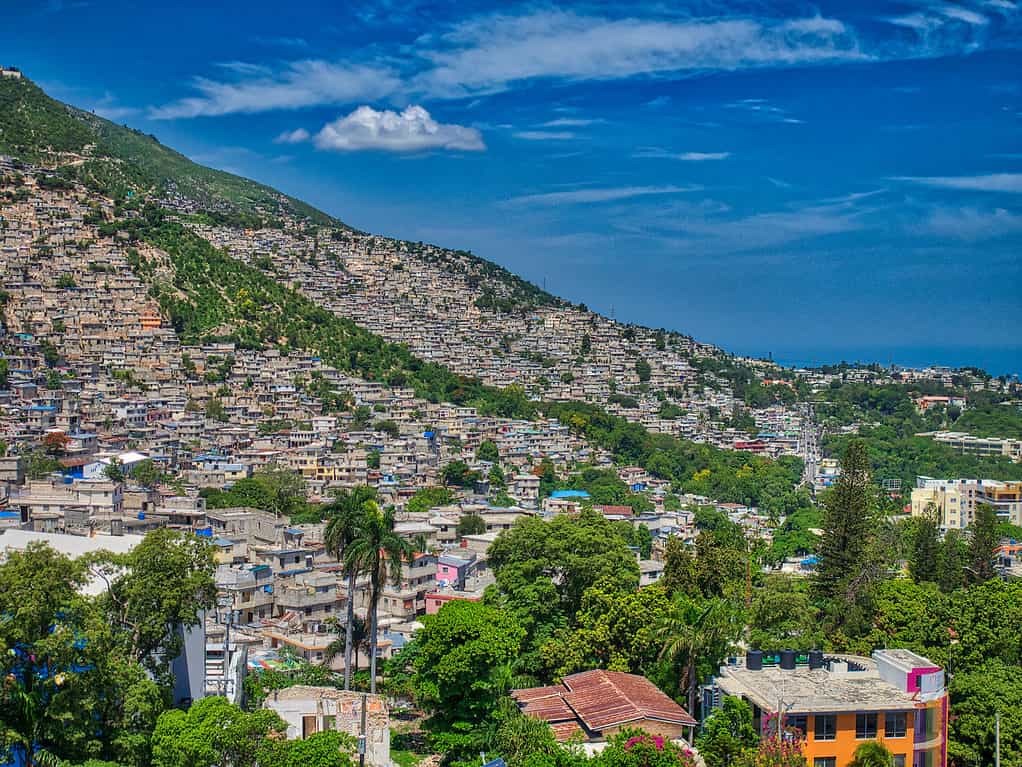
Haiti is a very mountainous place with a unique culture and history.
©iStock.com/Stephen Howard
Haiti is a country of unique history and culture, as a country where the vast majority of people are descended from enslaved African people. Haiti’s story is significant, in that it won its independence from the French in 1804. This revolution made it the second country in the region, after the United States, to become independent from European colonial rule.
Haiti’s official languages are French and Haitian Creole (also spelled “Kreyol” or “Kweyol). Most Haitian people use Creole in everyday life. This linguistic tradition separates Haiti from most of its Caribbean and Latin American neighbors, which speak Spanish or English. It also speaks to Haiti’s unique history as a country colonized by the French. However, in the centuries since it gained independence from France, Haiti has endured numerous social and political challenges, natural disasters, and economic realities. Though the climate is tropical and can see significant rainfall, some portions of the island of Hispaniola receive fewer than 28 inches of rain each year. This contributes to drought, ongoing crop failures, and famines that impact farmers throughout the country.
In part due to these factors, deforestation and soil erosion have left a significant mark on Haiti’s topography. The thin mountain soil is prone to quickly becoming infertile after cultivation, and historical agricultural practices have contributed to the loss of much of Haiti’s native vegetation. The hot, humid climate keeps temperatures at above 70 degrees Fahrenheit, though higher elevations can see winter frosts appear.
What is the Hibiscus, the Unofficial National Flower of Haiti?
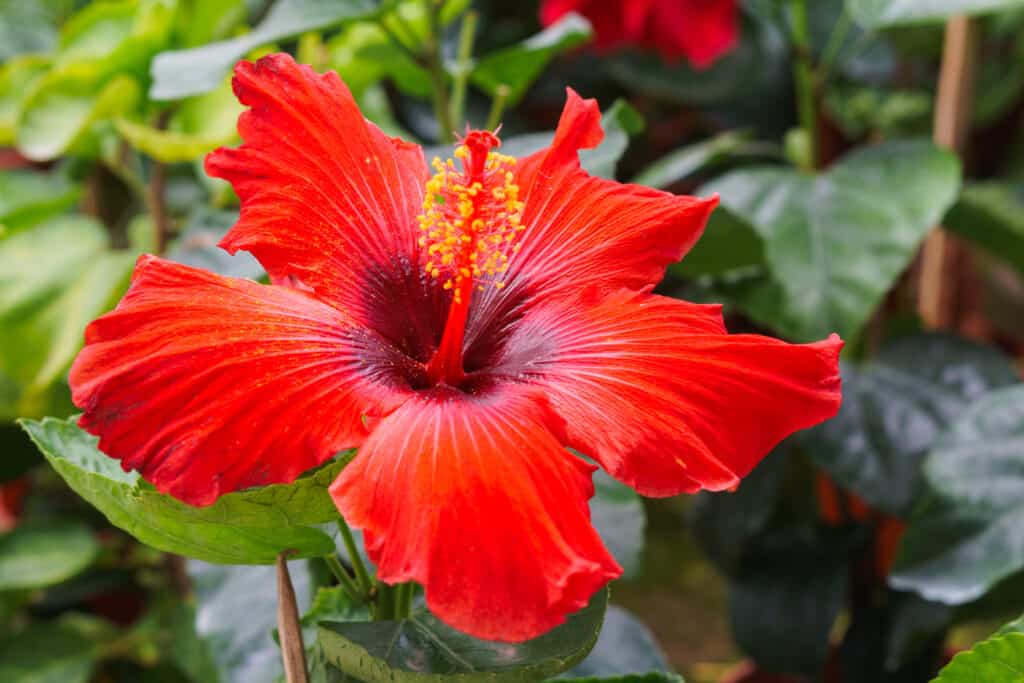
The hibiscus is the national flower of Haiti.
©MajestiX B/Shutterstock.com
In Haiti, the hibiscus flower is a well-loved symbol of culture and beauty and a plant that grows natively on the island of Hispaniola. Hibiscus is a genus of flowering plants that belong to the Malvaceae family. These are known as “hibiscus flowers.” All of the species in the genus are native to warm, tropical regions of the world. Some of the most well-known hibiscus species are originally from Asia. However, there are now species of hibiscus growing throughout the warmer-weather parts of the world. This includes parts of Haiti, where the “rose kayenn” or “choeblack,” as it is known in Creole, is thought of as an unofficial national flower of Haiti.
What Do Hibiscus Flowers Look Like?
One species of hibiscus found most commonly in Haiti is the Hibiscus rosa-sinensis. The Hibiscus rosa-sinensis also goes by the names of “Hawaiian hibiscus” or “Chinese hibiscus.” These flowers grow on evergreen shrubs or small trees and appear each summer and fall. Each flower has five petals reaching approximately four inches in diameter. These showy blossoms often come in a funnel or trumpet shape. They also have long, noticeable stamens protruding from the middle of the petals.
Though the most common color for the hibiscus flower is red, the flowers from hibiscus plants have a recognizable trumpet shape and come in a rainbow of bright colors. They grow in shades that include bright red, pink, orange, and yellow.
Hibiscus plant leaves are usually dark green and glossy. Because the hibiscus plant is actually an evergreen shrub, most of the year, all that you will see are the green leaves and not the dazzling flowers. In fact, Hibiscus rosa-sinensis will keep these leaves all year round in mild winter weather.
Where Do Hibiscus Plants Grow?
The species Hibiscus rosa-sinensis is grown widely throughout warm, tropical countries as an ornamental plant. As well as growing in people’s gardens and in pots, you may see hibiscus shrubs or small trees bordering a landscaped yard or on the edge of water features like ponds.
If you would like to grow your own hibiscus plant, you will find that certain species grow better than others in North America. Typically, species such as Hibiscus syriacus can grow successfully in USDA Hardiness Zones 5 to 8. This is assuming that your hibiscus plant receives partial to full sun, warm temperatures, and nutritious soil. In these conditions, your hibiscus plant should produce beautiful flowers each year with relatively little effort on your part! If you prune the shrub each year, you can control its growth and keep the size manageable. This will also allow you to bring your hibiscus plant indoors during colder winter months when it would wilt outside of its ideal tropical conditions. Just be sure to keep the plant in a sunny area, such as near a large window.
What is the Cultural Significance of the Hibiscus Flower, the National Flower of Haiti?
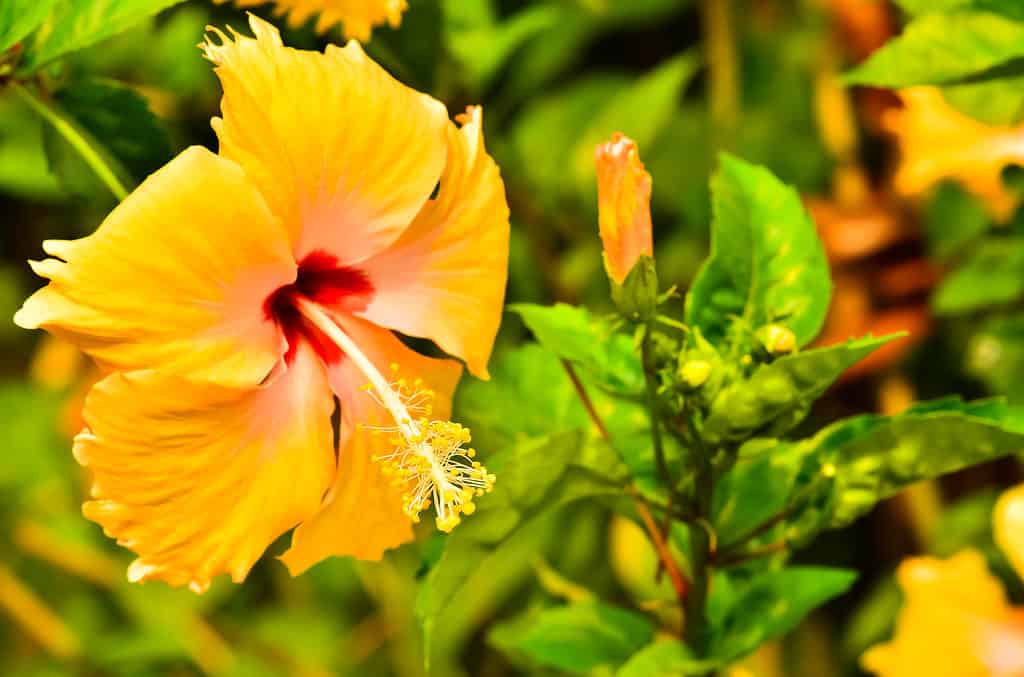
Hibiscus is known for its beauty and is used to promote national pride in Haiti.
©Nuttapong Wongcheronkit/Shutterstock.com
Hibiscus flowers have gained prominence as an unofficial national flower of Haiti. There, the symbol of the hibiscus blossom has been used to promote national pride, advertise the country to tourists, and represent certain political parties.
Aside from recognizing the hibiscus flower as a national symbol, many know hibiscus as a popular flavor for tea, juice beverages, candy, or other desserts. In fact, hibiscus plants have multiple edible parts: people can eat the flowers, leaves, and seeds! In Haitian culture, there are many herbal remedies given to treat a range of physical and mental ailments. Among these is the popular hibiscus tea, which some use in traditional medicine as a hot or cold beverage to cure all kinds of illnesses.
What Are the Other National Symbols of Haiti?
The hibiscus flower is just one symbol of Haiti. Some of the other emblems of the country include:
- The national bird is the Hispaniolan trogon.
- The national tree is the royal palm.
- The national sport is soccer.
- The national mountain is Pic Makaya.
- The national river is the Artibonite River.
Haiti is a country with unique ethnic, linguistic, and cultural history. The tropical hibiscus is just one of the notable plant species growing within this small island country and is a beautiful symbol of its people as the national flower of Haiti.