
Is a bald eagle powerful enough to win a fight against a mountain lion?
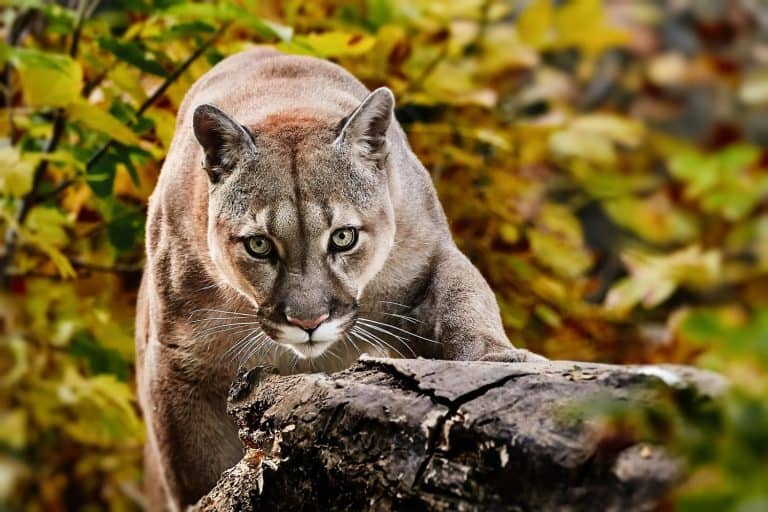
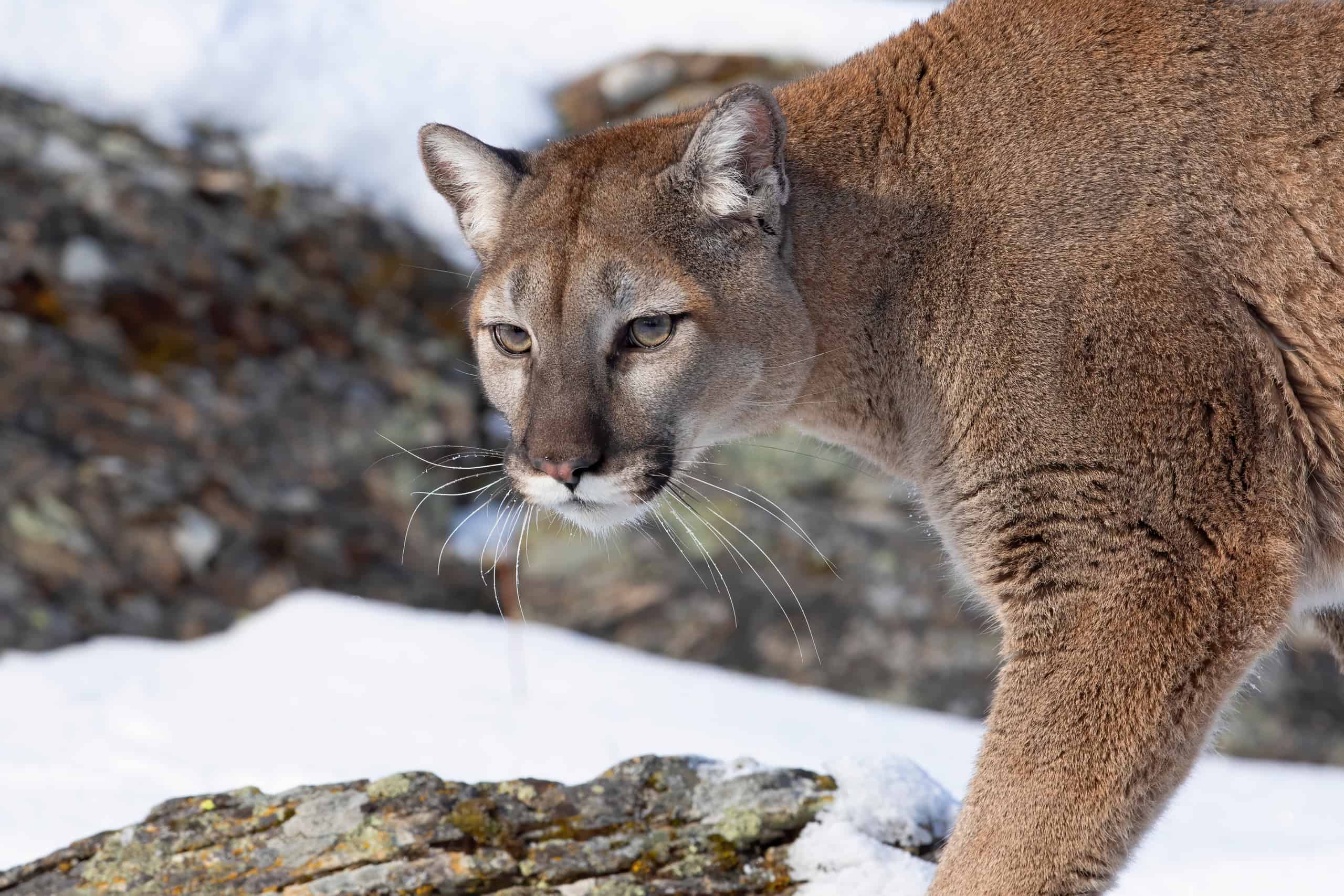
It’s easy to tell mountain lions apart from other wild cats like the lynx or bobcat. These felines are much larger and have long tails that measure about 1/3 of their total body length. Mountain lions also have a muscular, sleek build. Their strong legs are made for speed, and their paws are equipped for climbing and hunting.
Bald eagles have well-developed brains; they’re intelligent birds. They can think strategically and solve problems. But are they powerful enough to go after a fully-grown mountain lion? It’s time to find out! Follow along as we learn more about these hunters to see who has the advantage.
Bald Eagle: Overview
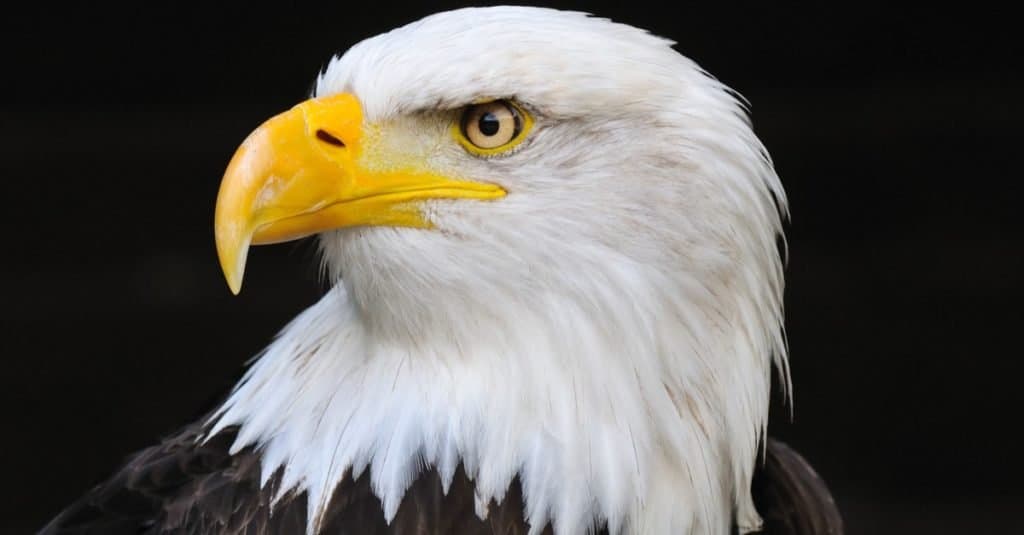
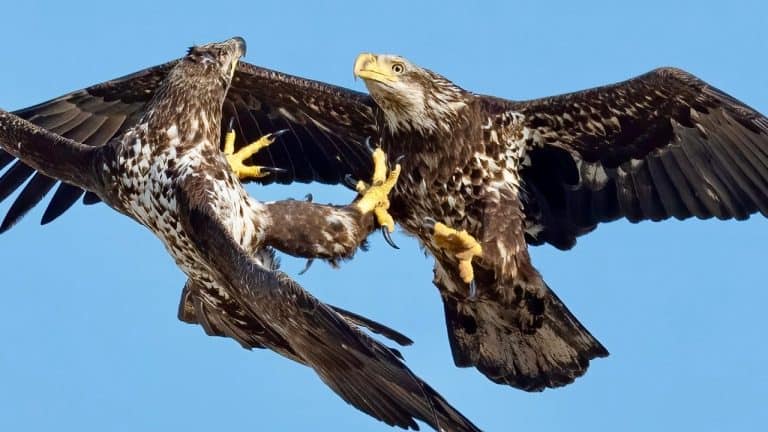
Bald eagles get their name from the white feathers on their head and neck.
©visuelldesign/Shutterstock.com
Let’s clear one thing up; bald eagles aren’t bald! Their name comes from the white feathers on their head and neck. These majestic birds of prey have a wingspan measuring 6 feet, making them one of the biggest species around.
Along with being big and beautiful, bald eagles also have exceptional vision. They can see objects that are four times further away than anything we could spot. They can also rotate their heads up to 270°, providing binocular and monocular vision.
Where are you most likely to see bald eagles flying around? Coastal areas, rivers, and large lakes are a few of the places they frequent. These birds of prey prefer to stay in areas with easy fish access. After all, fish is their primary source of food. Bald eagles are diurnal hunters who use their powerful talents to snatch up fish that swim near the surface.
Mountain Lion: Overview
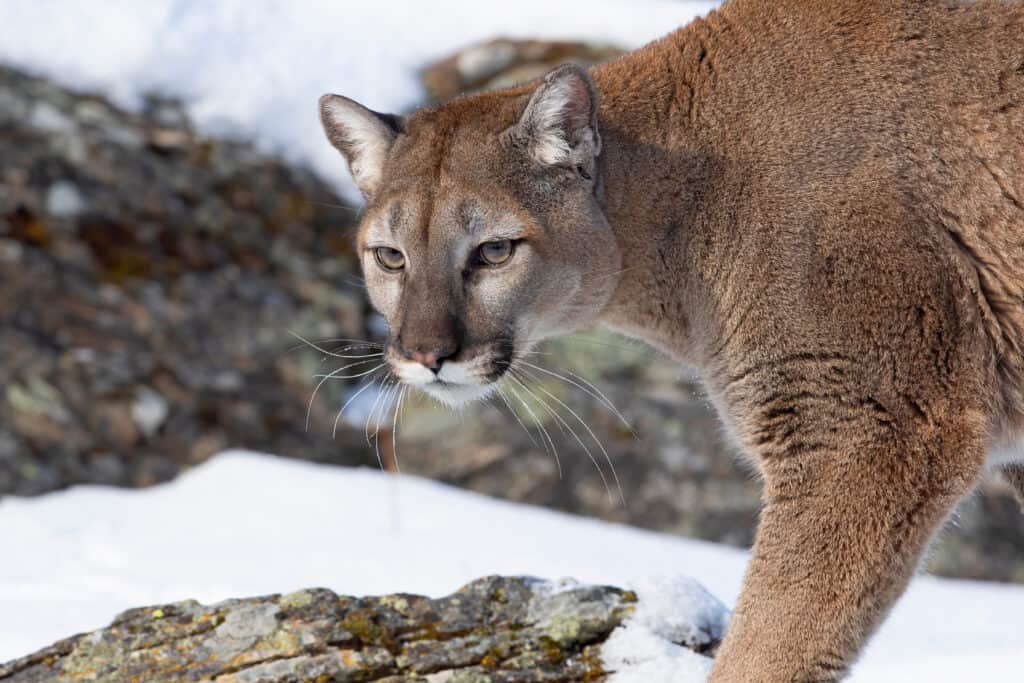
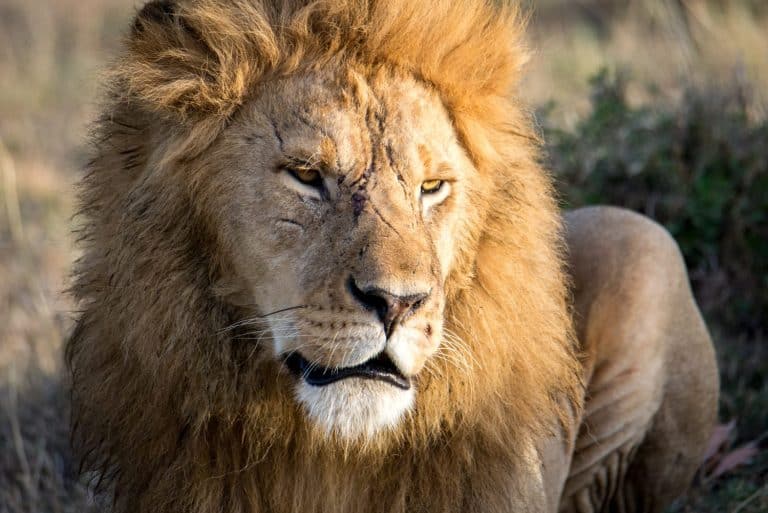
A mountain lion can weigh over 100 pounds.
©Jim Cumming/Shutterstock.com
When you think of a mountain lion, how big of an animal are you picturing? If you’re thinking about a house cat, think bigger. Mountain lions are bigger than the average house cat. On average, house catch way around 20 pounds, and a mountain lion can easily weigh over 100 pounds! It’s normal for adult males to be over 8 feet long and weigh between 135 and 175 pounds. Adult females can grow up to 7 feet long and usually weigh between 90 to 105 pounds.
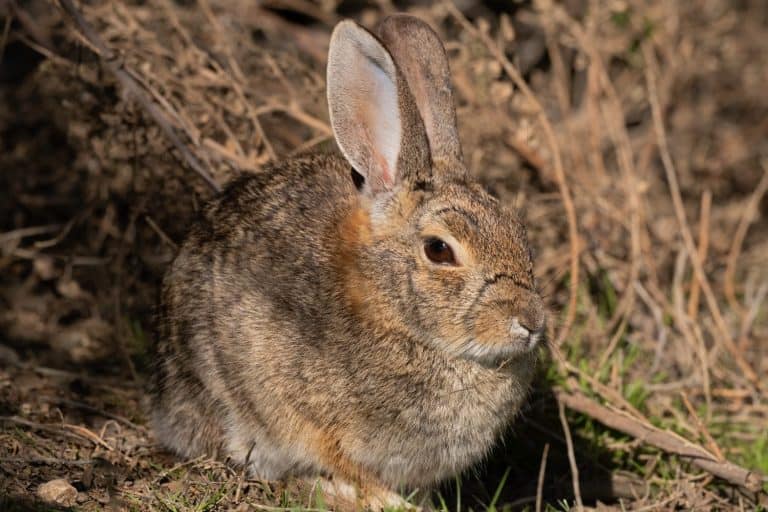
Along with small snakes, mountain lions eat beavers, rabbits, raccoons, porcupines, and even bighorn sheep. These active hunters love meat and can take down prey as large as elk or deer. They kill their prey with a single neck-snapping bite. Sometimes their bite penetrates the skull. After digesting their meal, the mountain lion will return to the kill site to feed again.
Is a Bald Eagle Powerful Enough to Carry a Mountain Lion?
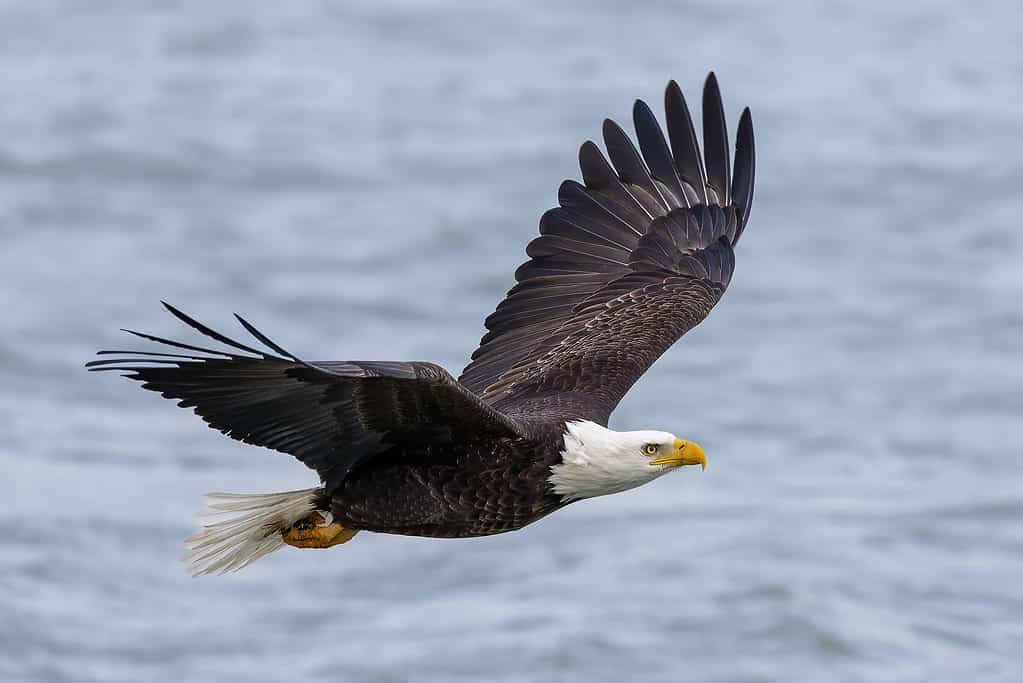
Can a bald eagle carry a mountain lion? No, unless this is a movie, and it’s CGI!
©iStock.com/Karel Bock
Now for the question we’re all wondering, is a bald eagle powerful enough to carry an adult mountain lion? The fast answer is no.
While it might be fun to picture a bald eagle flying off with an angry mountain lion in tow, it’s not likely. These wild cats are just too big. Bald eagles usually only carry 7 to 8 pounds, and that’s under ideal conditions. Everything has to be just right.
The ideal conditions include snatching the load during flight and having plenty of wide open space to glide. On average, it’s more common for them to carry 1 to 3 pounds. Carrying heavier weight requires special conditions, momentum, and need. There is the harpy eagle; this species can easily carry 20 pounds, but this eagle’s an exception, not the norm.
Bald Eagle: What They Can and Can’t Carry
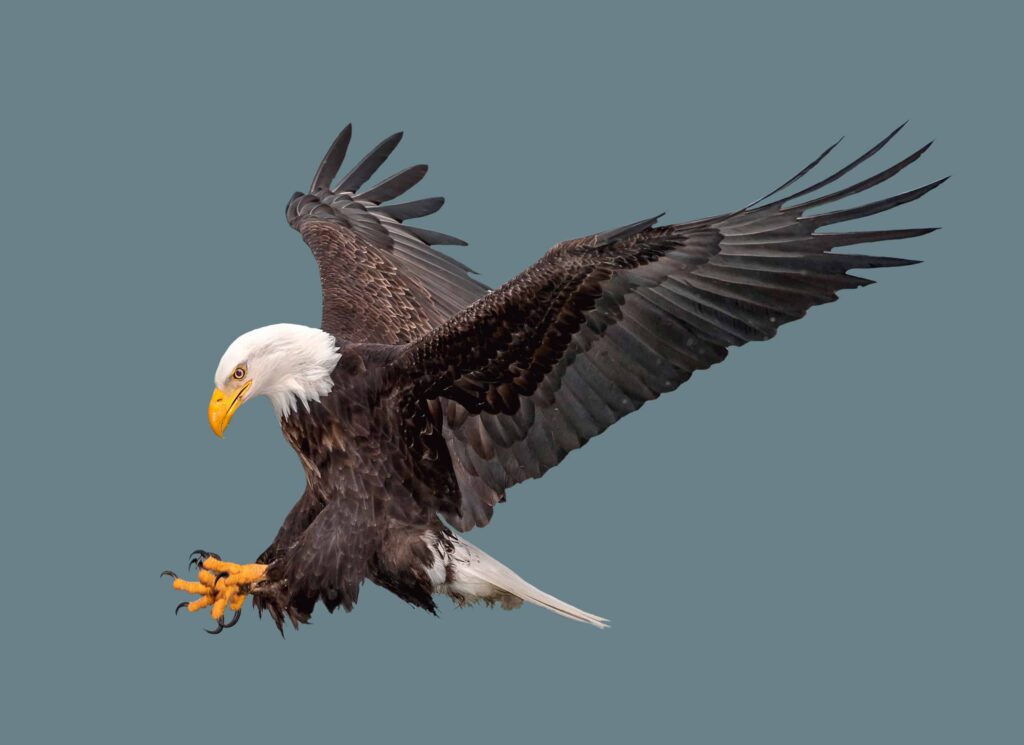
Bald eagles can carry about 1/3 of their own body weight.
©PHOTOOBJECT/Shutterstock.com
Though they are strong birds, bald eagles do have their limits. A bald eagle lifting power caps out at around 4 to 5 pounds. The overall lifting capacity depends on the bird’s wing size and airspeed. These birds of prey can quickly adapt to new situations and develop creative solutions for catching prey.
Using their expert maneuverability and precise control and flight, they can carry about 1/3 of their own body weight. Since the typical bald eagle weighs 10 to 12 pounds, it can usually carry three to four pounds without a problem. These expert aerialists can reach speeds of 150 mph. The better the airspeed, the more weight the eagle will be able to carry. The airspeed to the momentum builds the eagle’s strength or lifting capacity.
Overcoming Myths
Bald eagles rarely carry prey that weighs a lot. Even if they can do so, it takes too much energy. What about the stories of eagles carrying cats and dogs? Are they true? The stories can be true when you hear people talking about bald eagles carrying away small dogs or cats. But the incidents aren’t as likely as you would think.
The chances of a bald eagle picking up a dog or cat are pretty low. These animals put up too much of a fight and weigh a lot. There’s also the myth about eagles picking up and carrying off children. But even a newborn baby would be too heavy for the eagle’s frame, and they’re hesitant to approach people again.
Learning Curve of Young Bald Eagles
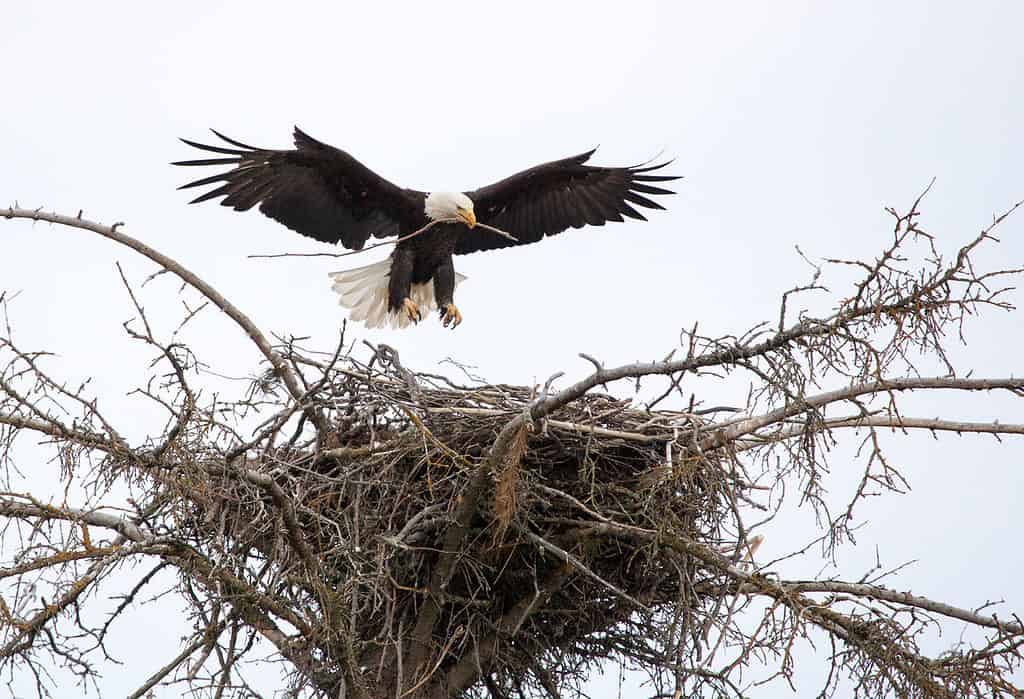
Young bald eagles practice their hunting skills until they can successfully grab objects and prey.
©iStock.com/June Jacobsen
Stories of eagles swooping down for large animals usually involve juveniles. Sometimes immature eagles swoop on inappropriate objects and unsuccessfully try to snatch them up. When young, eagles determine their carrying capacity by practicing hunting skills. Using trial and error, they test their carrying limits. Moving forward, adult eagles focus on grabbing animals they can easily carry to their nest. They latch onto the animals using their strong talons.
When eagles carry a heavy load, they can’t travel very far. Sometimes they break up large prey into small chunks, making transporting them to their nest easier. The most an eagle can carry depends on environmental conditions; their capacity is usually around 3 to 4 pounds.
If a bald eagle were to attack a mountain lion, it would most likely be a juvenile bald eagle. When they’re unskilled and inexperienced, these birds of prey will try to pick up things that are much too heavy. The moment the juvenile bald eagle swoops down to pick up the mountain lion, it’ll begin to realize its mistake. It’ll be instantly obvious that they can’t pick up the mountain lion and won’t want to stick around to see what the big cat says about their failed attempt.
Bale Eagle: Powerful Vision and Talons
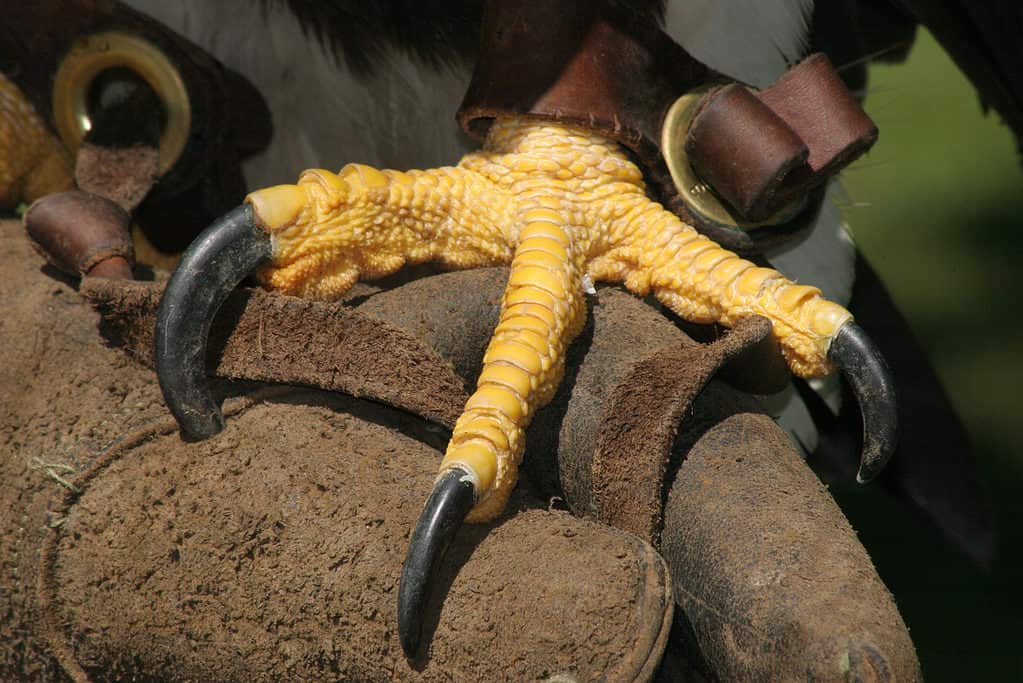
The bald eagle’s talons can latch onto their prey.
©iStock.com/LoriSkelton
A bald eagle’s talons can exert 1000 pounds of pressure per square inch! Unlike some bird species with involuntarily locked talons, an eagle can choose how to move their toes. They can latch onto fish and release their talons voluntarily at any time.
They can even swim with their talons latched onto the fish. That’s right; bald eagles can swim! But it’s more of a float than a swim. The large bird floats in the water and uses their wings to row. They can use this maneuver to pursue prey and carry fish offshore.
Strength in Nest Building: Carrying Heavy Loads
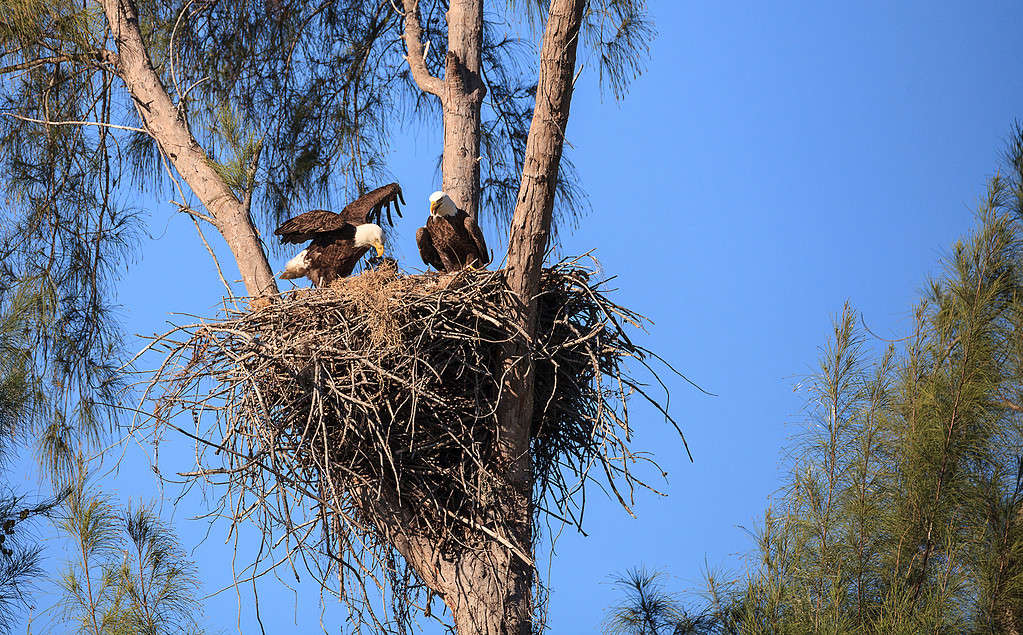
A bald eagle nest can weigh up to 1.1 tons, the biggest of any bird in North America.
©iStock.com/LagunaticPhoto
Eagles are powerful flyers, building some of the biggest and most impressive bird nests. The bald eagle breeding season happens throughout a large part of the year. The 10 to 11-month-long breeding cycle includes territory occupancy, nest repair, egg laying, incubation, feeding, and fledging.
While building nests, it’s clear just how much these birds can carry. Before laying eggs, females make intertwined baskets of big sticks and large branches to form the nest. When the time is right, the female lays one to three eggs three days apart.
Eagles Steer Clear of Prey with Claws
What is the maximum weight a bald eagle can lift under any circumstance? Under the perfect conditions, bald eagles can carry 108% of their body weight. For heavier items, they’re usually gliding and using momentum as a carrying tool.
Since most eagles have a lifting capacity that tops out around 1 to 3 pounds, it’s highly unlikely they’d be able to win in a fight against a mountain lion. Not only is the wild cat too big, but it’s also too wild!
Eagles have a hard time handling animals that fight back with sharp claws. If a bald eagle was to snatch up a kitten, it might wind up dropping it. Returning the cat to its nesting site will be more difficult than taking a docile mammal. Unlike a rabbit that’s just going to sit in the talons, a kitten can scratch and bite.
Finding Easy Meals on the Road
Bald eagles like getting easy meals whenever they can. That’s why sometimes you’ll see these majestic birds of prey swooping into the road to pick up dead animals. Roadkill is one of the bald eagles’ favorite things to eat. The animal is already dead, and sometimes the passing vehicles break it into smaller, easy-to-carry chunks.
While roadkill can be a great food source, it can pose a threat. If you’ve ever seen a bald eagle swoop into the road, try to pick something up, and fail, you know what we’re talking about. Sometimes they get so focused on trying to lift the dead animal off of the road they get hit by oncoming traffic.
Can a Bald Eagle Beat a Mountain Lion on the Ground?
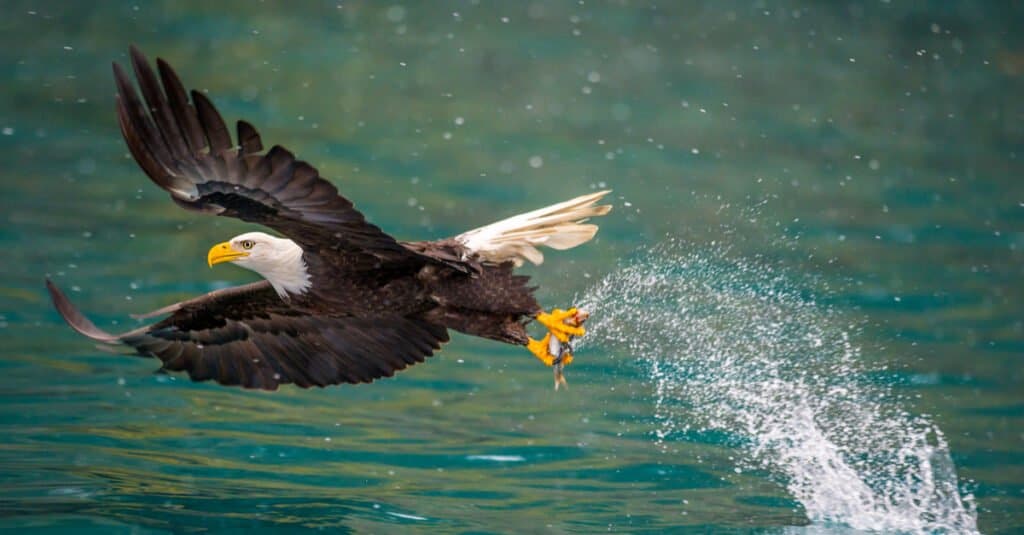
Bald eagles strike their prey lightning-fast.
©FloridaStock/Shutterstock.com
Bald eagles strike prey with twice the force of a rifle bullet. The power is thanks to their lightning-fast speed. These birds of prey use their dive bombs to hunt and claim territory. Just watch this bald eagle body slam a Grizzly, and you’ll see how strong they are.
There’s no doubt about it; this bird is brave. But is the bald eagle powerful enough to win this matchup? It’s possible this bird of prey could fatally injure a mountain lion. But it won’t be easy. Bald eagles are capable of killing adult deer, pronghorns, and calves. The prey size depends on where the eagles live, the food availability, and the bird size.
Do Mountain Lions Eat Eagles?
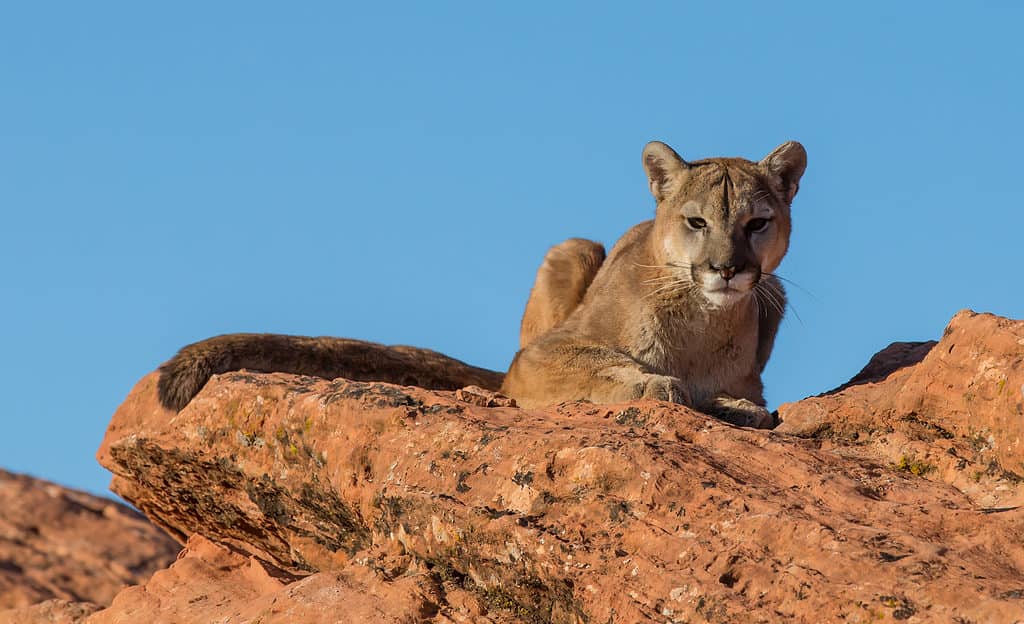
Eagles aren’t part of the normal mountain lion diet.
©Warren Metcalf/Shutterstock.com
Do mountain lions eat eagles? Not usually. Deer and elk are the primary prey of these obligate carnivores. Mountain lions only eat meat, and they’re driven by hunger. They’re always covering large areas of land in search of prey. Their need to feed is even greater when raising kittens.
Mountain lions have large canines that could kill a bald eagle with one bite. Their carnassial teeth are made for shearing and tearing flesh. And don’t forget about their retractable claws; they’re super sharp. As if their bite and claws weren’t dangerous enough, mountain lions also have extraordinary vision. Their keen vision is thanks to the shape of their pupils.
The mountain lion’s rounded pupils are perfect for light adaptation, making it easy to see things far away. They also have a keen sense of smell but use it more for social behaviors than hunting.
Crepuscular Animal
Mountain lions are crepuscular animals most active during dawn and dusk. The low light conditions help them ambush prey. A hungry mountain lion will roam around a lot more than a satiated one. They focus their explorations on areas with known prey populations.
Mountain Lion vs. Bald Eagle Eating Habits
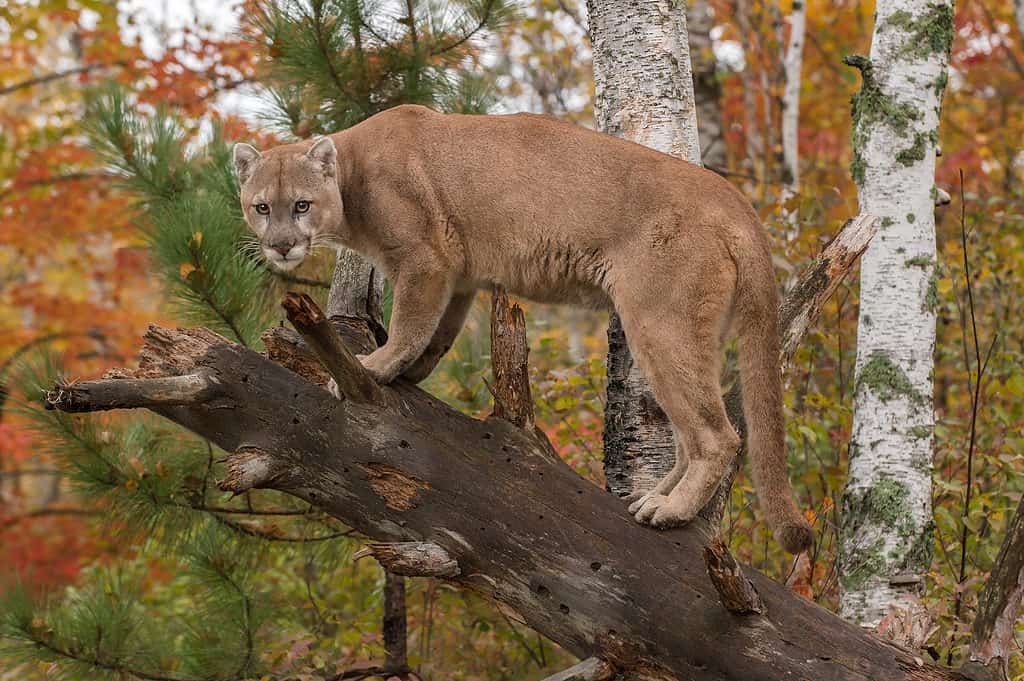
Mountain lions consume large bones when they eat their prey.
©Geoffrey Kuchera/Shutterstock.com
The body of a freshly killed animal provides clues about its predator. By looking at a deer carcass, you can determine what type of predator killed it and which scavengers are feeding on it. One of the first things to pay attention to is whether or not the bones are missing.
Certain species are adapted for consuming bones, while others pick the meat off meticulously. When it comes to mountain lion vs. bald eagle eating habits, they devour their prey in very different ways. Mountain lions can consume large bones, including vertebrae, femurs, skulls, pelvises, and scapulae. Smaller scavengers, like bobcats, foxes, and bald eagles, leave most of the bones intact.
When a small scavenger feeds, you’ll see most of the large bones on the carcass. And the bones will be picked clean of meat. If the carcass is being devoured by a larger animal, like a mountain lion, you’ll probably see a lot of broken bones.
Mountain lions have strong teeth that can break and eat large bones. Bone chunks as large as 1 inch by 1 inch have been found in mountain lion droppings. This is evident when they consume deer. When eating a deer, mountain lions gobble up the entire spinal column, both femurs and almost all of the skull.
Why Mountain Lions Eat Internal Organs
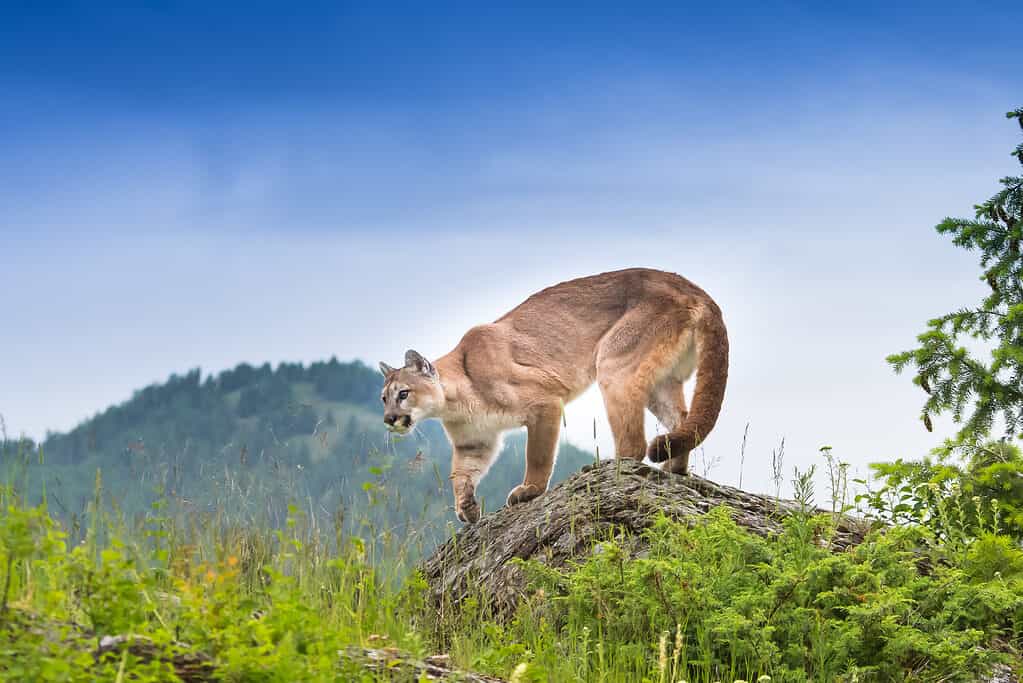
Mountain lions deftly pick apart their prey’s carcass.
©Warren Metcalf/Shutterstock.com
Along with eating the bones, mountain lions like eating the internal organs. The internal organs are nutrient-dense, providing the wild cat with all the necessary vitamins. This is especially important since mountain lions can’t synthesize certain nutrients like vitamin A.
How do they get to the tasty organs? First, they have to pluck out the hair from the hyde. After pulling off the hair, mountain lions open the carcass beneath the lowest rib. They use their sharp teeth to shear off chunks of meat and break up bone. Working from the lower rib cage, they move their way upward until they access the liver, heart, kidneys, and lungs.
Who Wins: Bald Eagle vs. Mountain Lion

The mountain lion is the winner in a showdown of mountains vs. bald eagles.
©Evgeniyqw/Shutterstock.com
The mountain lion is the winner! The eagle could launch an aerial attack that would harm the mountain lion. Dive bombing into the wild cat could inflict a lot of damage. But it’s unlikely that the big bird of prey could kill its competitor.
After the eagle’s aerial attack, the mountain lion could respond with full force. Using its weight, they’d roll over, bringing the eagle to the ground. Once the fight is on the ground, the fight’s already won. The mountain lion will take victory with their sharp claws, agile body, and flesh-tearing teeth!
Bald eagles are incredible birds of prey that can carry up to 3 pounds or more, depending on the circumstances. Carrying capacity depends on how fast they’re flying and how big they are. But even the biggest bald eagle isn’t going to win in a matchup against a mountain lion. For today’s animal battle, the win goes to the mountain lion!